
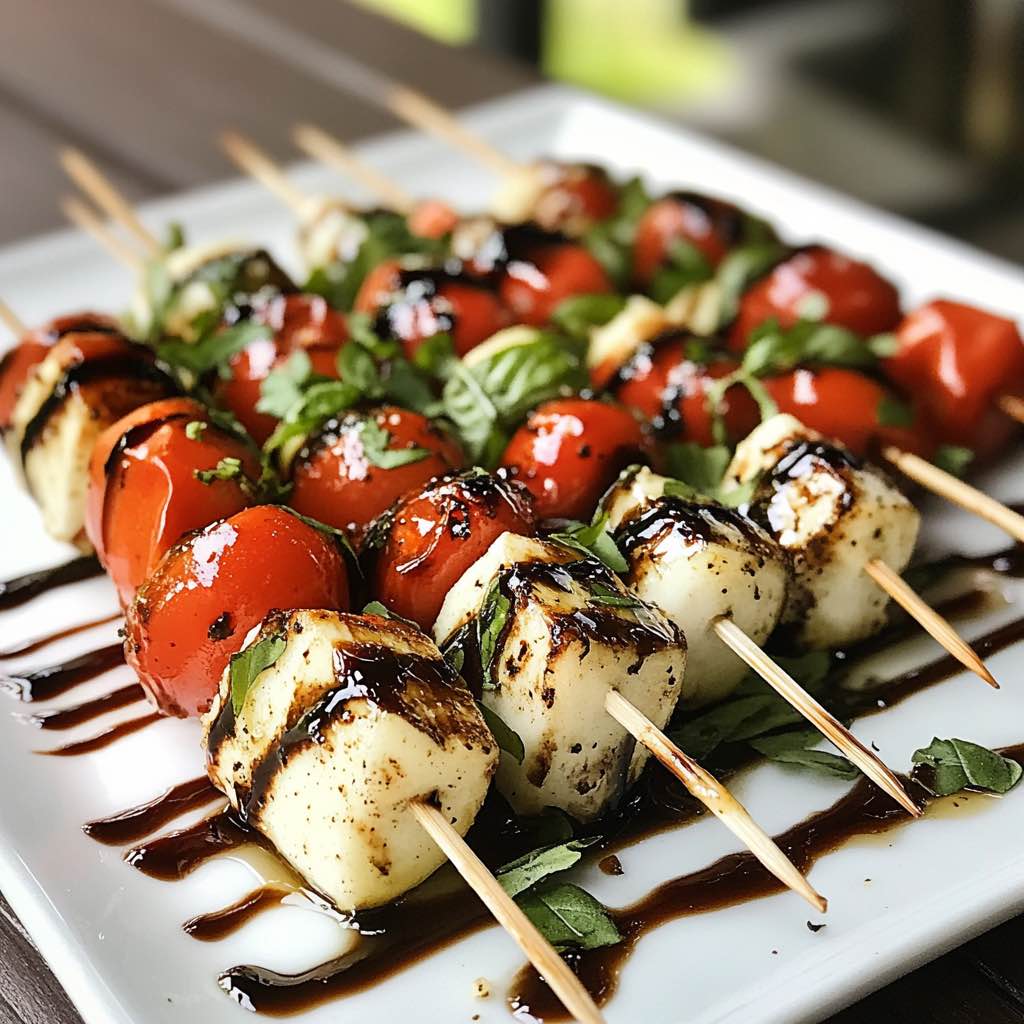
Caprese Skewers with Balsamic Glaze: A Simple, Fresh, and Elegant Appetizer
Caprese skewers with balsamic glaze bring together juicy cherry tomatoes, creamy fresh mozzarella, and fragrant basil in a colorful bite-sized appetizer that delights guests at any gathering. These elegant Mediterranean-inspired skewers require minimal preparation, making them perfect for busy hosts who want impressive results without complicated cooking techniques. The sweet and tangy balsamic glaze adds the finishing touch that transforms simple ingredients into an unforgettable appetizer.
What Are Caprese Skewers with Balsamic Glaze
Caprese skewers represent a portable, party-friendly version of the classic Italian Caprese salad. Each skewer features cherry tomatoes, mini mozzarella balls, and fresh basil leaves threaded onto toothpicks or small wooden skewers. The arrangement creates a stunning visual display with red, white, and green colors reminiscent of the Italian flag.
The balsamic glaze serves as the signature finishing touch. This thick, syrupy reduction adds a sweet-tart flavor that complements the fresh ingredients beautifully. Unlike the traditional plated Caprese salad, these skewers offer convenience for stand-up events and cocktail parties.
These appetizers typically contain fewer than 40 calories per skewer, making them a light yet satisfying option. The combination delivers both flavor and nutrition in every bite.
The Origin and History of Caprese
The Caprese flavor combination originates from the Italian island of Capri, where locals have enjoyed fresh tomatoes, mozzarella, and basil for generations. Traditional Caprese salad showcases these three ingredients in their simplest form, allowing each component to shine. The dish celebrates the essence of Italian cuisine through quality ingredients and minimal preparation.
Skewered versions emerged as creative adaptations for modern entertaining needs. Home cooks and caterers transformed the classic plated salad into portable, elegant bites perfect for parties and gatherings. This evolution maintained the traditional flavor profile while improving convenience and presentation.
Today, Caprese skewers appear at everything from casual backyard barbecues to upscale wedding receptions. Their popularity stems from their beautiful appearance, fresh taste, and simple preparation.
Essential Ingredients for Perfect Skewers
Cherry Tomatoes
Cherry tomatoes provide the sweet, juicy foundation for these skewers. Look for firm, ripe tomatoes with vibrant red color and smooth skin. Grape tomatoes work equally well as an alternative. Each serving typically requires 10 ounces of tomatoes, which equals approximately 24 to 36 pieces depending on size.
Fresh Mozzarella Balls
Mini mozzarella balls, called ciliegine or bocconcini, deliver creamy texture and mild flavor. These bite-sized cheese balls typically measure about one inch in diameter. Fresh mozzarella offers superior taste and texture compared to processed varieties. Eight ounces provides enough cheese for a standard batch of skewers.
Fresh Basil Leaves
Fresh basil contributes aromatic, peppery flavor and bright green color. Select leaves that appear vibrant without brown spots or wilting. Medium-sized leaves work best, though larger leaves can be folded or quartered. Approximately one ounce of fresh basil provides enough leaves for 24 skewers.
Balsamic Vinegar for Glaze
Quality balsamic vinegar forms the base of the glaze. Aceto Balsamico di Modena, traditional balsamic vinegar from the Modena region, delivers authentic Italian flavor. Two cups of balsamic vinegar reduce to approximately one cup of glaze. Store-bought balsamic reduction offers a convenient alternative for time-pressed cooks.
Additional Ingredients
Extra virgin olive oil enhances richness and helps carry flavors. Fine sea salt and freshly ground black pepper provide essential seasoning. Italian seasoning adds optional herbal notes.
How to Make Balsamic Glaze from Scratch
The Simple Reduction Method
Making balsamic glaze requires just one ingredient and approximately 10 to 15 minutes. Pour one cup of balsamic vinegar into a small, thick-bottomed saucepan. Bring the vinegar to a boil over medium-high heat. Once boiling, reduce the heat to maintain a gentle simmer.
Stir the vinegar frequently to prevent burning and ensure even reduction. The vinegar should reduce by approximately half its original volume. The process typically takes 10 to 20 minutes depending on starting volume and desired thickness.
Testing for Perfect Consistency
The glaze reaches ideal consistency when it resembles thin maple syrup. Test by scraping a spatula across the bottom of the pan. If the bottom remains visible for one to two seconds, the reduction has reached proper thickness.
Remember that balsamic glaze continues thickening as it cools. Therefore, remove it from heat when slightly thinner than desired final consistency. Allow the glaze to cool to room temperature before drizzling over skewers.
Storage and Shelf Life
Transfer cooled balsamic glaze to an airtight jar or container. Store at room temperature in the pantry for up to six months. Refrigerated storage extends shelf life up to five days for opened containers. No sweeteners are necessary, as reduced balsamic vinegar develops natural sweetness through concentration.
Step-by-Step Assembly Instructions
Preparing the Ingredients
Start by washing cherry tomatoes thoroughly under cool running water. Pat them completely dry with paper towels to remove excess moisture. Rinse fresh basil leaves gently and dry them carefully to preserve their delicate texture. Drain mozzarella balls from their packaging liquid and pat dry.
Optional Marinating Step
Create a simple marinade by mixing olive oil with Italian seasoning, salt, and pepper in a small bowl. Add mozzarella balls to the bowl and toss gently to coat each piece. This step adds extra flavor but remains completely optional.
Threading the Skewers
Thread one mozzarella ball onto a toothpick or small wooden skewer. Add one fresh basil leaf next, folding it in half or quarters if large. Finish with one cherry tomato at the end. This traditional arrangement showcases all three ingredients beautifully.
Alternative arrangements include starting with a tomato, adding basil, then mozzarella, and finishing with another tomato. Some variations place basil between two layers of cheese for enhanced herb flavor. Experiment with different arrangements to find your preferred presentation.
Arranging on a Serving Platter
Place completed skewers on a large serving platter in a single layer. Arrange them in neat rows or circular patterns for visual appeal. Leave small gaps between skewers to make individual servings easy to grab.
Final Seasoning and Drizzling
Just before serving, sprinkle assembled skewers with fine sea salt and freshly ground black pepper. Drizzle extra virgin olive oil lightly over the skewers for added richness. Finish with balsamic glaze, using a light hand to avoid overwhelming the delicate flavors. Place extra glaze in a small serving bowl with a spoon so guests can add more to taste.
Nutritional Benefits of Caprese Skewers
Protein Content
Caprese skewers deliver substantial protein from fresh mozzarella cheese. Each one-ounce serving of mozzarella provides approximately 8 grams of protein. Protein plays essential roles in building and maintaining muscle tissue, supporting healthy skin and bones. One cup of assembled skewers contains approximately 19 grams of protein, representing 37 percent of daily value.
Calcium and Bone Health
Mozzarella cheese ranks as an excellent calcium source, crucial for maintaining strong bones and teeth. This mineral prevents tooth decay and gum disease while supporting overall skeletal health. One serving of Caprese skewers provides approximately 473 milligrams of calcium, equaling 36 percent of daily recommended intake. Regular calcium consumption reduces the risk of osteoporosis and supports new bone cell growth.
Essential Vitamins and Minerals
Fresh basil contributes significant vitamin K, with one tablespoon providing 13 percent of recommended daily intake. This vitamin supports proper blood clotting and bone metabolism. Mozzarella contains biotin, also known as vitamin B7, which strengthens hair, skin, and nails. The cheese also provides vitamin A, promoting healthy eyes, skin, and immune function.
Cherry tomatoes deliver vitamin C for immune system support and antioxidant protection. Basil contains beta-carotene and other antioxidant compounds that protect cells from damage. Mozzarella offers selenium, zinc, and potassium, supporting immune function and heart health.
Lower Sodium Content
Fresh mozzarella contains less sodium than most other cheese varieties. This characteristic makes Caprese skewers heart-healthy options for people monitoring sodium intake. Each skewer provides approximately 236 milligrams of sodium, representing only 10 percent of daily recommended maximum.
Probiotic Benefits
Fresh mozzarella contains beneficial bacteria strains including Lactobacillus casei and Lactobacillus fermentum. These probiotics support digestive health and contribute to balanced gut microbiome. Regular consumption of probiotic-rich foods strengthens immune function and improves overall wellness.
Caloric Content
Each individual Caprese skewer contains fewer than 90 calories, making them light appetizer choices. One cup of skewers provides approximately 379 calories with balanced macronutrients. The combination includes 28 grams of fat, primarily from healthy olive oil and cheese. Carbohydrate content remains low at approximately 10 grams per serving.
Serving Suggestions and Presentation Ideas
Perfect Occasions for Caprese Skewers
These elegant appetizers suit virtually any entertaining occasion. They shine at cocktail parties where guests mingle while holding drinks. Summer barbecues benefit from their fresh, seasonal flavors and easy serving style. Wedding receptions and bridal showers gain sophistication from these colorful bites.
Holiday gatherings feature Caprese skewers as festive red and green appetizers. Office parties and potlucks welcome these crowd-pleasing, transportable treats. Family dinners benefit from having healthy, vegetarian appetizer options available.
Creative Presentation Methods
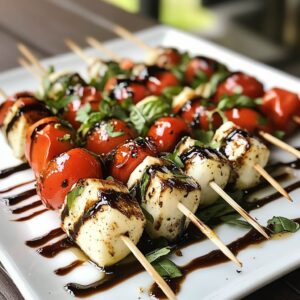
Arrange skewers standing upright in small shot glasses or clear plastic cups for dramatic presentation. This method showcases the beautiful layers while keeping ingredients fresh. Large white platters provide classic, elegant backgrounds that highlight vibrant colors. Wooden serving boards create rustic, farmhouse-style displays perfect for casual gatherings.
Create circular arrangements on round platters, placing skewers like spokes radiating from center. Line skewers in neat rows for modern, organized presentations. Add fresh basil sprigs between skewers for additional color and aroma.
Complementary Foods and Pairings
Caprese skewers pair beautifully with other Italian-inspired appetizers. Serve alongside crusty bread slices or focaccia for guests preferring heartier options. Include cured meats like prosciutto or salami for non-vegetarian guests. Offer marinated olives, roasted peppers, and artichoke hearts to create complete antipasto spreads.
Fresh vegetable crudités provide crisp contrasts to creamy mozzarella. Hummus and other dips add variety to appetizer tables. Sparkling water with citrus slices offers refreshing beverage options.
Portion Planning
Plan for two to three skewers per person when serving alongside other appetizers. Allow four to six skewers per guest if Caprese represents the primary or only appetizer. Standard recipes yield approximately 12 to 24 skewers depending on ingredient quantities. Double or triple recipes easily for larger gatherings.
Popular Variations and Creative Twists
Ingredient Substitutions
Replace cherry tomatoes with grape tomatoes for slightly different shape and texture. Yellow cherry tomatoes offer milder, less acidic flavor profiles suitable for sensitive stomachs. Heirloom tomato varieties add unique colors and flavors to traditional presentations.
Substitute marinated mozzarella balls for extra flavor without additional preparation. Vegan cheese alternatives or marinated tofu cubes create plant-based versions. Lactose-free cheese accommodates guests with dietary restrictions.
Flavor Enhancements
Drizzle herb-infused olive oils over finished skewers for aromatic complexity. Add sun-dried tomatoes between fresh tomatoes and mozzarella for concentrated flavor. Include roasted red bell peppers for sweet, smoky notes. Sprinkle toasted pine nuts or crushed walnuts over skewers for nutty crunch.
Season with flaky Maldon sea salt instead of regular salt for gourmet finishing touch. Add red pepper flakes for subtle heat. Brush mozzarella balls with pesto before assembling for intensified basil flavor.
Serving Style Variations
Transform skewers into Caprese crostini by placing ingredients on toasted baguette slices. Create Caprese sandwiches using mini ciabatta rolls layered with tomatoes, mozzarella, and basil. Serve ingredients over beds of fresh arugula or spinach greens for salad presentations.
Arrange components in clear mason jars for individual, portable servings. Thread ingredients onto longer bamboo skewers for substantial side dishes. Create deconstructed versions on small spoons or in tasting cups.
Seasonal Adaptations
Spring versions incorporate fresh asparagus spears or snap peas alongside traditional ingredients. Summer presentations feature peak-season heirloom tomatoes and garden-fresh basil. Fall adaptations include roasted butternut squash cubes or caramelized onions. Winter variations add sun-dried tomatoes or oven-roasted cherry tomatoes for concentrated flavors.
Storage and Make-Ahead Tips
Advance Preparation Timeline
Prepare balsamic glaze up to five days before serving and refrigerate in airtight containers. Wash and dry tomatoes one day ahead, storing them at room temperature for best flavor. Keep mozzarella balls in their original liquid until ready to assemble. Rinse basil leaves several hours early, wrapping them in damp paper towels and refrigerating.
Assembling in Advance
Complete skewer assembly up to three hours before serving time. Arrange finished skewers on serving platters and cover loosely with plastic wrap. Refrigerate assembled skewers until 30 minutes before serving. Remove from refrigeration before guests arrive to allow ingredients to reach room temperature.
Avoid assembling more than three hours ahead, as mozzarella begins drying out. Basil leaves may darken or wilt with extended refrigeration. Tomato juices can make skewers watery if assembled too far in advance.
Final Touches Before Serving
Add olive oil, salt, and pepper immediately before presenting skewers. Drizzle balsamic glaze at the last possible moment to prevent sogginess. This timing ensures optimal texture and prevents ingredients from becoming waterlogged.
Leftover Storage
Store leftover skewers in airtight containers in the refrigerator for up to 24 hours. Remove skewers and store ingredients separately for better quality retention. Leftover balsamic glaze keeps at room temperature for up to six months. Refrigerate unused fresh mozzarella in its original liquid for up to one week.
Common Mistakes to Avoid
Ingredient Quality Issues
Using underripe or overripe tomatoes compromises flavor and texture. Select firm, ripe cherry tomatoes at peak freshness. Avoid pre-shredded or low-moisture mozzarella, which lacks the creamy texture of fresh varieties. Choose authentic fresh mozzarella balls stored in water or brine.
Low-quality balsamic vinegar produces inferior glaze with harsh, acidic taste. Invest in moderately priced Aceto Balsamico di Modena for best results. Skip wilted or brown-spotted basil leaves, which add unpleasant flavors.
Preparation Errors
Failing to dry tomatoes and mozzarella completely creates watery, diluted presentations. Pat all ingredients thoroughly with paper towels before assembly. Skipping seasoning results in bland, disappointing flavors. Always add salt, pepper, and olive oil before serving.
Over-reducing balsamic glaze creates thick, sticky sauce that overwhelms delicate ingredients. Monitor reduction carefully and remove from heat at thin maple syrup consistency. Burning vinegar during reduction produces bitter, unpleasant flavors.
Assembly and Timing Problems
Threading too many ingredients onto single skewers makes them difficult to eat. Stick with simple arrangements featuring one mozzarella ball, one basil leaf, and one tomato. Over-drizzling with balsamic glaze creates messy, sloppy presentations. Apply glaze sparingly and offer extra on the side.
Assembling skewers too far in advance causes ingredients to deteriorate. Limit advance preparation to three hours maximum. Serving cold skewers straight from refrigerator mutes flavors. Allow 30 minutes at room temperature before serving.
Frequently Asked Questions
Can I make Caprese skewers the night before?
Assembling complete skewers the night before is not recommended, as mozzarella dries out and basil wilts. Instead, prepare balsamic glaze up to five days ahead and store refrigerated. Wash and prep ingredients the night before, storing them separately until assembly time. Complete skewer assembly no more than three hours before serving for optimal freshness.
What size mozzarella balls work best?
Ciliegine or cherry-sized mozzarella balls measuring approximately one inch in diameter provide ideal proportions. These bite-sized balls match cherry tomato dimensions perfectly. Bocconcini, slightly larger mozzarella balls, also work well depending on tomato size. Match mozzarella size to tomato size for balanced, attractive presentations.
How do I prevent basil from turning brown?
Keep basil leaves whole until ready to assemble skewers. Wash and dry basil gently, then wrap in barely damp paper towels and refrigerate. Avoid cutting or tearing basil until immediately before use. Assemble skewers close to serving time to maintain bright green color.
Can I use store-bought balsamic glaze?
Store-bought balsamic reduction offers convenient alternatives to homemade versions. Look for quality brands like Alessi or Trader Joe’s varieties. Check ingredient labels to ensure products contain real balsamic vinegar without artificial additives. Homemade glaze costs less and tastes fresher but requires additional preparation time.
Are Caprese skewers gluten-free?
Yes, traditional Caprese skewers with balsamic glaze contain no gluten ingredients. Fresh tomatoes, mozzarella, basil, olive oil, and balsamic vinegar are naturally gluten-free. Verify that balsamic glaze contains no additives if using store-bought versions. These skewers accommodate gluten-sensitive guests perfectly.
How long do assembled skewers stay fresh?
Assembled Caprese skewers remain fresh for up to three hours when refrigerated and covered. Beyond three hours, mozzarella begins drying and basil starts wilting. For best quality, assemble skewers one to two hours before serving. Allow skewers to reach room temperature 30 minutes before presenting to guests.
What other herbs can replace basil?
Fresh arugula leaves provide peppery alternatives to traditional basil. Mint offers surprising freshness that complements tomatoes and cheese. Oregano delivers stronger, more robust Italian flavors. Baby spinach provides mild green color without competing with other flavors.
Conclusion
Caprese skewers with balsamic glaze combine fresh tomatoes, creamy mozzarella, and aromatic basil into elegant, bite-sized appetizers perfect for any occasion. These simple yet sophisticated skewers require minimal preparation while delivering maximum visual impact and delicious flavor. The sweet-tart balsamic glaze adds the perfect finishing touch that elevates ordinary ingredients into extraordinary presentations.
Whether hosting casual gatherings or formal celebrations, these Mediterranean-inspired skewers provide healthy, crowd-pleasing options. Their low calorie count, high protein content, and impressive nutritional profile make them smart choices for health-conscious entertaining. With proper ingredient selection and careful timing, anyone can create restaurant-quality Caprese skewers with balsamic glaze that impress guests and satisfy appetites.
Print
Caprese Skewers with Balsamic Glaze
Description
Caprese Skewers with Balsamic Glaze
Ingredients
-
1 pint cherry or grape tomatoes
-
8 oz fresh mozzarella balls (bocconcini), drained
-
Fresh basil leaves
-
2–3 tbsp balsamic glaze (store-bought or homemade)
-
Salt and freshly ground black pepper, to taste
-
Toothpicks or small skewers
Optional for Homemade Glaze:
-
½ cup balsamic vinegar
-
1–2 tsp honey or brown sugar
Instructions
-
Make the Balsamic Glaze (if homemade):
-
In a small saucepan, combine balsamic vinegar and honey.
-
Simmer over medium heat until reduced by half and syrupy, about 10–15 minutes.
-
Let cool before drizzling.
-
-
Assemble the Skewers:
-
Thread a cherry tomato, a basil leaf (folded if large), and a mozzarella ball onto each skewer.
-
Repeat until all ingredients are used.
-
-
Season and Serve:
-
Arrange skewers on a platter.
-
Drizzle with balsamic glaze and season lightly with salt and pepper.
-
Optional: sprinkle with extra fresh basil or a touch of olive oil.
-