
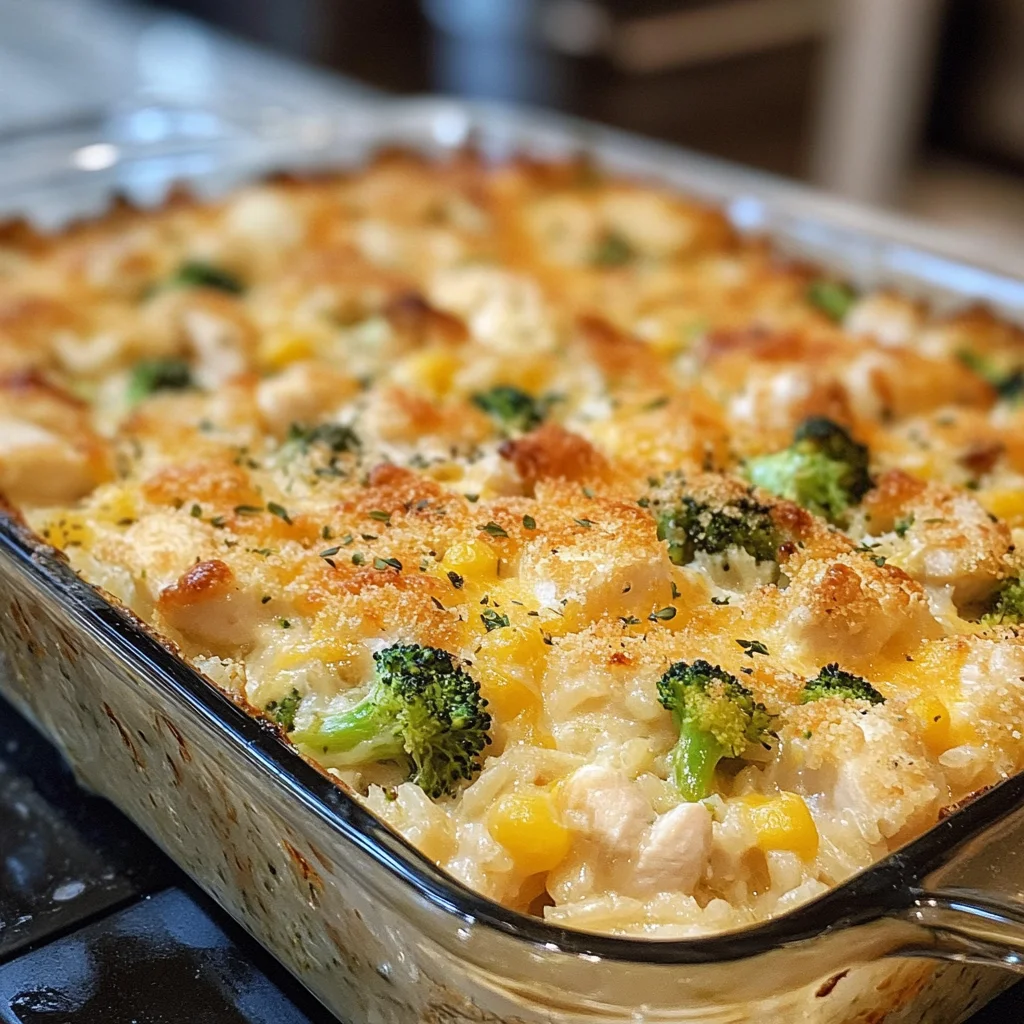
Cheesy Chicken and Broccoli Rice Casserole: The Ultimate Comfort Food Guide
Introduction
The Cheesy Chicken and Broccoli Rice Casserole stands as one of America’s most beloved comfort food dishes. This all-in-one meal combines tender chicken, nutritious broccoli florets, fluffy rice, and a rich cheese sauce into a satisfying dinner that feeds the whole family. Whether you need a quick weeknight solution or a reliable dish for meal prepping, this casserole delivers on flavor, convenience, and nutrition. The beauty of this recipe lies in its simplicity and versatility, making it perfect for both experienced cooks and kitchen beginners.
Families have cherished this classic combination for generations. The creamy texture, savory flavors, and hearty ingredients create a complete meal in one dish. Best of all, you can customize it to suit your preferences while keeping the preparation straightforward and stress-free.
What Makes This Casserole So Special
One-Dish Convenience
This casserole brings together protein, vegetables, and grains in a single baking dish. You save time on both cooking and cleanup. The streamlined approach means fewer pots and pans to wash, making it ideal for busy weeknights when you want a wholesome meal without extensive kitchen work.
Budget-Friendly Ingredients
The main components remain affordable and readily available year-round. Chicken, rice, broccoli, and cheese represent staple ingredients found in most grocery stores. You can stretch your food budget without sacrificing taste or quality.
Crowd-Pleasing Flavor Profile
The combination of creamy cheese sauce, savory chicken, and mild broccoli appeals to various palates. Even picky eaters often enjoy this dish because the cheese complements the vegetables perfectly. The casserole format allows flavors to meld together during baking, creating a harmonious taste experience.
Essential Ingredients Breakdown
Protein Component
The chicken serves as the primary protein source in this casserole. You can use boneless, skinless chicken breasts or chicken thighs depending on your preference. Chicken breasts provide leaner protein, while thighs offer more moisture and flavor. Rotisserie chicken works wonderfully as a time-saving option, allowing you to skip the cooking step entirely.
Vegetable Foundation
Fresh broccoli florets add color, texture, and essential nutrients to the dish. The broccoli maintains a slight crunch when cooked properly, providing textural contrast to the creamy sauce. You need approximately two to three cups of broccoli florets, cut into bite-sized pieces for even distribution.
Rice Base
Long-grain white rice creates the starchy foundation that absorbs the flavorful sauce. The rice should be partially or fully cooked before assembly, depending on your chosen method. Some recipes call for uncooked rice that cooks in the casserole with additional liquid. Brown rice can substitute for white rice if you prefer a whole-grain option.
Cheese Selection
Sharp cheddar cheese delivers the signature cheesy flavor that defines this casserole. You typically need two to three cups of shredded cheese, divided between the sauce and topping. Some variations incorporate cream cheese, Parmesan, or Boursin for added richness and complexity.
Sauce Components
The creamy sauce combines cream of chicken soup, milk, and sour cream. These ingredients create the velvety texture that binds everything together. You can make homemade condensed soup or use canned versions for convenience. Heavy cream serves as an alternative to milk for an extra-rich sauce.
Flavor Enhancers
Garlic, onions, salt, pepper, and Italian seasoning boost the overall taste profile. These aromatics and spices layer additional flavors into the dish. Paprika, thyme, and garlic powder represent other popular seasonings that complement the main ingredients.
Nutritional Benefits of the Key Components
High-Quality Protein from Chicken
Chicken breast delivers 31 grams of complete protein per 100-gram serving. This lean protein source contains all nine essential amino acids needed for muscle repair, growth, and maintenance. The protein increases muscle protein synthesis and promotes satiety by reducing hunger hormones.
The thermic effect of protein means your body burns calories during digestion. Chicken also provides B vitamins that support metabolic function. This makes it an excellent choice for those maintaining lean muscle mass or following fitness-focused eating plans.
Nutrient-Dense Broccoli
Broccoli packs impressive nutritional value into each serving. One cup provides 95% of your daily vitamin C needs, 100% of vitamin K, and significant amounts of folate and potassium. The cruciferous vegetable contains fiber for digestive health and antioxidant compounds like sulforaphane.
These nutrients support immune function, bone health, and blood sugar regulation. Broccoli’s fiber content aids digestion and provides prebiotic benefits. The vegetable boasts more protein than most other vegetables, making it a complementary addition to chicken.
Energy from Rice
Rice supplies carbohydrates that fuel your body’s energy needs. The grain provides B vitamins and serves as a neutral base that absorbs the casserole’s flavorful sauce. Brown rice offers additional fiber and minerals compared to white rice.
Calcium and Protein from Cheese
Cheese contributes calcium for bone health and additional protein to the meal. While higher in fat and calories, cheese provides vitamin A and phosphorus. Moderate portions add satisfying richness without excessive calories.
Balanced Macronutrients
A typical serving contains approximately 228-330 calories, depending on preparation methods and portions. The macronutrient breakdown includes protein for muscle maintenance, carbohydrates for energy, and fats for satiety. This balance creates a complete meal that satisfies hunger for hours.
Step-by-Step Preparation Guide
Prepping the Chicken
Start by cutting boneless, skinless chicken breasts into small cubes for faster cooking. Season the chicken pieces with salt, pepper, and any desired spices. Heat olive oil in a skillet over medium heat and cook the chicken until browned and cooked through, approximately five to seven minutes.
Alternatively, use pre-cooked rotisserie chicken to save time. Simply dice or shred the meat and add it directly to your casserole mixture. This method reduces active cooking time significantly while maintaining excellent flavor.
Cooking the Rice
Prepare one and a quarter to two cups of uncooked long-grain white rice according to package directions. Use chicken broth instead of water to infuse extra flavor into the grain. The rice should be tender but not mushy, as it will continue cooking in the oven.
Some methods call for uncooked rice added directly to the casserole with additional liquid. This approach requires careful liquid measurements to ensure the rice cooks properly. Follow recipe specifications for liquid ratios when using this method.
Preparing the Broccoli
Cut fresh broccoli into small, bite-sized florets for even distribution. You can use raw broccoli if baking the casserole for an extended period. For shorter baking times, blanch the broccoli in boiling water for two to three minutes.
Drain the blanched broccoli thoroughly to prevent excess moisture in your casserole. Pat the florets dry with paper towels if necessary. Properly prepared broccoli maintains a pleasant texture rather than becoming mushy.
Making the Cheese Sauce
In a medium saucepan, melt butter over medium-low heat. Add flour and whisk together to form a paste, cooking for two minutes while stirring continuously. This creates a roux that thickens the sauce.
Gradually add milk, whisking until smooth after each addition. Increase heat to medium-high and bring to a boil while whisking constantly. Let it boil for one minute, then remove from heat.
Stir in shredded cheddar cheese until melted and smooth. Season with salt and pepper to taste. Some recipes incorporate cream of chicken soup, sour cream, or cream cheese for additional richness.
Assembling the Casserole
Preheat your oven to 350-375°F, depending on your recipe specifications. Grease a 9×13-inch baking dish with butter or cooking spray. In a large bowl, combine the cooked chicken, prepared rice, blanched broccoli, and cheese sauce.
Mix until all ingredients are evenly coated with sauce. Transfer the mixture to your prepared baking dish and spread it evenly. Top with additional shredded cheese for a golden, bubbly finish.
Baking Instructions
Cover the casserole with aluminum foil and bake for 20-30 minutes. The foil prevents the top from browning too quickly while the interior heats through. Remove the foil during the last 10 minutes of baking to allow the cheese topping to brown.
The casserole is ready when it’s hot and bubbling throughout, with a lightly golden cheese top. Let it rest for five to ten minutes before serving. This resting period allows the sauce to thicken slightly and makes serving easier.
Cooking Techniques for Perfect Results
Creating a Smooth Cheese Sauce
Coating your cheese with cornstarch before melting prevents clumping and creates a smoother sauce. Whisk continuously while adding liquids to avoid lumps. Use low to medium heat to prevent the cheese from separating or becoming grainy.
Evaporated milk produces a creamier texture than regular milk. Add cheese gradually while stirring constantly for the best consistency. Remove the pan from heat before adding cheese to prevent overheating.
Preventing Dry Casserole
Use adequate liquid to keep the casserole moist throughout baking. Covering with foil during the initial baking period traps steam and prevents moisture loss. Don’t overbake, as this dries out the ingredients and toughens the chicken.
Adding a bit of extra chicken broth or cream to the mixture ensures sufficient moisture. If using pre-cooked ingredients, reduce baking time to prevent drying. Check the casserole periodically and add liquid if it appears dry.
Achieving Even Cooking
Cut all ingredients into uniform, bite-sized pieces for consistent cooking. Spread the mixture evenly in the baking dish rather than mounding it in the center. Stir the casserole halfway through baking if desired to redistribute heat.
Use an oven thermometer to ensure accurate temperature. Position the casserole on the center rack for even heat distribution. Rotate the dish 180 degrees midway through baking if your oven has hot spots.
Browning the Cheese Topping
Remove the foil during the final 10 minutes of baking to brown the cheese. For extra browning, place the casserole under the broiler for one to two minutes at the end. Watch carefully to prevent burning.
Adding a buttery cracker topping creates additional texture and golden color. Mix crushed Ritz crackers with melted butter and sprinkle over the casserole before the final baking stage.
Variations and Customization Options
Vegetable Additions
Incorporate other vegetables like carrots, peas, or bell peppers for added nutrition and color. Mushrooms complement the creamy sauce beautifully. Cauliflower can substitute for or supplement the broccoli.
Dice vegetables into small pieces so they cook evenly with the other ingredients. Adjust liquid amounts if adding high-moisture vegetables. Frozen mixed vegetables work as a convenient option.
Protein Alternatives
Turkey breast can replace chicken for a similar lean protein option. Leftover holiday turkey transforms into an excellent casserole filling. Cooked ham adds a different flavor profile while maintaining the dish’s heartiness.
Tofu or chickpeas provide plant-based protein alternatives. Season these ingredients well to match the casserole’s flavor profile. Adjust cooking times based on your protein choice.
Cheese Combinations
Mix different cheese varieties for complex flavor. Combine sharp cheddar with Monterey Jack, Gruyere, or Swiss cheese. Boursin cheese adds garlic and herb notes that elevate the dish.
Parmesan cheese sprinkled on top creates a savory, crispy crust. Cream cheese incorporated into the sauce increases richness and creaminess. Use freshly shredded cheese rather than pre-shredded for better melting.
Rice Substitutions
Quinoa offers a protein-rich alternative to traditional rice. Wild rice provides nutty flavor and chewy texture. Cauliflower rice creates a lower-carb version of the casserole.
Cook grain substitutes according to package directions before adding to the casserole. Adjust liquid amounts to account for different absorption rates. Brown rice requires slightly more liquid and longer cooking time than white rice.
Spice and Seasoning Variations
Italian seasoning, thyme, and paprika enhance the basic flavor profile. Garlic powder and onion powder add aromatic depth without additional prep work.
Cajun seasoning transforms the casserole into a spicy Southern variation. Herbs like parsley, dill, or chives provide fresh, bright notes. Adjust seasonings to match your family’s preferences.
Storage and Meal Prep Tips
Refrigerator Storage
Wait until your casserole has cooled completely before storing it in the fridge. Transfer portions to airtight containers or cover the baking dish tightly with plastic wrap or aluminum foil. Stored casserole stays fresh for three to four days in the refrigerator.
Keep it in the coldest part of your fridge, not in the door where temperatures fluctuate. Label containers with the date you cooked the casserole so you can track freshness. Use within the recommended timeframe to ensure food safety.
Freezing for Long-Term Storage
Freezing works great for meal prep or large batches. Divide the casserole into individual portions before freezing so you only thaw what you need. Use freezer-safe containers or heavy-duty freezer bags.
Press out extra air from bags and flatten them to save freezer space. Frozen casserole tastes best within one to two months but stays safe for up to three months. Thaw it in the fridge overnight before reheating.
Reheating Instructions
Reheat refrigerated casserole in a 350°F oven for 20-25 minutes until heated through. Cover with foil to prevent the top from drying out. You can also microwave individual portions for two to three minutes, stirring halfway through.
Add a splash of milk or chicken broth when reheating to restore moisture. Frozen casserole can be reheated directly from frozen, though it requires longer cooking time. Ensure the internal temperature reaches 165°F for food safety.
Make-Ahead Strategies
Assemble the casserole completely, cover tightly, and refrigerate for up to 24 hours before baking. This allows you to prep dinner in advance during less busy times. Add 10-15 minutes to the baking time if starting from cold.
You can also prepare components separately and assemble just before baking. Cook rice and chicken ahead, then combine with fresh sauce and vegetables when ready to bake. This approach maintains better texture in the final dish.
Common Mistakes to Avoid
Overcooking the Chicken
Dry, tough chicken ruins an otherwise excellent casserole. Cook chicken just until it reaches 165°F internally, as it continues cooking in the oven. Using chicken thighs instead of breasts helps prevent dryness.
Rotisserie chicken eliminates the risk of overcooking during the initial preparation stage. Monitor baking time carefully to avoid overdoing the assembled casserole.
Using Too Much or Too Little Liquid
Incorrect liquid ratios lead to either soupy or dry casseroles. Follow recipe measurements carefully, especially when using uncooked rice. If using pre-cooked rice, reduce liquid amounts since the rice has already absorbed moisture.
Different rice varieties absorb different amounts of liquid. Adjust accordingly if substituting brown rice or other grains. Check the casserole midway through baking and add liquid if needed.
Skipping the Resting Period
Cutting into the casserole immediately after removing it from the oven causes the sauce to run. Allow five to ten minutes of resting time for the sauce to thicken and set. This makes serving cleaner and easier.
The resting period also allows extremely hot food to cool slightly, preventing burns. Cover the casserole loosely with foil during resting to keep it warm.
Not Seasoning Adequately
Bland casserole disappoints even when using quality ingredients. Season each component as you prepare it rather than relying solely on the cheese for flavor. Taste and adjust seasonings before baking.
Salt enhances all the other flavors in the dish. Don’t be afraid to use herbs, spices, and aromatics to build complex taste. Remember that flavors meld during baking, so slightly over-season rather than under-season.
Using Pre-Shredded Cheese
Pre-shredded cheese contains anti-caking agents that prevent smooth melting. Shred cheese from a block for the creamiest sauce and best texture. The extra effort pays off in superior results.
Freshly shredded cheese also melts more evenly and creates a better consistency. Keep blocks of cheese in your freezer for quick shredding when needed.
Serving Suggestions and Pairings
Side Dish Options
A crisp green salad with vinaigrette balances the casserole’s richness. Roasted vegetables like asparagus or green beans add color and nutrients to the plate. Garlic bread provides a complementary carbohydrate option.
Fresh fruit salad offers a refreshing contrast to the savory casserole. Steamed green beans seasoned with lemon juice complement the dish without overwhelming it. Simple sides work best since the casserole itself is quite hearty.
Garnish Ideas
Chopped fresh parsley adds bright color and herbal notes. Green onions or chives provide mild onion flavor and visual appeal. A sprinkle of paprika on top adds warmth and attractive color.
Extra shredded cheese melted on individual servings satisfies cheese lovers. Cracked black pepper or red pepper flakes add a finishing touch of heat. Keep garnishes simple to let the casserole shine.
Portion Sizes
A standard serving ranges from one to one and a half cups, depending on appetite. The casserole is quite filling due to the combination of protein, vegetables, and rice. Plan for approximately six to eight servings from a 9×13-inch dish.
For meal prep, divide into equal portions in individual containers. This simplifies reheating and helps with portion control. Label each container with reheating instructions for convenience.
Frequently Asked Questions
Can I use frozen broccoli instead of fresh?
Yes, frozen broccoli works well in this casserole. Thaw and drain it thoroughly before adding to prevent excess moisture. Pat the broccoli dry with paper towels to remove as much water as possible. Frozen broccoli may be slightly softer in texture than fresh but still delivers good results.
What’s the best way to prevent a watery casserole?
Ensure your broccoli is well-drained if using frozen. Don’t add too much liquid to the mixture, and follow recipe measurements carefully. Pre-cooking rice fully before assembly helps control moisture levels. Cover the casserole during baking to trap steam, then uncover to allow excess moisture to evaporate.
Can I make this casserole ahead of time?
Absolutely, this casserole is perfect for make-ahead meals. Assemble it completely, cover tightly with foil, and refrigerate for up to 24 hours before baking. Add 10-15 minutes to the baking time if starting from cold. You can also freeze the unbaked casserole for up to two months.
How do I know when the casserole is done?
The casserole is ready when it’s hot and bubbling throughout, with a golden cheese topping. Insert a knife in the center to check that it’s steaming hot all the way through. The internal temperature should reach 165°F for food safety. The edges will bubble, and the cheese on top should be melted and lightly browned.
Can I use brown rice instead of white rice?
Brown rice can substitute for white rice, though it requires adjustments. Cook brown rice fully before adding to the casserole, as it takes longer to cook than white rice. Brown rice absorbs more liquid, so you may need to add extra broth or cream. The nutty flavor and chewier texture of brown rice change the dish slightly but still taste delicious.
What can I substitute for cream of chicken soup?
Make a homemade white sauce with butter, flour, and chicken broth as a substitute. Cream of mushroom soup provides a similar creamy base with different flavor notes. You can also use a combination of sour cream, milk, and cream cheese for richness.
How long does leftover casserole last?
Stored properly in airtight containers, leftover casserole lasts three to four days in the refrigerator. Freeze portions for up to two months for longer storage. Always reheat to 165°F before eating. Discard any casserole that develops an off smell or appearance.
Conclusion
The Cheesy Chicken and Broccoli Rice Casserole delivers comfort, nutrition, and convenience in every bite. This versatile dish combines protein-rich chicken, nutrient-dense broccoli, satisfying rice, and creamy cheese sauce into one complete meal. Whether you’re feeding a busy family, meal prepping for the week, or looking for a reliable potluck contribution, this casserole meets all your needs.
The preparation is straightforward, the ingredients are budget-friendly, and the results consistently please both adults and children. By following the techniques and tips outlined in this guide, you’ll create a perfectly cooked, flavorful casserole every time. Customize it with your favorite vegetables, cheeses, or seasonings to make it your own signature dish.
Ready to experience this delicious comfort food for yourself? Gather your ingredients, preheat your oven, and prepare to enjoy one of the most satisfying one-dish meals you’ll ever make. Your family will request this Cheesy Chicken and Broccoli Rice Casserole again and again.
Print
Cheesy Chicken and Broccoli Rice Casserole
Description
Cheesy Chicken and Broccoli Rice Casserole
Ingredients
-
2 cups cooked chicken, shredded or diced
-
2 cups cooked white rice (or brown rice)
-
2 cups broccoli florets, steamed
-
1 cup cheddar cheese, shredded
-
½ cup mozzarella cheese, shredded
-
1 can (10.5 oz) cream of chicken soup
-
½ cup sour cream
-
½ cup milk
-
1 small onion, diced
-
2 cloves garlic, minced
-
1 tsp garlic powder
-
½ tsp onion powder
-
½ tsp salt (adjust to taste)
-
¼ tsp black pepper
-
¼ cup grated Parmesan cheese (for topping)
-
1 tbsp butter, melted
Instructions
1. Preheat Oven
Preheat oven to 375°F (190°C) and lightly grease a 9×13-inch casserole dish.
2. Prepare the Filling
-
In a large bowl, combine:
-
cooked chicken
-
cooked rice
-
steamed broccoli
-
cheddar & mozzarella
-
cream of chicken soup
-
sour cream
-
milk
-
onion, garlic
-
garlic powder, onion powder, salt, and pepper
-
-
Stir until well combined.
3. Assemble the Casserole
-
Pour mixture into the prepared casserole dish.
-
Mix slightly to level it out.
-
Sprinkle Parmesan on top and drizzle melted butter over it.
4. Bake
Bake 25–30 minutes, or until bubbly and golden on top.
Optional: broil for 2–3 minutes at the end for extra crispiness.
5. Serve
Let cool 5 minutes before serving.
Perfect for a cozy weeknight dinner!