
Mastering Classic Eggplant Parmesan: An Authentic Journey from Italy to Your Table
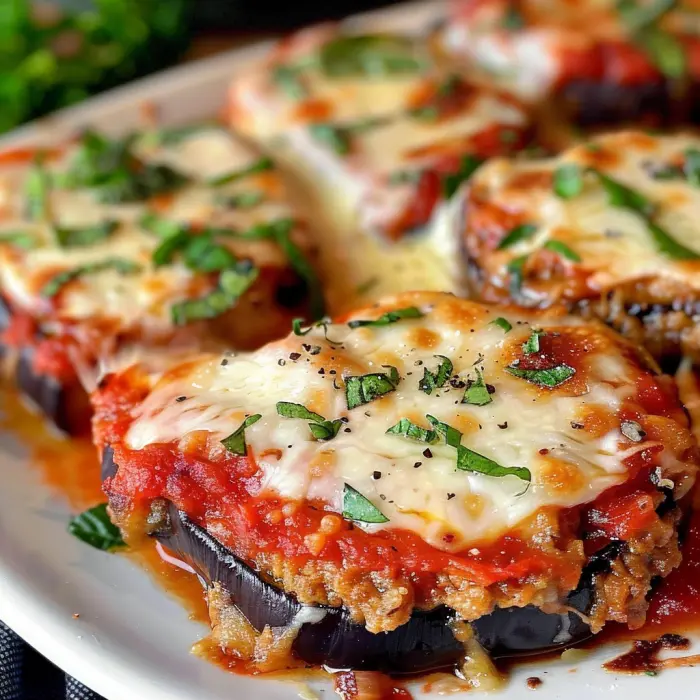
Ah, Classic Eggplant Parmesan! Just the name conjures up images of bubbling cheese, tangy tomato sauce, and crispy, golden-brown eggplant. It’s the ultimate hug in a baking dish, a centerpiece for noisy family dinners, and a testament to the magic of simple ingredients done right. This isn’t just another recipe; it’s a journey into the heart of Italian-American comfort food.
Buckle up, because we’re about to dive deep. We’ll explore the dish’s surprisingly debated origins, uncover the science behind a perfect slice, and guide you, step-by-step, to creating an unforgettable Parmigiana di Melanzane right in your own kitchen. Forget soggy, disappointing versions—we’re chasing crispy, cheesy perfection.
More Than Just a Meal: Why Eggplant Parmesan Captivates Us
Let’s be honest, what’s not to love? Seriously, the allure of a well-made Eggplant Parmesan is downright irresistible. Firstly, there’s the textural symphony: the satisfying crunch of the breadcrumb coating giving way to the silky, tender flesh of the eggplant. Then, of course, you hit the heart of the matter—the rich, garlicky tomato sauce and those glorious, stretchy layers of melted mozzarella and salty, nutty Parmigiano-Reggiano. It’s a rollercoaster for your taste buds!
Furthermore, this dish transcends its ingredients. It’s not merely food; it’s a feeling. Often, it represents Sunday dinners with the family, the star of the potluck table, or the ultimate vegetarian main course that satisfies even the most devoted carnivores. Ultimately, it’s a cornerstone of Italian-American cuisine, yet its roots dig deep into the sun-baked soil of Southern Italy. This beautiful journey from the old country to the new world is a story worth savoring as much as the dish itself.
A Name with a Story: The Origins of Parmigiana di Melanzane
So, where did this masterpiece come from? Well, the name itself is a bit of a historical puzzle. Many assume “Parmesan” refers directly to the city of Parma, famous for its cheese. However, the plot thickens! Food historians often suggest the term likely comes from the Sicilian word “Parmiciana,” which describes the overlapping slats of a wooden shutter—a perfect analogy for the way we layer the eggplant slices in the baking dish.
Naturally, this sparks a friendly but fierce regional debate. Campania, Sicily, and Parma all have claims to the dish’s origin. Consequently, the true story is probably a tapestry woven through trade routes and regional kitchens. For a deeper dive into this culinary mystery, you can explore the fascinating and debated history of Parmigiana di Melanzane.
From Southern Italy to the World: A Dish of Migration and Adaptation
As Italian immigrants brought their recipes to America, the dish evolved beautifully. Traditionally, the Italian version focuses on the eggplant as the undisputed star, with cheese playing a supporting role. Meanwhile, the Italian-American interpretation, while honoring its roots, often embraces more abundant, stretchy cheese and a heartier presence. Honestly, both versions are glorious in their own right! This adaptation is a classic tale of immigration, using available ingredients to recreate a taste of home.
The Pillars of a Perfect Classic Eggplant Parmesan
Building a magnificent Eggplant Parmesan doesn’t require magic; it requires respect for a few non-negotiable principles. Think of these as the four pillars holding up your cheesy, saucy temple.
The Eggplant: Choosing and Preparing Your Main Star
First and foremost, you must choose your fighter. Look for firm, glossy globe eggplants that feel heavy for their size. The preparation, however, is where many cooks skip a crucial step: salting. This process, called “degorging,” is your absolute secret weapon against a watery, bitter final product.
The Sauce: Simplicity is Key
Secondly, let’s talk sauce. You might be tempted to go complex, but resist! The best sauce for this dish is a simple, quick-cooked marinara. Why? Because it provides a bright, acidic counterpoint to the rich, fried eggplant and fatty cheeses without overwhelming them. Canned San Marzano tomatoes are your best friend here.
The Cheese: A Harmony of Melty and Salty
Thirdly, cheese is not the place to cut corners. You need a team players. Fresh, low-moisture mozzarella delivers that iconic, irresistible stretch. For the salty, umami punch, nothing beats freshly grated Parmigiano-Reggiano from the official Consorzio del Formaggio Parmigiano-Reggiano. Some families also love a layer of creamy ricotta for textural contrast.
The Technique: Layering for Perfection
Finally, the architecture matters. How you stack your components directly affects how everything bakes and holds together. A proper assembly ensures every bite has a perfect balance of crispy eggplant, sauce, and cheese. It’s the difference between a sloppy mess and a slice you can proudly lift with a spatula.
Selecting Your Ingredients for Authentic Flavor
You can’t build a great house with weak bricks. Similarly, the quality of your ingredients will make or break your Classic Eggplant Parmesan. This is where you lay the foundation for flavor.
The Eggplant: Globe vs. Italian Varieties
For the best results, stick with the common globe eggplant. They are meaty, have fewer seeds, and slice into perfect rounds for layering. When selecting them, press the skin gently; it should spring back without leaving an indent. Avoid any that look wrinkled or dull—they’re past their prime. Remember, salting is non-negotiable for the best texture!
The Holy Trinity of Cheeses
This is your dream team. For the melt, use low-moisture mozzarella (either blocks you shred yourself or pre-shredded for convenience). Pre-shredded cheese often has anti-caking agents that can affect meltiness slightly, but it’s a decent time-saver. For the flavor, invest in a wedge of real Parmigiano-Reggiano and grate it yourself. The pre-grated stuff in tubs simply cannot compare in flavor or meltability. Finally, for extra creaminess, consider a good-quality ricotta cheese, perhaps mixed with an egg and fresh herbs to make it spreadable.
Crafting the Perfect Simple Tomato Sauce
Don’t overthink it! A great sauce can be made in the time it takes to salt your eggplant. Sauté a few cloves of garlic in the importance of a high-quality extra virgin olive oil until fragrant (don’t let it brown!). Then, add a large can of whole San Marzano tomatoes, crushing them by hand as they go into the pot. Season with salt, a pinch of sugar to balance the acidity, and a few fresh basil leaves. Let it simmer for 20-30 minutes until slightly thickened. That’s it! You’ve just made a sauce that beats any jar.
The Definitive Step-by-Step Recipe for Classic Eggplant Parmesan
Ready to get your hands dirty? This detailed guide will walk you through each critical stage. Patience here is rewarded with a dish that is absolutely legendary.
Prep Time: 1 hour 30 minutes | Cook Time: 45 minutes | Total Time: 2 hours 15 minutes (plus resting time) | Yields: 6-8 servings
Equipment You’ll Need
-
Large baking sheets
-
Wire cooling racks
-
Paper towels or clean kitchen towels
-
Three shallow bowls (for the breading station)
-
A large skillet for frying
-
9×13 inch baking dish
Ingredients List
For the Eggplant:
-
2 large globe eggplants (about 2.5-3 lbs total), sliced into 1/2-inch rounds
-
1 tablespoon coarse kosher salt
-
1 cup all-purpose flour
-
4 large eggs, beaten
-
2 cups fine Italian-style breadcrumbs (or Panko for extra crunch)
-
1 cup grated Parmigiano-Reggiano cheese, divided
-
1 teaspoon dried oregano
-
Black pepper to taste
-
Avocado or vegetable oil for frying (high smoke point is key)
For the Sauce:
-
3 tablespoons olive oil
-
4 garlic cloves, minced
-
1 (28-oz) can whole San Marzano tomatoes
-
1/4 cup fresh basil, chopped, plus more for garnish
-
1 teaspoon salt
-
1/2 teaspoon black pepper
-
Pinch of red pepper flakes (optional)
For Assembly:
-
1 lb low-moisture mozzarella cheese, shredded
-
1/2 cup grated Parmigiano-Reggiano cheese
-
1 cup whole milk ricotta cheese (optional)
-
1 extra egg (if using ricotta)
Step 1: Preparing the Eggplant – To Salt or Not to Salt?
This is the most crucial step for non-watery, crispy eggplant. Lay the eggplant slices on a wire rack set over a baking sheet. Sprinkle both sides generously with kosher salt. Let them sit for at least 45 minutes, or up to 1.5 hours. You’ll see beads of moisture (bitter liquid) drawn to the surface. Afterwards, thoroughly rinse the slices under cold water and pat them completely dry with kitchen towels. This step is non-negotiable for texture!
Step 2: Creating the Crispy Breading Station
Set up your three bowls in an assembly line. In the first, place the flour. In the second, the beaten eggs. In the third, combine the breadcrumbs, 1/2 cup of the Parmigiano-Reggiano, dried oregano, and black pepper. Now, dredge each dried eggplant slice in flour (shake off excess), dip in egg (let excess drip off), and then press firmly into the breadcrumb mixture to coat. Place the breaded slices back on the wire rack. This allows the coating to set and prevents a gummy layer.
Step 3: Frying to Golden-Brown Perfection
Pour oil into your skillet to a depth of about 1/4 inch and heat over medium-high heat. To test if it’s ready, flick a breadcrumb in; it should sizzle immediately. Carefully add a few eggplant slices in a single layer—do not crowd the pan! Fry for 2-3 minutes per side until deeply golden brown. Transfer them back to the wire rack to drain. This is far better than paper towels, which can make the bottom steam and get soggy. Repeat in batches, adding more oil as needed.
Step 4: Assembling the Layers
Preheat your oven to 375°F (190°C). Spread a thin layer of your tomato sauce on the bottom of the 9×13 inch baking dish. This prevents sticking. Now, create your first layer: slightly overlap the fried eggplant slices to cover the bottom. Spoon more sauce over the eggplant (don’t drown it!), then sprinkle a third of the mozzarella and a third of the remaining Parmigiano. If using, dollop spoonfuls of the ricotta mixture (ricotta mixed with one egg) over the cheese. Repeat this process two more times, ending with a final layer of cheese.
Step 5: Baking, Resting, and Serving
Cover the dish loosely with foil and bake for 25 minutes. Then, remove the foil and bake for another 15-20 minutes, until the top is golden and the sauce is bubbling around the edges. Now, here is the hardest part: RESTING. You must let the Eggplant Parmesan sit for at least 20 minutes before cutting into it. This allows the layers to set firmly, ensuring you get a perfect, clean slice instead of a sloppy mess. Garnish with fresh basil ribbons before serving.
Delicious Variations on a Classic
The basic recipe is a masterpiece, but don’t be afraid to play!
Lighter Baked Eggplant Parmesan
For a healthier twist, you can bake the breaded eggplant instead of frying. Arrange the breaded slices on oiled baking sheets and bake at 425°F (220°C) for 20-25 minutes, flipping halfway, until golden and crispy. Then assemble and bake as directed.
Gluten-Free and Vegan Adaptations
Thankfully, this dish is easy to adapt. Use gluten-free breadcrumbs and flour for a celiac-friendly version. For a vegan eggplant parmesan, use a flax egg, dairy-free cheeses, and a vegan Parmesan alternative. The salting step remains just as important.
Adding a Personal Twist
Feel free to get creative! Add a layer of sautéed mushrooms, spinach, or even thin slices of zucchini. Some traditions, particularly in parts of Southern Italy, include sliced hard-boiled eggs or mortadella within the layers.
How to Serve and What to Pair It With
This hearty dish is a meal unto itself, but a few simple sides make it spectacular. Serve it alongside a light, crisp green salad with a sharp vinaigrette to cut through the richness. A slice of crusty garlic bread is also essential for scooping up every last bit of sauce. For a true feast, serve it over a bed of light pasta like spaghetti or linguine.
Storing and Reheating for Later Enjoyment
Leftovers? They might be even better the next day! Let the baked dish cool completely, then store it covered in the refrigerator for up to 4 days. To freeze, wrap individual portions tightly in plastic wrap and foil and freeze for up to 3 months.
Reheating Tip: Always reheat in the oven (350°F/175°C) until warmed through. This will preserve the crispy texture. The microwave will turn your masterpiece into a soft, soggy disappointment.
Frequently Asked Questions (FAQs)
Do you really have to salt eggplant before making eggplant parmesan?
While modern eggplant varieties are less bitter, salting is crucial primarily for removing excess water. This step ensures your fried eggplant gets crispy and your final baked dish isn’t watery. Don’t skip it!
Why is my eggplant parmesan watery?
The usual suspects are: 1) Not salting and drying the eggplant properly, 2) Using a sauce that is too thin or watery, or 3) Using fresh mozzarella that hasn’t been drained well. Following the steps above will solve all these issues.
Can I make eggplant parmesan ahead of time?
Absolutely! You can assemble the entire dish a day in advance. Cover it tightly and keep it in the refrigerator. When you’re ready, bake it straight from the fridge, adding a few extra minutes to the baking time since it will be cold.
What’s the difference between Eggplant Parmesan and Parmigiana di Melanzane?
“Parmigiana di Melanzane” is the original Italian name. The style often emphasizes the eggplant itself with a lighter touch on the cheese. “Eggplant Parmesan” is the Italian-American evolution, which is typically cheesier and heartier. Both are delicious!
Print
Classic Eggplant Parmesan
Description
Classic Eggplant Parmesan
Ingredients
For the eggplant:
-
2 large eggplants, sliced into ¼-inch rounds
-
1 tbsp salt (for drawing out moisture)
-
2 cups Italian-style breadcrumbs
-
1 cup grated Parmesan cheese (divided)
-
1 tsp dried oregano
-
½ tsp garlic powder
-
3 large eggs, beaten
-
1 cup all-purpose flour
-
Olive oil, for frying
For assembly:
-
3 cups marinara sauce (homemade or store-bought)
-
3 cups shredded mozzarella cheese
-
½ cup grated Parmesan cheese
-
¼ cup fresh basil leaves (optional)
Instructions
-
Prep the eggplant:
-
Place sliced eggplant on paper towels and sprinkle with salt.
-
Let sit for 30 minutes to draw out bitterness and excess water. Pat dry.
-
-
Bread the eggplant:
-
Set up three bowls: flour, beaten eggs, and breadcrumbs mixed with ½ cup Parmesan, oregano, and garlic powder.
-
Dredge eggplant slices in flour, dip in egg, then coat in breadcrumb mixture.
-
-
Fry the eggplant:
-
Heat olive oil in a skillet over medium-high.
-
Fry eggplant slices until golden brown on both sides. Drain on paper towels.
-
-
Assemble the casserole:
-
Preheat oven to 375°F (190°C).
-
In a 9×13-inch baking dish, spread a thin layer of marinara.
-
Layer fried eggplant slices, marinara, mozzarella, and Parmesan. Repeat layers.
-
Finish with marinara, mozzarella, and Parmesan on top.
-
-
Bake:
-
Cover with foil and bake 25 minutes.
-
Remove foil and bake another 15–20 minutes until bubbly and golden.
-
Let rest 10 minutes before serving. Garnish with basil.
-