
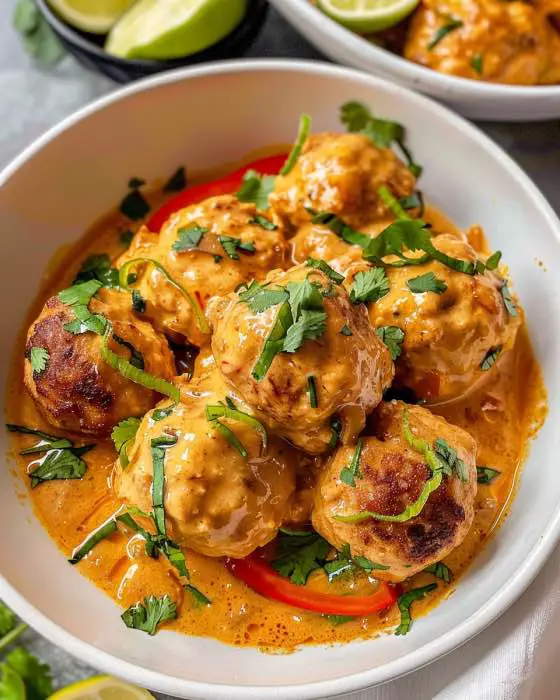
Coconut Curry Meatballs: A Flavorful Journey into Aromatic Comfort Food
Introduction
Coconut Curry Meatballs combine the best of two culinary worlds. They bring together tender, juicy meatballs with a rich coconut curry sauce that’s bursting with flavor. This dish transforms ordinary meatballs into an extraordinary meal that’s both comforting and exotic.
Furthermore, these meatballs are incredibly versatile and family-friendly. The coconut milk creates a creamy base that balances the warm curry spices perfectly. Meanwhile, the meatballs themselves remain moist and flavorful throughout cooking. Whether you’re looking for a weeknight dinner or something special for guests, this recipe delivers exceptional results.
Additionally, this dish comes together faster than you might expect. The preparation takes minimal effort, yet the flavors taste like you’ve spent hours in the kitchen. As a result, it’s become a favorite for busy home cooks everywhere.
What Are Coconut Curry Meatballs?
Coconut Curry Meatballs feature seasoned ground meat formed into balls and simmered in a creamy coconut curry sauce. The dish originated from fusion cuisine, blending Asian and European cooking traditions. Consequently, it offers a unique flavor profile that appeals to diverse palates.
The meatballs typically use ground beef, chicken, turkey, or pork. They’re seasoned with complementary spices that enhance the curry sauce. Moreover, the coconut milk provides richness without heaviness. This creates a balanced dish that’s satisfying yet not overwhelming.
Thai and Indian cuisines heavily influence this recipe. However, it’s been adapted to suit Western preferences and ingredients. As a result, it’s accessible for home cooks everywhere while maintaining authentic flavors.
Essential Ingredients for Perfect Meatballs
Ground Meat Selection
The foundation of great Coconut Curry Meatballs starts with quality ground meat. Ground beef (80/20 blend) offers excellent flavor and moisture. Alternatively, ground chicken provides a lighter option that absorbs the curry flavors beautifully.
Ground turkey works wonderfully for health-conscious cooks. It’s lean yet remains tender when prepared correctly. Meanwhile, ground pork adds richness and a slightly sweet undertone that complements coconut milk perfectly.
Binding Agents
Breadcrumbs help hold the meatballs together and add texture. Panko breadcrumbs create lighter, fluffier meatballs. Regular breadcrumbs work equally well for denser texture.
Eggs serve as the primary binder in the mixture. They ensure the meatballs maintain their shape during cooking. Additionally, they add moisture and richness to the final product.
Aromatics and Seasonings
Fresh garlic and ginger form the aromatic base. They provide essential flavors that complement the curry spices. Mincing them finely ensures even distribution throughout the meatballs.
Onions add sweetness and depth to the meat mixture. Finely diced or grated onions work best. They release moisture during cooking, keeping the meatballs tender.
Salt and pepper are fundamental seasonings. They enhance all other flavors in the dish. Therefore, proper seasoning at this stage is crucial for success.
The Coconut Curry Sauce Components
Coconut Milk Base
Full-fat coconut milk creates the signature creamy texture. It provides richness and balances the spices perfectly. Consequently, the sauce becomes luxuriously smooth and coating.
Light coconut milk can be substituted for fewer calories. However, the sauce will be thinner and less rich. Curry Paste and Powder
Red curry paste delivers bold, complex flavors instantly. It contains lemongrass, galangal, and chili peppers. Meanwhile, yellow curry paste offers milder, earthier notes with turmeric prominence.
Curry powder can supplement or replace curry paste. It adds warmth without intense heat. Moreover, it’s more accessible in most grocery stores.
Supporting Ingredients
Coconut sugar or brown sugar balances the spice. A small amount enhances the natural sweetness of coconut milk. Subsequently, it rounds out the flavor profile beautifully.
Fish sauce adds umami depth to the curry sauce. Just a tablespoon transforms the entire dish. It’s available at most supermarkets and Asian grocery stores.
Lime juice brightens the sauce and cuts through richness. Fresh lime juice works better than bottled versions. Additionally, it adds a refreshing citrus note that elevates the dish.
Step-by-Step Preparation Guide
Mise en Place
Begin by gathering all ingredients and measuring them out. This French culinary technique ensures smooth cooking. Moreover, it prevents scrambling for ingredients mid-recipe.
Chop all vegetables and aromatics before starting. Mince garlic and ginger finely for even distribution. Similarly, dice onions to appropriate sizes for their intended use.
Set up your workspace with necessary equipment. You’ll need mixing bowls, measuring spoons, and cooking utensils. Additionally, prepare baking sheets or skillets for cooking the meatballs.
Making the Perfect Meatballs
Mixing the Meat
Place ground meat in a large mixing bowl. Add breadcrumbs, eggs, and aromatics to the bowl. Furthermore, include your chosen seasonings and spices.
Mix the ingredients gently but thoroughly. Overmixing makes meatballs tough and dense. Therefore, stop as soon as everything is evenly combined.
Use your hands for best results. They provide better control than utensils. Additionally, you can feel the texture and consistency more accurately.
Forming Uniform Meatballs
Scoop the meat mixture using a cookie scoop or spoon. Aim for consistent sizes to ensure even cooking. Typically, 1.5 to 2-inch diameter works perfectly.
Roll each portion between your palms gently. Create smooth, round shapes without compacting too much. Consequently, the meatballs will be tender after cooking.
Place formed meatballs on a prepared baking sheet. Leave space between them to prevent sticking. Cover and refrigerate for 30 minutes to help them hold shape.
Pre-Cooking Options
Baking the meatballs before adding sauce reduces cooking time. Preheat your oven to 400°F (200°C). Bake for 15-18 minutes until lightly browned.
Pan-frying creates a delicious crust on the meatballs. Heat oil in a skillet over medium-high heat. Brown the meatballs on all sides, about 6-8 minutes total.
Both methods work beautifully for Coconut Curry Meatballs. Choose based on your preference and available time. However, pre-cooking isn’t mandatory if simmering long enough in sauce.
Creating the Coconut Curry Sauce
Building the Flavor Base
Heat oil in a large, deep skillet or pot. Add minced garlic and ginger once the oil shimmers. Sauté for 30-60 seconds until fragrant but not browned.
Add curry paste and cook for another minute. This step blooms the spices and releases their aromatic oils. Consequently, the sauce develops deeper, more complex flavors.
Stir constantly to prevent burning the aromatics. The mixture should become very fragrant and slightly darker. This indicates the spices are properly activated.
Adding Liquid Components
Pour in the coconut milk and stir to combine. Whisk until the curry paste dissolves completely. The mixture should be smooth and uniform in color.
Add coconut sugar and fish sauce at this stage. Stir until the sugar dissolves completely. These ingredients balance and deepen the overall flavor profile.
Bring the sauce to a gentle simmer. Reduce heat to maintain a steady, gentle bubble. Avoid boiling vigorously as it can break the coconut milk.
Seasoning and Adjusting
Taste the sauce and adjust seasonings as needed. Add more curry paste for stronger flavor. Similarly, increase sugar if the sauce tastes too spicy.
Squeeze fresh lime juice into the sauce. Start with one lime and add more if desired. The acidity brightens the rich coconut flavors beautifully.
Let the sauce simmer for 5-10 minutes. This allows flavors to meld and develop complexity. Meanwhile, the sauce will thicken slightly through reduction.
Cooking Methods and Techniques
Stovetop Method
Add the prepared meatballs to the simmering curry sauce. Gently nestle them into the liquid without overcrowding. Cover the pan and reduce heat to low.
Simmer for 20-25 minutes until meatballs are cooked through. Turn them occasionally for even coating and cooking. The internal temperature should reach 160°F (71°C) for ground beef or pork.
Check the sauce consistency throughout cooking. Add coconut milk or broth if it becomes too thick. Conversely, simmer uncovered to thicken if needed.
Slow Cooker Method
Place raw or pre-cooked meatballs in the slow cooker. Pour the prepared curry sauce over the meatballs. Cover and cook on low for 4-6 hours.
This method creates incredibly tender meatballs. Moreover, it’s perfect for busy schedules and meal prep. The flavors develop beautifully over the long cooking time.
Stir occasionally if possible during cooking. However, it’s not necessary for good results. Add fresh lime juice and garnishes just before serving.
Instant Pot Method
Use the sauté function to prepare the curry sauce. Add meatballs once the sauce is ready. Close the lid and set to manual high pressure.
Cook for 8 minutes, then allow natural release for 5 minutes. Quick release any remaining pressure carefully. The meatballs will be perfectly cooked and flavorful.
This method saves significant time on busy weeknights. Additionally, the pressure cooking makes meatballs exceptionally tender. Check our guide on [Instant Pot basics] for more tips.
Expert Tips for Success
Achieving Perfect Texture
Don’t overmix the meat mixture when forming meatballs. Overworking makes them tough and rubbery. Therefore, mix just until combined for tender results.
Chill formed meatballs before cooking if time allows. This helps them hold their shape better. Consequently, they’re less likely to fall apart during cooking.
Use a combination of ground meats for complexity. Mix beef and pork for richness and moisture. Alternatively, combine chicken and turkey for lighter versions.
Flavor Enhancement Techniques
Toast whole spices before adding to the sauce. Heat cumin seeds, coriander, and fennel in dry pan. This releases essential oils and intensifies their flavors dramatically.
Add fresh herbs at the end of cooking. Cilantro, Thai basil, or mint work wonderfully. They provide freshness that balances the rich curry sauce.
Include vegetables in the curry sauce for nutrition. Bell peppers, peas, or spinach work beautifully. Add them during the last 10 minutes of cooking.
Common Mistakes to Avoid
Don’t use low-quality curry paste or powder. Fresh, authentic products make a noticeable difference.
Avoid cooking the sauce on high heat. High temperatures can cause coconut milk to separate. Therefore, maintain gentle simmering throughout cooking.
Don’t skip the lime juice at the end. It’s crucial for balancing the rich coconut flavors. Fresh lime juice works significantly better than bottled alternatives.
Flavor Variations and Customizations
Spice Level Adjustments
For milder Coconut Curry Meatballs, use yellow curry paste. It contains less chili heat than red varieties. Additionally, reduce the curry paste amount by one-third.
Increase heat by adding fresh chilies to the sauce. Thai bird’s eye chilies provide authentic spiciness. Alternatively, use cayenne pepper or red pepper flakes.
Balance excessive heat with extra coconut milk or sugar. These ingredients temper spiciness without diluting flavor. Moreover, they create a more family-friendly version.

Protein Alternatives
Create vegetarian versions using plant-based meat substitutes. Products from brands like Beyond Meat work excellently. Season them generously as they’re blander than real meat.
Fish balls or seafood can replace traditional meatballs. They cook faster and absorb curry flavors beautifully. Use firm white fish like cod or halibut.
Tofu or paneer cubes offer protein without meat. Press tofu firmly and pan-fry before adding to sauce. These alternatives create authentic Asian-inspired variations.
International Twists
Add Thai influences with lemongrass and galangal. These aromatics create authentic Southeast Asian flavors. Moreover, they complement coconut curry perfectly.
Include Indian spices like garam masala and turmeric. These transform the dish into Indian-style curry meatballs. Add them when creating the sauce base.
Try Japanese curry powder for different flavor profiles. It’s milder and slightly sweeter than Thai varieties. This creates a fusion dish that’s uniquely delicious.
Best Side Dishes and Pairings
Rice and Grain Options
Jasmine rice is the classic accompaniment to Coconut Curry Meatballs. Its subtle fragrance complements the curry beautifully. Moreover, it soaks up the delicious sauce perfectly.
Basmati rice offers a nuttier, more aromatic option. Its long grains remain separate and fluffy. Cook it with cardamom pods for extra fragrance.
Cauliflower rice provides a low-carb alternative. It’s lighter and lets the curry shine. Additionally, it absorbs flavors while adding vegetables to the meal.
Bread and Flatbreads
Naan bread is perfect for scooping curry sauce. Its pillowy texture and slight char add interest. Warm it before serving for best results.
Roti or chapati offers a lighter, healthier option. These whole wheat flatbreads are traditional curry accompaniments. They’re also easier to make at home.
Crusty baguette works for fusion presentations. It provides textural contrast to tender meatballs. Additionally, it’s readily available at most supermarkets.
Vegetable Sides
Sautéed green beans add crunch and freshness. Season them simply with garlic and salt. They provide textural contrast to the creamy curry.
Roasted cauliflower complements the curry spices beautifully. Toss florets with curry powder before roasting. This creates a cohesive flavor profile across the meal.
Fresh cucumber salad offers cooling contrast. Dress it with lime juice and herbs. It balances the richness and heat perfectly.
Storage and Reheating Guidelines
Refrigerator Storage
Allow Coconut Curry Meatballs to cool completely before storing. Transfer them to airtight containers with the sauce. Properly stored, they last 3-4 days refrigerated.
Store meatballs and sauce together for best results. The sauce keeps the meatballs moist during storage. Consequently, they reheat better and maintain texture.
Label containers with dates for food safety. Use the oldest containers first to prevent waste. This simple practice ensures food quality and safety.
Freezer Storage
Freeze Coconut Curry Meatballs for longer storage. They maintain quality for up to 3 months frozen. Use freezer-safe containers or heavy-duty freezer bags.
Portion the meatballs before freezing for convenience. Individual portions thaw and reheat faster. Moreover, you can defrost only what you need.
Leave headspace in containers when freezing liquids. The curry sauce expands when frozen. Inadequate space can cause containers to crack or leak.
Reheating Methods
Reheat on the stovetop for best results. Place meatballs and sauce in a pan over medium-low heat. Stir occasionally until heated through, about 10-15 minutes.
Microwave reheating works for quick meals. Use microwave-safe containers and heat in 1-minute intervals. Stir between intervals for even heating throughout.
Add a splash of coconut milk when reheating. This refreshes the sauce and prevents dryness. Additionally, it restores the creamy texture perfectly.
Nutritional Information and Benefits
Caloric Content
A typical serving of Coconut Curry Meatballs contains 350-450 calories. This includes 4-5 meatballs with curry sauce. The exact amount varies based on meat choice and portion size.
Full-fat coconut milk contributes significant calories. However, it also provides healthy fats. These fats help with nutrient absorption and satiety.
Protein Content
Each serving provides approximately 25-30 grams of protein. This makes it an excellent choice for muscle maintenance. Moreover, protein promotes satiety and energy throughout the day.
Ground beef and pork offer complete proteins. They contain all essential amino acids your body needs. Similarly, chicken and turkey provide lean protein options.
Nutritional Benefits
Coconut milk contains medium-chain triglycerides (MCTs). These healthy fats support metabolism and brain function. Research from Harvard Health suggests MCTs offer various health benefits.
Curry spices provide anti-inflammatory compounds. Turmeric, in particular, contains curcumin with powerful properties. Consequently, this dish offers more than just great taste.
Garlic and ginger support immune system health. They’ve been used medicinally for thousands of years. Modern research continues to validate their health benefits.
Frequently Asked Questions
Can I make Coconut Curry Meatballs ahead of time?
Yes, these meatballs are perfect for meal prep. Form the meatballs and refrigerate them up to 24 hours before cooking. Alternatively, prepare the entire dish and reheat when needed.
What’s the best meat for Coconut Curry Meatballs?
Ground beef (80/20) provides excellent flavor and moisture. However, ground chicken or turkey work beautifully for lighter versions. Mix different meats for complexity and richness.
Can I freeze Coconut Curry Meatballs?
Absolutely, they freeze exceptionally well. Cool completely, then store in airtight containers. They maintain quality for up to 3 months when properly frozen.
How do I prevent meatballs from falling apart?
Avoid overmixing the meat mixture during preparation. Chill formed meatballs before cooking to help them set. Additionally, handle them gently when adding to the sauce.
Is curry paste necessary for this recipe?
Curry paste provides authentic, complex flavors efficiently. However, you can use curry powder instead. The flavor will differ but still taste delicious.
Can I make this dish dairy-free?
Yes, Coconut Curry Meatballs are naturally dairy-free. Coconut milk replaces traditional cream or dairy products. This makes it suitable for lactose-intolerant individuals.
What can I substitute for fish sauce?
Soy sauce or tamari can replace fish sauce. Use slightly less as they’re more concentrated. Alternatively, add extra salt to boost umami flavor.
How spicy are these meatballs?
The spice level depends on curry paste type and amount. Red curry paste is spicier than yellow or green. Adjust according to your heat tolerance preferences.
Conclusion
Coconut Curry Meatballs deliver an incredible combination of flavors and textures. The tender, seasoned meatballs complement the rich, aromatic curry sauce perfectly. Moreover, this dish brings restaurant-quality results to your home kitchen with minimal effort.
This recipe works beautifully for various occasions and dietary preferences. It’s adaptable, allowing you to customize spice levels and protein choices. Furthermore, the make-ahead and freezer-friendly nature makes it practical for busy lifestyles.
The aromatic spices, creamy coconut milk, and juicy meatballs create unforgettable meals. Each bite offers warmth, comfort, and satisfaction. Therefore, this dish deserves a permanent place in your recipe rotation.

Coconut Curry Meatballs
Description
Coconut Curry Meatballs
Ingredients:
For the Meatballs:
-
1 lb (450g) ground chicken, turkey, beef, or lamb
-
½ cup breadcrumbs (panko or regular)
-
1 egg
-
2 cloves garlic, minced
-
1 teaspoon fresh ginger, grated
-
2 tablespoons fresh cilantro or parsley, chopped
-
1 teaspoon curry powder
-
½ teaspoon salt
-
½ teaspoon black pepper
For the Coconut Curry Sauce:
-
2 tablespoons coconut oil (or vegetable oil)
-
1 small onion, finely chopped
-
2 cloves garlic, minced
-
1 tablespoon ginger, grated
-
2 tablespoons red curry paste (or yellow/green curry paste)
-
1 teaspoon curry powder
-
1 can (14 oz / 400ml) coconut milk
-
1 cup chicken or vegetable broth
-
1 tablespoon soy sauce or fish sauce
-
1 tablespoon lime juice
-
1 teaspoon brown sugar (optional, balances flavors)
-
Fresh cilantro, for garnish
Instructions:
-
Make the Meatballs
-
In a bowl, combine ground meat, breadcrumbs, egg, garlic, ginger, cilantro, curry powder, salt, and pepper.
-
Mix until just combined, then shape into small meatballs (about 1 inch in size).
-
-
Cook the Meatballs
-
Heat a little oil in a large skillet over medium heat.
-
Sear meatballs in batches, turning to brown all sides (they don’t need to be fully cooked through yet).
-
Remove and set aside.
-
-
Prepare the Curry Sauce
-
In the same skillet, add coconut oil, onion, garlic, and ginger. Sauté until fragrant (2–3 minutes).
-
Stir in curry paste and curry powder, cooking for another 1–2 minutes.
-
Pour in coconut milk and broth, stirring to combine.
-
Season with soy sauce (or fish sauce), lime juice, and brown sugar if using.
-
-
Simmer Meatballs in Sauce
-
Return the meatballs to the skillet.
-
Simmer gently for 15–20 minutes until meatballs are fully cooked and sauce thickens.
-
-
Serve
-
Garnish with fresh cilantro.
-
Serve hot with steamed jasmine rice, coconut rice, or naan bread.
-