
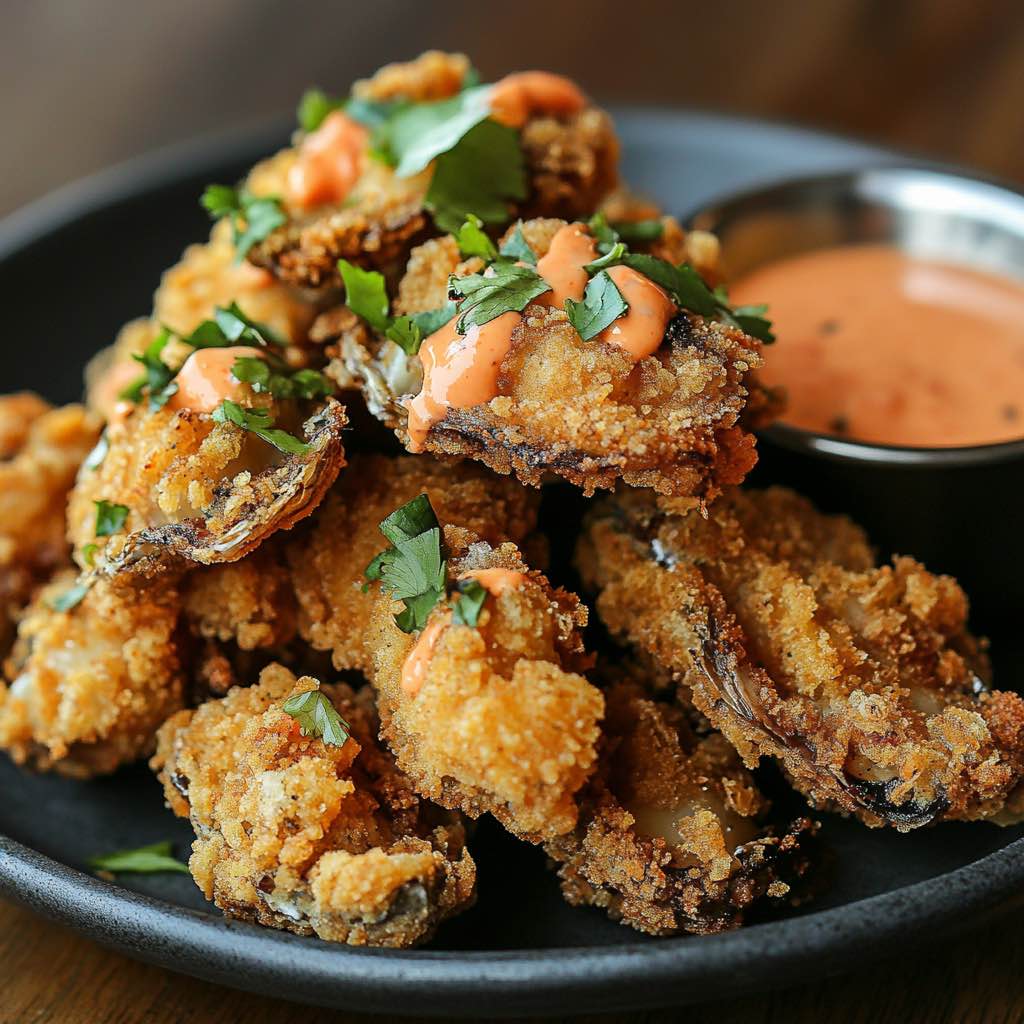
Cornmeal Fried Oysters with Sriracha Mayo
Introduction
Cornmeal Fried Oysters with Sriracha Mayo combine the delicate brininess of fresh oysters with a perfectly crispy golden coating and a bold, spicy kick. This Southern-inspired seafood dish transforms plump bivalves into an unforgettable appetizer that balances texture and flavor brilliantly. The cornmeal creates an incredibly crunchy exterior while the oysters remain tender inside, and the creamy sriracha mayo adds just the right amount of heat.
This recipe brings restaurant-quality results to your home kitchen with straightforward techniques. Whether serving guests at a dinner party or treating yourself to a special seafood meal, these fried oysters deliver every time. The preparation takes minimal time, and the results rival any upscale seafood establishment.
What Makes Cornmeal Fried Oysters Special
Southern Culinary Heritage
Cornmeal fried oysters represent a treasured tradition in Southern coastal cuisine. The technique of coating oysters in cornmeal rather than regular flour creates a distinctive texture that has been perfected over generations. This preparation method celebrates the natural flavor of the oyster while adding complementary crunch.
The cornmeal coating provides superior crispiness compared to traditional breadcrumb or flour coatings. Each bite delivers a satisfying contrast between the crunchy exterior and the soft, succulent oyster meat. This textural harmony makes the dish memorable and crave-worthy.
Perfect Flavor Balance
The combination of sweet cornmeal, briny oysters, and spicy sriracha mayo creates layers of flavor that work in perfect harmony. The mild sweetness from the cornmeal complements the natural oceanic taste of fresh oysters. Meanwhile, the creamy, spicy mayo adds richness and heat that elevates the entire dish.
This flavor profile appeals to both seafood enthusiasts and those new to oysters. The coating mellows the intense brininess that some find overwhelming in raw oysters. The result is an approachable yet sophisticated seafood preparation.
Essential Ingredients
For the Fried Oysters
The foundation of this recipe requires high-quality fresh oysters. Select approximately 12 to 24 large shucked oysters, depending on serving size and guest count. Fresh shucked oysters from a reputable seafood market ensure the best flavor and texture.
The coating mixture combines one cup of fine or medium-grind cornmeal with half a cup of cornstarch. This combination creates exceptional crispiness that stays intact. Add half a teaspoon of cayenne powder for a subtle heat layer.
Season the breading with one teaspoon of salt and half a teaspoon of black pepper. Some recipes incorporate Creole seasoning for additional complexity. Two tablespoons of all-purpose flour can be mixed in for extra adhesion.
For the soaking liquid, one cup of buttermilk creates the perfect base. The buttermilk tenderizes the oysters slightly and helps the breading adhere beautifully. Alternatively, beaten eggs work well for coating.
For the Sriracha Mayo
Creating exceptional sriracha mayo requires just a few simple ingredients. Start with one cup of high-quality mayonnaise as the creamy base. Japanese Kewpie mayonnaise offers a richer flavor, though any good mayo works perfectly.
Add three tablespoons of sriracha chili sauce for the signature spicy kick. This amount provides noticeable heat without overwhelming the palate. Adjust the ratio based on personal spice preference.
Include one teaspoon of fresh lemon juice to brighten the flavors. The acidity balances the richness of the mayonnaise beautifully. Some recipes use lime juice instead for a slightly different citrus note.
Incorporate a quarter teaspoon of garlic powder and smoked paprika for depth. Fresh minced garlic can replace garlic powder for more pronounced flavor. A pinch of salt enhances all the components, though sriracha already contains salt.
Kitchen Equipment Needed
Frying Setup
A large heavy-duty stockpot, Dutch oven, or cast iron skillet with high sides works best for frying. The vessel should accommodate at least two inches of oil. Deep sides prevent oil splatter and maintain consistent temperature.
Invest in a reliable candy or deep-fry thermometer to monitor oil temperature accurately. Maintaining 350°F to 375°F ensures perfectly fried oysters. Temperature consistency is crucial for achieving golden, crispy results without greasiness.
Preparation Tools
Have several shallow bowls or pie plates ready for the breading station. One bowl holds the buttermilk soak, while another contains the cornmeal mixture. A wire cooling rack placed over a baking sheet allows coated oysters to rest before frying.
A wire kitchen spider or slotted spoon safely removes oysters from hot oil. Paper towels or a second wire rack provide drainage space after frying. Tongs can assist with handling oysters during the coating process.
How to Select Fresh Oysters
Quality Indicators
Fresh oysters should have a clean, briny ocean scent without any strong fishy odor. This fresh smell indicates quality and proper handling. Avoid oysters with an off-putting or ammonia-like smell.
Look for plump oysters with a glistening appearance and minimal liquid loss. The meat should appear firm and well-formed. Shucked oysters should be swimming in their natural liquor, which indicates freshness.
Sourcing Options
Purchase shucked oysters from reputable seafood markets or grocery stores with high turnover. Many markets sell containers of pre-shucked oysters, which saves considerable time. Check the sell-by date and purchase the freshest batch available.
If shucking oysters yourself, wear protective gloves and use a proper oyster knife. Be careful not to damage the tender meat during shucking. Canned oysters work as an alternative, though fresh always delivers superior results.
Preparing the Perfect Sriracha Mayo
Mixing Technique
Combine all sriracha mayo ingredients in a small bowl. Add the mayonnaise first, followed by sriracha, lemon juice, garlic powder, and smoked paprika. This layering ensures even distribution.
Use a small rubber spatula or whisk to mix thoroughly until completely combined. The mixture should turn a pinkish color and become super creamy. Ensure no streaks of unmixed mayo remain.
Flavor Adjustments
Taste the sauce and adjust seasoning as needed. Add more sriracha for increased heat or additional mayonnaise for a milder version. The beauty of homemade sriracha mayo lies in customization.
Allow the sauce to rest for at least 10 minutes before serving if possible. This resting time lets the flavors meld together beautifully. The garlic flavor becomes more pronounced after sitting.
Make-Ahead Tips
Sriracha mayo can be prepared up to two weeks in advance. Store it in an airtight container in the refrigerator. Stir well before using, as slight separation may occur.
The sauce maintains its quality and flavor throughout the storage period. Making it ahead saves time when preparing the complete meal. Fresh garlic versions should be used within one week.
Step-by-Step Cooking Instructions
Draining and Soaking
Pour the shucked oysters into a colander or strainer. Let them drain thoroughly to remove excess liquid. Rinsing with cold water is optional but removes any debris or shell fragments.
Transfer the drained oysters to a medium bowl with buttermilk. Let them soak for 15 to 20 minutes at room temperature. This soaking step tenderizes the oysters and creates a sticky surface for breading.
Coating Process
Combine cornmeal, cornstarch, flour, cayenne, salt, and pepper in a shallow bowl. Whisk the dry ingredients together until evenly distributed. This ensures consistent seasoning on every oyster.
Remove oysters from buttermilk one at a time. Let excess liquid drip off before dredging. Toss each oyster gently in the cornmeal mixture, ensuring complete coverage.
Shake off any excess breading and place coated oysters on a wire cooling rack. Let them rest for several minutes to allow the breading to fuse with the buttermilk. This crucial step prevents breading from falling off during frying.
Frying Technique
Fill your pot or skillet with one to two inches of oil. Heat over medium-high heat until a thermometer registers 350°F to 375°F. Proper temperature is critical for achieving crispy, non-greasy results.
Carefully add oysters to the hot oil one at a time using tongs or a spider. Watch for oil splatter and maintain distance. Fry in small batches of six to eight oysters to avoid overcrowding.
Cook for two to three minutes, stirring occasionally. The oysters are done when the breading turns light golden brown. The meat should become opaque with slightly curled edges.
Use a wire spider or slotted spoon to remove fried oysters. Transfer to paper towels or a wire rack to drain excess oil. Serve immediately while hot and crispy.
Pro Tips for Extra Crispy Oysters
Oil Selection and Temperature
Choose peanut oil or vegetable oil for frying as both handle high heat well. Peanut oil adds a subtle nutty flavor that complements seafood beautifully. Vegetable oil works perfectly as a neutral alternative.
Maintain consistent oil temperature throughout the frying process. Adjust the heat up or down as needed to stay at 350°F. Overcrowding lowers oil temperature and creates soggy oysters.
Breading Secrets
Let coated oysters rest on a rack before frying. This waiting period allows moisture to activate the breading mixture. The result is breading that stays attached through the cooking process.
Pat oysters as dry as possible after draining. Less moisture on the surface creates a crispier coating. The drier the oyster, the better the breading adheres.
Batch Management
Fry oysters in small batches to maintain oil temperature. Small batches also prevent oysters from sticking together. Never crowd the pan, as this creates steaming rather than frying.
Allow oil to return to proper temperature between batches. This takes just a minute or two with good heat control. Consistent temperature ensures every batch turns out perfectly crispy.
Serving Suggestions
Presentation Ideas
Arrange fried oysters on a large platter lined with fresh lettuce or parchment paper. The presentation should showcase the golden-brown coating beautifully. Garnish with fresh lemon wedges for guests who enjoy extra citrus.
Serve the sriracha mayo in a small bowl alongside the oysters for dipping. Alternatively, drizzle the sauce artistically over the platter. Individual serving plates with sauce portions work well for formal dinners.
Complementary Sides
Coleslaw provides a refreshing contrast to the rich fried oysters. The crisp, cool vegetables balance the warm, crunchy seafood perfectly. French fries or sweet potato fries make excellent companions.
A simple green salad with vinaigrette adds freshness to the plate. Hush puppies extend the Southern theme beautifully. Cornbread offers another cornmeal-based complement.
Beverage Pairings
Iced tea is a classic Southern beverage that pairs wonderfully with fried seafood. Fresh lemonade cuts through the richness of the fried coating. Sparkling water with lemon provides a clean, refreshing option.
Check out our guide on [insert link] for more seafood pairing ideas.
Nutritional Information
Calorie and Macronutrient Breakdown
One serving of cornmeal fried oysters typically contains approximately 250 to 350 calories. The exact count depends on portion size and oil absorption. Oysters themselves are relatively low in calories but nutrient-dense.
The cornmeal coating and frying oil contribute most of the calories. Protein content ranges from 12 to 18 grams per serving from the oysters. Carbohydrates from cornmeal and cornstarch add approximately 20 to 30 grams.
Micronutrient Profile
Oysters provide exceptional nutrition beyond basic macronutrients. They contain high levels of zinc, which supports immune function. Oysters also deliver significant iron, important for oxygen transport in blood.
Vitamin B12, essential for nerve health, appears in abundant quantities in oysters. Selenium, an important antioxidant, is also present. These shellfish offer omega-3 fatty acids that benefit heart health.
The sriracha mayo adds approximately 96 calories per two-tablespoon serving. Most of these calories come from the mayonnaise base. The sauce provides minimal micronutrients but adds flavor that encourages vegetable consumption.
Storage and Reheating Guidelines
Short-Term Storage
Fried oysters taste best when consumed immediately after cooking. However, leftovers can be stored in an airtight container in the refrigerator. Use within 24 hours for optimal quality and food safety.
Place paper towels in the container to absorb excess moisture. This prevents the breading from becoming completely soggy. Store the sriracha mayo separately in its own airtight container.
Reheating Methods
Reheat fried oysters in a 375°F oven for best results. Place them on a wire rack over a baking sheet. This setup allows hot air to circulate and restore crispiness.
Bake for 5 to 8 minutes until heated through and crispy. Avoid microwave reheating, which creates soggy breading. An air fryer also works excellently for reheating at 375°F for 3 to 5 minutes.
Freezing Considerations
Freezing fried oysters is not recommended as the texture suffers significantly. The breading becomes soggy and the oyster meat turns rubbery. Raw breaded oysters can be frozen before frying.
To freeze uncooked breaded oysters, place them on a baking sheet and freeze until solid. Transfer to a freezer bag for storage up to one month. Fry directly from frozen, adding an extra minute to cooking time.
Common Mistakes to Avoid
Temperature Troubles
Frying at too low a temperature creates greasy, soggy oysters. The breading absorbs excess oil instead of crisping properly. Always verify oil temperature with a thermometer before adding oysters.
Conversely, excessive heat burns the coating before the oyster cooks through. The breading turns dark brown while the inside remains cold. Maintaining steady temperature in the optimal range ensures success.
Moisture Management
Adding too many oysters at once dramatically lowers oil temperature. The resulting steam prevents proper frying. Patience with small batches produces far superior results.
Insufficiently dried oysters prevent breading from adhering properly. The coating slides off during frying, leaving bare spots. Take time to drain and pat oysters thoroughly dry.
Breading Issues
Using only flour or only cornmeal creates suboptimal texture. The combination of cornmeal with cornstarch produces ideal crispiness. The cornstarch adds extra crunch while cornmeal provides flavor.
Skipping the resting period after coating often results in breading falling off. The fusion time allows the buttermilk and breading to bond. This simple step prevents frustrating coating loss.
Variations and Substitutions
Alternative Coatings
Replace half the cornmeal with panko breadcrumbs for extra crunch. This modification creates an even lighter, crispier texture. The combination maintains cornmeal flavor while adding airiness.
Substitute yellow cornmeal with white cornmeal for a more delicate flavor. Some cooks prefer the subtle sweetness of white cornmeal. Both varieties work equally well in terms of texture.
Seasoning Variations
Add Creole or Cajun seasoning to the breading for bolder flavor. These spice blends bring complexity without additional effort. Start with one tablespoon and adjust to taste.
Incorporate smoked paprika into the cornmeal mixture for depth. The smokiness complements the fried coating beautifully. Fresh herbs like thyme add aromatic notes.
Sauce Alternatives
Create a lime-cilantro mayo by replacing lemon juice with lime and adding fresh cilantro. This variation offers a brighter, more herbaceous profile. The cilantro provides freshness that pairs wonderfully with seafood.
Mix equal parts sriracha mayo with Greek yogurt for a lighter option. This reduces calories while maintaining creaminess. The tanginess of yogurt adds pleasant complexity.
Cooking Method Options
Pan-fry oysters in half an inch of oil for a lighter version. Flip frequently to brown all sides evenly. This method uses less oil while still producing crispy results.
Air fry breaded oysters at 400°F for 8 to 10 minutes. Spray lightly with cooking spray before air frying. This technique significantly reduces fat content.
Frequently Asked Questions
Can I use frozen oysters for this recipe?
Frozen oysters work adequately when fresh are unavailable. Thaw them completely in the refrigerator overnight. Pat them exceptionally dry before proceeding with the recipe, as frozen oysters release more moisture.
How do I know when fried oysters are done?
Properly cooked fried oysters display light golden brown coating and opaque meat with slightly curled edges. The internal temperature should reach 145°F for food safety. Total frying time typically ranges from two to three minutes.
What’s the best oil temperature for frying Cornmeal Fried Oysters with Sriracha Mayo?
The optimal temperature range is 350°F to 375°F. This range creates crispy exteriors without burning while cooking the oyster thoroughly. Use a thermometer to monitor temperature consistently.
Can I make the breading mixture ahead of time?
The dry cornmeal mixture can be prepared up to one week in advance. Store it in an airtight container at room temperature. Mix thoroughly before using, as ingredients may settle.
How can I reduce the spiciness of the sriracha mayo?
Decrease the sriracha amount to one or two tablespoons for milder heat. Increase the mayonnaise proportion to dilute the spice level. Add a teaspoon of honey for sweetness that balances heat.
Are cornmeal fried oysters gluten-free?
Standard recipes contain all-purpose flour, which contains gluten. Substitute with gluten-free all-purpose flour or additional cornstarch for a gluten-free version. Ensure the cornmeal is certified gluten-free, as cross-contamination can occur during processing.
Conclusion
Cornmeal Fried Oysters with Sriracha Mayo deliver an exceptional combination of crispy texture, briny sweetness, and spicy creaminess. This recipe transforms simple ingredients into restaurant-quality seafood that impresses every guest. The Southern-inspired preparation method creates perfectly crunchy oysters that remain tender inside.
Success depends on maintaining proper oil temperature, working in small batches, and using fresh oysters. The homemade sriracha mayo elevates the dish with bold, spicy flavor that complements the delicate seafood beautifully. These techniques ensure consistent, delicious results every time.
Master this recipe and enjoy a versatile dish suitable for appetizers, main courses, or special occasions. The straightforward preparation makes it accessible for home cooks while delivering impressive results. Gather your ingredients and experience the delicious satisfaction of homemade cornmeal fried oysters.
Print
Cornmeal Fried Oysters with Sriracha Mayo
Description
Cornmeal Fried Oysters with Sriracha Mayo
Ingredients:
For the Fried Oysters:
-
1 pint fresh shucked oysters, drained
-
1 cup buttermilk
-
1 cup yellow cornmeal
-
½ cup all-purpose flour
-
1 tsp paprika
-
1 tsp garlic powder
-
½ tsp cayenne pepper (optional, for extra heat)
-
Salt and black pepper, to taste
-
Vegetable oil, for frying
For the Sriracha Mayo:
-
½ cup mayonnaise
-
1–2 tbsp Sriracha sauce (adjust to taste)
-
1 tsp lime juice
-
½ tsp honey (optional, for balance)
Instructions:
1. Prepare the Sriracha Mayo:
In a small bowl, whisk together mayonnaise, Sriracha, lime juice, and honey.
Refrigerate until ready to serve.
2. Marinate the Oysters:
Place the drained oysters in a bowl and cover with buttermilk. Let sit for 10–15 minutes — this helps the coating stick and keeps them tender.
3. Make the Coating:
In a shallow dish, mix together the cornmeal, flour, paprika, garlic powder, cayenne, salt, and pepper.
4. Heat the Oil:
Pour about 2 inches of vegetable oil into a deep skillet or cast-iron pan.
Heat to 350°F (175°C).
5. Dredge and Fry:
Remove oysters from buttermilk, letting excess drip off.
Coat each oyster in the cornmeal mixture, pressing lightly so it adheres.
Fry in batches for 2–3 minutes per side, until golden and crispy.
Transfer to a paper towel–lined plate to drain.
6. Serve:
Serve immediately with Sriracha mayo for dipping and lemon wedges on the side.
Garnish with chopped parsley or green onions for a fresh touch.