
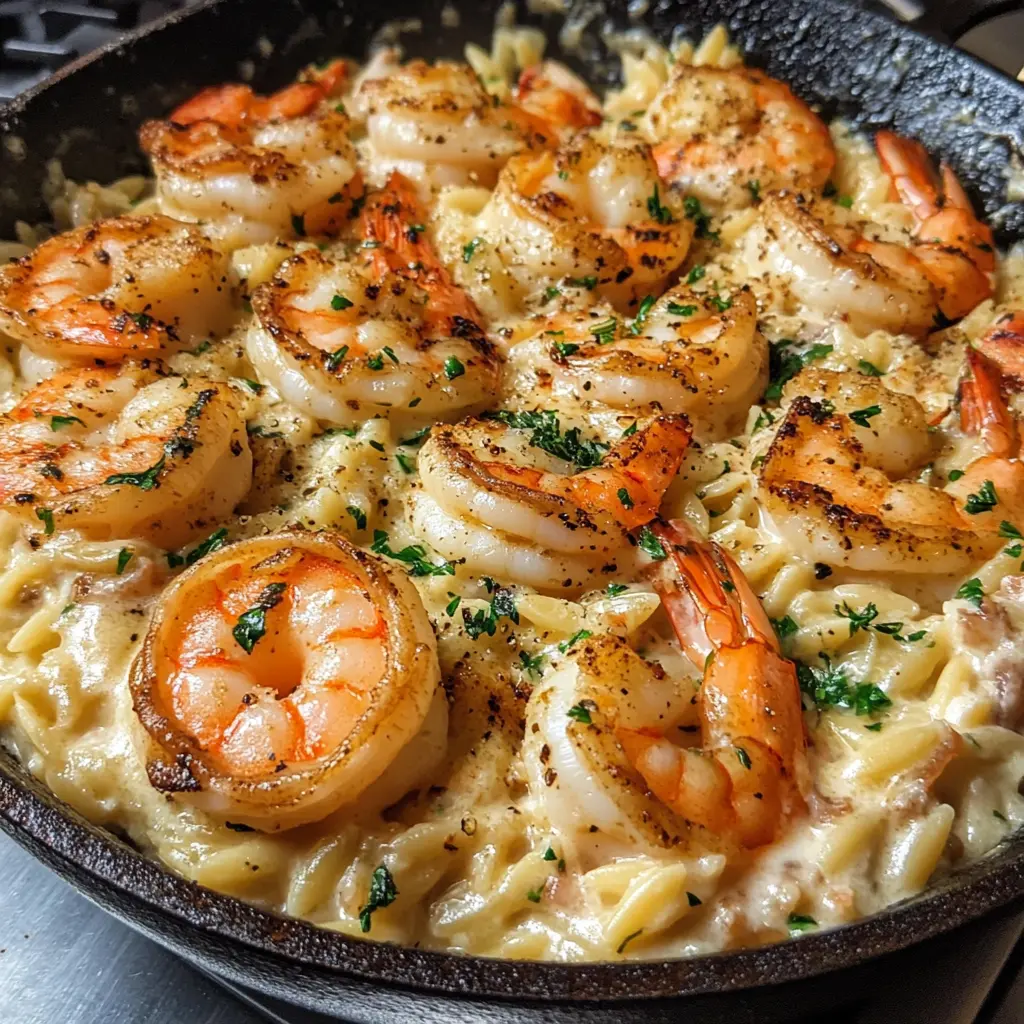
Creamy Garlic Butter Shrimp and Orzo Skillet: The Ultimate One-Pan Comfort Meal
Introduction
Imagine coming home after a long day and creating a restaurant-quality meal in just 30 minutes. Creamy Garlic Butter Shrimp and Orzo Skillet delivers exactly that experience. This one-pan wonder combines succulent shrimp, tender orzo pasta, and a luxuriously creamy garlic butter sauce that will make your taste buds sing.
Moreover, this dish solves the eternal weeknight dinner dilemma. It’s quick, satisfying, and requires minimal cleanup. Furthermore, the combination of protein-rich shrimp and hearty orzo creates a balanced meal that feels indulgent yet remains surprisingly nutritious. Additionally, the beauty of this recipe lies in its simplicity and adaptability, making it perfect for both busy weeknights and special occasions.
What Makes This Recipe Special
One-Pan Simplicity
First and foremost, this recipe requires just one skillet. Consequently, you’ll spend less time washing dishes and more time enjoying your meal. The cooking process flows seamlessly from toasting the orzo to simmering the sauce to cooking the shrimp.
Quick-Cooking Ingredients
Notably, both shrimp and orzo cook incredibly fast. Shrimp typically needs only 5-8 minutes to reach perfect doneness. Similarly, orzo pasta cooks in approximately 12-15 minutes. Therefore, you can have dinner ready in under 35 minutes from start to finish.
Restaurant-Quality Flavor
Despite its simplicity, this dish tastes like something from an upscale Italian restaurant. The garlic butter sauce coats every grain of orzo perfectly. Meanwhile, the creamy texture elevates the entire dish to gourmet status.
Essential Ingredients Breakdown
The Protein
Shrimp forms the star of this dish. For best results, use one pound of large shrimp, peeled and deveined. Fresh or frozen shrimp both work wonderfully, though frozen shrimp should be thawed completely before cooking. Additionally, removing the tails makes eating easier, though leaving them on creates a more elegant presentation.
The Pasta
Orzo pasta is a rice-shaped pasta that absorbs flavors beautifully. One cup of dry orzo typically serves 3-4 people as a main dish. Furthermore, orzo’s small size allows it to cook evenly and quickly in the skillet.
The Sauce Components
The sauce combines several key ingredients:
-
Butter: 2-4 tablespoons create that signature rich flavor
-
Garlic: 4-5 cloves minced provide aromatic depth
-
Heavy cream: ½ cup adds luxurious creaminess
-
Chicken broth: 2-2¼ cups help cook the orzo and create the sauce base
-
Parmesan cheese: ½ cup grated brings savory umami notes
Flavor Enhancers
-
Olive oil: 2-3 tablespoons for sautéing
-
Lemon juice: 1-2 tablespoons brighten the entire dish
-
Fresh herbs: Parsley adds freshness and color
-
Red pepper flakes: ½ teaspoon provides gentle heat
-
Seasonings: Salt, black pepper, and oregano round out the flavors
Optional Additions
-
Cherry tomatoes halved add pops of acidity
-
Fresh spinach wilts beautifully into the sauce
-
Sun-dried tomatoes contribute concentrated flavor
-
Lemon zest enhances the citrus notes
Step-by-Step Cooking Instructions
Preparation Phase
First, gather all your ingredients and prep them before you start cooking. This approach ensures smooth execution. Next, pat the shrimp completely dry with paper towels. This step helps them develop a beautiful golden color when cooked.
Marinating the Shrimp
In a large bowl, combine the shrimp with olive oil, lemon juice, minced garlic, red pepper flakes, salt, and pepper. Subsequently, let the mixture sit for 10 minutes while you prepare other components. This marinating step infuses the shrimp with incredible flavor.
Toasting the Orzo
Heat butter in a large 12-inch skillet over medium heat. Once melted, add the dry orzo pasta. Stir frequently for 3-4 minutes until the orzo turns golden and releases a nutty aroma. This toasting process adds tremendous depth to the final dish.
Building the Sauce
After toasting the orzo, add minced garlic to the pan. Cook for just 30 seconds until fragrant. Then, pour in the chicken broth and bring the mixture to a boil. Reduce the heat to a gentle simmer and cover the skillet.
Cooking the Orzo
Allow the orzo to simmer covered for 12-15 minutes. During this time, the pasta will absorb the liquid and become tender. Stir occasionally to prevent sticking. The orzo should be al dente with a slight bite when done.
Adding Cream and Cheese
Once the orzo is nearly cooked, stir in the heavy cream and grated Parmesan cheese. Mix thoroughly until the cheese melts completely and creates a smooth, creamy sauce. The sauce should coat the orzo beautifully.
Cooking the Shrimp
Nestle the marinated shrimp into the creamy orzo mixture. Cover the skillet again and cook for 5-8 minutes. The shrimp are done when they turn pink, opaque, and curl slightly. Avoid overcooking, as this makes shrimp rubbery.
Final Touches
Remove the skillet from heat and sprinkle with fresh chopped parsley. Add an extra tablespoon of butter if desired for ultimate richness. Serve immediately with lemon wedges on the side for squeezing.
Pro Tips for Perfect Results
Selecting Quality Shrimp
Choose shrimp that smell fresh and ocean-like, never fishy. Larger shrimp work best for this recipe, such as 16-20 count per pound. Furthermore, wild-caught shrimp often have better flavor and texture than farm-raised varieties.
Preventing Sticky Orzo
Orzo tends to clump together during cooking. Therefore, stir the pasta every few minutes while it simmers. Additionally, using adequate liquid prevents the orzo from becoming sticky.
Achieving Creamy Consistency
If your sauce seems too thick, add a splash of chicken broth or pasta water. Conversely, if it’s too thin, simmer uncovered for a few extra minutes to reduce. The sauce should coat the back of a spoon nicely.
Timing Considerations
Start checking your orzo for doneness at the 7-minute mark. Cooking times can vary based on your specific brand and stovetop. Remember that the pasta continues cooking slightly even after you remove it from heat.
Temperature Control
Maintain medium heat throughout the cooking process. Too high heat can burn the garlic and make the cream separate. Meanwhile, too low heat extends cooking time unnecessarily.
Nutritional Benefits
Protein Powerhouse
Shrimp provides exceptional nutritional value. Just 3 ounces contains approximately 20 grams of protein, which equals 40% of the recommended daily value. Additionally, shrimp remains remarkably low in calories despite its high protein content.
Heart-Healthy Omega-3s
Shrimp contains beneficial omega-3 fatty acids that support cardiovascular health. These fatty acids demonstrate anti-inflammatory properties that may reduce heart disease risk. Moreover, studies have linked omega-3 consumption to improved lipid panels and better heart function.
Essential Minerals
This recipe delivers impressive amounts of important minerals. Specifically, shrimp provides zinc, magnesium, iodine, and phosphorus. Magnesium benefits blood pressure regulation and bone health. Meanwhile, iodine and selenium support proper thyroid function.
Brain Health Support
The vitamin B12 and omega-3s in shrimp contribute to optimal brain function. Research suggests that adequate intake of these nutrients supports cognitive health in both children and adults. Furthermore, vitamin B12 helps prevent elevated homocysteine levels linked to cognitive decline.
Immune System Boost
Shrimp contains zinc, which plays a crucial role in immune system development. This mineral is necessary for creating cells that form your body’s immune defense. Therefore, regularly consuming shrimp can enhance your overall immune function.
Weight Management
Despite its creamy richness, this dish can fit into a balanced diet. The high protein content promotes satiety and helps you feel fuller longer. Consequently, you’re less likely to overeat or snack excessively after this meal.
Popular Variations
Mediterranean Style
Transform this dish by adding sun-dried tomatoes, Kalamata olives, and crumbled feta cheese. Fresh basil instead of parsley creates authentic Mediterranean flavor. Additionally, a splash of lemon juice brightens these bold ingredients.
Tuscan Inspiration
Incorporate fresh spinach, sun-dried tomatoes, and Italian herbs for a Tuscan twist. The spinach wilts beautifully into the hot sauce. Furthermore, this variation adds valuable nutrients and vibrant color.
Spicy Cajun Version
Replace the oregano with Cajun seasoning and increase the red pepper flakes. Add diced bell peppers and celery for authentic Cajun flavor. This variation brings Louisiana flair to your dinner table.
Lighter Option
Substitute half-and-half for heavy cream to reduce calories. Alternatively, use Greek yogurt stirred in at the end for tang and protein. These swaps maintain creaminess while lightening the overall dish.
Garden Vegetable Addition
Fold in cherry tomatoes, zucchini, or asparagus for extra vegetables. These additions increase fiber and nutritional value. Moreover, they add beautiful colors and textures to the finished dish.
Serving Suggestions
Side Dishes
This creamy shrimp and orzo skillet pairs wonderfully with several sides. A simple arugula salad with lemon vinaigrette cuts through the richness perfectly. Alternatively, garlic bread makes an excellent accompaniment for soaking up extra sauce. Roasted vegetables like asparagus or green beans add nutritional balance.
Presentation Tips
Serve directly from the skillet for rustic charm. Alternatively, plate individually and garnish with fresh parsley and lemon wedges. A sprinkle of extra Parmesan cheese on top adds visual appeal.
Portion Sizes
This recipe typically serves 4-6 people as a main course. For heartier appetites, plan on approximately 1½ cups per serving. The dish is quite filling due to the protein and carbohydrate combination.
Storage and Reheating Tips
Refrigerator Storage
Store leftovers in an airtight container in the refrigerator for up to 3 days. The orzo may absorb more sauce as it sits, which is completely normal. Consequently, you might need to add liquid when reheating.
Reheating Methods
The stovetop method works best for maintaining texture. Add a few tablespoons of chicken broth or water to the pan. Heat gently over medium-low heat, stirring occasionally until warmed through. Microwave reheating also works, though the texture may be slightly different.
Freezing Considerations
Cream-based sauces can separate when frozen and thawed. However, if you plan to freeze this dish, slightly undercook the orzo. Freeze in portion-sized containers for convenient future meals. Thaw overnight in the refrigerator before reheating.
Make-Ahead Strategy
You can prepare components separately in advance. Cook the orzo and store it separately from the sauce and shrimp. When ready to serve, combine everything in the skillet and heat through. This approach maintains better texture than fully preparing and storing the complete dish.
Common Mistakes to Avoid
Overcooking the Shrimp
Shrimp cook remarkably quickly, and overcooking makes them tough and rubbery. Remove them from heat as soon as they turn pink and opaque. They’ll continue cooking slightly from residual heat.
Underseasoning the Dish
Pasta absorbs significant amounts of seasoning. Therefore, season generously at each stage of cooking. Taste before serving and adjust salt and pepper as needed.
Using Insufficient Liquid
Orzo needs adequate liquid to cook properly. If the pan looks dry before the orzo is tender, add more broth immediately. The pasta should be slightly saucy, not dry.
Skipping the Toasting Step
Toasting the orzo before adding liquid creates nutty depth. This crucial step elevates the entire dish from good to extraordinary. Don’t rush through this important foundation.
Adding Cheese to Boiling Liquid
Always reduce heat before stirring in Parmesan cheese. High heat can cause the cheese to become grainy or clump. Gentle heat allows smooth, creamy incorporation.
Kitchen Tools You’ll Need
Essential Equipment
A large 12-inch skillet with a lid forms the cornerstone of this recipe. Cast iron skillets work particularly well for even heat distribution. Additionally, you’ll need a sharp knife for mincing garlic and chopping herbs.
Measuring Tools
Accurate measurements ensure consistent results. Have measuring cups for liquids and dry ingredients ready. Measuring spoons help portion seasonings precisely.
Prep Bowls
Small bowls organize your ingredients for efficient cooking. This mise en place approach prevents scrambling during the cooking process. Furthermore, a larger bowl is needed for marinating the shrimp.
Stirring Utensils
A wooden spoon or heat-resistant spatula works best for stirring orzo. These tools won’t scratch your cookware and can withstand high heat. Additionally, tongs help turn the shrimp easily.
Frequently Asked Questions
Can I use a different type of pasta for this Creamy Garlic Butter Shrimp and Orzo Skillet?
Absolutely! While orzo is traditional, other small pasta shapes work well too. Pearl couscous, ditalini, or small shells make excellent substitutes. However, adjust the cooking time based on your chosen pasta’s package directions. Keep in mind that different pasta shapes absorb liquids differently.
What’s the best way to devein shrimp?
Deveining shrimp is straightforward and improves presentation. First, peel off the shell, leaving the tail if desired. Next, use a small paring knife to make a shallow cut along the back. Finally, rinse out the dark vein under cold water. Many grocery stores sell pre-cleaned shrimp if you prefer convenience.
Can I make this recipe dairy-free?
Yes, several substitutions work well for dairy-free versions. Replace butter with olive oil throughout the recipe. Substitute heavy cream with full-fat coconut milk for creaminess. Use nutritional yeast instead of Parmesan cheese for a savory, cheesy flavor.
How do I know when shrimp are perfectly cooked?
Properly cooked shrimp display several visual cues. They turn from gray to pink or coral in color. The flesh becomes opaque rather than translucent. Additionally, cooked shrimp curl into a loose “C” shape. If they curl into a tight “O,” they’re overcooked.
Can I use vegetable broth instead of chicken broth?
Certainly! Vegetable broth creates a lighter flavor profile while keeping the dish pescatarian. The cooking method remains identical regardless of which broth you choose. Some cooks even use seafood stock for amplified ocean flavors.
Why did my sauce separate or become grainy?
Sauce separation typically occurs from excessive heat when adding dairy products. Always reduce to medium-low heat before incorporating cream or cheese. Additionally, add cheese gradually while stirring constantly. If separation does occur, whisk in a small amount of cold cream to bring it back together.
How can I make this recipe gluten-free?
Substitute gluten-free orzo-shaped pasta or rice for traditional orzo. Several brands now make gluten-free orzo from rice flour or corn. The cooking process remains essentially the same, though gluten-free pasta sometimes requires slightly different liquid ratios.
What size skillet works best?
A 12-inch skillet provides ideal space for this recipe. This size allows the orzo to cook evenly without crowding. Smaller pans may result in uneven cooking and spillage. If you only have a smaller skillet, consider halving the recipe.
Conclusion
Creamy Garlic Butter Shrimp and Orzo Skillet represents the perfect intersection of convenience and sophistication. This one-pan wonder delivers restaurant-quality results with minimal effort and cleanup. The combination of tender shrimp, perfectly cooked orzo, and luxuriously creamy garlic butter sauce creates an unforgettable dining experience.
Furthermore, this versatile recipe adapts beautifully to various dietary preferences and taste profiles. Whether you prefer Mediterranean flavors, spicy Cajun heat, or classic Italian simplicity, this dish accommodates your preferences. Additionally, the impressive nutritional profile of shrimp makes this comfort food choice surprisingly healthy.
The beauty of this Creamy Garlic Butter Shrimp and Orzo Skillet lies in its accessibility. Even novice cooks can achieve spectacular results by following the straightforward steps. Meanwhile, experienced home chefs will appreciate the efficiency and elegance of this streamlined approach.
Ready to transform your weeknight dinners? Gather your ingredients and experience the magic of this incredible one-pan meal tonight. Your family will thank you for bringing restaurant-quality flavor to your dinner table. Don’t forget to share your results and variations – this recipe inspires endless creative possibilities!
Print
Creamy Garlic Butter Shrimp and Orzo Skillet
Description
Creamy Garlic Butter Shrimp and Orzo Skillet
Ingredients:
-
1 lb large shrimp, peeled and deveined
-
1 cup orzo pasta
-
3 tbsp butter
-
3 cloves garlic, minced
-
1 ½ cups chicken broth
-
½ cup heavy cream
-
½ cup grated Parmesan cheese
-
1 tsp paprika
-
½ tsp red pepper flakes (optional)
-
Salt and black pepper, to taste
-
2 tbsp fresh parsley, chopped (for garnish)
Instructions:
-
Cook the Orzo:
-
In a large skillet, melt 1 tbsp butter over medium heat.
-
Add orzo and toast for 1–2 minutes.
-
Pour in chicken broth, bring to a simmer, and cook until orzo is tender and liquid is mostly absorbed (about 8–10 minutes).
-
-
Cook the Shrimp:
-
Season shrimp with paprika, salt, and pepper.
-
In a separate pan, melt 2 tbsp butter and sauté shrimp 2–3 minutes per side until pink and cooked through. Remove and set aside.
-
-
Make the Garlic Butter Sauce:
-
In the skillet with orzo, add minced garlic and cook 30 seconds until fragrant.
-
Stir in heavy cream and Parmesan cheese. Cook 2–3 minutes until creamy.
-
-
Combine and Serve:
-
Fold in cooked shrimp.
-
Adjust seasoning with salt, pepper, and red pepper flakes if desired.
-
Garnish with chopped parsley and serve hot.
-