
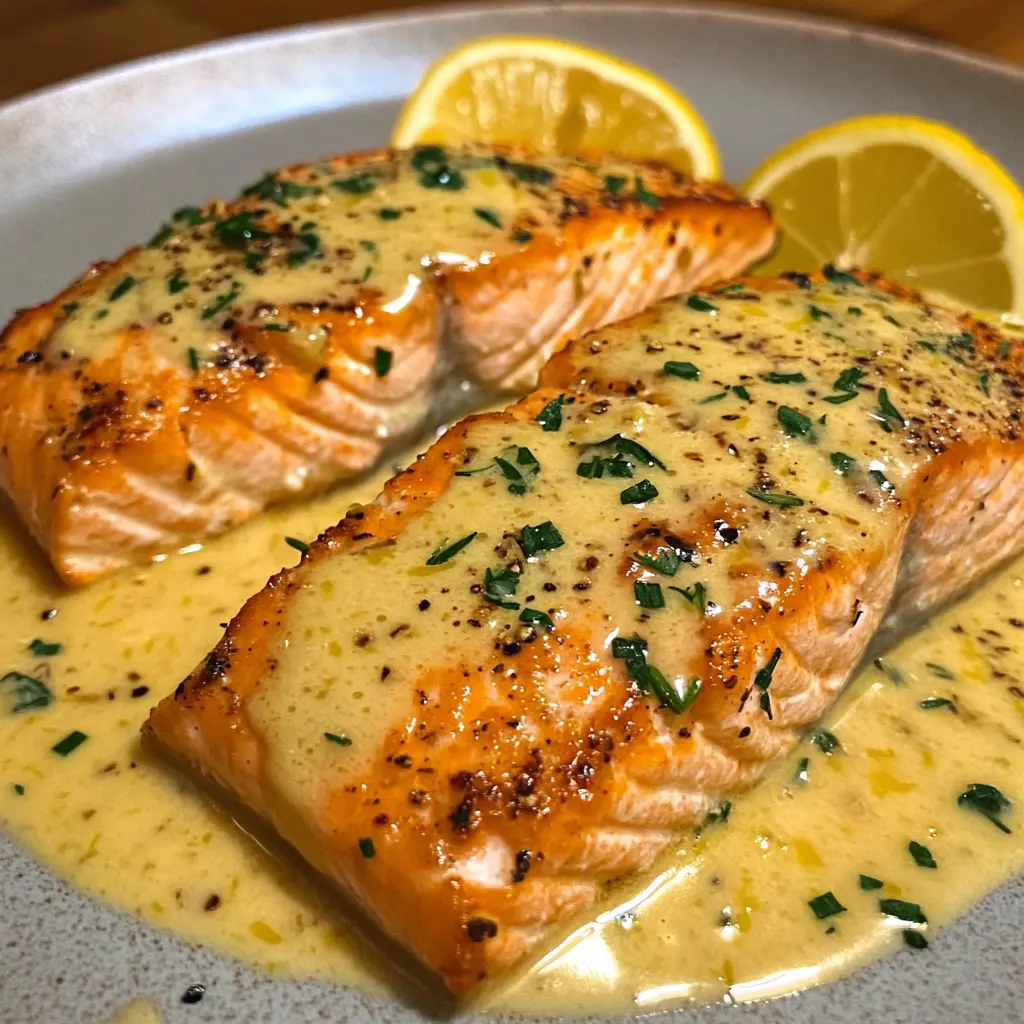
Creamy Lemon Garlic Butter Salmon
Introduction
Creamy Lemon Garlic Butter Salmon is a restaurant-quality dish that brings elegance and flavor to your dinner table in under 30 minutes. This recipe combines tender, flaky salmon fillets with a luxurious sauce made from butter, garlic, fresh lemon, and cream, creating a harmonious balance of richness and brightness. Moreover, the dish offers incredible versatility, making it suitable for busy weeknight dinners or special occasions when you want to impress your guests. The creamy sauce pairs beautifully with the natural oils in salmon, while the citrus notes cut through the richness, ensuring every bite is satisfying without being overwhelming.
What Makes Creamy Lemon Garlic Butter Salmon Special
This dish stands out for several compelling reasons that make it a favorite among home cooks and seafood enthusiasts alike. First, the flavor profile is extraordinary. The richness of garlic butter paired with tender, flaky salmon complements the bright, citrusy undertones of the creamy lemon sauce in a way that is both satisfying and sophisticated. Additionally, the recipe is remarkably simple to execute. You can prepare this one-skillet meal with minimal prep work, making it accessible even for beginners.
Furthermore, salmon provides outstanding health benefits. The fish is renowned for being rich in omega-3 fatty acids, high-quality proteins, and essential vitamins and minerals that support overall wellness. These nutrients work together to promote heart health, brain function, and reduced inflammation throughout your body. The combination of these elements makes Creamy Lemon Garlic Butter Salmon not just delicious but also a nutritious choice for your meal rotation.
Essential Ingredients
For the Salmon
To create this exceptional dish, you’ll need high-quality salmon fillets as your foundation. Choose fresh or properly frozen salmon fillets, preferably with skin on for better texture and easier handling during cooking. Each fillet should weigh approximately 6 ounces for consistent cooking times. Season the salmon with salt and pepper to enhance its natural flavor.
For the Creamy Lemon Garlic Sauce
The sauce requires several key components that work together harmoniously. Start with unsalted butter, which forms the rich base of your sauce. Add olive oil for additional depth and to prevent the butter from burning. Fresh garlic cloves, minced or thinly sliced, provide aromatic intensity. Fresh lemon juice and zest bring brightness and acidity to balance the richness.
Heavy cream creates the signature creamy texture. Chicken broth adds savory depth and helps thin the sauce to the perfect consistency. Fresh or dried herbs like dill, parsley, or oregano enhance the overall flavor profile. Optional additions include honey for subtle sweetness and paprika for color and mild heat.
Step-by-Step Cooking Instructions
Preparing the Salmon
Begin by patting your salmon fillets completely dry with paper towels. This crucial step ensures proper searing and prevents excess moisture in your sauce. Season both sides generously with salt and pepper. Let the seasoned salmon rest at room temperature for about 10 minutes before cooking, which promotes even cooking throughout.
Creating the Sauce
Heat olive oil in a large skillet over medium-high heat until it shimmers. Carefully place the salmon fillets skin-side down in the hot pan. Cook undisturbed for approximately 5 minutes, allowing the skin to become crispy and golden. Gently press down on the fillets with a fish spatula during the first minute to prevent the skin from curling away from the pan.
Finishing the Dish
Once the skin is crispy and the sides appear mostly opaque, carefully flip the salmon. Cook for an additional 1-2 minutes on the second side. Remove the salmon from the pan and set aside on a plate. In the same skillet, reduce the heat to medium and add butter. When the butter melts, add minced garlic and sauté for about 1 minute until fragrant but not browned.
Pour in chicken broth and fresh lemon juice, stirring to combine. Let the mixture simmer for 2-3 minutes to reduce slightly. Add heavy cream and your chosen herbs, stirring continuously until the sauce thickens. Return the salmon to the pan, spooning the creamy sauce over the top. Cook for another 2-3 minutes until the salmon reaches an internal temperature of 120-125°F and flakes easily.
Cooking Tips for Perfect Salmon
Temperature Control
Starting with a cold pan can produce exceptionally crispy skin. Place your salmon skin-side down in a nonstick skillet with oil before turning on the heat. Gradually increase the temperature to medium-high, which renders the fat slowly and evenly. This method results in perfectly crispy, golden skin while keeping the flesh moist and tender.
Doneness Indicators
The ideal internal temperature for salmon is 120-125°F. At this temperature, the fish will be moist, tender, and perfectly cooked. Visual cues include flesh that flakes easily when tested with a fork and meat that appears mostly opaque with a slightly translucent center. Avoid overcooking, as salmon can quickly become dry and lose its delicate texture.
Pan Selection
Use a large nonstick skillet or a well-seasoned cast-iron pan for best results. These surfaces prevent sticking and allow for easy flipping. Make sure your pan is large enough to accommodate all fillets without crowding, which ensures even cooking and proper browning.
Nutritional Benefits of Salmon
Omega-3 Fatty Acids
Salmon ranks among the best dietary sources of omega-3 fatty acids, particularly EPA and DHA. These essential fats provide numerous health benefits that support multiple body systems. Research demonstrates that omega-3s help keep your heart healthy by slightly lowering blood pressure and reducing levels of triglycerides in the blood. They also lower the risk of irregular heartbeats and promote overall cardiovascular wellness.
Brain and Cognitive Health
The DHA found abundantly in salmon helps repair and maintain brain cells. Studies indicate that getting enough of this fatty acid in your diet may reduce your risk of cognitive decline, including conditions like Alzheimer’s and Parkinson’s diseases. Regular consumption of omega-3-rich fish like salmon supports memory, focus, and overall brain function throughout your life.
Additional Health Benefits
Beyond heart and brain health, salmon provides high-quality protein essential for muscle maintenance and repair. The fish also contains important vitamins and minerals that support immune function, bone health, and energy production. Furthermore, research suggests that omega-3 fatty acids may support eye health, potentially lowering the risk of conditions like glaucoma and age-related vision loss.
Best Side Dishes to Serve
Starchy Accompaniments
Creamy Lemon Garlic Butter Salmon pairs wonderfully with starchy sides that can absorb the delicious sauce. Greek lemon rice offers complementary citrus notes that enhance the dish’s brightness. Herbed potatoes or Greek roasted potatoes provide satisfying substance and are perfect for mopping up every drop of the creamy sauce. Tiny roasted potatoes tossed with butter and garlic create a harmonious flavor profile.
Vegetable Options
Fresh, crunchy salads provide textural contrast to the rich, creamy salmon. A Mediterranean tomato and cucumber salad offers refreshing acidity and crisp vegetables. Steamed or roasted broccoli delivers nutritious green vegetables that complement the fish beautifully. Any steamed vegetable of your choice works well, from asparagus to green beans to Brussels sprouts.
Grain-Based Sides
Couscous, particularly the flavored varieties available in boxes, cooks quickly and soaks up the lemon garlic butter sauce perfectly. Alternatively, serve the salmon over creamy lemon pasta for a complete meal that emphasizes the citrus-forward flavor profile. These grain-based options add heartiness to your meal while maintaining the elegant presentation.
Variations and Customizations
Sauce Adaptations
Transform your creamy lemon garlic butter sauce with simple substitutions and additions. Replace some of the butter with olive oil for a lighter version. Substitute lime juice for lemon to create a tropical twist. Add capers plus a teaspoon or two of brine from the jar for a salty, briny flavor.
Herb Options
Experiment with different fresh herbs to customize the flavor profile. While parsley is traditional, you can substitute cilantro for a bold, fresh taste. Thyme, oregano, sage, or rosemary each bring unique aromatic qualities to the dish. Try these herbs independently first to understand how they interact with the other flavors.
Heat Variations
If you enjoy spicy food, incorporate heat into your salmon dish. Add red pepper flakes to the sauce for a subtle kick. For more intense heat, dice a small habanero chili and add it to the pan, straining it out before serving. These additions complement the creamy sauce while adding excitement to each bite.
Storage and Reheating Guidelines
Refrigerator Storage
After cooking, let your salmon cool to room temperature before storing. Place the fish in an airtight container or wrap it tightly in plastic wrap or aluminum foil. Properly stored, cooked salmon stays fresh in the refrigerator for up to three days. However, for the best flavor and texture, consume leftover salmon within 1-2 days of cooking.
Freezer Storage
If you don’t plan to eat the leftover salmon within three days, freezing extends its shelf life significantly. Wrap the fish tightly in plastic wrap or aluminum foil before placing it in an airtight container or freezer-safe bag. When you’re ready to eat the frozen salmon, thaw it in the refrigerator for several hours. Never thaw at room temperature, as this promotes bacterial growth.
Food Safety Tips
Keep your refrigerator at or below 40°F to slow bacterial growth and maintain food freshness. Recognize signs of spoiled salmon, including discoloration, a foul odor, or a slimy texture. If any of these indicators appear, discard the fish immediately to avoid foodborne illness. Never allow cooked salmon to sit at room temperature for more than an hour before refrigerating.
Common Mistakes to Avoid
Overcooking the Fish
Salmon cooks quickly and can easily become dry if left on heat too long. Monitor the internal temperature carefully, removing the fish from heat when it reaches 120-125°F. Remember that carryover cooking will continue to raise the temperature by a few degrees even after removal from the pan. Watch the fish closely during the final minutes of cooking to achieve perfectly moist, tender results.
Using Wet Salmon
Excess moisture on the surface of your salmon prevents proper browning and creates unwanted steam. Always pat your fillets completely dry with paper towels before seasoning and cooking. This simple step ensures crispy skin and better texture throughout.
Burning the Garlic
Garlic burns easily and becomes bitter when exposed to high heat for too long. Add garlic to the pan after removing the salmon and reducing the heat to medium. Sauté the minced garlic for only about 1 minute until fragrant, stirring constantly to prevent burning. If the garlic starts to turn dark brown, it has burned and should be discarded before starting fresh.
Frequently Asked Questions
What type of salmon works best for this recipe?
Fresh, wild-caught salmon provides the best flavor and texture, though high-quality farm-raised salmon also works well. Look for fillets that are vibrant in color with firm flesh and a fresh, ocean-like smell. Skin-on fillets are preferred because they’re easier to handle and the skin becomes deliciously crispy during cooking.
Can I make Creamy Lemon Garlic Butter Salmon ahead of time?
While salmon tastes best when freshly cooked, you can prepare components in advance. Make the creamy sauce earlier in the day and refrigerate it in an airtight container. When ready to serve, cook the salmon fresh and reheat the sauce gently while spooning it over the fish. This approach ensures optimal texture and flavor.
How do I know when salmon is fully cooked?
Properly cooked salmon reaches an internal temperature of 120-125°F when measured with an instant-read thermometer at the thickest part. Visually, the fish should appear mostly opaque with a slightly translucent center and flake easily when tested with a fork. The flesh should feel firm but still yield slightly to gentle pressure.
What can I substitute for heavy cream in the sauce?
For a lighter alternative, use half-and-half or whole milk, though the sauce will be less rich and creamy. Coconut cream provides a dairy-free option with comparable richness. Greek yogurt mixed with a small amount of milk creates a tangy, protein-rich variation. Keep in mind that these substitutions will alter the flavor and consistency of your final sauce.
How should I store leftover Creamy Lemon Garlic Butter Salmon?
Cool the cooked salmon to room temperature, then transfer it to an airtight container or wrap it tightly in plastic wrap. Store in the refrigerator at or below 40°F for up to three days. For longer storage, freeze the wrapped salmon for up to three months, thawing it overnight in the refrigerator before reheating.
Conclusion
Creamy Lemon Garlic Butter Salmon delivers restaurant-quality flavor with minimal effort, making it an ideal choice for both weeknight dinners and special occasions. The combination of tender, flaky salmon with a luxurious, tangy sauce creates a memorable dining experience that’s as nutritious as it is delicious. With omega-3 fatty acids supporting heart and brain health, plus high-quality protein and essential nutrients, this dish provides substantial wellness benefits alongside its exceptional taste.
The versatility of this recipe allows for endless customization through herb variations, heat additions, and sauce adaptations. Moreover, the straightforward cooking method ensures success even for novice cooks. By following proper storage guidelines, you can enjoy leftovers safely for several days.
Print
Creamy Lemon Garlic Butter Salmon
Description
Creamy Lemon Garlic Butter Salmon
Ingredients
-
4 salmon fillets
-
1 tbsp olive oil
-
2 tbsp butter
-
Salt and black pepper, to taste
-
1 tsp garlic powder
-
1 tsp paprika
-
4 garlic cloves, minced
-
1 cup heavy cream
-
½ cup chicken broth (or seafood broth)
-
2 tbsp lemon juice
-
1 tbsp lemon zest
-
½ cup grated Parmesan
-
1 cup spinach (optional)
-
Fresh parsley or lemon slices for garnish
Instructions
-
Season salmon with salt, pepper, garlic powder, and paprika.
-
Heat olive oil and butter in a skillet over medium-high heat.
-
Sear salmon 3–4 minutes per side until golden. Remove and set aside.
-
In the same skillet, add minced garlic and sauté 30 seconds.
-
Pour in heavy cream, chicken broth, lemon juice, lemon zest, and Parmesan. Stir and simmer 2–3 minutes until slightly thickened.
-
Add spinach (optional) and let it wilt.
-
Return salmon to the skillet, spoon sauce over the top, and simmer 2–3 more minutes.
-
Garnish with parsley or lemon slices and serve over rice, mashed potatoes, or pasta.