
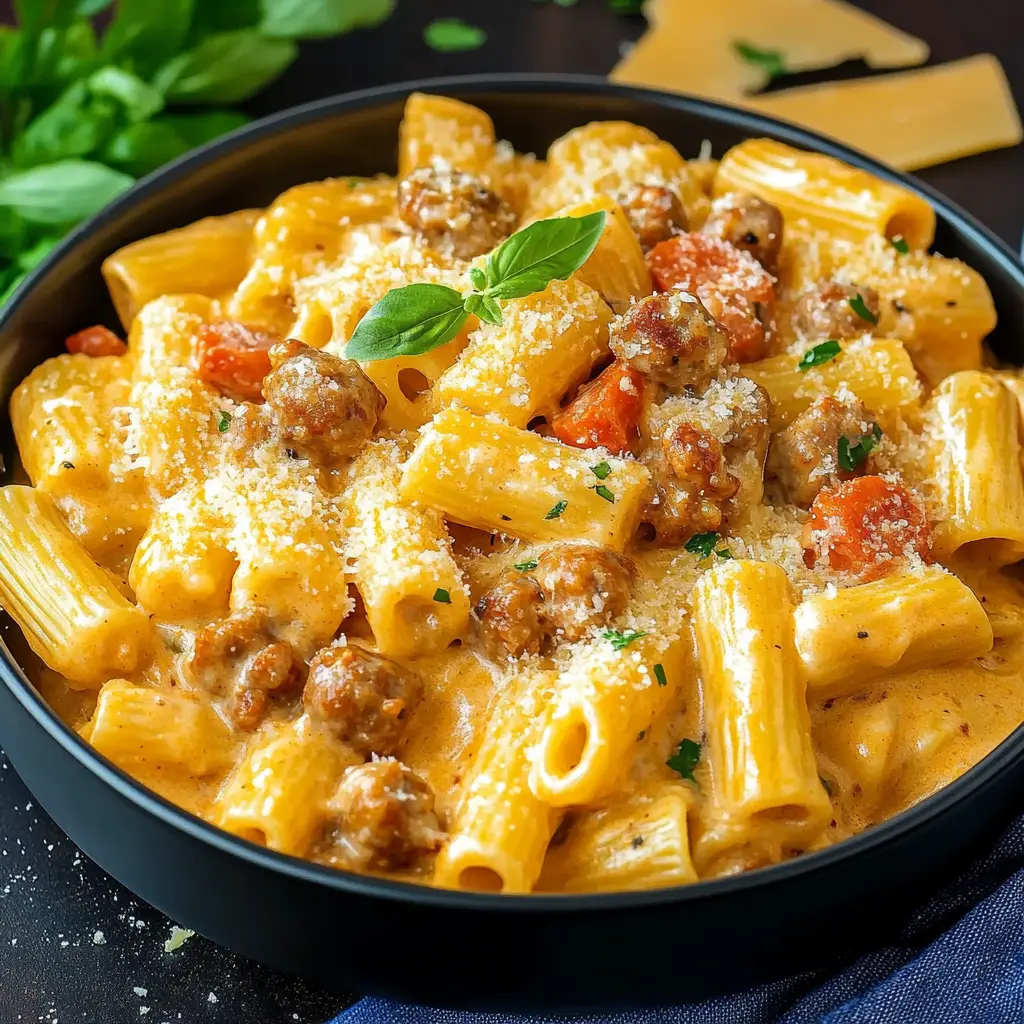
Creamy Sausage Rigatoni: A Rich and Comforting Italian-Inspired Pasta Dish
Introduction
Creamy sausage rigatoni is a comforting Italian-inspired pasta dish that brings together hearty Italian sausage, tender ridged pasta tubes, and a luxurious tomato cream sauce. This restaurant-quality meal comes together in just 30 minutes, making it perfect for busy weeknights when you crave something indulgent yet easy to prepare. The ridged texture of rigatoni pasta captures every bit of the rich, savory sauce, while the Italian sausage adds depth and satisfying protein to create a complete meal in one bowl.
Whether you’re cooking for your family or entertaining guests, this dish delivers impressive flavors without complicated techniques.
What Makes Creamy Sausage Rigatoni Special
The Perfect Pasta Shape
Rigatoni stands out as the ideal pasta choice for this dish due to its unique characteristics. These large, tube-shaped noodles feature distinctive ridges running along their length, which come from the Italian word “rigato,” meaning “ridged” or “lined”. The ridges serve a functional purpose by capturing and holding onto the creamy sauce, ensuring every bite delivers maximum flavor.
The tubular shape allows the sauce to coat both the outside and fill the hollow center. This creates a satisfying textural experience with each forkful. Rigatoni originated in the Italian regions of Lazio and Campania, where it has been a staple in traditional cooking for generations.
Italian Sausage: The Flavor Foundation
Italian sausage provides the dish’s savory backbone with its blend of herbs and spices. Traditional Italian sausage contains pork seasoned with fennel, garlic, pepper, and various aromatic spices. You can choose between mild and spicy varieties depending on your heat preference.
Mild Italian sausage offers a balanced flavor profile that appeals to all palates. Meanwhile, spicy versions include additional red pepper flakes or paprika for those who enjoy a kick. Both varieties typically contain around 210 calories per 3.3-ounce link and provide approximately 16 grams of protein.
The Creamy Tomato Sauce
The signature sauce combines heavy cream with tomato elements to create a rich, velvety coating. This dual-component sauce balances the brightness of tomatoes with the luxurious mouthfeel of cream. The addition of Parmesan cheese further enhances the umami depth and helps thicken the sauce naturally.
Essential Ingredients Breakdown
Main Components
Rigatoni Pasta: You’ll need 16 ounces of dried rigatoni for a family-sized portion. The pasta is made from durum wheat semolina, which provides carbohydrates for energy and contains some protein and fiber.
Italian Sausage: One pound of ground Italian sausage forms the protein base. Choose between mild or spicy based on your preference. Ground sausage allows for easy incorporation throughout the dish, though you can also use link sausage removed from casings.
Heavy Cream: One cup of heavy cream creates the signature richness. The fat content helps emulsify the sauce and creates a smooth, coating texture.
Tomato Products: Use either tomato paste (6 ounces), canned crushed tomatoes (14 ounces), or a combination. Tomato paste provides concentrated flavor, while crushed tomatoes add texture and brightness.
Aromatics and Seasonings
Garlic: Three to four cloves of minced garlic add essential aromatic depth. Fresh garlic releases compounds that enhance the overall flavor profile significantly.
Onion: Half a cup of chopped onion provides sweetness and foundation. Cooking the onion until soft and slightly caramelized adds complexity to the final dish.
Fennel Seeds: Half a teaspoon of crushed fennel seeds reinforces the Italian sausage flavor. Fennel is a traditional Italian seasoning that pairs naturally with pork.
Red Pepper Flakes: A quarter teaspoon adds subtle heat without overwhelming. Adjust this amount based on your spice tolerance.
Supporting Ingredients
Chicken Broth: One cup helps deglaze the pan and adds savory notes. The broth also helps create the proper sauce consistency.
Parmesan Cheese: A quarter cup of grated Parmesan enriches the sauce. Real Parmigiano-Reggiano provides the best flavor and melting properties.
Olive Oil: Three tablespoons facilitate the initial cooking process. Extra virgin olive oil adds fruity notes that complement the Italian flavors.
Step-by-Step Cooking Instructions
Preparing the Pasta
Start by bringing a large pot of salted water to a rolling boil. Use approximately 4 to 6 quarts of water per pound of pasta to allow proper movement and prevent sticking. Add a generous tablespoon of salt to the water once it reaches a boil.
Add the rigatoni to the boiling water and cook for 12 to 15 minutes until al dente. Al dente means “to the tooth” in Italian and describes pasta that is tender yet firm with slight resistance when bitten. Test a piece about 2 minutes before the package directions indicate doneness.
Before draining, reserve one cup of the starchy pasta water. This liquid gold helps adjust sauce consistency later. Drain the pasta but don’t rinse it, as the surface starch helps the sauce adhere better.
Building the Sauce Base
While the pasta cooks, heat olive oil in a large skillet over medium heat. Add the chopped onion and cook for about 5 minutes until soft and translucent. The onion should begin to develop golden edges but not burn.
Add the Italian sausage to the skillet, breaking it into small pieces with a wooden spoon. Cook for 8 to 10 minutes, stirring occasionally, until no pink remains and the sausage develops a golden-brown exterior. If excessive fat accumulates, drain most of it while leaving a thin coating for flavor.
Stir in the minced garlic, crushed fennel seeds, and red pepper flakes. Cook for about one minute, stirring constantly to prevent the garlic from burning. This brief cooking releases the aromatic compounds without creating bitterness.
Creating the Creamy Tomato Sauce
Add the tomato paste to the skillet and cook for a few minutes, stirring frequently. This step caramelizes the tomato paste and intensifies its flavor. Pour in the chicken broth and use your spoon to scrape any browned bits from the pan bottom. These flavorful bits add depth to the finished sauce.
Allow the broth to simmer until it reduces by approximately half. This concentration process typically takes 3 to 5 minutes. The reduction creates a more intense base for the cream.
Stir in the heavy cream and bring the mixture to a gentle simmer. Continue cooking for a few more minutes until the sauce thickens slightly. The sauce should coat the back of a spoon when ready.
Finishing and Serving
Add the cooked, drained rigatoni to the skillet with the sauce. Toss everything together, gradually adding reserved pasta water as needed to achieve your desired consistency. Start with a quarter cup and add more in small increments.
Stir in the grated Parmesan cheese until melted and incorporated. The cheese adds richness and helps bind the sauce to the pasta. Season with salt and pepper to taste, remembering that Italian sausage and Parmesan already contribute saltiness.
Garnish with fresh chopped parsley and additional Parmesan if desired. Serve immediately while hot for the best texture and flavor.
Pro Tips for Perfect Results
Pasta Cooking Secrets
Cook your rigatoni exactly to al dente texture rather than fully soft. The pasta continues cooking slightly when combined with the hot sauce, so slightly undercooking prevents mushiness. Start testing for doneness 2 minutes before the package instructions recommend.
Salt your pasta water generously—it should taste like the sea. This is your only opportunity to season the pasta itself from the inside. Many home cooks under-salt their pasta water, resulting in bland noodles even with flavorful sauce.
Never rinse your pasta after draining. The surface starch helps the sauce cling to each rigatoni tube. Additionally, leaving a small amount of pasta water on the noodles when draining helps everything come together.
Sausage Preparation Tips
Remove sausage from the refrigerator 15 minutes before cooking. Room-temperature sausage cooks more evenly and browns better than cold meat. If using link sausage, remove the casings by slicing lengthwise and peeling away the skin.
Break the sausage into small, bite-sized pieces rather than large chunks. Smaller pieces distribute throughout the dish more evenly and ensure every bite contains sausage. Use a wooden spoon or potato masher to achieve the ideal crumbly texture.
Don’t drain all the fat after browning the sausage. A thin layer of rendered fat carries flavor and helps the aromatics cook properly. However, if more than 2 tablespoons accumulate, remove the excess.
Sauce Consistency Mastery
Reserve more pasta water than you think you’ll need. The starchy liquid is your insurance policy for fixing sauce that becomes too thick. You can always pour out excess, but you can’t retrieve it after draining.
Add pasta water gradually in small amounts. The sauce should be slightly loose when combining with pasta, as it thickens upon standing. Aim for a consistency that coats each rigatoni generously but doesn’t pool at the bottom of your serving bowl.
Simmer your sauce gently rather than boiling vigorously. High heat can cause cream to break and become grainy. Medium to medium-low heat creates a smooth, velvety texture.
Flavor Enhancement Strategies
Toast your fennel seeds before crushing them. A quick 30-second toast in a dry pan intensifies their aromatic properties and adds nutty notes. Let them cool before crushing with a mortar and pestle or the back of a spoon.
Use freshly grated Parmesan cheese rather than pre-grated. Pre-grated varieties contain anti-caking agents that prevent smooth melting. A chunk of authentic Parmigiano-Reggiano delivers superior flavor and texture.
Add fresh herbs at the end of cooking. Delicate herbs like basil and parsley lose their brightness when cooked too long. Stirring them in just before serving preserves their fresh flavor and vibrant color.
Nutritional Information
Calorie and Macronutrient Breakdown
A typical serving of creamy sausage rigatoni contains approximately 500 to 600 calories. This estimation includes all main components: pasta, sausage, cream sauce, and cheese. The exact count varies based on portion size and ingredient proportions.
Each serving provides substantial protein, with the sausage contributing 16 grams per 3.3-ounce portion and the pasta adding another 15 grams per 2-cup serving. Protein supports muscle maintenance and creates lasting satiety. The combination makes this dish a filling, satisfying meal.
The carbohydrate content comes primarily from the rigatoni, with approximately 84 grams per 2-cup serving. These carbohydrates provide energy for daily activities and brain function. Durum wheat semolina also contributes some dietary fiber at about 4 grams per serving.
Fat Content Considerations
The fat content in creamy sausage rigatoni ranges from 20 to 30 grams per serving. Italian sausage contributes about 16 grams of fat per link, including 5 to 7 grams of saturated fat. Heavy cream adds additional fat that creates the sauce’s characteristic richness.
For a lighter version, consider using chicken Italian sausage, which contains only 3.5 grams of fat per link while maintaining 18 grams of protein. You can also substitute half-and-half for heavy cream to reduce fat content while preserving creaminess. These modifications decrease overall calories without dramatically compromising flavor.
Micronutrients and Health Benefits
Rigatoni made from durum wheat provides iron at approximately 2 milligrams per serving, contributing 27% of the daily value. Iron supports oxygen transport throughout the body and prevents fatigue. The pasta also contains small amounts of calcium and potassium.
Italian sausage contributes B vitamins, particularly vitamin B6 and B12. These vitamins support metabolism and nervous system function. Adding vegetables like spinach, peppers, or tomatoes increases the vitamin and antioxidant content significantly.
For those with gluten sensitivities, gluten-free rigatoni options exist made from rice, corn, or legume flours. These alternatives maintain the characteristic ridged shape while accommodating dietary restrictions. Always check nutrition labels, as gluten-free versions may have different macronutrient profiles.
Popular Variations and Customizations
Vegetable Additions
Transform your creamy sausage rigatoni into a more balanced meal by incorporating vegetables. Spinach works particularly well, wilting into the sauce and adding color, fiber, and iron. Add 2 to 3 cups of fresh spinach during the final minutes of cooking.
Bell peppers bring sweetness and crunch when sautéed with the onions. Red or yellow peppers add visual appeal while contributing vitamin C and antioxidants. Slice one large pepper and cook it alongside the onion until slightly softened.
Sun-dried tomatoes intensify the tomato flavor while adding chewy texture. Chop half a cup of oil-packed sun-dried tomatoes and stir them in with the cream. Their concentrated flavor pairs beautifully with Italian sausage.
Mushrooms contribute earthy, umami notes that complement the savory sausage. Slice 8 ounces of cremini or button mushrooms and sauté them before adding the sausage. The mushrooms release moisture that deglazes the pan naturally.
Protein Alternatives
While traditional recipes feature pork Italian sausage, several alternatives work equally well. Chicken Italian sausage provides a leaner option with similar seasoning profiles. It contains significantly less fat while delivering comparable protein content.
Turkey Italian sausage offers another lighter alternative. It typically contains less fat than pork while maintaining the characteristic fennel and garlic flavors. Season turkey sausage with extra herbs if you find the flavor milder than expected.
For a meatless version, plant-based Italian sausage products have improved dramatically in recent years. These alternatives often use pea protein or soy as their base and include traditional Italian seasonings. They work best when browned well to develop flavor complexity.
Cheese Variations
While Parmesan forms the traditional cheese choice, other varieties add interesting dimensions. Pecorino Romano provides a sharper, saltier flavor profile that pairs well with spicy sausage. Use it in place of or combined with Parmesan.
Ricotta creates extra creaminess when dolloped on individual servings. The mild cheese balances spicy heat and adds luxurious richness. Add 2 tablespoons per serving just before eating.
Mozzarella transforms the dish into a more pizza-like experience. Tear fresh mozzarella into pieces and stir them in at the end, allowing them to partially melt. The stretchy cheese adds playful texture.
Spice Level Adjustments
Control the heat level by choosing your sausage variety and adjusting red pepper flakes. Mild Italian sausage combined with a pinch of red pepper creates gentle warmth. For family-friendly versions, omit red pepper flakes entirely.
Hot Italian sausage delivers significant spice on its own. These versions contain paprika and extra pepper that create noticeable heat. When using spicy sausage, reduce or eliminate additional red pepper flakes.
Balance excessive heat by increasing the cream slightly or serving with extra Parmesan. Dairy products contain casein, which binds to capsaicin and reduces its burning sensation. A dollop of ricotta or sour cream on each serving also helps moderate spiciness.
Common Mistakes to Avoid
Pasta Overcooking
One of the most frequent errors involves cooking rigatoni past the al dente stage. Overcooked pasta becomes mushy and loses its ability to hold sauce properly. The ridges on rigatoni disappear when cooked too long, eliminating their functional purpose.
Set your timer for 2 minutes less than the package directions indicate. Test a piece by biting into it—you should feel slight resistance at the center. Remember that the pasta continues cooking when combined with hot sauce.
Cooking pasta in too little water causes sticking and uneven cooking. Use at least 4 quarts of water per pound of pasta. The large volume allows rigatoni tubes to move freely and cook uniformly.
Sauce Separation Issues
Cream sauces can separate when exposed to excessive heat. The fat separates from the liquid, creating an oily, grainy appearance. Always use medium or medium-low heat when working with cream.
Adding cream to a violently boiling base increases separation risk. Reduce the heat to a gentle simmer before pouring in the cream. Stir continuously as the cream incorporates to distribute heat evenly.
Using low-fat dairy substitutes often leads to disappointing results. Heavy cream contains the fat necessary for proper emulsification and luxurious texture. Half-and-half works as a lighter alternative, but skim milk typically produces thin, watery sauces.
Underseasoning
Many home cooks fail to season their pasta water adequately. Bland pasta cannot be fixed later, as salt penetrates the pasta during cooking. Your pasta water should taste pleasantly salty before adding the rigatoni.
Forgetting to taste and adjust seasoning before serving results in flat flavors. Both Italian sausage and Parmesan contribute salt, but you’ll likely need additional seasoning. Taste the finished dish and add salt and pepper incrementally until the flavors bloom.
Neglecting to balance richness with acid creates a heavy, one-dimensional dish. A squeeze of fresh lemon juice or splash of vinegar brightens cream-based sauces. This acidity cuts through fat and makes the dish more crave-worthy.
Timing and Temperature Problems
Starting with cold sausage straight from the refrigerator prevents proper browning. Let meat sit at room temperature for 15 to 20 minutes before cooking. This ensures even cooking and better crust development.
Overcrowding the pan when browning sausage creates steam instead of browning. The moisture released from the meat cannot evaporate quickly in a crowded pan. Use a large skillet that accommodates the sausage in a single layer.
Combining pasta with sauce too early or too late affects final texture. Add drained rigatoni to the sauce immediately after draining while both are hot. This allows the pasta to absorb flavor while the sauce coats evenly.
Serving Suggestions and Pairings
Ideal Side Dishes
Creamy sausage rigatoni pairs beautifully with simple vegetable sides that provide contrast. A crisp green salad dressed with lemon vinaigrette cuts through the richness. The acidity and fresh greens balance the heavy cream sauce.
Roasted vegetables like broccoli, Brussels sprouts, or asparagus add nutritional value and textural variety. Toss vegetables with olive oil, salt, and pepper, then roast at 425°F until caramelized. The charred edges complement the creamy pasta perfectly.
Garlic bread remains a classic accompaniment that’s perfect for soaking up extra sauce. Toast sliced Italian bread brushed with olive oil and rubbed with fresh garlic. The crispy bread provides satisfying crunch against the soft pasta.
Portion Sizes and Presentation
A standard serving of creamy sausage rigatoni measures approximately 1.5 to 2 cups. This portion provides adequate nutrition for a main course when paired with salad or vegetables. The dish is quite rich, so generous portions aren’t necessary.
Serve the pasta in wide, shallow bowls rather than deep plates. This presentation style allows the rigatoni to spread out, showcasing the sauce and making eating easier. Warm your bowls beforehand to keep the pasta hot longer.
Garnish each serving with freshly chopped parsley and a generous grating of Parmesan. The bright green parsley adds color contrast against the cream sauce. Coarsely ground black pepper sprinkled on top provides visual appeal and subtle spice.
Making it a Complete Meal
Transform your creamy sausage rigatoni into a fully balanced dinner by adding vegetables directly to the dish. Sautéed zucchini, bell peppers, and cherry tomatoes increase fiber, vitamins, and minerals. These additions make the meal more nutritious without requiring separate side dishes.
Consider incorporating leafy greens like spinach, kale, or arugula. These vegetables wilt quickly into the hot pasta, adding nutrients with minimal effort. Two to three cups of greens per pound of pasta creates good balance.
For protein-focused eaters, increasing the sausage proportion works well. Use 1.5 pounds of Italian sausage instead of 1 pound for a more substantial protein boost. This adjustment satisfies heartier appetites while maintaining the dish’s essential character.
Storage and Reheating Guidelines
Proper Storage Techniques
Cool leftover creamy sausage rigatoni to room temperature before refrigerating. Transfer the pasta to an airtight container within 2 hours of cooking to prevent bacterial growth. Properly stored, the dish remains safe to eat for 3 to 4 days.
Don’t leave pasta water on the leftovers, as excess moisture creates sogginess. Drain any accumulated liquid before sealing the container. This practice helps maintain the pasta’s texture during storage.
For longer storage, freeze creamy sausage rigatoni in portion-sized containers. The dish freezes reasonably well for up to 2 months, though the texture changes slightly. Cream-based sauces sometimes separate upon thawing but usually recombine when heated.
Reheating Methods
The stovetop method produces the best results for reheating creamy sausage rigatoni. Place the pasta in a skillet over medium-low heat with a few tablespoons of water or broth. Stir gently as it warms, allowing the liquid to revive the sauce.
Microwave reheating works for convenience but requires careful attention. Place portions in a microwave-safe bowl with a splash of water. Cover loosely and heat in 30-second intervals, stirring between each, until hot throughout.
Oven reheating suits larger quantities well. Transfer the pasta to an oven-safe dish, add a few tablespoons of cream or broth, and cover with foil. Bake at 350°F for 20 to 25 minutes until heated through.
Make-Ahead Strategies
Prepare components separately for easy weeknight assembly. Cook the sausage and make the sauce up to 2 days ahead, storing them in the refrigerator. Cook fresh pasta when ready to serve for optimal texture.
Assemble the entire dish except for the final cheese addition, then refrigerate. This approach works well when cooking for gatherings. Reheat gently on the stovetop, adding the Parmesan just before serving.
Prep your ingredients in advance even if not cooking ahead. Chop onions and garlic, measure spices, and grate cheese the night before. This preparation reduces actual cooking time to under 30 minutes.
Frequently Asked Questions
Can I use a different pasta shape instead of rigatoni?
Yes, several pasta shapes work well as substitutes for rigatoni. Penne, ziti, and paccheri all feature similar tubular structures that capture sauce effectively. These alternatives have different cooking times, so check package directions. Penne requires 11 to 13 minutes while rigatoni needs 12 to 15 minutes.
How do I make creamy sausage rigatoni ahead of time?
Prepare the sauce and sausage mixture up to 3 days in advance and store it refrigerated in an airtight container. Cook the pasta fresh when ready to serve for the best texture. Alternatively, assemble the complete dish up to 1 day ahead and reheat gently before serving.
What’s the best way to prevent the cream sauce from curdling?
Maintain medium to medium-low heat throughout the cooking process. Never allow cream-based sauces to boil vigorously, as high temperatures cause fat separation. Add cream to slightly cooled liquid rather than to a rolling boil. Stir continuously as the cream incorporates to distribute heat evenly.
Can I make this dish lighter or healthier?
Several modifications reduce calories and fat while maintaining flavor. Use chicken or turkey Italian sausage instead of pork to cut fat significantly. Substitute half-and-half for heavy cream to reduce richness. Add vegetables like spinach, bell peppers, and zucchini to increase nutrients and fiber.
What should I serve with creamy sausage rigatoni?
This rich pasta pairs well with light, acidic sides. A simple green salad with lemon or vinegar-based dressing provides refreshing contrast. Roasted vegetables like broccoli or asparagus add nutrition and texture. Garlic bread remains a classic choice for soaking up extra sauce.
How do I know when my rigatoni is cooked al dente?
Test a piece 2 minutes before the package directions indicate doneness. Bite into the pasta—it should feel tender on the outside with slight firmness at the center. The pasta should have a bit of resistance when chewed but not taste raw or crunchy.
Conclusion
Creamy sausage rigatoni delivers restaurant-quality comfort food in your own kitchen with minimal effort and maximum flavor. This satisfying pasta dish combines tender ridged noodles, savory Italian sausage, and luxurious tomato cream sauce into a meal that pleases both family and guests. The recipe comes together in just 30 minutes, making it perfect for busy weeknights when you crave something special.
The versatility of creamy sausage rigatoni allows endless customization to suit your preferences and dietary needs. Add vegetables for extra nutrition, adjust spice levels to your taste, or experiment with different sausage varieties. Master the basic technique, and you’ll have a reliable go-to recipe that never disappoints.
Print