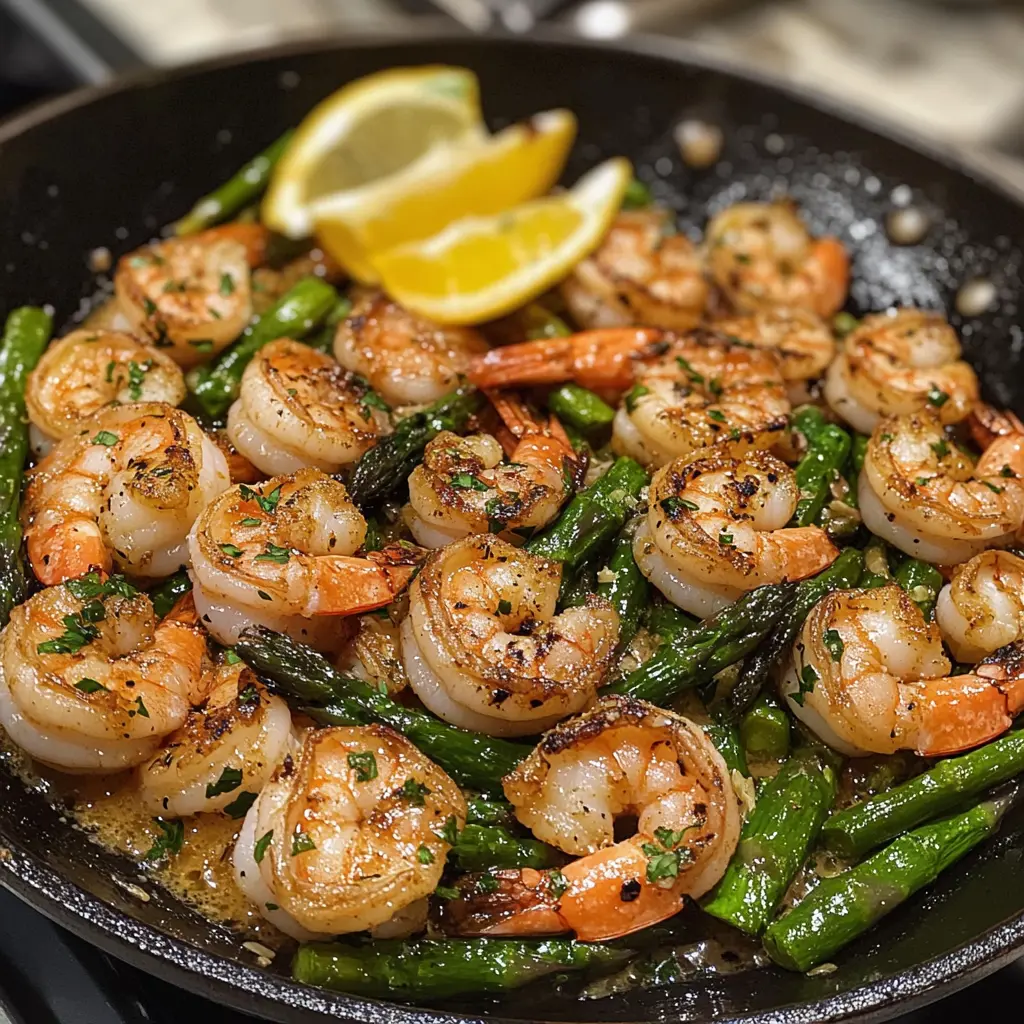
Garlic Butter Shrimp & Asparagus Skillet
Introduction
The Garlic Butter Shrimp & Asparagus Skillet delivers restaurant-quality flavor in just 15 minutes. This one-pan wonder combines succulent shrimp with crisp-tender asparagus, all coated in a luscious garlic butter sauce that makes every bite irresistible. Perfect for busy weeknights or elegant dinners, this dish proves that healthy eating doesn’t require hours in the kitchen. Whether you’re following a low-carb lifestyle or simply craving something delicious, this Garlic Butter Shrimp & Asparagus Skillet checks all the boxes.
Why You’ll Love This Garlic Butter Shrimp & Asparagus Skillet
This recipe stands out for several compelling reasons. First, it comes together incredibly quickly, making it ideal for those hectic evenings when time is scarce. Additionally, the dish requires minimal cleanup since everything cooks in one skillet. The combination of protein-rich shrimp and nutrient-dense asparagus creates a balanced meal that satisfies without weighing you down. Moreover, the garlic butter sauce adds indulgent flavor while keeping the ingredient list simple and straightforward.
Quick and Convenient
The entire cooking process takes approximately 15 to 20 minutes from start to finish. This makes it perfect for anyone juggling work, family, and other commitments. Furthermore, you don’t need any special equipment or advanced cooking skills. A single skillet handles everything beautifully.
Nutritionally Balanced
Each serving provides high-quality protein from shrimp along with fiber, vitamins, and minerals from asparagus. The dish contains only about 92 calories per 124-gram serving when prepared with minimal butter. Therefore, it fits seamlessly into various eating plans, including keto, paleo, and low-carb diets.
Key Ingredients and Their Health Benefits
Understanding what makes this dish so nutritious helps you appreciate every bite even more. Each component contributes unique health benefits that support overall wellness.
Shrimp: Protein Powerhouse
Shrimp delivers exceptional nutritional value despite its small size. It contains high-quality protein essential for muscle maintenance and repair. Additionally, shrimp provides omega-3 fatty acids, particularly EPA and DHA, which support heart and brain health. These healthy fats help reduce inflammation throughout the body. Moreover, shrimp contains astaxanthin, a powerful antioxidant that gives it the pink color.
Research shows that shrimp offers favorable fat quality with low atherogenic and thrombogenic indices. This means it actually supports cardiovascular health rather than harming it. Furthermore, shrimp contains low mercury levels compared to many fish species. The omega-3 content in shrimp can be enhanced through diet, making farm-raised options nutritionally comparable to wild-caught varieties.
Asparagus: Nutrient-Dense Vegetable
Asparagus ranks among the world’s healthiest vegetables for good reason. One cup contains only 20 calories yet provides impressive amounts of vitamins and minerals. It delivers 57% of your daily vitamin K needs, which supports blood clotting and bone health. Additionally, asparagus supplies 34% of your folate requirements, crucial for cell growth and DNA formation.
The vegetable also provides substantial vitamin A (18% DV), vitamin C (12% DV), and vitamin E (7% DV). These antioxidants neutralize free radicals that damage cells and DNA. Moreover, asparagus contains fiber that promotes healthy digestion. The rich mineral content includes selenium, copper, manganese, potassium, iron, and phosphorus.
Studies indicate that asparagus helps with wound healing thanks to its vitamin K content. It may also prevent iron deficiency anemia. For pregnant women, the high folate content supports fetal development and helps prevent neural tube defects.
Garlic: Ancient Medicine
Garlic has served medicinal purposes for thousands of years. Modern research confirms many of these traditional health claims. Garlic boosts immune function, potentially reducing the frequency and severity of colds. One study found that regular garlic consumption correlated with a 35% lower colon cancer risk.
Furthermore, garlic acts as a natural anti-inflammatory. Research shows it can help lower blood pressure and reduce cholesterol levels. Taking garlic supplements for more than two months may decrease LDL cholesterol by up to 10%. The sulfur compounds in garlic also protect against heavy metal toxicity. In one study, garlic reduced blood lead levels by 19% in workers exposed to excessive lead.
Essential Ingredients
Gathering high-quality ingredients ensures the best possible results. Here’s everything you need for this Garlic Butter Shrimp & Asparagus Skillet.
Main Ingredients
-
1.5 pounds raw shrimp, peeled and deveined
-
1 pound fresh asparagus, trimmed and cut into 3-4 inch pieces
-
4 tablespoons unsalted butter, divided
-
4-6 cloves fresh garlic, minced
-
1 shallot, thinly sliced
-
2 tablespoons fresh parsley, finely chopped
-
Juice and zest from 1 lemon
-
Kosher salt to taste
-
Freshly ground black pepper to taste
-
Red pepper flakes (optional)
Ingredient Selection Tips
Choose large or jumbo shrimp for the best texture and presentation. Fresh asparagus should have firm, straight spears with tightly closed tips. The stalks should snap easily when bent. Additionally, select plump garlic cloves without soft spots or green shoots. Fresh parsley adds bright flavor and beautiful color to the finished dish.
Step-by-Step Cooking Instructions
Following these detailed instructions guarantees perfect results every time. Pay attention to timing since shrimp cook quickly and can become rubbery when overdone.
Preparation Steps
Start by preparing all ingredients before you begin cooking. Peel and devein the shrimp if not already done. Trim the woody ends from asparagus spears by bending them until they naturally snap. Cut the tender portions into 3-4 inch pieces. Next, mince the garlic finely and slice the shallot thinly. Chop the fresh parsley and juice the lemon.
Cooking Process
Heat a large skillet over medium heat and add 1 tablespoon of butter. Once melted, add the sliced shallots and cook for about 1 minute until fragrant. Then add the asparagus pieces and season with salt. Sauté the asparagus for 3-4 minutes until it becomes crisp-tender. Test by piercing with a fork – it should be tender but still have some bite. Remove the asparagus and shallots to a plate and set aside.
Add the remaining butter to the same skillet. When it melts, add the minced garlic and cook for 30 seconds until aromatic. Be careful not to burn the garlic as it becomes bitter. Immediately add the shrimp in a single layer, avoiding overcrowding. Season with salt, pepper, and red pepper flakes if using.
Cook the shrimp for 2 minutes without moving them. This allows proper browning. Then flip each shrimp and cook for another 1-2 minutes until they turn pink and opaque. Shrimp cook quickly, so watch carefully. Overcooked shrimp become tough and rubbery.
Final Assembly
Return the cooked asparagus and shallots to the skillet with the shrimp. Add the fresh lemon juice and lemon zest. Toss everything together gently for about 30 seconds to combine flavors. Remove from heat immediately. Sprinkle with freshly chopped parsley before serving.
Pro Tips for Perfect Results
These expert tips elevate your Garlic Butter Shrimp & Asparagus Skillet from good to extraordinary.
Shrimp Cooking Secrets
Don’t overcrowd your skillet when cooking shrimp. Leave space between each piece to ensure proper browning. If necessary, work in batches rather than piling them together. Additionally, pat shrimp dry with paper towels before cooking. This helps achieve better searing and prevents steaming.
Use medium-high heat for cooking shrimp. The pan should be hot enough that the butter sizzles when shrimp are added. However, avoid extremely high heat which can burn the garlic. Cook shrimp just until they turn pink and form a slight curl. They continue cooking slightly after removal from heat.
Asparagus Preparation
Select asparagus spears of similar thickness so they cook evenly. Thicker spears may need an extra minute or two. The asparagus should retain some crunch rather than becoming mushy. Bright green color indicates proper doneness. If the asparagus looks dull or gray, it’s overcooked.
Flavor Enhancement
Use freshly minced garlic rather than pre-minced versions for superior flavor. Fresh garlic contains more active compounds that benefit health. Similarly, fresh lemon juice tastes brighter than bottled varieties. The zest adds concentrated lemon flavor without extra acidity.
Season in layers throughout cooking rather than all at once. Salt the asparagus while it cooks, then season the shrimp separately. This builds depth of flavor. Taste the finished dish and adjust seasoning before serving.
Nutritional Benefits
This Garlic Butter Shrimp & Asparagus Skillet delivers impressive nutrition in every serving.
Macronutrient Profile
A typical serving provides approximately 309 calories with a balanced macro split. The dish contains about 40-45 grams of protein from shrimp. Protein supports muscle maintenance, immune function, and satiety. Total fat content ranges from 15-20 grams depending on butter quantity. These fats include omega-3 fatty acids that reduce inflammation.
Carbohydrates remain low at around 7-9 grams per serving, making this ideal for low-carb diets. Most carbs come from asparagus, which also provides 2 grams of dietary fiber. Fiber supports digestive health and helps maintain steady blood sugar levels.
Vitamin and Mineral Content
The combination of shrimp and asparagus creates a vitamin powerhouse. Asparagus contributes significant amounts of vitamins K, A, C, E, and several B vitamins. Vitamin K supports blood clotting and bone health. Folate (vitamin B9) is essential for cell growth, DNA formation, and healthy pregnancy.
Shrimp provides vitamin B12, crucial for nerve function and red blood cell formation. It also contains selenium, an important antioxidant mineral. Meanwhile, asparagus supplies additional minerals including iron, phosphorus, potassium, and magnesium. These minerals support bone health, energy production, and muscle function.
Omega-3 Fatty Acids
Shrimp contains beneficial omega-3 fatty acids, particularly EPA and DHA. These essential fats support cardiovascular health by reducing inflammation and improving cholesterol profiles. Research shows that shrimp have favorable fat quality indices. The omega-3 content helps protect against heart disease and supports brain function.
Studies demonstrate that regular seafood consumption, including shrimp, provides maximum health benefits when choosing species with high omega-3 and low mercury levels. Shrimp fits this profile perfectly.
Serving Suggestions
This versatile dish pairs beautifully with numerous sides and complements.
Low-Carb Options
Serve the Garlic Butter Shrimp & Asparagus Skillet over cauliflower rice for a complete keto-friendly meal. The cauliflower rice soaks up the delicious garlic butter sauce perfectly. Alternatively, try zucchini noodles for a light, vegetable-forward base. Both options keep carbs low while adding volume and nutrients.
Traditional Pairings
For those not limiting carbs, serve over pasta, white rice, or quinoa. The garlic butter sauce coats these grains beautifully. A side of crusty bread helps soak up every drop of flavorful sauce. Fresh garden salad with lemon vinaigrette complements the rich main dish.
Complete Meal Ideas
This skillet serves as either an appetizer or main course. As an appetizer, it serves 6-8 people. For a main course, it feeds 3-4 people generously. Add roasted cherry tomatoes for extra color and flavor. The tomatoes add a sweet-tart element that balances the rich butter sauce.
Common Mistakes to Avoid
Steering clear of these pitfalls ensures success every time.
Overcooking Shrimp
The most common mistake involves cooking shrimp too long. Shrimp need only 2-3 minutes per side. They’re done when they turn pink and form a slight C-shape. Overcooked shrimp become tough, rubbery, and lose their sweet flavor. Remove them from heat as soon as they’re opaque throughout.
Burning Garlic
Garlic burns easily, especially in hot butter. Burnt garlic tastes bitter and ruins the dish. Add garlic after the butter melts but before it browns. Cook for only 30 seconds until fragrant. If the garlic starts turning brown, immediately add the shrimp to lower the pan temperature.
Mushy Asparagus
Asparagus should remain crisp-tender, not soft and mushy. Cook it for only 3-4 minutes. The spears should be bright green and still have a slight snap. Overcooked asparagus loses nutrients and becomes unappetizing.
Crowded Pan
Overcrowding prevents proper browning. Shrimp release moisture when they cook. If too many crowd the pan, they steam instead of searing. This results in pale, rubbery shrimp without appealing color. Use a large skillet and work in batches if necessary.
Storage and Reheating Tips
Proper storage maintains quality and food safety.
Refrigeration
Store leftover Garlic Butter Shrimp & Asparagus Skillet in an airtight container. Refrigerate within two hours of cooking. The dish keeps well for up to 3 days in the refrigerator. Make sure the container seals tightly to prevent odors from spreading.
Reheating Methods
Reheat gently to prevent overcooking the shrimp further. Use a skillet over medium-low heat, stirring frequently. Add a splash of broth or butter if the mixture seems dry. Alternatively, microwave in 30-second intervals, stirring between each. Heat just until warm throughout, not piping hot.
Meal Prep Considerations
This dish works reasonably well for meal prep. However, shrimp texture is best when freshly cooked. For optimal results, cook the asparagus ahead and prepare the shrimp fresh when serving. Store components separately and combine during reheating.
Recipe Variations
Customize this Garlic Butter Shrimp & Asparagus Skillet to suit your preferences.
Vegetable Additions
Include sliced mushrooms for extra umami flavor and meaty texture. Add them with the asparagus and cook until golden. Cherry tomatoes bring bright acidity and beautiful color. Stir them in during the last minute so they soften but don’t burst. Bell peppers add sweetness and crunch.
Spice Level
Adjust heat by increasing or decreasing red pepper flakes. For spicy lovers, add a pinch of cayenne pepper. Fresh ginger paste creates an Asian-inspired variation. Black pepper alone provides mild warmth without additional heat.
Healthy Fats
Substitute half the butter with extra virgin olive oil for lighter flavor. Ghee (clarified butter) works beautifully and offers a higher smoke point. Some recipes use avocado oil for its neutral taste and health benefits. Each fat option provides different flavors while maintaining the dish’s essence.
Protein Swaps
Try this recipe with scallops instead of shrimp. Scallops require similar cooking time and pair wonderfully with asparagus. Chicken breast strips work well too, though they need longer cooking. Cut chicken into thin strips and cook thoroughly before adding vegetables.
FAQs
How do I know when shrimp are perfectly cooked?
Properly cooked shrimp turn pink and opaque throughout, usually taking 2-3 minutes per side. They form a loose C-shape rather than a tight curl. Overcooked shrimp become rubbery and form tight spirals. The texture should be tender but slightly firm. When cut, the center should be opaque white rather than translucent.
Can I use frozen shrimp for this Garlic Butter Shrimp & Asparagus Skillet?
Yes, frozen shrimp work perfectly well. Thaw them completely before cooking by placing in the refrigerator overnight. Alternatively, run sealed shrimp under cold water for quick thawing. Pat thawed shrimp very dry with paper towels. Excess moisture prevents proper browning. Frozen shrimp often cost less than fresh while maintaining similar quality.
What size shrimp should I buy?
Large or jumbo shrimp (16-20 count per pound) work best for this recipe. They’re easier to cook without overdoing it. Medium shrimp cook faster and may become tough more easily. Extra-large shrimp create an impressive presentation. Whatever size you choose, ensure they’re all similar for even cooking.
How do I select fresh asparagus?
Choose firm, straight spears with tightly closed tips. The cut ends should look moist rather than dried out. Spears should snap cleanly when bent. Avoid limp, wilted asparagus or spears with slimy spots. Medium-thickness spears cook most evenly. Store asparagus upright in water in the refrigerator.
Is this recipe suitable for meal prep?
While possible, this dish is best enjoyed fresh. Shrimp can become rubbery when reheated. For meal prep, consider cooking asparagus ahead and preparing shrimp fresh each day. Store in airtight containers for up to 3 days. Reheat gently to maintain texture. The garlic butter sauce may separate during storage but comes together when heated.
Can I make this recipe dairy-free?
Absolutely, substitute butter with olive oil or avocado oil. Use 4 tablespoons of your chosen oil. The flavor will be lighter and less rich. Ghee offers a middle ground if you tolerate clarified butter. Some people use coconut oil, though it imparts subtle coconut flavor. All alternatives maintain the dish’s delicious essence.
Conclusion
The Garlic Butter Shrimp & Asparagus Skillet transforms simple ingredients into an extraordinary meal that satisfies on every level. This quick 15-minute recipe delivers restaurant-quality results without requiring advanced skills or extensive time. The combination of protein-rich shrimp, nutrient-dense asparagus, and aromatic garlic butter creates flavors that taste indulgent while supporting your health goals.
Whether you’re following a specific diet plan or simply want delicious food that nourishes your body, this Garlic Butter Shrimp & Asparagus Skillet fits the bill perfectly. The dish provides essential omega-3 fatty acids, vitamins, minerals, and antioxidants that protect your health. Furthermore, the recipe’s versatility allows endless customization to match your preferences and dietary needs.
Try this fantastic one-pan meal tonight and discover why it’s become a favorite in kitchens everywhere. Your family will request it again and again.
Print
Garlic Butter Shrimp & Asparagus Skillet
Description
Garlic Butter Shrimp & Asparagus Skillet
Ingredients
-
1 lb large shrimp, peeled & deveined
-
1 bunch asparagus, trimmed & cut into 2-inch pieces
-
3 tbsp butter
-
1 tbsp olive oil
-
4–5 garlic cloves, minced
-
1 tsp paprika
-
1 tsp lemon zest
-
1 tbsp lemon juice
-
½ tsp red pepper flakes (optional)
-
Salt & black pepper to taste
-
Fresh parsley, chopped (for garnish)
Instructions
-
Season Shrimp
Toss shrimp with paprika, salt, pepper, and a drizzle of olive oil. Set aside. -
Cook Asparagus
Heat 1 tbsp butter + olive oil in a large skillet over medium-high.
Add asparagus, season with salt & pepper, and sauté 3–4 minutes until bright green and tender-crisp. Remove from skillet. -
Cook Shrimp
Add remaining butter to the skillet.
Stir in garlic and cook 30 seconds until fragrant.
Add shrimp and cook 2–3 minutes per side until pink and cooked through. -
Combine
Return asparagus to the skillet.
Add lemon zest, lemon juice, and red pepper flakes.
Toss everything together for 1 more minute. -
Serve
Garnish with parsley and extra lemon if desired.
Serving Ideas
-
Serve over rice, pasta, quinoa, or mashed potatoes.
-
Great as a low-carb meal on its own.