
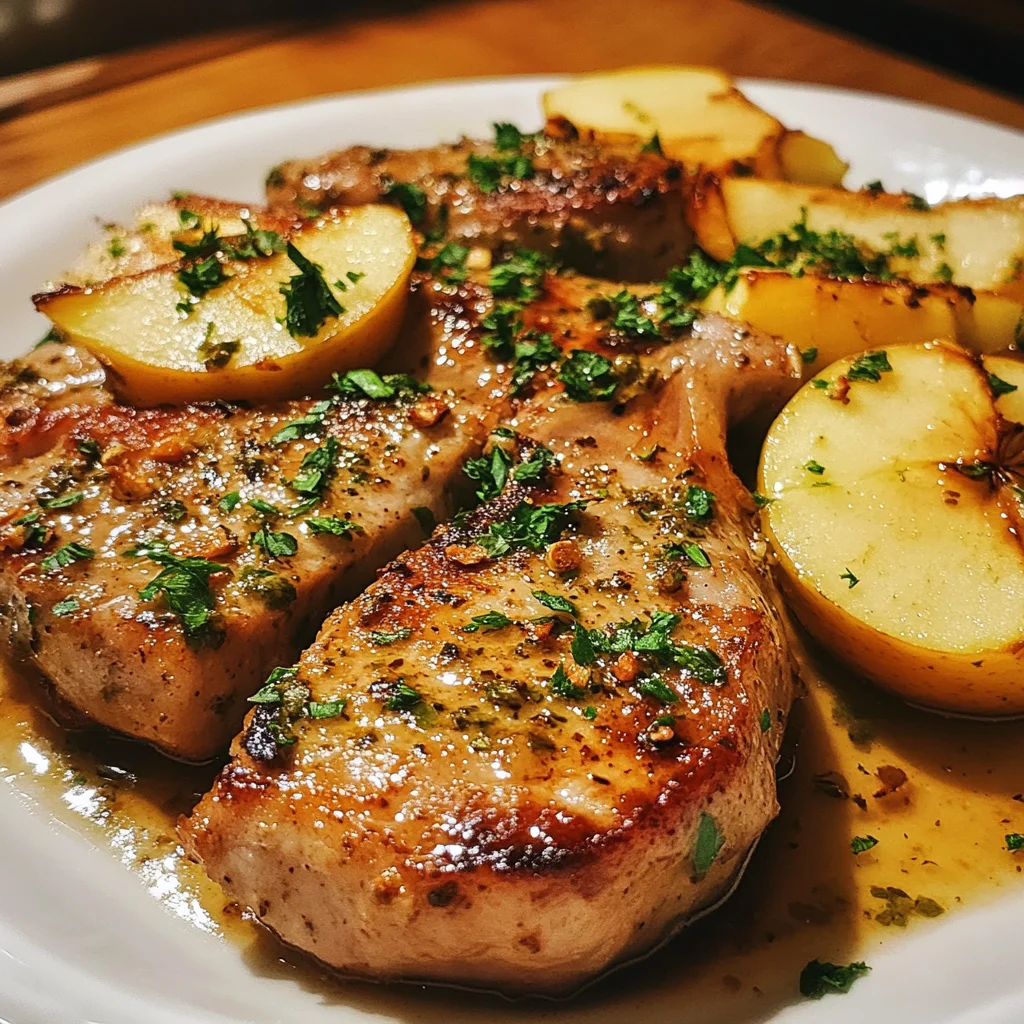
Garlic Herb Butter Pork Chops with Apples
Garlic herb butter pork chops with apples combine savory richness with natural sweetness in a meal that’s both elegant and comforting. This dish features perfectly seared pork chops infused with aromatic garlic and fresh herbs, paired with tender caramelized apples that create a sophisticated flavor profile perfect for weeknight dinners or special occasions. The buttery sauce ties everything together, making this garlic herb butter pork chops with apples recipe a family favorite that delivers restaurant-quality results at home.
Why This Dish Works
The combination of pork and apples is a classic pairing that has stood the test of time. The natural sweetness of apples perfectly complements the savory richness of pork chops. Furthermore, the garlic herb butter adds depth and complexity while keeping the meat incredibly moist during cooking. This balance creates a harmonious dish where each component enhances the others without overwhelming the palate.
The cooking method itself contributes to success. Searing the pork chops first creates a golden crust that locks in juices. Meanwhile, the apples soften in the pan drippings, absorbing all those delicious flavors. This one-pan approach ensures every element is infused with complementary tastes.
Additionally, this recipe offers impressive results with minimal effort. The entire dish comes together in under 35 minutes, making it perfect for busy weeknights. The simple technique requires no special culinary skills, yet delivers results that look and taste restaurant-worthy.
Nutritional Benefits
Pork chops are an excellent source of high-quality protein, providing approximately 26 grams per serving. This protein content supports muscle growth, repair, and overall body function. Moreover, pork chops are packed with essential vitamins and minerals that contribute to optimal health.
One serving of pork chops delivers nearly half the recommended daily amount of thiamin (vitamin B1). Thiamin is critical for proper cell function and energy metabolism. The meat also provides substantial amounts of vitamin B12, vitamin B6, niacin, selenium, zinc, phosphorus, and iron. These nutrients support immunity, oxygen transport, and nervous system function.
Apples bring their own health advantages to this dish. They contain pectin, a natural fiber that may help lower cholesterol levels. Research has shown that consuming apples can have a cholesterol-lowering effect in healthy individuals. Apples are also rich in polyphenols, particularly quercetin, a flavonoid linked to reduced risk of chronic diseases including heart disease.
Garlic provides additional health benefits through its antioxidant properties. It contains compounds that help protect cells from damage and may offer anti-inflammatory effects. Garlic also provides vitamin C, vitamin B6, and manganese. The healthy fats from butter contribute to energy levels and support the absorption of fat-soluble vitamins.
Ingredients You’ll Need
The beauty of this recipe lies in its simplicity. You’ll need bone-in or boneless pork chops as your protein base. Bone-in chops tend to be more flavorful and stay juicier during cooking. Choose thick-cut chops, preferably at least one inch thick, for the best results.
For the apples, you’ll need two to three medium apples, peeled, cored, and sliced. The variety matters, so choose apples that hold their shape during cooking. Sweet onions add another layer of flavor and complement the apples beautifully.
Fresh herbs are essential for this dish. Rosemary and thyme are traditional choices that pair exceptionally well with both pork and apples. Fresh garlic, minced, provides the aromatic foundation. You’ll also need butter, divided between cooking and making the sauce.
Additional ingredients include olive oil or vegetable oil for searing, salt and pepper for seasoning, and optional spices like cinnamon and nutmeg. For the sauce, chicken broth and apple cider help deglaze the pan and create a flavorful reduction. Some recipes incorporate apple butter for extra depth and sweetness.
Choosing the Right Pork Chops
Selecting quality pork chops is crucial for this recipe’s success. Thick-cut chops, approximately one to one-and-a-half inches thick, are ideal. Thicker chops allow for proper searing without overcooking the interior. They also provide a better texture and more satisfying eating experience.
Bone-in pork chops are generally more flavorful than boneless varieties. The bone helps retain moisture during cooking and adds richness to the final dish. However, boneless chops work perfectly well and cook slightly faster, making them a convenient alternative.
Look for pork chops with a pinkish-red color and minimal excess fat around the edges. The meat should appear firm and moist, not dry or discolored. Marbling within the meat indicates tenderness and flavor, so some internal fat streaking is actually desirable.
Consider purchasing pork chops from trusted sources that prioritize quality and proper handling. The nutritional content remains fairly consistent across different types of pork chops, though exact vitamin and mineral amounts vary slightly by cut. All cuts contain substantial amounts of beneficial nutrients regardless of whether they’re bone-in or boneless.
Best Apple Varieties
Choosing the right apple variety significantly impacts your dish’s final flavor and texture. Not all apples behave the same way when cooked. Some varieties turn mushy quickly, while others maintain their structure and provide the perfect balance of sweetness and tartness.
Honeycrisp apples are an excellent choice for this recipe. They hold their shape well during cooking and offer a sweet-tart flavor profile. Granny Smith apples provide a tart contrast to the rich, savory pork and stand up beautifully to heat. Their firmness ensures they won’t disintegrate in the pan.
Gala and Fuji apples work wonderfully if you prefer sweeter flavors. They caramelize beautifully and create a luscious sauce. Pink Lady apples offer another versatile option with balanced sweetness and acidity. Braeburn apples provide a complex flavor that combines sweet and tart notes perfectly.
Avoid using Red Delicious apples, as they tend to become mealy when cooked. Similarly, McIntosh apples break down too quickly for this application. The goal is to have tender apple slices that maintain some texture rather than turning into applesauce. Mixing two varieties can create interesting flavor complexity and visual appeal.
Essential Herbs and Seasonings
The herb selection transforms ordinary pork chops into an extraordinary meal. Rosemary is a classic choice that brings a peppery taste with a strong aroma. This herb balances the sweetness of apples while cutting through the richness of the meat. However, use rosemary sparingly, as a little goes a long way.
Thyme offers a lemony bite that combines perfectly with the juicy sweetness of apples. It cuts through the fattiness of pork while adding complexity to the dish. Fresh thyme is preferable to dried, as it provides brighter, more vibrant flavor. The combination of rosemary and thyme creates a classic herb pairing that never disappoints.
Sage is another traditional option that pairs beautifully with pork and apples. It brings an earthy, slightly peppery quality. Parsley adds a fresh, peppery kick that balances sweetness while complementing savory flavors. Dill provides a fresh taste that works wonderfully, especially when used as a garnish.
For those seeking more adventurous flavors, cilantro offers bright, zesty, citrusy undertones. It works particularly well in sauces or when making variations of the basic recipe. Basic seasonings like salt and pepper remain essential, while optional spices such as cinnamon and nutmeg can enhance the apple component. These warm spices complement the natural sweetness without overwhelming the dish.
Kitchen Equipment
Having the right tools makes this recipe considerably easier. A large, heavy-bottomed skillet or frying pan is essential. Cast iron skillets work exceptionally well because they distribute heat evenly and can go from stovetop to oven if needed. The pan should be large enough to accommodate all pork chops without crowding, as proper air circulation ensures even browning.
You’ll need tongs for flipping the pork chops safely without piercing the meat. A meat thermometer is crucial for determining doneness accurately. This tool eliminates guesswork and ensures food safety while preventing overcooking. A sharp chef’s knife makes quick work of slicing apples and onions.
Additional useful items include a cutting board, measuring spoons, and small bowls for organizing ingredients. A wooden spoon or spatula helps with deglazing the pan and stirring the sauce. Some cooks prefer using a whisk for combining sauce ingredients smoothly.
If you plan to finish the dish in the oven, ensure your skillet is oven-safe. Otherwise, a baking dish for transferring everything works perfectly. Having these tools ready before you start cooking ensures a smooth, stress-free experience.
Step-by-Step Cooking Instructions
Begin by seasoning both sides of the pork chops generously with salt and pepper. Let them sit at room temperature for about 10 minutes before cooking, which promotes even cooking. This simple step makes a significant difference in the final texture.
Heat your skillet over medium-high heat and add oil. Once the oil begins to shimmer or lightly smoke, add the pork chops. Reduce heat to medium-high and add butter along with fresh thyme sprigs. Cook the pork chops for 4 to 8 minutes per side, depending on thickness, until golden brown.
The internal temperature should reach 145°F for safe consumption. Use your meat thermometer to check the thickest part of the chop. Once cooked, remove the pork chops from the pan and set them aside to rest. This resting period allows juices to redistribute throughout the meat.
In the same pan, add sliced onions to the drippings. Cook for about 4 minutes until softened, stirring often and scraping up the browned bits from the bottom. These bits add tremendous flavor to your sauce. Add the sliced apples and minced garlic to the onions. Season with your chosen herbs and cook for 5 to 7 minutes until the apples soften but retain some texture.
Stir in the remaining butter along with any liquid components like chicken broth or apple cider. The liquid should deglaze the pan, incorporating all those delicious browned bits. If using apple butter, whisk it in now along with any additional seasonings. Simmer the mixture until it slightly thickens, about 5 to 8 minutes.
Return the pork chops to the pan, nestling them into the apple mixture. Spoon the sauce over the tops of the chops before serving hot. The entire process takes approximately 30 to 35 minutes from start to finish.
Temperature and Timing Guidelines
Understanding proper temperature control ensures both safety and optimal texture. The USDA recommends cooking pork chops to an internal temperature of 145°F, followed by a three-minute rest period. This temperature safely eliminates any parasites that could contaminate pork, which die at 138°F internal temperature.
Cooking pork to 145°F results in meat that is safe, juicy, and flavorful. The meat maintains its moisture and flavor at this temperature without drying out. For those who prefer their pork cooked more thoroughly, temperatures between 150°F and 160°F achieve medium to medium-well doneness.
The resting period is equally important as the cooking itself. During rest, the temperature remains stable or continues to increase slightly, which helps kill off any remaining harmful bacteria. Moreover, letting meat rest after cooking enhances its flavor by redistributing juices back into the meat fibers.
Timing varies based on pork chop thickness. One-inch thick chops typically require 7 to 8 minutes per side over medium-high heat. Thinner chops need only 4 to 5 minutes per side. Always use a meat thermometer rather than relying solely on timing, as variables like pan temperature and chop thickness affect cooking duration.
The apples need 5 to 7 minutes to soften adequately. They should become tender but still retain some firmness and structure. If they’re cooking too quickly, reduce heat slightly. Conversely, if liquid evaporates too fast, add small amounts of broth or cider to maintain proper consistency.
Making the Perfect Garlic Herb Butter
Creating exceptional garlic herb butter elevates this dish from good to extraordinary. Start with quality unsalted butter so you can control the seasoning level. The butter serves multiple purposes: cooking the pork, sautéing vegetables, and creating the finishing sauce.
Fresh garlic is non-negotiable for optimal flavor. Minced garlic should be added after the onions have softened to prevent burning. Garlic cooks quickly and can turn bitter if exposed to high heat for too long. Cook minced garlic for just 1 to 2 minutes until fragrant but not browned.
Fresh herbs infuse the butter with aromatic compounds as they cook. Add herb sprigs like thyme and rosemary directly to the butter while searing pork chops. The heat releases essential oils that permeate both the butter and the meat. For the finishing sauce, you can use either whole herb sprigs or chopped herbs depending on preference.
The butter’s healthy fats enhance flavor while providing energy and supporting cell function. Combined with garlic’s antioxidants, which help protect against free radicals and reduce inflammation, this butter offers both taste and nutritional benefits. The fat also aids in the absorption of fat-soluble vitamins from the meal.
When making the sauce, reserve some butter for the final addition. Adding cold butter at the end, off heat, creates a silky, emulsified sauce that coats the pork chops beautifully. This professional technique, called “mounting” with butter, transforms simple pan drippings into restaurant-quality sauce.
Tips for Caramelizing Apples
Perfectly caramelized apples require attention to technique. Start by slicing apples into uniform pieces, approximately one-quarter inch thick. Consistent sizing ensures even cooking and prevents some pieces from turning mushy while others remain raw.
Add apples to the pan after cooking the onions, using the accumulated fat and flavorful drippings. These drippings add depth that plain oil or butter cannot match. The pan should be at medium heat at this stage to prevent burning.
Avoid stirring the apples constantly. Allow them to sit undisturbed for a minute or two between stirs, which promotes caramelization. The natural sugars in apples caramelize when exposed to sustained heat, creating complex flavors and appealing color. However, stir occasionally to ensure even cooking and prevent sticking.
The apples should soften but maintain some texture, requiring about 5 to 7 minutes total. They’re ready when tender enough to pierce with a fork but still hold their shape. Overcooked apples turn to mush and lose their visual appeal.
If you’re using tart apples like Granny Smith, consider adding a touch of sweetness through apple butter or a small amount of honey. Conversely, if using very sweet apples, a splash of apple cider vinegar balances the flavors. This balance between sweet and tart creates the most satisfying result.
Common Mistakes to Avoid
Several pitfalls can compromise this otherwise straightforward recipe. Overcrowding the pan is perhaps the most common error. When pork chops touch each other, they steam rather than sear, preventing that desirable golden crust. Cook in batches if necessary to maintain proper spacing.
Cooking pork chops straight from the refrigerator leads to uneven cooking. Cold meat takes longer to reach safe internal temperature, often resulting in overcooked exteriors and undercooked centers. Always let pork chops sit at room temperature for 10 to 15 minutes before cooking.
Moving the meat too frequently disrupts crust formation. Once you place pork chops in the hot pan, resist the urge to flip them constantly. Let them cook undisturbed for the full recommended time on each side. The chops will naturally release from the pan when ready to flip.
Skipping the resting period is a critical mistake. Cutting into pork chops immediately causes all the juices to run out onto the plate. This results in dry, less flavorful meat. Always rest pork chops for at least 3 minutes after cooking.
Overcooking remains the most common issue with pork. Older guidelines recommended cooking pork to 160°F, but modern food safety standards recognize 145°F as safe. Following outdated advice produces dry, tough meat. Invest in a reliable meat thermometer to avoid this problem.
Using the wrong apple variety can disappoint. Soft apples that break down quickly create an unappealing, mushy texture. Stick with firm varieties that hold their shape during cooking. Finally, burning the garlic ruins the entire dish with bitter flavors. Add garlic after other aromatics have softened, and watch it carefully.
Serving Suggestions
This versatile dish pairs beautifully with numerous side dishes. Mashed potatoes are a classic choice that soaks up the delicious sauce. The creamy texture complements the tender pork and sweet apples perfectly. Rice pilaf offers another excellent starchy option that balances the rich flavors.
For lighter accompaniments, consider roasted vegetables like Brussels sprouts, carrots, or green beans. These vegetables add color and nutritional variety to the plate. A simple green salad with vinaigrette provides refreshing contrast to the richness of the main dish.
Bread options work wonderfully for mopping up sauce. Crusty artisan bread or soft dinner rolls both serve this purpose well. Alternatively, serve the pork chops over a bed of sautéed greens like spinach or collard greens for a nutrient-dense presentation.
For an elegant plating approach, slice the pork chops and fan them out on the plate. Arrange the caramelized apples and onions alongside or over the meat, then drizzle generously with the pan sauce. Garnish with fresh herb sprigs for visual appeal. This restaurant-style presentation impresses guests while requiring minimal extra effort.
The dish also works well for meal prep. Portion individual servings into containers with chosen sides for convenient weekday lunches. The flavors actually improve after a day as the herbs and spices continue melding together.
Storage and Reheating
Proper storage maintains quality and food safety. Allow the pork chops and apples to cool to room temperature before refrigerating, which should take no more than two hours. Transfer everything to an airtight container, storing the meat and apples together so they stay moist.
Refrigerated pork chops remain safe for 3 to 4 days when stored properly. The apples may soften slightly during storage but will still taste delicious. Keep the container in the coldest part of your refrigerator, typically the back of a lower shelf.
For longer storage, freezing is an excellent option. Place cooled pork chops and apples in freezer-safe containers or heavy-duty freezer bags. Remove as much air as possible to prevent freezer burn. Properly frozen pork maintains quality for 2 to 3 months.
When reheating, gentle methods preserve texture best. The oven works wonderfully for reheating multiple servings. Preheat to 325°F, place pork chops and apples in a covered baking dish, and heat for 15 to 20 minutes until warmed through. Add a splash of broth or water if the mixture seems dry.
For single servings, microwave reheating is convenient. Use medium power rather than high to prevent toughening the meat. Cover the dish to retain moisture and heat in 1-minute intervals, checking frequently. Stovetop reheating also works well; add the pork and apples to a pan with a little butter or broth, cover, and warm over medium-low heat.
Recipe Variations
This foundational recipe welcomes creative adaptations. Try adding different herbs like sage for an earthier profile. Sage pairs exceptionally well with both pork and apples, bringing depth to the flavor profile. Alternatively, experiment with parsley or dill for brighter, fresher notes.
Spice variations add exciting dimension. Cinnamon and nutmeg create a warming, autumn-inspired version. Ground ginger provides a subtle heat that complements the sweetness beautifully. Smoked paprika adds complexity without overwhelming the other flavors.
Vegetable additions increase nutritional value and visual appeal. Sliced mushrooms work wonderfully, adding earthiness and meaty texture. Diced butternut squash roasted alongside the apples creates a hearty fall variation. Leafy greens like collard greens or kale can be stirred in during the final minutes of cooking.
For sauce variations, try incorporating apple butter for deeper, more concentrated apple flavor. Mustard, particularly Dijon, adds tangy complexity that balances sweetness. A splash of apple cider vinegar brightens the entire dish and cuts through richness.
Consider using pork tenderloin instead of chops for an elegant presentation. Slice the cooked tenderloin and serve it over the caramelized apples. Boneless chops offer a more economical option while maintaining excellent flavor. For special occasions, bone-in rib chops provide impressive visual impact.
International flavor profiles can transform the dish entirely. Asian-inspired versions might include ginger, garlic, and a touch of soy sauce. Mediterranean variations could feature oregano, lemon, and olives alongside the apples. These adaptations demonstrate the recipe’s versatility as a canvas for creative cooking.
Frequently Asked Questions
What temperature should pork chops be cooked to?
Pork chops should reach an internal temperature of 145°F, followed by a three-minute rest period. This temperature ensures food safety while keeping the meat juicy and flavorful. Modern food safety guidelines have updated previous recommendations, making 145°F the ideal target for whole muscle cuts of pork.
Can I use boneless pork chops instead of bone-in?
Absolutely, boneless pork chops work perfectly in this recipe. They cook slightly faster than bone-in varieties, so adjust timing accordingly. While bone-in chops tend to be more flavorful and retain moisture better, boneless options are convenient and deliver excellent results.
What are the best apples for cooking with pork?
Firm varieties that hold their shape work best, including Honeycrisp, Granny Smith, Gala, Fuji, and Pink Lady apples. These apples maintain texture during cooking and offer balanced sweetness and tartness. Avoid softer varieties like Red Delicious or McIntosh, which break down too quickly.
How long should pork chops rest after cooking?
Pork chops should rest for at least 3 minutes after reaching proper internal temperature. This resting period allows juices to redistribute throughout the meat, resulting in more tender, flavorful chops. The temperature may continue rising slightly during rest, which further ensures safety.
Can I make this dish ahead of time?
Yes, this dish works well for make-ahead meals. Cook everything completely, then store in airtight containers in the refrigerator for up to 3 to 4 days. Reheat gently in the oven or on the stovetop, adding a little liquid if needed to prevent drying.
What herbs pair best with pork and apples?
Rosemary, thyme, and sage are traditional choices that complement both pork and apples beautifully. Rosemary brings peppery notes, thyme offers lemony brightness, and sage provides earthiness. Parsley, dill, and cilantro offer alternative flavor profiles for variety.
Is pork a healthy protein choice?
Yes, pork chops are an excellent source of high-quality protein and essential nutrients. A typical serving provides about 26 grams of protein along with B-vitamins, zinc, selenium, phosphorus, and iron. When trimmed of excess fat and prepared using healthy cooking methods, pork chops fit perfectly into a balanced diet.
Why do my pork chops turn out dry?
Overcooking is the primary cause of dry pork chops. Modern guidelines recommend cooking pork to 145°F rather than the outdated 160°F recommendation. Using a meat thermometer ensures accuracy and prevents overcooking. Additionally, skipping the resting period causes moisture loss.
Conclusion
Garlic herb butter pork chops with apples deliver an impressive combination of flavors, textures, and nutritional benefits in a single pan. This recipe showcases how simple ingredients can create extraordinary results when prepared with proper technique. The savory richness of perfectly seared pork chops, aromatic garlic herb butter, and sweet caramelized apples come together in a dish that satisfies both family dinners and special occasions.
The nutritional profile offers substantial protein, essential vitamins, minerals, and beneficial compounds from both the pork and apples. With proper temperature control and quality ingredients, you’ll achieve restaurant-quality results at home every time. The versatility of this recipe allows endless variations while maintaining its core appeal.
Ready to create this delicious meal? Gather your ingredients, heat your skillet, and experience how garlic herb butter pork chops with apples can transform your dinner routine into something truly special.
Print
Garlic Herb Butter Pork Chops with Apples
Description
Garlic Herb Butter Pork Chops with Apples
Ingredients
-
4 boneless pork chops
-
1 tbsp olive oil
-
2 tbsp butter
-
3 garlic cloves, minced
-
1 tsp Italian seasoning
-
1 tsp dried thyme
-
1 tsp dried rosemary
-
Salt and black pepper, to taste
-
2 apples, thinly sliced (Honeycrisp or Gala work best)
-
1 small onion, thinly sliced
-
½ cup chicken broth
-
1 tbsp Dijon mustard
-
1 tbsp honey
-
Fresh parsley for garnish
Instructions
-
Season both sides of the pork chops with salt, pepper, Italian seasoning, thyme, and rosemary.
-
Heat olive oil in a large skillet over medium-high heat. Sear the pork chops for 3–4 minutes per side until golden. Remove and set aside.
-
In the same skillet, melt the butter. Add garlic, sliced apples, and onion. Sauté for 3–4 minutes until lightly softened.
-
Stir in chicken broth, Dijon mustard, and honey. Bring to a simmer.
-
Return the pork chops to the skillet. Spoon the sauce over the top.
-
Reduce heat, cover, and cook 5–7 minutes until pork chops are cooked through and apples are tender.
-
Garnish with parsley and serve with mashed potatoes, rice, or roasted vegetables.