
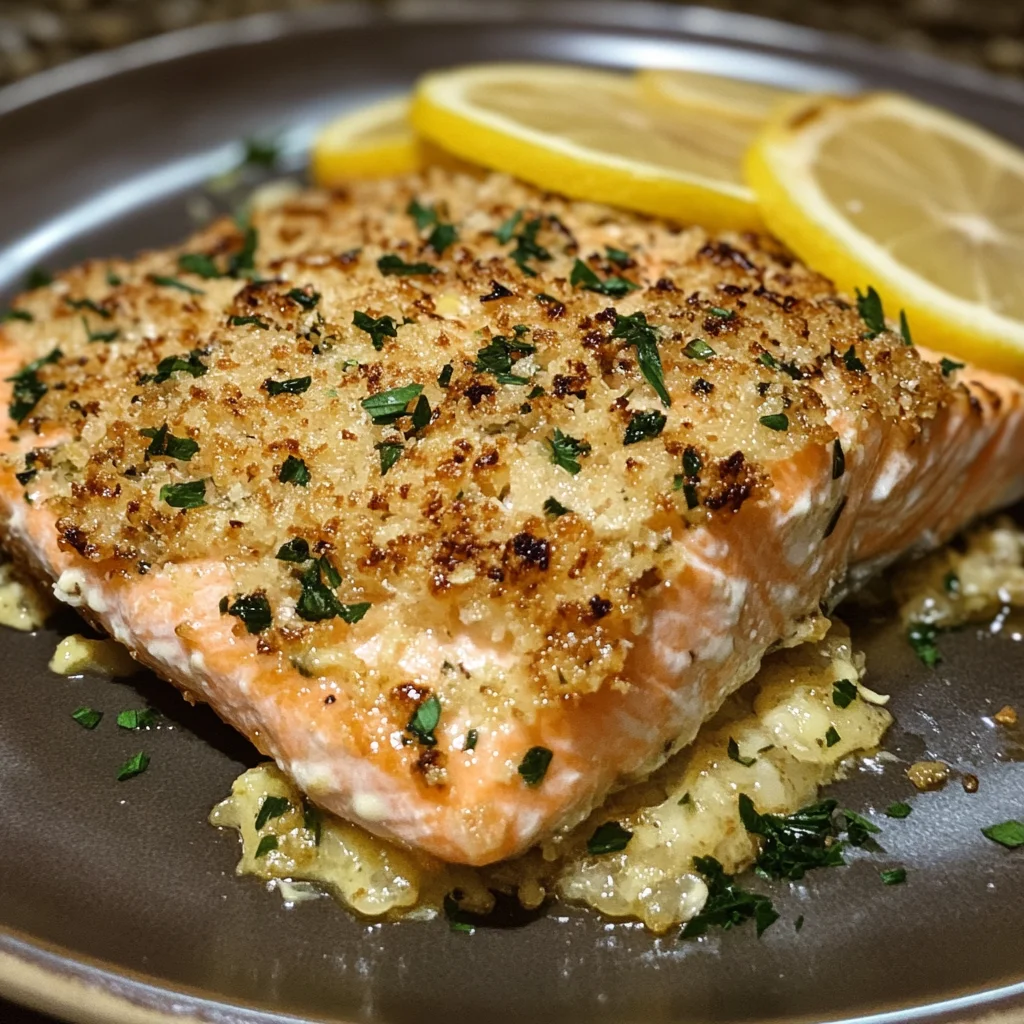
Garlic Parmesan Crusted Salmon with Lemon
Garlic Parmesan Crusted Salmon with Lemon is a restaurant-quality dish that transforms simple ingredients into an extraordinary meal. This elegant yet approachable recipe combines tender salmon fillets with a golden, crispy topping made from garlic, parmesan cheese, and fresh lemon zest. Whether you’re hosting a dinner party or preparing a weeknight dinner, this dish delivers impressive flavors with minimal effort.
Why This Recipe Works
This Garlic Parmesan Crusted Salmon with Lemon recipe stands out because it combines three powerhouse ingredients that complement each other perfectly. The parmesan cheese creates a golden crust that locks in moisture while adding nutty, savory depth. Meanwhile, fresh garlic provides aromatic complexity and numerous health benefits. The lemon brightens everything with its tangy acidity, cutting through the richness and enhancing the natural flavors of the salmon.
The cooking method ensures the fish remains moist and flaky inside while developing a crispy, flavorful exterior. By starting with properly prepared salmon and applying the crust mixture correctly, you achieve restaurant-quality results at home. Additionally, the entire dish comes together in under 30 minutes, making it ideal for busy schedules without sacrificing quality or taste.
Salmon itself is an exceptional protein choice packed with omega-3 fatty acids. These essential fats support heart health, reduce inflammation, and may help with cognitive function. Therefore, combining nutrition with incredible taste makes this recipe a winner for health-conscious home cooks.
Ingredients You’ll Need
For the Salmon
Creating this Garlic Parmesan Crusted Salmon with Lemon requires fresh, quality ingredients that work together harmoniously. Here’s everything you’ll need:
-
4 salmon fillets (6 ounces each), skin removed
-
2 tablespoons olive oil
-
Salt and freshly ground black pepper to taste
-
1 tablespoon fresh lemon juice
For the Parmesan Crust
-
3/4 cup panko breadcrumbs
-
1/2 cup finely grated parmesan cheese
-
4 cloves garlic, minced
-
2 tablespoons fresh parsley, finely chopped
-
1 tablespoon fresh chives, sliced
-
1 1/2 teaspoons lemon zest
-
3 tablespoons melted butter
-
1 teaspoon Italian seasoning
-
1/4 teaspoon paprika
Optional Garnish
-
Lemon wedges for serving
-
Additional fresh parsley
-
Extra parmesan shavings
Each ingredient serves a specific purpose. The panko breadcrumbs provide superior crispiness compared to regular breadcrumbs. Parmesan cheese adds both flavor and helps bind the crust. Fresh garlic delivers aromatic punch while lemon zest and juice brighten the entire dish.
Step-by-Step Instructions
Preparing the Salmon
Start by preheating your oven to 425°F (220°C). Line a baking sheet with parchment paper or lightly grease it to prevent sticking. Pat the salmon fillets completely dry with paper towels, as excess moisture prevents proper crust formation.
Next, arrange the salmon fillets on the prepared baking sheet, leaving space between each piece. Drizzle the olive oil over the fillets and squeeze fresh lemon juice evenly across all pieces. Season generously with salt and pepper. This initial seasoning layer ensures the fish itself is well-flavored beneath the crust.
Making the Crust Mixture
In a medium bowl, combine the panko breadcrumbs, grated parmesan cheese, minced garlic, chopped parsley, chives, and lemon zest. Add the Italian seasoning and paprika for extra flavor dimension. Pour in the melted butter and mix thoroughly until all ingredients are evenly coated. The mixture should resemble wet sand and hold together when pressed.
Furthermore, taste the crust mixture and adjust seasonings if needed. Since parmesan is naturally salty, you may not need additional salt. However, don’t be shy with the fresh herbs and lemon zest, as these ingredients provide brightness and complexity.
Applying the Crust
Distribute the crust mixture evenly over the top of each salmon fillet, pressing gently to help it adhere. Create an even layer that covers the entire surface of each piece. The butter in the mixture acts as a binder while also promoting golden browning during baking.
Use your hands or the back of a spoon to pack the mixture firmly onto the salmon. This ensures the crust stays intact during cooking and develops that desirable crispy texture. Don’t worry if some mixture falls off the edges—you can press it back onto the sides of the fillets.
Baking the Salmon
Place the baking sheet on the top oven rack and bake for 12-15 minutes. The exact timing depends on the thickness of your fillets. For best results, use an instant-read thermometer to check doneness. The internal temperature should reach 125-130°F (52-54°C) for medium doneness, which yields tender, moist salmon.
After baking, switch the oven to broil mode. Broil the salmon for 2-3 minutes, watching carefully to prevent burning. This final step creates a beautifully golden, crispy crust that contrasts wonderfully with the tender fish beneath. The crust should turn golden brown with slightly darker edges.
Remove the salmon from the oven and let it rest for 3-5 minutes before serving. This resting period allows the juices to redistribute throughout the fish, ensuring each bite is perfectly moist. Moreover, the crust will set slightly, making it easier to serve without falling apart.
Pro Tips for Perfect Results
Choosing Quality Salmon
Select fresh, wild-caught salmon whenever possible for the best flavor and nutritional profile. Look for fillets with firm flesh, bright color, and a fresh ocean smell. Avoid any salmon with brown spots, strong fishy odors, or mushy texture. Additionally, ensure uniform thickness across all fillets for even cooking.
If using frozen salmon, thaw it completely in the refrigerator overnight. Never thaw salmon at room temperature, as this promotes bacterial growth. Pat thawed salmon extra dry before proceeding with the recipe.
Temperature Control
Understanding proper cooking temperatures is crucial for Garlic Parmesan Crusted Salmon with Lemon success. While the USDA recommends 145°F for food safety, many chefs prefer 125-130°F for optimal texture and moisture. At this temperature, the salmon remains tender and slightly translucent in the center.
Use a reliable instant-read thermometer inserted into the thickest part of the fillet. Check the temperature after 12 minutes of baking, then continue cooking in 2-minute increments if needed. Remember that carryover cooking will raise the temperature by 5-10 degrees during resting.
Achieving Maximum Crispiness
For the crispiest crust, ensure your panko breadcrumbs are fresh and dry. Stale or moist breadcrumbs won’t crisp properly. Furthermore, don’t skip the broiling step, as this final blast of high heat transforms the crust from merely cooked to gloriously crispy and golden.
Position your oven rack in the upper third of the oven. This placement exposes the salmon to more direct heat, promoting better browning. However, watch carefully during broiling to prevent burning, as the line between perfectly golden and charred is thin.
Enhancing Flavor
Toast the panko breadcrumbs briefly in a dry skillet before mixing with other crust ingredients. This extra step adds nutty depth and ensures even crispier results. Additionally, use freshly grated parmesan cheese rather than pre-grated varieties, which often contain anti-caking agents that affect texture and melting.
Don’t skimp on fresh garlic and lemon zest. These aromatic ingredients provide layers of flavor that dried versions simply cannot match. Moreover, the natural oils in fresh lemon zest contain concentrated citrus flavor that elevates the entire dish.
Nutritional Benefits
Omega-3 Fatty Acids
Salmon ranks among the best dietary sources of omega-3 fatty acids EPA and DHA. These essential fats support cardiovascular health by reducing triglyceride levels and lowering the risk of heart disease and stroke. Research shows that consuming two servings of fatty fish weekly meets omega-3 requirements for most adults.
Additionally, omega-3 fatty acids may help alleviate cognitive decline in elderly individuals. These beneficial fats support brain function and have anti-inflammatory properties throughout the body. Therefore, including Garlic Parmesan Crusted Salmon with Lemon in your regular meal rotation provides significant long-term health advantages.
High-Quality Protein
Each serving of this dish delivers substantial high-quality protein essential for muscle repair and maintenance. Salmon provides complete protein containing all essential amino acids your body needs. Furthermore, protein promotes satiety, helping you feel fuller longer and potentially supporting weight management goals.
The parmesan cheese adds additional protein to the recipe, contributing approximately 32-36 grams per 100 grams. This combination makes the dish particularly beneficial for athletes, active individuals, and anyone looking to maintain lean muscle mass.
Essential Nutrients
Beyond protein and omega-3s, this Garlic Parmesan Crusted Salmon with Lemon recipe provides numerous vitamins and minerals. Salmon offers vitamin D, B vitamins, selenium, and potassium. Meanwhile, parmesan cheese contributes calcium, phosphorus, and zinc, all supporting bone health and metabolic function.
Garlic adds its own nutritional benefits, including compounds that may help lower blood pressure and cholesterol levels. Fresh garlic contains allicin, a sulfur compound linked to various health advantages including immune system support and heavy metal detoxification.
Serving Suggestions
Side Dishes
Pair your Garlic Parmesan Crusted Salmon with Lemon with complementary sides that enhance the meal. Roasted vegetables such as asparagus, Brussels sprouts, or broccoli provide color, texture, and additional nutrients. Simply toss them in olive oil, season with salt and pepper, and roast alongside the salmon during the last 20 minutes of cooking.
Alternatively, serve the salmon over a bed of creamy mashed potatoes or cauliflower mash. The smooth, buttery texture contrasts beautifully with the crispy crust. Additionally, consider pairing with rice pilaf, quinoa, or couscous for a complete meal that satisfies.
Fresh salads work wonderfully as lighter accompaniments. Try a simple arugula salad with lemon vinaigrette, or a Mediterranean-style salad with tomatoes, cucumbers, and olives. The crisp, refreshing vegetables balance the richness of the salmon perfectly.
Sauce Options
While this Garlic Parmesan Crusted Salmon with Lemon stands delicious on its own, sauces can elevate it further. A light lemon cream sauce made with cream, lemon juice, and fresh dill complements the dish beautifully. Simply combine these ingredients in a small saucepan and simmer until slightly thickened.
For a tangier option, prepare a lemon butter sauce by melting butter with lemon juice, capers, and fresh parsley. This bright sauce adds moisture and zesty flavor without overwhelming the parmesan crust. Alternatively, serve with a simple herb aioli or tartar sauce for dipping.
Presentation Tips
Serve the salmon immediately after resting for the best texture and temperature. Place each fillet on warmed dinner plates and garnish with fresh lemon wedges, additional chopped parsley, and a sprinkle of parmesan shavings. The visual appeal enhances the dining experience significantly.
Consider adding a drizzle of high-quality olive oil or melted herb butter around the plate. This restaurant-style touch adds elegance while keeping the salmon moist. Finally, arrange your chosen side dishes artfully around the salmon for a complete, beautiful presentation.
Common Mistakes to Avoid
Overcooking the Salmon
The most frequent error when preparing Garlic Parmesan Crusted Salmon with Lemon is overcooking. Salmon cooked beyond 145°F becomes dry, tough, and chalky. To prevent this, remove the fish from heat when it reaches 125-130°F, allowing carryover cooking to finish the job during resting.
Watch the salmon carefully during broiling, as the high heat can quickly push it past the ideal temperature. Check frequently during this final step and remove immediately once the crust achieves golden perfection. Remember that slightly underdone salmon is far superior to overcooked fish.
Using Wet Salmon
Moisture is the enemy of a crispy crust. Always pat salmon fillets completely dry with paper towels before seasoning and adding the crust mixture. Excess moisture prevents proper browning and creates a soggy, unappetizing topping instead of the desired crispy texture.
If your salmon was previously frozen, be especially vigilant about removing all moisture. Frozen salmon releases more water as it thaws, so allow extra drying time before proceeding with the recipe.
Incorrect Oven Positioning
Placing the baking sheet too low in the oven results in pale, undercooked crust. Position the rack in the upper third of the oven for optimal heat exposure. This placement ensures the top of the salmon receives adequate heat for proper browning while the fish cooks through evenly.
Conversely, placing the rack too close to the broiler during the final crisping step can burn the crust before the interior reaches proper temperature. Maintain about 6-8 inches between the salmon and the heating element for best results.
Skipping the Resting Period
Cutting into salmon immediately after removing it from the oven allows precious juices to run out. Let the fish rest for 3-5 minutes before serving. This brief pause allows the juices to redistribute throughout the flesh, ensuring moist, flavorful results in every bite.
During resting, the crust also sets slightly, making it less likely to fall apart during plating and serving. Use this time to prepare your sides, set the table, or make any accompanying sauces.
Storage and Reheating
Refrigerator Storage
Store leftover Garlic Parmesan Crusted Salmon with Lemon in an airtight container in the refrigerator for up to 3 days. Allow the salmon to cool completely before storing to prevent condensation, which can make the crust soggy. Place parchment paper between layers if stacking multiple pieces.
For best quality, consume leftovers within 2 days. The crust will soften during storage, though it can be partially restored through proper reheating techniques. Keep the salmon separate from any sauces or sides to maintain better texture.
Reheating Methods
Reheat salmon gently to avoid drying it out further. The oven method works best: preheat to 275°F, place salmon on a baking sheet, and heat for 10-15 minutes until warmed through. Cover loosely with foil to prevent the crust from burning before the center warms.
Alternatively, use a toaster oven or air fryer at low temperature for smaller portions. Both methods help restore some crispiness to the crust while gently warming the fish. Avoid the microwave if possible, as it produces rubbery texture and completely eliminates crust crispiness.
For crispy crust restoration, finish reheated salmon under the broiler for 1-2 minutes. Watch carefully to prevent burning. This quick blast of high heat can revive the golden, crunchy texture that makes this Garlic Parmesan Crusted Salmon with Lemon so appealing.
Freezing Considerations
While cooked salmon can be frozen, the delicate crust doesn’t freeze particularly well. The texture deteriorates significantly during thawing and reheating. If you must freeze leftovers, wrap them tightly in plastic wrap followed by aluminum foil, and use within one month.
Instead of freezing cooked salmon, consider preparing the crust mixture separately and freezing it. Portion the mixture into small bags and freeze for up to 3 months. Thaw overnight in the refrigerator, then apply to fresh salmon fillets as directed in the recipe.
Variations and Substitutions
Different Fish Options
While salmon works beautifully, this crust adapts well to other fish varieties. Try cod, halibut, or mahi-mahi for different flavors and textures. Adjust cooking times based on thickness, as leaner fish cook faster than fatty salmon. Check internal temperature frequently to prevent overcooking.
Rainbow trout also works wonderfully with this Garlic Parmesan Crusted preparation. Its delicate flavor pairs perfectly with the bold crust ingredients. Alternatively, use arctic char for a salmon-like experience with slightly milder taste.
Herb Variations
Customize the crust by changing the fresh herbs. Basil, dill, oregano, or tarragon each bring unique character to the dish. Mix and match according to your preferences or what’s available in your garden. Fresh herbs always provide superior flavor compared to dried versions.
For a Mediterranean twist, add chopped sun-dried tomatoes and fresh basil to the crust mixture. Italian-inspired variations can include fresh rosemary and thyme. These adaptations keep the recipe interesting while maintaining the core concept of crispy, flavorful crust.
Crust Alternatives
Substitute almond flour or crushed pork rinds for panko breadcrumbs to create a low-carb or gluten-free version. Both alternatives crisp nicely and provide different flavor profiles. Adjust butter quantities as needed since different base ingredients absorb moisture differently.
For added texture and nutrition, incorporate finely chopped nuts such as almonds or walnuts into the crust mixture. These add healthy fats and create interesting crunch. Toast the nuts lightly before adding for enhanced nutty flavor.
Cheese Options
While parmesan is traditional, other hard aged cheeses work well. Try Pecorino Romano for sharper, saltier flavor, or aged Asiago for nutty sweetness. Grana Padano offers similar characteristics to parmesan at often lower cost. Each cheese brings slightly different flavor profiles while maintaining the essential crust structure.
For a flavor boost, combine multiple cheeses in the crust. A blend of parmesan and pecorino creates complex savory notes. However, avoid soft or fresh cheeses, as they don’t crisp properly and can make the topping soggy.
Frequently Asked Questions
Q: Can I use frozen salmon for Garlic Parmesan Crusted Salmon with Lemon?
Yes, frozen salmon works well if properly thawed and dried. Thaw completely in the refrigerator overnight, then pat extremely dry with paper towels before proceeding. Frozen salmon releases more moisture than fresh, so extra drying time is essential for a crispy crust.
Q: What internal temperature should salmon reach?
The USDA recommends 145°F for safety, but many chefs prefer 125-130°F for optimal texture. At this lower temperature range, salmon remains moist and tender. Use an instant-read thermometer for accuracy and remove from heat slightly before target temperature to account for carryover cooking.
Q: How do I prevent the crust from falling off?
Ensure the salmon is completely dry before applying the crust, and press the mixture firmly onto the fish. The butter in the mixture acts as a binder. Additionally, avoid moving the salmon once placed on the baking sheet, as this can dislodge the topping.
Q: Can I prepare the crust mixture ahead of time?
Yes, prepare the crust mixture up to 24 hours in advance and refrigerate in an airtight container. Bring to room temperature before applying to salmon for easier spreading. This make-ahead approach saves time when preparing weeknight dinners or entertaining guests.
Q: What’s the best way to remove salmon skin?
Use a sharp knife to separate the flesh from the skin by sliding the blade between them at a slight angle. Alternatively, ask your fishmonger to remove the skin when purchasing. Skinless fillets are often available at most supermarkets, saving you this prep step entirely.
Q: Can I make this recipe dairy-free?
Substitute nutritional yeast for parmesan cheese and use olive oil instead of butter. While the flavor profile changes, nutritional yeast provides savory, cheese-like notes. Add extra garlic and herbs to compensate for the missing cheese flavor complexity.
Q: How do I know when salmon is done without a thermometer?
Gently press the center of the fillet with a fork. Properly cooked salmon flakes easily and appears opaque throughout with slight translucency in the center. The flesh should be firm yet springy, not mushy or rubbery. However, a thermometer provides the most reliable results.
Q: Why did my crust turn out soggy?
Soggy crust typically results from excess moisture on the salmon or insufficient oven temperature. Always pat fish completely dry, ensure your oven is properly preheated to 425°F, and don’t skip the broiling step. Additionally, using fresh, dry panko breadcrumbs rather than regular breadcrumbs helps achieve crispiness.
Conclusion
Garlic Parmesan Crusted Salmon with Lemon delivers restaurant-quality results with straightforward techniques and accessible ingredients. This recipe combines the nutritional benefits of omega-3-rich salmon with the bold flavors of garlic, parmesan, and bright lemon. The golden, crispy crust contrasts beautifully with tender, flaky fish, creating a memorable dining experience that impresses family and guests alike.
Whether you’re new to cooking fish or an experienced home chef, this recipe offers reliable success. The step-by-step instructions, pro tips, and troubleshooting guidance ensure perfect results every time. Moreover, the versatility allows endless customization to suit your preferences and dietary needs.
Print
Garlic Parmesan Crusted Salmon with Lemon
Description
Garlic Parmesan Crusted Salmon with Lemon
Ingredients
-
4 salmon fillets (about 6 oz each)
-
2 tbsp olive oil
-
3 tbsp melted butter
-
4 garlic cloves, minced
-
½ cup grated Parmesan cheese
-
⅓ cup panko breadcrumbs
-
1 tbsp lemon zest
-
1 tbsp lemon juice
-
1 tsp paprika
-
½ tsp black pepper
-
½ tsp salt
-
2 tbsp fresh parsley, chopped
-
Lemon slices (for topping)
Instructions
-
Prep the Salmon
Preheat oven to 400°F (200°C).
Pat salmon dry and place on a foil-lined baking sheet.
Brush with olive oil, then season with salt, pepper, and paprika. -
Make Garlic Parmesan Crust
In a bowl, mix melted butter, garlic, Parmesan, panko, lemon zest, and parsley. -
Top the Salmon
Press the Parmesan-garlic mixture onto each fillet to form a thick crust.
Add lemon slices on top if you want extra lemon flavor. -
Bake
Bake 12–15 minutes, until salmon flakes easily and the crust is golden. -
Finish
Drizzle fresh lemon juice over the salmon before serving.