
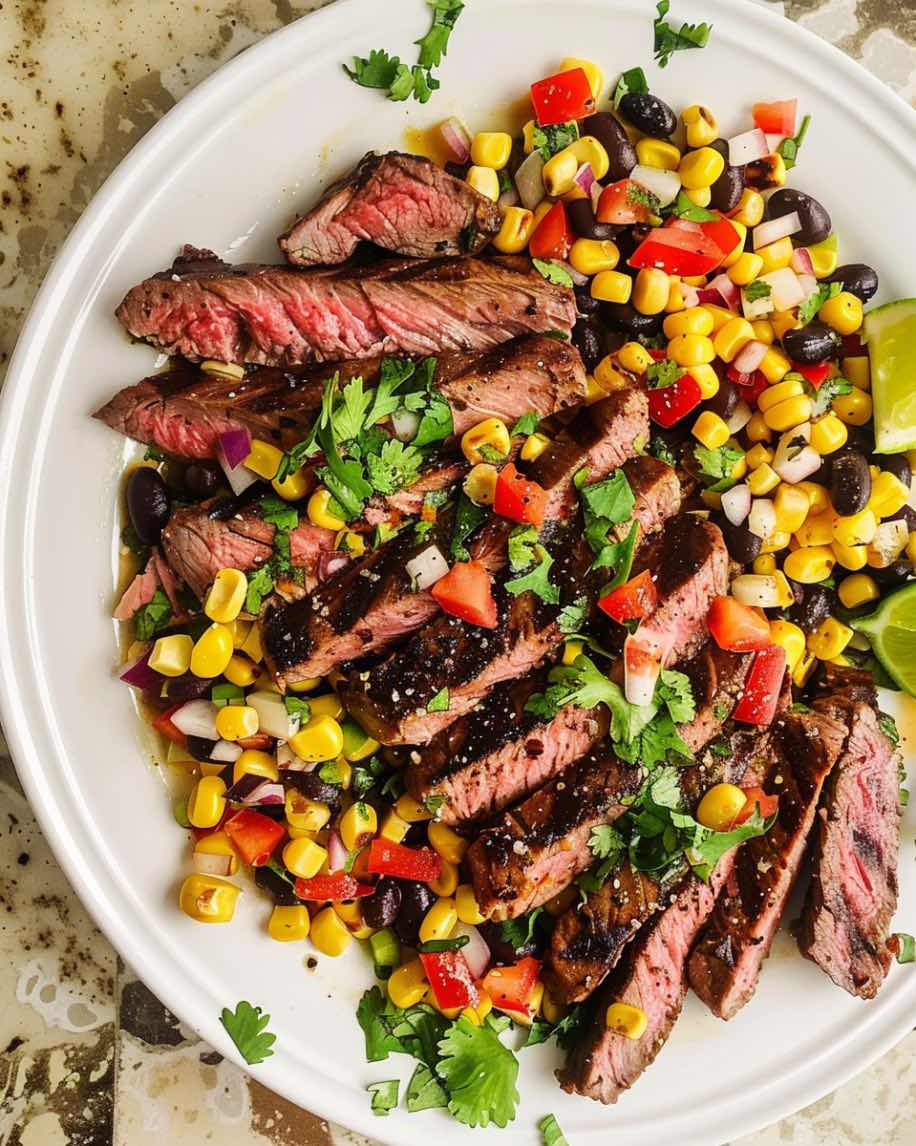
Grilled Flank Steak with Black Bean & Corn Salsa
Introduction
Grilled flank steak with black bean and corn salsa is a show-stopping dish that delivers restaurant-quality results at home. This protein-packed meal combines tender, juicy steak with a fresh, zesty salsa that brings vibrant colors and bold flavors to your plate. Moreover, this recipe takes less than 30 minutes of active cooking time, making it perfect for weeknight dinners or weekend gatherings.
Flank steak is a lean, flavorful cut that becomes incredibly tender when properly marinated and grilled. Additionally, the black bean and corn salsa adds a nutritious, fiber-rich component that complements the rich, savory meat perfectly. This combination creates a balanced meal that satisfies both your taste buds and nutritional needs.
Whether you’re hosting a summer barbecue or preparing a quick family dinner, this grilled flank steak recipe will become your go-to favorite. Furthermore, the colorful salsa makes the dish visually appealing and adds a refreshing contrast to the smoky, charred steak.
What Makes Flank Steak Perfect for Grilling
Flank steak is an excellent choice for grilling due to its unique characteristics. First, this cut comes from the abdominal muscles of the cow, which means it has long, visible muscle fibers. These fibers absorb marinades exceptionally well, allowing flavors to penetrate deeply into the meat.
Lean Yet Flavorful
Unlike fattier cuts, flank steak offers intense beefy flavor without excessive marbling. Consequently, it provides a healthier protein option while still delivering satisfying taste. The lean nature of this cut also means it cooks quickly over high heat, developing a beautiful crust while remaining tender inside.
Cost-Effective Choice
Flank steak typically costs less than premium cuts like ribeye or filet mignon. Therefore, it’s an economical option for feeding a crowd. Despite its affordability, flank steak doesn’t compromise on flavor or texture when prepared correctly.
Versatile Cooking Methods
While grilling is ideal, flank steak also works well with broiling, pan-searing, or even slow cooking. However, high-heat grilling creates the perfect balance of smoky char on the outside and juicy tenderness inside. The quick cooking time prevents the meat from becoming tough or dry.
Ingredients You’ll Need
For the Flank Steak Marinade:
-
1.5 to 2 pounds flank steak
-
¼ cup olive oil
-
¼ cup soy sauce (low-sodium preferred)
-
3 tablespoons lime juice (freshly squeezed)
-
4 cloves garlic (minced)
-
1 tablespoon honey or brown sugar
-
1 teaspoon ground cumin
-
1 teaspoon smoked paprika
-
½ teaspoon black pepper
-
½ teaspoon red pepper flakes (optional)
-
2 tablespoons fresh cilantro (chopped)
For the Black Bean & Corn Salsa:
-
1 can (15 oz) black beans (drained and rinsed)
-
1.5 cups fresh or frozen corn kernels (cooked)
-
1 large tomato (diced)
-
½ red onion (finely chopped)
-
1 jalapeño pepper (seeded and minced)
-
¼ cup fresh cilantro (chopped)
-
2 tablespoons lime juice
-
2 tablespoons olive oil
-
1 teaspoon ground cumin
-
½ teaspoon salt
-
¼ teaspoon black pepper
-
1 avocado (diced, optional)
How to Prepare the Marinade
Creating the perfect marinade is essential for tender, flavorful grilled flank steak. The marinade serves multiple purposes: it adds flavor, helps tenderize the meat, and creates a beautiful caramelized crust during grilling.
Combining the Ingredients
Start by whisking together all marinade ingredients in a medium bowl. First, combine the olive oil and soy sauce as your base. Then, add the freshly squeezed lime juice, which provides acidity to help break down tough muscle fibers.
Next, incorporate the minced garlic, which adds aromatic depth and savory notes. The honey or brown sugar balances the salty and acidic elements while promoting caramelization during grilling. Additionally, the cumin and smoked paprika contribute earthy, warm flavors that complement the beef perfectly.
Balancing Flavors
The key to an excellent marinade is achieving the right balance. The oil carries fat-soluble flavors and prevents the meat from drying out. Meanwhile, the acidic lime juice tenderizes without turning the meat mushy. Furthermore, the soy sauce adds umami depth and saltiness that enhances the natural beef flavor.
For those who enjoy heat, red pepper flakes add a pleasant kick without overwhelming the dish. However, you can adjust the spice level according to your preference. Fresh cilantro in the marinade introduces herbaceous notes that preview the fresh flavors in the salsa.
Marinating Tips for Maximum Flavor
Proper marinating technique dramatically improves your grilled flank steak results. Follow these guidelines to ensure optimal flavor penetration and tenderness.
Timing Matters
Marinate flank steak for a minimum of 2 hours, though overnight marination yields the best results. The extended time allows the acidic components to break down tough connective tissues. However, don’t exceed 24 hours, as excessive exposure to acid can make the meat mushy.
For quick preparations, even 30 minutes of marinating time makes a noticeable difference. Nevertheless, plan ahead when possible to achieve restaurant-quality tenderness and flavor.
Use Proper Containers
Place the steak in a large zip-top bag or shallow glass dish. Plastic bags work exceptionally well because they allow you to massage the marinade into the meat. Additionally, bags take up less refrigerator space and ensure even coating.
Avoid using aluminum containers, as the acidic marinade can react with the metal. Glass or food-grade plastic containers are safe alternatives that won’t affect flavor.
Maximize Surface Contact
Score the surface of the flank steak lightly with a sharp knife before marinating. Make shallow diagonal cuts about ¼ inch deep across the grain. This technique creates more surface area for the marinade to penetrate. Moreover, it helps the meat cook more evenly.
Turn the steak occasionally during marination to ensure all sides receive equal exposure. If using a bag, squeeze out excess air before sealing to maximize contact between meat and marinade.
Making the Black Bean & Corn Salsa
The black bean and corn salsa brings freshness, texture, and nutritional value to your grilled flank steak. This vibrant topping is easy to prepare and can be made ahead of time.
Preparing the Vegetables
Begin by draining and rinsing the canned black beans thoroughly. This step removes excess sodium and improves the overall flavor. If using fresh corn, grill or roast the kernels first for added smokiness. Alternatively, frozen corn works perfectly and requires only brief cooking.
Dice the tomato into small, uniform pieces. Remove excess seeds and liquid to prevent the salsa from becoming watery. Similarly, finely chop the red onion to distribute its sharp flavor evenly throughout the mixture.
Adding Fresh Elements
Seed and mince the jalapeño pepper carefully. The seeds contain most of the heat, so adjust according to your spice tolerance. Wash your hands thoroughly after handling peppers to avoid irritation.
Chop fresh cilantro just before adding it to the salsa. This preserves its bright, aromatic qualities. Furthermore, cilantro adds essential freshness that balances the rich flavors of the grilled steak.
Combining and Seasoning
Mix all salsa ingredients in a large bowl. Drizzle with olive oil and lime juice, then toss gently to combine. Season with ground cumin, salt, and black pepper. Taste and adjust seasonings as needed.
Let the salsa rest for at least 15 minutes before serving. This resting period allows the flavors to meld together beautifully. If adding avocado, dice it just before serving to prevent browning.
Step-by-Step Grilling Instructions
Grilling flank steak requires attention to technique, but the process is straightforward. Follow these steps for perfectly cooked meat every time.
Preparing the Grill
Preheat your grill to high heat (450-500°F). Clean the grates thoroughly with a wire brush to prevent sticking. Then, oil the grates lightly using a folded paper towel dipped in vegetable oil.
A two-zone fire works best for flank steak. Create a hot direct-heat zone and a cooler indirect-heat zone. This setup allows you to sear the meat over high heat and then move it to lower heat if needed.
Removing Excess Marinade
Take the flank steak from the refrigerator 20-30 minutes before grilling. This brings the meat to room temperature for more even cooking. Remove the steak from the marinade and shake off excess liquid. Pat the surface dry with paper towels to promote better browning.
Discard the used marinade, as it has contacted raw meat. Never use it as a sauce without boiling it first for food safety reasons.
Grilling Process
Place the flank steak on the hot grill at a 45-degree angle to the grates. This creates attractive grill marks. Close the lid and cook for 4-5 minutes without moving the meat. Resist the urge to flip it early, as this prevents proper searing.
After the first side develops a nice char, flip the steak using tongs. Grill the second side for another 4-5 minutes. For medium-rare doneness, aim for an internal temperature of 130-135°F. Medium doneness requires 140-145°F.
Checking Doneness
Use an instant-read meat thermometer to check the internal temperature. Insert it into the thickest part of the steak horizontally. Remember that the temperature will rise another 5 degrees during resting.
Alternatively, use the touch test. Press the steak gently with your finger. Rare meat feels soft and squishy. Medium-rare has slight resistance. Medium feels firmer with some give.
How to Slice Flank Steak Correctly
Proper slicing technique is crucial for tender grilled flank steak. Cutting against the grain shortens the long muscle fibers, making each bite easier to chew.
Resting the Meat
Transfer the grilled steak to a cutting board immediately after removing it from the heat. Tent it loosely with aluminum foil and let it rest for 10 minutes. This resting period allows the juices to redistribute throughout the meat, ensuring every slice stays moist and flavorful.
Skipping the resting step causes juices to run out when you cut the steak. Consequently, the meat becomes dry and less enjoyable. Patience during this stage significantly improves the final result.
Identifying the Grain
Look carefully at the surface of the flank steak. You’ll notice parallel lines running in one direction. These lines represent the muscle fibers, also called the grain. Your goal is to cut perpendicular to these lines.
Hold your knife at a 90-degree angle to the grain direction. This ensures you’re cutting across the fibers rather than along them. When sliced correctly, the meat will have short fibers that are easy to chew.
Slicing Technique
Use a sharp chef’s knife for clean cuts. Hold the knife at a 45-degree angle to the cutting board for wider slices. Cut the steak into thin strips, approximately ¼ to ½ inch thick.
Thinner slices are generally more tender and visually appealing. Additionally, thin slices stretch further when serving a crowd. Arrange the sliced steak on a serving platter and top generously with the black bean and corn salsa.
Serving Suggestions
Grilled flank steak with black bean and corn salsa pairs beautifully with various side dishes and accompaniments. These suggestions help create a complete, satisfying meal.
Traditional Sides
Serve the steak with warm flour or corn tortillas for a taco-style presentation. Guests can build their own tacos by filling tortillas with sliced steak and salsa. Additionally, provide lime wedges, sour cream, and extra cilantro as garnishes.
Spanish rice or cilantro lime rice makes an excellent side dish. The fluffy, seasoned rice complements the bold flavors of the steak and salsa perfectly. Furthermore, rice helps soak up any juices from the meat.
Fresh Accompaniments
A simple green salad with lime vinaigrette adds freshness and balances the richness of the steak. Include mixed greens, cucumber, and cherry tomatoes for color and crunch. Moreover, the acidity in the vinaigrette cleanses the palate between bites.
Grilled vegetables such as bell peppers, zucchini, and onions enhance the smoky flavors of the dish. Toss them with olive oil and seasonings before grilling alongside the steak. This creates a cohesive meal with complementary cooking methods.
Creative Presentations
Transform leftovers into steak salad bowls. Layer mixed greens, the black bean and corn salsa, sliced steak, and your favorite toppings. Drizzle with a tangy dressing for a lighter meal option.
Another option is steak quesadillas. Place sliced steak and cheese between tortillas, then grill until crispy and melted. Cut into wedges and serve with the salsa as a dipping sauce.
Storage and Meal Prep Tips
Proper storage extends the life of your grilled flank steak and salsa. These tips help you prepare components in advance for easy weeknight meals.
Storing Cooked Steak
Allow the grilled flank steak to cool completely before storing. Place sliced or whole steak in an airtight container and refrigerate for up to 4 days. Separate slices with parchment paper to prevent them from sticking together.
For longer storage, freeze the cooked steak for up to 3 months. Wrap individual portions tightly in plastic wrap, then place in freezer bags. Remove as much air as possible to prevent freezer burn.
Storing the Salsa
The black bean and corn salsa keeps well in the refrigerator for 3-4 days. Store it in an airtight container to maintain freshness. However, wait to add avocado until just before serving to prevent browning.
The salsa’s flavors actually improve after a day as the ingredients meld together. Make it a day ahead for even better taste. Drain any excess liquid before serving to prevent sogginess.
Meal Prep Strategies
Prepare the marinade up to 3 days in advance and store it separately. When ready to cook, simply add the flank steak and marinate as directed. This saves time on busy cooking days.
The salsa can be completely prepared 1-2 days ahead. Store vegetables chopped but separate, then mix just before serving for optimal texture. This approach keeps ingredients fresh while reducing last-minute preparation.
Grill extra steak for meal prep purposes. Sliced cooked steak works wonderfully in salads, wraps, grain bowls, and sandwiches throughout the week. This versatility makes batch cooking worthwhile.
Common Mistakes to Avoid
Understanding common pitfalls helps you achieve perfect grilled flank steak every time. Avoid these mistakes for consistent, delicious results.
Overcooking the Meat
Flank steak becomes tough and chewy when overcooked. This lean cut contains minimal fat, so it dries out quickly past medium doneness. Always use a meat thermometer to monitor internal temperature accurately.
Remove the steak from the grill when it reaches 5 degrees below your target temperature. The carryover cooking during resting will bring it to the perfect doneness. This technique prevents accidental overcooking.
Skipping the Marinade
Unmarinated flank steak can be quite tough and lack flavor depth. The marinade serves an essential purpose by tenderizing the meat’s long muscle fibers. Even a short 30-minute marinade makes a significant difference.
Plan ahead whenever possible to allow for proper marinating time. The investment of a few hours yields dramatically better results. Your patience will be rewarded with tender, flavorful meat.
Incorrect Slicing
Cutting with the grain instead of against it leaves you with chewy, tough meat. Always identify the direction of the muscle fibers before slicing. Take a moment to observe the grain and plan your cuts accordingly.
Additionally, thick slices are harder to chew than thin ones. Aim for slices no thicker than ½ inch for optimal tenderness. A sharp knife makes this task easier and produces cleaner cuts.
Poor Heat Management
Grilling over insufficient heat prevents proper searing and caramelization. Preheat your grill thoroughly to achieve high temperatures needed for a good crust. The intense heat creates the flavorful char that makes grilled steak special.
Conversely, excessive heat can burn the exterior before the interior cooks properly. Monitor your grill temperature and adjust as needed. Using a two-zone fire gives you more control over the cooking process.
Nutritional Benefits
Grilled flank steak with black bean and corn salsa offers impressive nutritional value. This meal provides essential nutrients while remaining relatively lean and wholesome.
Protein Powerhouse
Flank steak delivers high-quality protein essential for muscle maintenance and growth. A 4-ounce serving provides approximately 30 grams of protein. This makes it an excellent choice for active individuals and those focused on protein intake.
The black beans in the salsa add plant-based protein and fiber. This combination creates a complete amino acid profile when consumed together. Furthermore, the protein helps keep you feeling satisfied and full longer.
Rich in Vitamins and Minerals
Flank steak contains significant amounts of iron, zinc, and B vitamins. Iron supports healthy blood cell production and prevents anemia. Zinc boosts immune function and aids in wound healing. B vitamins, particularly B12, support energy metabolism and nervous system health.
The vegetables in the salsa contribute vitamins A and C, potassium, and folate. Corn provides additional fiber and antioxidants like lutein and zeaxanthin. These nutrients support eye health, immune function, and overall wellness.
Healthy Fats
The olive oil in both the marinade and salsa supplies heart-healthy monounsaturated fats. These fats help reduce inflammation and support cardiovascular health. If you add avocado to the salsa, you’ll benefit from additional healthy fats and potassium.
The overall fat content remains moderate, making this a balanced meal option. Unlike fattier cuts of beef, flank steak provides protein without excessive saturated fat. This balance supports heart health while delivering satisfying flavor.
Fiber Content
The black bean and corn salsa significantly boosts the meal’s fiber content. A serving provides 8-10 grams of dietary fiber. This supports digestive health, helps regulate blood sugar, and promotes feelings of fullness.
Adequate fiber intake is linked to reduced risk of heart disease, diabetes, and certain cancers. The combination of protein and fiber in this meal creates lasting satiety. Consequently, you’re less likely to overeat or snack excessively.
Recipe Variations
Customize your grilled flank steak with black bean and corn salsa using these creative variations. These adaptations suit different tastes and dietary preferences.
Asian-Inspired Marinade
Replace the cumin and paprika with fresh ginger and sesame oil. Add a splash of rice vinegar instead of lime juice. Include a teaspoon of honey for subtle sweetness. This variation creates an Asian fusion flavor profile that pairs beautifully with the steak.
Top with the traditional salsa or swap it for an Asian slaw. Combine shredded cabbage, carrots, cilantro, and a ginger-lime dressing. This lighter option complements the rich, savory steak perfectly.
Southwestern Style
Enhance the southwestern flavors by adding chipotle powder to the marinade. Include oregano and a pinch of cinnamon for depth. These warm spices create a complex, layered flavor profile.
Add diced mango or pineapple to the salsa for a sweet-savory contrast. The fruit’s natural sweetness balances the smoky, spicy elements beautifully. This tropical twist makes the dish feel special and unique.
Mediterranean Twist
Create a Mediterranean-inspired marinade using lemon juice, oregano, and rosemary. Add plenty of minced garlic and extra virgin olive oil. This fresh, herbaceous combination offers a different but equally delicious flavor direction.
Replace the black bean salsa with a Mediterranean tomato-cucumber salad. Include Kalamata olives, red onion, and feta cheese. Dress with lemon juice and olive oil for a refreshing alternative.
Low-Sodium Option
For those watching sodium intake, use low-sodium soy sauce or coconut aminos. Increase the lime juice and herbs to compensate for reduced salt. The marinade will still be flavorful while containing significantly less sodium.
Rinse canned beans thoroughly and use no-salt-added versions when possible. Season the salsa with extra lime juice and spices instead of salt. These adjustments make the dish suitable for low-sodium diets.
Frequently Asked Questions
How long should I marinate flank steak?
Marinate flank steak for at least 2 hours for noticeable tenderness and flavor. However, overnight marination (8-12 hours) produces the best results. The extended time allows the acidic ingredients to break down tough muscle fibers effectively. Never exceed 24 hours, as excessive marinating can make the meat mushy. For quick preparations, even 30 minutes helps enhance flavor, though texture improvements will be minimal.
Can I cook flank steak in the oven instead of grilling?
Yes, you can broil flank steak in the oven with excellent results. Preheat your broiler to high and position an oven rack 4-6 inches from the heat source. Place the marinated steak on a broiler pan and cook for 4-5 minutes per side. This method creates similar char and caramelization to grilling. Alternatively, pan-sear the steak in a cast-iron skillet over high heat for 3-4 minutes per side.
What’s the best temperature for grilled flank steak?
For medium-rare, aim for an internal temperature of 130-135°F. This produces a pink, juicy center with maximum tenderness. Medium doneness requires 140-145°F, resulting in slightly less pink meat. Avoid cooking beyond medium, as flank steak becomes tough and dry at higher temperatures. Remember that the temperature will rise 5 degrees during resting.
How do I prevent flank steak from being tough?
Proper marinating tenderizes the meat’s long muscle fibers. Always slice against the grain after cooking to shorten these fibers further. Additionally, avoid overcooking the steak, as this is the primary cause of toughness. Let the meat rest after grilling to allow juices to redistribute. Following these techniques ensures tender, enjoyable results every time.
Can I make the salsa ahead of time?
Yes, the black bean and corn salsa tastes even better when made a day ahead. The flavors meld together beautifully during refrigeration. Store in an airtight container for up to 4 days. However, wait to add avocado until just before serving to prevent browning. Drain any excess liquid that accumulates before serving the salsa with your grilled flank steak.
What sides go well with grilled flank steak?
Rice, whether Spanish-style or cilantro lime, complements the bold flavors perfectly. Grilled vegetables add smokiness that enhances the overall meal. Fresh green salads with lime vinaigrette provide refreshing contrast. Warm tortillas allow guests to create their own tacos. Roasted sweet potatoes or black beans offer additional hearty side options that complete the meal.
How long does leftover steak last?
Store leftover grilled flank steak in an airtight container in the refrigerator for up to 4 days. Ensure the meat cools completely before refrigerating. For longer storage, freeze cooked steak for up to 3 months. Wrap portions tightly in plastic wrap, then place in freezer bags. Thaw frozen steak overnight in the refrigerator before reheating gently.
Is flank steak a healthy choice?
Flank steak is a lean cut with excellent nutritional value. It provides high-quality protein, iron, zinc, and B vitamins with relatively low fat content. A 4-ounce serving contains approximately 30 grams of protein and only 8-10 grams of fat. This makes it a heart-healthy option when consumed as part of a balanced diet. The addition of vegetable-based salsa further enhances the meal’s nutritional profile.
Conclusion
Grilled flank steak with black bean and corn salsa delivers an impressive combination of flavors, textures, and nutritional benefits. This versatile dish works equally well for casual weeknight dinners and special occasions. The tender, smoky steak paired with fresh, vibrant salsa creates a memorable meal that satisfies everyone at the table.
The key to success lies in proper marinating, high-heat grilling, and correct slicing technique. By following these fundamental principles, you’ll achieve restaurant-quality results in your own backyard. Furthermore, the recipe’s flexibility allows endless variations to suit your preferences and dietary needs.
The black bean and corn salsa adds essential nutrients while providing refreshing contrast to the rich, savory meat. This colorful topping transforms a simple grilled steak into a complete, balanced meal. Additionally, both components can be prepared ahead, making this dish perfect for meal prep and entertaining.
Whether you’re new to grilling or an experienced cook, this grilled flank steak recipe will become a favorite in your rotation. The straightforward preparation and impressive results make it a reliable choice for any occasion. Moreover, the combination of lean protein, fiber-rich beans, and fresh vegetables supports your health goals without sacrificing flavor.
Grilled Flank Steak with Black Bean & Corn Salsa
Description
Grilled Flank Steak with Black Bean & Corn Salsa
Ingredients:
For the Steak:
-
1 ½ lbs (680 g) flank steak
-
3 tbsp olive oil
-
2 cloves garlic, minced
-
1 tsp chili powder
-
1 tsp cumin
-
½ tsp smoked paprika
-
Juice of 1 lime
-
Salt & black pepper, to taste
For the Black Bean & Corn Salsa:
-
1 cup black beans, rinsed and drained
-
1 cup corn kernels (fresh, frozen, or canned)
-
1 small red bell pepper, diced
-
½ red onion, finely diced
-
1 jalapeño, minced (optional, for heat)
-
¼ cup fresh cilantro, chopped
-
Juice of 1 lime
-
Salt & pepper, to taste
Instructions:
-
Marinate the Steak
-
In a bowl, mix olive oil, garlic, chili powder, cumin, smoked paprika, lime juice, salt, and pepper.
-
Rub mixture over the flank steak and marinate at least 30 minutes, up to 2 hours.
-
-
Make the Salsa
-
In a medium bowl, combine black beans, corn, red bell pepper, onion, jalapeño, cilantro, and lime juice.
-
Season with salt and pepper. Set aside.
-
-
Grill the Steak
-
Preheat grill or grill pan to medium-high heat.
-
Grill flank steak 4–6 minutes per side for medium-rare (adjust for thickness).
-
Let rest 5–10 minutes before slicing against the grain into thin strips.
-
-
Serve
-
Serve sliced steak topped with black bean and corn salsa.
-
Optional: serve with tortillas, rice, or a side salad.
-