
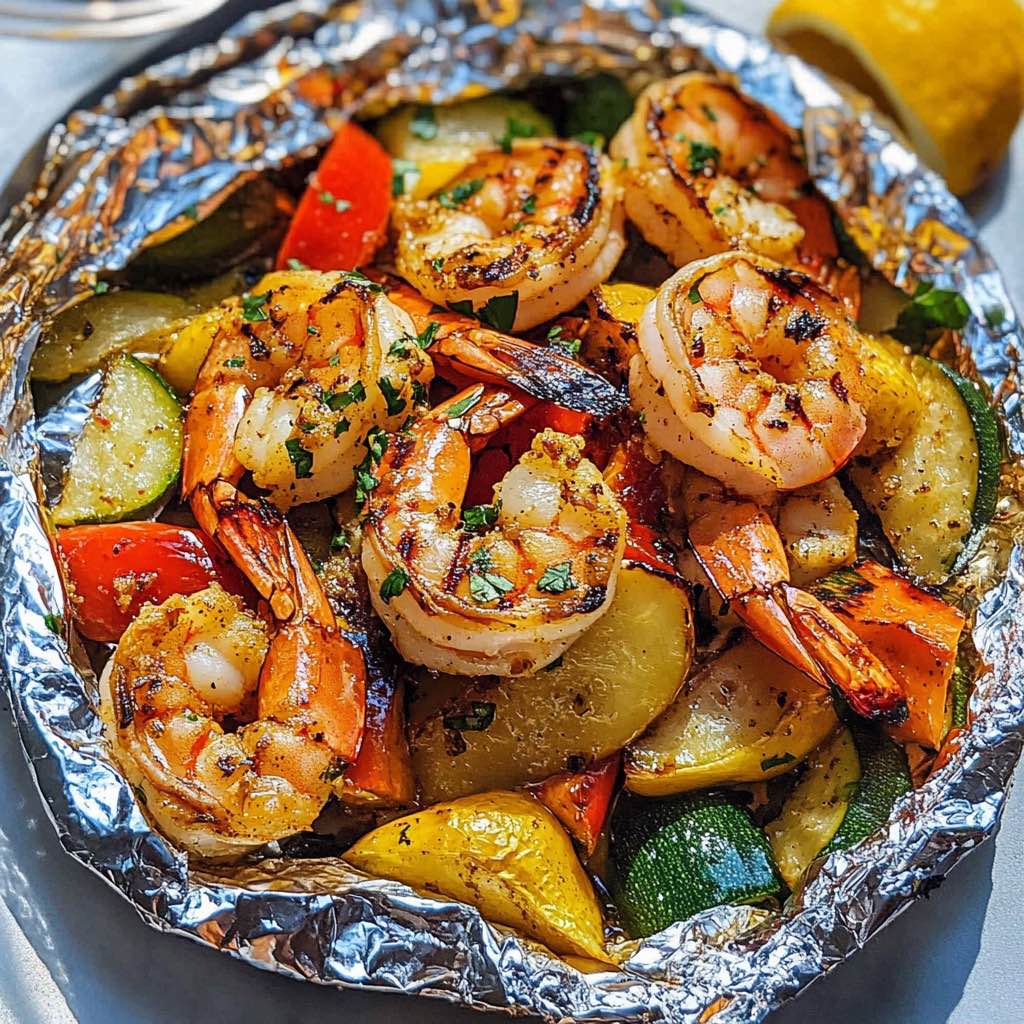
Grilled Shrimp Foil Packets with Vegetables: The Ultimate Guide to Easy Summer Cooking
Introduction
Grilled shrimp foil packets with vegetables represent the perfect fusion of convenience and flavor for outdoor cooking enthusiasts. These individual meal packets combine succulent shrimp with fresh vegetables, creating a complete dinner solution that requires minimal cleanup. Moreover, this cooking method locks in moisture and intensifies flavors, resulting in restaurant-quality meals from your backyard grill.
Furthermore, foil packet cooking eliminates the worry of food falling through grill grates. In addition, each packet becomes a customizable meal where family members can choose their preferred vegetables and seasonings. Therefore, this versatile cooking technique has become a favorite among busy home cooks seeking delicious, healthy dinner options.
Table of Contents
What Are Grilled Shrimp Foil Packets?
Grilled shrimp foil packets with vegetables are individual meal portions wrapped in aluminum foil and cooked on the grill. This cooking method, also known as “hobo packets” or “foil pouches,” creates a sealed environment where ingredients steam in their own juices. Consequently, the shrimp becomes tender while vegetables retain their vibrant colors and nutrients.
The Science Behind Foil Packet Cooking
The foil acts as a mini-oven on your grill. Heat from the grill warms the foil, which then creates steam from the natural moisture in the ingredients. Therefore, the food cooks through a combination of steaming and gentle roasting. This method prevents overcooking while ensuring even heat distribution throughout the packet.
Additionally, the sealed environment prevents flavor loss. Seasonings and natural juices concentrate within the packet, creating intensely flavorful results. However, proper sealing techniques are crucial for optimal cooking results.
Historical Background
Foil packet cooking originated from traditional cooking methods used by outdoor enthusiasts and military personnel. For example, soldiers would wrap food in leaves or cloth before burying it in coals. Similarly, modern foil packets evolved from these ancient techniques, adapted for contemporary grilling equipment.
Benefits of Cooking Shrimp in Foil Packets
Foil packet cooking offers numerous advantages for preparing shrimp and vegetables. These benefits make this cooking method particularly appealing for both beginner and experienced grillers.
Easy Cleanup
One of the most significant advantages is minimal cleanup. The foil contains all cooking juices and prevents food from sticking to grill grates. Furthermore, you can simply discard the foil after eating, leaving virtually no dishes to wash.
Individual Portion Control
Each packet serves as an individual meal portion. Therefore, you can customize each packet according to dietary preferences or restrictions. For instance, some family members might prefer spicier seasonings while others favor milder flavors.
Nutrient Retention
The steaming environment preserves vitamins and minerals that might otherwise be lost through other cooking methods. Moreover, vegetables retain their crisp texture and vibrant colors. Additionally, the cooking juices create a natural sauce that enhances both flavor and nutrition.
Moisture Preservation
Shrimp can easily become tough and rubbery when overcooked. However, foil packet cooking prevents moisture loss, ensuring tender, succulent results every time. The sealed environment maintains optimal humidity levels throughout the cooking process.
Versatility and Customization
You can easily adapt recipes to accommodate different preferences. For example, vegetarians can substitute tofu or tempeh for shrimp. Similarly, those following low-carb diets can focus on non-starchy vegetables.
Essential Ingredients for Perfect Foil Packets
Creating delicious grilled shrimp foil packets with vegetables requires selecting high-quality ingredients and understanding how they work together.
Choosing the Right Shrimp
Fresh or properly thawed frozen shrimp work best for foil packets. Look for shrimp that smell like the ocean without any fishy odors. Moreover, avoid shrimp with black spots or slimy textures.
Size Considerations:
-
Large shrimp (21-25 count per pound) cook evenly and are easy to handle
-
Medium shrimp (31-35 count) work well for smaller packets
-
Avoid extra-small shrimp as they cook too quickly
Preparation Tips:
-
Remove shells and devein before cooking
-
Pat dry with paper towels to remove excess moisture
-
Season 15-20 minutes before cooking for better flavor absorption
Vegetable Selection Criteria
Choose vegetables with similar cooking times for best results. Furthermore, consider textures and flavors that complement shrimp’s delicate taste.
Quick-Cooking Vegetables:
-
Bell peppers (all colors)
-
Zucchini and yellow squash
-
Cherry tomatoes
-
Asparagus spears
-
Snow peas
Medium-Cooking Vegetables:
-
Broccoli florets
-
Cauliflower pieces
-
Green beans
-
Brussels sprouts (halved)
Longer-Cooking Vegetables:
-
Potatoes (diced small)
-
Sweet potatoes
-
Carrots (sliced thin)
-
Corn kernels
Essential Seasonings and Fats
Fat is crucial for preventing sticking and adding flavor. Olive oil, butter, or a combination works well. Additionally, acid from lemon juice brightens flavors and helps prevent overcooking.
Basic Seasoning Blend:
-
Salt and freshly ground black pepper
-
Garlic powder or minced fresh garlic
-
Paprika for color and mild heat
-
Fresh herbs like parsley, dill, or thyme
Step-by-Step Cooking Instructions
Follow these detailed instructions to create perfect grilled shrimp foil packets with vegetables every time.
Preparation Phase
Step 1: Prepare Your Workspace
Set up a clean work area with all ingredients within reach. Additionally, tear off sheets of heavy-duty aluminum foil, approximately 12-18 inches long. Each sheet will make one packet.
Step 2: Prep Ingredients
Wash and cut vegetables into uniform, bite-sized pieces. Therefore, everything cooks at the same rate. Pat shrimp dry and season according to your chosen flavor profile.
Step 3: Create Assembly Line
Arrange ingredients in order of assembly. This organization speeds up the packet-making process and ensures consistency across all packets.
Assembly Process
Step 4: Layer Ingredients
Place vegetables in the center of each foil sheet first. Then, add seasoned shrimp on top. This arrangement prevents overcooking of the delicate shrimp.
Step 5: Add Fats and Seasonings
Drizzle with olive oil or dot with butter pieces. Furthermore, add any liquid seasonings like lemon juice or soy sauce. However, avoid adding too much liquid as it can make packets soggy.
Step 6: Seal the Packets
Bring the long sides of foil together and fold down in 1-inch increments. Then, fold the short ends up and over to create a sealed packet. Additionally, ensure no steam can escape during cooking.
Cooking Process
Step 7: Preheat the Grill
Heat your grill to medium-high heat (around 400-450°F). Clean and oil the grates to prevent sticking. Moreover, create zones of different heat levels for better control.
Step 8: Place and Cook
Carefully place sealed packets on the grill. Cook for 12-15 minutes, depending on packet size and shrimp quantity. Avoid moving packets frequently to prevent tearing.
Step 9: Check for Doneness
Carefully open one packet to check if shrimp are pink and opaque throughout. Vegetables should be tender-crisp. If needed, reseal and cook for 2-3 more minutes.
Best Vegetables for Shrimp Foil Packets
Selecting the right vegetables ensures perfectly cooked grilled shrimp foil packets with vegetables. Different vegetables require different preparation techniques and cooking considerations.
Mediterranean-Style Vegetables
Zucchini and Yellow Squash
These summer squashes cook quickly and absorb flavors beautifully. Cut into half-moon slices about ¼-inch thick. However, avoid cutting too thin as they may become mushy.
Bell Peppers
All colors work well, with red and yellow peppers being slightly sweeter. Cut into strips or chunks. Additionally, remove all seeds and white membranes for better texture.
Cherry Tomatoes
These burst with flavor when cooked in foil packets. Leave whole or halve larger ones. Furthermore, they release juices that create a natural sauce within the packet.
Classic American Vegetables
Corn Kernels
Fresh corn kernels add sweetness and texture. Cut kernels from the cob just before assembly. Moreover, frozen corn works well when thawed and drained first.
Green Beans
Trim ends and cut into 1-inch pieces for even cooking. Fresh green beans provide the best texture and flavor. However, blanch thicker beans briefly before adding to packets.
Potatoes
Baby potatoes work best when halved or quartered. Larger potatoes should be diced into ½-inch pieces. Additionally, pre-cooking dense potatoes for 3-4 minutes ensures even cooking.
Exotic and International Options
Asparagus
Snap off tough ends and cut spears into 2-inch pieces. This elegant vegetable pairs exceptionally well with shrimp’s delicate flavor. Therefore, it’s perfect for special occasions.
Baby Bok Choy
Cut lengthwise and separate leaves for even cooking. This Asian vegetable adds crunch and mild flavor. Moreover, it cooks quickly and retains vibrant color.
Mushrooms
Sliced mushrooms release moisture that enhances overall packet flavors. Use button, cremini, or shiitake varieties. However, avoid portobello mushrooms as they release too much liquid.
Seasoning and Flavor Combinations
Creating memorable grilled shrimp foil packets with vegetables depends largely on thoughtful seasoning combinations. Different flavor profiles can transform the same basic ingredients into entirely different meals.
Classic Garlic Herb Blend
This timeless combination appeals to most palates and highlights the natural flavors of shrimp and vegetables.
Ingredients:
-
3 tablespoons olive oil
-
4 cloves garlic, minced
-
2 tablespoons fresh parsley, chopped
-
1 tablespoon fresh thyme leaves
-
1 teaspoon dried oregano
-
Salt and freshly ground black pepper
Application Tips:
Mix all ingredients in a small bowl. Toss shrimp and vegetables with this mixture before assembling packets. Furthermore, reserve some herb oil for drizzling after cooking.
Mediterranean Lemon Oregano
This bright, aromatic blend brings sunshine flavors to your foil packets. The combination works particularly well with zucchini, tomatoes, and bell peppers.
Key Components:
-
Fresh lemon juice and zest
-
Dried oregano
-
Extra virgin olive oil
-
Red pepper flakes
-
Crumbled feta cheese (optional)
Preparation Method:
Combine lemon juice, zest, and oregano with olive oil. Therefore, the acid helps tenderize the shrimp while preventing overcooking. Add cheese during the last 2-3 minutes of cooking.
Cajun Spice Fusion
For those who enjoy bold flavors, this spicy blend creates restaurant-quality results at home.
Spice Mix Recipe:
-
2 teaspoons paprika
-
1 teaspoon garlic powder
-
1 teaspoon onion powder
-
1 teaspoon dried thyme
-
½ teaspoon cayenne pepper
-
½ teaspoon black pepper
-
1 teaspoon salt
Usage Instructions:
Rub spice mixture directly onto shrimp 20 minutes before cooking. However, adjust cayenne pepper according to heat tolerance. Additionally, butter enhances the Cajun flavors beautifully.
Asian-Inspired Ginger Soy
This fusion blend creates umami-rich packets with complex, satisfying flavors.
Sauce Ingredients:
-
3 tablespoons soy sauce
-
2 tablespoons rice vinegar
-
1 tablespoon sesame oil
-
2 teaspoons fresh ginger, grated
-
2 green onions, sliced
-
1 teaspoon honey
Assembly Notes:
Whisk all ingredients together until honey dissolves completely. Marinate shrimp for 15-20 minutes before adding to packets. Moreover, reserve extra sauce for serving.
Grilling Tips and Techniques
Mastering the grill ensures consistently perfect grilled shrimp foil packets with vegetables. Proper technique makes the difference between good and exceptional results.
Temperature Control
Medium-High Heat Is Optimal
Maintain grill temperature between 400-450°F for best results. This temperature range cooks food thoroughly without burning the foil. However, adjust heat based on packet thickness and ingredient density.
Creating Heat Zones
Establish different temperature zones on your grill. Place packets requiring longer cooking times over higher heat areas. Furthermore, move packets to cooler zones if they’re cooking too quickly.
Using a Grill Thermometer
Invest in a reliable grill thermometer for accurate temperature readings. Built-in thermometers often provide inaccurate readings. Therefore, an instant-read thermometer ensures optimal cooking conditions.
Placement and Timing Strategies
Strategic Packet Placement
Position packets with denser vegetables toward the center of the grill where heat is most consistent. Additionally, rotate packets 90 degrees halfway through cooking for even heat distribution.
Timing Considerations
Start checking packets after 10 minutes of cooking. Moreover, remember that carryover cooking continues after removal from the grill. Therefore, slight undercooking prevents overcooked shrimp.
Multiple Packet Management
When cooking several packets simultaneously, label them with different seasonings or dietary requirements. Use small pieces of foil as markers to identify contents easily.
Safety and Handling
Proper Foil Sealing
Double-check all packet seals before placing on the grill. Loose seals allow steam to escape, resulting in dry food. Furthermore, torn packets can cause flare-ups from dripping juices.
Safe Handling Techniques
Use long-handled tongs to move packets on the grill. Additionally, wear heat-resistant gloves when handling hot packets. Open packets carefully to avoid steam burns.
Checking for Doneness
Open one packet completely to check doneness rather than peeking into multiple packets. This method maintains cooking environment in other packets while ensuring food safety.
Serving Suggestions and Side Dishes
Grilled shrimp foil packets with vegetables create complete meals, but thoughtful accompaniments enhance the dining experience. Consider these serving options for different occasions.
Casual Family Dinners
Simple Bread Options
Garlic bread or crusty rolls absorb the flavorful juices from foil packets perfectly. Moreover, toasted bread provides textural contrast to tender shrimp and vegetables.
Light Salad Pairings
A simple green salad with vinaigrette balances the richness of buttery foil packets. Furthermore, cucumber and tomato salads add freshness to grilled meals.
Beverage Recommendations
Iced tea, lemonade, or sparkling water with citrus complement the outdoor dining atmosphere. Additionally, these beverages cleanse the palate between bites.
Elegant Dinner Parties
Rice and Grain Bases
Serve packets over jasmine rice, quinoa, or couscous to absorb cooking juices. Therefore, guests receive complete, satisfying portions without additional preparation.
Sophisticated Appetizers
Begin meals with bruschetta, antipasto platters, or soup courses. These starters prepare guests for the main foil packet presentation.
Outdoor Entertaining
Picnic-Style Presentation
Serve packets directly in their foil for authentic outdoor dining experiences. Provide individual plates and utensils, but maintain the rustic foil packet charm.
Campfire Alternatives
These same packets work excellently over campfires or portable camping stoves. Therefore, they’re perfect for camping trips or beach cookouts.
Make-Ahead Components
Prepare packets earlier in the day and refrigerate until cooking time. This preparation method reduces stress during outdoor entertaining events.
Storage and Meal Prep Ideas
Grilled shrimp foil packets with vegetables work excellently for meal preparation strategies. Proper storage techniques maintain food quality and safety.
Advance Preparation Methods
Assembly Timeline
Assemble packets up to 24 hours ahead and refrigerate until cooking time. However, avoid adding acid ingredients like lemon juice until just before cooking to prevent texture changes.
Freezer-Friendly Options
Prepare packets without cooking and freeze for up to 3 months. Moreover, thaw completely in refrigerator before grilling. This method provides convenient weeknight dinner solutions.
Batch Cooking Strategies
Prepare multiple flavor varieties simultaneously for diverse meal options throughout the week. Label packets clearly with contents and cooking instructions.
Leftover Management
Refrigerator Storage
Store leftover cooked packets in refrigerator for up to 3 days. Remove from foil and transfer to airtight containers for optimal freshness. Furthermore, separate storage prevents flavor mixing.
Reheating Techniques
Reheat in microwave at reduced power or in oven at 300°F until heated through. Additionally, add a splash of broth or lemon juice to restore moisture during reheating.
Creative Leftover Uses
Transform leftovers into pasta salads, grain bowls, or breakfast scrambles. The pre-seasoned shrimp and vegetables integrate easily into new recipes.
Portion Planning
Individual Serving Sizes
Plan approximately 4-6 ounces of shrimp per person plus 1-2 cups of vegetables. However, adjust portions based on appetite and accompanying side dishes.
Family Pack Options
Create larger packets for family-style serving rather than individual portions. This approach works well for families with similar taste preferences.
Special Dietary Accommodations
Prepare separate packets for family members with food allergies or dietary restrictions. Clear labeling prevents confusion during meal service.
Common Mistakes to Avoid
Understanding potential pitfalls helps ensure success when making grilled shrimp foil packets with vegetables. These common errors can easily be prevented with proper knowledge.
Overcooking Issues
Shrimp Texture Problems
Overcooked shrimp becomes rubbery and tough. Therefore, watch timing carefully and remember that shrimp cook quickly. Pink, opaque shrimp indicate perfect doneness.
Vegetable Overcooking
Mushy vegetables result from excessive cooking time or cutting pieces too small. Moreover, different vegetables require different cooking times, so plan accordingly.
Temperature Management
Excessively high heat burns foil and creates uneven cooking. Additionally, too low heat extends cooking time unnecessarily and may not cook food thoroughly.
Assembly Errors
Inadequate Sealing
Poorly sealed packets allow steam to escape, resulting in dried-out food. Furthermore, torn foil during grilling creates safety hazards from dripping juices.
Overfilling Packets
Cramming too many ingredients into packets prevents proper cooking and sealing. Therefore, divide ingredients among multiple packets when necessary.
Improper Ingredient Layering
Placing shrimp on the bottom can lead to overcooking. Instead, layer vegetables first, then add shrimp on top for optimal results.
Seasoning Mistakes
Salt Timing Issues
Adding salt too early draws moisture from vegetables, creating soggy packets. However, seasoning just before cooking maintains proper textures.
Acid Overuse
Excessive lemon juice or vinegar can “cook” shrimp chemically, resulting in tough textures. Therefore, use acid juices sparingly and add just before cooking.
Spice Distribution
Uneven seasoning creates inconsistent flavors throughout packets. Mix seasonings thoroughly with oil before applying to ensure even distribution.
Variations and Recipe Ideas
Exploring different variations keeps grilled shrimp foil packets with vegetables interesting and accommodates diverse taste preferences. These creative adaptations inspire new meal possibilities.
International Flavor Profiles
Mexican-Inspired Packets
Combine shrimp with bell peppers, corn, black beans, and jalapeños. Season with cumin, chili powder, and lime juice. Additionally, serve with warm tortillas and salsa for complete Mexican meals.
Italian Herb Combinations
Use zucchini, tomatoes, and bell peppers with Italian seasoning, basil, and oregano. Moreover, add a splash of balsamic vinegar and finish with fresh mozzarella cheese.
Thai-Style Fusion
Create exotic flavors with coconut oil, curry powder, and lime leaves. Include snap peas, bell peppers, and Thai basil. Furthermore, serve over jasmine rice with sweet chili sauce.
Dietary Adaptations
Keto-Friendly Options
Focus on low-carb vegetables like broccoli, cauliflower, and zucchini. Use generous amounts of butter or olive oil for fat content. Additionally, avoid corn, potatoes, and other starchy vegetables.
Paleo Compliant Versions
Eliminate dairy and use coconut oil instead of butter. Furthermore, focus on simple herb and spice combinations without processed seasonings.
Vegetarian Alternatives
Substitute firm tofu, tempeh, or halloumi cheese for shrimp. Marinate protein alternatives longer for better flavor absorption. Moreover, adjust cooking times based on protein density.
Seasonal Adaptations
Spring Vegetable Medley
Feature asparagus, peas, radishes, and spring onions with fresh herb combinations. Light, bright flavors celebrate spring’s arrival perfectly.
Summer Peak Season
Highlight tomatoes, zucchini, corn, and peppers at their flavor peak. Additionally, fresh herbs like basil and parsley enhance summer’s bounty.
Fall Harvest Combinations
Include butternut squash, brussels sprouts, and sweet potatoes for hearty fall flavors. Moreover, warming spices like thyme and rosemary complement autumn ingredients.
Frequently Asked Questions
Can I make grilled shrimp foil packets with vegetables in advance?
Yes, you can assemble packets up to 24 hours ahead. However, store them in the refrigerator and avoid adding acidic ingredients like lemon juice until just before cooking. This prevents the acid from affecting shrimp texture during storage.
What’s the best foil type for grilling packets?
Heavy-duty aluminum foil works best for grilled shrimp foil packets with vegetables. Regular foil tears easily on the grill and may not withstand high heat. Additionally, non-stick foil varieties can make cleanup even easier.
How do I know when the shrimp are fully cooked?
Properly cooked shrimp appear pink and opaque throughout without any translucent areas. Moreover, they should feel firm but not rubbery when touched. Internal temperature should reach 145°F for food safety.
Can I cook these packets in the oven instead?
Absolutely! Bake packets at 425°F for 15-20 minutes. This method works particularly well during winter months or when grill access isn’t available. Furthermore, oven cooking provides more consistent temperature control.
What vegetables should I avoid in foil packets?
Avoid leafy greens like spinach or lettuce as they become mushy. Additionally, very dense vegetables like whole potatoes won’t cook through properly. Instead, stick with vegetables that have similar cooking times to shrimp.
How can I prevent packets from sticking to the grill?
Clean and oil your grill grates thoroughly before cooking. Moreover, avoid moving packets frequently during cooking. The foil itself shouldn’t stick, but proper grill maintenance prevents potential issues.
Can I use frozen shrimp for these packets?
Frozen shrimp work well when properly thawed and drained. Therefore, thaw completely in the refrigerator overnight and pat dry before seasoning. Never use shrimp that still contain ice crystals.
What’s the ideal packet size for even cooking?
Keep packets relatively flat and no more than 2 inches thick. This ensures even heat distribution throughout the packet. Furthermore, divide ingredients among multiple smaller packets rather than creating oversized ones.
Conclusion
Grilled shrimp foil packets with vegetables offer the perfect solution for delicious, healthy outdoor cooking with minimal cleanup. This versatile cooking method accommodates various dietary preferences while delivering consistently excellent results. Moreover, the technique’s simplicity makes it accessible to cooks of all skill levels.
From casual family dinners to elegant outdoor entertaining, these foil packets adapt to any occasion. The combination of tender shrimp, perfectly cooked vegetables, and concentrated flavors creates memorable meals that guests will request repeatedly. Furthermore, the preparation flexibility allows for advance planning and customization.
Whether you choose classic herb seasonings, bold international flavors, or simple salt and pepper, the fundamental technique remains the same. Therefore, master these basic principles and experiment with different combinations to discover your favorite variations.
Grilled Shrimp Foil Packets with Vegetables
Description
Ingredients
For the shrimp and vegetables:
-
2 lbs large shrimp, peeled and deveined
-
2 medium zucchini, sliced into half-moons
-
1 red bell pepper, sliced
-
1 green bell pepper, sliced
-
1 cup cherry tomatoes, halved
-
½ white onion, thinly sliced
-
1 lb baby potatoes, halved and pre-cooked
For the seasoning:
-
⅓ cup extra virgin olive oil
-
4 cloves garlic, minced
-
Zest and juice of 2 lemons
-
2 tsp smoked paprika
-
1 tsp Old Bay seasoning
-
1 tsp dried oregano
-
½ tsp red pepper flakes (optional)
-
Salt and pepper to taste
For serving:
-
Fresh parsley, chopped
-
Lemon wedges
-
Butter (optional)
Instructions
Prepare the packets:
-
Cut 6 sheets of heavy-duty aluminum foil, approximately 12×15 inches each.
-
Layer parchment paper on top of each foil sheet for easier cleanup (optional).
-
Preheat grill to medium-high heat (400-450°F).
Pre-cook potatoes:
4. Microwave baby potatoes for 5-6 minutes until just tender – they’ll finish cooking in the packets.
Season the mixture:
5. Combine olive oil, garlic, lemon zest, lemon juice, paprika, Old Bay, oregano, and red pepper flakes in a large bowl.
6. Add shrimp and all vegetables to the seasoning mixture and toss to coat evenly.
7. Let marinate for 10-15 minutes for deeper flavor.
Assemble the packets:
8. Divide the mixture evenly among the foil sheets, placing everything in the center.
9. Spoon any remaining marinade over each portion.
10. Fold foil packets by bringing two opposite sides together and folding down to seal the top, then fold the side edges to create a sealed packet with room for steam.
Grill the packets:
11. Place packets on the grill with folded edges up and cover with lid.
12. Cook for 12-15 minutes without opening, until shrimp are pink and vegetables are tender.
13. Check doneness by carefully opening one packet – shrimp should be pink and curled.
Serve:
14. Remove from grill using tongs and place on serving plates.
15. Open packets carefully to avoid steam burns.
16. Garnish with fresh parsley and serve with lemon wedges.