
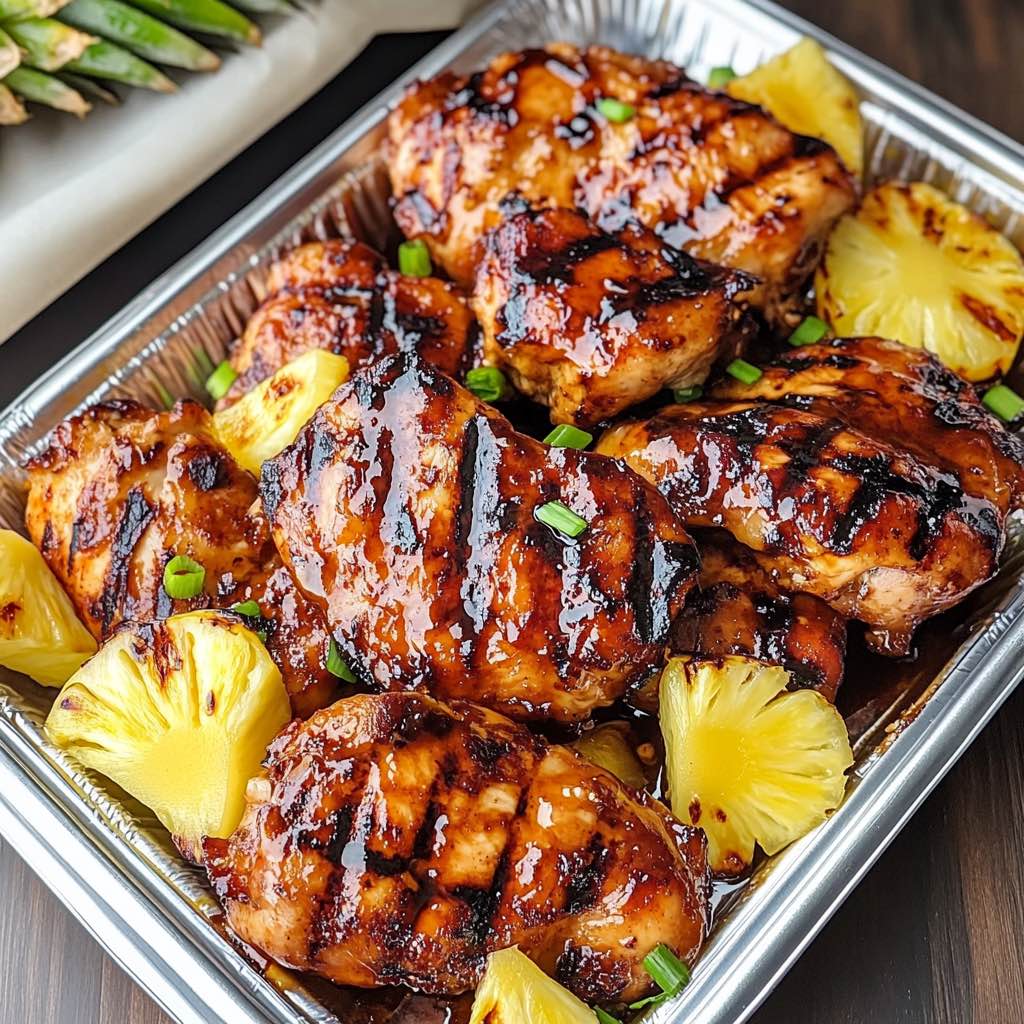
Hawaiian Grilled Chicken with Pineapple Glaze: The Ultimate Tropical BBQ Recipe
Introduction
Hawaiian Grilled Chicken with Pineapple Glaze brings the tropical flavors of the Pacific islands right to your backyard. This mouthwatering dish combines juicy grilled chicken with a sweet and tangy pineapple glaze that caramelizes beautifully over the flames. Moreover, this recipe perfectly balances savory and sweet elements, making it an ideal choice for summer barbecues, family gatherings, or any time you crave island-inspired flavors.
The combination of tender chicken and glossy pineapple glaze creates a restaurant-quality meal. Furthermore, this dish pairs wonderfully with coconut rice, grilled vegetables, or a fresh tropical salad. Therefore, you’ll have a complete meal that transports your taste buds to a Hawaiian luau.
Table of Contents
-
The Origins of Hawaiian Grilled Chicken
-
Essential Ingredients for Perfect Pineapple Glaze
-
Choosing the Right Chicken Cuts
-
Preparing the Marinade
-
Creating the Perfect Pineapple Glaze
-
Grilling Techniques and Temperature Control
-
Serving Suggestions and Side Dishes
-
Storage and Reheating Tips
-
Recipe Variations and Adaptations
-
Nutritional Benefits
-
Common Mistakes to Avoid
-
Frequently Asked Questions
-
Conclusion
The Origins of Hawaiian Grilled Chicken
Hawaiian cuisine reflects a beautiful fusion of cultures and flavors. The islands’ culinary traditions combine Polynesian, Asian, and American influences. Additionally, the abundance of tropical fruits like pineapple naturally found their way into local cooking methods.
Cultural Influences
The pineapple industry significantly shaped Hawaiian cuisine during the 20th century. Consequently, pineapple became a staple ingredient in many local dishes. Hawaiian Grilled Chicken with Pineapple Glaze represents this evolution perfectly.
Traditional Hawaiian cooking methods often involved open-fire grilling. Therefore, combining grilled meats with tropical fruit glazes became a natural progression. The sweet and savory flavor profile appeals to diverse palates and cultural backgrounds.
Modern Adaptations
Today’s Hawaiian grilled chicken recipes have evolved beyond traditional island cooking. However, the core principles remain the same. The balance of sweet pineapple with savory chicken creates an irresistible combination that continues to gain popularity worldwide.
Essential Ingredients for Perfect Pineapple Glaze
Creating an authentic Hawaiian Grilled Chicken with Pineapple Glaze requires quality ingredients. The glaze serves as the star of this dish, so selecting the right components is crucial.
Primary Glaze Components
The foundation of your pineapple glaze includes several key ingredients:
-
Fresh pineapple juice or crushed pineapple
-
Brown sugar for deep caramelization
-
Soy sauce for umami depth
-
Rice vinegar for tangy brightness
-
Fresh ginger for aromatic warmth
-
Garlic for savory complexity
Supporting Flavor Elements
Additional ingredients enhance the glaze’s complexity. For example, sesame oil adds nutty richness. Similarly, red pepper flakes provide subtle heat that balances the sweetness perfectly.
Cornstarch helps thicken the glaze to the ideal consistency. Furthermore, fresh lime juice brightens the overall flavor profile. These ingredients work together to create a well-rounded glaze that complements the chicken beautifully.
Quality Considerations
Using fresh pineapple juice produces superior results compared to canned alternatives. However, high-quality canned pineapple juice works well when fresh isn’t available. Additionally, choosing low-sodium soy sauce allows better control over the final saltiness.
Choosing the Right Chicken Cuts
Selecting appropriate chicken cuts significantly impacts your Hawaiian Grilled Chicken with Pineapple Glaze success. Different cuts require varying cooking times and techniques.
Best Cuts for Grilling
Chicken thighs offer the most forgiving option for grilling. The higher fat content keeps the meat moist throughout cooking. Moreover, thighs absorb marinades and glazes exceptionally well.
Chicken breasts work well but require more attention to prevent drying. Therefore, pounding them to even thickness ensures uniform cooking. Additionally, brining chicken breasts beforehand helps maintain moisture.
Whole chicken pieces provide variety and visual appeal. However, different pieces cook at different rates. Consequently, monitoring each piece individually becomes necessary for optimal results.
Preparation Techniques
Properly preparing your chicken enhances flavor absorption and cooking results. First, remove excess skin if desired, though some skin helps retain moisture. Additionally, scoring the meat slightly allows better marinade penetration.
Bringing chicken to room temperature before grilling ensures even cooking. Furthermore, patting the chicken dry before applying marinades helps seasonings adhere better.
Preparing the Marinade
A well-crafted marinade elevates your Hawaiian Grilled Chicken with Pineapple Glaze to restaurant quality. The marinade tenderizes the meat while infusing tropical flavors throughout.
Basic Marinade Components
Start with these foundational marinade ingredients:
-
Pineapple juice as the acidic base
-
Olive oil for moisture and flavor carrier
-
Minced garlic for aromatic depth
-
Fresh ginger for warming spice
-
Salt and black pepper for seasoning
Advanced Flavor Additions
Elevate your marinade with these optional ingredients. For instance, coconut aminos add subtle sweetness and umami. Similarly, fresh herbs like cilantro or basil provide aromatic complexity.
A splash of lime juice enhances the tropical character. Additionally, a touch of honey balances the acidity while promoting beautiful caramelization during grilling.
Marinating Time and Techniques
Proper marinating time allows flavors to penetrate the meat effectively. Therefore, marinate chicken for at least 2 hours, though overnight produces optimal results. However, avoid marinating longer than 24 hours, as acids can over-tenderize the meat.
Use glass or food-grade plastic containers for marinating. Additionally, ensure all chicken pieces are completely submerged in marinade. Turning the chicken occasionally promotes even flavor distribution.
Creating the Perfect Pineapple Glaze
The pineapple glaze distinguishes Hawaiian Grilled Chicken with Pineapple Glaze from ordinary grilled chicken recipes. Mastering this component ensures restaurant-quality results every time.
Step-by-Step Glaze Preparation
Creating the perfect glaze requires careful attention to timing and temperature. First, combine pineapple juice, brown sugar, and soy sauce in a saucepan. Heat the mixture over medium heat while stirring occasionally.
Next, add minced garlic and ginger to the warming mixture. These aromatics release their flavors gradually as the glaze heats. Subsequently, simmer the mixture until it reduces by approximately half.
Achieving Proper Consistency
The ideal glaze consistency coats the back of a spoon without being too thick. Therefore, monitor the reduction process carefully. Additionally, the glaze should flow smoothly when drizzled but maintain some body.
If the glaze becomes too thick, add small amounts of pineapple juice. Conversely, if it’s too thin, continue simmering until it reaches the desired consistency. Furthermore, straining the glaze removes any solid particles for a smooth finish.
Flavor Balance Adjustments
Taste the glaze throughout the cooking process and adjust seasonings accordingly. For example, add more brown sugar if you prefer extra sweetness. Similarly, a splash of rice vinegar brightens overly sweet glazes.
The final glaze should balance sweet, salty, tangy, and savory elements harmoniously. Additionally, it should complement rather than overpower the chicken’s natural flavors.
Grilling Techniques and Temperature Control
Proper grilling technique ensures your Hawaiian Grilled Chicken with Pineapple Glaze cooks evenly while developing beautiful caramelization. Temperature control and timing are crucial for success.
Grill Setup and Preparation
Prepare your grill for medium-high heat, approximately 375-400°F. Additionally, clean and oil the grates to prevent sticking. Create heat zones by placing coals on one side for gas grills, use direct and indirect heat zones.
Allow the grill to preheat thoroughly before adding chicken. Furthermore, have all tools and glazes ready before beginning the cooking process.
Cooking Process and Timing
Start by placing marinated chicken on the direct heat zone skin-side down. Cook for 5-7 minutes until the skin develops golden color and releases easily from grates. Subsequently, flip the chicken and move to indirect heat.
Apply the pineapple glaze during the final 10-15 minutes of cooking. However, avoid applying glaze too early, as the sugars can burn before the chicken fully cooks.
Internal Temperature Guidelines
Use a meat thermometer to ensure food safety and optimal texture. Chicken thighs should reach 175°F internal temperature, while breasts need 165°F. Additionally, let the chicken rest for 5 minutes after grilling to redistribute juices.
The glaze should caramelize beautifully on the surface while the meat remains juicy inside. Therefore, monitor both temperature and visual cues throughout the cooking process.
Serving Suggestions and Side Dishes
Hawaiian Grilled Chicken with Pineapple Glaze pairs wonderfully with various side dishes that complement its tropical flavors. Creating a cohesive meal enhances the overall dining experience.
Traditional Hawaiian Sides
Coconut rice provides the perfect foundation for this tropical dish. The subtle coconut flavor complements the pineapple glaze beautifully. Moreover, the rice absorbs any extra glaze that drips from the chicken.
Grilled pineapple rounds make an excellent accompaniment. The caramelized fruit echoes the glaze flavors while adding textural variety. Additionally, the natural sweetness balances any savory elements in the meal.
Fresh and Light Options
A tropical fruit salad brings freshness and color to the plate. Combine mango, papaya, kiwi, and coconut flakes for variety. Furthermore, a lime-mint dressing brightens the entire fruit mixture.
Asian-inspired coleslaw provides crunchy contrast to the tender chicken. Use a rice vinegar-based dressing with sesame oil and fresh herbs. Additionally, this lighter option balances the richness of the glazed chicken.
Vegetable Accompaniments
Grilled vegetables work exceptionally well with this dish. For example, zucchini, bell peppers, and onions develop beautiful char while maintaining their natural sweetness. Similarly, grilled corn on the cob adds rustic appeal and complementary flavors.
Steamed jasmine rice offers a neutral base that won’t compete with the glaze. However, you can enhance plain rice with coconut milk or fresh herbs for added interest.
Storage and Reheating Tips
Proper storage and reheating maintain the quality of your Hawaiian Grilled Chicken with Pineapple Glaze for future enjoyment. These techniques preserve both flavor and texture.
Refrigeration Guidelines
Store leftover chicken in airtight containers within 2 hours of cooking. The chicken remains safe for 3-4 days when properly refrigerated. Additionally, store any remaining glaze separately for best results.
Wrap individual pieces in aluminum foil or plastic wrap to prevent drying. Furthermore, label containers with dates to track freshness accurately.
Freezing Instructions
Frozen Hawaiian grilled chicken maintains quality for up to 3 months. However, freeze the chicken and glaze in separate containers for optimal results. Additionally, thaw completely in the refrigerator before reheating.
Portion the chicken into meal-sized servings before freezing. This approach allows you to thaw only what you need. Moreover, smaller portions thaw more quickly and evenly.
Reheating Methods
The oven provides the best reheating method for maintaining texture and flavor. Preheat to 350°F and cover the chicken with foil. Heat for 15-20 minutes until warmed through.
Alternatively, reheat on the grill for a few minutes to refresh the exterior. However, monitor carefully to prevent overcooking. Additionally, brush with fresh glaze during reheating for renewed flavor.
Recipe Variations and Adaptations
Hawaiian Grilled Chicken with Pineapple Glaze adapts easily to different preferences and dietary needs. These variations maintain the dish’s tropical character while offering new flavor profiles.
Spicy Variations
Add heat to your glaze with fresh jalapeños or red pepper flakes. The spiciness creates interesting contrast with the sweet pineapple. Furthermore, sriracha or Asian chili sauce blend seamlessly with the existing flavors.
Cayenne pepper provides clean heat without competing flavors. Additionally, fresh ginger increases the warming spice element naturally present in the original recipe.
Dietary Modifications
For lower sodium options, use coconut aminos instead of soy sauce. This substitution maintains umami depth while reducing salt content. Moreover, coconut aminos add subtle sweetness that complements the pineapple perfectly.
Sugar-free alternatives work well for diabetic-friendly versions. Use sugar substitutes that handle heat well, such as erythritol or stevia blends. However, adjust quantities as these sweeteners often concentrate differently than brown sugar.
Protein Alternatives
The pineapple glaze works beautifully with other proteins beyond chicken. For instance, pork tenderloin develops gorgeous caramelization with this glaze. Similarly, salmon fillets pair exceptionally well with the tropical flavors.
Tofu and tempeh offer vegetarian options that absorb the glaze wonderfully. Additionally, portobello mushrooms provide meaty texture while embracing the sweet and savory elements.
Nutritional Benefits
Hawaiian Grilled Chicken with Pineapple Glaze offers several nutritional advantages while satisfying your taste buds. Understanding these benefits helps you appreciate this dish beyond its delicious flavor.
Protein Content
Chicken provides high-quality complete protein essential for muscle maintenance and growth. A typical serving contains 25-30 grams of protein. Additionally, chicken supplies all essential amino acids your body requires.
The protein helps maintain satiety and supports healthy metabolism. Furthermore, lean chicken breast options reduce overall calorie content while maximizing protein benefits.
Vitamin and Mineral Profile
Pineapple contributes significant vitamin C content, supporting immune system function. Additionally, it provides manganese, which aids in bone health and wound healing. The fruit also contains bromelain, an enzyme that may support digestion.
Chicken supplies B vitamins, particularly niacin and B6, which support energy metabolism. Moreover, it provides selenium, an important antioxidant mineral that supports cellular health.
Balanced Macronutrients
This dish offers a well-balanced macronutrient profile when paired with appropriate sides. The chicken provides protein, while the glaze contributes carbohydrates for energy. Additionally, proper preparation methods keep fat content reasonable.
The natural fruit sugars in pineapple provide quick energy, while the protein ensures sustained satisfaction. Therefore, this combination supports stable blood sugar levels when consumed as part of a balanced meal.
Common Mistakes to Avoid
Successfully preparing Hawaiian Grilled Chicken with Pineapple Glaze requires attention to detail. Avoiding these common mistakes ensures consistently excellent results.
Glaze Application Errors
Applying glaze too early during cooking often results in burning. The natural sugars caramelize quickly over direct heat. Therefore, wait until the final 10-15 minutes of cooking before glazing.
Over-glazing can overpower the chicken’s natural flavors. Instead, apply thin, even coats that build flavor gradually. Additionally, save some glaze for serving alongside the finished dish.
Temperature Control Issues
Cooking over excessively high heat burns the exterior before the interior cooks through. Maintain medium-high heat for optimal results. Furthermore, use indirect heat zones to prevent flare-ups from dripping glaze.
Insufficient preheating leads to sticking and uneven cooking. Allow your grill adequate time to reach proper temperature. Moreover, clean, well-oiled grates prevent frustrating sticking issues.
Marinating Mistakes
Under-marinating limits flavor penetration and tenderness benefits. Allow at least 2 hours for adequate marination. However, over-marinating beyond 24 hours can create mushy texture from excessive acid exposure.
Using reactive metal containers can impart off-flavors to marinated chicken. Choose glass, ceramic, or food-grade plastic containers instead. Additionally, ensure complete submersion for even flavor distribution.
Frequently Asked Questions
How long should I marinate Hawaiian Grilled Chicken with Pineapple Glaze?
Marinate chicken for minimum 2 hours, though overnight produces optimal flavor penetration. However, avoid marinating longer than 24 hours to prevent texture changes from acid over-exposure.
Can I make the pineapple glaze ahead of time?
Yes, prepare the glaze up to 3 days in advance and refrigerate in airtight containers. Additionally, the flavors often improve with time as ingredients meld together.
What internal temperature should Hawaiian Grilled Chicken with Pineapple Glaze reach?
Chicken thighs should reach 175°F internal temperature, while breasts need 165°F for food safety. Use a reliable meat thermometer for accurate readings.
Can I use canned pineapple instead of fresh?
Canned pineapple works well, though fresh provides superior flavor. Choose canned pineapple in juice rather than syrup for better glaze consistency. Additionally, drain thoroughly before using.
How do I prevent the glaze from burning?
Apply glaze only during the final 10-15 minutes of cooking. Use medium-high rather than high heat, and move chicken to indirect heat zones after initial searing.
What sides pair best with this dish?
Coconut rice, grilled vegetables, tropical fruit salad, and Asian-inspired coleslaw complement the flavors perfectly. Additionally, steamed jasmine rice provides a neutral foundation for the glazed chicken.
Can I adapt this recipe for the oven?
Yes, bake at 400°F for 25-35 minutes depending on chicken cut size. Apply glaze during the final 10 minutes of cooking time. However, grilling provides superior caramelization and smoky flavor.
Conclusion
Hawaiian Grilled Chicken with Pineapple Glaze transforms ordinary chicken into an extraordinary tropical feast. This dish perfectly balances sweet and savory elements while providing impressive visual appeal. Moreover, the versatile recipe adapts easily to different preferences and cooking methods.
The combination of tender marinated chicken and caramelized pineapple glaze creates restaurant-quality results at home. Furthermore, this dish brings people together around the dinner table with its appealing aromas and flavors. Whether serving family or entertaining guests, this recipe consistently delivers memorable dining experiences.
The nutritional benefits and customization options make this dish suitable for various dietary needs. Additionally, proper storage and reheating techniques ensure you can enjoy leftovers without sacrificing quality. Therefore, mastering this recipe adds a valuable option to your cooking repertoire.
Hawaiian Grilled Chicken with Pineapple Glaze
Description
Ingredients
For the chicken:
-
2-3 lbs boneless chicken thighs or chicken breasts (halved lengthwise for even cooking)
-
Salt and pepper to taste
For the pineapple marinade/glaze:
-
1 cup pineapple juice (fresh or canned)
-
¾ cup low-sodium soy sauce
-
⅓ cup brown sugar, packed
-
3 cloves garlic, minced
-
1 tbsp fresh ginger, grated
-
2 tbsp ketchup
-
1 tbsp sesame oil
-
1 tbsp fish sauce (optional)
-
1 tsp chili-garlic paste or red pepper flakes
-
½ tsp Chinese five-spice (optional)
For grilling:
-
1 fresh pineapple, cored and sliced into rings
-
2 tbsp olive oil for brushing
-
Green onions, sliced for garnish
For the glaze:
-
2 tbsp cornstarch
-
2 tbsp water
Instructions
Prepare the marinade:
-
Whisk together pineapple juice, soy sauce, brown sugar, garlic, ginger, ketchup, sesame oil, fish sauce, chili-garlic paste, and Chinese five-spice in a large bowl until brown sugar dissolves.
-
Reserve ½ cup of the marinade in the refrigerator to use for basting and making glaze later.
Marinate the chicken:
3. Place chicken in a large zip-top bag and pour remaining marinade over it, ensuring all pieces are well coated.
4. Marinate in refrigerator for at least 4 hours or preferably overnight for maximum flavor.
5. Remove chicken from refrigerator 30 minutes before grilling to bring to room temperature.
Prepare the grill:
6. Preheat grill to medium-high heat (about 400°F) and clean and oil the grates.
7. Remove chicken from marinade and discard used marinade.
Grill the chicken:
8. Grill chicken for 6-8 minutes per side, depending on thickness, until internal temperature reaches 165°F.
9. During the last 3-4 minutes, baste chicken liberally with the reserved marinade for extra flavor and caramelization.
10. Let chicken rest for 5 minutes under foil after grilling.
Grill the pineapple:
11. Brush pineapple rings with olive oil and grill for 2-3 minutes per side until caramelized with nice grill marks.
Make the glaze:
12. Bring reserved marinade to a boil in a small saucepan and simmer for 5-10 minutes to reduce.
13. Mix cornstarch with water to create a slurry, then whisk into the simmering marinade.
14. Cook for 2-3 minutes until thickened into a glossy glaze.
Serve:
15. Slice chicken and arrange on plates with grilled pineapple rings.
16. Drizzle with pineapple glaze and garnish with sliced green onions.
Pro Tips
-
Use chicken thighs for juicier, more flavorful results that won’t dry out on the grill
-
Don’t skip the marinating time – the longer marination allows the flavors to penetrate the meat
-
Reserve marinade separately before adding raw chicken to avoid cross-contamination
-
Baste frequently during the last few minutes for maximum caramelization