
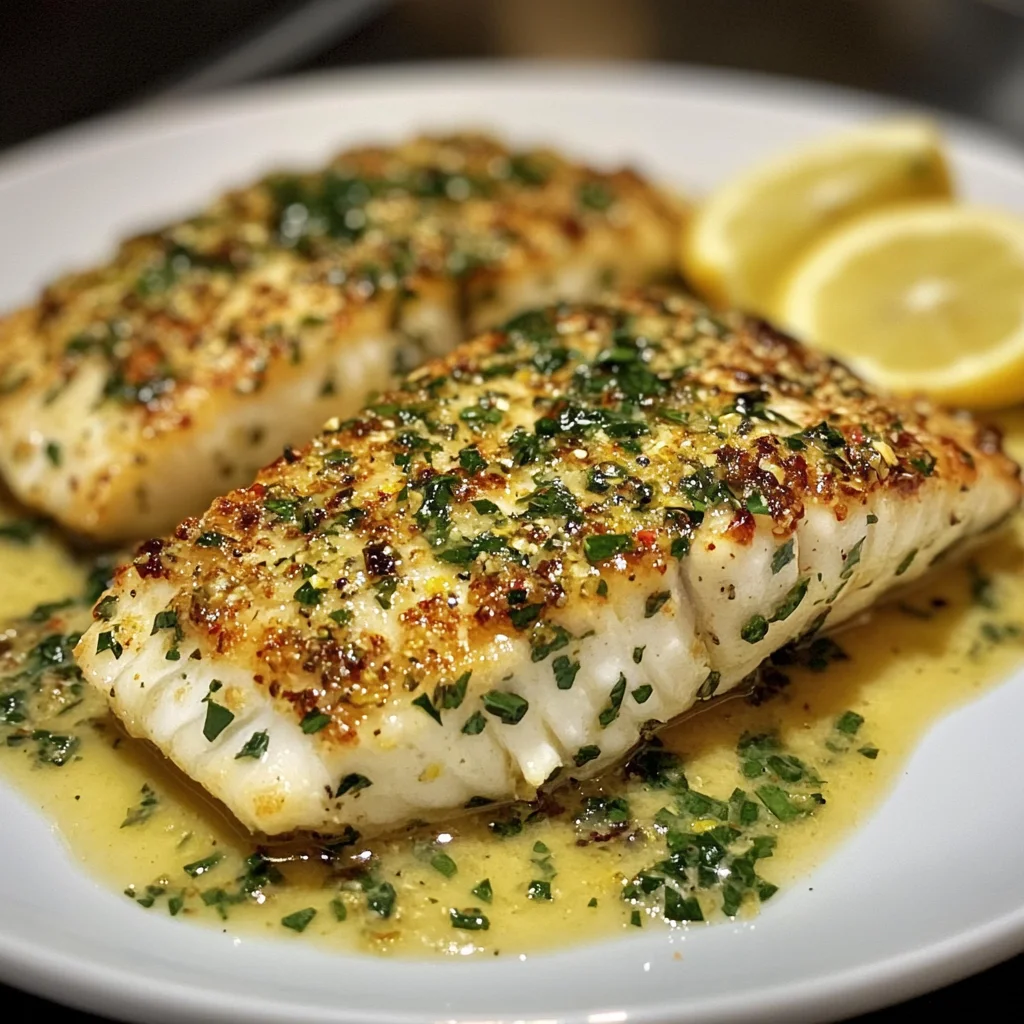
Herb-Crusted Halibut with Lemon Butter Sauce: A Restaurant-Quality Seafood Dish at Home
Imagine a perfectly cooked Herb-Crusted Halibut with Lemon Butter Sauce on your dinner table tonight—tender, flaky fish with a golden, aromatic crust and a velvety citrus sauce that elevates every bite. This elegant yet simple seafood dish combines the delicate flavor of halibut with fresh herbs, crispy breadcrumbs, and a tangy lemon butter sauce that makes every meal feel special. Whether you’re hosting a dinner party or treating yourself to a nutritious weeknight meal, this recipe delivers restaurant-quality results with minimal effort.
What Makes Herb-Crusted Halibut Special
Herb-Crusted Halibut with Lemon Butter Sauce stands out as one of the most impressive yet approachable seafood dishes you can prepare at home. The combination of firm, mild halibut with aromatic herbs creates a harmonious balance of flavors and textures. Unlike oilier fish varieties, halibut provides a clean canvas that beautifully showcases the herb crust without overwhelming your palate.
The crispy breadcrumb and herb coating adds dimension to the naturally delicate fish. Meanwhile, the lemon butter sauce brings brightness and richness that complements rather than masks the fish’s subtle sweetness. This preparation method also helps keep the fish moist during cooking, preventing the dryness that sometimes plagues leaner fish varieties.
Additionally, this dish offers versatility for various occasions and skill levels. The straightforward technique makes it accessible for home cooks while delivering results worthy of fine dining establishments. Furthermore, the recipe adapts easily to different cooking methods including baking, pan-searing, and even air frying.
Health Benefits of Halibut
Halibut ranks among the most nutritious seafood choices available today. This lean white fish packs impressive amounts of essential nutrients while remaining low in calories. A single serving provides exceptional nutritional value that supports multiple aspects of your health.
Rich in Essential Minerals
One serving of halibut delivers more than 100% of your daily selenium needs. Selenium functions as a powerful antioxidant that helps lower oxidative stress throughout your body. This trace mineral also supports thyroid health, aids in repairing damaged cells, and strengthens your immune response.
Beyond selenium, halibut contains significant amounts of phosphorus, magnesium, and potassium. These minerals work together to support bone health, muscle function, and proper nerve signaling. The combination creates a nutritional powerhouse that benefits your entire body.
Excellent Source of Complete Protein
Halibut provides high-quality complete protein with all essential amino acids your body requires. The proteins in halibut are well-balanced for excellent nutrition and easy absorption. This makes it an ideal choice for muscle recovery, tissue repair, and maintaining healthy body composition.
Heart-Healthy Omega-3 Fatty Acids
Despite being a lean fish, halibut maintains healthy levels of omega-3 fatty acids. These beneficial fats promote cardiovascular health and help maintain healthy cholesterol balance. The omega-3 content works alongside selenium and niacin to reduce chronic inflammation throughout the body.
Vitamin B Complex Benefits
Halibut serves as an excellent source of B vitamins including niacin, vitamin B6, and vitamin B12. Niacin helps promote a healthy heart and protects against cardiovascular illness. These vitamins also support nervous system function, energy metabolism, and healthy skin.
Anti-Inflammatory Properties
The combination of selenium, niacin, and omega-3 fatty acids in halibut helps fight chronic inflammation. Chronic low-grade inflammation contributes to numerous health problems, so reducing it supports overall wellness. This makes halibut particularly beneficial for those managing inflammatory conditions.
Essential Ingredients for Success
Creating the perfect Herb-Crusted Halibut with Lemon Butter Sauce requires quality ingredients that work in harmony. Each component plays a specific role in building layers of flavor and achieving ideal texture. Selecting fresh, high-quality ingredients makes a noticeable difference in your final dish.
For the Halibut and Herb Crust
-
4 halibut fillets (about 6 ounces each)
-
1/2 cup breadcrumbs (panko preferred for extra crispiness)
-
2 tablespoons fresh parsley, finely chopped
-
1 tablespoon fresh dill, finely chopped
-
1 tablespoon fresh chives, finely chopped
-
2 tablespoons olive oil
-
Salt and pepper to taste
The fresh herbs provide aromatic complexity that dried herbs cannot match. Panko breadcrumbs create a lighter, crispier crust compared to regular breadcrumbs. Olive oil helps bind the crust while adding healthy fats and promoting even browning.
For the Lemon Butter Sauce
-
4 tablespoons unsalted butter
-
2 tablespoons fresh lemon juice
-
1 teaspoon lemon zest
-
1 clove garlic, minced
-
Salt and pepper to taste
-
Optional: additional fresh herbs for garnish
Fresh lemon juice and zest deliver bright, vibrant citrus flavor. The garlic adds depth and savory notes that balance the acidity. Unsalted butter gives you better control over the final seasoning while creating a velvety texture.
How to Select Fresh Halibut
Purchasing high-quality fresh halibut ensures the best flavor and texture in your finished dish. Knowing what to look for helps you identify truly fresh fish and avoid subpar products. These selection tips guarantee you bring home the finest halibut available.
Visual Inspection Points
Fresh halibut fillets should display a translucent, slightly glossy appearance with firm, almost springy texture. Look for flesh that appears moist but not slimy, with a clean, even color. Avoid fillets with discoloration, a chalky white appearance, or opaque flesh, as these indicate aging or protein deterioration.
If purchasing whole halibut, check for clear, bright eyes that signal freshness. Cloudy or sunken eyes suggest the fish has passed its prime. The gills should appear bright red rather than brown or gray.
Smell Test
Fresh halibut should smell clean and briny, similar to the ocean. A faintly ocean-like smell indicates quality, while any strong “fishy” odor signals that the halibut isn’t fresh. Don’t hesitate to ask your fishmonger if you can smell the fish before purchasing.
Texture Assessment
When gently pressed, fresh halibut flesh should spring back rather than leaving an indentation. The meat should feel firm and moist without any slimy coating. For halibut steaks, look for intact pieces without cracks or drying edges.
Source Considerations
Purchasing from reputable suppliers ensures consistent quality and freshness. Whether buying from local fish markets or trusted online sources, established vendors typically maintain higher quality standards. Ask about the fish’s origin and when it arrived at the market.
Step-by-Step Cooking Instructions
Preparing Herb-Crusted Halibut with Lemon Butter Sauce follows a straightforward process that delivers impressive results. This methodical approach ensures perfectly cooked fish with a golden crust and flavorful sauce. Following these steps carefully produces restaurant-quality seafood at home.
Preparation Phase
Preheat your oven to 400°F (200°C) and line a baking sheet with parchment paper. Remove the halibut fillets from refrigeration about 15 minutes before cooking to allow them to come closer to room temperature. Pat the fillets completely dry with paper towels to remove any excess moisture, which helps achieve a crispy crust.
Season both sides of each fillet lightly with salt and pepper. This foundational seasoning enhances the fish’s natural flavor without overpowering it. Set the prepared fillets aside while you create the herb crust mixture.
Creating the Herb Crust
In a small bowl, combine the breadcrumbs, fresh parsley, dill, chives, olive oil, salt, and pepper. Mix thoroughly until the herbs distribute evenly throughout the breadcrumbs and the mixture takes on a slightly moist, sandy texture. The olive oil should coat the breadcrumbs without making them soggy.
Taste the mixture and adjust seasoning if needed. Remember that this crust will be the primary seasoning for the fish’s surface, so it should taste well-balanced. Fresh herbs should dominate the flavor profile with the breadcrumbs providing texture.
Applying the Crust
Place the dried, seasoned halibut fillets on the prepared baking sheet, skin-side down if applicable. Take a generous amount of the herb crust mixture and press it firmly onto the top side of each fillet. Use your hands to pack the mixture tightly, creating an even coating that adheres well to the fish.
Ensure complete coverage across the entire top surface. The crust should form a substantial layer, approximately 1/4 to 1/2 inch thick. Gentle but firm pressure helps the mixture stick during cooking.
Baking Process
Transfer the prepared fillets to the preheated oven. Bake for approximately 12-15 minutes, depending on the thickness of your fillets. The fish is done when it appears opaque throughout and flakes easily with a fork.
Avoid overcooking, as halibut contains less oil than many fish varieties and can dry out quickly. The internal temperature should reach 145°F for food safety, though many chefs prefer pulling it at 135-140°F for optimal moisture. The herb crust should turn golden brown and crispy.
Preparing the Lemon Butter Sauce
While the halibut bakes, prepare the sauce. Melt the butter in a small saucepan over medium heat. Add the minced garlic and cook for 1-2 minutes until fragrant but not browned.
Stir in the fresh lemon juice, lemon zest, salt, and pepper. Simmer for an additional 2-3 minutes to allow the flavors to meld together. The sauce should appear glossy and slightly thickened.
Remove from heat and keep warm until serving. If the sauce separates, whisk it briefly to re-emulsify before drizzling over the fish. Taste and adjust seasoning with additional salt, pepper, or lemon juice as desired.
Finishing and Serving
Remove the herb-crusted halibut from the oven when cooked through. Transfer each fillet to a serving plate using a wide spatula to keep the crust intact. Drizzle the warm lemon butter sauce generously over each portion.
Garnish with additional fresh herbs, lemon zest, or lemon wedges if desired. Serve immediately while the crust remains crispy and the fish is at peak temperature. The combination of crispy exterior, tender fish, and tangy sauce creates an unforgettable dining experience.
Creating the Perfect Herb Crust
The herb crust transforms ordinary halibut into an extraordinary dish with texture, flavor, and visual appeal. Mastering this component ensures your Herb-Crusted Halibut with Lemon Butter Sauce achieves restaurant-quality results. Several key factors determine crust success.
Choosing Your Breadcrumbs
Panko breadcrumbs produce a lighter, crispier crust compared to traditional breadcrumbs. Their larger, flakier structure creates more air pockets that crisp beautifully during cooking. However, regular fine breadcrumbs work well if that’s what you have available.
For gluten-free versions, substitute almond flour or crushed gluten-free crackers. Ground almonds add a nutty dimension that pairs excellently with halibut. Each breadcrumb choice affects the final texture differently, so experiment to find your preference.
Fresh Versus Dried Herbs
Fresh herbs deliver superior flavor and aroma compared to dried alternatives. The moisture in fresh herbs also helps the crust adhere to the fish. Classic choices include parsley, dill, and chives, but basil, thyme, cilantro, or tarragon work wonderfully too.
If using dried herbs, reduce the quantity to about one-third of the fresh amount. Dried herbs concentrate flavors more intensely, so a little goes further. Mix dried herbs into the breadcrumbs thoroughly to distribute flavor evenly.
Achieving Proper Adhesion
The crust must stick firmly to the fish throughout cooking. Patting the fillets completely dry creates a better surface for adhesion. Some recipes incorporate a light coating of mayonnaise, mustard, or olive oil directly on the fish before applying the crust.
This binding layer acts as glue while adding flavor and helping prevent overcooking. Press the crust mixture firmly onto the fish, compacting it gently but thoroughly. The more thoroughly you press, the better it adheres during baking.
Balancing Moisture Content
The herb crust mixture should feel slightly moist from the olive oil but not wet or soggy. Too much oil creates a heavy, greasy crust, while too little results in a dry mixture that won’t brown properly. The texture should resemble damp sand that holds together when squeezed.
Mix the olive oil into the breadcrumb-herb mixture gradually. You can always add more, but you cannot remove excess. The herbs themselves contribute some moisture, so account for this when adding oil.
Golden Brown Perfection
Proper oven temperature ensures the crust browns while the fish cooks through. At 400°F, the breadcrumbs toast to golden perfection in the same time the fish needs to cook. Lower temperatures may leave the crust pale and soft, while higher heat risks burning before the fish finishes.
Position the baking sheet in the middle of the oven for even heat distribution. If the crust appears to brown too quickly, tent the fish loosely with foil. Conversely, if it seems pale near the end of cooking, briefly switch on the broiler for 1-2 minutes.
Making Lemon Butter Sauce from Scratch
Lemon butter sauce elevates Herb-Crusted Halibut with Lemon Butter Sauce from delicious to extraordinary. This classic accompaniment brings together rich butter, bright citrus, and aromatic garlic in perfect harmony. Creating this sauce takes mere minutes but dramatically enhances your seafood dish.
Essential Components
Quality unsalted butter forms the foundation of this sauce. Using unsalted allows you to control the final seasoning precisely. Fresh lemon juice provides the characteristic tangy brightness, while lemon zest adds concentrated citrus oils and complexity.
Garlic contributes savory depth that balances the acidity. Fresh garlic minced finely releases maximum flavor without overwhelming chunks. Salt and pepper round out the seasoning, bringing all elements into focus.
Proper Technique
Start by melting butter over medium heat, not high heat. High temperatures can cause butter to separate or brown too quickly. Once melted and gently bubbling, add the minced garlic.
Cook the garlic for 1-2 minutes, stirring frequently, until fragrant and softened but not browned. Browned garlic tastes bitter and overpowers the delicate sauce. This step infuses the butter with aromatic garlic flavor.
Next, stir in the fresh lemon juice and zest. The sauce will bubble vigorously as the acidic juice hits the hot butter. Reduce heat slightly and simmer for 2-3 minutes, allowing the flavors to meld.
Flavor Adjustments
Taste the sauce before serving and adjust as needed. More lemon juice increases brightness and acidity, while additional butter mellows sharpness and adds richness. A pinch of salt enhances all the flavors, while freshly ground black pepper adds subtle heat.
Some variations incorporate fresh herbs like parsley, dill, basil, or thyme directly into the sauce. Add chopped herbs at the very end to preserve their fresh flavor and color. Capers also complement the sauce beautifully, especially with seafood.
Serving Temperature
Serve the lemon butter sauce warm for the best flavor and texture. Cold butter sauce solidifies and loses its silky, pourable consistency. Keep the finished sauce warm over very low heat or in a warm water bath until ready to serve.
If the sauce separates or appears broken, whisk it vigorously off heat. The emulsion should come back together with persistent whisking. Adding a tiny splash of warm water while whisking can also help re-emulsify separated sauce.
Versatility Beyond Halibut
This lemon butter sauce pairs excellently with various proteins beyond halibut. Try it with other fish varieties, shrimp, scallops, lobster, chicken, or even vegetables. The sauce also works beautifully tossed with pasta or drizzled over potatoes.
For different flavor profiles, experiment with lime instead of lemon, add a splash of broth for a lighter consistency, or incorporate a teaspoon of mustard for tang. Each variation creates a unique sauce while maintaining the fundamental technique.
Cooking Techniques and Tips
Mastering the cooking technique ensures your Herb-Crusted Halibut with Lemon Butter Sauce turns out perfectly every time. Several methods work well, each offering distinct advantages. Understanding these approaches helps you choose the best option for your kitchen and preferences.
Oven Baking Method
Baking represents the most straightforward approach for herb-crusted halibut. This hands-off method allows even cooking while you prepare the sauce and sides. Set your oven to 400°F for optimal results.
The consistent heat surrounds the fish, cooking it evenly from all sides. This method particularly suits thicker fillets that need more time to cook through. Additionally, baking multiple fillets simultaneously works better than pan-searing when serving several people.
Pan-Searing Technique
Pan-searing creates an exceptionally crispy crust through direct contact with a hot surface. Heat oil in a non-stick skillet over medium-high heat. Place the fish crust-side down first and cook for 3-4 minutes without moving it.
This undisturbed cooking time allows a golden crust to form. Flip carefully using a thin spatula and cook another 3-5 minutes on the second side, depending on thickness. This method works best for thinner fillets that cook quickly.
Air Fryer Approach
Air frying produces remarkable crispiness with less oil. Preheat your air fryer to 390°F. Arrange the crusted fillets in a single layer without overcrowding.
Cook for 10-12 minutes until the crust turns golden and crispy. The circulating hot air creates an evenly browned exterior while keeping the interior moist. This method suits smaller fillets and works excellently for weeknight dinners.
Temperature Monitoring
Using an instant-read thermometer ensures perfectly cooked fish. Insert the probe into the thickest part of the fillet. The FDA recommends cooking fish to an internal temperature of 145°F.
However, many chefs prefer pulling halibut at 135-140°F for optimal moisture retention. The fish continues cooking slightly from residual heat after removal from the heat source. Slightly undercooking proves better than overcooking, as halibut dries out quickly.
Avoiding Overcooking
Halibut contains less natural oil than many fish varieties, making it prone to drying. Watch cooking times carefully and check doneness early. The fish should appear opaque and flake easily when gently pressed with a fork.
Buying fillets of similar size ensures even cooking across all portions. This prevents some pieces from overcooking while others finish. Remove fish from heat as soon as it reaches proper doneness.
Resting Period
Allow the cooked halibut to rest for 2-3 minutes before serving. This brief resting period lets the juices redistribute throughout the fish. The result is moister, more evenly textured fish.
During this time, finish preparing your sauce and plating other components. The crust remains crispy while the interior reaches perfect eating temperature. Serve promptly after resting for the best textural contrast.
Common Mistakes to Avoid
Understanding potential pitfalls helps you achieve perfect Herb-Crusted Halibut with Lemon Butter Sauce every time. Avoiding these common errors ensures consistent, delicious results. Learning from typical mistakes saves time, ingredients, and disappointment.
Starting with Wet Fish
Moisture on the fish’s surface prevents proper crust adhesion. Wet fillets create a soggy rather than crispy crust. Always pat halibut completely dry with paper towels before seasoning or applying the crust.
Excess moisture also extends cooking time and can cause steaming rather than roasting. Take an extra moment to thoroughly dry each fillet. This simple step dramatically improves crust quality.
Overcooking the Fish
Overcooking ranks as the most common mistake with halibut. The lean fish dries out quickly when cooked beyond proper doneness. Watch timing carefully and use a thermometer to monitor internal temperature.
It’s better to slightly undercook halibut than overcook it. The fish continues cooking from residual heat after removal from the oven. Pull it just before it reaches your target temperature.
Burning the Garlic
Burned garlic tastes bitter and ruins the lemon butter sauce. Cook garlic only until fragrant and softened, not browned. Use medium heat rather than high heat when making the sauce.
Stir the garlic constantly during cooking to prevent sticking and burning. If you notice it browning too quickly, remove the pan from heat immediately. Starting over with fresh garlic beats trying to salvage burned sauce.
Using Insufficient Seasoning
Bland fish disappoints even with a beautiful crust. Season the fish itself before applying the crust. The crust mixture should also taste well-seasoned when sampled raw.
Remember that seasoning enhances the fish’s natural flavor rather than masking it. Taste components at each stage and adjust as needed. Proper seasoning throughout the cooking process builds layers of flavor.
Crowding the Pan
When pan-searing multiple fillets, overcrowding the skillet reduces heat and creates steam. This prevents proper browning and crisping. Leave adequate space between fillets for air circulation.
Cook in batches if necessary rather than cramming everything into one pan. The extra few minutes investment pays off in superior texture and color. Maintain high enough heat to achieve good searing.
Forgetting to Preheat
Starting with a cold oven or skillet extends cooking time unpredictably. The fish may overcook on the outside before the inside finishes. Always preheat your oven fully to the specified temperature.
For pan-searing, heat the skillet until a drop of water sizzles on contact. Proper preheating ensures the timing in recipes works as intended. This step creates better texture and more predictable results.
Serving Suggestions and Pairings
Herb-Crusted Halibut with Lemon Butter Sauce pairs beautifully with numerous side dishes and accompaniments. Thoughtful pairings create a complete, balanced meal. These combinations complement the fish without overwhelming its delicate flavor.
Vegetable Accompaniments
Roasted vegetables provide earthy flavors and varied textures. Try roasted asparagus, Brussels sprouts, or green beans tossed with olive oil and sea salt. The caramelization from roasting adds depth that complements the herb crust.
Sautéed spinach or kale offers nutritious, quick-cooking options. Fresh seasonal vegetables showcase produce at its peak. Roasted cherry tomatoes burst with sweetness that balances the tangy lemon sauce.
Starch Options
Light, fluffy rice pilaf absorbs the delicious lemon butter sauce. Herbed rice with parsley or dill echoes the crust’s flavors. Alternatively, creamy mashed potatoes provide comfort food appeal.
Roasted baby potatoes with herbs offer a rustic presentation. Quinoa or couscous add interesting textures and nutritional variety. Each starch option creates a different meal experience while supporting the star ingredient.
Salad Pairings
A light green salad with lemon vinaigrette provides refreshing contrast. The acidity in the dressing complements the butter sauce without competing. Mixed greens, arugula, or butter lettuce all work wonderfully.
Add shaved fennel for an anise note that pairs excellently with fish. Cucumber, radishes, and cherry tomatoes contribute fresh crunch. Keep salads simple to let the halibut shine.
Complete Meal Composition
Balance your plate with protein, vegetables, and starch for nutritional completeness. The halibut provides lean protein and omega-3 fatty acids. Vegetables contribute fiber, vitamins, and minerals.
A modest portion of starch rounds out the meal without overwhelming. This combination satisfies while showcasing the Herb-Crusted Halibut with Lemon Butter Sauce as the focal point. Aim for colorful presentations that please the eye as well as the palate.
Beverage Suggestions
Sparkling water with lemon complements the bright flavors. Unsweetened iced tea provides a neutral backdrop. Fresh-squeezed lemonade echoes the citrus notes in the sauce.
For a festive touch, try sparkling grape juice or a citrus-based mocktail. These options enhance the dining experience without overpowering the delicate fish. Choose beverages that refresh and cleanse the palate between bites.
Storage and Reheating Guidelines
Proper storage preserves the quality and safety of leftover Herb-Crusted Halibut with Lemon Butter Sauce. Following food safety guidelines prevents waste while maintaining flavor. These methods help you enjoy leftovers almost as much as the fresh dish.
Refrigeration Basics
Cool leftover halibut to room temperature before refrigerating, but don’t leave it out longer than two hours. Transfer fish to an airtight container to prevent odor absorption and moisture loss. Properly stored halibut keeps in the refrigerator for 2-3 days maximum.
Store the lemon butter sauce separately in a small container. This prevents the sauce from making the crust soggy during storage. Label containers with the date to track freshness.
Freezing Considerations
Freezing cooked herb-crusted halibut isn’t ideal, as the texture changes significantly upon thawing. The crust becomes soggy and the fish may turn mushy. If you must freeze it, wrap portions tightly in plastic wrap, then aluminum foil.
Use frozen cooked halibut within one month for best quality. Thaw overnight in the refrigerator rather than at room temperature. Accept that texture won’t match freshly cooked fish.
Oven Reheating Method
The oven produces the best reheating results for maintaining crust crispness. Preheat your oven to 350°F. Place the fish on a baking sheet and reheat for about 10 minutes, or until warmed through.
Avoid covering the fish, as this creates steam that softens the crust. Check the internal temperature reaches 165°F for food safety. The crust won’t be quite as crispy as when freshly made, but this method comes closest.
Air Fryer Reheating
The air fryer excellently recrisps the herb coating. Heat your air fryer to 350°F. Place the fish in a single layer and heat for 5-7 minutes until warmed through.
This method restores much of the original crispness. Check frequently to avoid overcooking, which dries out the already-cooked fish. The circulating hot air refreshes the texture remarkably well.
Sauce Reheating
Gently reheat lemon butter sauce in a small saucepan over low heat. Stir frequently to prevent separation. If the sauce appears broken, whisk vigorously to re-emulsify.
Avoid boiling the sauce, as high heat causes the butter to separate. Warm it just until fluid and pourable. Make fresh sauce if possible, as it only takes minutes and tastes significantly better.
Recipe Variations and Substitutions
Customizing Herb-Crusted Halibut with Lemon Butter Sauce allows creative expression while accommodating dietary needs and preferences. These variations maintain the dish’s core appeal while offering new flavor experiences. Experiment to discover your favorite combinations.
Alternative Fish Options
Halibut’s firm texture and mild flavor make it ideal, but other fish work well too. Cod, sea bass, or mahi-mahi provide similar texture with slightly different flavors. Salmon offers a richer, oilier alternative that stands up beautifully to the herb crust.
Tilapia or snapper provide budget-friendly options. Choose thick, firm fillets regardless of species for best results. Adjust cooking time based on fillet thickness and fish variety.
Herb Combinations
Classic parsley, dill, and chives create a traditional flavor profile. However, basil and oregano offer an Italian-inspired variation. Tarragon and chervil provide a French twist.
Cilantro and mint create a fresh, bright variation. Thyme and rosemary deliver earthy, aromatic notes. Mix and match herbs based on availability and personal preference.
Crust Modifications
Replace breadcrumbs with crushed nuts for added nutrition and different texture. Almonds, pecans, or macadamia nuts all work excellently. Parmesan cheese mixed with breadcrumbs creates a savory, umami-rich crust.
For gluten-free versions, use certified gluten-free breadcrumbs or almond flour. Crushed gluten-free crackers or rice cereal also work. Each substitution creates a unique textural experience.
Sauce Variations
Add capers to the lemon butter sauce for briny complexity. Incorporate Dijon mustard for tangy depth. Swap lime for lemon to create a different citrus profile.
Mix in a splash of chicken or vegetable broth for a lighter consistency. Add cream for a richer, more decadent sauce. Fresh herbs stirred into the finished sauce add visual appeal and flavor.
Cooking Method Adaptations
Try grilling herb-crusted halibut for smoky char. Use a fish basket or place fillets on oiled foil to prevent sticking. The high heat creates beautiful grill marks and adds outdoor cooking appeal.
Broiling offers quick cooking with excellent browning. Position the rack 4-6 inches from the heat source. Watch carefully to prevent burning, as broilers cook very quickly.
Dietary Modifications
For dairy-free versions, replace butter with olive oil or dairy-free butter substitute in the sauce. The flavor changes slightly but remains delicious. Use additional lemon juice and herbs to compensate for butter’s richness.
Lower-carb options skip the breadcrumbs entirely or use pork rinds. A simple herb and olive oil coating provides flavor without breading. Each modification allows more people to enjoy this versatile dish.
Frequently Asked Questions
What temperature should I cook halibut to?
Cook halibut to an internal temperature of 145°F for food safety according to FDA guidelines. However, many chefs prefer pulling it at 135-140°F for optimal moisture and texture. The fish will continue cooking slightly from residual heat after removal. Use an instant-read thermometer inserted into the thickest part for accurate measurement.
How do I know when my Herb-Crusted Halibut with Lemon Butter Sauce is done?
The fish should appear opaque throughout rather than translucent. It should flake easily when gently pressed with a fork. The herb crust should be golden brown and crispy. Additionally, an instant-read thermometer should register 135-145°F in the center.
Can I make the herb crust ahead of time?
Yes, prepare the herb crust mixture several hours or even a day in advance. Store it covered in the refrigerator until ready to use. This saves time during meal preparation. However, apply the crust to the fish just before cooking for best adhesion and texture.
Why is my halibut dry?
Overcooking is the most common cause of dry halibut. Halibut contains less natural oil than many fish, making it prone to drying out. Cook just until done and consider pulling it at a slightly lower temperature. Using a thermometer helps prevent overcooking. The mayonnaise or oil coating under the crust also helps retain moisture.
What can I substitute for halibut in this recipe?
Cod, sea bass, mahi-mahi, or grouper all work well as substitutes. These fish have similar firm, flaky texture and mild flavor. Salmon provides a richer alternative if you prefer oilier fish. Choose thick fillets of whatever fish you select for best results.
How do I prevent the herb crust from falling off?
Pat the fish completely dry before applying the crust. Press the mixture firmly onto the fish to help it adhere. Some cooks apply a thin layer of mayonnaise, mustard, or olive oil to the fish first as a binding agent. Handle the crusted fish gently when transferring to avoid dislodging the coating.
Can I freeze leftover halibut?
While possible, freezing cooked herb-crusted halibut significantly affects texture quality. The crust becomes soggy and the fish may turn mushy when thawed. If you must freeze it, wrap tightly and use within one month. Refrigeration for 2-3 days is preferable to freezing.
What sides pair best with this dish?
Light, fresh sides complement Herb-Crusted Halibut with Lemon Butter Sauce beautifully. Try roasted vegetables like asparagus or green beans. Rice pilaf or roasted potatoes provide satisfying starch options. A simple green salad with lemon vinaigrette adds refreshing contrast.
Conclusion
Herb-Crusted Halibut with Lemon Butter Sauce delivers restaurant-quality elegance with home-kitchen simplicity. This nutritious, flavorful dish combines tender halibut, aromatic herb crust, and tangy citrus sauce in perfect harmony. The recipe adapts easily to various cooking methods, dietary needs, and personal preferences.
Rich in protein, omega-3 fatty acids, selenium, and essential vitamins, halibut supports overall health while satisfying your taste buds. The straightforward technique makes this impressive dish accessible to cooks of all skill levels. Whether preparing a special dinner for guests or treating yourself to a nutritious weeknight meal, this Herb-Crusted Halibut with Lemon Butter Sauce never disappoints.
Ready to create this stunning seafood masterpiece in your own kitchen? Gather your ingredients, follow these detailed instructions, and prepare to impress everyone at your table with this delicious, healthy, and beautiful dish.
Print
Herb-Crusted Halibut with Lemon Butter Sauce
Description
Herb-Crusted Halibut with Lemon Butter Sauce
Ingredients:
-
4 halibut fillets
-
2 tbsp olive oil
-
Salt and pepper, to taste
-
¼ cup breadcrumbs
-
2 tbsp fresh parsley, chopped
-
1 tsp fresh thyme, chopped
-
1 tsp fresh dill, chopped
-
2 tbsp grated Parmesan cheese
Lemon Butter Sauce:
-
4 tbsp butter
-
2 garlic cloves, minced
-
2 tbsp lemon juice
-
1 tsp lemon zest
-
Salt and pepper, to taste
Instructions:
-
Preheat oven to 400°F (200°C).
-
In a small bowl, combine breadcrumbs, parsley, thyme, dill, and Parmesan.
-
Season halibut fillets with salt and pepper, then press the breadcrumb mixture onto the top of each fillet.
-
Heat olive oil in an oven-safe skillet over medium-high heat. Sear halibut fillets 2–3 minutes per side until golden.
-
Transfer the skillet to the oven and bake for 6–8 minutes until fish is cooked through and flakes easily.
-
For the sauce, melt butter in a small saucepan over medium heat. Add garlic, lemon juice, and zest. Cook for 1–2 minutes, then season with salt and pepper.
-
Drizzle lemon butter sauce over the halibut before serving.