
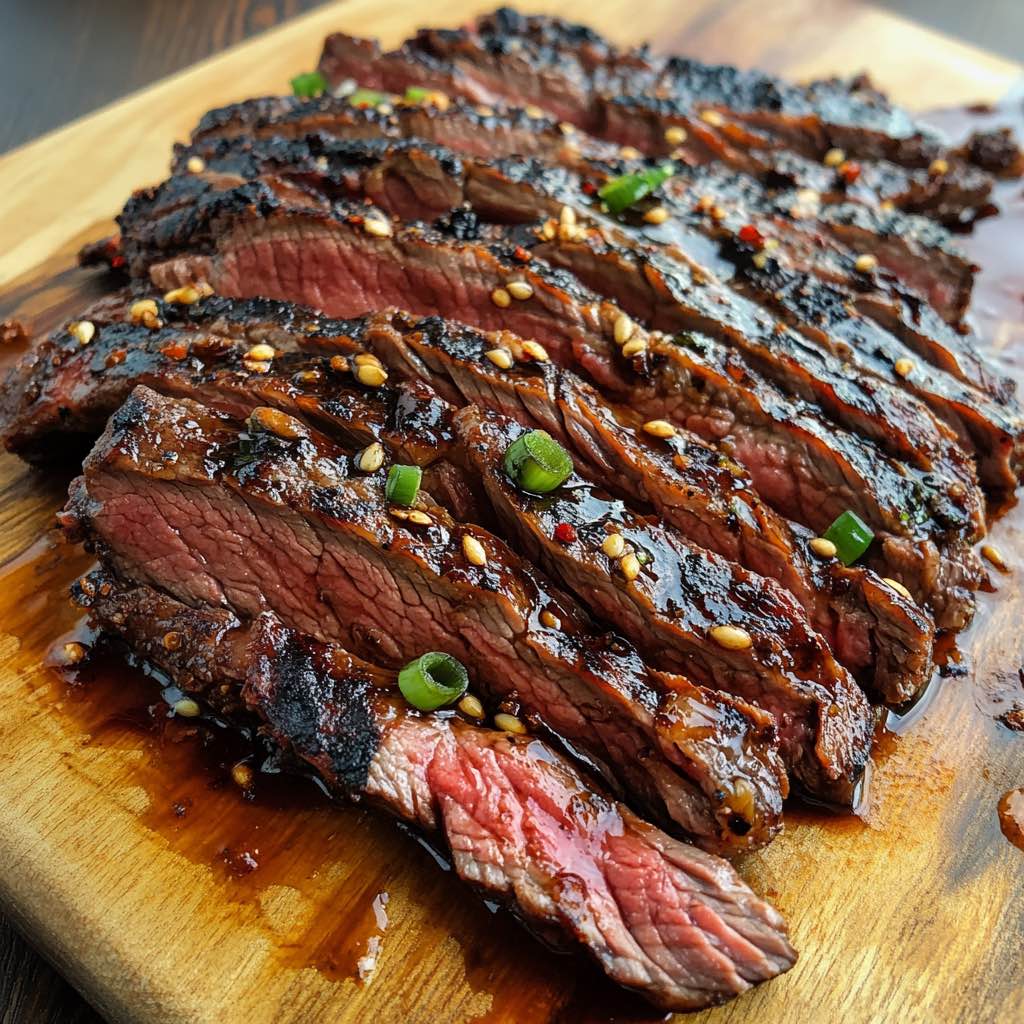
Korean-Style Grilled Flank Steak
Korean-Style Grilled Flank Steak transforms a lean, affordable cut into a tender, flavorful masterpiece inspired by traditional bulgogi techniques. This recipe features a savory-sweet marinade packed with gochujang, soy sauce, and Asian pear, creating an irresistible dish perfect for weeknight dinners or special gatherings.
What Makes Korean-Style Flank Steak Special
Korean-style grilled flank steak combines the bold flavors of Korean barbecue with an economical cut of beef. The marinade works double duty by infusing intense flavors while tenderizing the naturally lean meat. Unlike traditional steak preparations, this method uses Asian ingredients like gochujang, sesame oil, and fresh ginger to create layers of savory, sweet, and spicy notes.
The Secret to Tender Flank Steak
Flank steak benefits tremendously from marination. The cut contains long muscle fibers that can be tough without proper preparation. Korean marinades traditionally include Asian pear, which contains natural enzymes called calpain that break down proteins and tenderize meat effectively.
Additionally, the marinade creates caramelization during grilling. The sugars from brown sugar and pear combine with high heat to form a delicious crust. This combination delivers restaurant-quality results at home.
Understanding Flank Steak
What Is Flank Steak
Flank steak comes from the abdominal muscles of the cow. This lean cut is characterized by visible long muscle fibers running in one direction. The meat contains minimal fat marbling, making it a healthier choice compared to ribeye or porterhouse cuts.
Choosing Quality Flank Steak
Select flank steak that displays bright red color without excessive browning. The cut should measure about one inch thick for even cooking. Look for meat with minimal surface moisture and a fresh, clean smell.
Furthermore, consider purchasing from reputable butchers or specialty stores. Quality matters significantly when working with lean cuts. Fresh flank steak delivers superior flavor and texture compared to previously frozen options.
Why Flank Steak Works for Korean BBQ
Korean barbecue traditionally uses thinly sliced beef for quick cooking. Flank steak’s grain structure makes it ideal for slicing against the grain after grilling. The lean profile absorbs marinades exceptionally well, allowing flavors to penetrate deeply.
Essential Ingredients for Korean Marinade
Core Marinade Components
The marinade for Korean-style grilled flank steak requires specific ingredients that create authentic flavors. Each component serves a distinct purpose in the final dish.
Soy Sauce forms the salty, umami-rich base of the marinade. Use low-sodium varieties to control salt levels while maintaining depth. Soy sauce contains amino acids that enhance the meat’s natural flavors.
Gochujang adds signature Korean heat and complexity. This fermented red pepper paste combines spicy, sweet, and savory notes. Start with two tablespoons and adjust according to personal heat preference.
Asian Pear provides natural sweetness and tenderizing enzymes. The fruit contains calpain, a proteolytic enzyme that breaks down tough muscle fibers. Substitute with regular pear or pineapple if Asian pear is unavailable.
Brown Sugar balances the salty and spicy elements. The sugar caramelizes during grilling, creating a flavorful crust. Use approximately two tablespoons for optimal sweetness.
Sesame Oil contributes nutty richness and authentic Korean flavor. Toasted sesame oil offers more intense flavor than regular varieties. One to two tablespoons suffices for most recipes.
Fresh Garlic and Ginger provide aromatic complexity. Mince or grate both ingredients finely for even distribution. Fresh versions deliver superior flavor compared to powdered alternatives.
Green Onions add mild onion flavor and visual appeal. Chop both white and green parts for the marinade. Reserve some sliced green parts for garnish.
Optional Flavor Enhancers
Sesame Seeds provide textural contrast and nuttiness. Toast seeds lightly before adding to enhance their flavor. Use as both marinade component and garnish.
Rice Vinegar adds subtle acidity that brightens flavors. The vinegar helps tenderize meat while balancing sweetness. One to two tablespoons works well.
Gochugaru increases heat for spice enthusiasts. These Korean red pepper flakes offer fruity heat without overwhelming other flavors. Add one teaspoon for moderate spiciness.
Step-by-Step Preparation Guide
Preparing the Flank Steak
Begin by trimming excess fat from the flank steak. Pat the meat dry with paper towels to ensure proper marinade adhesion. Some recipes suggest partially freezing the steak for easier slicing, though this step is optional for whole steak preparations.
Score the surface lightly in a crosshatch pattern. This technique allows marinade to penetrate more effectively. Make shallow cuts about one-quarter inch deep.
Making the Korean Marinade
Combine all marinade ingredients in a blender or food processor. Pulse the Asian pear, onion, garlic, ginger, and green onions until smooth. Add soy sauce, gochujang, brown sugar, and sesame oil.
Alternatively, prepare a simpler version by whisking ingredients together. Grate the pear finely instead of blending. Mince aromatics very finely for even distribution.
Taste the marinade before adding to meat. Adjust sweetness, saltiness, or heat according to preference. The marinade should taste slightly stronger than desired final flavor.
Marinating Process
Place the flank steak in a large resealable plastic bag or shallow dish. Pour marinade over the meat, ensuring complete coverage. Remove excess air from the bag and seal tightly.
Marinate in the refrigerator for at least two hours. For best results, marinate four to eight hours. The enzymes in Asian pear work during this time to tenderize the meat.
Turn the bag occasionally to redistribute marinade. This ensures even flavor penetration throughout the steak. Avoid marinating longer than 24 hours, as excessive time can make the texture mushy.
Pre-Grilling Preparation
Remove the steak from refrigerator 30 minutes before grilling. Bringing meat to room temperature promotes even cooking. Shake off excess marinade but don’t rinse the meat.
Preheat the grill to medium-high heat. Clean grill grates thoroughly and oil them lightly to prevent sticking. Aim for a temperature around 450-500°F for optimal searing.
Reserve some unused marinade if desired. Boil reserved marinade for at least three minutes before using as a sauce. This step eliminates any bacteria from raw meat contact.
Grilling Techniques and Tips
Achieving Perfect Grill Marks
Place the flank steak directly over high heat. Position the meat at a 45-degree angle to grill grates. Allow it to cook undisturbed for three to five minutes.
Resist the temptation to move or flip the steak prematurely. Moving meat disrupts crust formation and prevents proper caramelization. The steak will release naturally from grates when ready to flip.
Rotate the steak 90 degrees after initial searing. This creates attractive crosshatch grill marks. Cook for an additional two to three minutes before flipping.
Temperature and Timing Guidelines
Flank steak cooks quickly due to its thinness. Total cooking time ranges from six to ten minutes depending on desired doneness. Use an instant-read meat thermometer for accuracy.
For rare flank steak, aim for an internal temperature of 120-130°F. Cook approximately three minutes per side. The meat will feel soft to the touch.
For medium-rare, target 130-135°F internal temperature. Grill four to four and a half minutes per side. This doneness level works best for flank steak.
For medium doneness, cook to 135-145°F. Grill five to six minutes per side. The steak will have a slight tinge of pink in the center.
Avoid cooking flank steak beyond medium. Well-done flank steak becomes tough and chewy regardless of marination. The lean nature of this cut requires careful attention to prevent overcooking.
Resting and Slicing
Transfer the grilled steak to a cutting board immediately after cooking. Tent loosely with aluminum foil to retain heat. Allow the meat to rest for five to ten minutes.
Resting permits juices to redistribute throughout the meat. Cutting too soon causes flavorful juices to run out. The internal temperature will rise slightly during resting.
Identify the grain direction before slicing. The grain appears as parallel lines running lengthwise across the flank steak. Slice perpendicular to these lines at a 45-degree angle.
Cut slices approximately one-quarter to one-half inch thick. Thin slicing enhances tenderness by shortening muscle fibers. Use a sharp knife for clean cuts.
Serving Suggestions
Traditional Korean-Style Presentation
Serve Korean-style grilled flank steak over steamed white rice. The rice absorbs flavorful meat juices beautifully. Alternatively, use brown rice for added nutritional benefits.
Arrange lettuce leaves alongside the sliced steak. Butter lettuce or red leaf lettuce work excellently for wrapping. Guests can create custom lettuce wraps with meat and accompaniments.
Garnish generously with toasted sesame seeds and sliced green onions. These additions provide visual appeal and complementary flavors. Add a drizzle of extra sesame oil if desired.
Side Dish Pairings
Kimchi offers traditional fermented tang that balances rich meat flavors. The spicy, sour notes cleanse the palate between bites. Choose from various kimchi types including cabbage, radish, or cucumber varieties.
Steamed Vegetables add color and nutrition to the plate. Consider broccoli, bok choy, or snap peas prepared simply. Season lightly to allow the steak flavors to shine.
Asian Slaw provides crunchy contrast. Combine shredded cabbage, carrots, and cucumber with rice vinegar dressing. Add sesame seeds and a touch of gochujang for Korean flair.
Cucumber Salad offers cool refreshment. Slice cucumbers thinly and toss with rice vinegar, sesame oil, and a pinch of sugar. This light side complements the savory steak perfectly.
Creative Serving Ideas
Transform leftover Korean-style grilled flank steak into rice bowls. Layer rice with sliced steak, quick-pickled vegetables, and a fried egg. Drizzle with extra gochujang sauce for added flavor.
Use the meat for Korean-inspired tacos. Fill soft tortillas with sliced steak, kimchi, cilantro, and a squeeze of lime. This fusion approach creates exciting flavor combinations.
Create bulgogi salads with mixed greens. Top lettuce with warm sliced steak, cucumber, carrots, and sesame dressing. This lighter option works perfectly for lunch.
Nutritional Benefits
Protein and Macronutrients
Flank steak provides excellent protein content with fewer calories than fattier cuts. A three-ounce serving contains approximately 23 grams of protein. This high protein content supports muscle building and repair.
The lean nature of flank steak means lower total fat content. Each serving contains about seven grams of total fat with three grams saturated fat. This profile makes it suitable for health-conscious individuals.
Korean-style grilled flank steak contains minimal carbohydrates from the marinade. The beef itself has zero carbohydrates. Overall calories remain reasonable at around 200 calories per serving.
Essential Vitamins and Minerals
Iron ranks among the most important nutrients in flank steak. One serving provides approximately 15-22% of the daily value. Iron supports oxygen transport throughout the body.
Vitamin B12 appears in significant quantities, with one serving offering 37-68% of daily needs. This vitamin is crucial for nerve function and red blood cell formation. B12 occurs naturally only in animal products.
Zinc contributes to immune function and wound healing. Flank steak provides about 14-45% of daily zinc requirements. The mineral also supports taste and smell functions.
Phosphorus aids bone health and energy production. Each serving contains roughly 21-30% of recommended daily intake. Phosphorus works synergistically with calcium for optimal bone strength.
Health Benefits of Korean Ingredients
Gochujang offers unexpected health benefits beyond flavor. The fermented paste contains beneficial probiotics that support gut health. Research suggests gochujang may have anti-obesity and anti-inflammatory properties.
The capsaicin in gochujang provides antioxidant effects. This compound may boost metabolism and support cardiovascular health. Gochujang also contains vitamin C, vitamin A, and dietary fiber.
Sesame oil contributes healthy unsaturated fats. These fats support heart health when consumed in moderation. The oil also contains antioxidants and anti-inflammatory compounds.
Garlic and ginger provide immune-boosting properties. Both ingredients contain compounds that may reduce inflammation. They also aid digestion and add nutritional value without significant calories.
Storage and Meal Prep
Marinating in Advance
Prepare the marinade up to three days ahead. Store in an airtight container in the refrigerator. Whisk thoroughly before using as ingredients may separate.
Marinate the steak the night before for convenient meal preparation. The extended marination time enhances tenderness and flavor. Simply remove from refrigerator and grill when ready.
Consider marinating multiple steaks simultaneously for batch cooking. Freeze marinated steaks in individual bags for future meals. Thaw overnight in refrigerator before grilling.
Storing Cooked Steak
Refrigerate leftover grilled flank steak within two hours of cooking. Store in airtight containers to maintain moisture and prevent odor absorption. Properly stored steak lasts three to four days in the refrigerator.
Freeze cooked sliced steak for longer storage. Wrap portions tightly in plastic wrap, then place in freezer bags. Remove excess air to prevent freezer burn.
Frozen cooked flank steak maintains quality for two to three months. Label containers with the date for easy tracking. Thaw in refrigerator overnight before reheating.
Reheating Methods
Reheat sliced steak gently to prevent toughness. Place slices in a skillet over medium heat with a splash of liquid. Cover and warm for two to three minutes until heated through.
Microwave reheating works in a pinch. Arrange slices in a single layer on a microwave-safe plate. Cover with a damp paper towel and heat in 30-second intervals.
Use reheated steak in rice bowls, salads, or sandwiches. The versatility of Korean-style grilled flank steak makes leftovers exciting. Add fresh garnishes and sauce to refresh the dish.
Frequently Asked Questions
Can I use a different cut of beef for Korean-style grilled flank steak?
Yes, several cuts work well with Korean marinades. Skirt steak closely resembles flank steak in texture and flavor. Sirloin offers a more tender option though with less intense beef flavor.
Ribeye creates a richer, fattier version of Korean-style grilled steak. The increased marbling means more calories and fat. Chuck roast works for budget-friendly alternatives when sliced thinly.
How do I know when the flank steak is done?
Use an instant-read meat thermometer for accuracy. Insert the thermometer into the thickest part of the steak. Reference the temperature guidelines earlier in this article for preferred doneness.
Touch tests provide a backup method. Rare steak feels soft and squishy. Medium-rare offers slight resistance with softness. Medium feels firmer with some give remaining.
Can I prepare Korean-style grilled flank steak without a grill?
Absolutely, a cast iron skillet or grill pan works excellently. Heat the pan over medium-high heat until very hot. Cook the steak three to four minutes per side.
Broiling offers another alternative cooking method. Position the oven rack four to six inches from the heating element. Broil three to five minutes per side, watching carefully.
What can I substitute for Asian pear?
Regular pears make the closest substitute. Bosc or Bartlett pears provide similar sweetness and tenderizing enzymes. Use the same quantity as called for with Asian pear.
Pineapple juice or crushed pineapple also tenderizes effectively. The enzymes in pineapple break down protein efficiently. Use about half the amount since pineapple is more potent.
Is Korean-style grilled flank steak spicy?
The heat level depends on gochujang quantity used. Standard recipes create mild to moderate spiciness. Reduce gochujang by half for sensitive palates.
Omit gochugaru if using it for less heat. The dish remains flavorful without being spicy. Add hot sauce at the table for those who prefer more heat.
How thin should I slice the cooked steak?
Slice the steak one-quarter to one-half inch thick. Thinner slices maximize tenderness by cutting through muscle fibers. Use a very sharp knife for clean, even cuts.
Always slice against the grain at a 45-degree angle. This technique is crucial for tender results. Check out our guide on [insert link] for detailed slicing instructions.
Conclusion
Korean-style grilled flank steak delivers restaurant-quality flavor with simple preparation techniques. The combination of traditional Korean ingredients like gochujang, soy sauce, and Asian pear transforms an economical cut into a tender, flavorful masterpiece. This recipe provides a healthy, protein-rich meal option that’s perfect for weeknight dinners or special occasions.
Remember to marinate the meat for at least two hours for optimal tenderness. Grill over high heat until medium-rare, then slice thinly against the grain. The result is a versatile dish that works beautifully over rice, in lettuce wraps, or as the star of Korean-inspired bowls.
Print
Korean-Style Grilled Flank Steak
Description
Korean-Style Grilled Flank Steak
Ingredients
-
1 ½ lbs flank steak (or skirt steak)
-
2 green onions, chopped (plus extra for garnish)
-
1 tablespoon sesame seeds (for garnish)
For the Marinade:
-
⅓ cup low-sodium soy sauce
-
3 tablespoons brown sugar
-
2 tablespoons rice vinegar (or apple cider vinegar)
-
2 tablespoons sesame oil
-
3 cloves garlic, minced
-
1 tablespoon fresh ginger, grated
-
2 tablespoons gochujang (Korean chili paste)
-
1 tablespoon honey
-
½ teaspoon black pepper
🔪 Instructions
1. Marinate the Steak
-
In a bowl, whisk together soy sauce, brown sugar, vinegar, sesame oil, garlic, ginger, gochujang, honey, and black pepper.
-
Place flank steak in a resealable bag or shallow dish.
-
Pour the marinade over it, seal, and refrigerate for at least 4 hours, preferably overnight for maximum flavor.
2. Grill the Steak
-
Preheat your grill (or grill pan) to medium-high heat.
-
Remove steak from marinade and let excess drip off (discard marinade).
-
Grill for 4–5 minutes per side for medium doneness, or adjust based on preference.
-
Let rest for 5–10 minutes before slicing to keep it juicy.
3. Slice and Garnish
-
Slice the steak thinly against the grain.
-
Sprinkle with toasted sesame seeds and chopped green onions before serving.