
Introduction
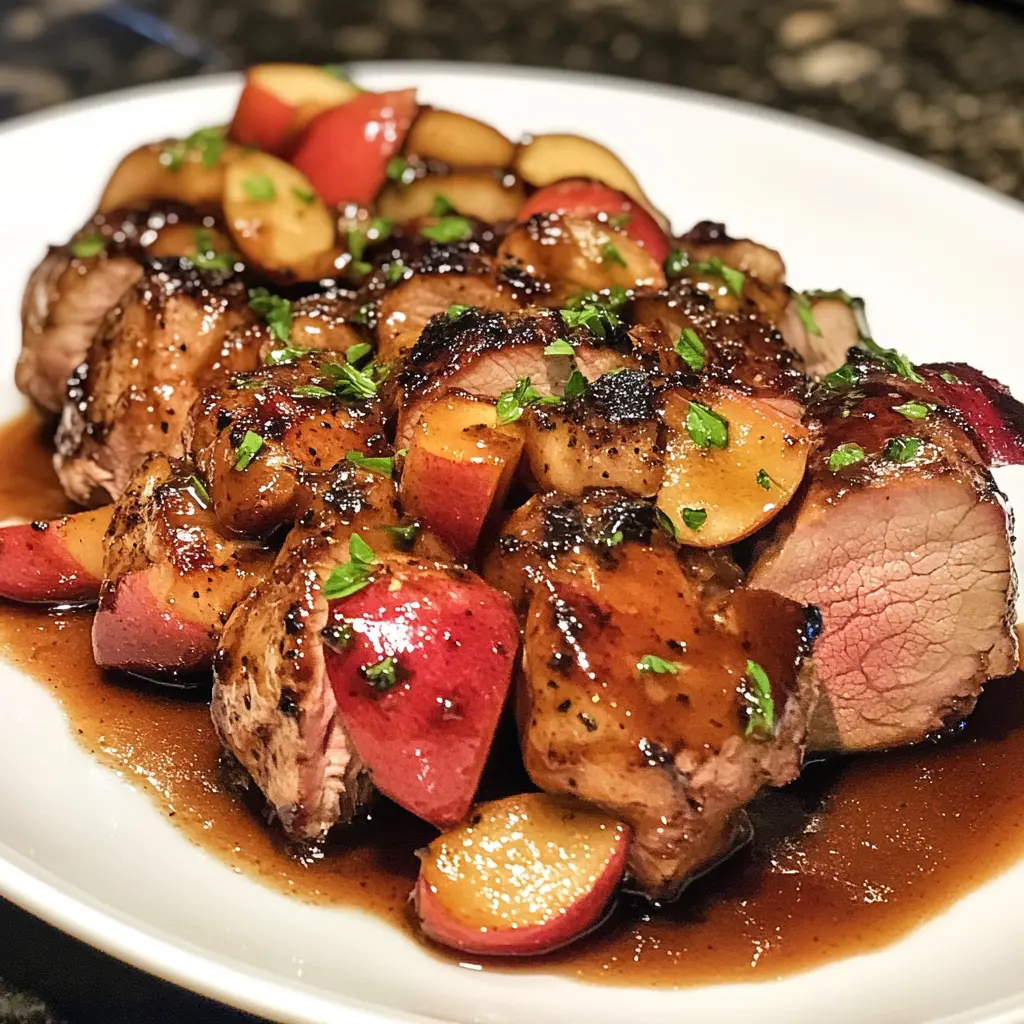
Maple Bourbon Glazed Pork Tenderloin with Roasted Apples represents the perfect harmony of sweet and savory flavors that define comfort food at its finest. This elegant yet approachable dish combines tender, juicy pork with a rich maple glaze and perfectly caramelized apples. Whether you’re planning a cozy family dinner or entertaining guests during the fall season, this recipe delivers restaurant-quality results right from your home kitchen.
The beauty of this dish lies in its simplicity. Furthermore, the combination of maple syrup’s natural sweetness with aromatic spices creates a glaze that transforms ordinary pork tenderloin into an extraordinary meal. Meanwhile, roasted apples add both texture and complementary flavor that elevates every bite.
What Makes This Dish Special
A Perfect Seasonal Centerpiece
This recipe celebrates autumn’s bounty by incorporating seasonal ingredients that naturally pair together. Consequently, the dish feels both timely and timeless, making it ideal for holiday gatherings or weeknight dinners alike. The maple glaze caramelizes beautifully during cooking, creating a glossy coating that looks as impressive as it tastes.
Balanced Flavor Profile
The interplay between sweet maple syrup, tangy mustard, and aromatic garlic creates depth of flavor. Additionally, the roasted apples provide natural sweetness and acidity that balance the richness of the pork. This thoughtful combination ensures each component enhances the others without overwhelming the palate.
Impressive Yet Accessible
Despite its elegant presentation, this dish requires minimal advanced cooking skills. Therefore, home cooks of all levels can achieve professional-looking results. The straightforward preparation makes it perfect for both special occasions and casual entertaining.
Ingredients You’ll Need
For the Pork Tenderloin
-
2 pork tenderloins (about 1 pound each)
-
1/4 cup pure maple syrup
-
1/4 cup bourbon seasoning or flavoring
-
2 tablespoons Dijon mustard
-
3 tablespoons extra-virgin olive oil
-
2 tablespoons balsamic vinegar
-
2-inch piece fresh ginger, peeled and minced
-
3 cloves garlic, minced
-
1 tablespoon sea salt
-
1 teaspoon black pepper
-
1 teaspoon smoked paprika
For the Roasted Apples
-
3 medium cooking apples (Honeycrisp, Granny Smith, or Fuji)
-
1 medium sweet onion, sliced into wedges
-
2 tablespoons brown sugar
-
1 tablespoon olive oil
-
1/2 teaspoon cinnamon
-
1/4 teaspoon nutmeg
-
Fresh thyme sprigs for garnish
Step-by-Step Preparation Guide
Preparing the Marinade
Start by combining maple syrup, bourbon flavoring, Dijon mustard, olive oil, and balsamic vinegar in a large mixing bowl. Next, add minced ginger and garlic to create an aromatic base. Whisk these ingredients together until fully emulsified and smooth.
Preparing the Pork
Trim any excess fat and silverskin from the pork tenderloins using a sharp knife. This step ensures even cooking and better texture. Then, tie the thin tail end under the rest of the tenderloin to create uniform thickness. This technique prevents the thinner sections from overcooking.
Place the prepared tenderloins in a large resealable bag. Pour the marinade over the meat, ensuring complete coverage. Seal the bag and refrigerate for 1 to 2 hours, allowing the flavors to penetrate the meat.
Preparing the Apples
Core the apples and cut them into eighths, leaving the skin on for added texture and color. Slice the onion into wedges of similar size to ensure even roasting. Toss the apple and onion pieces with olive oil, brown sugar, cinnamon, and nutmeg in a separate bowl.
Seasoning the Meat
Remove the pork from the marinade, reserving the liquid for later use. Pat the meat dry with paper towels to promote better browning. Season generously with salt, pepper, and smoked paprika on all sides.
Searing for Flavor
Heat a large oven-safe skillet over medium-high heat with a tablespoon of olive oil. Sear the pork tenderloins for 2-3 minutes on each side until golden brown. This crucial step locks in juices and creates a flavorful crust. Transfer the skillet to a preheated oven at 400°F.
Roasting Process
After the pork has roasted for 10 minutes, add the prepared apple and onion mixture around the meat in the same pan. Brush the reserved marinade over the pork, creating the signature glaze. Continue roasting for an additional 15-20 minutes.
Checking for Doneness
Use a digital meat thermometer to check the internal temperature. The pork should reach 145°F for perfectly juicy results with a slight pink center. For those who prefer fully cooked meat, aim for 155°F.
Resting Period
Remove the pan from the oven and transfer the pork to a cutting board. Let it rest for 5 minutes before slicing. This resting period allows juices to redistribute throughout the meat, ensuring maximum tenderness and moisture.
Cooking Techniques for Perfect Results
Temperature Control
Maintaining proper oven temperature ensures even cooking throughout. Additionally, using an oven thermometer helps verify accuracy. The initial sear at high heat followed by oven roasting creates the ideal texture contrast between crispy exterior and tender interior.
Glazing Method
Apply the maple glaze in layers during cooking for maximum flavor impact. First, brush it on before placing the pork in the oven. Then, apply additional coats every 10 minutes during roasting. This technique builds up a beautiful caramelized coating.
Apple Selection
Choose firm apples that hold their shape during roasting. Granny Smith apples provide tartness that balances the sweet glaze. Honeycrisp apples offer a sweet-tart flavor with excellent texture. Fuji apples contribute natural sweetness and maintain firmness when roasted.
Timing Coordination
Start the pork first, then add the apples halfway through cooking. This ensures both components finish simultaneously at their optimal doneness. The apples should be tender but not mushy, with caramelized edges.
Nutritional Benefits
High-Quality Protein Source
Pork tenderloin provides approximately 22 grams of protein per 4-ounce serving. This makes it an excellent choice for muscle growth and maintenance. Moreover, it contains all essential amino acids needed for optimal health.
Lean Meat Option
Despite common misconceptions, pork tenderloin is remarkably lean. A typical serving contains only 4 grams of fat, which amounts to about 6% of the recommended daily value. Therefore, it fits well into balanced, health-conscious meal plans.
Essential Vitamins and Minerals
This cut of pork is rich in B vitamins, particularly B6 and B12. Additionally, it provides significant amounts of selenium, zinc, and iron. These nutrients support immune function, energy production, and overall wellness.
Natural Sweetener Benefits
Pure maple syrup contains 24 natural antioxidants that help reduce inflammation. Unlike refined sugars, it offers trace minerals including manganese and zinc. However, moderation remains important as it still contains natural sugars.
Apple Nutrition
Apples contribute dietary fiber, vitamin C, and additional antioxidants to the dish. The skin contains much of the nutritional value, so leaving it on maximizes health benefits. Furthermore, apples support digestive health and provide natural sweetness without added sugars.
Serving Suggestions and Pairings
Vegetable Sides
Roasted Brussels sprouts with balsamic glaze complement the sweet notes in the pork beautifully. Alternatively, try garlic mashed potatoes for a comforting accompaniment. Green beans almondine add color and crunch to the plate.
Grain Options
Wild rice pilaf with cranberries echoes the fall flavors in the main dish. Similarly, quinoa with herbs provides a nutritious, light option. Creamy polenta offers a smooth contrast to the tender meat and crispy apples.
Salad Pairings
A simple arugula salad with pears and walnuts continues the autumn theme. Dress it lightly with lemon vinaigrette to cut through the richness of the pork. Baby spinach with dried cranberries and pecans also works wonderfully.
Bread Selections
Crusty artisan bread helps soak up the delicious pan juices and glaze. Warm dinner rolls provide a classic accompaniment. Herb focaccia adds aromatic complexity to the meal.
Complete Menu Ideas
For an impressive dinner party, start with butternut squash soup. Follow with the Maple Bourbon Glazed Pork Tenderloin with Roasted Apples as the main course. Finish with apple crisp or pumpkin cheesecake for a cohesive seasonal menu.
Storage and Reheating Tips
Proper Storage Methods
Allow leftover pork to cool completely before storing. Transfer sliced meat to an airtight container, separating layers with parchment paper. Store the roasted apples in a separate container to maintain texture. Properly stored, leftovers keep for 3-4 days in the refrigerator.
Freezing Guidelines
This dish freezes well for up to 3 months when properly packaged. Wrap individual portions tightly in plastic wrap, then place in freezer bags. Label with the date and contents for easy identification. Thaw overnight in the refrigerator before reheating.
Reheating Instructions
For best results, reheat gently in a 325°F oven covered with foil. Add a splash of broth or water to prevent drying. Alternatively, slice the pork thinly and reheat quickly in a skillet with a bit of the reserved glaze. Microwave reheating works in a pinch but may compromise texture.
Repurposing Leftovers
Transform leftover pork into delicious sandwiches with arugula and mustard. Chop it for grain bowls with quinoa and roasted vegetables. Use it in quesadillas with sharp cheddar and caramelized onions. The possibilities for creative meal planning are endless.
Common Mistakes to Avoid
Overcooking the Pork
The most common error is cooking pork tenderloin beyond 145°F. This results in dry, tough meat that lacks appeal. Always use a meat thermometer to ensure perfect doneness. Remember that the temperature will rise slightly during resting.
Skipping the Sear
Some cooks skip the initial searing step to save time. However, this crucial step develops complex flavors and attractive color. The caramelization that occurs during searing cannot be replicated through roasting alone.
Not Removing Silverskin
Failing to remove the tough silverskin membrane leads to chewy, unpleasant texture. Take time to properly trim this connective tissue before cooking. Slide a sharp knife under the silverskin and pull it away in one smooth motion.
Using Cold Meat
Starting with refrigerator-cold pork leads to uneven cooking. Let the meat sit at room temperature for 20-30 minutes before cooking. This ensures the exterior doesn’t overcook while waiting for the center to reach temperature.
Crowding the Pan
Placing too many apple pieces around the pork prevents proper caramelization. Leave space between pieces for air circulation and browning. Use a large enough pan to accommodate everything comfortably without overlap.
Inadequate Resting Time
Cutting into the pork immediately after cooking releases all the precious juices. Patience during the resting period makes a significant difference in the final result. Those 5 minutes of waiting are well worth the superior texture and moisture.
Advanced Variations and Customizations
Spice Variations
Add warmth with additional spices like cardamom or allspice in the glaze. Incorporate Chinese five-spice for an Asian-inspired twist. Try chipotle powder for subtle heat that complements the sweetness.
Fruit Alternatives
Replace apples with pears for a different but equally delicious flavor profile. Fresh figs work beautifully when in season. Dried apricots or prunes soaked in broth add concentrated sweetness and texture.
Glaze Modifications
Substitute honey for half the maple syrup for different flavor notes. Add orange zest and juice for citrus brightness. Incorporate whole grain mustard instead of Dijon for more texture and tang.
Herb Additions
Fresh rosemary sprigs placed under the pork during roasting infuse aromatic flavor. Thyme complements both the pork and apples beautifully. Sage brings earthy, savory notes that balance the sweetness.
Cooking Method Variations
This recipe adapts well to outdoor grilling during warmer months. The smoky flavor from grilling adds another dimension to the dish. Alternatively, use a slow cooker for a hands-off approach, though you’ll sacrifice some caramelization.
Seasonal Adaptations
Spring Version
In spring, use asparagus instead of apples for a lighter preparation. Add lemon zest to the glaze for brightness. Serve with new potatoes and fresh herbs from the garden.
Summer Grilling
Take this dish outside during summer months. Grill peaches or nectarines instead of apples. Use fresh corn on the cob as a side for a complete outdoor feast.
Winter Comfort
During winter, add root vegetables like parsnips and carrots alongside the apples. Increase warming spices like cinnamon and ginger. Serve over creamy mashed sweet potatoes for ultimate comfort.
Holiday Entertaining
Scale up the recipe for holiday gatherings by preparing multiple tenderloins. Arrange sliced pork on a large platter surrounded by roasted apples. Garnish with fresh herbs and pomegranate seeds for festive color.
Expert Tips for Success
Ingredient Quality
Invest in pure maple syrup rather than pancake syrup for authentic flavor. Choose organic pork when possible for better taste and texture. Select crisp, fresh apples without blemishes or soft spots.
Marinade Enhancement
Marinating for the full 2 hours yields more flavorful results than shorter times. However, avoid marinating longer than 4 hours as acidity can affect texture. Room temperature marinade penetrates meat more effectively than cold.
Pan Selection
Use a heavy-bottomed, oven-safe skillet for even heat distribution. Cast iron works exceptionally well for this recipe. Stainless steel pans with thick bottoms are also excellent choices.
Basting Technique
Baste the pork every 10 minutes during roasting for maximum glaze buildup. Use a silicone brush to avoid leaving bristles behind. Tilt the pan slightly to collect pooled glaze for easier basting.
Presentation Matters
Slice the pork on a slight diagonal for more impressive presentation. Fan out the slices on individual plates or a serving platter. Arrange roasted apples artfully around the meat and drizzle with pan juices.
Frequently Asked Questions
How do I know when Maple Bourbon Glazed Pork Tenderloin with Roasted Apples is done cooking?
The pork reaches perfect doneness at an internal temperature of 145°F when measured with a meat thermometer. Insert the thermometer into the thickest part of the tenderloin for an accurate reading. The meat will have a slightly pink center, which is safe and optimal for tenderness and juiciness.
Can I prepare this dish ahead of time?
Yes, you can marinate the pork up to 24 hours in advance for deeper flavor penetration. Prepare the apple mixture and store it separately in the refrigerator. However, cook the dish fresh for best texture and taste, as reheating can compromise the pork’s tenderness.
What’s the best type of apple to use?
Firm, tart apples like Granny Smith hold their shape well during roasting and balance the sweet glaze. Honeycrisp apples offer excellent texture with a sweet-tart flavor profile. Avoid soft apples like Red Delicious, which turn mushy when roasted.
Can I make this without bourbon flavoring?
Absolutely, you can omit the bourbon flavoring entirely and increase the maple syrup and balsamic vinegar slightly. Add extra spices like cinnamon, nutmeg, or vanilla extract for complexity. The dish will still be delicious with a more straightforward maple flavor profile.
How many servings does this recipe make?
Two 1-pound tenderloins serve 6-8 people depending on portion size and accompanying sides. Each person typically receives 4-6 ounces of cooked pork. Scale the recipe up or down based on your guest count.
Why is my pork tenderloin dry?
Overcooking is the primary cause of dry pork tenderloin. Cooking beyond 155°F causes proteins to contract and squeeze out moisture. Not letting the meat rest before slicing also releases juices prematurely, resulting in dryness.
Can I use pork loin instead of tenderloin?
While pork loin can substitute in a pinch, it requires longer cooking time due to its larger size. Tenderloin is leaner and more tender, cooking more quickly. Adjust cooking time accordingly if using loin, checking internal temperature frequently.
What should I do with leftover glaze?
Reserve some glaze before it touches raw meat for drizzling over the finished dish. Leftover marinade that contacted raw pork must be boiled for at least 5 minutes before using. Use it to glaze the apples or as a sauce for grain sides.
How do I prevent the glaze from burning?
Monitor oven temperature carefully and avoid placing the pork too close to the heating element. If the glaze begins to darken too quickly, tent the pork loosely with foil. Lower the oven temperature by 25°F if needed.
Is this recipe suitable for meal prep?
Yes, this dish works wonderfully for meal prep when stored properly. Slice the pork and portion it with roasted apples into individual containers. Pair with your choice of grains and vegetables for complete, ready-to-eat meals throughout the week.
Troubleshooting Common Issues
Glaze Won’t Thicken
If the glaze remains too thin, remove the pork and apples from the pan when done. Place the skillet on the stovetop over medium-high heat. Reduce the pan juices by half while stirring constantly, then drizzle over sliced pork.
Apples Cook Too Quickly
Different apple varieties cook at varying rates based on moisture content and firmness. If apples become too soft before the pork finishes, remove them temporarily. Return them to the pan during the final 5 minutes of cooking.
Uneven Browning
Pork tenderloins often taper at one end, causing uneven browning and cooking. Fold the thin tail under and secure with kitchen twine. This creates uniform thickness for consistent results.
Sticking to Pan
Ensure the pan is properly preheated before adding meat. Use adequate oil during the searing process. If using a stainless steel pan, wait until a golden crust forms before attempting to flip.
Budget-Friendly Tips
Shopping Smart
Purchase pork tenderloin when on sale and freeze for future use. Buy apples in season when prices are lowest and quality is highest. Stock up on maple syrup during sales, as it stores indefinitely.
Stretching Servings
Slice the pork thinly to make servings appear larger and more generous. Bulk up the meal with affordable sides like roasted potatoes and seasonal vegetables. Use leftover pork in multiple meals throughout the week.
Ingredient Substitutions
While pure maple syrup tastes best, a combination of brown sugar and molasses approximates the flavor. Standard yellow onions work as well as sweet onions at a fraction of the cost. Dried ginger can replace fresh in a pinch.
Making It Special for Celebrations
Holiday Presentation
Arrange sliced pork on a beautiful serving platter garnished with fresh herbs. Surround with colorful roasted apples and candied pecans for visual appeal. Add pomegranate arils for jewel-like pops of color and tartness.
Dinner Party Strategy
This recipe allows the host to spend more time with guests rather than in the kitchen. Prepare the marinade and apples ahead, then simply roast when guests arrive. The impressive presentation belies the simple preparation method.
Wine Pairing Suggestions
The sweet and savory elements in this dish pair well with off-dry options. Consider serving alongside the meal for enhanced enjoyment. The fruit notes complement the apples while balancing the rich glaze.
Conclusion
Maple Bourbon Glazed Pork Tenderloin with Roasted Apples delivers impressive flavor and presentation with surprisingly simple preparation. This versatile dish works equally well for casual family dinners and elegant entertaining. The combination of tender, protein-rich pork with sweet, caramelized apples and aromatic maple glaze creates a memorable meal that celebrates seasonal ingredients.
By following proper cooking techniques and paying attention to internal temperature, home cooks can achieve restaurant-quality results every time. The recipe’s flexibility allows for endless variations and customizations to suit personal preferences and dietary needs. Whether served during fall celebrations or any time you crave comfort food with sophistication, Maple Bourbon Glazed Pork Tenderloin with Roasted Apples never disappoints.
Print
Maple Bourbon Glazed Pork Tenderloin with Roasted Apples
Description
Ingredients
Pork Tenderloin
-
1½ lbs pork tenderloin
-
1 tablespoon olive oil
-
1 teaspoon salt
-
½ teaspoon black pepper
-
½ teaspoon smoked paprika
-
½ teaspoon garlic powder
Maple Bourbon Glaze
-
½ cup pure maple syrup
-
¼ cup bourbon
-
1 tablespoon Dijon mustard
-
1 tablespoon apple cider vinegar
-
1 tablespoon butter
Roasted Apples
-
3 apples, sliced (Honeycrisp or Granny Smith)
-
1 tablespoon olive oil
-
½ teaspoon cinnamon
-
¼ teaspoon salt
Instructions
-
Preheat oven to 400°F (200°C).
-
Season pork tenderloin with olive oil, salt, pepper, smoked paprika, and garlic powder.
-
Heat a large oven-safe skillet over medium-high heat. Sear pork for 2–3 minutes per side until browned.
-
Transfer skillet to oven and roast for 15–18 minutes, or until internal temperature reaches 145°F (63°C). Remove and rest.
-
Meanwhile, toss apples with olive oil, cinnamon, and salt. Spread on a baking sheet and roast for 20–25 minutes until caramelized.
-
In a saucepan, combine maple syrup, bourbon, Dijon mustard, and apple cider vinegar. Simmer over medium heat for 8–10 minutes until slightly thickened.
-
Remove from heat and whisk in butter until glossy.
-
Slice pork tenderloin and drizzle generously with maple bourbon glaze. Serve with roasted apples.