
The Ultimate Guide to Mexican Restaurant Style White Cheese Dip (Queso)
Ah, the moment of truth. The basket of warm, salty tortilla chips hits the table, followed closely by that iconic little bowl of creamy, liquid gold. You know the one—the Mexican restaurant-style white cheese dip that’s so irresistibly smooth, slightly tangy, and just spicy enough to keep you reaching for chip after chip. Seriously, who can resist? It’s the undisputed champion of appetizers, the social lubricant of countless gatherings, and frankly, a culinary mystery for many home cooks.
Why does the version from your favorite restaurant seem so impossible to replicate? Your attempts might end in a grainy, greasy mess, leaving you wondering what magical ingredients and techniques they’re hiding in that kitchen. Well, wonder no more! This guide is your backstage pass to queso bliss. We’re diving fork-first into the history, science, and soul of this beloved dip. Furthermore, we’ll crack the code on its perfect consistency, explore foolproof recipes, and answer all your burning questions. Ultimately, you’ll be armed with everything you need to become the undisputed queso master of your own home.
The Irresistible Pull of Melty, Cheesy Goodness
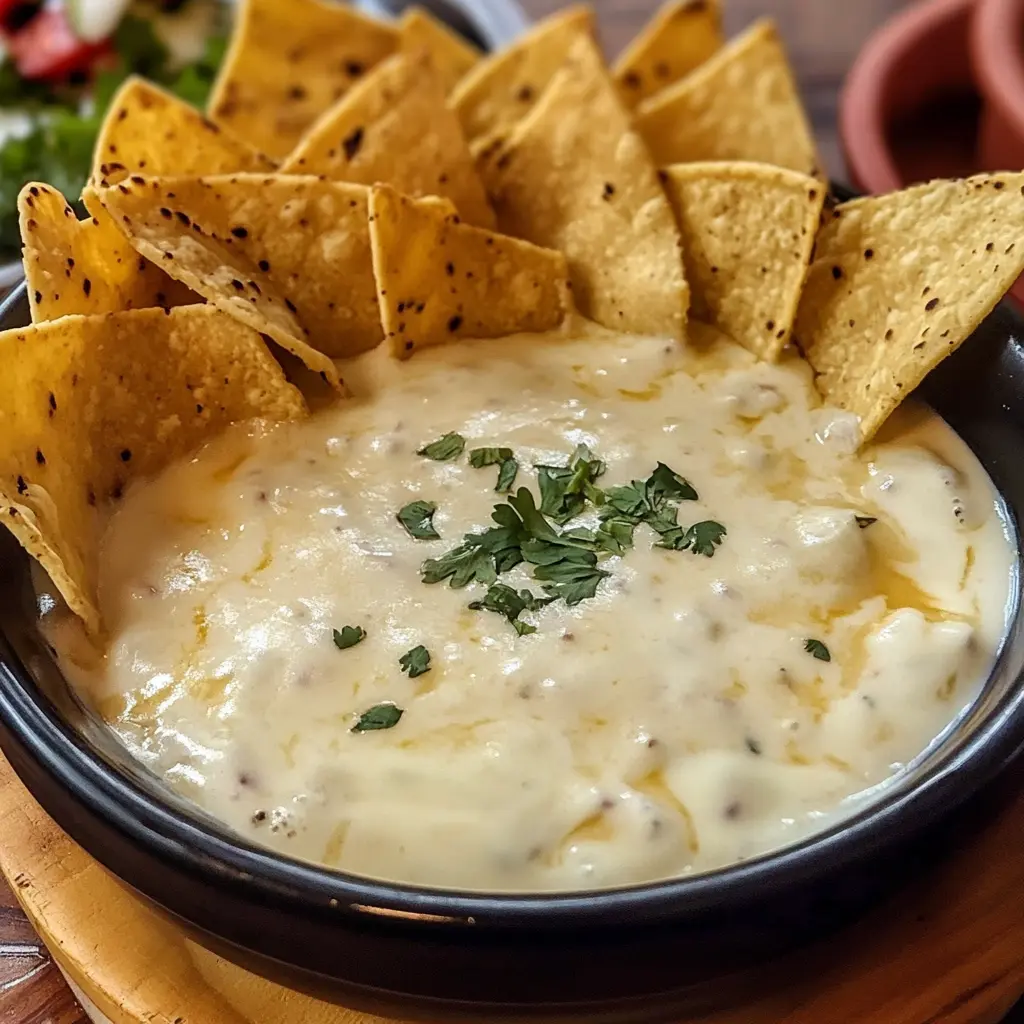
Let’s be honest; that bowl of white queso dip is more than just an appetizer—it’s an experience. Firstly, there’s the visual appeal: a pristine, creamy canvas, often dotted with flecks of green jalapeño or red pimento, promising a flavor explosion. Then, of course, comes the sound: the satisfying snap of a sturdy tortilla chip diving into that velvety surface. And finally, the taste! That initial salty, cheesy hit is followed by a gentle warmth that builds with each delicious bite. It’s pure, unadulterated comfort food.
This isn’t just about satisfying a craving, however; it’s about connection. Sharing a bowl of queso is a communal activity, a reason to lean in, talk, laugh, and maybe even engage in a friendly battle for the last chip laden with cheesy goodness. It’s the start of a great meal, a centerpiece for game day, and a guaranteed crowd-pleaser. But for such a simple concept—melted cheese—it can be deceptively difficult to get right. Consequently, that perfect balance of flavor, heat, and, most importantly, texture separates the amateur attempts from the truly authentic restaurant-style masterpiece.
So, what exactly is this magical concoction? Is it truly Mexican? And how on earth do they get it so gloriously smooth? Stick with us, because we’re about to unravel this delicious mystery, one cheesy layer at a time.
What Exactly is Mexican Restaurant Style White Queso Dip?
Before we dive into pots and pans, let’s clear up a common point of confusion. Not all queso dips are created equal! In fact, walking into this without knowing the difference is a recipe for, well, not what you’re expecting.
Defining the Dip: Queso Blanco vs. Queso Amarillo
Generally, you’ll encounter two main types in restaurants. Firstly, there’s the bright yellow, often slightly spicy dip known as chile con queso or nacho cheese sauce. This version typically relies on a base of orange cheddar or, more commonly, American cheese like Velveeta, which is melted with tomatoes, green chiles, and ground beef or chorizo. It’s delicious, but it’s not the star of our show today.
Conversely, the dip we’re obsessed with is the white cheese dip—sometimes called queso blanco or queso dip on menus. This version is renowned for its pale, creamy white color and its exceptionally smooth, velvety texture. Its flavor profile is typically milder, tangier, and more buttery than its yellow cousin, often letting the pure, savory flavor of the cheese take center stage, complemented by green chiles and spices.
A Note on Authenticity: Tex-Mex vs. Mexican Cuisine
Here’s a crucial piece of the puzzle: this specific white queso dip is a cornerstone of Tex-Mex cuisine, not a traditional dish from interior Mexico. That doesn’t make it any less delicious, of course! Its origins are a fascinating blend of Northern Mexican cheese-making traditions and American innovation, which we’ll explore next. Understanding this distinction is key to appreciating the dish for what it is: a beloved American-born icon that has found a happy home in Mexican restaurants nationwide.
The Origins of a Tex-Mex Legend: A Brief History of Queso Dip
That bowl of dip has a backstory, and it’s as rich as its flavor. The tale of queso is a story of cultural fusion and culinary ingenuity.
From Northern Mexico to Texas and Beyond
The concept of melted cheese sauces isn’t new. In fact, you can trace the inspiration back to Northern Mexico, where cheeses like Asadero (literally meaning “for roasting”) have been melted for dishes like queso fundido for generations. Queso fundido is a simpler, more rustic affair—literally “melted cheese” often served with flour tortillas and sometimes mixed with chorizo.
The leap from fundido to the smooth, dip-able queso we know happened largely in Texas. The invention of processed cheese in the early 20th century, specifically brands like Velveeta, was a total game-changer. These cheeses were packed with emulsifying salts that prevented them from separating when melted, making a perfectly smooth sauce almost foolproof. Suddenly, creating a stable, large-batch cheese dip for restaurants became incredibly easy.
Queso’s Rise to National Stardom
While its exact origin is debated, many credit Otis Farnsworth and his San Antonio restaurant, Otis’ Cafe, in the 1930s with serving an early version. However, it was the rise of Tex-Mex cuisine throughout the 20th century that launched queso into the stratosphere. As chains like El Fenix and Matt’s El Rancho popularized Tex-Mex fare, the dip became a mandatory starter. Its popularity exploded, spreading from Texas across the entire United States. Today, it’s as standard as salsa in many eateries, a testament to its utterly addictive quality.
The Secret to Smoothness: The Science of Melting Cheese
Alright, let’s get to the real meat—or rather, cheese—of the matter. Why does your homemade attempt sometimes turn into a greasy, grainy puddle of despair while the restaurant version is always silky perfection? The answer, my friend, is science.
Why Some Cheeses Seize and Others Spread
Not all cheeses are born equal melters. It all boils down to structure. Natural cheese is an emulsion of fat, water, and milk proteins (casein). When you heat it, the protein structure tightens up, squeezing out the fat and water. If you heat it too quickly or too high, the proteins over-coagulate, resulting in a tough, greasy, and grainy mess. This is why a great melting cheese like mozzarella becomes stretchy, while a fresh cheese like paneer or feta just softens.
Aged, dry cheeses like Parmesan or an extra-sharp cheddar have less moisture and a more fragile protein structure, making them prone to breaking. The best melting cheeses are younger, higher in moisture, and lower in acidity—think Monterey Jack, Fontina, Gouda, or the Mexican cheeses Asaderoand Queso Quesadilla.
The Role of Emulsifying Salts: The Real Restaurant Secret
This is the biggest secret. Restaurants often use one magic ingredient to guarantee a flawless, stable emulsion every single time: sodium citrate. This odorless, salty-white powder is a powerful emulsifier. By altering the cheese’s pH, it stops the proteins from clumping together too tightly. The result? A shockingly smooth, liquid sauce that refuses to break, even when held on a warmer for hours. You can melt virtually any cheese with it, even those that normally wouldn’t melt well! For a deep dive into the science of sodium citrate and cheese emulsion, this resource is fantastic.
Many restaurants also achieve a similar effect by using White American cheese as a base. American cheese is already loaded with these emulsifying salts, making it the ultimate, no-fail melting agent. Combining it with other cheeses gives you that authentic flavor with a guaranteed smooth texture.
Cracking the Code: Key Ingredients in Authentic White Queso Dip
Now that we know the how, let’s talk about the what. The flavor profile of a great queso blanco is a harmonious blend of rich dairy, savory cheese, and subtle heat.
The Cheese Trinity: White American, Asadero, and Queso Quesadilla
This is the holy grail of cheese blends for that true restaurant-style taste.
-
White American Cheese: Don’t turn your nose up! This is the workhorse. It provides the unmistakable creamy base and the emulsifying power for that flawless texture. Always get it from the deli counter and slice it yourself—it melts far better than the individual wrapped slices.
-
Asadero/Queso Quesadilla: These are the authentic flavor champions. Asadero is a semi-soft, pale Mexican cheese with a mild, buttery, and slightly tangy flavor that melts beautifully. Queso Quesadilla is very similar, specifically designed for melting. If you can find them at a Latin market, they will elevate your dip immensely.
-
Monterey Jack: This is the perfect, highly accessible substitute. Its mild flavor and excellent melting properties make it a fantastic stand-in for the harder-to-find Mexican cheeses.
The Flavor Base: Beyond the Cheese
The cheese is the star, but the supporting cast is crucial.
-
Dairy: Evaporated milk is a pro secret. It’s rich, creamy, and stable, preventing the sauce from becoming too thick as it cools. Whole milk is a good alternative, but evaporated milk is superior.
-
Aromatics: Freshly diced onions, minced garlic, and finely chopped jalapeños (seeds removed for less heat) build a foundational flavor.
-
Chiles: A can of mild diced green chiles (like Ortega or Hatch) is non-negotiable. They provide the classic flavor and a subtle kick. Don’t drain the can—the liquid adds flavor!
-
Spices: Ground cumin, a pinch of chili powder, and perhaps a dash of cayenne pepper add depth and warmth without overpowering the cheese.

How to Make Mexican Restaurant Style Queso Dip at Home
Ready to roll up your sleeves? Here are two guaranteed methods to achieve queso glory. The first is traditional; the second is a modern miracle.
Method 1: The Stovetop Standard (Roux-Based)
This method uses a butter and flour roux to thicken the sauce, creating a stable base for the cheese.
-
Sauté Aromatics: In a saucepan, melt butter over medium heat. Cook diced onions and jalapeños until soft. Add garlic and cook for one more minute.
-
Make the Roux: Sprinkle flour over the veggies and cook, stirring, for about a minute to remove the raw flour taste.
-
Add Liquid: Gradually whisk in evaporated milk (or whole milk) until the mixture is smooth. Bring it to a gentle simmer, stirring constantly until it thickens slightly.
-
Melt the Cheese: Reduce the heat to low. Gradually add your shredded cheese blend, one handful at a time, whisking until completely melted before adding more.
-
Season: Stir in the diced green chiles (with their juice!), cumin, and any other spices. Thin with a little more milk if needed. Serve immediately!
Pros: Uses common pantry ingredients; rich, cooked flavor.
Cons: Higher risk of graininess if overheated; can thicken too much as it sits.
Method 2: The Modern Hack (Sodium Citrate Method)
This is the foolproof, restaurant-quality method.
-
Combine Liquid and Emulsifier: In a saucepan, combine 1 cup of liquid (evaporated milk, beer, or broth) with 1 teaspoon of sodium citrate. Whisk and heat until simmering and dissolved.
-
Blend in Cheese: With the heat on low, gradually add your shredded cheese a handful at a time, using an immersion blender to emulsify it into a perfectly smooth sauce after each addition. Seriously, it’s like magic.
-
Finish: Stir in your pre-cooked aromatics (you’ll need to sauté them separately first), green chiles, and spices.
Pros: Unbelievably smooth and stable texture; can use any cheese you want.
Cons: Requires purchasing sodium citrate online or at specialty stores.
Pro Tips for the Perfect Consistency
-
Low and Slow: Never boil your queso after adding the cheese! High heat is the enemy of a smooth sauce.
-
Grate Your Own: Always grate cheese from a block. Pre-shredded bags are coated with anti-caking agents like potato starch or cellulose, which can make your sauce grainy and prevent it from melting smoothly.
-
Emulsify: An immersion blender is your best friend for achieving that ultra-smooth, restaurant-style texture, especially if you encounter any graininess.
Authentic Mexican Restaurant Style White Queso Dip Recipe
This recipe uses the reliable stovetop method for accessibility, with tips for perfection.
Prep Time: 10 minutes | Cook Time: 15 minutes | Total Time: 25 minutes
Servings: 6
Ingredients:
-
2 tablespoons unsalted butter
-
1/4 cup finely diced white onion
-
1 jalapeño, seeds and ribs removed, finely diced
-
2 cloves garlic, minced
-
2 tablespoons all-purpose flour
-
1 1/2 cups evaporated milk (or whole milk)
-
1/2 pound White American cheese, shredded (from a block)
-
1/2 pound Monterey Jack cheese, shredded (from a block)
-
1 (4 oz) can diced green chiles, undrained
-
1/2 teaspoon ground cumin
-
Salt, to taste
-
2 tablespoons chopped fresh cilantro (for garnish)
Instructions:
-
Sauté Vegetables: In a medium saucepan, melt the butter over medium heat. Add the diced onion and jalapeño. Cook for 4-5 minutes, until softened. Add the garlic and cook for another 30 seconds until fragrant.
-
Create Roux: Sprinkle the flour over the vegetable mixture and stir constantly for about 1 minute to cook the flour.
-
Add Milk: Gradually pour in the evaporated milk while whisking constantly to avoid lumps. Bring the mixture to a gentle simmer. Continue to whisk until the sauce thickens slightly, about 2-3 minutes.
-
Melt Cheese: Reduce the heat to the lowest possible setting. Gradually add the shredded cheeses, one handful at a time, whisking until each addition is completely melted and smooth before adding the next.
-
Season: Once all the cheese is melted and the sauce is smooth, stir in the entire can of undrained green chiles and the ground cumin. If the dip is too thick, whisk in a little more milk, one tablespoon at a time, until it reaches your desired consistency. Taste and add salt only if needed (the cheeses are often salty enough).
-
Serve: Transfer the queso to a serving bowl, garnish with fresh cilantro, and serve immediately with plenty of tortilla chips!
Notes:
-
Cheese is Key: For the absolute best flavor, use 8 oz of White American and 8 oz of Asadero or Queso Quesadilla if you can find it.
-
No Lumps: If you’re worried about lumps with the roux, you can warm the evaporated milk separately before adding it.
-
Keeping it Warm: To keep queso warm for serving, transfer it to a small slow cooker on the “warm” setting.
Queso Rescue: Troubleshooting Common Problems
Even with the best intentions, things can go sideways. Don’t panic! Here’s how to fix common quesocatastrophes.
My Queso is Grainy or Rubbery. How do I fix it?
Cause: The cheese was likely overheated or added too quickly.
Fix: Immediately remove it from the heat. Add a tablespoon of cold evaporated milk or a squeeze of fresh lime juice and blend vigorously with an immersion blender. The added liquid and acid can sometimes shock the proteins back into an emulsion.
My Queso is Too Thick.
Cause: It’s over-reduced or has cooled down.
Fix: Simply whisk in a small amount of warm milk, evaporated milk, or even water, one tablespoon at a time, until it flows nicely again.
My Queso is Too Thin.
Cause: Not enough cheese or too much liquid.
Fix: Let it stand for a few minutes off the heat; it will often thicken as it cools slightly. If not, create a quick slurry by mixing 1 teaspoon of cornstarch with 1 tablespoon of cold milk. Whisk this into the simmering queso until it thickens.
The Oil is Separating (It’s “Breaking”).
Cause: The emulsion has broken, usually from excessive heat.
Fix: Remove from heat. Add a splash of cold milk or cream and whisk like crazy. An immersion blender is your most powerful tool here to force the fat and liquid back together.
Serving, Storing, and Reheating Your Masterpiece
The Perfect Pairing: More Than Just Tortilla Chips
While tortilla chips are the classic vehicle, don’t stop there! This creamy dip is incredibly versatile. Try it as a topping for nachos, baked potatoes, or grilled chicken. Drizzle it over burritos, tacos, or scrambled eggs. It also makes a fantastic dip for veggie sticks, soft pretzels, or even french fries!
How to Store and Reheat Leftover Queso
Storing: Let the queso cool completely before transferring it to an airtight container. It will keep in the refrigerator for 3 to 4 days.
Reheating: The microwave is tricky as it heats unevenly. The best method is to reheat it slowly in a saucepan over low heat, adding a splash of milk or water and whisking constantly until smooth. If you must use a microwave, do it in 30-second bursts on medium power, stirring well between each interval.
Frequently Asked Questions About White Queso Dip
What cheese is used in Mexican restaurant white queso?
Most restaurants use a blend. The foundation is almost always White American cheese for its incredible meltability and smooth texture. This is then combined with more flavorful melting cheeses like Asadero, Queso Quesadilla, or Monterey Jack to achieve that authentic, buttery flavor.
Is Mexican white cheese dip actually Mexican?
It’s best classified as Tex-Mex. While its inspiration comes from Northern Mexican melted cheese dishes like queso fundido, the specific, smooth, dip-style queso blanco was developed and popularized in the United States, specifically in Texas. For more on the fascinating history of queso dip in Tex-Mex cuisine, the story is a great read.
Why is my queso dip grainy?
Graininess is usually caused by two things:
-
Overheating: Cheese proteins tighten and squeeze out fat when heated too aggressively.
-
Pre-shredded Cheese: These bags are dusted with anti-caking agents (like potato starch or cellulose) that prevent clumping in the bag but also prevent smooth melting.
The fix is to always use low heat and shred your own cheese from a block.
Can I make queso dip without American cheese?
Absolutely! The sodium citrate method is your best bet. It allows you to create a perfectly smooth sauce with any cheese you like, from all Monterey Jack to a blend of Gouda and Mozzarella. Without it, using a combination of good natural melting cheeses (Monterey Jack, Fontina, young Gouda) will work, but the texture might be slightly less smooth and more prone to breaking if not handled carefully.
How do you keep queso dip creamy?
The key to keeping it creamy is maintaining the emulsion.
-
Use Emulsifiers: Incorporate cheese that contains emulsifiers (White American) or add your own (sodium citrate).
-
Low Heat: Never let it boil.
-
The Right Tools: Keep it warm for serving in a small crockpot, fondue pot, or a bowl set over a warmer. This provides gentle, even heat that prevents separation. If you’re curious about other cheeses that melt well, check out this guide to different types of Mexican cheeses.

Mexican Restaurant Style White Cheese (Queso) Dip
Description
Mexican Restaurant Style White Cheese (Queso) Dip
Ingredients:
-
1 lb white American cheese (from the deli, cubed or shredded)
-
½ cup whole milk (more if needed to thin)
-
¼ cup half & half (or heavy cream, for extra creaminess)
-
1 tbsp butter
-
1 small onion, finely diced (optional)
-
1 small jalapeño or green chili, finely chopped (seeds removed for mild)
-
2 garlic cloves, minced
-
½ tsp cumin
-
¼ tsp chili powder or paprika
-
Salt, to taste
-
Fresh cilantro, chopped (for garnish)
Instructions:
-
Sauté Aromatics (optional but flavorful):
In a saucepan over medium heat, melt butter. Add onion, jalapeño, and garlic. Cook 2–3 minutes until softened and fragrant. -
Melt the Cheese:
Reduce heat to low. Add the white American cheese, milk, and half & half. Stir constantly until cheese melts and mixture becomes smooth. -
Season:
Stir in cumin, chili powder, and a pinch of salt. Adjust consistency by adding more milk if needed. -
Serve:
Transfer to a warm serving bowl. Garnish with cilantro and serve with tortilla chips, warm tortillas, or drizzle over nachos and tacos.