
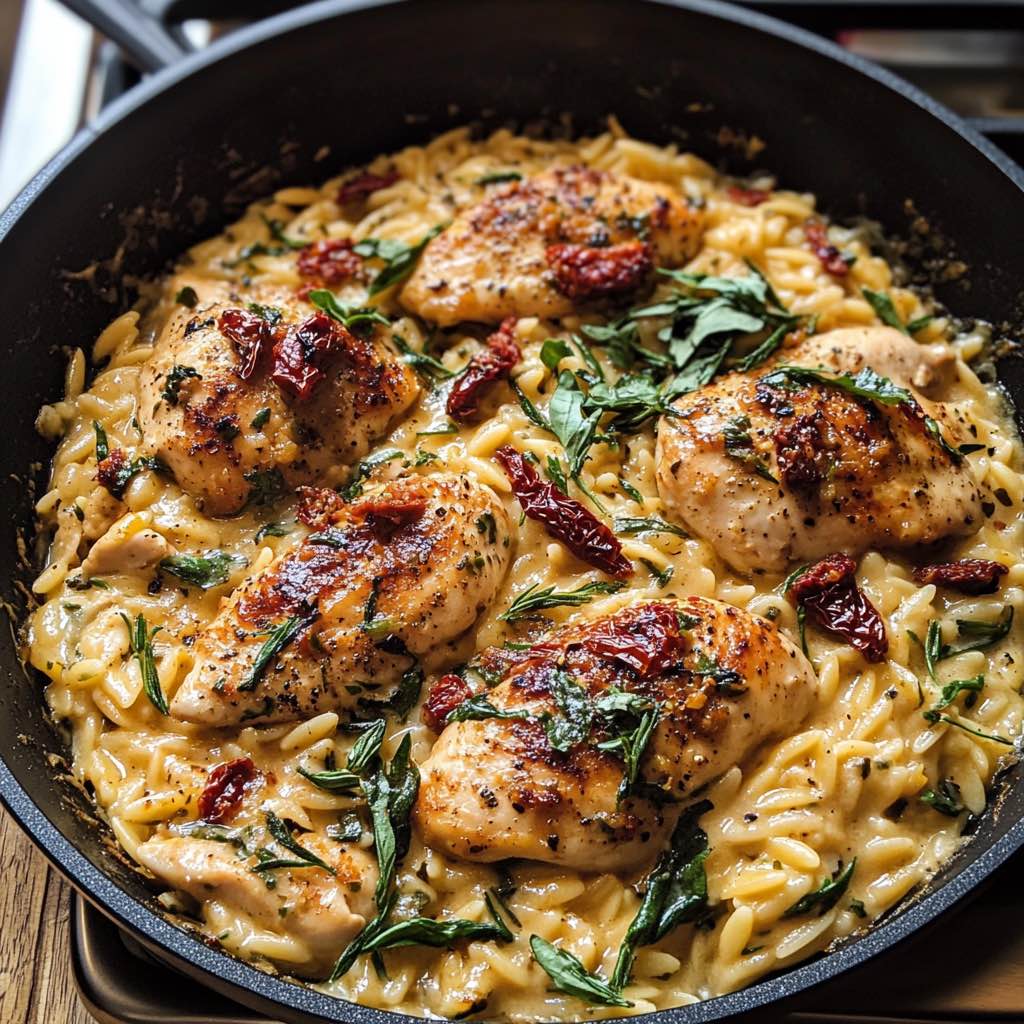
One Skillet Creamy Sun-Dried Tomato Chicken and Orzo
Introduction
One Skillet Creamy Sun-Dried Tomato Chicken and Orzo transforms ordinary weeknight dinners into restaurant-quality meals. This complete meal combines tender, seasoned chicken with tiny rice-shaped orzo pasta swimming in a luscious cream sauce studded with tangy sun-dried tomatoes. The best part is that everything cooks in a single pan, which means minimal cleanup and maximum flavor.
The magic happens when the orzo absorbs the creamy sauce while cooking, creating a rich, almost risotto-like texture without constant stirring. Fresh spinach wilts into the mixture, adding color and nutrients. Meanwhile, the chicken stays perfectly juicy thanks to a quick sear followed by gentle oven finishing. This recipe delivers comfort food at its finest in just 45 minutes from start to finish.
What Makes This Dish Special
This one-skillet wonder stands out from typical chicken and pasta recipes for several compelling reasons. The cooking method infuses every component with flavor as the orzo simmers directly in the pan drippings.
Traditional pasta dishes often require boiling pasta separately, but this recipe streamlines the process. The orzo cooks right in the skillet, absorbing all the savory goodness from the seared chicken, aromatic shallots, and garlic. This technique creates layers of flavor that separate pasta simply cannot achieve.
The creamy sauce strikes a perfect balance between richness and brightness. Sun-dried tomatoes provide concentrated umami notes and a slight tang that cuts through the heavy cream. Fresh spinach adds earthiness and nutritional value without overwhelming the dish. The combination of Parmesan cheese and Dijon mustard creates depth and complexity in every bite.
Understanding the Star Ingredients
Sun-Dried Tomatoes
Sun-dried tomatoes serve as the flavor powerhouse in this recipe. These concentrated gems are made by dehydrating ripe tomatoes, which intensifies their natural sweetness and creates a chewy texture. The drying process concentrates nutrients, making them rich in vitamins C and K.
These ruby-red additions pack significant health benefits beyond their bold taste. They contain high levels of lycopene, a powerful antioxidant that helps combat oxidative stress. Sun-dried tomatoes also provide essential minerals including potassium, magnesium, and iron. Their fiber content supports digestive health while adding satisfying texture to the dish.
Oil-packed sun-dried tomatoes work best for this recipe because they blend seamlessly into the creamy sauce. The oil preserves their moisture and makes them tender and ready to use. Drain them well before adding to prevent the dish from becoming too oily.
Orzo Pasta
Orzo resembles rice but is actually a small, oval-shaped pasta. Its name comes from the Italian word for barley due to its grain-like appearance. This tiny pasta shape is perfect for one-pot dishes because it cooks quickly and absorbs flavors beautifully.
Cooking orzo requires attention because it tends to stick and clump together. Frequent stirring prevents these issues and ensures even cooking. The pasta typically reaches al dente texture in 7-9 minutes, though cooking times can vary. For dishes where orzo continues cooking in sauce, slightly undercook it by 1-2 minutes.
The small size of orzo makes it ideal for creamy preparations. Each piece gets coated in sauce, delivering consistent flavor in every spoonful. When cooked properly, orzo achieves a tender yet slightly firm texture that holds up well in saucy dishes.
Essential Kitchen Equipment
The Right Skillet
An oven-safe skillet is crucial for this recipe. The pan needs to handle both stovetop searing and oven baking without damage. Cast iron skillets work wonderfully because they distribute heat evenly and develop a natural non-stick surface over time.
Stainless steel skillets with oven-safe handles also perform well. Look for pans at least 12 inches in diameter to provide adequate space for all ingredients. The wide surface area allows the chicken to sear properly without steaming.
Avoid using non-stick pans unless specifically labeled as oven-safe to high temperatures. Many non-stick coatings break down at temperatures above 400°F. Check your pan’s manufacturer guidelines before using it in the oven.
Additional Tools
A sharp chef’s knife makes prep work faster and safer. Chopping shallots, mincing garlic, and slicing sun-dried tomatoes becomes easier with a quality blade. Measuring cups and spoons ensure accurate proportions for the creamy sauce.
Keep a sturdy wooden spoon or heat-resistant spatula nearby for stirring. These tools help scrape up flavorful browned bits from the pan bottom. A meat thermometer takes the guesswork out of checking chicken doneness. The internal temperature should reach 165°F for safe consumption.
Ingredient Breakdown and Substitutions
Chicken Selection
Boneless, skinless chicken breasts or thighs both work excellently in this dish. Breasts provide leaner protein with a mild flavor that absorbs the seasonings beautifully. Thighs offer more richness and stay juicy even if slightly overcooked.
Chicken tenderloins cook faster than whole breasts and require less preparation. Their smaller size means they cook through during the oven stage without drying out. For consistent results, pound thicker pieces to an even thickness before cooking.
Fresh chicken delivers the best texture, but properly thawed frozen chicken also works. Pat the chicken completely dry before seasoning to achieve a golden-brown sear. Moisture on the surface creates steam instead of the desired caramelization.
Dairy Components
Heavy cream creates the signature rich sauce that coats every piece of orzo. Its high fat content prevents curdling when combined with acidic ingredients like lemon juice and sun-dried tomatoes. Whole milk or half-and-half can substitute in a pinch, though the sauce will be thinner.
Parmesan cheese adds nutty, salty notes that complement the tangy tomatoes. Freshly grated Parmesan melts more smoothly than pre-shredded varieties. The pre-shredded options contain anti-caking agents that can make the sauce grainy.
Butter provides richness and helps create a silky sauce texture. It also adds flavor when used to sauté the aromatics. For dairy-free versions, check out our guide on [dairy-free cooking substitutions].
Aromatics and Seasonings
Shallots offer a milder, sweeter flavor than regular onions. Their delicate taste enhances without overpowering the other ingredients. One medium shallot equals about three tablespoons when finely chopped. Yellow or white onions can substitute if shallots are unavailable.
Garlic infuses the dish with aromatic depth. Fresh garlic tastes sharper and more pungent than jarred minced versions. Two cloves provide balanced garlic flavor without overwhelming the tomatoes and cream.
Italian seasonings including dried oregano, paprika, and red pepper flakes create a warm, slightly spicy profile. Adjust the red pepper flakes based on heat preference. Smoked paprika adds an extra dimension of flavor compared to regular paprika.
Fresh Vegetables
Baby spinach wilts quickly and adds nutritional value plus vibrant color. Two cups may seem like a lot, but spinach reduces dramatically when heated. Frozen spinach can substitute, but thaw and squeeze out excess moisture first.
Lemon juice brightens the rich, creamy sauce at the end of cooking. Fresh lemon juice tastes more vibrant than bottled versions. The acidity balances the heavy cream and cheese for a more complex flavor profile.

Step-by-Step Cooking Instructions
Preparing the Chicken
Start by preheating the oven to 400°F. This ensures it reaches the proper temperature when needed. Pat chicken pieces dry with paper towels to remove surface moisture. Dry chicken sears better and develops an appealing golden crust.
Rub each piece with olive oil, then season generously with oregano, paprika, red pepper flakes, salt, and black pepper. The oil helps seasonings adhere while promoting browning. Make sure to coat all surfaces evenly for consistent flavor.
Heat one tablespoon of olive oil in the oven-safe skillet over medium-high heat until shimmering. Place seasoned chicken in the hot pan without overcrowding. Sear each side for 3-5 minutes until golden brown. The chicken does not need to cook through at this stage. Transfer the seared pieces to a clean plate and set aside.
Building the Base
Add butter to the same skillet, using the residual heat to melt it. Toss in chopped shallots and cook for about three minutes until fragrant and translucent. Stir frequently to prevent burning.
Add minced garlic and dry orzo to the shallot mixture. Cook for 2-3 minutes, stirring constantly, until the orzo begins to turn lightly golden. This toasting step adds a subtle nutty flavor to the finished dish.
Pour in chicken stock gradually while scraping the bottom of the pan with a wooden spoon. These browned bits stuck to the pan contain concentrated flavor. Bring the liquid to a boil, then reduce heat and let it cook for 3-5 minutes.
Creating the Creamy Sauce
Stir in heavy cream, Dijon mustard, and grated Parmesan cheese. Mix thoroughly until the cheese melts and combines with the cream. The mustard adds tang and helps emulsify the sauce.
Add drained sun-dried tomatoes and fresh baby spinach to the skillet. Stir continuously until the spinach wilts down completely. This typically takes 2-3 minutes. The spinach releases moisture as it cooks, adding to the sauce volume.
Nestle the seared chicken pieces back into the skillet along with any accumulated juices. Push them down slightly so they are partially submerged in the orzo mixture. The chicken will finish cooking while infusing more flavor into the dish.
Finishing in the Oven
Transfer the entire skillet to the preheated oven. Bake uncovered for 10-15 minutes until the chicken reaches an internal temperature of 165°F. The orzo continues absorbing liquid and becomes tender during this time.
Check doneness by inserting a meat thermometer into the thickest part of the chicken. Avoid touching bone if using bone-in pieces. The orzo should be tender but still have a slight bite.
Remove the skillet carefully from the oven using oven mitts. The handle will be extremely hot. Let the dish rest for 2-3 minutes before serving. This resting period allows the sauce to thicken slightly and the flavors to meld.
Squeeze fresh lemon juice over the top just before serving. Garnish with fresh herbs like parsley or rosemary if desired. The brightness from the lemon elevates the entire dish.
Pro Tips for Perfect Results
Achieving the Best Sear
Temperature control makes the difference between properly seared and steamed chicken. Wait until the oil shimmers before adding chicken to ensure the pan is hot enough. Resist the urge to move the chicken around once placed in the pan.
Let each side develop a golden-brown crust before flipping. This takes 3-5 minutes per side depending on thickness. The chicken should release easily from the pan when ready to turn. If it sticks, wait another minute before attempting to flip.
Work in batches if necessary to avoid overcrowding. Too many pieces in the pan lower the temperature and create steam. This prevents proper browning and results in pale, rubbery chicken.
Orzo Cooking Success
Stir the orzo frequently once liquid is added to prevent sticking. This pasta shape tends to clump together, especially in creamy preparations. Use a wooden spoon to scrape the bottom and sides of the pan.
Monitor the liquid level as the orzo cooks. If it looks too dry before the pasta softens, add small amounts of chicken stock. Conversely, if too much liquid remains when the orzo is tender, simmer uncovered for a few extra minutes.
Remember that orzo continues cooking in the oven. Slightly undercook it during the stovetop phase to prevent mushy pasta in the final dish. The residual heat and remaining liquid finish the cooking process perfectly.
Sauce Consistency
The sauce should coat the back of a spoon but remain pourable. If it appears too thick, thin it with additional chicken stock or cream. Too thin means more simmering time to evaporate excess liquid.
Add the Parmesan cheese gradually while stirring constantly. This prevents clumping and ensures smooth integration into the sauce. Pre-shredded cheese takes longer to melt, so freshly grated works best.
Reserve some pasta cooking liquid if available, as it contains starch that helps thicken sauces naturally. Though this recipe cooks orzo directly in sauce, this tip applies when preparing orzo separately.
Nutritional Benefits
Protein Power
Chicken provides high-quality complete protein essential for muscle maintenance and repair. A four-ounce serving of chicken breast contains approximately 26 grams of protein. This recipe delivers a substantial portion of daily protein needs in one satisfying meal.
The combination of chicken and Parmesan cheese boosts the total protein content significantly. Protein promotes satiety, helping maintain fullness longer after eating. This makes the dish an excellent choice for active individuals or those managing weight.
Vitamins and Minerals
Sun-dried tomatoes concentrate nutrients during the drying process. They offer impressive amounts of vitamin C, which supports immune function. Vitamin K, important for blood clotting and bone health, also appears in significant quantities.
These flavorful additions provide essential minerals including iron, potassium, and magnesium. Iron supports healthy blood cell production while potassium helps regulate blood pressure. The combination creates a nutritionally dense component that enhances more than just flavor.
Spinach contributes additional vitamins A, C, and K along with folate. These nutrients support vision, immune health, and cell growth. Two cups of fresh spinach provide a meaningful portion of daily vegetable servings.
Antioxidant Content
Lycopene, the antioxidant responsible for tomatoes’ red color, appears in concentrated amounts in sun-dried varieties. This powerful compound helps protect cells from damage caused by free radicals. Research suggests lycopene may reduce the risk of certain chronic diseases.
The drying process actually increases lycopene availability compared to fresh tomatoes. Sun-dried tomatoes contain beta-carotene and lutein, additional antioxidants that support overall health. These compounds work synergistically to provide anti-inflammatory benefits.
Garlic adds its own antioxidant properties along with compounds that support cardiovascular health. The combination of ingredients creates a dish that nourishes while satisfying taste preferences.
Serving Suggestions
Complementary Side Dishes
Though this one-skillet meal is complete on its own, certain sides enhance the dining experience. A simple green salad with a light vinaigrette provides refreshing contrast to the rich, creamy pasta. Crisp romaine or mixed greens work perfectly with lemon-based dressings.
Crusty bread serves two purposes alongside this dish. It soaks up the delicious sauce and adds textural variety to the meal. Garlic bread amplifies the Italian-inspired flavors already present in the chicken and orzo.
Roasted vegetables like asparagus, green beans, or Brussels sprouts add color and additional nutrients. Their slightly charred edges complement the creamy sauce beautifully. Season them simply with olive oil, salt, and pepper to let the main dish shine.
Beverage Pairings
For an dining experience, several beverage options complement this dish perfectly. Sparkling water with fresh lemon or lime slices provides refreshing palate cleansing between bites. The bubbles and citrus cut through the cream without overwhelming delicate flavors.
Unsweetened iced tea, particularly herbal varieties, offers another excellent choice. Mint or chamomile teas provide subtle flavors that pair nicely with the Italian seasonings. For cold weather meals, hot herbal tea creates a cozy accompaniment.
Fresh lemonade or limeade adds brightness that balances the rich sauce. Keep the sweetness moderate to avoid competing with the savory elements. Sparkling apple cider provides festive appeal for special occasions.
Presentation Ideas
Serve this dish family-style directly from the skillet for casual dinners. The rustic presentation adds visual appeal and keeps the food warm longer. Place the hot skillet on a trivet or thick cutting board to protect the table surface.
For plated presentations, use shallow bowls that showcase the creamy orzo pooled around the chicken. Garnish each serving with fresh herbs, extra Parmesan, and a light drizzle of quality olive oil. These finishing touches elevate the dish for company dinners.
Add color contrast with fresh basil leaves or chopped parsley scattered over the top. A wedge of lemon on the side allows guests to adjust brightness to their preference. Consider offering crushed red pepper flakes for those who enjoy extra heat.
Storage and Reheating
Proper Storage Methods
Cool leftovers to room temperature before storing, but do not leave them out longer than two hours. Transfer the chicken and orzo to airtight containers once cooled. Properly stored, this dish keeps in the refrigerator for 3-4 days.
Separate the chicken from the orzo if planning to store for the full duration. This prevents the pasta from absorbing too much moisture and becoming mushy. Layer parchment paper between containers to make reheating portions easier.
For longer storage, freeze individual portions in freezer-safe containers. Leave about half an inch of space at the top for expansion during freezing. Label containers with contents and date for easy identification. Frozen portions maintain quality for up to three months.
Reheating Instructions
The stovetop method produces the best results for reheating this creamy dish. Place leftovers in a skillet over medium-low heat with a splash of chicken stock or cream. Stir gently and frequently until heated through. This method prevents drying and helps revive the creamy texture.
Microwave reheating works when time is limited. Transfer a portion to a microwave-safe dish and add a tablespoon of stock or water. Cover loosely with a microwave-safe lid or damp paper towel. Heat in 1-minute intervals, stirring between each, until hot throughout.
Oven reheating suits larger portions. Preheat the oven to 350°F and transfer the chicken and orzo to an oven-safe dish. Add liquid if the mixture looks dry, then cover tightly with foil. Bake for 15-20 minutes until heated completely through.
Refreshing Leftovers
Revive the dish by adding fresh elements when reheating. Stir in a handful of fresh spinach that will wilt in the residual heat. A squeeze of fresh lemon juice brightens flavors that may have muted during storage.
Consider adding extra Parmesan cheese or a dollop of cream to restore richness. A drizzle of quality olive oil enhances mouthfeel and adds glossy appeal. Fresh herbs like basil or parsley contribute aroma and visual interest.
Transform leftovers into new meals by adding ingredients that change the character. Toss in cherry tomatoes, artichoke hearts, or sautéed mushrooms for variety. A different protein like cooked shrimp can replace or supplement the chicken.
Common Mistakes to Avoid
Overcooking the Chicken
Dry, rubbery chicken ruins this otherwise perfect dish. Avoid overcooking by monitoring internal temperature carefully. Remember that chicken continues cooking from residual heat even after removing from the oven.
The initial sear should not cook the chicken through completely. This step develops flavor and color while the oven stage finishes the cooking process. Cutting into the chicken to check doneness releases precious juices. Use a meat thermometer instead for accurate temperature readings.
Resting the chicken briefly before serving allows juices to redistribute. Cutting immediately causes those flavorful juices to run out onto the plate. Even 2-3 minutes of resting time makes a noticeable difference in juiciness.
Pasta Problems
Mushy orzo results from overcooking or adding too much liquid. Watch the pasta carefully during both the stovetop and oven cooking stages. It should remain slightly firm with just a bit of bite rather than completely soft.
Clumpy, stuck-together orzo comes from insufficient stirring. This small pasta releases starch as it cooks, which creates a gummy texture when not agitated. Stir every minute or two while the orzo simmers on the stovetop.
Adding orzo before the liquid boils can lead to uneven cooking. Ensure the stock reaches a full boil before incorporating the pasta. This helps the orzo cook uniformly and prevents some pieces from turning mushy while others remain hard.
Sauce Issues
Broken or curdled sauce happens when dairy overheats or combines improperly with acidic ingredients. Add cream after removing the pan from high heat. Stir constantly while incorporating to distribute temperature evenly.
Thin, watery sauce lacks the luscious coating that makes this dish special. Simmer longer to reduce excess liquid before transferring to the oven. The orzo absorbs liquid as it cooks, which helps thicken the sauce naturally.
Overly thick sauce prevents the orzo from cooking properly and creates a gummy texture. Add small amounts of stock to adjust consistency during cooking. The final dish should be creamy but not pasty.
Recipe Variations
Protein Alternatives
Swap chicken for other proteins to create exciting variations. Boneless pork chops work wonderfully with the sun-dried tomato cream sauce. Follow the same searing and baking process for similar results.
Shrimp transforms this into a seafood dish ready in even less time. Add raw shrimp during the final five minutes of oven cooking. They cook quickly and pair beautifully with the tangy tomatoes. Check out our guide on [cooking perfect shrimp] for additional tips.
Vegetarian versions replace chicken with hearty vegetables like portobello mushrooms or thick zucchini rounds. Chickpeas or white beans add protein , plant-based profile. Adjust cooking times since vegetables require less time than chicken.
Vegetable Additions
Incorporate additional vegetables to increase nutritional value and add color. Cherry tomatoes burst during cooking, releasing sweet juice that enhances the sauce. Add them at the same time as the sun-dried tomatoes.
Broccoli florets or asparagus spears bring green vegetables front and center. Blanch them briefly before adding to the skillet for even cooking. Bell peppers add sweetness and crunch when diced and sautéed with the shallots.
Artichoke hearts complement the Mediterranean flavors perfectly. Use jarred or canned versions, drained and quartered. Mushrooms add earthiness that pairs well with the creamy sauce. Sauté them before adding the orzo for best texture.
Cheese Variations
Different cheeses create unique flavor profiles while maintaining the creamy base. Pecorino Romano delivers a sharper, saltier taste than Parmesan. Use slightly less since its flavor is more intense.
Fontina cheese melts beautifully and adds mild, nutty notes. Combine it with Parmesan for complex, layered flavors. Goat cheese creates tangy creaminess that contrasts nicely with the sweet sun-dried tomatoes.
For bolder flavor, add crumbled feta on top just before serving. The salty, briny cheese provides textural contrast to the smooth orzo. Mascarpone makes the sauce even richer and more decadent.
Spice Adjustments
Customize heat levels by adjusting the red pepper flakes. Omit them completely for a mild, family-friendly version. Double the amount for those who enjoy significant spice.
Fresh herbs change the flavor profile dramatically. Fresh basil brings aromatic sweetness that pairs perfectly with tomatoes. Thyme adds earthy, slightly minty notes. Rosemary provides a pine-like intensity that works especially well with chicken.
Experiment with different spice blends for international twists. Herbes de Provence creates a French-inspired version. Za’atar brings Middle Eastern flair with its combination of herbs and sesame seeds. Curry powder transforms the dish into a fusion creation.
FAQs
Can I make One Skillet Creamy Sun-Dried Tomato Chicken and Orzo ahead of time?
Preparing components in advance streamlines weeknight cooking. Season and sear the chicken up to 24 hours ahead, then refrigerate covered. Chop vegetables and measure ingredients into containers for quick assembly. However, cook the orzo fresh for best texture, as it becomes mushy when prepared too far in advance.
What can I substitute for heavy cream?
Several alternatives work depending on dietary preferences. Half-and-half creates a lighter sauce with slightly less richness. Coconut cream from a can provides dairy-free creaminess with subtle tropical notes. Greek yogurt stirred in at the very end adds tang and protein, though it may thin the sauce.
How do I prevent the orzo from sticking?
Frequent stirring is the most effective prevention method. Use a wooden spoon to scrape the bottom and sides of the pan every minute or two. Ensure adequate liquid is present throughout cooking. Adding orzo to boiling liquid rather than cold also helps separate the pieces.
Can I use a different pasta shape?
Small pasta shapes work best for this one-skillet method. Ditalini, small shells, or acini di pepe provide similar results. Avoid long pastas like spaghetti or linguine, which do not cook evenly in the skillet. Adjust liquid amounts and cooking times based on package directions for alternative shapes.
What if I do not have an oven-safe skillet?
Transfer the mixture to a baking dish before the oven stage. Use a 9×13-inch casserole dish or similar size. The cooking process remains the same, though the presentation changes. Alternatively, finish cooking on the stovetop by covering and simmering until the chicken reaches 165°F internal temperature.
How can I make this dish spicier?
Increase red pepper flakes for straightforward heat enhancement. Fresh jalapeños or serrano peppers diced and sautéed with the shallots add fresh spice. Cayenne pepper mixed into the cream sauce distributes heat evenly throughout. Hot sauce stirred in at the end allows for customizable spice levels.
Is this recipe suitable for meal prep?
The dish reheats reasonably well, making it acceptable for meal prep. Portion into individual containers for grab-and-go lunches. Add extra liquid when reheating to compensate for absorption during storage. Prepare a double batch and freeze half for future quick dinners.
Conclusion
One Skillet Creamy Sun-Dried Tomato Chicken and Orzo delivers restaurant-quality flavor with minimal effort and cleanup. The combination of tender chicken, tangy sun-dried tomatoes, and creamy orzo creates a complete meal that satisfies both weeknight and special occasion needs. This recipe proves that simple ingredients prepared thoughtfully can result in extraordinary dinners.
The beauty of this dish lies in its versatility. Customize it with different proteins, vegetables, or cheeses to suit personal preferences. The one-skillet method saves time while building layers of flavor impossible to achieve with separate cooking methods. Whether feeding a busy family or entertaining guests, this recipe consistently impresses.
Ready to transform your dinner routine? Gather your ingredients and experience how this one-skillet wonder brings comfort food to a new level.
Print
One Skillet Creamy Sun-Dried Tomato Chicken and Orzo
Description
One Skillet Creamy Sun-Dried Tomato Chicken and Orzo
Ingredients
-
4 boneless, skinless chicken breasts (or thighs)
-
1 teaspoon salt
-
½ teaspoon black pepper
-
1 teaspoon paprika
-
1 teaspoon garlic powder
-
2 tablespoons olive oil
For the creamy sauce & orzo:
-
2 tablespoons butter
-
3 cloves garlic, minced
-
1 cup orzo pasta
-
3 cups chicken broth (low sodium)
-
¾ cup heavy cream
-
½ cup sun-dried tomatoes (packed in oil), chopped
-
1 cup baby spinach, roughly chopped
-
½ cup grated Parmesan cheese
-
1 teaspoon Italian seasoning
-
Salt and pepper to taste
-
Fresh basil or parsley, for garnish
🔪 Instructions
1. Sear the Chicken
-
Season chicken with salt, pepper, paprika, and garlic powder.
-
Heat olive oil in a large skillet over medium-high heat.
-
Sear chicken for 4–5 minutes per side until golden brown and mostly cooked through.
-
Remove from skillet and set aside.
2. Cook the Orzo
-
In the same skillet, melt butter. Add minced garlic and sauté for 30 seconds until fragrant.
-
Stir in orzo and toast for 1–2 minutes, stirring often.
-
Pour in chicken broth and bring to a simmer.
-
Cook uncovered for 8–10 minutes, stirring occasionally, until orzo is tender and most of the liquid is absorbed.
3. Make It Creamy
-
Stir in heavy cream, sun-dried tomatoes, Italian seasoning, and Parmesan cheese.
-
Add spinach and stir until wilted.
-
Season with salt and pepper to taste.
4. Combine Everything
-
Nestle the seared chicken back into the skillet.
-
Spoon the creamy orzo over the chicken.
-
Simmer for 3–5 minutes on low heat until chicken is fully cooked and sauce thickens slightly.
5. Garnish & Serve
Top with chopped basil or parsley and an extra sprinkle of Parmesan before serving.