
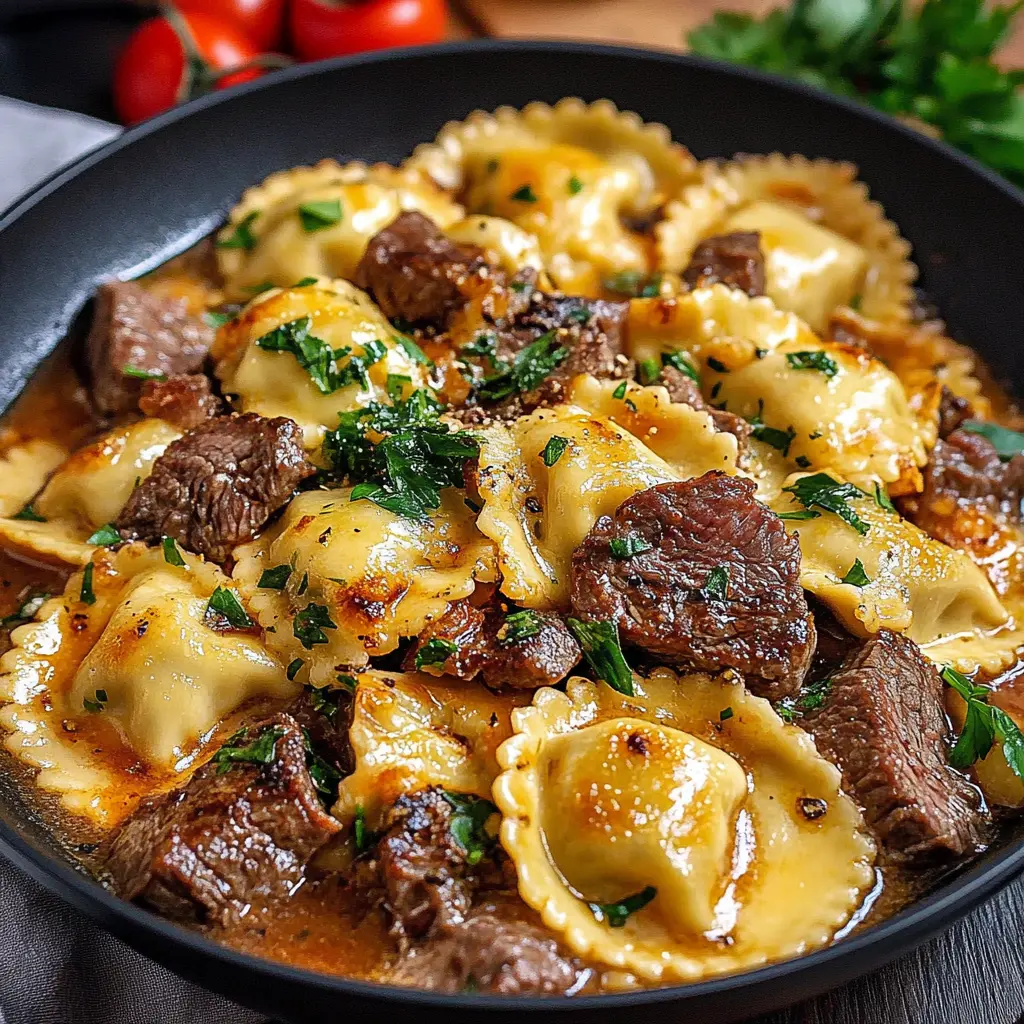
One-Skillet Garlic Butter Steak & Cheese Ravioli
Introduction
Imagine tender pieces of steak paired with pillowy cheese ravioli, all swimming in a luscious garlic butter sauce that coats every bite. This One-Skillet Garlic Butter Steak & Cheese Ravioli delivers restaurant-quality flavors without the restaurant price tag or cleanup hassle. Everything cooks in a single pan, making it perfect for busy weeknights when you want something special without spending hours in the kitchen.
This hearty dish combines protein-rich beef with satisfying pasta and a sauce that’s bursting with savory garlic flavor. The best part? You’ll have dinner on the table in under 30 minutes with minimal cleanup afterward.
Why This Recipe Works
One-Pan Convenience
The beauty of this garlic butter steak and cheese ravioli lies in its simplicity. By cooking everything in one skillet, you build layers of flavor while keeping cleanup minimal. The steak sears first, creating those delicious brown bits on the bottom of the pan. These bits, called fond, dissolve into the sauce and add incredible depth.
Moreover, the ravioli cooks directly in the sauce. This means the pasta absorbs all those wonderful garlic butter flavors instead of plain water. The result is a cohesive dish where every component tastes connected.
Restaurant Quality at Home
This dish tastes like something you’d order at an upscale Italian steakhouse. However, it costs a fraction of dining out and requires basic cooking skills. The combination of butter, garlic, and beef broth creates a sauce that rivals anything a professional chef might make.
Furthermore, the presentation looks impressive. When you bring this skillet to the table, your family or guests will think you spent hours preparing it. The golden-brown steak pieces, tender ravioli, and glossy sauce create visual appeal that matches the taste.
Nutrient-Rich and Satisfying
Beyond convenience and flavor, this one-skillet meal delivers substantial nutrition. The beef provides high-quality protein and essential minerals like iron and zinc. Cheese ravioli adds calcium and additional protein. Fresh herbs and garlic contribute antioxidants and anti-inflammatory compounds.
Additionally, this dish keeps you full for hours. The combination of protein, carbohydrates, and healthy fats creates a balanced meal that satisfies hunger and prevents energy crashes later.
Essential Ingredients Breakdown
Steak Selection
Choosing the right cut of beef makes a significant difference in your final dish. Sirloin steak works wonderfully because it offers good flavor without breaking the budget. Cut it into bite-sized pieces for quick cooking and easy eating.
Alternatively, ribeye provides more marbling and richer flavor. The extra fat content makes the meat incredibly tender. For a leaner option, tenderloin creates an elegant dish, though it costs more per pound.
Season your steak generously with salt and black pepper before cooking. This simple seasoning allows the beef’s natural flavor to shine through while complementing the garlic butter sauce.
Cheese Ravioli
Fresh or frozen cheese ravioli both work perfectly in this recipe. Fresh ravioli from the refrigerated section cooks faster and has a more delicate texture. Frozen varieties are more budget-friendly and store longer.
Look for ravioli filled with ricotta, mozzarella, or a blend of Italian cheeses. The filling should be creamy and flavorful since it adds richness to every bite. Avoid ravioli with meat fillings, as they would compete with the steak.
Garlic Butter Foundation
Fresh garlic creates the aromatic base of this dish. Mince at least four cloves, or use more if you love garlic flavor. Fresh garlic has a pungent, complex taste that jarred minced garlic cannot replicate.
Unsalted butter gives you control over the seasoning. It also browns beautifully, creating a nutty flavor that enhances the sauce. Use high-quality butter for the best results, as it’s a primary flavor component.
Broth and Liquids
Beef broth forms the cooking liquid for your ravioli and creates the sauce base. Choose a low-sodium variety so you can adjust seasoning to your preference. The broth should have a rich, savory flavor that complements the beef.
Heavy cream adds luxurious texture and mellows the garlic’s sharpness. It also helps the sauce cling to the pasta and steak. For a lighter version, half-and-half works, though the sauce will be thinner.
Fresh Herbs and Aromers
Fresh parsley brightens the rich dish with its clean, slightly peppery flavor. Chop it finely and sprinkle it over the finished dish. Parsley also adds a pop of green color that makes the presentation more appealing.
Dried Italian seasoning provides oregano, basil, thyme, and other Mediterranean flavors. These herbs complement both the beef and cheese components perfectly. You can also use fresh herbs if you have them available.
Kitchen Tools You’ll Need
The Right Skillet
A large skillet with high sides is essential for this recipe. Choose one that’s at least 12 inches in diameter to accommodate all ingredients comfortably. Cast iron skillets work beautifully because they retain heat well and create excellent searing.
Alternatively, a stainless steel skillet provides even heating and makes it easy to see the fond developing. Non-stick skillets are convenient for cleanup but don’t brown food as effectively. If using non-stick, make sure it’s rated for high heat.
Additional Equipment
You’ll need a sharp knife for cutting the steak into uniform pieces. Consistent sizing ensures even cooking. A cutting board with a groove around the edge catches juices and keeps your counter clean.
Wooden spoons or silicone spatulas help stir without scratching your pan’s surface. Tongs make it easy to turn steak pieces and remove them from the skillet. A lid that fits your skillet speeds up the ravioli cooking process.
Step-by-Step Cooking Instructions
Preparing Your Ingredients
Start by cutting your steak into bite-sized pieces, roughly 1-inch cubes. Pat them dry with paper towels to remove excess moisture. Dry meat browns better and develops more flavor.
Next, mince your garlic cloves finely. Uneven pieces can burn while others remain raw, so take time to chop uniformly. Measure out your broth, cream, and seasonings so everything is ready when you need it.
Searing the Steak
Heat your skillet over medium-high heat until very hot. Add a tablespoon of oil with a high smoke point, like avocado or vegetable oil. The oil should shimmer when the pan is ready.
Season your steak pieces generously with salt and pepper. Add them to the hot pan in a single layer, leaving space between pieces. Overcrowding causes steaming instead of searing.
Let the steak cook undisturbed for 2-3 minutes. This allows a golden-brown crust to form. Flip each piece and cook another 2 minutes. The steak should be browned but not fully cooked through yet.
Remove the steak to a plate and set aside. Don’t worry if the centers are still pink. The meat will finish cooking when you add it back later.
Building the Garlic Butter Sauce
Reduce heat to medium and add butter to the same skillet. As it melts, use a wooden spoon to scrape up the browned bits stuck to the pan. These bits add incredible flavor to your sauce.
Add minced garlic once the butter has melted. Stir constantly for about 30 seconds until fragrant. Be careful not to let the garlic burn, as it turns bitter quickly.
Pour in beef broth and bring to a simmer. The liquid will deglaze the pan further, incorporating all those flavorful bits into the sauce. Season with Italian herbs, salt, and pepper.
Cooking the Ravioli
Add your cheese ravioli directly to the simmering broth. Arrange them in a single layer if possible. Cover the skillet with a lid to trap steam and help the pasta cook evenly.
Cook for 4-6 minutes if using fresh ravioli, or 8-10 minutes for frozen. The exact time depends on the brand and size. Check the package directions for guidance.
Stir gently once or twice during cooking to prevent sticking. The ravioli should become tender and float to the surface when done. They’ll also absorb some of the flavorful broth.
Finishing the Dish
Once the ravioli is tender, reduce heat to low. Stir in heavy cream, which will create a rich, velvety sauce. The sauce should coat the back of a spoon but still be pourable.
Return the seared steak pieces to the skillet, along with any accumulated juices. Gently fold everything together so the sauce coats both the meat and pasta. Cook for 2-3 minutes until the steak reaches your desired doneness.
Taste and adjust seasoning as needed. You might want more salt, pepper, or a pinch of red pepper flakes for heat. Remove from heat and sprinkle with fresh chopped parsley.
Pro Tips for Perfect Results
Temperature Control Matters
Managing your heat throughout cooking ensures the best results. High heat sears the steak and creates flavor through browning. Medium heat allows the garlic to become fragrant without burning. Low heat at the end prevents the cream from breaking.
Therefore, adjust your burner as you move through the recipe. This attention to temperature makes the difference between good and exceptional.
Don’t Overcook the Steak
Since the steak returns to the pan after searing, undercook it slightly during the initial browning. The residual heat and additional cooking time will bring it to perfect doneness. Overcooked beef becomes tough and chewy.
Consequently, aim for medium-rare during the sear. The final result will be a perfect medium after the finishing steps.
Use Quality Ingredients
This simple recipe relies on ingredient quality for its impressive flavor. Choose a well-marbled steak cut for tenderness and taste. Pick ravioli with a flavorful cheese filling. Use real butter instead of margarine.
Furthermore, fresh garlic makes a noticeable difference compared to pre-minced versions. The extra minute of prep time pays off in the final dish.
Layer Your Flavors
Each cooking step builds flavor complexity. The steak creates fond. The fond enhances the garlic butter. The garlic butter flavors the broth. The broth cooks into the ravioli. This layering creates depth that makes the dish memorable.
Additionally, finishing with fresh herbs adds brightness that balances the rich sauce. Don’t skip this final touch.
Variations and Substitutions
Protein Alternatives
While steak is traditional, other proteins work beautifully in this preparation. Chicken breast cut into bite-sized pieces cooks quickly and absorbs the garlic butter sauce wonderfully. Season it the same way you would beef.
Pork tenderloin offers another lean option with mild flavor. It pairs especially well with the cheese ravioli and cream sauce. Shrimp creates an elegant seafood version that cooks even faster than steak.
Ravioli Options
Beyond cheese ravioli, many filled pasta varieties work in this recipe. Mushroom ravioli adds earthy depth that complements beef beautifully. Spinach and ricotta ravioli increases the vegetable content while maintaining creaminess.
Lobster ravioli transforms this into a luxurious special occasion meal. The sweet lobster contrasts nicely with savory steak and garlic. Adjust cooking times based on the ravioli size and whether it’s fresh or frozen.
Sauce Modifications
For a lighter sauce, replace heavy cream with half-and-half or whole milk. The result will be thinner but still delicious. Add a tablespoon of cream cheese to thicken it slightly without extra cream.
Alternatively, stir in a handful of baby spinach or sun-dried tomatoes for added nutrition and flavor. The greens wilt into the sauce, while tomatoes provide tangy contrast to the rich butter.
Dairy-Free Adaptations
Create a dairy-free version by using olive oil instead of butter and coconut cream instead of heavy cream. Look for dairy-free ravioli filled with vegetables or vegan cheese alternatives. The flavor profile changes but remains satisfying.
Additionally, nutritional yeast adds a cheesy flavor without dairy. Sprinkle it over the finished dish for extra umami depth.
Serving Suggestions and Pairings
Complementary Side Dishes
A simple green salad balances the richness of this one-skillet meal. Toss mixed greens with a light vinaigrette made from olive oil, lemon juice, and Dijon mustard. The acidity cuts through the cream sauce beautifully.
Roasted vegetables add color and nutrition to your plate. Try asparagus, green beans, or broccoli tossed with olive oil and roasted until crispy. These vegetables complement the Italian flavors perfectly.
Crusty bread is essential for soaking up every drop of that incredible garlic butter sauce. Warm it in the oven and serve with butter or olive oil for dipping. Garlic bread takes this pairing to the next level.
Beverage Pairings
Sparkling water with lemon provides refreshing contrast to the rich dish. The bubbles cleanse your palate between bites. Add fresh herbs like mint or basil for extra flavor.
Iced tea, whether sweetened or unsweetened, offers another excellent choice. The tannins in black tea complement beef particularly well. Herbal teas like chamomile or peppermint provide soothing alternatives.
For something special, try cranberry or pomegranate juice mixed with sparkling water. The fruity, slightly tart flavor balances the savory richness beautifully.
Presentation Ideas
Serve this dish family-style by bringing the skillet directly to the table. Place it on a trivet to protect your table surface. This casual presentation emphasizes the homestyle nature of the meal.
Alternatively, plate individual portions for a more elegant presentation. Arrange several ravioli in the center, surround with steak pieces, and drizzle extra sauce over the top. Garnish with fresh parsley and grated Parmesan cheese.
Storage and Reheating Guide
Proper Storage Methods
Cool leftover garlic butter steak and ravioli to room temperature within two hours of cooking. Transfer it to an airtight container and refrigerate promptly. Properly stored, the leftovers keep for 3-4 days.
The sauce may thicken as it cools, which is completely normal. The butter solidifies and the ravioli absorbs liquid. Don’t worry—reheating restores the creamy consistency.
Freezing Instructions
This dish freezes reasonably well, though the ravioli texture changes slightly upon thawing. Freeze in individual portions for convenient future meals. Use freezer-safe containers and leave a half-inch of space for expansion.
Label containers with the date and contents. Use within 2-3 months for best quality. Longer storage is safe but may affect texture and flavor.
Reheating for Best Results
Reheat refrigerated portions in a skillet over medium-low heat. Add a splash of broth or cream to restore the sauce consistency. Stir gently and heat until warmed through, about 5-7 minutes.
Microwave reheating works but can make the ravioli rubbery. If using a microwave, heat in 30-second intervals, stirring between each. Add liquid as needed to prevent drying out.
Frozen portions should thaw overnight in the refrigerator before reheating. This ensures even heating and better texture than reheating from frozen.
Nutritional Information
Macronutrient Breakdown
One serving of this garlic butter steak and cheese ravioli provides approximately 520-580 calories, depending on portion size and specific ingredients used. The dish offers a balanced macronutrient profile with roughly 35 grams of protein from the beef and cheese.
Carbohydrates come primarily from the pasta, totaling about 42 grams per serving. The fat content ranges from 22-28 grams, mostly from the butter, cream, and cheese filling. This combination creates a satisfying meal that provides sustained energy.
Vitamins and Minerals
Beef contributes significant amounts of iron, zinc, and B vitamins, particularly B12. These nutrients support energy production, immune function, and red blood cell formation. The cheese provides calcium for bone health.
Garlic offers antioxidants and compounds that support cardiovascular health. Parsley contains vitamin K, vitamin C, and various beneficial plant compounds. Together, these ingredients create a nutritious meal despite its indulgent nature.
Making It Lighter
To reduce calories and fat, use sirloin instead of ribeye and choose part-skim ricotta ravioli. Replace half the heavy cream with low-fat milk or broth. These modifications cut calories by 150-200 per serving.
Additionally, increase the vegetable content by adding spinach, cherry tomatoes, or mushrooms. This boosts nutrition while adding volume without significantly increasing calories.
Frequently Asked Questions
Can I make One-Skillet Garlic Butter Steak & Cheese Ravioli ahead of time?
You can prep ingredients ahead by cutting the steak, mincing garlic, and measuring seasonings. However, the dish tastes best when cooked fresh. The ravioli becomes mushy if it sits too long in the sauce.
If you must prepare ahead, cook everything except the cream. Refrigerate, then reheat gently before stirring in cream and fresh herbs. This method preserves better texture.
What if my sauce is too thin?
A thin sauce usually means too much liquid or not enough reduction time. Let it simmer uncovered for a few extra minutes to evaporate excess liquid. The sauce will thicken as it reduces.
Alternatively, mix a teaspoon of cornstarch with cold water to create a slurry. Stir it into the simmering sauce and cook for 1-2 minutes until thickened. This method works quickly without changing the flavor.
Can I use a different type of pasta?
While ravioli is traditional, other pasta shapes work well. Tortellini offers similar cheese-filled satisfaction. Penne or rigatoni catch the sauce in their ridges and tubes. Adjust cooking times based on the pasta type.
Fresh pasta cooks faster than dried varieties. Check package directions and taste for doneness. Add extra broth if needed to ensure the pasta cooks through.
How do I prevent the garlic from burning?
Add garlic after reducing the heat from the high temperature used for searing. Stir it constantly and cook only until fragrant, about 30 seconds. Burned garlic tastes bitter and ruins the sauce.
If the garlic starts to brown too quickly, remove the pan from heat temporarily. The residual heat will continue cooking it without burning.
What cut of steak works best for this recipe?
Sirloin offers the best balance of flavor, tenderness, and value. It’s lean enough to be healthy but has enough marbling for good taste. Ribeye creates a more luxurious version with extra marbling.
Tenderloin is the most tender option but costs significantly more. Flank steak works if sliced thinly against the grain. Avoid tough cuts like chuck or round unless you have time for slow cooking.
Can I double this recipe?
Doubling works if you have a large enough skillet. Use a 14-inch pan or cook in two batches. Overcrowding prevents proper browning and leads to steaming instead.
Alternatively, use two skillets simultaneously. This approach maintains the quality while feeding more people. All other aspects of the recipe scale up proportionally.
How do I know when the ravioli is done?
Properly cooked ravioli floats to the surface and feels tender when pressed gently. The edges should no longer be firm or doughy. Most ravioli cooks in 4-10 minutes depending on whether it’s fresh or frozen.
Taste a piece to check doneness. The pasta should be tender but not mushy. The filling should be hot throughout.
Is this dish kid-friendly?
Most children love this combination of pasta, cheese, and mild garlic butter sauce. The steak pieces are easy to eat and not overly seasoned. However, adjust the garlic amount if your kids are sensitive to strong flavors.
Cut the steak into smaller pieces for younger children. You can also prepare the sauce with less garlic and let adults add more to their individual portions.
Conclusion
One-Skillet Garlic Butter Steak & Cheese Ravioli transforms simple ingredients into an extraordinary meal that rivals restaurant quality. The combination of tender beef, pillowy pasta, and rich garlic butter sauce creates comfort food at its finest. Best of all, everything cooks in a single pan, making both preparation and cleanup remarkably easy.
This versatile dish adapts to various dietary preferences and ingredient substitutions while maintaining its delicious core flavor profile. Whether you’re cooking for a weeknight family dinner or impressing dinner guests, this recipe delivers consistent, crowd-pleasing results.
The balance of protein, carbohydrates, and vegetables creates a complete meal in one skillet. Furthermore, the cooking technique builds layers of flavor that make every bite memorable. Master this recipe, and you’ll have a reliable go-to meal that never disappoints.
One-Skillet Garlic Butter Steak & Cheese Ravioli
Description
One-Skillet Garlic Butter Steak & Cheese Ravioli
Ingredients
• 1 lb sirloin or ribeye steak, cut into bite-size cubes
• 1 (20 oz) package cheese ravioli (fresh or refrigerated)
• 3 tbsp butter
• 1 tbsp olive oil
• 4 garlic cloves, minced
• 1 tsp Italian seasoning
• 1/2 cup beef broth
• 1 cup shredded mozzarella
• 1/4 cup grated parmesan
• Salt and black pepper to taste
• Fresh parsley for garnish
Optional: red pepper flakes for a little danger
Instructions
-
Season steak bites generously with salt, pepper, and Italian seasoning.
-
Heat olive oil in a large skillet on medium-high. Sear steak bites 2–3 minutes per side just until browned. Remove to a plate so they stay tender.
-
In the same skillet, melt butter and add garlic. Stir 30 seconds until fragrant enough to make your neighbors jealous.
-
Pour in beef broth and bring to a simmer.
-
Add ravioli, stirring so they’re coated in the garlicky goodness. Cover and cook 5–7 minutes until tender.
-
Stir steak back into the skillet.
-
Sprinkle mozzarella and parmesan over top. Cover 2 more minutes until the cheese melts into perfection.
-
Finish with parsley and a pinch of red pepper flakes.