
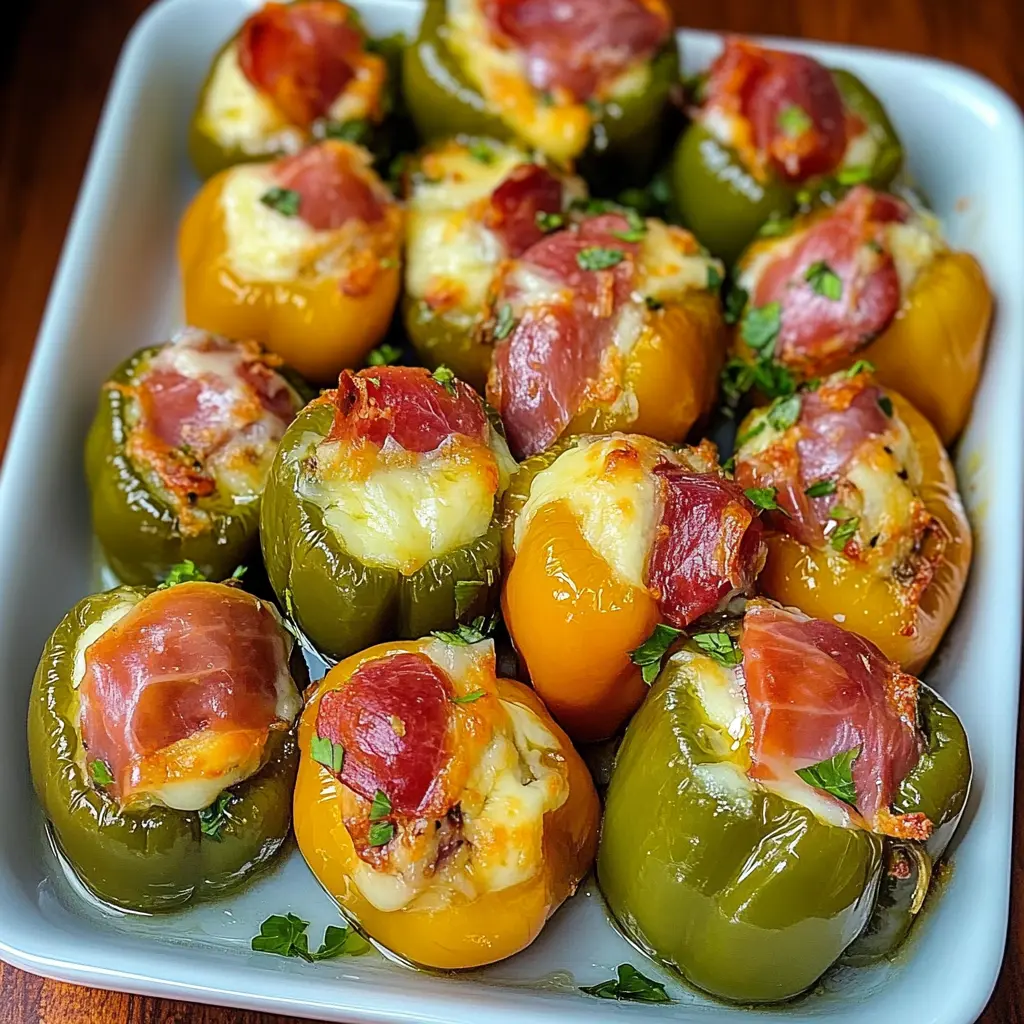
Prosciutto & Provolone Stuffed Cherry Peppers: The Ultimate Italian Appetizer
These Prosciutto & Provolone Stuffed Cherry Peppers bring together sweet, tangy peppers with savory Italian cured meat and creamy cheese. This crowd-pleasing appetizer combines bold flavors in every bite-sized morsel. Perfect for entertaining or meal prep, these stuffed peppers deliver restaurant-quality taste right from your kitchen.
What Makes Stuffed Cherry Peppers Special
Stuffed cherry peppers represent a perfect balance of flavors and textures. The mild heat from the peppers contrasts beautifully with rich prosciutto and smooth provolone cheese.
These appetizers originated from Italian-American cuisine. They’ve become a staple at gatherings, holidays, and Italian restaurants across the country. The combination creates an irresistible finger food that disappears quickly from any serving platter.
Cherry peppers provide natural sweetness with a gentle kick. They’re milder than jalapeños but more interesting than bell peppers. This makes them ideal vessels for stuffing without overwhelming other ingredients.
Why This Recipe Works
The key to exceptional prosciutto and provolone stuffed cherry peppers lies in ingredient quality and proper preparation. Fresh cherry peppers maintain their structure during cooking while delivering consistent flavor.
Prosciutto adds salty, umami-rich notes. Its delicate texture complements the cheese without becoming tough. Provolone melts smoothly, binding the filling together while contributing creamy richness.
The contrast between cool, crisp peppers and warm, melted filling creates textural interest. Each component serves a specific purpose in the final dish.
Ingredient Breakdown and Selection
Core Ingredients
Cherry Peppers (12-16 medium peppers)
Choose firm peppers with bright red color and minimal blemishes. Fresh cherry peppers work best, though jarred varieties can substitute in a pinch. Avoid peppers with soft spots or wrinkled skin.
Look for peppers roughly 1.5 to 2 inches in diameter. This size provides enough cavity space for generous filling without becoming unwieldy to eat.
Prosciutto (8 ounces, thinly sliced)
Select quality prosciutto from your deli counter. It should appear rosy-pink with delicate marbling. Avoid overly salty or dry varieties.
Prosciutto di Parma offers authentic Italian flavor, while domestic versions provide excellent alternatives at lower price points. The meat should tear easily without crumbling.
Provolone Cheese (8 ounces, shredded)
Sharp provolone delivers more robust flavor than mild varieties. Freshly shredded cheese melts better than pre-packaged options.
Aged provolone contains less moisture, preventing soggy filling. Look for firm cheese that grates cleanly without becoming sticky.
Supporting Ingredients
Cream Cheese (4 ounces, softened)
Room temperature cream cheese blends smoothly with other ingredients. It adds richness and helps bind the filling together.
Full-fat cream cheese produces the best texture. Low-fat versions can separate during cooking.
Fresh Garlic (3-4 cloves, minced)
Fresh garlic provides aromatic depth that powdered versions cannot match. Mince finely to distribute flavor evenly throughout the filling.
Roasted garlic offers sweeter, mellower notes for those preferring less pungency.
Fresh Herbs
Basil and oregano complement Italian flavors naturally. Use 2 tablespoons of fresh basil and 1 tablespoon of fresh oregano. Dried herbs work in smaller quantities—reduce by two-thirds.
Parsley adds freshness without competing with other flavors. Chop herbs just before mixing to preserve their aromatic oils.
Olive Oil (2-3 tablespoons)
Extra virgin olive oil enhances flavor and prevents sticking during baking. Choose cold-pressed varieties for superior taste.
Olive oil also helps achieve golden browning on exposed filling.
Breadcrumbs (1/4 cup, optional)
Panko or Italian-seasoned breadcrumbs add textural contrast. They create a crispy top layer when broiled.
Gluten-free breadcrumbs work equally well for dietary restrictions.
Quality Matters
According to Serious Eats, ingredient quality directly impacts final results in simple recipes. Since this dish features few components, each must perform at its best.
Source ingredients from reputable suppliers. Italian delis often carry superior prosciutto and provolone compared to standard grocery stores.
Essential Kitchen Tools
Must-Have Equipment
Sharp Paring Knife
A sharp blade makes clean cuts through pepper flesh without crushing. Dull knives tear peppers and create ragged edges.
Use the knife to remove stems and create openings for stuffing. Precision cutting ensures uniform presentation.
Small Spoon or Melon Baller
These tools efficiently remove seeds and membranes from pepper cavities. A narrow spoon reaches into corners without damaging walls.
Melon ballers create smooth, round cavities perfect for stuffing. Their curved shape matches pepper interiors naturally.
Mixing Bowls
Medium-sized bowls accommodate filling ingredients comfortably. Glass or stainless steel won’t retain odors from garlic and herbs.
Having multiple bowls streamlines prep work when chopping ingredients separately.
Baking Dish
A 9×13-inch baking dish holds 12-16 stuffed peppers in a single layer. Ceramic or glass dishes distribute heat evenly.
Shallow sides promote air circulation around peppers during baking. This helps achieve consistent cooking throughout.
Piping Bag or Ziplock Bag
Piping bags fill peppers cleanly without mess. Cut a large opening for chunky fillings.
Heavy-duty ziplock bags work as substitutes. Simply snip one corner to create a makeshift piping tool.
Nice-to-Have Tools
Disposable gloves protect hands from pepper oils. A food processor quickly chops prosciutto into fine pieces. Wire racks elevate peppers for even cooking.
Step-by-Step Preparation Guide
Preparing the Peppers
Step 1: Clean and Cut
Rinse cherry peppers under cold water. Pat completely dry with paper towels. Moisture interferes with cheese adhesion.
Slice off the stem end of each pepper. Save these “caps” for later use if desired. The opening should measure roughly 1/2 inch across.
Step 2: Remove Seeds and Membranes
Insert your small spoon or melon baller into the pepper cavity. Gently scrape out all seeds and white membranes. These parts contain most of the heat.
Rinse pepper interiors under running water to remove stubborn seeds. Shake out excess water and pat dry again.
Work carefully to avoid tearing pepper walls. Thin spots may split during stuffing or baking.
Step 3: Optional Pre-Treatment
Some cooks prefer roasting empty peppers for 5 minutes at 400°F before stuffing. This softens them slightly and intensifies sweetness.
Others blanch peppers in boiling water for 2 minutes, then shock in ice water. This method preserves bright color while reducing raw bite.
Fresh peppers can be stuffed without pre-treatment. They maintain more crunch this way.
Making the Filling
Step 4: Prepare Prosciutto
Chop prosciutto into small pieces, roughly 1/4-inch squares. Uniform size ensures even distribution throughout filling.
For smoother texture, pulse prosciutto in a food processor 3-4 times. Don’t over-process—you want small pieces, not paste.
Step 5: Combine Ingredients
In a medium bowl, mix softened cream cheese with shredded provolone. Beat together until well blended. The mixture should look cohesive without streaks.
Add minced garlic, chopped herbs, and chopped prosciutto. Fold everything together gently but thoroughly. Season with black pepper to taste. Salt usually isn’t needed due to prosciutto’s saltiness.
Taste the filling before stuffing. Adjust seasonings as needed. Remember that flavors intensify slightly during cooking.
Step 6: Rest the Filling
Let filling sit for 10-15 minutes at room temperature. This allows flavors to meld together. The cheese softens further, making stuffing easier.
If mixture seems too loose, refrigerate for 20 minutes. It should hold its shape when scooped but remain spreadable.
Stuffing Process
Step 7: Fill the Peppers
Transfer filling to your piping bag or ziplock bag. If using ziplock, push filling toward one corner and snip a 1/2-inch opening.
Hold each pepper upright in one hand. Insert piping tip into the cavity. Squeeze gently while pulling back slowly. This creates even distribution from bottom to top.
Fill peppers just past the rim. The filling will compact slightly during cooking. Overfilled peppers may burst or leak.
Use a small spoon to smooth and shape exposed filling. Create a slight dome on top for attractive presentation.
Step 8: Optional Topping
Mix breadcrumbs with 1 tablespoon olive oil and 1 tablespoon grated Parmesan. Sprinkle this mixture over filled peppers for added crunch.
Press topping gently to help it adhere to cheese filling. This creates a golden crust during baking.
Cooking Methods Compared
Baked Stuffed Cherry Peppers
Advantages
Baking delivers consistent results with minimal supervision. The gentle heat melts cheese thoroughly without burning exteriors.
This method works well for large batches. A standard oven accommodates multiple baking dishes simultaneously.
Instructions
Preheat oven to 375°F. Arrange stuffed peppers in your baking dish with space between each. Don’t let them touch—this promotes even browning.
Drizzle lightly with olive oil. Bake for 20-25 minutes until filling bubbles and cheese turns golden brown.
For extra color, broil during the final 2-3 minutes. Watch carefully to prevent burning.
Let peppers rest 5 minutes before serving. This allows filling to set slightly, making them easier to handle.
Air Fryer Method
Advantages
Air frying produces incredibly crispy exteriors while keeping interiors creamy. Cook time reduces by roughly 30% compared to conventional ovens.
The compact space intensifies flavor concentration. Peppers develop deeper caramelization in less time.
Instructions
Preheat air fryer to 370°F. Arrange stuffed peppers in the basket without overcrowding. Work in batches if necessary.
Cook for 12-15 minutes, checking at 10 minutes. Peppers should show golden spots and bubbling cheese.
No need to turn or shake during cooking. The circulating air cooks all sides evenly.
Grilled Preparation
Advantages
Grilling adds smoky depth to prosciutto and provolone stuffed cherry peppers. The high heat creates appealing char marks.
This method works perfectly for outdoor entertaining. Grilled peppers complement other barbecue offerings naturally.
Instructions
Preheat grill to medium-high (around 375°F). Use indirect heat to prevent bottom scorching.
Place stuffed peppers on a grill-safe baking sheet or use a perforated grill pan. Direct grate placement may cause small peppers to fall through.
Close lid and cook for 15-18 minutes. Check frequently after 12 minutes to monitor browning.
For char marks, finish over direct heat for 1-2 minutes per side.
Slow Cooker Option
Advantages
Slow cooking infuses peppers with deep, melded flavors. This hands-off method frees you for other tasks.
The gentle heat prevents cheese from separating or becoming grainy.
Instructions
Arrange stuffed peppers in slow cooker insert. They can stack in layers if needed.
Cook on low for 3-4 hours or high for 1.5-2 hours. Peppers should be tender but not mushy.
For browned tops, transfer to a broiler-safe dish and broil 2-3 minutes before serving.
Flavor Variations and Customizations
Spicy Version
Add 1/4 teaspoon red pepper flakes to the filling mixture. Include diced jalapeño or serrano pepper for extra heat.
Cayenne pepper in the breadcrumb topping creates gradual warmth. Start with 1/8 teaspoon and adjust to preference.
Hot cherry peppers instead of sweet varieties amplify the fire. Choose wisely based on your heat tolerance.
Mediterranean Twist
Replace provolone with feta cheese for tangy brightness. Mix in sun-dried tomatoes, kalamata olives, and fresh dill.
Crumbled prosciutto combines beautifully with feta’s saltiness. Add lemon zest for citrus notes.
Top with toasted pine nuts instead of breadcrumbs. This creates nutty richness and textural contrast.
Vegetarian Alternative
Omit prosciutto entirely and double the cheese. Mix in sautéed mushrooms for umami depth.
Chopped artichoke hearts and roasted red peppers add substance. Season generously with Italian herbs.
Consider adding cooked quinoa or rice for heartier filling. This transforms appetizers into light main courses.
Breakfast Style
Mix crumbled cooked sausage into the filling with scrambled egg pieces. Use cheddar cheese instead of provolone.
Add diced green onions and a pinch of smoked paprika. Serve these breakfast stuffed cherry peppers with morning spreads.
Smoked Variation
Use smoked provolone for deeper flavor complexity. Smoked paprika in the filling enhances this profile.
Grill peppers over wood chips for authentic smokehouse taste. Hickory and applewood complement Italian ingredients particularly well.
Serving Suggestions and Pairings
As Appetizers
Arrange prosciutto and provolone stuffed cherry peppers on a decorative platter. Garnish with fresh basil leaves and drizzle with balsamic glaze.
Serve 2-3 peppers per person as part of an antipasto spread. They pair excellently with marinated olives, fresh mozzarella, and cured meats.
Provide small plates and cocktail napkins. The cheese filling can be messy when hot.
Party Presentation
Skewer each stuffed pepper with a decorative toothpick. This makes grabbing and eating easier during standing events.
Keep warm in a slow cooker set to the lowest temperature. This prevents drying while maintaining food safety.
Label clearly if serving multiple pepper varieties. Guests appreciate knowing heat levels beforehand.
Main Course Integration
Serve stuffed cherry peppers alongside grilled chicken or fish. They add color and flavor contrast to simple proteins.
Pair with pasta dishes for an Italian feast. The peppers complement marinara-based sauces particularly well.
Include in grain bowls with farro, arugula, and cherry tomatoes. The warm peppers contrast nicely with cool, fresh ingredients.
Beverage Pairings
Sparkling water with lemon cleanses the palate between bites. The carbonation cuts through rich cheese effectively.
Iced tea—particularly peach or raspberry varieties—offers sweet balance to salty prosciutto. Herbal teas work equally well.
Fresh lemonade provides acidic brightness that complements all components. Mint-infused versions add refreshing complexity.
According to Food Network, matching temperature contrasts creates memorable dining experiences. Cool drinks with warm appetizers exemplify this principle.
Complementary Dishes
Crusty Italian bread helps scoop any escaped filling. Toast slices and brush with garlic oil for added flavor.
Simple green salads with vinaigrette provide fresh counterpoint. Arugula’s peppery notes enhance Italian ingredients.
Roasted vegetables—especially zucchini, eggplant, and tomatoes—extend the Mediterranean theme naturally.
Storage and Make-Ahead Tips
Refrigerator Storage
Store leftover stuffed cherry peppers in airtight containers. They’ll keep for 3-4 days when properly refrigerated.
Cool completely before sealing to prevent condensation buildup. Moisture makes filling watery and soggy.
Layer peppers between parchment paper sheets if stacking. This prevents sticking and maintains shape integrity.
Reheating Instructions
Oven Method
Preheat to 350°F. Place peppers in a baking dish and cover loosely with foil. Heat for 10-12 minutes until warmed through.
Remove foil during final 3 minutes for crisper tops. Check temperature in the center before serving.
Microwave Method
Arrange peppers on a microwave-safe plate. Cover with a damp paper towel to prevent drying.
Heat on medium power in 30-second intervals. This gentle approach prevents cheese from becoming rubbery.
Expect slightly softer texture compared to fresh-baked versions. The flavors remain excellent despite textural changes.
Make-Ahead Strategies
Prep Peppers in Advance
Clean and hollow peppers up to 2 days before stuffing. Store in airtight containers in the refrigerator.
Keep peppers completely dry to prevent premature softening. Moisture degrades cell walls over time.
Prepare Filling Early
Mix filling components up to 24 hours ahead. Refrigerate in a covered bowl until ready to use.
Bring filling to room temperature 30 minutes before stuffing. Cold filling is difficult to pipe and distribute evenly.
Stuff and Freeze
Assemble stuffed peppers completely, then freeze before cooking. Arrange on a baking sheet and freeze until solid.
Transfer frozen peppers to freezer bags. They’ll keep for up to 3 months without quality loss.
Bake from frozen, adding 10-15 minutes to the standard cooking time. No thawing necessary.
Blanch and Freeze
Some cooks blanch peppers before freezing for better texture retention. Boil for 2 minutes, cool completely, then freeze.
This extra step preserves bright color and prevents freezer burn. It’s worthwhile for long-term storage.
Food Safety Considerations
Always cool cooked peppers within 2 hours of finishing. Bacteria multiply rapidly in the temperature danger zone (40°F-140°F).
Reheat to an internal temperature of 165°F for food safety. Use an instant-read thermometer to verify.
Discard peppers showing signs of spoilage—off odors, mold growth, or slimy texture. Trust your senses when evaluating leftovers.
Troubleshooting Common Issues
Peppers Split During Cooking
Cause: Overstuffing, thin pepper walls, or excessively high temperature.
Solution: Fill peppers just to the rim without packing tightly. Select thick-walled peppers when possible. Reduce oven temperature by 25°F and extend cooking time slightly.
Filling Leaks Out
Cause: Too much moisture in filling, peppers not dried properly, or damaged pepper walls.
Solution: Drain excess liquid from ingredients before mixing. Pat pepper interiors completely dry. Inspect for tears before stuffing and discard damaged peppers.
Add extra shredded cheese to thicken loose filling. The cheese absorbs moisture while binding other ingredients.
Cheese Separates or Becomes Grainy
Cause: Cooking temperature too high, low-quality cheese, or insufficient fat content.
Solution: Use full-fat cream cheese and quality provolone. Bake at moderate temperature (375°F or below). Avoid extended cooking times.
Let cheese ingredients come to room temperature before mixing. Cold dairy doesn’t incorporate smoothly.
Peppers Too Soft or Mushy
Cause: Overcooking, using jarred peppers, or excessive pre-blanching.
Solution: Start checking peppers at minimum cooking time. Fresh peppers maintain structure better than jarred varieties.
If pre-blanching, limit to 90 seconds maximum. Shock immediately in ice water to stop cooking.
Filling Doesn’t Brown
Cause: Insufficient surface fat, oven temperature too low, or crowded baking dish.
Solution: Brush exposed filling with olive oil before baking. Increase temperature to 400°F for final 5 minutes.
Space peppers adequately in the baking dish. Crowding traps steam and prevents browning.
Finish under the broiler for 2-3 minutes. Watch constantly to prevent burning.
Too Salty
Cause: Salty prosciutto combined with salted cheese and added salt.
Solution: Taste filling before adding any salt. Prosciutto usually provides sufficient seasoning.
Choose low-sodium provolone when available. Rinse prosciutto briefly under cold water to remove excess salt if necessary.
Balance saltiness with acid—add lemon juice or vinegar in small amounts. Start with 1 teaspoon and adjust.
Not Enough Flavor
Cause: Bland ingredients, insufficient seasoning, or undercooked garlic.
Solution: Use aged, sharp provolone instead of mild varieties. Increase fresh garlic amount by 1-2 cloves.
Add more herbs—basil and oregano boost Italian character significantly. Include fresh-cracked black pepper generously.
Sauté garlic in olive oil before adding to filling. This mellows harshness while intensifying flavor.
Check out our guide on [Italian appetizer pairings] for more flavor-boosting ideas.
Nutritional Information
Per Stuffed Pepper (Approximate)
Calories: 85-95
Protein: 6g
Fat: 6g (3g saturated)
Carbohydrates: 3g
Fiber: 0.5g
Sugar: 2g
Sodium: 280mg
Calcium: 80mg
Vitamin C: 45mg
Macronutrient Balance
These prosciutto and provolone stuffed cherry peppers provide balanced nutrition for an appetizer. The protein-to-fat ratio supports satiety without excessive calories.
Each pepper contains roughly 70% calories from fat, 25% from protein, and 5% from carbohydrates. This makes them suitable for low-carb dietary approaches.
Vitamin and Mineral Content
Cherry peppers deliver significant vitamin C—one pepper provides about 75% of the daily recommended intake. This antioxidant supports immune function and collagen production.
Vitamin A from peppers promotes eye health and immune response. The bright red color indicates high carotenoid content.
Calcium from provolone and cream cheese contributes to bone health. Each pepper offers roughly 8% of daily calcium needs.
Dietary Considerations
Gluten-Free: Naturally gluten-free when made without breadcrumb topping. Verify prosciutto contains no added fillers.
Keto-Friendly: Low carbohydrate count fits ketogenic macros well. High fat content supports this dietary approach.
High-Protein: The prosciutto and cheese combination delivers quality protein for muscle maintenance.
Not Suitable For: Vegetarians (contains meat), vegans (contains dairy and meat), or those avoiding pork products.
Healthier Modifications
Reduce saturated fat by using part-skim mozzarella instead of full-fat provolone. This cuts calories by roughly 20 per pepper.
Turkey or chicken deli meat can replace prosciutto for lower sodium content. Choose uncured varieties without nitrates.
Increase vegetable content by mixing finely diced spinach or kale into filling. This adds fiber and micronutrients without altering flavor significantly.
According to Harvard Health, incorporating vegetables into every dish increases overall nutrient density. Even small additions contribute meaningfully to daily intake goals.
Frequently Asked Questions
Can I use different types of peppers for this recipe?
Yes, several pepper varieties work beautifully. Mini bell peppers create sweeter versions without heat. Poblano peppers offer mild warmth and larger cavities for more filling.
Banana peppers provide tangy flavor with moderate heat levels. Jalapeños work for those wanting significant spice—remove all membranes to control intensity.
The key is selecting peppers with thick walls that maintain structure during cooking. Avoid thin-skinned varieties that become too soft.
How can I make prosciutto and provolone stuffed cherry peppers vegetarian?
Replace prosciutto with sautéed mushrooms, sun-dried tomatoes, or marinated artichoke hearts. These ingredients provide savory depth without meat.
Chopped walnuts or pecans add texture similar to diced prosciutto. Toast nuts beforehand for enhanced flavor.
Consider smoked cheese varieties to replicate prosciutto’s complexity. Smoked gouda or cheddar work particularly well.
Do I need to remove all the seeds from cherry peppers?
Removing seeds significantly reduces heat while improving texture. Seeds and membranes contain most of the pepper’s capsaicin.
Leave some membranes intact if you prefer spicier results. Adjust based on personal heat tolerance.
Thorough seed removal also prevents bitter undertones. The white membranes can taste unpleasantly acrid when cooked.
Can I prepare these peppers in advance for a party?
Absolutely. Stuffed cherry peppers excel as make-ahead appetizers. Assemble completely and refrigerate up to 24 hours before baking.
Bring to room temperature 20 minutes before cooking for even heating. Cold peppers straight from the refrigerator require slightly longer baking time.
Freeze assembled peppers for up to 3 months. Bake directly from frozen, adding 10-15 minutes to standard cooking time.
What’s the best way to reduce heat in cherry peppers?
Soaking hollowed peppers in cold water for 30 minutes draws out some capsaicin. Change water twice during soaking.
Removing all seeds and white membranes eliminates roughly 80% of the heat. Be thorough during this step.
Blanching peppers in boiling water for 2 minutes also reduces spiciness. This method simultaneously softens texture slightly.
How do I prevent the cheese from leaking during baking?
Use a thicker filling consistency by adding less cream cheese or more shredded provolone. The mixture should hold its shape when scooped.
Don’t overfill peppers beyond the rim. Expansion during heating causes overflow in overstuffed peppers.
Ensure pepper walls have no tears or thin spots. Even small damage allows filling to escape.
Can I use pre-shredded cheese?
Fresh-shredded cheese melts more smoothly than pre-packaged varieties. Commercial shredded cheese contains anti-caking agents that affect texture.
If convenience requires pre-shredded options, choose quality brands without excessive additives. Let cheese come to room temperature before mixing.
The filling may be slightly less creamy but still delivers excellent flavor. Many home cooks successfully use pre-shredded cheese without issues.
What should I serve with these stuffed peppers?
These versatile appetizers complement numerous dishes. Serve alongside bruschetta, caprese skewers, or cured meat platters for Italian-themed spreads.
They work beautifully with pasta dishes, grilled proteins, or fresh salads. The bold flavors pair well with simple preparations.
Crusty bread helps capture any escaped filling. Provide small plates for easier handling.
How long do leftovers stay fresh?
Properly stored stuffed cherry peppers keep 3-4 days refrigerated. Store in airtight containers to maintain quality.
Reheat gently to prevent cheese from becoming rubbery. Oven reheating at 350°F produces better results than microwaving.
Freezing cooked peppers isn’t recommended—the texture deteriorates significantly upon thawing. Fresh assembly and freezing before cooking yields superior results.
Are stuffed cherry peppers spicy?
Heat levels vary based on pepper selection and preparation. Traditional cherry peppers offer mild to moderate warmth—less than jalapeños.
Sweet cherry pepper varieties provide no heat at all. Check labels carefully when purchasing.
Removing all seeds and membranes reduces spiciness by approximately 80%. This makes peppers accessible to heat-sensitive palates.
Conclusion
Prosciutto & Provolone Stuffed Cherry Peppers deliver restaurant-quality flavor with home kitchen simplicity. These Italian-inspired appetizers combine sweet peppers, savory cured meat, and creamy cheese into irresistible bites.
The recipe offers impressive versatility—adapt flavors to suit any preference or dietary need. Whether baked, grilled, or air-fried, these stuffed peppers consistently satisfy.
Master this technique once, and you’ll return to it repeatedly for entertaining and meal prep. The make-ahead friendly nature reduces party stress while maximizing flavor impact.
Each golden-topped pepper promises complex taste in compact form. The balance of textures—crisp pepper skin, silky cheese, and delicate prosciutto—creates memorable eating experiences.
Prosciutto & Provolone Stuffed Cherry Peppers
Description
Prosciutto & Provolone Stuffed Cherry Peppers
Ingredients:
-
20–24 pickled cherry peppers (drained and patted dry)
-
6–8 slices prosciutto, cut into small strips
-
6 oz provolone cheese, cut into small cubes
-
2 tablespoons olive oil
-
1 tablespoon chopped fresh parsley (optional)
-
Cracked black pepper for finishing
Instructions:
-
Gently cut open the top of each cherry pepper and remove any seeds if needed.
-
Tuck a strip of prosciutto into each pepper.
-
Press a cube of provolone inside along with the prosciutto.
-
Arrange peppers on a serving plate and drizzle lightly with olive oil.
-
Sprinkle parsley and cracked black pepper over the top for that nice finishing touch.
-
Chill 20–30 minutes before serving if you like them cold, or serve right away at room temp.