
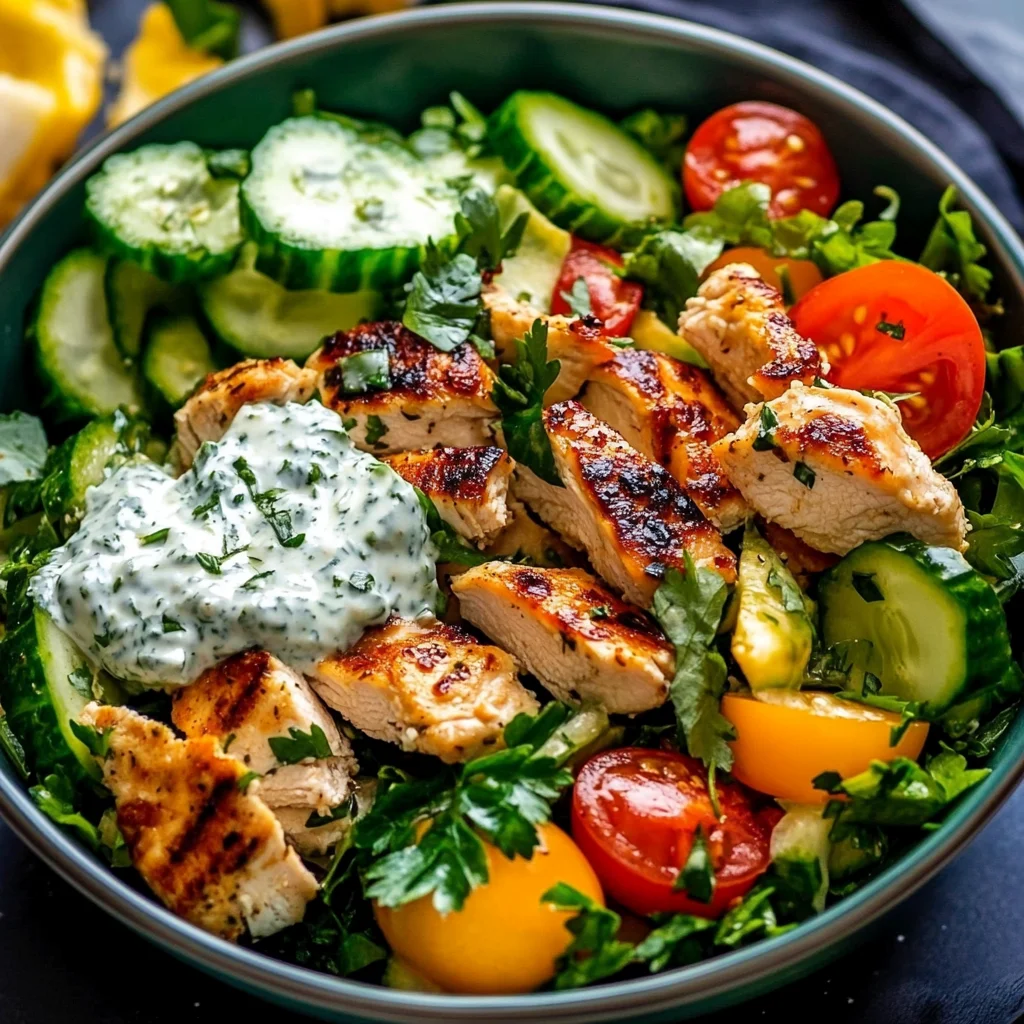
Tzatziki Chicken Salad: A Fresh Mediterranean-Inspired Meal
Are you searching for a refreshing, protein-packed meal that brings Mediterranean flavors to your table? Tzatziki chicken salad combines tender chicken with crisp vegetables and creamy tzatziki sauce for a satisfying dish that’s perfect for lunch, dinner, or meal prep. This recipe delivers bold Greek-inspired flavors without any fuss, making it ideal for busy weeknights and healthy eating goals.
What Is Tzatziki Chicken Salad?
Tzatziki chicken salad is a Mediterranean-inspired dish that features seasoned chicken paired with fresh vegetables and a creamy cucumber-yogurt sauce. This refreshing salad draws inspiration from Greek cuisine, combining protein-rich chicken with the cooling properties of tzatziki.
The dish typically includes grilled or baked chicken, crisp cucumbers, juicy tomatoes, red onions, and sometimes olives or feta cheese. Everything gets tossed together with homemade or store-bought tzatziki sauce. The result is a light yet filling meal that’s bursting with flavor.
Unlike traditional mayonnaise-based chicken salads, this version uses Greek yogurt as its base. This substitution creates a tangier, lighter sauce while adding beneficial probiotics. The garlic and fresh dill in the tzatziki provide aromatic complexity that elevates simple ingredients.
Origins and Cultural Significance
Tzatziki sauce has been a staple in Greek and Middle Eastern cuisines for centuries. The combination of yogurt, cucumber, and garlic appears in various forms across Mediterranean countries. When paired with chicken and fresh vegetables, it creates a modern fusion that honors traditional flavors.
This salad represents the Mediterranean diet’s emphasis on fresh ingredients, lean proteins, and healthy fats. It’s a perfect example of how ancient culinary wisdom translates into contemporary healthy eating.
Why You’ll Love This Recipe
This tzatziki chicken salad recipe stands out for numerous reasons. First, it’s incredibly versatile and adapts to your schedule. You can prepare components ahead of time or assemble everything fresh before serving.
The flavor profile is both refreshing and satisfying. The tangy tzatziki sauce complements the mild chicken perfectly. Fresh vegetables add crunch and brightness. Every bite delivers a balanced combination of textures and tastes.
Health Benefits at a Glance
Furthermore, this dish supports various dietary goals. It’s naturally high in protein, which helps with muscle maintenance and satiety. The Greek yogurt base provides calcium and probiotics for digestive health. Fresh vegetables contribute fiber, vitamins, and minerals.
Additionally, the recipe is naturally gluten-free when served without bread. It’s also easily customizable for different dietary preferences. You can adjust ingredients to make it dairy-free, low-carb, or keto-friendly.
Time-Saving Advantages
Moreover, this salad is perfect for meal prep. You can cook chicken in batches and store it for quick assembly throughout the week. The tzatziki sauce stays fresh in the refrigerator for several days. Simply combine everything when you’re ready to eat.
The preparation process is straightforward even for beginner cooks. There’s no complex techniques or hard-to-find ingredients required. Most components come together in under 30 minutes.
Essential Ingredients Breakdown
Creating the perfect tzatziki chicken salad starts with selecting quality ingredients. Each component plays a specific role in building flavor and texture.
For the Chicken
Chicken breast serves as the protein foundation. Choose boneless, skinless breasts for lean protein. You can also use chicken thighs for extra richness and moisture. About 1.5 to 2 pounds feeds four to six people.
Olive oil helps keep chicken moist during cooking. It also adds healthy monounsaturated fats. Use extra-virgin olive oil for the best flavor.
Seasonings enhance the chicken’s taste. Basic options include salt, black pepper, garlic powder, and dried oregano. You can also add paprika, cumin, or lemon zest for variation.
For the Tzatziki Sauce
Greek yogurt forms the creamy base. Full-fat Greek yogurt creates the richest sauce, while low-fat versions work for lighter options. You’ll need about 1.5 to 2 cups. Make sure to use plain, unsweetened yogurt.
Cucumber provides freshness and crunch. English cucumbers work best because they have fewer seeds. You’ll need one medium cucumber, grated and drained. Persian cucumbers also work well.
Fresh garlic adds pungent flavor. Use 2 to 3 cloves, minced finely. Fresh garlic tastes significantly better than pre-minced varieties.
Fresh dill brings herbaceous notes. About 2 tablespoons of chopped fresh dill is ideal. Dried dill can substitute in a pinch, but fresh is preferred.
Lemon juice brightens the sauce. One to two tablespoons of fresh lemon juice balances the richness of yogurt. It also helps preserve the sauce.
Salt and pepper season to taste. Sea salt or kosher salt work best for even distribution.
For the Salad Base
Romaine lettuce provides a crisp foundation. You can also use mixed greens, spinach, or arugula. About 6 to 8 cups of chopped lettuce serves four people.
Tomatoes add juiciness and color. Cherry tomatoes, grape tomatoes, or diced Roma tomatoes all work well. You’ll need about 2 cups.
Cucumber appears again in the salad for additional crunch. One additional cucumber, diced, balances the other vegetables.
Red onion offers sharp, pungent flavor. Half a medium red onion, thinly sliced, is usually sufficient. You can soak sliced onions in cold water to mellow their bite.
Kalamata olives contribute briny, savory notes. About half a cup of pitted olives adds Mediterranean authenticity. You can omit them if you’re not a fan.
Feta cheese provides salty, tangy creaminess. Crumbled feta cheese enhances the Greek-inspired theme. Use about half a cup, or adjust to preference.
Kitchen Tools You’ll Need
Having the right equipment makes preparation easier and more efficient. You don’t need specialized tools for this recipe.
Essential Equipment
A cutting board and sharp knife are fundamental for chopping vegetables and slicing chicken. Keep your knife sharp for safer, cleaner cuts.
A large mixing bowl holds all the salad components. Choose a bowl with at least 4-quart capacity for easy tossing.
A medium bowl is needed for mixing the tzatziki sauce. A 2-quart bowl works perfectly.
Measuring cups and spoons ensure accurate proportions. Precise measurements help maintain consistency.
A box grater or food processor shreds cucumber quickly. The food processor saves time when making larger batches.
Cooking Equipment
A grill pan, outdoor grill, or skillet cooks the chicken. Each method produces slightly different results. Grilling adds smoky char, while pan-searing creates a golden crust.
A meat thermometer ensures chicken reaches safe internal temperature. Chicken should reach 165°F (74°C) for food safety.
Tongs help flip chicken without piercing the meat. This keeps juices inside for moister results.
Optional but Helpful
A salad spinner dries lettuce thoroughly. Dry lettuce prevents watery salad and helps dressing adhere better.
Airtight containers store prepped ingredients separately. Glass containers work best for meal prep storage.
A citrus juicer extracts lemon juice efficiently. Fresh juice tastes better than bottled alternatives.
Step-by-Step Preparation Guide
Follow these detailed instructions to create restaurant-quality tzatziki chicken salad at home. The process breaks down into manageable steps.
Making the Tzatziki Sauce
Start by preparing the tzatziki sauce since flavors improve with resting time. First, grate one English cucumber using a box grater. Place the grated cucumber in a fine-mesh strainer or clean kitchen towel.
Sprinkle the cucumber with a pinch of salt. Let it sit for 10 minutes. Then squeeze firmly to remove excess moisture. This crucial step prevents watery sauce.
In a medium bowl, combine 1.5 cups of Greek yogurt with the drained cucumber. Add 2 to 3 cloves of minced garlic, 2 tablespoons of chopped fresh dill, and 1 to 2 tablespoons of fresh lemon juice.
Season with salt and black pepper to taste. Stir everything together until well combined. Cover and refrigerate for at least 30 minutes. This resting period allows flavors to meld beautifully.
Preparing the Chicken
While the sauce chills, prepare your chicken. Pat 1.5 to 2 pounds of chicken breasts dry with paper towels. Dry chicken browns better and develops more flavor.
Season both sides generously with salt, black pepper, garlic powder, and dried oregano. You can also add a squeeze of lemon juice for extra brightness.
Heat 2 tablespoons of olive oil in a large skillet over medium-high heat. Once the oil shimmers, add the chicken breasts. Don’t overcrowd the pan.
Cook for 6 to 7 minutes on the first side without moving them. This creates a golden-brown crust. Flip the chicken and cook for another 6 to 7 minutes.
Check internal temperature with a meat thermometer. The chicken is done when it reaches 165°F (74°C) in the thickest part. Remove from heat and let rest for 5 minutes.
After resting, slice or dice the chicken into bite-sized pieces. Alternatively, you can shred it with two forks for a different texture.
Assembling the Salad
In a large mixing bowl, combine 6 to 8 cups of chopped romaine lettuce. Add 2 cups of halved cherry tomatoes, 1 diced cucumber, and half a thinly sliced red onion.
Toss in half a cup of pitted Kalamata olives and half a cup of crumbled feta cheese. Mix gently to distribute ingredients evenly.
Add the cooked chicken pieces to the bowl. Drizzle with half of the prepared tzatziki sauce. Toss everything together until vegetables and chicken are lightly coated.
Taste and adjust seasoning if needed. Add more salt, pepper, or lemon juice according to preference.
Serving
Transfer the salad to individual serving bowls or a large platter. Dollop additional tzatziki sauce on top or serve it on the side. This allows people to add more sauce as desired.
Garnish with extra fresh dill, a sprinkle of feta, or a drizzle of olive oil. Serve immediately for the crispest texture.
Pro Tips for Perfect Results
These expert tips elevate your tzatziki chicken salad from good to exceptional. Small details make significant differences in final results.
Chicken Cooking Techniques
For the juiciest chicken, avoid overcooking. Use a meat thermometer rather than guessing doneness. Pull chicken from heat when it reaches 165°F (74°C).
Brining chicken breasts before cooking adds moisture and flavor. Dissolve 1/4 cup of salt in 4 cups of water. Submerge chicken for 30 minutes to 2 hours. Rinse thoroughly before cooking.
Pounding chicken to even thickness ensures uniform cooking. Place chicken between plastic wrap and gently pound with a meat mallet. This prevents thin parts from drying out while thick sections cook through.
Tzatziki Sauce Secrets
Removing cucumber moisture is non-negotiable for thick sauce. Really squeeze that cucumber hard. The drier the cucumber, the thicker your sauce will be.
Use full-fat Greek yogurt for the creamiest texture. Low-fat versions work but produce thinner sauce. If your sauce seems thin, add another tablespoon of yogurt.
Let the sauce rest in the refrigerator for at least 30 minutes. Better yet, make it the day before. Flavors deepen and intensify overnight.
Fresh dill makes a noticeable difference. Dried dill can’t match the bright, aromatic quality of fresh herbs. If you must substitute, use only one-third the amount of dried dill.
Salad Assembly Advice
Keep components separate until serving time. This maintains maximum crispness. Wet ingredients make lettuce soggy quickly.
Dry your lettuce thoroughly after washing. A salad spinner removes excess water efficiently. Wet lettuce dilutes dressing and creates a watery salad.
Cut vegetables into similar-sized pieces for balanced bites. Uniformity improves both presentation and eating experience.
Add salt to tomatoes separately and let them sit for 5 minutes. This draws out natural sweetness and enhances flavor.
Flavor Enhancement Ideas
Toast whole cumin seeds and crush them for adding to the chicken seasoning. This creates deeper, more complex flavor than pre-ground spices.
Add a pinch of sumac to the finished salad for tangy brightness. This Middle Eastern spice complements Mediterranean flavors beautifully.
Use lemon zest in addition to lemon juice. The zest contains essential oils that provide intense citrus flavor without acidity.
Mix different lettuce varieties for varied textures. Combine romaine with butter lettuce, arugula, or radicchio for complexity.
Nutritional Benefits
Tzatziki chicken salad offers impressive nutritional value while remaining delicious. Understanding these benefits helps you make informed dietary choices.
Macronutrient Profile
One serving (approximately 2 cups) contains roughly 300 to 350 calories, depending on ingredient proportions. The majority comes from lean protein and healthy fats.
Protein content ranges from 30 to 35 grams per serving. Chicken provides complete protein with all essential amino acids. Greek yogurt adds additional protein, supporting muscle maintenance and satiety.
Carbohydrates total about 15 to 20 grams per serving, mostly from vegetables. These complex carbs provide sustained energy without blood sugar spikes. The fiber content aids digestion and promotes fullness.
Fats contribute 12 to 18 grams per serving. Most come from heart-healthy sources like olive oil, feta cheese, and olives. These monounsaturated and polyunsaturated fats support cardiovascular health.
Vitamins and Minerals
This salad delivers substantial amounts of several key nutrients. Vitamin A from lettuce and tomatoes supports vision and immune function. Vitamin C from tomatoes, cucumbers, and lemon juice acts as an antioxidant.
Calcium from Greek yogurt and feta cheese strengthens bones and teeth. Potassium from cucumbers and tomatoes regulates blood pressure and fluid balance.
B vitamins from chicken support energy metabolism and nervous system function. Iron from chicken and leafy greens prevents anemia and supports oxygen transport.
According to Mayo Clinic, Mediterranean-style eating patterns reduce risk of heart disease and other chronic conditions.
Probiotic Benefits
Greek yogurt contains live active cultures that support digestive health. These beneficial bacteria improve gut microbiome diversity. They may enhance immune function and nutrient absorption.
Regular consumption of probiotic-rich foods like yogurt has been linked to improved digestion and reduced inflammation. Some studies suggest probiotics may support mental health through the gut-brain connection.
Low-Calorie, High-Satisfaction
Despite its relatively low calorie count, this salad provides excellent satiety. The combination of protein, fiber, and healthy fats keeps you full for hours. This makes it ideal for weight management goals.
The high water content in vegetables adds volume without calories. This creates a satisfying portion size that feels substantial.
Serving Suggestions and Pairings
Tzatziki chicken salad shines as a standalone meal, but thoughtful pairings enhance the experience. Consider these serving options for different occasions.
As a Main Course
Serve the salad in large individual bowls for a complete meal. Add a side of warm pita bread or flatbread for scooping up extra tzatziki sauce. The bread adds satisfying heartiness without overwhelming the fresh vegetables.
Pair with a simple soup for a more substantial meal. Lemon-based soups or vegetable broths complement the Mediterranean flavors without competing. A light lentil soup works particularly well.
In Wraps and Pitas
Transform the salad into a portable meal by stuffing it into whole wheat pita pockets. Warm the pita slightly for easier folding. This creates a handheld lunch perfect for on-the-go eating.
Use large flour tortillas or lavash bread to make wraps. Layer lettuce first, then add chicken and vegetables. Drizzle with tzatziki and roll tightly. Slice in half for easier handling.
As Part of a Mezze Spread
Include tzatziki chicken salad as one component of a Mediterranean-inspired mezze platter. Surround it with hummus, baba ganoush, stuffed grape leaves, and fresh vegetables. This creates an impressive spread for entertaining.
Add warm pita triangles, olives, and marinated artichoke hearts to complete the spread. This approach works beautifully for casual gatherings or appetizer parties.
Grain Bowl Variation
Layer the salad components over cooked grains for a hearty bowl meal. Quinoa, brown rice, or bulgur wheat all work wonderfully. The grains add fiber and make the meal more filling.
Start with warm grains as the base. Top with lettuce, vegetables, chicken, and a generous dollop of tzatziki. Drizzle with olive oil and sprinkle with herbs.
Side Dish Options
Serve alongside grilled vegetables like zucchini, eggplant, or bell peppers. The smoky char complements the fresh salad beautifully. Roasted red peppers add sweet, smoky notes.
Crispy baked chickpeas make an excellent crunchy side. Season them with cumin, paprika, and garlic powder. They add plant-based protein and satisfying texture.
Beverage Pairings
Pair with sparkling water infused with lemon and mint for a refreshing combination. The bubbles and citrus cleanse the palate between bites. Fresh mint echoes the herbs in the salad.
Iced herbal tea, particularly mint or chamomile, complements the Mediterranean flavors. The coolness matches the refreshing nature of the dish. Avoid overly sweet beverages that might overwhelm delicate flavors.
Storage and Meal Prep Guidelines
Proper storage extends the life of your ingredients while maintaining food safety and quality. These guidelines help you meal prep efficiently.
Component Storage
Store tzatziki sauce separately from other ingredients. Transfer it to an airtight container and refrigerate for up to 4 days. The sauce may separate slightly; simply stir before using.
Keep cooked chicken in a separate airtight container. Refrigerated properly, cooked chicken stays fresh for 3 to 4 days. Let chicken cool completely before refrigerating to prevent bacterial growth.
Store chopped vegetables in separate containers lined with paper towels. The towels absorb excess moisture, preventing sogginess. Vegetables stay crisp for 3 to 4 days this way.
Keep lettuce especially dry. Wash and thoroughly dry lettuce, then store in a container with paper towels. Replace damp towels as needed to maintain crispness.
Assembly Strategies
For best results, assemble salads just before serving. This maintains optimal texture and prevents wilting. However, you can prepare individual components ahead for quick assembly.
Pack components in mason jars for grab-and-go lunches. Layer ingredients with heaviest on bottom: dressing, cucumbers, tomatoes, chicken, then lettuce on top. Shake and pour into a bowl when ready to eat.
Create assembly-line meal prep by dedicating one session to chopping vegetables and cooking protein. Portion everything into containers for easy weekday lunches.
Freezing Considerations
Avoid freezing assembled salad or fresh vegetables. The water content in lettuce, cucumbers, and tomatoes creates ice crystals that destroy texture upon thawing.
However, you can freeze cooked chicken for longer storage. Wrap portions tightly in plastic wrap, then place in freezer bags. Frozen chicken maintains quality for 2 to 3 months.
Tzatziki sauce doesn’t freeze well due to yogurt’s water content. The texture becomes grainy and separated when thawed. Always make tzatziki fresh or refrigerate for short-term storage.
Food Safety Tips
Never leave perishable ingredients at room temperature for more than 2 hours. Bacteria multiply rapidly in the “danger zone” between 40°F and 140°F (4°C and 60°C).
Always refrigerate chicken within 2 hours of cooking. Cool it quickly by spreading it on a large plate rather than leaving it in a deep container.
Check refrigerator temperature regularly. It should maintain 40°F (4°C) or below for food safety. Use a refrigerator thermometer for accuracy.
When reheating chicken, ensure it reaches 165°F (74°C) throughout. However, for this salad, you’ll typically serve chicken cold or at room temperature.
Popular Variations to Try
Customizing tzatziki chicken salad keeps meals interesting while accommodating different preferences and dietary needs. These variations offer exciting alternatives.
Mediterranean Quinoa Version
Replace lettuce with cooked quinoa for a heartier meal. Use about 2 cups of cooked quinoa as the base. The nutty grain adds protein and fiber.
Mix the quinoa with diced cucumbers, tomatoes, red onions, and olives. Toss with tzatziki sauce and top with sliced chicken. This creates a satisfying grain bowl.
Add roasted chickpeas for extra protein and crunch. Season them with cumin and paprika before roasting at 400°F (200°C) for 25 minutes.
Spicy Version
Incorporate heat for those who enjoy spicy food. Add diced jalapeños or serrano peppers to the salad. Remove seeds for milder heat or leave them in for more intensity.
Mix harissa paste into the tzatziki sauce for spicy, smoky flavor. Start with 1 teaspoon and adjust to taste. Harissa adds North African flair to Greek flavors.
Sprinkle red pepper flakes over the finished salad. This provides adjustable heat that each person can control.
Dairy-Free Alternative
Create a dairy-free version using coconut yogurt or cashew yogurt instead of Greek yogurt. These plant-based alternatives create surprisingly similar texture.
Omit feta cheese or replace it with a dairy-free alternative. Nutritional yeast adds savory, cheesy flavor without dairy. Use about 2 tablespoons.
Add extra lemon juice and fresh herbs to compensate for the tangy flavor normally provided by dairy. The result tastes fresh and satisfying.
Low-Carb and Keto-Friendly
Skip grains and bread to keep the salad low-carb. Focus on leafy greens and non-starchy vegetables. This naturally creates a keto-friendly meal.
Increase healthy fats by adding more olive oil, olives, and full-fat feta. Include sliced avocado for creamy texture and additional fats.
Choose chicken thighs instead of breasts for higher fat content. The extra fat keeps you satiated longer on a low-carb diet.
Rotisserie Chicken Shortcut
Save time by using store-bought rotisserie chicken. Simply shred the meat and skip the cooking step entirely. This reduces active preparation time significantly.
Choose plain rotisserie chicken without heavy seasonings or marinades. This allows the tzatziki and fresh vegetables to shine.
Remove the skin before shredding to reduce fat content. However, leaving some skin adds richness and flavor if preferred.
Warm Chicken Version
Serve the salad with warm, freshly grilled chicken for a different experience. The contrast between warm protein and cool vegetables is delightful.
Grill chicken just before serving and slice it immediately. Arrange warm slices over the cold salad. The heat slightly wilts the lettuce, creating interesting texture.
Drizzle extra tzatziki sauce over the warm chicken. The cool sauce against hot chicken creates pleasant temperature contrast.
Troubleshooting Common Issues
Even simple recipes can present challenges. These solutions address common problems you might encounter.
Watery Tzatziki Sauce
If your sauce seems thin or watery, you likely didn’t remove enough moisture from the cucumber. Next time, squeeze the grated cucumber harder and longer.
To fix thin sauce, strain it through cheesecloth or a fine-mesh strainer. Let it drain for 15 to 20 minutes. This removes excess liquid.
Alternatively, stir in more Greek yogurt to thicken the consistency. Add one tablespoon at a time until you reach desired thickness.
Dry Chicken
Overcooked chicken becomes dry and tough. Always use a meat thermometer to avoid overcooking. Pull chicken at exactly 165°F (74°C).
If you’ve already overcooked the chicken, dice it into smaller pieces and toss it generously with tzatziki sauce. The sauce adds moisture back to dry meat.
For future batches, try brining chicken before cooking. This adds moisture that prevents drying even if you slightly overcook.
Bitter Cucumber
Sometimes cucumbers taste bitter due to compounds called cucurbitacins. This occurs more often with garden cucumbers than English varieties.
Cut a slice from the stem end and rub the cut surfaces together in circular motions. A white foam appears, drawing out bitterness. Rinse and continue cutting.
Alternatively, peel cucumbers completely to remove the skin where most bitterness concentrates. This sacrifices some nutrients but improves flavor.
Soggy Salad
Lettuce becomes soggy when it’s wet or when dressing sits on it too long. Always dry lettuce thoroughly after washing.
Dress the salad just before serving. If you must dress ahead, use a lighter hand with sauce. Add extra tzatziki on the side.
Store components separately for meal prep. Only combine when you’re ready to eat for maximum crispness.
Bland Flavor
If your salad tastes bland, you probably underseasoned. Salt enhances all other flavors, so season generously at each stage.
Add salt to the chicken before cooking, to vegetables after chopping, and to the finished salad. Taste and adjust until flavors pop.
Incorporate more acid if needed. Add extra lemon juice to brighten flavors. Fresh herbs like dill, parsley, or mint also boost overall taste.
Too Much Garlic
Raw garlic can overwhelm if you add too much. Start with less and add more to taste. Remember that garlic flavor intensifies as tzatziki sits.
To mellow harsh garlic flavor, add more yogurt to dilute it. You can also add a pinch of sugar to balance the pungency.
For future batches, roast garlic cloves before adding to tzatziki. Roasting creates sweeter, milder flavor that’s less aggressive.
Frequently Asked Questions
Can I make tzatziki chicken salad ahead of time?
You can prepare components ahead, but assemble just before serving for best texture. Cook chicken and make tzatziki sauce up to 3 days in advance. Chop vegetables up to 2 days ahead. Store everything separately in airtight containers. Combine when ready to eat to prevent sogginess.
What’s the best way to cook chicken for this salad?
Grilling produces the most flavor with nice char marks. Pan-searing creates a golden crust quickly. Baking in the oven works great for larger batches. All methods work well as long as you don’t overcook. The key is reaching 165°F (74°C) internal temperature without going over.
Can I use store-bought tzatziki sauce?
Yes, store-bought tzatziki saves time. However, homemade sauce tastes fresher and allows you to control ingredients. If using store-bought, choose brands with simple, natural ingredients. Check the label to ensure it doesn’t contain unwanted additives or preservatives.
How do I make this salad dairy-free?
Replace Greek yogurt with coconut yogurt or cashew yogurt for the tzatziki. Omit feta cheese or use a dairy-free alternative. The rest of the ingredients are naturally dairy-free. Add extra lemon juice and herbs to compensate for the tangy flavor dairy provides.
Is tzatziki chicken salad good for weight loss?
Yes, this salad supports weight loss goals when eaten in appropriate portions. It’s high in protein and fiber, which promote satiety. The combination keeps you full for hours. Choose lean chicken breast and go light on olive oil and cheese for lowest calories.
Can I use chicken thighs instead of breasts?
Absolutely! Chicken thighs provide more flavor and stay moister during cooking. They contain slightly more fat and calories than breasts. The darker meat has richer taste that some prefer. Cook thighs to the same internal temperature of 165°F (74°C).
How long does this salad last in the refrigerator?
When stored properly with components separated, ingredients last 3 to 4 days. Assembled salad lasts only 1 day before wilting. Tzatziki sauce keeps for 4 days. Cooked chicken stays fresh for 3 to 4 days. Always refrigerate promptly and store in airtight containers.
What can I serve with tzatziki chicken salad?
Serve with warm pita bread, flatbread, or naan for scooping. Pair with soup for a heartier meal. Include as part of a Mediterranean mezze platter with hummus and vegetables. Add grain-based sides like rice or quinoa for more substance.
Conclusion
Tzatziki chicken salad combines fresh Mediterranean flavors with satisfying protein for a meal that’s both healthy and delicious. The creamy cucumber-yogurt sauce, tender chicken, and crisp vegetables create perfect harmony in every bite. This versatile dish works equally well for meal prep, quick weeknight dinners, or entertaining guests.
The recipe adapts easily to various dietary preferences and cooking skill levels. Whether you’re following a low-carb diet, seeking high-protein meals, or simply craving fresh flavors, this salad delivers. The straightforward preparation process makes it accessible even on busy days.
By following the tips and techniques outlined above, you’ll create restaurant-quality results in your own kitchen. Remember to use fresh ingredients, properly season each component, and keep elements separate until serving time. These small details elevate the final dish significantly.
Tzatziki Chicken Salad
Description
Tzatziki Chicken Salad
Ingredients:
-
2 cups cooked chicken, shredded or diced
-
1 cup plain Greek yogurt
-
1/2 cucumber, finely diced (peeled and seeded if you prefer)
-
1 tablespoon fresh dill, chopped
-
1 tablespoon fresh lemon juice
-
1 small garlic clove, minced
-
1 tablespoon extra-virgin olive oil
-
1/4 teaspoon salt
-
1/4 teaspoon black pepper
-
1/4 cup red onion, finely diced (optional)
-
Cherry tomatoes and fresh lettuce for serving (optional)
Instructions:
-
In a bowl, stir together Greek yogurt, cucumber, dill, lemon juice, garlic, olive oil, salt, and pepper until smooth and creamy.
-
Fold in the cooked chicken and red onion if using.
-
Chill at least 20 minutes so the flavors get friendly.
-
Serve in lettuce cups, in pita bread, on a sandwich, or with crackers and tomatoes on the side.