
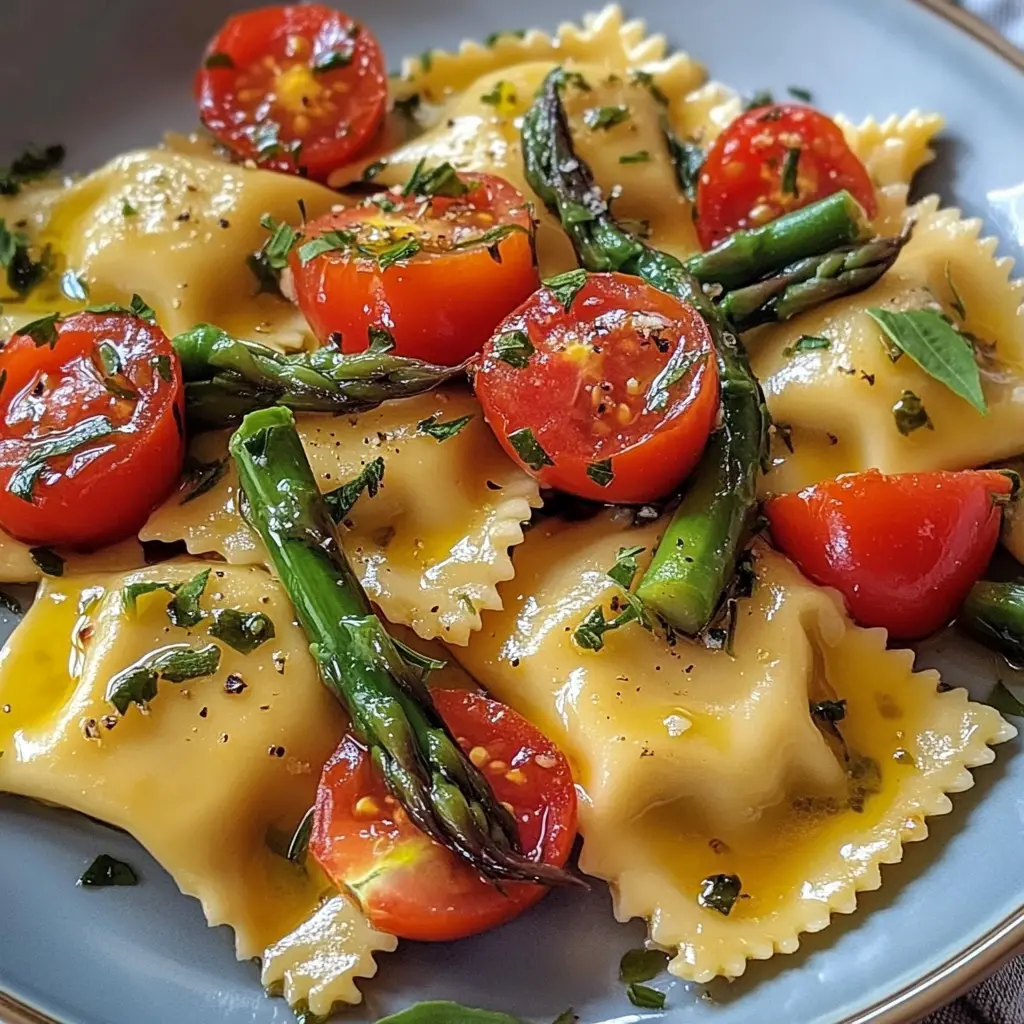
Ravioli with Tomatoes, Asparagus, Garlic & Herbs: Celebrating Spring on a Plate
Ah, the first signs of spring! Not just the warmer weather, mind you, but the incredible, vibrant produce that starts to fill the markets. Speaking of which, is there anything more delightful than a plate of fresh pasta tossed with the season’s very best? We’re talking about a dish that truly sings with flavor: Ravioli with Tomatoes, Asparagus, Garlic & Herbs.
This isn’t just another pasta recipe; it’s a celebration on a plate. Imagine tender, cheese-filled parcels meeting sweet, blistered tomatoes and crisp-tender asparagus spears. Now, picture all of that brought together by a lively, aromatic sauce made from garlic, fresh herbs, and a generous glug of olive oil. Honestly, it’s the kind of meal that feels both gourmet and utterly comforting, a surefire way to brighten up any weeknight or impress weekend guests without spending hours in the kitchen.
Why This Recipe Is an Absolute Must-Try
So, what makes this particular spring ravioli recipe so special? Well, for starters, it’s a symphony of textures and flavors that just works. Furthermore, it’s incredibly versatile. Whether you’re a seasoned chef or a complete beginner, this guide will walk you through creating a restaurant-quality meal right at home.
Firstly, it highlights the absolute best of seasonal produce. Instead of heavy, wintery sauces, we’re using the bright, fresh flavors of spring. Secondly, it’s surprisingly simple to make. In fact, the entire dish comes together in well under 30 minutes, making it a perfect quick pasta dish for busy evenings. Moreover, it’s a fantastic vegetarian ravioli dish that is satisfying enough to please even the most devoted meat-lovers at the table. Ultimately, this recipe is your passport to a delicious, gourmet meal at home that requires minimal effort for maximum reward.
The Anatomy of Flavor: Choosing Your Ingredients Wisely
Alright, let’s get down to the nuts and bolts. The magic of this dish doesn’t come from complex techniques; it comes from using high-quality, fresh ingredients. Each component plays a crucial role, so choosing wisely is the first step to success.
The Star of the Show: Selecting Your Ravioli
Obviously, you can’t make this asparagus tomato ravioli without the ravioli itself! Walking down the pasta aisle can be overwhelming, so here’s the lowdown.
Cheese Ravioli is the classic choice and our top recommendation. The creamy, mild filling—typically a blend of ricotta, mozzarella, and parmesan—provides a beautiful, neutral canvas that lets the vegetables and herbs truly shine. It’s a crowd-pleaser every single time.
For a luxurious twist, lobster or crab ravioli is absolutely phenomenal. The sweet, delicate seafood pairs wonderfully with the bright, grassy notes of the asparagus and the acidic pop of the tomatoes. It instantly elevates the dish for a special occasion.
If you’re feeling a bit adventurous, butternut squash ravioli offers a wonderful sweet and savory alternative. The natural sweetness of the squash creates a fascinating contrast with the garlic and herbs. Just a heads-up: you might want to go a little lighter on any added lemon zest if you go this route.
Finally, the eternal question: fresh, frozen, or shelf-stable? Honestly, fresh pasta from the refrigerated section often has a more delicate texture and cooks in a flash. However, a good-quality frozen or even shelf-stable brand works perfectly well in a pinch. The sauce is so flavorful that it will carry the day regardless!
The Supporting Cast: Vegetables and Aromatics
This is where the springtime vibe comes alive. Let’s break it down.
Asparagus: Look for firm, bright green stalks with tightly closed tips. Pencil-thin asparagus is tender and cooks quickly, while thicker spears have a more robust, meaty texture. It’s purely a matter of preference! Just remember to snap off the woody ends—they naturally break at the right spot.
Tomatoes: We strongly recommend sweet cherry or grape tomatoes for this recipe. When heated, they burst and release their juicy sweetness, creating a fantastic instant sauce. Sun-dried tomatoes (the soft, oil-packed kind) are a brilliant pantry-friendly option for a more intense, concentrated flavor. In a real pinch, a can of diced tomatoes, well-drained, can work too.
Garlic: This is non-negotiable: use freshly minced garlic. That pre-minced jarred stuff just doesn’t deliver the same potent, aromatic punch. You want that gorgeous fragrance to be the backbone of your sauce.
The Herb Garden: Fresh herbs are the final, non-negotiable flourish. Fresh basil brings a sweet, peppery essence, while parsley offers a clean, grassy note. A little thyme can add a wonderful earthy depth. If you absolutely must substitute dried herbs, do so sparingly (use one-third the amount), but know that the flavor will be much more muted.
The Foundation: Oils, Cheese, and Seasonings
Don’t you dare overlook these finishing touches! They make all the difference.
A good extra virgin olive oil (EVOO) drizzled over the finished dish adds a fruity, peppery complexity that cheaper oils just can’t match. However, a more neutral olive oil is fine for the initial sautéing.
For cheese, splurge on a wedge of Parmigiano-Reggiano or Grana Padano and grate it yourself. The pre-grated stuff often contains anti-caking agents that prevent it from melting smoothly. The flavor of freshly grated cheese is incomparably richer and nuttier.
Finally, a hit of acidity from lemon zest or a small squeeze of juice at the end is the secret weapon. It cuts through the richness of the cheese and oil, balancing the entire dish and making all the flavors pop. And always, always finish with flaky sea salt and freshly cracked black pepper.
Gearing Up for Success: Essential Kitchen Tools
You don’t need a ton of fancy equipment for this easy ravioli recipe. In fact, you likely have everything already!
The Must-Haves:
-
A large pot for boiling your pasta. Plenty of water is key!
-
A large skillet or sauté pan. This is where the magic happens, so make sure it’s big enough to hold all the ingredients comfortably at the end.
-
A colander for draining both the pasta and the blanched asparagus.
-
A sharp chef’s knife and a sturdy cutting board for all your chopping.
-
A microplane or zester for your cheese and lemon. It’s a game-changer.
-
Tongs and a wooden spoon for stirring and tossing.
The Nice-to-Haves:
-
A mandoline can be useful for slicing asparagus into thin ribbons if you want a different texture, but it’s totally optional.
-
A garlic press if you hate mincing.
Crafting Your Masterpiece: A Step-by-Step Guide
Okay, apron on! Let’s transform these beautiful ingredients into an unforgettable meal. Follow these steps for foolproof results.
Step 1: Mise en Place (a.k.a. Get Everything Ready)
First things first, do all your prep. This is the golden rule of cooking, especially for a fast-moving recipe like this. Wash and dry your asparagus and tomatoes. Mince the garlic. Chop your herbs. Grate your cheese. Zest your lemon. Having everything measured and within arm’s reach (that’s what mise en place means!) turns cooking from a stressful scramble into a relaxing, enjoyable process.
Step 2: The Blanching Technique: Perfect Asparagus Every Time
Now, bring your large pot of well-salted water to a rolling boil. While you wait, prepare an ice bath—a large bowl filled with ice and cold water.
Once boiling, carefully add your prepped asparagus. Cook it for just 60-90 seconds, until it turns brilliantly green and is just barely tender. Seriously, don’t walk away! Using your tongs, immediately transfer the asparagus to the ice bath. This shocking process, known as blanching, stops the cooking instantly, preserving that beautiful color and perfect crisp-tender bite. After a minute in the bath, drain and set it aside.
Step 3: Building the Sauce Foundation
Next, heat a tablespoon of olive oil in your large skillet over medium heat. Add the minced garlic and cook for just 30-60 seconds until it becomes fragrant. Please, whatever you do, don’t let it brown! Burnt garlic turns bitter and will ruin your sauce.
Now, add your cherry tomatoes. Cook them, stirring occasionally, for about 5 minutes. You’ll hear them sizzle and see their skins start to wrinkle and maybe even burst. This is exactly what you want! They’re releasing their sweet juices to form the base of your incredible light pasta sauce.
Step 4: Cooking Ravioli to Al Dente Perfection
Meanwhile, using the same pot of boiling water you used for the asparagus, cook your ravioli according to the package directions. Remember to taste one a minute before the time is up! You’re aiming for al dente—firm to the bite. It will finish cooking later in the sauce.
This is the most important step: RESERVE PASTA WATER! Before you drain the ravioli, scoop out about one cup of the starchy, salty cooking water. This liquid gold is the key to creating a glossy, restaurant-worthy sauce that clings to every single ravioli.
Step 5: The Marriage: Combining Pasta, Sauce, and Vegetables
Alright, let’s bring this home. Gently add the drained ravioli and the blanched asparagus to the skillet with the tomatoes and garlic. Reduce the heat to low. Now, splash in about a 1/4 cup of that reserved pasta water. As you gently toss everything together, you’ll see the water, oil, and tomato juices emulsify into a beautiful, light sauce that coats everything perfectly. Add more pasta water a little at a time if it looks too dry.
Step 6: The Final Flourish: Finishing Touches
Take the skillet off the heat immediately. This is crucial because high heat will kill the fresh flavor of your herbs. Now, stir in your chopped fresh herbs, a teaspoon of lemon zest, and a final generous drizzle of that good extra virgin olive oil. Give it one final gentle toss.
Divide the ravioli among warmed plates, garnish with a mountain of freshly grated cheese and another crack of black pepper, and serve immediately. You did it!
Beyond the Recipe: Pro Tips and Adaptations
You’ve mastered the basic recipe, so now let’s play! Here’s how to tweak it, improve it, and make it your own.
Chef’s Secrets for Elevating Your Dish
-
Add Some Heat: A pinch of red pepper flakes added with the garlic introduces a wonderful warmth that contrasts the dish’s freshness.
-
Toast for Texture: For an incredible nutty flavor and slightly crispy texture, try pan-toasting your ravioli in a little olive oil after boiling them, just for a minute per side, before adding them to the sauce.
-
Creamy Dreamy: For a richer, creamy sauce without cream, add a large dollop of whole-milk ricotta or mascarpone off the heat and let it melt into the sauce.
Creative Variations to Try
-
Protein Power: This vegetarian ravioli dish is easily turned carnivorous. Top it with grilled chicken breast, seared shrimp, or pan-seared scallops for a extra heartier meal.
-
Different Greens: No asparagus? No problem! Broccolini, snap peas, or even fresh spinach make excellent substitutes. Adjust the cooking time accordingly.
-
Herb Swap: Feel free to experiment with other soft herbs. Tarragon offers a lovely anise-like flavor, and chives provide a mild oniony kick.
Making It Dietary-Friendly
-
Gluten-Free: Simply use your favorite brand of gluten-free ravioli. The rest of the recipe is naturally gluten-free!
-
Vegan: The market is full of amazing vegan ravioli options filled with nut-based “ricottas” or vegetables. Use nutritional yeast instead of cheese for a cheesy flavor and omit the butter.
-
Lower Carb: Love the sauce but watching carbs? Serve this glorious tomato and asparagus topping over spiralized zucchini noodles (zoodles) or chickpea pasta.
From Kitchen to Table: Serving and Enjoying
Your masterpiece is ready, but let’s talk about the full experience.
What to Serve Alongside Your Ravioli
This dish is fantastic on its own, but a simple side can turn it into a true feast. A light arugula salad with a lemon vinaigrette complements the flavors perfectly. Furthermore, a slice of crusty, warm bread is essential for mopping up every last bit of that delicious sauce from your plate.
The Perfect Pour: Beverage Pairings
Since we are avoiding alcoholic beverages, let’s focus on brilliant non-alcoholic pairings. A sparkling water with a wedge of lemon or lime cleanses the palate beautifully between bites. For something more special, an iced herbal tea—like lemon verbena or peppermint—accentuates the fresh, garden flavors in the dish. Even a tart cherry juice spritzer would work wonderfully.
Storing and Reheating Leftovers
Let’s be honest, leftovers are unlikely! However, if you do have some, store them in an airtight container in the refrigerator for up to 2 days.
Reheating is tricky because microwaving can make the ravioli rubbery. The best method is to gently reheat it in a skillet on the stove over low heat. Add a tiny splash of water to loosen the sauce back up. It won’t be quite as perfect as the first time, but it’ll still be delicious.
Your Ravioli Questions, Answered
Can I use frozen asparagus instead of fresh?
You certainly can, but the texture will be different. Thaw it completely and pat it dry very thoroughly with paper towels to remove excess moisture. Otherwise, you’ll water down your beautiful sauce. For the best results and that classic crisp-tender bite, fresh is always the way to go.
How can I prevent my ravioli from bursting while cooking?
This is a common frustration! The key is to use a large pot with plenty of water. Crowding the pot is a primary cause of bursting. Furthermore, bring the water to a gentle boil rather than a violent roll. Finally, stir the ravioli gently immediately after adding them to the water to prevent them from sticking to the bottom—and each other.
What other herbs can I use in this recipe?
The herb world is your oyster! While basil and parsley are classics, don’t be afraid to experiment. Oregano or marjoram would give it a more robust, Italian-American flair. Fresh dill or chives would also be lovely. Just remember that woody herbs like rosemary are too powerful and would overwhelm the other delicate flavors here.
Is this ravioli recipe suitable for a beginner cook?
Absolutely, yes! In fact, it’s an ideal recipe for beginners. It teaches fundamental skills like blanching vegetables, sautéing aromatics, emulsifying a simple pan sauce, and, most importantly, the value of prepping your ingredients beforehand. It’s practically a cooking class in a single, delicious dish!
Can I make this dish ahead of time?
You can do a lot of the prep work ahead of time to make your life easier. You can wash and chop the vegetables, mince the garlic, chop the herbs, and grate the cheese a few hours in advance. However, for the best texture and flavor, the actual cooking and assembly should be done just before serving. The ravioli and asparagus can become mushy if they sit for too long.
Print
Ravioli with Tomatoes, Asparagus, Garlic & Herbs
Description
🍝 Ravioli with Tomatoes, Asparagus, Garlic & Herbs
Ingredients:
-
1 (20 oz) package cheese ravioli (fresh or frozen)
-
2 tbsp olive oil
-
3 cloves garlic, minced
-
1 bunch asparagus, trimmed and cut into 2-inch pieces
-
1 pint cherry tomatoes, halved
-
½ cup vegetable or chicken broth
-
¼ tsp red pepper flakes (optional)
-
2 tbsp fresh basil, chopped
-
2 tbsp fresh parsley, chopped
-
¼ cup grated Parmesan cheese
-
Salt and black pepper, to taste
-
Extra drizzle of olive oil or balsamic glaze (optional, for serving)
Instructions:
-
Cook the ravioli:
-
Bring a large pot of salted water to a boil.
-
Cook ravioli according to package instructions. Drain and set aside.
-
-
Sauté the vegetables:
-
In a large skillet, heat olive oil over medium heat.
-
Add garlic and cook until fragrant (about 1 minute).
-
Add asparagus and cook 3–4 minutes until tender-crisp.
-
Stir in cherry tomatoes and cook until softened, about 2 minutes.
-
-
Make the sauce:
-
Pour in broth and a pinch of red pepper flakes.
-
Simmer 2–3 minutes until slightly reduced. Season with salt and pepper.
-
-
Combine:
-
Add cooked ravioli to the skillet and gently toss with vegetables and sauce.
-
-
Finish & serve:
-
Sprinkle with fresh basil, parsley, and Parmesan.
-
Drizzle with olive oil or balsamic glaze if desired.
-
Serve warm with crusty bread.
-