
Introduction
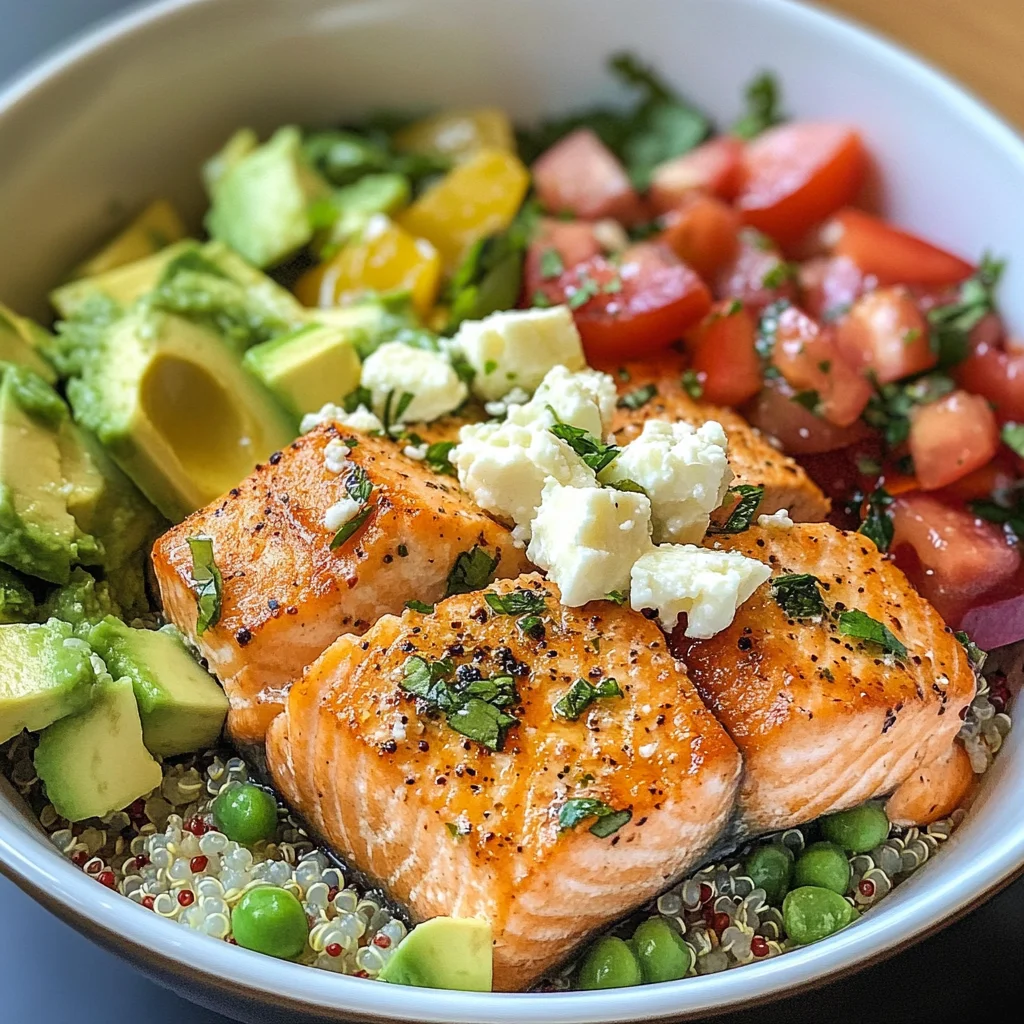
Are you searching for a nutritious, satisfying meal that combines protein, healthy fats, and whole grains in one beautiful bowl? Salmon and Quinoa Power Bowls with Lemon Feta Avocado Salsa deliver exactly that – a restaurant-quality dish you can prepare at home in under 30 minutes. Moreover, this vibrant meal provides essential omega-3 fatty acids, complete protein, and an abundance of vitamins that fuel your body throughout the day.
This power bowl represents the perfect intersection of convenience and nutrition. Furthermore, the combination of flaky salmon, fluffy quinoa, and creamy avocado salsa creates a flavor profile that satisfies both your taste buds and nutritional needs. Whether you’re meal prepping for the week or preparing a quick weeknight dinner, this recipe adapts beautifully to your lifestyle.
Why Power Bowls Are Perfect for Healthy Living
Power bowls have revolutionized the way we approach healthy eating. Consequently, they’ve become a staple in kitchens worldwide, offering balanced nutrition in a single dish.
The Science Behind Balanced Bowl Meals
Each component in a power bowl serves a specific nutritional purpose. Therefore, when you combine protein-rich salmon, fiber-packed quinoa, and nutrient-dense vegetables, you create a complete meal that stabilizes blood sugar levels and promotes sustained energy. Additionally, this balanced approach prevents the energy crashes associated with unbalanced meals.
Research shows that meals containing protein, complex carbohydrates, and healthy fats improve satiety and reduce overeating. Thus, power bowls naturally support weight management goals without requiring restrictive dieting.
Time-Saving Benefits for Busy Lifestyles
Modern life demands efficient meal solutions. Subsequently, power bowls answer this need by allowing batch preparation of individual components. You can cook quinoa in advance, prep vegetables ahead of time, and simply add fresh salmon when ready to eat.
This meal takes approximately 25-30 minutes from start to finish. Meanwhile, the active cooking time involves minimal hands-on effort, freeing you to handle other tasks while dinner cooks.
Essential Ingredients for Salmon and Quinoa Power Bowls
Gathering quality ingredients ensures the best results for your power bowl creation. Below, you’ll find everything needed to build this nutritious masterpiece.
For the Salmon
-
4 salmon fillets (6 ounces each)
-
2 tablespoons olive oil
-
1 teaspoon garlic powder
-
1 teaspoon paprika
-
½ teaspoon black pepper
-
½ teaspoon sea salt
-
1 teaspoon dried dill
For the Quinoa Base
-
1½ cups uncooked quinoa
-
3 cups vegetable broth or water
-
½ teaspoon sea salt
-
1 bay leaf
-
1 tablespoon olive oil
For the Lemon Feta Avocado Salsa
-
2 ripe avocados, diced
-
½ cup crumbled feta cheese
-
3 tablespoons fresh lemon juice
-
1 tablespoon lemon zest
-
¼ cup red onion, finely diced
-
2 tablespoons fresh cilantro, chopped
-
1 tablespoon fresh parsley, chopped
-
½ teaspoon sea salt
-
¼ teaspoon black pepper
-
2 tablespoons extra virgin olive oil
For the Bowl Assembly
-
4 cups mixed greens (spinach, arugula, kale)
-
1 cup cherry tomatoes, halved
-
1 cucumber, sliced
-
½ cup shredded carrots
-
¼ cup pumpkin seeds or sunflower seeds
-
Fresh lemon wedges for serving
Step-by-Step Preparation Guide
Creating perfect Salmon and Quinoa Power Bowls requires attention to timing and technique. Nevertheless, the process remains straightforward and beginner-friendly.
Preparing the Quinoa
First, rinse quinoa thoroughly under cold water using a fine-mesh strainer. This step removes the natural coating called saponin, which can taste bitter. Subsequently, combine the rinsed quinoa with broth, salt, bay leaf, and olive oil in a medium saucepan.
Bring the mixture to a boil over high heat. Then, reduce heat to low, cover, and simmer for 15 minutes. After cooking, remove from heat and let stand covered for 5 minutes. Finally, fluff with a fork and remove the bay leaf.
Cooking the Perfect Salmon
While the quinoa cooks, prepare your salmon fillets. Pat them dry with paper towels to ensure proper seasoning adherence. Next, combine garlic powder, paprika, black pepper, salt, and dill in a small bowl.
Rub the spice mixture evenly over all salmon surfaces. Heat olive oil in a large skillet over medium-high heat. Once the oil shimmers, add salmon skin-side up and cook for 4-5 minutes. Flip carefully and cook for another 3-4 minutes until the internal temperature reaches 145°F.
Creating the Lemon Feta Avocado Salsa
This vibrant salsa brings freshness and creamy texture to your power bowl. Start by dicing avocados into half-inch cubes. Place them in a medium bowl and immediately add lemon juice to prevent browning.
Add crumbled feta cheese, lemon zest, red onion, cilantro, and parsley. Drizzle with olive oil and season with salt and pepper. Gently fold ingredients together, being careful not to mash the avocado. The salsa should remain chunky and textured.
Assembling Your Power Bowl
Assembly order matters for optimal presentation and eating experience. Begin by placing a generous portion of fluffy quinoa at the bowl’s base. Arrange mixed greens on one side, creating a colorful foundation.
Add cherry tomatoes, cucumber slices, and shredded carrots in separate sections around the bowl. Place the cooked salmon fillet prominently in the center. Top generously with the lemon feta avocado salsa and sprinkle with pumpkin seeds. Serve with fresh lemon wedges on the side.
Nutritional Benefits of This Power Bowl
Understanding the nutritional value helps you appreciate how this meal supports your health goals. Each component contributes specific nutrients that work synergistically.
Omega-3 Fatty Acids from Salmon
Salmon ranks among the richest sources of omega-3 fatty acids, particularly EPA and DHA. These essential fats support heart health, reduce inflammation, and promote brain function. Additionally, omega-3s may improve mood and reduce symptoms of depression.
A 6-ounce salmon fillet provides approximately 4,000 mg of omega-3 fatty acids. This amount exceeds the recommended daily intake, offering powerful anti-inflammatory benefits.
Complete Protein and Fiber from Quinoa
Quinoa stands out as one of few plant-based complete proteins, containing all nine essential amino acids. Moreover, it provides substantial fiber that supports digestive health and promotes feelings of fullness.
One cup of cooked quinoa delivers 8 grams of protein and 5 grams of fiber. Furthermore, quinoa contains iron, magnesium, phosphorus, and manganese – minerals crucial for energy production and bone health.
Healthy Fats and Micronutrients from Avocado
Avocados contribute heart-healthy monounsaturated fats that help maintain healthy cholesterol levels. Beyond healthy fats, avocados provide potassium, vitamin K, folate, and vitamin C.
The combination of healthy fats from avocado and olive oil enhances absorption of fat-soluble vitamins from vegetables. Therefore, your body better utilizes nutrients from greens, tomatoes, and carrots.
Probiotics and Calcium from Feta
Feta cheese adds tangy flavor while contributing calcium and probiotics. These beneficial bacteria support gut health and immune function. Additionally, feta provides protein and vitamin B12, essential for energy metabolism.
Overall Nutritional Profile
Each serving of salmon and quinoa power bowls contains approximately:
-
650-700 calories
-
45g protein
-
50g carbohydrates
-
35g healthy fats
-
12g fiber
-
Rich in vitamins A, C, D, E, and K
-
Excellent source of B vitamins
-
High in minerals including iron, calcium, and potassium
Customization Ideas and Variations
Flexibility makes this recipe adaptable to different preferences and dietary needs. Consequently, you can modify ingredients while maintaining nutritional balance.
Protein Alternatives
While salmon provides exceptional nutrition, other proteins work beautifully in power bowls. Grilled chicken breast offers lean protein with milder flavor. Baked tofu or tempeh creates excellent plant-based versions that absorb marinades wonderfully.
Shrimp cooks quickly and pairs perfectly with lemon feta salsa. Hard-boiled eggs provide budget-friendly protein that’s simple to prepare in advance. For vegetarian options, chickpeas or black beans add protein and satisfying texture.
Grain Substitutions
Although quinoa provides complete protein, other grains create delicious variations. Brown rice offers nutty flavor and additional fiber. Farro adds chewy texture and Mediterranean character to the bowl.
Cauliflower rice reduces carbohydrates for low-carb diets while maintaining volume. Wild rice blend introduces earthy flavors and interesting visual appeal. For gluten-free options, millet or amaranth provide nutritious alternatives.
Salsa Variations
The lemon feta avocado salsa adapts to seasonal ingredients and flavor preferences. Replace feta with goat cheese for tangier, creamier texture. Add diced mango for tropical sweetness that complements salmon beautifully.
Include jalapeño or serrano peppers for spicy kick. Substitute lime juice for lemon to create different citrus profiles. Fresh mint instead of cilantro offers refreshing, unexpected flavor dimension.
Seasonal Vegetable Options
Spring brings asparagus, snap peas, and radishes that add crunch and color. Summer tomatoes, zucchini, and bell peppers create rainbow bowls bursting with freshness.
Fall introduces roasted butternut squash, Brussels sprouts, and beets that add earthy sweetness. Winter kale, cabbage, and root vegetables provide hearty, satisfying additions.
Sauce and Dressing Alternatives
Beyond the built-in salsa, additional sauces enhance flavor complexity. Tahini dressing adds nutty, creamy element that complements both salmon and quinoa. Greek yogurt-based tzatziki provides cooling contrast to seasoned fish.
Chimichurri sauce introduces herbaceous, garlicky notes that brighten the entire bowl. Honey mustard vinaigrette adds sweet-tangy balance. Miso ginger dressing creates Asian-inspired fusion that works surprisingly well.
Meal Prep Tips for Busy Weekdays
Strategic meal preparation transforms this recipe into a time-saving solution for hectic schedules. Planning ahead ensures healthy meals remain accessible throughout the week.
Quinoa Preparation and Storage
Cook a large batch of quinoa at the beginning of the week. Spread cooked quinoa on a baking sheet to cool completely before transferring to airtight containers. This prevents condensation that makes quinoa mushy.
Refrigerated quinoa stays fresh for 5-6 days. Alternatively, freeze portions in individual containers for up to 3 months. Thaw overnight in the refrigerator before using.
Salmon Cooking Methods for Meal Prep
For meal prep purposes, baking salmon yields consistent results. Preheat oven to 400°F and arrange seasoned fillets on a parchment-lined baking sheet. Bake for 12-15 minutes until cooked through.
Alternatively, cook salmon the day you plan to eat it for optimal texture and flavor. Leftover cooked salmon refrigerates well for 3 days. Gently reheat in a covered skillet over low heat to prevent drying.
Preparing Vegetables in Advance
Wash and chop vegetables 2-3 days ahead of assembly. Store sturdy vegetables like carrots, cucumbers, and tomatoes in separate containers. Keep greens in containers lined with paper towels to absorb excess moisture.
Prepare vegetables Sunday and Wednesday to maintain maximum freshness throughout the week. This twice-weekly prep keeps produce crisp and appealing.
Salsa Assembly Strategy
Prepare the salsa fresh each time for best texture and flavor. However, you can prep individual components ahead. Dice onions and chop herbs in advance, storing separately.
Cut avocados and combine salsa ingredients immediately before serving. Pre-juiced lemon stored in small containers speeds assembly while maintaining freshness.
Container Selection for Optimal Storage
Choose glass containers with tight-fitting lids for superior storage. Separate wet ingredients from dry components to prevent sogginess. Pack quinoa and salmon in one container, vegetables in another, and salsa separately.
This compartmentalized approach maintains texture integrity and allows customization at mealtime. Wide, shallow containers work better than tall, narrow ones for bowl assembly.
Storage and Reheating Instructions
Proper storage techniques preserve quality and food safety. Following these guidelines ensures your power bowls taste fresh throughout the week.
Refrigeration Guidelines
Store assembled power bowls in the refrigerator for up to 3 days. However, keeping components separate extends freshness to 5 days. Place containers in the coldest part of your refrigerator, typically the back of lower shelves.
Label containers with preparation dates to track freshness. Discard any components showing signs of spoilage like off-odors or discoloration.
Freezing Options
Cooked quinoa freezes excellently for up to 3 months. Portion into meal-sized servings before freezing for convenient thawing. Cooked salmon freezes acceptably for 2-3 months, though texture may change slightly.
Avoid freezing fresh vegetables, avocado, and feta as they don’t maintain quality after thawing. Instead, freeze only quinoa and salmon, adding fresh components when ready to eat.
Reheating Techniques
Microwave method works well for quick reheating. Place quinoa and salmon in a microwave-safe container, cover with a damp paper towel, and heat in 30-second intervals until warm.
Stovetop reheating provides better texture control. Heat a skillet over medium-low heat, add a splash of water or broth, and gently warm components covered. This method prevents drying and maintains moisture.
Oven reheating suits larger portions. Preheat to 325°F, place components in an oven-safe dish covered with foil, and warm for 10-15 minutes. Add fresh greens and salsa after heating.
Common Mistakes to Avoid
Learning from common errors ensures success when preparing salmon and quinoa power bowls. These tips help you avoid pitfalls that compromise quality.
Overcooking the Salmon
Salmon continues cooking after removal from heat due to carryover cooking. Therefore, remove salmon when it reaches 140°F internally. It will reach the safe temperature of 145°F while resting.
Overcooked salmon becomes dry and loses its appealing texture. Check doneness by inserting a thermometer into the thickest part of the fillet.
Not Rinsing Quinoa
Skipping the rinsing step leaves bitter-tasting saponin on quinoa. Always rinse thoroughly until water runs clear. This simple step dramatically improves flavor and ensures restaurant-quality results.
Making Salsa Too Far in Advance
Avocado oxidizes and turns brown when exposed to air for extended periods. While lemon juice slows this process, prepare salsa within 2 hours of serving for best appearance and flavor.
Using Cold Salmon on Hot Quinoa
Temperature contrast creates texture issues and affects enjoyment. Allow refrigerated components to reach room temperature before assembling, or warm them gently. This ensures even temperature throughout the bowl.
Neglecting Proper Seasoning
Each component needs adequate seasoning. Taste quinoa, salmon, and salsa individually before assembly. Adjust salt, pepper, and acid levels to ensure balanced, flavorful results.
Choosing Low-Quality Salmon
Salmon quality significantly impacts the final dish. Select wild-caught salmon when possible for superior flavor and nutrition. Look for firm flesh with bright color and fresh ocean smell. Avoid salmon with brown spots or strong fishy odor.
Frequently Asked Questions
Can I use frozen salmon for this power bowl recipe?
Yes, frozen salmon works perfectly for salmon and quinoa power bowls. Thaw completely in the refrigerator overnight before cooking. Pat dry thoroughly to ensure proper seasoning adherence and even cooking. Frozen salmon often costs less while maintaining excellent nutritional value.
How do I prevent my quinoa from becoming mushy?
Use the correct water-to-quinoa ratio of 2:1 and avoid overcooking. After cooking, let quinoa rest covered for 5 minutes, then fluff immediately with a fork. Spread on a baking sheet to cool if meal prepping, which stops the cooking process and prevents mushiness.
What’s the best way to tell when salmon is perfectly cooked?
Insert an instant-read thermometer into the thickest part of the fillet. Remove from heat when it reaches 140°F, as it will continue cooking to 145°F. Visually, properly cooked salmon appears opaque throughout and flakes easily with a fork.
Can I make this recipe vegan or vegetarian?
Absolutely! Replace salmon with grilled tofu, tempeh, or chickpeas for protein. Substitute nutritional yeast or vegan cheese for feta in the salsa. All other components remain the same, creating a delicious plant-based power bowl with complete nutrition.
How long does the lemon feta avocado salsa stay fresh?
Fresh salsa maintains best quality for 4-6 hours when refrigerated. The lemon juice helps preserve avocado color, but oxidation eventually occurs. For meal prep, prepare salsa components separately and combine just before serving.
Is this recipe suitable for weight loss?
Yes, salmon and quinoa power bowls support healthy weight management. The combination of protein, fiber, and healthy fats promotes satiety and stable blood sugar. One serving provides balanced nutrition within reasonable calorie ranges. Adjust portion sizes based on individual caloric needs.
Can children enjoy this power bowl?
Children often love deconstructed power bowls where they choose their own ingredients. The mild, flaky salmon appeals to young palates. Reduce or omit onions in the salsa for kid-friendly versions. This recipe introduces children to nutrient-dense foods in an accessible format.
What wine pairs well with salmon power bowls?
This recipe intentionally excludes all beverage pairings to focus solely on the food components. The dish stands beautifully on its own merit, allowing you to choose any preferred beverage separately.
Conclusion
Salmon and Quinoa Power Bowls with Lemon Feta Avocado Salsa represent the perfect marriage of nutrition, convenience, and flavor. Throughout this comprehensive guide, you’ve discovered how to create restaurant-quality power bowls in your own kitchen, customize ingredients to your preferences, and meal prep efficiently for busy weeks ahead.
This versatile recipe adapts to various dietary needs while delivering complete nutrition in every bite. The combination of omega-3-rich salmon, protein-packed quinoa, and creamy avocado salsa provides sustained energy and supports overall health. Moreover, the preparation techniques you’ve learned apply to countless other power bowl variations, expanding your healthy cooking repertoire.
Print
Salmon and Quinoa Power Bowls with Lemon Feta Avocado Salsa
Description
Salmon and Quinoa Power Bowls with Lemon Feta Avocado Salsa
Prep Time: 15 minutes
Cook Time: 15 minutes
Total Time: 30 minutes
Calories: ~620 per bowl (will vary based on toppings)
Ingredients
For the Salmon
-
4 salmon fillets
-
1 tbsp olive oil
-
1 tsp paprika
-
1 tsp garlic powder
-
1 tsp onion powder
-
½ tsp chili flakes (optional)
-
Salt & pepper, to taste
For the Quinoa Base
-
1 cup quinoa
-
2 cups vegetable or chicken broth
-
1 tbsp olive oil
-
1 garlic clove, minced
-
Pinch of salt
For the Lemon Feta Avocado Salsa
-
1 large avocado, diced
-
½ cup crumbled feta
-
1 small cucumber, diced
-
1 cup cherry tomatoes, halved
-
¼ cup red onion, finely diced
-
3 tbsp fresh lemon juice
-
Zest of 1 lemon
-
2 tbsp olive oil
-
2 tbsp fresh parsley or cilantro, chopped
-
Salt & pepper, to taste
Optional Toppings
-
Baby spinach or arugula
-
Toasted sesame seeds
-
Extra feta
-
Lemon wedges
Instructions
1. Cook the Quinoa
-
Rinse quinoa under cold water.
-
Heat olive oil in a pot, add garlic, and sauté 30 seconds.
-
Add quinoa and broth. Bring to a boil.
-
Reduce heat, cover, and simmer 12–15 minutes until fluffy.
2. Cook the Salmon
-
Pat salmon dry and season with paprika, garlic powder, onion powder, chili flakes, salt, and pepper.
-
Heat olive oil in a pan over medium-high.
-
Sear salmon 3–4 minutes per side until browned and cooked through.
You can also air-fry at 400°F (200°C) for 8–10 minutes.
3. Make the Lemon Feta Avocado Salsa
-
Combine avocado, feta, cucumber, tomatoes, and onion in a bowl.
-
Add lemon juice, zest, olive oil, parsley, salt, and pepper.
-
Gently toss to keep the avocado chunky and creamy.
4. Assemble the Power Bowls
-
Add a base of quinoa to each bowl.
-
Add greens if using.
-
Top with a salmon fillet.
-
Spoon a generous amount of Lemon Feta Avocado Salsa over the salmon.
-
Sprinkle sesame seeds and add lemon wedges.