
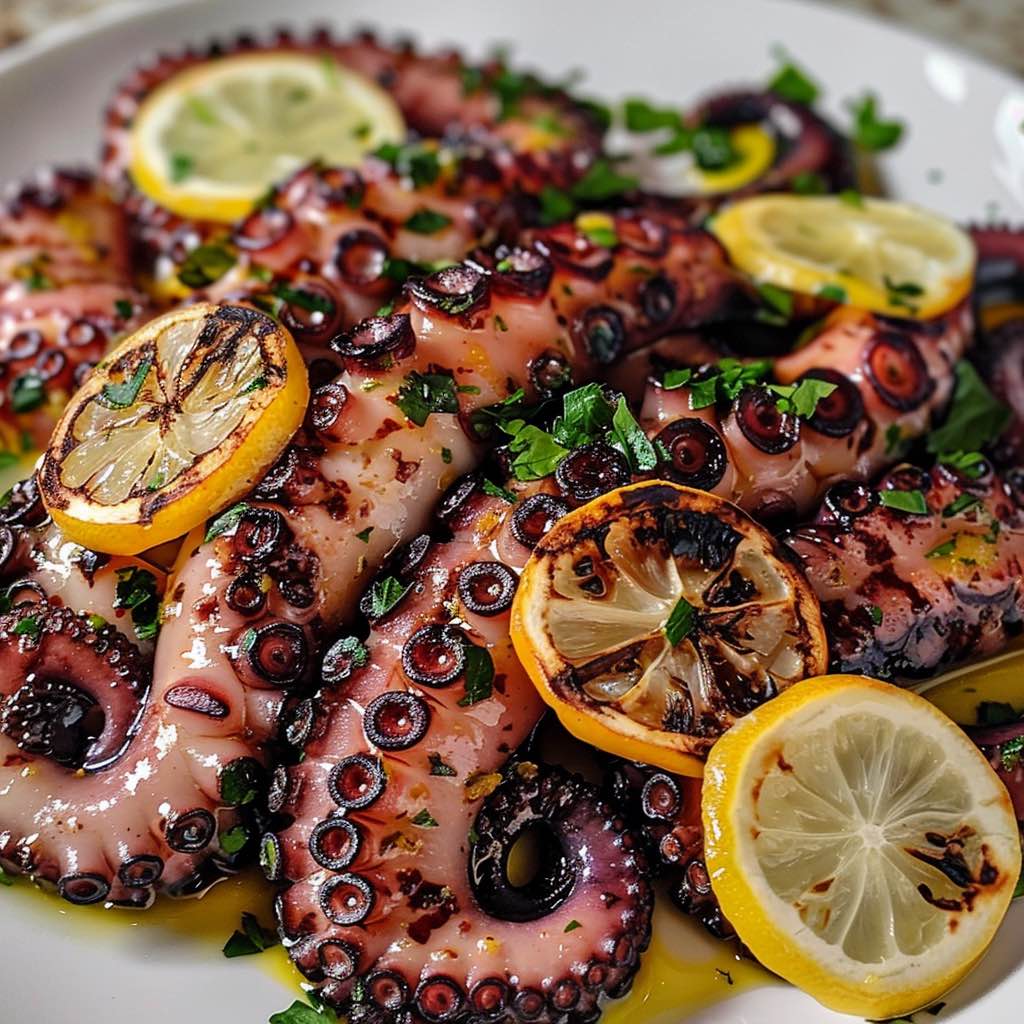
Simple Greek Grilled Octopus: Your Ultimate Guide to Perfect Tenderness & Flavor
Ah, the taste of the Aegean! Imagine this: the sun is warm on your skin, a gentle sea breeze carries the scent of salt and herbs, and before you sits a plate of the most incredible Greek grilled octopus. It’s tender, slightly charred, and dressed in nothing but brilliant, sunshine-bright lemon and fantastic olive oil. It seems like a dish reserved for seaside tavernas, doesn’t it? Well, I’m here to let you in on a little secret: creating this masterpiece at home is not only possible, but it’s also surprisingly simple.
This guide is your personal passport to grilling perfection. We’ll walk through every single step, from choosing your eight-legged friend to achieving those picture-perfect grill marks. Forget rubbery and tough; we’re chasing succulent, melt-in-your-mouth tenderness. So, grab your apron, and let’s embark on a culinary adventure to the heart of the Mediterranean.
Introduction & The Octopus Itself
Introduction: The Taste of the Aegean Sea
Picture yourself at a rustic wooden table, right by the water’s edge. The sound of lapping waves is your background music. Now, the waiter arrives with a plate that is a true work of art: glistening, charred tentacles drizzled with golden-green olive oil and sprinkled with aromatic oregano. That first bite? It’s a revelation—a smoky, oceanic flavor that’s simultaneously delicate and robust. Believe it or not, this isn’t a experience you have to book a flight to enjoy. With a few key techniques, you can recreate this magic in your own backyard.
Ultimately, the journey to incredible grilled octopus hinges on one thing: understanding how to transform a notoriously tough ingredient into something unbelievably tender. Furthermore, the beauty of Greek cuisine lies in its stunning simplicity. A few superb ingredients, treated with respect, are all you need. Consequently, this article will be your comprehensive guide, covering the selection of the perfect octopus, the crucial tenderizing process, a traditional marinade, masterful grilling techniques, and of course, the best ways to serve your creation.
Choosing Your Octopus: Fresh vs. Frozen
Alright, let’s get down to the first order of business: sourcing your main ingredient. Now, many home cooks feel intimidated by octopus, often believing that fresh is the only way to go. Surprisingly, that’s not necessarily the case.
The Case for Frozen Octopus
Here’s the inside scoop: most of the so-called “fresh” octopus you see at fish counters has actually been frozen previously. In fact, freezing works wonders for the texture. As the water inside the cells expands, it helps to break down the tough muscle fibers, naturally kick-starting the tenderizing process. Therefore, buying a high-quality frozen octopus is not a compromise; it’s often the smarter choice! It’s incredibly convenient, available year-round, and typically more consistent. Just remember to thaw it slowly and safely in your refrigerator for 24 hours before you plan to cook.
Selecting a Fresh Octopus (If Available)
If you are lucky enough to have access to a fantastic fishmonger with truly fresh octopus, by all means, go for it! You’ll want to use your senses for this. First, give it a sniff—it should smell clean and briny, like the ocean, with no overly fishy or ammonia-like notes. Next, the flesh should feel firm and resilient to the touch, not slimy or mushy. Finally, it should have a pleasant, glossy sheen. Don’t be shy; ask your fishmonger questions! They can often tell you exactly where it’s from and even advise on the best cooking methods.
Size and Variety Matters
Whether you choose fresh or frozen, size is a helpful thing to consider. For grilling, a medium-sized specimen, typically weighing between two to four pounds, is your golden ticket. Why is that? Well, larger ones can be a bit more challenging to cook evenly, while smaller ones might not provide those substantial, meaty pieces we’re after. The common octopus (Octopus vulgaris) is the variety you’ll most commonly find, and it is absolutely perfect for this authentic Greek recipe.
Preparation & Tenderizing Mastery
The Golden Rule: How to Tenderize Octopus
Let’s talk about the elephant in the room—or should I say, the octopus on the grill? Without a doubt, the single most important step in this entire process is achieving perfect tenderness. If you skip this, you’ll be chewing on something reminiscent of a bicycle tire. Conversely, if you get it right, you’ll be rewarded with a luxurious, buttery texture that cuts like a dream.
The science behind it is actually pretty straightforward. Octopus muscle is packed with tough collagen. However, when cooked low and slow, that collagen miraculously breaks down into soft, succulent gelatin. This transformation is non-negotiable. So, please, whatever you do, don’t try to throw a raw octopus directly on the grill! Tenderizing first is your absolute key to success.
Tenderizing Method 1: The Simmer
The traditional method, used for generations in Greek households, is a gentle simmer. It’s a forgiving process that fills your kitchen with the most wonderful aromas of the sea.
Step-by-Step Simmering Guide
-
Clean: Rinse your thawed octopus thoroughly under cold water. You can remove the beak (a hard mouthpart found at the center where the tentacles meet) and the ink sac if present, but most pre-cleaned frozen versions are ready to go.
-
Pot: Choose a pot large enough to accommodate the octopus comfortably.
-
Cook: Place the octopus in the pot; believe it or not, you don’t need any water to start! Alternatively, you can add a cup of water, a quartered onion, a couple of bay leaves, and a wine cork (a old wives’ tale that some swear by). The octopus will release its own water.
-
Simmer: Bring it to a boil, then immediately reduce the heat to the lowest possible setting. Let it simmer gently with the lid on for anywhere from 45 to 90 minutes. The cooking time depends entirely on the size and age of the octopus.
Tenderizing Method 2: The Pressure Cooker (Fastest Method)
Short on time? The pressure cooker is your new best friend. This modern marvel can dramatically speed up the process, yielding fantastically tender octopus in a fraction of the time.
Pressure Cooker Instructions
-
Place the cleaned octopus in the pot of your pressure cooker along with a few tablespoons of water or a couple of lemon slices for aroma.
-
Secure the lid and cook on high pressure for 15-20 minutes for a medium (2-3 lb) octopus. For a larger one, you might need 25 minutes.
-
Once the time is up, allow the pressure to release naturally for about 10-15 minutes before manually releasing any remaining pressure. This natural release is crucial for continued tenderizing.
Testing for Doneness
Regardless of your chosen method, the test for doneness is always the same. Carefully take a sharp paring knife and try to pierce the thickest part of a tentacle, right near the head. If the knife slides in with almost no resistance, like piercing soft butter, then congratulations—it’s perfectly done! On the other hand, if it still feels tough or rubbery, it needs more time. Be patient; it’s worth the wait.
Flavoring & The Grill
The Simple Greek Marinade: Olive Oil, Oregano, and Lemon
Now for the fun part: infusing flavor! Greek cooking is a celebration of simplicity, and the marinade for Greek grilled octopus is a perfect example. We’re not looking for a complicated list of ingredients; instead, we’re aiming for a few power players that complement, rather than overpower, the delicate taste of the sea.
The holy trinity here is fantastic Greek olive oil, earthy dried oregano, and zesty lemon. Together, they create a symphony of flavor that is unmistakably Mediterranean. To this base, we often add minced garlic for punch, a splash of red wine vinegar for acidity, and of course, coarse sea salt and freshly cracked black pepper.
Marinating for Maximum Flavor
Before you even think about marinating, there’s a critical step: drying. Once your octopus is cooked and slightly cool enough to handle, pat it completely dry with paper towels. Why is this so important? Well, moisture is the enemy of a good sear. A dry surface will caramelize and char beautifully on the grill, while a wet one will steam.
Now, you can marinate it whole, or for even more flavor penetration, use kitchen shears to separate the tentacles. Place them in a bowl and coat them generously with the marinade. While 30 minutes is sufficient, letting it hang out in the fridge for up to two hours will really allow those flavors to get cozy. However, I wouldn’t recommend much longer, as the acid can start to change the texture of the beautifully tenderized meat.
How to Grill Octopus to Perfection
This is it—the grand finale! Grilling is where we add that unforgettable smoky char. It’s a quick process, but it requires your full attention.
Prepping the Grill
First things first, you need serious heat. For a gas grill, turn all burners to high. For a charcoal grill, wait until the coals are glowing red and covered with a layer of white ash. Your grill grates must be screaming hot and meticulously clean. To prevent sticking, carefully oil the grates. Grab a pair of tongs and a folded paper towel dipped in a neutral, high-heat oil (like avocado or grapeseed). Then, swiftly wipe it over the grates.
The Grilling Process
Lay the tentacles on the hottest part of the grill, hearing that satisfying sizzle upon contact. Your goal is to crisp and char the outside without drying out the incredibly tender inside. Consequently, this means a short, intense blast of heat. Grill for 3-5 minutes per side, using your tongs to flip them once you see deep, dark grill marks. You might even press down gently to ensure even contact.
Getting Those Perfect Grill Marks
Here’s a pro tip: resist the urge to constantly move and fiddle with the octopus! Place it on the grill and let it be. In fact, if you try to move it too early, it will stubbornly stick to the grates. After a few minutes, it will naturally release when it’s ready to be flipped. This patience is the secret to achieving those gorgeous, professional-looking cross-hatched marks.
Serving, FAQs, and Conclusion
Serving Your Greek Grilled Octopus
The moment has arrived! Take your beautifully charred octopus off the grill and onto a serving platter. Traditionally, it’s served whole, allowing everyone to admire its glory before it’s sliced. Drizzle it with another generous glug of that high-quality extra virgin olive oil—this is not the time to be shy! Follow it up with a big squeeze of fresh lemon juice and a final sprinkle of dried oregano and flaky sea salt. The result is stunning in its simplicity.
Perfect Pairings: What to Serve With Grilled Octopus
While this grilled octopus is a superstar all on its own, it plays wonderfully with others. In Greece, it’s often served as a meze (appetizer) alongside other small dishes. Here are some classic pairings:
-
Horiatiki (Greek Village Salad): The crisp cucumbers, juicy tomatoes, red onion, and briny olives and feta cheese provide a fresh, acidic contrast to the rich, smoky octopus.
-
Skordalia: This powerful, garlicky potato or bread dip is a match made in heaven. Its creamy texture and sharp garlic flavor are the perfect companions.
-
Lemon-Roasted Potatoes: For a more substantial meal, serve the octopus atop a bed of potatoes roasted with lemon, oregano, and olive oil.
-
Grilled Vegetables: Bell peppers, zucchini, and red onion grilled alongside the octopus make for a complete and colorful plate.
To learn more about the history of this incredible dish, you can read about the history of octopus in Greek cuisine.
Frequently Asked Questions (FAQs)
Do you have to boil octopus before grilling?
Absolutely, yes! This is the most common mistake. Grilling alone will make it tough and chewy. The initial simmering or pressure-cooking step is 100% essential for breaking down the tough fibers and achieving that desired tender octopus texture. You cannot skip it.
How do you get octopus tender, not rubbery?
The key is low, slow, moist heat first. Whether you choose to simmer it on the stovetop or use a pressure cooker, you must cook it until a sharp knife pierces the thickest part with little to no resistance. Rushing this step is a surefire path to a rubbery result.
Can I cook octopus from frozen?
It’s highly not recommended for this recipe. Cooking from frozen will lead to extremely uneven results—the outside will be overcooked while the inside remains frozen and tough. Always thaw your octopus slowly in the refrigerator for at least 24 hours before cooking.
What is the best way to clean an octopus?
Most frozen octopus you buy today is already cleaned, which is a huge timesaver! If you have a whole, fresh one, you’ll need to remove the hard beak, located at the center of the tentacles where they meet the head. You should also remove the ink sac and any innards from the head cavity if they are present. Your fishmonger can often do this for you.
How long does cooked octopus last in the fridge?
Once cooked (and before grilling), the octopus will keep well in an airtight container in the refrigerator for 2 to 3 days. This is actually a fantastic make-ahead strategy. You can have it tenderized and ready to go, then simply marinate and grill it when your guests arrive for a quick and impressive meal.
Conclusion: Your Greek Feast Awaits
And there you have it! From a potentially daunting ingredient to a show-stopping, restaurant-quality dish. The path to perfect Simple Greek Grilled Octopus is clear: tenderize with patience, marinate with simplicity, and grill with confidence.
The final result is a true celebration of the Mediterranean spirit—unfussy, ingredient-driven, and meant to be shared with great company around your own table. So fire up that grill, and get ready for the compliments to roll in. You’ve just unlocked a culinary superpower.
Simple Greek Grilled Octopus
Description
Ingredients (4 servings):
-
2–3 lbs octopus (fresh or frozen, thawed)
-
1 small onion, quartered
-
2 bay leaves
-
3–4 whole peppercorns
-
½ cup extra virgin olive oil
-
3 tbsp fresh lemon juice
-
2 cloves garlic, minced
-
1 tsp dried oregano (Greek style)
-
Salt & freshly cracked black pepper
-
Lemon wedges, for serving
Instructions:
-
Tenderize Octopus – If using fresh octopus, lightly pound with a meat mallet to help tenderize.
-
Simmer – Place octopus in a large pot with onion, bay leaves, and peppercorns. Add just enough water to cover. Simmer gently over medium-low heat until tender (45–60 minutes). Drain and let cool slightly.
-
Marinate – Cut tentacles apart. In a bowl, whisk olive oil, lemon juice, garlic, oregano, salt, and pepper. Toss octopus in marinade and let sit 30 minutes.
-
Grill – Preheat grill (or grill pan) to high. Grill octopus 2–3 minutes per side until charred and smoky.
-
Serve – Drizzle with extra olive oil and lemon juice. Garnish with fresh oregano or parsley. Serve with crusty bread or alongside Greek salad.