
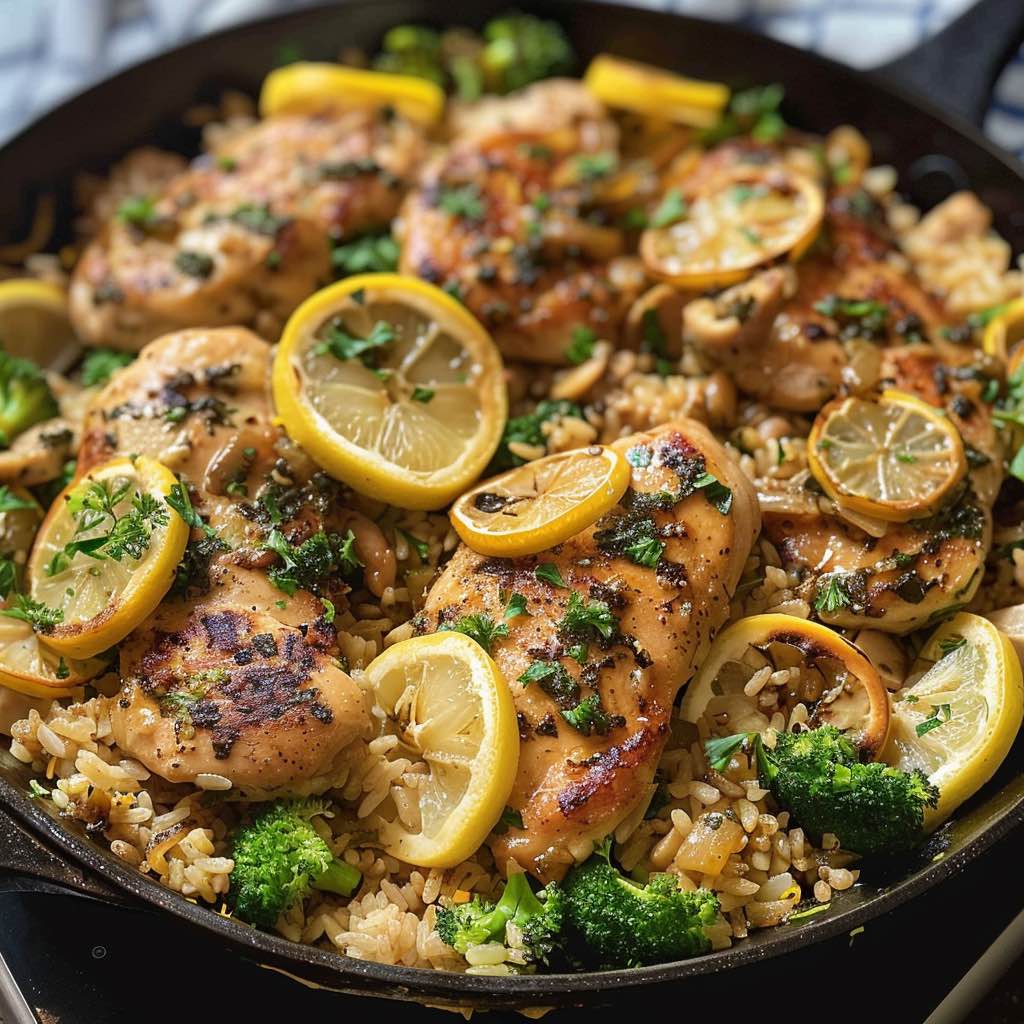
Skillet Lemon Chicken & Rice
Introduction
Skillet Lemon Chicken & Rice combines tender, juicy chicken with perfectly cooked rice in one convenient pan. This bright, flavorful dish delivers restaurant-quality results with minimal cleanup. Furthermore, the vibrant lemon flavor creates a refreshing meal that works perfectly for busy weeknights.
This one-pan wonder takes approximately 45 minutes from start to finish. Additionally, the recipe requires simple ingredients you likely have in your pantry. The lemon juice and zest create a zesty sauce that infuses both the chicken and rice with incredible flavor.
Whether you’re cooking for your family or meal prepping for the week, this skillet lemon chicken and rice recipe delivers consistent, delicious results every time.
What Makes Skillet Lemon Chicken & Rice Special
One-Pan Convenience
This recipe simplifies dinner preparation significantly. Cooking everything in a single skillet reduces both prep time and cleanup. Consequently, you spend less time in the kitchen and more time enjoying your meal.
The one-pan method also allows the flavors to meld together beautifully. As the rice cooks, it absorbs the savory chicken juices and bright lemon essence. Therefore, every bite delivers complex, layered flavors.
Bright, Fresh Flavors
The lemon creates a refreshing contrast to the savory chicken. Fresh lemon juice provides acidity that balances the richness of the dish. Meanwhile, lemon zest adds aromatic oils that enhance the overall flavor profile.
The citrus notes make this dish perfect for any season. However, it particularly shines during spring and summer months when you crave lighter fare.
Budget-Friendly Ingredients
This skillet lemon chicken rice recipe uses affordable, accessible ingredients. Chicken thighs or breasts provide protein without breaking the bank. Similarly, rice serves as an economical base that stretches the meal further.
Most recipes yield 4-6 servings, making it ideal for families. Additionally, the leftovers reheat beautifully for next-day lunches.
Nutritional Balance
Each serving provides a complete meal with protein, carbohydrates, and vegetables. The chicken delivers essential amino acids and nutrients. Meanwhile, the rice offers energy and fiber, especially when using brown rice.
Adding vegetables like spinach, peas, or bell peppers boosts the nutritional value. Consequently, you create a well-rounded meal in one pan.
Essential Ingredients for Perfect Results
Chicken Selection
Boneless, skinless chicken thighs: These remain moist and tender during cooking. They contain more flavor than chicken breasts. Moreover, they’re harder to overcook.
Boneless, skinless chicken breasts: These offer a leaner option with less fat. However, monitor cooking time carefully to prevent dryness. Cut larger breasts in half for even cooking.
Rice Varieties
Long-grain white rice: This cooks quickly and produces fluffy results. It absorbs the lemon-chicken broth perfectly. Additionally, it complements the bright flavors well.
Jasmine rice: This fragrant variety adds subtle floral notes. It pairs beautifully with the citrus elements. Furthermore, it creates a more aromatic dish.
Brown rice: This provides more fiber and nutrients. However, it requires longer cooking time and more liquid. Adjust the recipe accordingly for best results.
Citrus Components
Fresh lemons: Always use fresh lemons rather than bottled juice. Fresh juice provides superior flavor and brightness. Additionally, you need the zest for maximum impact.
Plan to use 2-3 medium lemons. You’ll need both juice and zest. Therefore, zest the lemons before juicing them.
Aromatics and Seasonings
-
Garlic cloves (4-5 minced)
-
Yellow onion (1 medium, diced)
-
Fresh thyme (2-3 sprigs)
-
Dried oregano (1 teaspoon)
-
Paprika (1 teaspoon)
-
Salt and black pepper
-
Red pepper flakes (optional)
Cooking Liquids
Chicken broth: Use low-sodium broth to control salt levels. The broth provides depth and helps cook the rice. Moreover, it creates the base for the flavorful sauce.
Water: Some recipes combine broth with water. This dilutes the saltiness while maintaining flavor. Additionally, it’s more economical.
Additional Ingredients
-
Olive oil (2-3 tablespoons)
-
Butter (2 tablespoons, optional)
-
Fresh parsley (for garnish)
-
Lemon slices (for presentation)
Step-by-Step Cooking Instructions
Preparation Phase
Prepare the chicken: Pat the chicken pieces dry with paper towels. This ensures proper browning. Next, season both sides generously with salt and pepper.
Prep aromatics: Mince the garlic finely. Dice the onion into small pieces. Additionally, zest the lemons before juicing them.
Measure liquids: Combine chicken broth and lemon juice in a measuring cup. Set aside for easy access during cooking. Furthermore, have your rice measured and ready.
Cooking the Chicken
Heat 2 tablespoons of olive oil in a large skillet over medium-high heat. The skillet should be at least 12 inches in diameter. Once the oil shimmers, add the chicken pieces.
Brown the chicken: Cook for 4-5 minutes per side without moving them. They should develop a golden-brown crust. However, they don’t need to cook through completely at this stage.
Remove the browned chicken to a plate. Don’t worry if the centers remain slightly pink. They’ll finish cooking with the rice later. Moreover, leaving them slightly undercooked prevents dryness.
Building the Flavor Base
Reduce heat to medium. Add another tablespoon of olive oil if the pan looks dry. Then, add the diced onion to the skillet.
Sauté the onion: Cook for 3-4 minutes until softened and translucent. Stir occasionally to prevent burning. The onions will pick up the flavorful brown bits from the chicken.
Add garlic: Stir in the minced garlic and cook for 30-60 seconds. The garlic should become fragrant but not brown. Additionally, add the dried oregano and paprika at this point.
Cooking the Rice
Toast the rice: Add the uncooked rice to the skillet. Stir constantly for 1-2 minutes. The rice should become slightly translucent around the edges. This toasting step enhances the nutty flavor.
Add liquids: Pour in the chicken broth-lemon juice mixture. Stir to combine everything evenly. Then, add the lemon zest and fresh thyme sprigs.
Bring to a boil: Increase heat to medium-high. Let the mixture come to a full boil. This usually takes 2-3 minutes.
Simmering and Finishing
Nestle the chicken: Once boiling, reduce heat to low. Place the browned chicken pieces on top of the rice. Pour any accumulated juices from the plate over the chicken.
Cover and simmer: Place a tight-fitting lid on the skillet. Cook undisturbed for 20-25 minutes. The rice should absorb all the liquid and become tender.
Check for doneness: After 20 minutes, carefully lift the lid. The rice should be fluffy and the liquid absorbed. Additionally, check that the chicken reaches 165°F internally.
Rest the dish: Remove from heat and let sit covered for 5 minutes. This allows the rice to finish steaming. Moreover, the chicken juices redistribute for maximum tenderness.
Final Touches
Remove the thyme sprigs before serving. Squeeze fresh lemon juice over the top. Garnish generously with chopped fresh parsley. Additionally, add lemon slices for visual appeal.
Fluff the rice gently with a fork. Serve the skillet lemon chicken and rice directly from the pan. This maintains the beautiful presentation and keeps everything warm.
Pro Tips for the Best Lemon Chicken and Rice
Achieving Perfect Chicken
Don’t skip the browning: The caramelized crust adds significant flavor. Moreover, it creates visual appeal. However, avoid moving the chicken too much while browning.
Use a meat thermometer: Check the internal temperature for food safety. Chicken should reach 165°F. Consequently, you avoid both undercooked and overcooked meat.
Let chicken rest: The 5-minute rest period allows juices to redistribute. This results in more tender, juicy chicken. Therefore, resist the urge to serve immediately.
Rice Cooking Secrets
Measure accurately: Use the correct rice-to-liquid ratio. Generally, use 1 cup rice to 2 cups liquid. However, check your specific rice package for recommendations.
Don’t lift the lid: Resist checking the rice while it cooks. Lifting the lid releases steam and disrupts cooking. Consequently, your rice may turn out undercooked or unevenly cooked.
Adjust for rice type: Brown rice needs more liquid and longer cooking time. Increase liquid by 1/2 cup and cook for 35-40 minutes. Meanwhile, instant rice cooks much faster.
Flavor Enhancement Techniques
Use fresh herbs: Fresh thyme, oregano, or basil elevate the dish significantly. Dried herbs work in a pinch. However, fresh herbs provide more vibrant flavor.
Balance the acidity: Taste before serving and adjust lemon juice as needed. Some prefer more citrus flavor. Conversely, others find it too tangy and prefer less.
Add butter: Stirring in 1-2 tablespoons of butter at the end creates richness. The butter also helps achieve a silky sauce. Furthermore, it adds a luxurious mouthfeel.
Equipment Recommendations
Choose the right skillet: A 12-inch skillet with a lid works best. The pan should have high sides to prevent overflow. Additionally, a heavy-bottomed pan distributes heat evenly.
Use oven-safe options: Some recipes finish in the oven for more even cooking. Therefore, an oven-safe skillet provides versatility. Cast iron skillets work particularly well.
Variations and Customization Options
Vegetable Additions
Spinach or kale: Add 2-3 cups of fresh greens during the last 5 minutes. They wilt perfectly in the residual heat. Moreover, they boost the nutritional value significantly.
Peas: Stir in 1 cup of frozen peas when you add the chicken back. They cook perfectly with the rice. Additionally, they add pop of color and sweetness.
Bell peppers: Dice one red or yellow bell pepper. Sauté with the onions at the beginning. Consequently, they become tender and sweet.
Artichoke hearts: Add quartered artichoke hearts for Mediterranean flair. They complement the lemon beautifully. Furthermore, they add interesting texture.
Asparagus: Cut asparagus into 1-inch pieces. Add during the last 10 minutes of cooking. They remain crisp-tender and vibrant green.
Protein Variations
Bone-in chicken: Use bone-in, skin-on chicken thighs for more flavor. However, increase cooking time to 30-35 minutes. The bones add richness to the dish.
Chicken sausage: Slice cooked chicken sausage and add with the rice. This creates a heartier meal. Moreover, it introduces different flavor profiles.
Shrimp: Replace chicken with large shrimp for a seafood version. Add shrimp during the last 5 minutes of cooking. They cook quickly and become tender.
Herb and Spice Combinations
Mediterranean style: Use oregano, basil, and rosemary. Add kalamata olives and sun-dried tomatoes. This creates a Greek-inspired version.
Italian herbs: Combine Italian seasoning with garlic and parmesan. Finish with fresh basil and mozzarella. Therefore, you get an Italian-inspired dish.
Cajun spices: Season with Cajun or Creole seasoning. Add diced tomatoes and okra. This creates a Southern-inspired variation.
Herbes de Provence: Use this French herb blend for elegant flavor. Add green beans and pearl onions. Consequently, you achieve French country cooking vibes.
Dairy Additions
Parmesan cheese: Stir in grated Parmesan during the last few minutes. It melts into the rice and creates creaminess. Moreover, it adds savory, umami notes.
Feta cheese: Crumble feta over the finished dish. The tangy cheese complements the lemon perfectly. Additionally, it adds a Mediterranean touch.
Cream cheese: Add a few tablespoons for ultra-creamy rice. Stir until fully melted and incorporated. This creates a richer, more indulgent version.
Serving Suggestions and Pairings
Side Dishes
Green salad: A simple mixed green salad with vinaigrette works perfectly. The fresh vegetables provide contrast. Moreover, the acidity complements the lemon chicken.
Roasted vegetables: Serve alongside roasted broccoli, carrots, or Brussels sprouts. The caramelized vegetables add different textures. Furthermore, they round out the meal nutritionally.
Crusty bread: Warm, crusty bread soaks up the flavorful pan sauce. Garlic bread works particularly well. Additionally, it makes the meal more filling.
Greek salad: Combine tomatoes, cucumbers, red onion, and feta. Dress with olive oil and lemon juice. This creates a cohesive Mediterranean meal.
Beverage Pairings
Iced tea: Lemon iced tea complements the citrus flavors naturally. Sweeten to taste or serve unsweetened. Moreover, it’s refreshing and family-friendly.
Lemonade: Fresh lemonade enhances the lemon theme. Serve it cold over ice. Additionally, herb-infused lemonades add sophistication.
Sparkling water: Add lemon or lime slices to sparkling water. This creates a light, refreshing beverage. Furthermore, it cleanses the palate between bites.
Fruit-infused water: Try cucumber-mint or strawberry-basil combinations. These complement the fresh, bright flavors. Consequently, they make the meal feel special.
Presentation Ideas
Family-style serving: Bring the skillet directly to the table. This creates a rustic, inviting presentation. Moreover, it keeps the food hot longer.
Individual plating: Serve portions on individual plates. Arrange chicken pieces over rice mounds. Garnish each plate with lemon slices and fresh herbs.
Buffet setup: Keep the skillet warm on a trivet. Let guests serve themselves. Additionally, offer garnishes on the side for customization.
Storage and Reheating Guidelines
Proper Storage
Cool quickly: Let the lemon chicken and rice cool to room temperature. However, don’t leave it out longer than 2 hours. This prevents bacterial growth.
Use airtight containers: Transfer leftovers to airtight containers. Glass containers work best for reheating. Moreover, they don’t absorb odors or stains.
Refrigerator storage: Store properly sealed containers in the refrigerator. The dish keeps well for 3-4 days. Label containers with the date for easy tracking.
Separate storage: Consider storing chicken and rice separately. This allows for different reheating methods. Additionally, it extends the quality of each component.
Freezing Instructions
Freeze in portions: Divide the cooled dish into meal-sized portions. This makes thawing and reheating easier. Furthermore, it reduces food waste.
Proper wrapping: Use freezer-safe containers or heavy-duty freezer bags. Remove as much air as possible. This prevents freezer burn effectively.
Freezer life: Frozen skillet lemon chicken rice lasts 2-3 months. Beyond this, quality deteriorates. Therefore, label containers with freezing dates.
Thawing safely: Thaw overnight in the refrigerator. Never thaw at room temperature. This ensures food safety standards.
Reheating Methods
Stovetop reheating: Place in a skillet with 2-3 tablespoons of broth. Cover and heat over medium-low heat. Stir occasionally until heated through completely.
Microwave method: Add a splash of broth or water to the dish. Cover with a damp paper towel. Heat in 1-minute intervals, stirring between each.
Oven reheating: Preheat oven to 350°F. Place in an oven-safe dish with added liquid. Cover with foil and heat for 15-20 minutes.
Add fresh lemon: Squeeze fresh lemon juice over reheated portions. This revives the bright flavors. Additionally, add fresh herbs for improved appearance.
Nutritional Information
Per Serving Breakdown
A typical serving of skillet lemon chicken and rice provides approximately:
-
Calories: 380-420 calories
-
Protein: 32-38 grams
-
Carbohydrates: 42-48 grams
-
Fat: 8-12 grams
-
Fiber: 2-3 grams
-
Sodium: 450-650 mg
These values vary based on specific ingredients used. Additionally, portion sizes affect nutritional content significantly.
Health Benefits
Lean protein: Chicken provides essential amino acids. It supports muscle maintenance and growth. Moreover, it keeps you feeling satisfied longer.
Complex carbohydrates: Rice offers sustained energy throughout the day. Brown rice provides more fiber and nutrients. Consequently, it supports digestive health.
Vitamin C: Fresh lemon juice delivers immune-boosting vitamin C. This powerful antioxidant supports overall health. Furthermore, it enhances iron absorption from the chicken.
Low in saturated fat: This dish contains minimal saturated fat. Therefore, it supports heart health. Additionally, it fits into balanced eating patterns.
Dietary Modifications
Lower sodium: Use low-sodium or no-salt-added broth. Season with herbs instead of salt. This significantly reduces sodium content.
Reduced fat: Use skinless chicken breast instead of thighs. Reduce olive oil by half. Consequently, you cut fat and calories substantially.
Gluten-free: This recipe is naturally gluten-free when using appropriate broth. Always check broth labels for hidden gluten. Additionally, ensure all seasonings are certified gluten-free.
Dairy-free: The basic recipe contains no dairy products. Skip optional butter or cheese additions. Therefore, it works for dairy-free diets naturally.
Common Mistakes to Avoid
Chicken Cooking Errors
Overcrowding the pan: Place chicken pieces with space between them. Overcrowding causes steaming instead of browning. Consequently, you lose flavor and texture.
Moving chicken too soon: Let the chicken develop a crust before flipping. Moving it prematurely causes sticking. Moreover, you won’t achieve proper browning.
Overcooking: Monitor cooking time carefully to prevent dry chicken. Use a thermometer for accuracy. Therefore, you achieve perfectly cooked, juicy results.
Rice Preparation Mistakes
Wrong liquid ratio: Measure liquids accurately for proper rice texture. Too much liquid creates mushy rice. Conversely, too little leaves it undercooked.
Lifting the lid frequently: Each time you lift the lid, steam escapes. This disrupts the cooking process. Consequently, rice cooks unevenly.
Insufficient resting time: Let the rice rest covered after cooking. This completes the steaming process. Moreover, it prevents gummy or sticky texture.
Flavor Balance Issues
Too much lemon: Start with less lemon juice than you think you need. You can always add more after tasting. However, you can’t remove excess citrus.
Underseasoning: Taste and adjust seasonings before serving. Rice absorbs significant amounts of salt. Therefore, you may need to season more than expected.
Forgetting to zest: Lemon zest provides essential oils and flavor. Don’t skip this step. Additionally, zest before juicing for easier preparation.
Equipment Problems
Pan too small: Use at least a 12-inch skillet for proper cooking. Smaller pans cause uneven heat distribution. Moreover, ingredients won’t fit comfortably.
Weak lid seal: Ensure your lid fits tightly. Steam escapes through gaps in loose lids. Consequently, rice doesn’t cook properly.
Incorrect heat level: Monitor heat carefully throughout cooking. Too high causes burning. Meanwhile, too low results in undercooked food.
Frequently Asked Questions
Can I make skillet lemon chicken and rice ahead of time?
Yes, you can prepare this dish up to one day ahead. Cook completely and store in the refrigerator. Reheat gently with added liquid before serving. However, the rice texture is best when freshly made.
What type of rice works best for this recipe?
Long-grain white rice produces the best results. It stays fluffy and separate after cooking. Jasmine rice also works wonderfully. However, avoid short-grain rice as it becomes too sticky.
How do I prevent the rice from burning on the bottom?
Use medium-low to low heat after bringing to a boil. Ensure the liquid is evenly distributed. Additionally, don’t stir the rice once it starts cooking. A heavy-bottomed pan also helps distribute heat evenly.
Can I use chicken breasts instead of thighs?
Absolutely, chicken breasts work well in this recipe. However, they cook faster and can dry out more easily. Therefore, monitor the internal temperature carefully. Pound breasts to even thickness for uniform cooking.
What can I substitute for fresh lemon juice?
While fresh lemon juice is ideal, you can use bottled juice. However, the flavor won’t be as bright. Additionally, you’ll miss the aromatic oils from the zest. Consider adding extra herbs to compensate.
Is this skillet lemon chicken rice recipe gluten-free?
Yes, this recipe is naturally gluten-free. However, always check your chicken broth label. Some brands contain gluten or wheat. Additionally, verify all seasonings are certified gluten-free.
How do I know when the chicken is fully cooked?
Use a meat thermometer to check internal temperature. Chicken should reach 165°F at the thickest part. Moreover, the juices should run clear when pierced. Never rely on color alone.
Can I make this recipe in an Instant Pot?
Yes, you can adapt this recipe for pressure cooking. Brown the chicken using the sauté function first. Add rice and liquids, then pressure cook on high for 10 minutes. Let pressure release naturally for best results.
Conclusion
Skillet lemon chicken and rice delivers incredible flavor with minimal effort. This one-pan meal combines tender chicken with fluffy rice and bright citrus notes. Moreover, the recipe requires simple ingredients and straightforward techniques.
The versatility of this dish makes it perfect for any occasion. Whether feeding your family on a busy weeknight or entertaining guests, it impresses consistently. Additionally, the leftovers taste delicious for days.
The combination of protein, carbohydrates, and vibrant flavors creates a satisfying meal. Furthermore, the lemon chicken and rice absorb the savory pan juices beautifully. Each bite delivers complex, well-balanced flavors.
Remember to use fresh lemons for the best results. Don’t skip the browning step for the chicken. Moreover, let the dish rest before serving for optimal texture.
This skillet lemon chicken rice recipe proves that simple ingredients can create extraordinary meals. The bright, fresh flavors make it a year-round favorite. Consequently, it deserves a permanent place in your recipe rotation.
Skillet Lemon Chicken & Rice
Description
Skillet Lemon Chicken & Rice
Ingredients
-
4 bone-in, skin-on chicken thighs (or breasts if preferred)
-
2 tbsp olive oil
-
Salt & black pepper, to taste
-
1 small onion, finely chopped
-
3 cloves garlic, minced
-
1 cup long-grain rice (jasmine or basmati works great)
-
2 cups chicken broth
-
Zest and juice of 1 lemon
-
½ tsp paprika
-
½ tsp dried oregano (or thyme)
-
2 tbsp butter
-
2 tbsp fresh parsley, chopped (for garnish)
-
Lemon slices, for serving
Instructions
-
Sear the Chicken:
-
Pat chicken dry, season generously with salt and pepper.
-
Heat olive oil in a large skillet over medium-high heat.
-
Sear chicken skin-side down until golden brown (about 5–6 minutes), flip and cook another 3–4 minutes. Remove and set aside.
-
-
Cook the Aromatics:
-
In the same skillet, add onion and cook until softened.
-
Stir in garlic and cook for 30 seconds.
-
-
Toast the Rice:
-
Add rice, butter, paprika, and oregano. Stir for 1–2 minutes until rice is lightly toasted.
-
-
Add Liquid & Chicken:
-
Stir in chicken broth, lemon juice, and lemon zest.
-
Nestle chicken pieces back into the skillet on top of the rice.
-
-
Simmer:
-
Bring to a boil, then reduce heat to low.
-
Cover and cook for 20–25 minutes, until rice is fluffy and chicken reaches 165°F (74°C) internal temp.
-
-
Finish & Serve:
-
Remove from heat, let rest 5 minutes.
-
Garnish with parsley and lemon slices.
-