
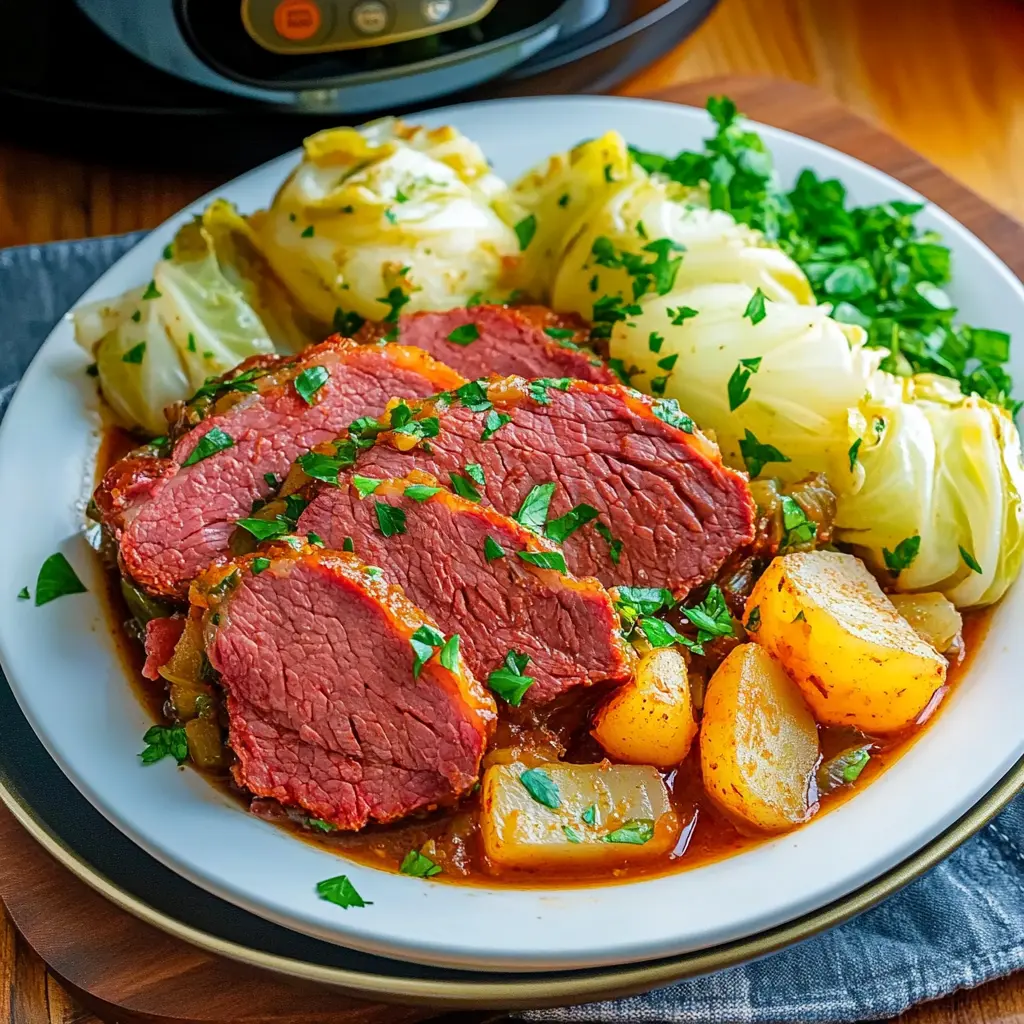
Slow Cooker Corned Beef and Cabbage: The Ultimate Comfort Food Guide
Nothing beats the aroma of tender Slow Cooker Corned Beef and Cabbage filling your home on a cool evening. This traditional dish transforms tough brisket into melt-in-your-mouth perfection with minimal effort. Whether you’re celebrating St. Patrick’s Day or simply craving hearty comfort food, this slow cooker method delivers restaurant-quality results every time. The best part? Your slow cooker does all the work while you go about your day.
What Is Corned Beef and Cabbage?
Corned beef and cabbage represents a classic one-pot meal with deep cultural roots. The dish features beef brisket cured in a salt brine with pickling spices, slowly cooked until tender alongside cabbage and root vegetables.
The History Behind the Dish
Irish-American immigrants popularized this combination in the United States during the 19th century. Salt-cured beef became an affordable protein alternative that reminded them of home. The addition of cabbage and potatoes created a complete, budget-friendly meal.
Understanding Corned Beef
The term “corned” refers to the large grains of rock salt used in the curing process. These salt “corns” preserve the meat and give it its distinctive pink color and savory flavor. Most grocery stores sell pre-brined corned beef brisket with an included seasoning packet.
The curing process typically takes 5-7 days. Fortunately, you can purchase ready-to-cook corned beef year-round. The meat develops a unique flavor profile from spices like coriander, mustard seeds, peppercorns, and bay leaves.
Why Use a Slow Cooker for This Recipe?
A slow cooker transforms tough corned beef brisket into fork-tender perfection through low, steady heat. This hands-off cooking method offers numerous advantages over stovetop or oven preparations.
Benefits of Slow Cooking
The extended cooking time breaks down tough muscle fibers and connective tissue. This results in incredibly tender meat that practically falls apart. Additionally, the enclosed environment keeps moisture locked in, preventing the beef from drying out.
Slow cookers maintain consistent temperature throughout the cooking process. This eliminates the need for constant monitoring or temperature adjustments. You can start your meal in the morning and return home to a fully cooked dinner.
Energy Efficiency
Slow cookers use significantly less electricity than conventional ovens. The low wattage combined with efficient heat retention makes them economical for long cooking sessions. Plus, they won’t heat up your kitchen during warmer months.
Flavor Development
The prolonged cooking time allows flavors to meld beautifully. Spices infuse the meat thoroughly while vegetables absorb the savory cooking liquid. The result is a deeply flavorful dish with complex taste layers.
Essential Ingredients and Equipment
Gathering quality ingredients ensures the best possible outcome for your slow cooker corned beef and cabbage. Here’s everything you need to create this comforting meal.
Main Ingredients
Corned Beef Brisket: Choose a 3-4 pound flat cut or point cut brisket. The flat cut offers more uniform slices, while the point cut provides more marbling and flavor.
Green Cabbage: One medium head (about 2 pounds) cut into wedges. The cabbage will shrink considerably during cooking.
Root Vegetables: Traditional additions include:
-
1.5 pounds baby potatoes or quartered Yukon gold potatoes
-
1 pound carrots, peeled and cut into 3-inch pieces
-
2-3 parsnips, peeled and cut into chunks (optional)
-
1 large onion, quartered
Seasonings and Liquids
Pickling Spice Packet: Most corned beef comes with a seasoning packet. If not, create your own blend with peppercorns, mustard seeds, coriander seeds, bay leaves, and allspice.
Liquid Base: You’ll need approximately 4 cups of liquid. Options include:
-
Beef broth or stock
-
Vegetable broth
-
Water
-
Apple cider vinegar (2 tablespoons adds tanginess)
Additional Seasonings: Fresh garlic cloves, whole peppercorns, and extra bay leaves enhance depth of flavor.
Equipment Needed
A 6-quart slow cooker accommodates a standard-sized brisket with vegetables comfortably. Smaller models may require reducing ingredient quantities. You’ll also need a sharp knife, cutting board, and measuring cups.
Step-by-Step Cooking Instructions
Follow these detailed instructions to achieve perfect slow cooker corned beef and cabbage every time. The process is straightforward and requires minimal active preparation.
Preparation Phase
Step 1: Rinse the Brisket
Remove the corned beef from its packaging and rinse thoroughly under cold water. This removes excess surface salt from the curing process. Pat the meat dry with paper towels.
Step 2: Layer the Vegetables
Place the quartered onion at the bottom of your slow cooker. This creates a flavorful base and prevents the meat from sticking. Add the potatoes, carrots, and parsnips in an even layer.
Step 3: Season and Position the Meat
Sprinkle the pickling spice packet over the vegetables. Place the corned beef fat-side up on top of the vegetables. The fat will baste the meat as it cooks, keeping it moist and flavorful.
Cooking Process
Step 4: Add Liquid
Pour beef broth or water around the sides of the slow cooker until the liquid reaches about halfway up the meat. Avoid pouring directly over the brisket. Add garlic cloves and bay leaves to the liquid.
Step 5: Set Temperature and Time
Cover the slow cooker with its lid. Cook on LOW for 8-10 hours or HIGH for 4-5 hours. The low setting produces more tender results. Check out our guide on [insert link] for more slow cooker timing tips.
Step 6: Add Cabbage
During the final 2-3 hours of cooking, nestle cabbage wedges into the liquid around the meat. The cabbage cooks quickly, so adding it later prevents mushiness.
Final Steps
Step 7: Check for Doneness
The corned beef is ready when it reaches an internal temperature of 145°F and easily pulls apart with a fork. The vegetables should be tender but not falling apart.
Step 8: Rest and Slice
Transfer the brisket to a cutting board and let it rest for 10-15 minutes. This allows juices to redistribute throughout the meat. Slice against the grain for maximum tenderness.
Timing and Temperature Guidelines
Proper timing ensures perfectly tender meat without overcooking the vegetables. Understanding temperature settings helps you plan your meal preparation effectively.
Low Setting Timeline
-
8-10 hours: Ideal for starting in the morning before work
-
Hour 0-6: Meat gradually tenderizes
-
Hour 6-8: Add cabbage wedges
-
Hour 8-10: Final cooking and flavor melding
High Setting Timeline
-
4-5 hours: Perfect for afternoon preparation
-
Hour 0-3: Rapid tenderization occurs
-
Hour 3-4: Add cabbage during this window
-
Hour 4-5: Complete cooking process
Temperature Considerations
The USDA recommends cooking corned beef to a minimum internal temperature of 145°F for food safety. However, the connective tissue fully breaks down around 190-205°F. Your slow cooker maintains temperatures between 200-300°F depending on the setting.
Adjusting for Different Slow Cookers
Some models run hotter than others. If your slow cooker tends to run hot, reduce cooking time by 30-60 minutes. Conversely, older models may require additional time.
Choosing the Best Cut of Corned Beef
Understanding corned beef cuts helps you select the right brisket for your preferences. Each cut offers distinct characteristics that affect texture and presentation.
Flat Cut vs. Point Cut
Flat Cut (First Cut)
-
Leaner with less marbling
-
More uniform thickness
-
Easier to slice neatly
-
Slightly higher price point
-
Best for sandwiches and presentation
Point Cut (Second Cut)
-
More intramuscular fat
-
Irregular shape
-
Richer, more robust flavor
-
Better moisture retention
-
Ideal for shredding or casual serving
Size Considerations
A 3-4 pound brisket serves 6-8 people comfortably. Plan for approximately 8 ounces of cooked meat per person. Larger briskets (5+ pounds) may not fit in standard 6-quart slow cookers.
Quality Indicators
Look for corned beef with:
-
Bright pink color throughout
-
Minimal grey or brown areas
-
Intact seasoning packet
-
Recent sell-by date
-
Vacuum-sealed packaging
Avoid packages with excessive liquid or torn packaging, as these indicate potential quality issues.
Vegetable Preparation Tips
Properly prepared vegetables complement the corned beef perfectly. These techniques ensure everything finishes cooking simultaneously with optimal texture.
Cabbage Cutting Techniques
Cut the cabbage into 6-8 wedges, leaving the core intact. The core holds the leaves together during cooking. Remove any damaged outer leaves first. Rinse the wedges under cold water to remove dirt.
Root Vegetable Sizing
Cut potatoes and carrots into similar-sized pieces for even cooking. Aim for 2-3 inch chunks. Baby potatoes can remain whole if they’re golf-ball sized or smaller.
Preventing Mushiness
Adding vegetables at different stages prevents overcooking:
-
Start of cooking: Onions, potatoes, carrots, parsnips
-
Last 2-3 hours: Cabbage wedges
-
Last 30 minutes: Delicate vegetables like bell peppers (if using)
Vegetable Variations
Consider these alternatives or additions:
-
Turnips add earthy sweetness
-
Brussels sprouts provide nutty flavor
-
Celery root offers subtle complexity
-
Sweet potatoes create interesting contrast
Flavor Variations and Add-Ins
Customize your slow cooker corned beef and cabbage with these creative variations. Small adjustments can dramatically change the dish’s flavor profile.
Sweetness Boosters
Add natural sweetness with:
-
2 tablespoons brown sugar
-
1/4 cup apple cider
-
2 tablespoons honey
-
Diced apples (Granny Smith or Honeycrisp)
Tangy Enhancements
Increase acidity for brightness:
-
3 tablespoons apple cider vinegar
-
Juice of one lemon
-
2 tablespoons whole grain mustard
-
Pickled pepper brine
Aromatic Additions
Deepen flavor complexity with:
-
Fresh thyme sprigs
-
Rosemary branches
-
Star anise pods
-
Juniper berries
-
Whole cloves
Heat Options
Add gentle warmth without overwhelming the dish:
-
Red pepper flakes (1/2 teaspoon)
-
Whole dried chilies
-
Fresh ginger slices
-
Black peppercorns (crushed)
Common Mistakes to Avoid
Even simple recipes can go wrong without proper attention. Avoid these frequent pitfalls to ensure success with your slow cooker corned beef and cabbage.
Overcrowding the Slow Cooker
Filling the slow cooker beyond 2/3 capacity prevents proper heat circulation. This leads to uneven cooking and potentially undercooked food. If necessary, use a larger slow cooker or reduce ingredient quantities.
Not Rinsing the Meat
The curing brine makes corned beef extremely salty. Failing to rinse removes excess surface salt that can make your dish unpalatably salty. Always rinse thoroughly under cold running water.
Adding All Vegetables at Once
Cabbage cooks much faster than root vegetables. Adding everything simultaneously results in mushy cabbage by the time the potatoes finish cooking. Stagger your vegetable additions based on cooking times.
Opening the Lid Repeatedly
Each time you remove the lid, you release heat and extend cooking time by 15-20 minutes. Resist the urge to check constantly. Only open when adding cabbage or checking for doneness near the end.
Slicing with the Grain
Cutting parallel to the muscle fibers creates chewy, tough meat. Always identify the grain direction and slice perpendicular to it. This shortens the fibers and ensures tender bites.
Using Insufficient Liquid
The liquid creates steam that cooks the meat and vegetables. Too little liquid can cause burning or uneven cooking. Maintain liquid at least halfway up the meat throughout cooking.
Storage and Reheating Methods
Proper storage preserves the quality and safety of your leftover corned beef and cabbage. These methods maintain flavor and texture for future meals.
Refrigerator Storage
Immediate Cooling: Allow food to cool to room temperature within 2 hours of cooking. Divide large quantities into shallow containers for faster cooling.
Storage Containers: Use airtight containers or heavy-duty plastic bags. Separate meat and vegetables if possible for optimal freshness.
Shelf Life: Properly stored corned beef lasts 3-4 days refrigerated. Vegetables maintain quality for 3-5 days.
Storage Tips: Pour a small amount of cooking liquid over the meat to prevent drying. Store cabbage separately as it releases odors.
Freezer Storage
Preparation: Cool completely before freezing. Wrap meat tightly in plastic wrap, then aluminum foil, or use freezer bags with air removed.
Duration: Frozen corned beef maintains quality for 2-3 months. Vegetables can become mushy when frozen, so consider freezing only the meat.
Labeling: Mark containers with contents and date. This prevents mystery meals later.
Reheating Techniques
Microwave Method: Place sliced meat in a microwave-safe dish with 2 tablespoons of cooking liquid. Cover and heat in 1-minute intervals, stirring between each.
Stovetop Method: Warm sliced corned beef in a skillet over medium-low heat with a splash of broth. This method preserves texture better than microwaving.
Oven Method: Wrap meat in foil with cooking liquid and heat at 300°F for 20-30 minutes. This works best for larger portions.
Vegetable Reheating: Microwave vegetables separately with a tablespoon of water for 2-3 minutes or until heated through.
Serving Suggestions and Side Dishes
Transform your slow cooker corned beef and cabbage into a complete meal with these complementary sides and presentation ideas.
Classic Accompaniments
Mustard Varieties: Serve with an assortment of mustards including whole grain, Dijon, and spicy brown. Mustard’s tanginess cuts through the meat’s richness.
Horseradish Sauce: Mix prepared horseradish with sour cream or Greek yogurt for a traditional condiment. The sharp flavor provides excellent contrast.
Crusty Bread: Serve warm, crusty bread or Irish soda bread for soaking up flavorful juices. Rye bread also pairs wonderfully with corned beef.
Additional Side Dishes
Roasted Vegetables: Complement your meal with roasted Brussels sprouts, asparagus, or green beans for added nutrition and color variety.
Simple Salads: A crisp green salad with vinaigrette provides refreshing contrast to the rich main dish. Consider arugula with lemon dressing.
Grain Options: Serve alongside quinoa, barley, or wild rice pilaf for a heartier meal. These grains absorb the delicious cooking liquid beautifully.
Plating Presentations
Family Style: Arrange sliced meat on a large platter surrounded by colorful vegetables. Drizzle with cooking liquid for visual appeal.
Individual Plates: Place 3-4 slices of meat alongside vegetable portions. Add a small ramekin of mustard or horseradish sauce.
Bowl Service: Create hearty bowls with sliced meat over potatoes and cabbage. Ladle cooking liquid over everything for comfort food perfection.
Leftover Transformations
-
Hash: Dice leftover meat and potatoes, pan-fry with onions for breakfast
-
Sandwiches: Layer sliced corned beef on rye with mustard and pickles
-
Soup: Simmer leftovers in broth with additional vegetables
-
Tacos: Shred meat and serve in tortillas with cabbage slaw
Nutritional Information
Understanding the nutritional profile of slow cooker corned beef and cabbage helps you make informed dietary choices. This dish provides substantial protein and vegetables.
Per Serving Analysis (based on 6 servings)
Corned Beef (4 oz serving)
-
Calories: 280-320
-
Protein: 24-28g
-
Fat: 18-22g (varies by cut)
-
Carbohydrates: 0g
-
Sodium: 900-1200mg
-
Iron: 15% daily value
-
Zinc: 35% daily value
Vegetables (1.5 cups combined)
-
Calories: 120-150
-
Protein: 3-4g
-
Fat: 0-1g
-
Carbohydrates: 28-32g
-
Fiber: 6-8g
-
Vitamin C: 70% daily value
-
Vitamin K: 85% daily value
Health Considerations
Sodium Content: Corned beef is naturally high in sodium due to the curing process. Rinsing reduces sodium by approximately 25-30%. Consider this dish an occasional indulgence if monitoring salt intake.
Protein Quality: The brisket provides complete protein with all essential amino acids. This supports muscle maintenance and satiety.
Vegetable Benefits: The cabbage, carrots, and potatoes offer fiber, vitamins, and minerals. Cabbage particularly provides cancer-fighting compounds and digestive benefits.
Dietary Modifications
Lower Sodium: Use low-sodium broth and rinse meat thoroughly. Skip added salt during cooking.
Lower Fat: Choose flat cut brisket and trim visible fat before cooking. Remove additional fat after slicing.
Increased Vegetables: Double vegetable quantities and reduce meat portion for lighter nutrition profile.
Frequently Asked Questions
Do I need to add water to my slow cooker when making corned beef?
Yes, adding liquid is essential. Use beef broth or water to reach halfway up the meat. The liquid creates steam that cooks the meat and prevents burning. The corned beef releases additional moisture during cooking.
Can I cook slow cooker corned beef and cabbage on HIGH instead of LOW?
Absolutely. Cook on HIGH for 4-5 hours instead of LOW for 8-10 hours. The LOW setting produces slightly more tender results. However, HIGH works perfectly when you need dinner faster.
Why is my corned beef tough after slow cooking?
Tough corned beef typically needs more cooking time. The connective tissue requires extended heat to break down completely. Continue cooking in 30-minute increments until fork-tender. Additionally, always slice against the grain.
Should I rinse corned beef before putting it in the slow cooker?
Yes, always rinse corned beef thoroughly under cold water before cooking. This removes excess salt from the surface that accumulates during the curing process. Rinsing prevents an overly salty final dish.
Can I prepare slow cooker corned beef and cabbage the night before?
You can prep ingredients the night before, but don’t start cooking until morning. Cut vegetables and store them separately in the refrigerator. Place the rinsed brisket in a covered container. Assemble everything in the slow cooker when ready to cook.
What’s the best way to slice corned beef for maximum tenderness?
Identify the direction of the muscle fibers (the grain). Slice perpendicular to these lines using a sharp knife. Cut slices about 1/4 inch thick. Cutting against the grain shortens the muscle fibers, creating tender bites.
Can I use red cabbage instead of green cabbage?
Yes, red cabbage works wonderfully in this recipe. It adds beautiful color and slightly sweeter flavor. Cooking times remain the same. Red cabbage may turn the cooking liquid purple, which is completely normal.
How do I know when my slow cooker corned beef is done?
The meat is done when it reaches 145°F internal temperature and easily pulls apart with a fork. Insert a meat thermometer into the thickest part. The meat should feel tender with minimal resistance.
Conclusion
Slow cooker corned beef and cabbage delivers restaurant-quality comfort food with minimal effort and maximum flavor. This foolproof method produces incredibly tender meat alongside perfectly cooked vegetables every single time. The hands-off approach frees you from kitchen duty while filling your home with mouthwatering aromas.
Whether you’re celebrating St. Patrick’s Day, feeding a hungry family, or meal prepping for the week, this recipe adapts beautifully to your needs. The versatile dish works equally well for casual weeknight dinners and special occasion gatherings.
Remember the key success factors: rinse your brisket thoroughly, add cabbage during the final hours, and always slice against the grain. These simple steps guarantee tender, flavorful results that will have everyone requesting seconds.
Ready to make the best slow cooker corned beef and cabbage you’ve ever tasted? Gather your ingredients, set up your slow cooker this morning, and come home to a complete, satisfying dinner tonight. Your family will thank you!
Slow Cooker Corned Beef and Cabbage
Description
Slow Cooker Corned Beef and Cabbage
Ingredients
• 1 (3–4 lb) corned beef brisket (with spice packet)
• 3–4 large carrots, cut into chunks
• 3–4 medium potatoes, halved or quartered
• 1 large onion, cut into wedges
• 4 cups beef broth (or water)
• 1 small green cabbage, cut into large wedges
• 3 cloves garlic, smashed
• 2 bay leaves
• Optional: 1–2 tbsp brown sugar, 1 tbsp whole grain mustard
Instructions
-
Scatter onion, carrots, and potatoes into the bottom of the slow cooker like they’re building a cozy veggie bed.
-
Nestle the corned beef on top, fat-side up. Sprinkle in the spice packet that comes with the meat.
-
Add garlic, bay leaves, broth (or water), and optional brown sugar + mustard if you want a little sweet-savory flair.
-
Cover and cook
• Low: 8–10 hours
• High: 4–5 hours -
About 1 hour before serving, tuck the cabbage wedges around the meat. Let them soften and soak up that magic.
-
Slice corned beef against the grain for tender bites. Spoon cooking juices over everything like a chef flourish.