
The Ultimate Slow Cooker Ground Beef Ragu: A Deep Dive into Comfort Food Perfection
Picture this: the rich, savory scent of tomatoes, herbs, and slowly simmered beef filling your home for hours. Meanwhile, you’re free to live your life, knowing that a spectacular, soul-warming meal is effortlessly coming together in your countertop appliance. This isn’t a fantasy; it’s the magic of a well-made Slow Cooker Ground Beef Ragu. This article is your ultimate guide to mastering this classic dish. We’ll explore its flavorful foundations, walk through a fail-proof recipe, and unlock a world of delicious variations. Get ready to transform simple ingredients into an extraordinary comfort food classic that will have everyone asking for seconds.
Introduction & The Foundation of Flavor
What is a Ground Beef Ragu? Unpacking a Comfort Food Classic
Let’s cut through the confusion right away. A ragu isn’t just your average spaghetti sauce; oh no, it’s in a league of its own. Fundamentally, a ragu is a hearty, Italian-inspired meat-based sauce where the meat is the undeniable star of the show. The tomatoes and other ingredients? They’re simply the supporting cast, there to enhance and complement the rich flavor of the beef. This distinction is crucial for setting the stage for the deep, complex dish we’re about to create.
Now, why the slow cooker? Well, this incredible kitchen workhorse is practically made for developing a proper ragu. Unlike a quick-cook marinara, a true ragu demands time. It needs those long, gentle hours for the flavors to meld, the meat to become impossibly tender, and the entire sauce to reduce into something truly special. Essentially, the slow cooker advantage is all about patience rewarded with profound flavor, and all without you having to babysit a pot on the stove.
Why This Slow Cooker Ragu Recipe Will Become Your Go-To
Honestly, this recipe is about to become your secret weapon for effortless, impressive meals. First and foremost, the hands-off cooking method is a total game-changer for busy weekdays. You do a little bit of quick prep in the morning, and then—poof!—dinner makes itself. Furthermore, the result is a sauce with an incredible depth of flavor that tastes like you spent your entire day stirring a pot, not out running errands or stuck in meetings.
Moreover, this ragu is a meal prep champion. It freezes like an absolute dream, meaning you can always have a taste of homemade comfort waiting for you. And let’s talk versatility! While it’s heavenly on pasta, its uses go far beyond. This single slow cooker ragu can be the foundation for lasagna, a topping for creamy polenta, or a hearty filling for sandwiches. It’s the gift that keeps on giving.
The Anatomy of a Perfect Ragu: Key Ingredients and Their Roles
Building a magnificent ragu is like building a house; you need a solid foundation. Every single ingredient plays a critical role in creating the final symphony of flavor.
The Beef: This is your main event. The choice here matters. An 80/20 blend (80% lean, 20% fat) is often the gold standard for a reason. That fat renders down during the long cooking process, basting the meat from within and resulting in a more succulent and flavorful sauce. You can, of course, use a leaner 90/10 blend, but just know you might sacrifice a little bit of that unctuous richness. For a truly next-level experience, consider a mix of ground beef and ground pork.
The Aromatics: This is your flavor foundation, the holy trinity known as soffritto: finely chopped onion, carrot, and celery. Sautéed until soft and sweet, they form the aromatic base that defines the entire sauce. Don’t rush this step! Their sweetness perfectly balances the acidity of the tomatoes and the savoriness of the beef.
The Liquid Base: This is where the magic of “slow cooking” really comes into play. A good-quality tomato paste, cooked until it darkens, provides a concentrated umami punch. Subsequently, crushed tomatoes or passata form the body of the sauce. Instead of wine, we use a combination of rich beef stock and a splash of something like balsamic vinegar to provide that necessary acidity and complexity, deglazing the pan and incorporating all those delicious browned bits.
The Flavor Enhancers: These are the secret weapons. A couple of bay leaves, some dried oregano, and a few sprigs of thyme infuse the sauce with herby notes during the long simmer. And here’s a pro tip: if you have a leftover Parmesan rind, toss it in! It will melt into the sauce, adding an incredible layer of savory, cheesy umami that makes the entire dish taste like it came from a nonna’s kitchen.
The Step-by-Step Recipe & Cooking Process
Gathering Your Ingredients: A Detailed Shopping List
Alright, let’s get down to business! Before we start, it’s best to have everything prepped and ready to go—what the chefs call mise en place. Trust me, it makes the process smooth and enjoyable. Here’s what you’ll need for this hearty pasta sauce:
-
For the Beef: 1.5 lbs (680g) ground beef (80/20 blend is ideal)
-
For the Soffritto: 1 large yellow onion (finely diced), 2 medium carrots (finely diced or grated), 2 celery stalks (finely diced), 4 cloves garlic (minced)
-
For the Tomato Base: 3 tbsp tomato paste, 1 (28 oz) can crushed tomatoes
-
For the Liquid: 1 cup beef stock (low sodium if possible), 2 tbsp balsamic vinegar
-
For the Herbs & Seasoning: 2 bay leaves, 1 tsp dried oregano, 1 tsp dried thyme, 1 Parmesan rind (optional but highly recommended), Salt and black pepper to taste
-
For Finishing: Fresh basil or parsley, grated Parmesan cheese for serving
Essential Equipment You’ll Need
Thankfully, you don’t need any fancy gear for this family dinner staple. In fact, you likely have everything already:
-
A 5 or 6-quart slow cooker (Crock-Pot).
-
A large skillet (cast iron is fantastic for searing).
-
Basic kitchen essentials: a sharp chef’s knife, a sturdy cutting board, a wooden spoon, and measuring spoons.
The Step-by-Step Method: Building Layers of Flavor
This process is all about building flavor in stages. While it’s tempting to just dump everything in the pot, these steps are non-negotiable for a sauce with real depth.
Step 1: The Crucial First Step – Browning the Beef
First, heat your skillet over medium-high heat. Add your ground beef, breaking it up with your spoon. Now, here’s the key: don’t crowd the pan, and don’t stir it constantly! Let it sit for a minute to develop a proper, brown sear. This reaction, called the Maillard reaction, is what creates incredibly rich, complex flavors. If you stir too soon, you’ll just steam the meat, resulting in a gray, bland texture. Once beautifully browned, drain off any excess fat.
Step 2: Sautéing the Aromatics
Next, using the same skillet (all those browned bits are flavor gold!), add your diced onion, carrot, and celery. Sauté them for about 5-7 minutes until they become soft and fragrant. Then, add the garlic and cook for one more minute until you can smell its incredible aroma. This step transforms the sharp, raw vegetables into a sweet, savory foundation for your sauce.
Step 3: Amplifying with Tomato Paste
Now, push the vegetables to the side and add the tomato paste to the center of the skillet. Let it cook for a full minute, stirring it in that spot. You’ll see it darken from a bright red to a deeper rust color, and it will smell sweet and nutty. This simple trick cooks out the raw, tinny taste and unlocks a powerful umami depth that will define your entire slow cooker ragu.
Step 4: The Slow Cooker Assembly
After that, transfer the browned beef and sautéed vegetable mixture into your slow cooker. Pour in the crushed tomatoes, beef stock, and balsamic vinegar. Then, add the bay leaves, oregano, thyme, and that magical Parmesan rind. Give everything a good stir to combine. The liquid should just about cover the ingredients; if not, add a splash more stock.
Step 5: The Low and Slow Simmer
Finally, secure the lid on your slow cooker. Set it to LOW for 7-8 hours. This long, gentle simmer is the heart of the process. It tenderizes the meat perfectly and allows all the individual flavors to marry and intensify into one harmonious, comfort food classic. If you’re in a serious pinch, you can cook it on HIGH for 3-4 hours, but the low-and-slow method is vastly superior for texture and taste.
Step 6: Final Adjustments & Serving
Once the cooking time is up, carefully remove the bay leaves and the Parmesan rind (most of it will have melted away, which is perfect!). Give the sauce a good stir. Now, taste it! This is the moment to season with salt and freshly ground black pepper. If the sauce seems a bit thin, you can let it simmer with the lid off for the last 20-30 minutes to thicken up. For an even thicker sauce, you can use one of the methods we’ll discuss later.
Mastering Your Ragu: Tips, Variations, and Serving
Pro Tips for an Unforgettable Ragu
Want to take your ragu from great to mind-blowing? These simple pro tips make all the difference.
-
Grate Your Veggies: For a smoother, more integrated sauce texture where the vegetables completely melt away, try grating your carrot and celery on a box grater instead of dicing them. It’s a game-changer, especially for picky eaters!
-
The Umami Boost: Besides the Parmesan rind, a teaspoon of fish sauce or a dash of soy sauce might sound crazy, but they are secret umami powerhouses. They don’t make the sauce taste fishy or soy-like; instead, they deepen the savory meatiness in an incredible way.
-
Rest is Best: Like many make ahead pasta sauce recipes, this ragu tastes even better the next day. If you can, let it cool and refrigerate it overnight. The flavors continue to develop and meld, making leftovers something to truly look forward to.
Common Ragu Mistakes and How to Avoid Them
Even the best cooks can stumble. Here’s how to sidestep common pitfalls:
-
The Great Browning Skip: The number one mistake is skipping the browning step. That fond (the browned bits stuck to the pan) is pure flavor. If you don’t brown, you simply won’t get the same rich, complex result. As recommended by experts on the importance of browning meat before slow cooking, this step is crucial for depth and texture.
-
Overcrowding the Pan: When browning the beef, cook it in batches if your skillet is small. Crowding the pan lowers the temperature, causing the meat to steam and boil in its own juices rather than sear.
-
The Herb Blunder: Adding delicate, fresh herbs like basil or parsley at the beginning of an 8-hour cook is a recipe for disappointment. Their delicate flavor will vanish. Always stir them in at the very end to keep their flavor bright and fresh.
Dietary Adaptations and Creative Variations
This recipe is wonderfully adaptable to suit almost any need or craving.
-
Gluten-Free: This sauce is naturally gluten-free! Just ensure your beef stock is certified gluten-free. Serve it over your favorite gluten-free pasta, polenta, or zucchini noodles.
-
Dairy-Free: Simply omit the Parmesan rind during cooking and the cheese garnish at the end. The sauce will still be incredibly flavorful.
-
The “Wow” Factor Variations:
-
Spicy Arrabbiata-Style Ragu: Add 1-2 tsp of red pepper flakes when you sauté the aromatics for a nice kick.
-
Mushroom Ragu: Sauté 8 oz of sliced cremini mushrooms along with the onions and carrots for an earthy, umami-packed vegetarian twist (use lentils in place of beef).
-
Italian Sausage Ragu: Replace half of the ground beef with mild or hot Italian sausage (removed from its casing) for a more robust, fennel-spiced flavor profile.
-
How to Serve Your Slow Cooker Ground Beef Ragu
The possibilities are nearly endless! While it’s sublime on pasta, don’t limit yourself.
-
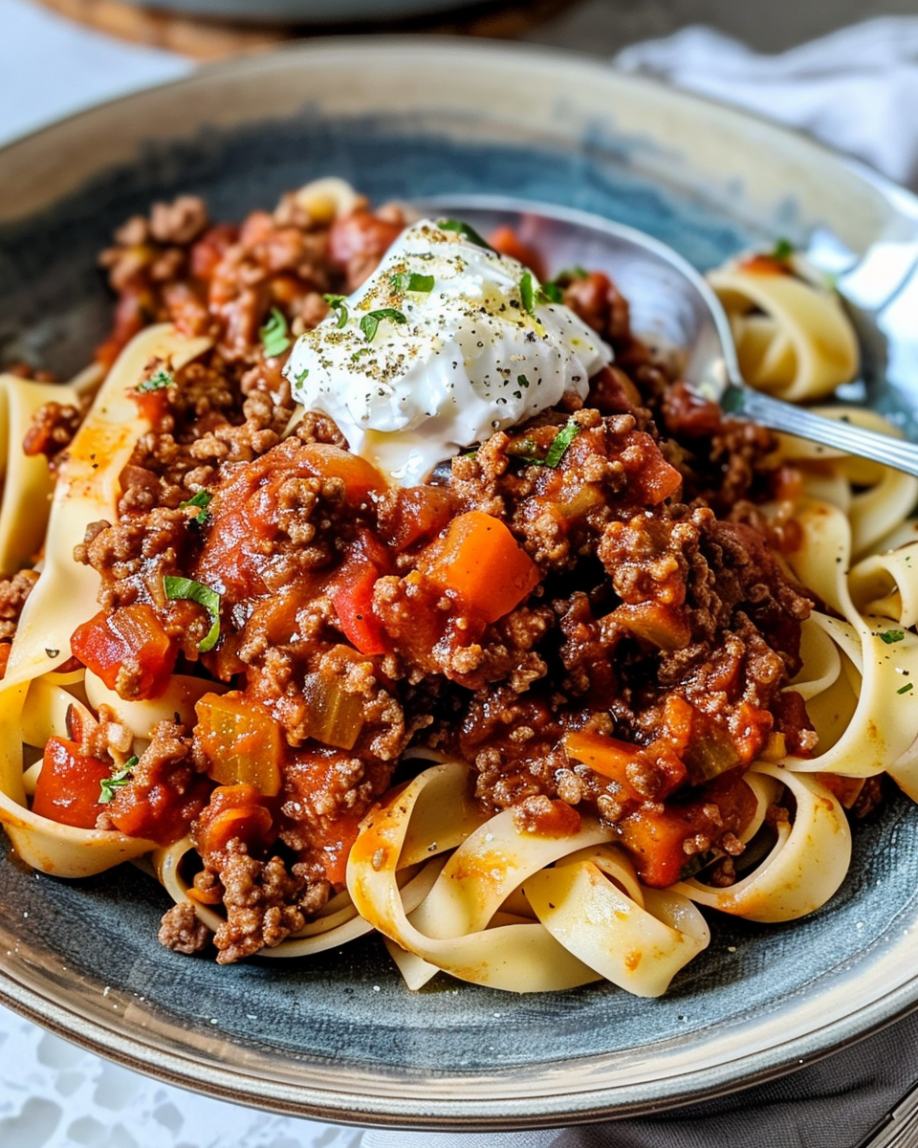
Classic Pairings: This sauce is a match made in heaven with wide, flat pasta like pappardelle or tagliatelle. Their broad surfaces are perfect for holding onto the hearty meat sauce. A final sprinkle of high-quality Parmigiano-Reggiano is mandatory!
-
Beyond Pasta:
-
Polenta: Spoon this rich ragu over a creamy bed of soft polenta for the ultimate comfort food.
-
Lasagna: Use it as the meat layer in your next lasagna—it will be the best you’ve ever made.
-
Baked Potatoes: Top a fluffy baked potato with ragu and cheese for a filling meal.
-
Sandwiches: Pile it onto a crusty roll with some provolone for an epic Italian beef sauce sandwich.
-
Storing and Reheating Your Leftover Ragu
One of the best things about this dish is its staying power.
-
Refrigeration: Let the ragu cool completely before transferring it to an airtight container. It will keep beautifully in the fridge for up to 4 days.
-
Freezing: For longer storage, freeze it! Portion the cooled ragu into freezer-safe bags or containers. It can be frozen for up to 3 months. Thaw overnight in the refrigerator before reheating.
-
Reheating: Gently warm the ragu in a saucepan over low heat on the stove, stirring occasionally. If it has thickened too much, add a small splash of water or beef stock to loosen it up.
FAQs & Conclusion
Frequently Asked Questions (FAQs)
Can I use frozen ground beef in the slow cooker?
It is strongly discouraged for important food safety reasons. A large chunk of frozen beef will take too long to heat up in the slow cooker, potentially staying in the “danger zone” (between 40°F and 140°F) for too long, which can allow bacteria to grow. Always fully thaw and brown your meat first. For more details, always refer to proper food safety guidelines for handling ground beef.
Can I make this ragu without wine?
Absolutely! The balsamic vinegar and beef stock in our recipe provide the necessary acidity and depth to replace wine perfectly. You won’t feel like you’re missing out at all.
Why is my ragu watery? How can I thicken it?
This is a common issue with slow cookers as they trap steam. The easiest fix is to remove the lid for the last 30-45 minutes of cooking and let the sauce simmer. This allows excess liquid to evaporate. Alternatively, you can create a quick slurry: mix one tablespoon of cornstarch with two tablespoons of cold water until smooth, stir it into the ragu, and cook on HIGH for 15-20 minutes until thickened.
What’s the difference between a ragu and a Bolognese?
This is a fantastic question! A Bolognese (or Ragù alla Bolognese) is a specific type of ragu from Bologna, Italy, with a protected, traditional recipe. As defined by the official traditional recipe for Ragu alla Bolognese, it often uses a mix of meats (beef, pork, veal), includes a small amount of tomato (often just paste), and uniquely incorporates milk, which tenderizes the meat and creates a creamier, less tomato-forward sauce. Our recipe is a more general, tomato-based ground beef ragu inspired by that classic.
Can I add vegetables like mushrooms or bell peppers?
Of course! Feel free to customize. Sauté chopped mushrooms or diced bell peppers along with the onions, carrots, and celery. This is a great way to add more flavor and sneak in extra veggies.
Conclusion: Your New Signature Sauce
And there you have it—your comprehensive guide to creating the most incredibly flavorful and effortless Slow Cooker Ground Beef Ragu imaginable. This isn’t just a recipe; it’s a blueprint for countless comforting meals that will bring friends and family together around the table. You’ve learned the secrets of building flavor, the tricks to avoid common errors, and countless ways to make it your own. So, go forth, get that slow cooker humming, and get ready to enjoy one of the most rewarding and delicious comfort food classics you’ll ever make.
Print
Slow Cooker Ground Beef Ragu
Description
🍝 Slow Cooker Ground Beef Ragu
Ingredients:
-
1 ½ lbs ground beef (or a mix of beef & pork for extra flavor)
-
2 tbsp olive oil
-
1 large onion, finely diced
-
2 carrots, finely diced
-
2 celery stalks, finely diced
-
4 cloves garlic, minced
-
2 tbsp tomato paste
-
1 can (28 oz) crushed tomatoes
-
1 cup beef broth (or red wine for depth)
-
2 tsp Italian seasoning
-
1 tsp dried thyme
-
2 bay leaves
-
1 tsp sugar (optional, balances acidity)
-
Salt & black pepper, to taste
-
Fresh basil or parsley, for garnish
-
Freshly grated Parmesan cheese, for serving
Instructions:
-
Brown the beef: In a skillet, heat olive oil over medium heat. Add ground beef and cook until browned, breaking it up with a spoon. Drain excess fat.
-
Sauté veggies: Add onion, carrots, celery, and garlic. Cook 5–6 minutes until softened. Stir in tomato paste and cook 1–2 minutes to caramelize.
-
Transfer to slow cooker: Add beef mixture to the slow cooker along with crushed tomatoes, broth (or wine), Italian seasoning, thyme, bay leaves, sugar, salt, and pepper. Stir well.
-
Cook: Cover and cook on LOW for 6–8 hours or HIGH for 3–4 hours, until flavors meld and sauce thickens.
-
Finish: Remove bay leaves. Adjust seasoning.
-
Serve: Spoon over pasta, polenta, or mashed potatoes. Garnish with fresh basil/parsley and Parmesan.