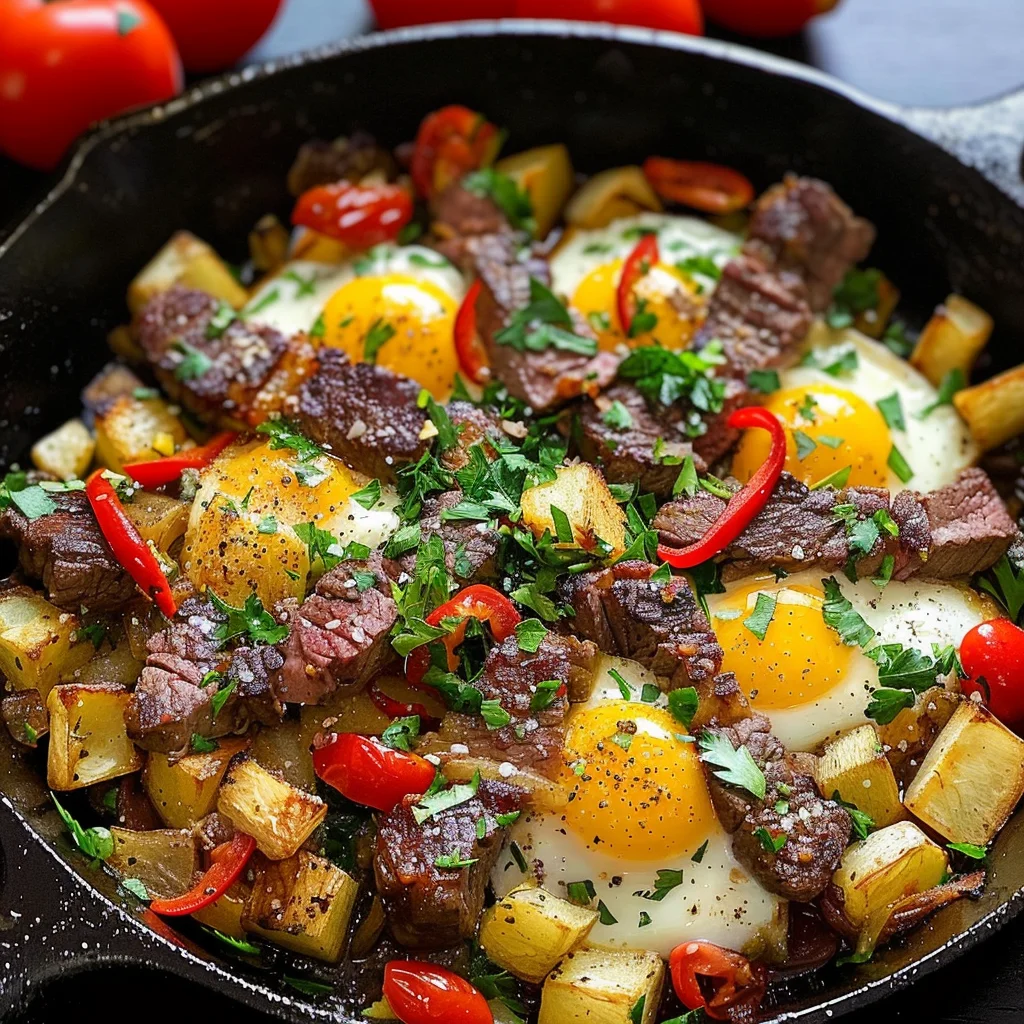
Ah, the sizzle of potatoes hitting a hot skillet, the rich aroma of searing steak, and the golden promise of a perfectly runny egg yolk—this is the symphony of a truly legendary breakfast. Steak and Eggs Hashisn’t just a meal; it’s an experience. It’s a hearty, satisfying dish that has cemented its place as a cornerstone of diner menus and weekend brunches alike. But what makes it so special? Is it the luxurious combination of premium proteins, or perhaps the humble, crispy potatoes that bring it all together?
Frankly, it’s everything. This definitive guide is your personal passport to hash mastery. We’re going to dive deep into its surprising history, break down the science behind the perfect crisp, and explore countless variations to make this classic dish your own. So, whether you’re a seasoned home cook or a breakfast novice, prepare to unlock the secrets of the ultimate Steak and Eggs Hash.
The Ultimate Steak and Eggs Hash: A Definitive Guide to the Perfect Breakfast
What exactly is this magnificent medley we call Steak and Eggs Hash? Fundamentally, it’s a hearty, one-pan wonder featuring crispy pan-fried potatoes, tender pieces of steak, savory onions, and peppers, all brought together under the crowning glory of perfectly cooked eggs. It’s the kind of dish that doesn’t just fill you up; it fuels your day with unwavering deliciousness.
Furthermore, this dish stands as a timeless classic for a multitude of compelling reasons. Primarily, its incredible satisfaction factor is undeniable. Packed with high-quality protein and energy-giving carbohydrates, it’s the ultimate fuel for a lazy weekend or a physically demanding day ahead. Moreover, its customizability is a huge part of its appeal; you can easily tweak the ingredients to suit your taste or dietary needs. Best of all, it’s a spectacularly clever and delicious way to give leftover steak from last night’s dinner a brilliant second act. Instead of a boring reheated meal, you get a transformative culinary experience.
In this comprehensive guide, you will learn absolutely everything you need to know. We’ll embark on a journey through the history of hash, then meticulously deconstruct each ingredient. Consequently, you’ll discover how to select the best cut of steak and the right type of potato for unparalleled results. After that, we’ll walk through a detailed, step-by-step cooking method to achieve hash perfection. Finally, we’ll explore exciting variations, answer all your burning questions, and provide expert tips for serving and storing. Ultimately, you will become the undisputed master of your breakfast skillet.
A Brief History of Hash: From Humble Origins to Brunch Staple
Believe it or not, this seemingly humble dish has a rather aristocratic pedigree. The very term “hash” is derived from the French verb “hacher,” which simply means “to chop.” This points to its fundamental nature: a practical, no-fuss dish made from chopped-up ingredients. Historically, hash was the epitome of resourceful cooking, a brilliant way for cooks to repurpose leftover roasted meat from a previous feast into a completely new and satisfying meal.
Furthermore, the concept of hash isn’t unique to American cuisine. Various cultures have their own beloved versions. For instance, the British have their classic corned beef hash, often served with a hearty portion of baked beans. In fact, this tradition of creating a “second-day” dish is a global phenomenon, highlighting a universal desire to avoid waste while creating something delicious.
The specific marriage of steak and eggs, however, carved its own path into culinary history. It gained a formidable reputation as a powerhouse breakfast for athletes, astronauts, and anyone needing sustained energy. Its presence on classic American diner menus solidified its status as a beloved, all-American comfort food. It’s a dish that speaks to both luxury and practicality, a combination that’s hard to beat.
Building Your Hash: Choosing the Best Ingredients
The magic of a great hash lies in the quality and harmony of its components. You simply cannot build a magnificent skyscraper on a weak foundation; the same principle applies here. Let’s break down each critical ingredient.
The Steak: Selecting the Right Cut
This is where you can truly make the dish your own. Your choice depends largely on whether you’re using leftovers or starting from scratch.
Best Cuts for Hash (Leftover vs. Fresh)
If you have leftovers, you’re already ahead of the game! Ribeye is a fantastic option due to its rich marbling, which keeps the meat tender and flavorful when reheated. Strip steak and sirloin are also excellent choices for their beefy flavor and firm texture. Conversely, if you’re cooking steak specifically for this recipe, you’ll want a cut that sears well and doesn’t break the bank. Skirt steak and flank steakare prime candidates; they are flavorful, cook quickly, and slice beautifully against the grain.
How to Cook Steak Perfectly for Hash
If you’re starting fresh, pat the steak dry and season it generously with salt and pepper. Then, sear it in a screaming-hot cast-iron skillet until it develops a beautiful crust. Most importantly, you must let it rest on a cutting board for at least five minutes before chopping. This allows the juices to redistribute, guaranteeing every bite is succulent.
The Potatoes: The Heart of the Hash
The potato is the canvas for your masterpiece, providing texture and substance. Your choice here will dramatically affect the final outcome.
Starchy vs. Waxy Potatoes: Which is Best?
For a hash with supremely crispy edges and a fluffy interior, starchy Russet potatoes are the undisputed champion. Their low moisture content allows them to crisp up beautifully. Alternatively, Yukon Goldpotatoes offer a wonderful middle ground; they have a buttery flavor and a creamy texture that holds its shape fairly well.
To Par-Boil or Not to Par-Boil?
This is the secret weapon for achieving that diner-level crispiness. Par-boiling your diced potatoes for about 8-10 minutes until they are just tender is a game-changer. Afterwards, draining them thoroughly and letting them steam dry for a minute means they will fry up crispy on the outside and remain perfectly soft on the inside.
The Aromatics and Vegetables
This is your flavor base. A classic combination of diced yellow onion and bell pepper (any color!) sautéed until sweet and soft is essential. Don’t forget to add a few cloves of minced garlic towards the end of cooking to avoid burning. Feel free to get creative here: mushrooms, jalapeños for heat, or even a handful of spinach at the very end are all welcome additions.
The Eggs: The Crowning Glory
The eggs are non-negotiable. A perfectly cooked fried egg, with a set white and a luxuriously runny yolk, transforms the hash from a side dish into a complete meal. When pierced, the yolk acts as a rich, velvety sauce that coats every component. While frying is classic, a gently poached egg is an equally magnificent topping.
Seasonings, Herbs, and Finishing Touches
Beyond salt and black pepper, consider smoked paprika for a touch of warmth or a simple blend of thyme and rosemary for an earthy aroma. Finally, always finish the dish with a flourish of fresh herbs. Chopped parsley or chives add a necessary pop of color and freshness. A dash of hot sauce or a drizzle of a creamy sauce can provide the perfect final accent.
Mastering the Method: A Step-by-Step Cooking Guide
Alright, you’ve gathered your stellar ingredients. Now, let’s turn them into magic. This process is surprisingly straightforward, but a few pro tips will make all the difference.
Essential Equipment You’ll Need
You can get by with a large frying pan, but for the best results, nothing beats a well-seasoned cast-iron skillet. Its superior heat retention and ability to develop a fantastic sear are invaluable for this recipe. Otherwise, you’ll just need a sharp chef’s knife, a sturdy cutting board, and a spatula.
Step 1: Prepping Your Ingredients
This is the “mise en place” – a French term meaning “everything in its place.” Dice your potatoes and vegetables into uniform, half-inch pieces to ensure even cooking. If you’re using fresh steak, now is the time to pat it dry and season it. Doing this prep work upfront makes the cooking process smooth and stress-free.
Step 2: Cooking the Potatoes to Crispy Perfection
If you par-boiled your potatoes, make sure they are completely dry. Heat a generous amount of oil in your skillet over medium-high heat. Add the potatoes in a single layer, resisting the urge to stir them constantly. Let them cook for a good 5-7 minutes until a golden-brown crust forms on one side before flipping. This patience is the key to crispiness, not sogginess.
Step 3: Sautéing the Aromatics and Vegetables
Once the potatoes are about 75% done, push them to the side of the skillet. Add your onions and peppers to the center. Let them sauté until they become fragrant and begin to soften, which should take about 4-5 minutes. Then, you can mix everything together. Add the garlic in the last minute of cooking.
Step 4: Incorporating the Steak
If you’re using pre-cooked steak, add the chopped pieces now. Toss them gently with the potato and vegetable mixture just to heat them through; this prevents them from becoming tough and overcooked. If you cooked a fresh steak, add your sliced steak back to the skillet at this point.
Step 5: The Final Press and Crisp
Here’s another pro tip: use your spatula to press the entire mixture down into an even layer. Let it cook undisturbed for another 2-3 minutes. This creates more contact with the hot pan, resulting in an incredible, unified crispy crust on the bottom—the hallmark of a great hash.
Step 6: Cooking and Adding the Eggs
Finally, create a few small wells in the surface of your hash. Crack an egg directly into each well. You can then add a tablespoon of water to the skillet and cover it with a lid for 1-2 minutes to steam the tops of the eggs, or you can transfer the entire skillet to a preheated 400°F (200°C) oven to finish cooking. Alternatively, you can fry the eggs in a separate pan for more control.
Beyond the Classic: Delicious Variations to Try
Once you’ve mastered the classic formula, the world of hash is your oyster! Don’t be afraid to experiment and tailor it to your cravings.
Southwest Style Hash
Give your hash a fiesta of flavors by adding a teaspoon of cumin and chili powder with the onions. Then, stir in a half cup of black beans and corn kernels along with the steak. Top it with sliced avocado, a spoonful of fresh salsa, and a dollop of Greek yogurt or sour cream.
The Gourmet Touch: Truffle and Herb Hash
For a more elegant twist, swap regular potatoes for sweet potatoes. After the hash is plated, finish it with a very light drizzle of truffle oil (a little goes a long way!), a sprinkle of fresh chopped rosemary, and a handful of microgreens.
Dietary Adaptations
Keto/Low-Carb Steak and Eggs Hash
You can absolutely enjoy this dish on a low-carb diet. Simply replace the potatoes with a low-carb vegetable like diced radishes, turnips, or cauliflower. These vegetables will still brown and provide a satisfying texture while keeping the carb count minimal.
Paleo and Whole30 Compliant Version
To make this compliant, ensure you are using a sugar-free steak seasoning and cooking fat like ghee, avocado oil, or coconut oil. Obviously, you must skip any non-compliant toppings like conventional cheese or sugar-laden hot sauce. Thankfully, the core ingredients of steak, eggs, and vegetables are already Whole30 superstars.
Serving, Pairings, and Leftovers
You’ve crafted your masterpiece; now it’s time to enjoy it to the fullest.
How to Serve and Plate Your Hash
For a truly impressive presentation, serve the hash family-style right in the skillet it was cooked in. Garnish it generously with those fresh herbs. When serving on individual plates, ensure each person gets a generous scoop of the crispy hash and a perfect egg on top.
The Best Drinks to Pair with Steak and Eggs Hash
A robust cup of black coffee or a creamy latte is a timeless pairing that cuts through the richness perfectly. For a non-alcoholic brunch option, a spicy Virgin Mary (bloody mary) or a fresh-squeezed orange juice provides a refreshing, acidic contrast.
What to Do with Leftovers
Leftover hash stores surprisingly well! Let it cool completely before transferring it to an airtight container. It will keep in the refrigerator for up to 3 days. To reheat, avoid the microwave, as it will make the potatoes soft. Instead, reheat it in a skillet over medium heat, stirring occasionally, until hot and crispy again. The eggs are best fresh, so you may want to fry a new one when you reheat.
Steak and Eggs Hash FAQs
What is the best cut of steak to use for steak and eggs hash?
Honestly, it depends! For leftover steak, ribeye or sirloin are excellent due to their flavor and tenderness. If cooking steak specifically for the hash, however, skirt or flank steak are great, budget-friendly options that sear beautifully and slice well.
Can I make steak and eggs hash ahead of time?
You can definitely prep the components ahead of time (dice vegetables, cook steak), but for the best texture, it’s ideal to cook the hash fresh. Leftover fully-assembled hash reheats well in a skillet, though the potatoes will lose a bit of their initial crisp.
What kind of potatoes are best for getting crispy?
Without a doubt, starchy Russet potatoes are the champion for crispiness due to their high starch content. The key steps, however, are par-boiling them and ensuring they are very dry before adding them to hot oil. This technique is more important than the potato type itself.
Is steak and eggs hash healthy?
It can be a very healthy, high-protein, and nutrient-dense meal! Using lean cuts of steak, loading up on vegetables, and moderating oil can make it part of a balanced diet. It’s also naturally low-carb if you modify the potatoes, making it suitable for various eating plans. For more detailed information on nutrition, you can always refer to USDA beef grading guidelines to understand the lean-to-fat ratios of different cuts.
Steak And Eggs Hash
Description
🍳 Steak and Eggs Hash
Ingredients (4 servings):
-
1 lb cooked steak (ribeye, sirloin, or leftover steak works well), diced
-
4 large potatoes, peeled and diced (or use sweet potatoes)
-
1 medium onion, diced
-
1 bell pepper, diced (any color)
-
3 cloves garlic, minced
-
4–6 eggs
-
3 tbsp olive oil or butter
-
Salt & freshly cracked black pepper, to taste
-
Optional toppings: shredded cheese, hot sauce, chopped parsley or green onions
Instructions:
-
Cook potatoes: Heat 2 tbsp olive oil in a large skillet over medium heat. Add diced potatoes and cook 10–12 minutes, stirring occasionally, until golden and tender.
-
Add vegetables: Add onion, bell pepper, and garlic. Cook 5 minutes until softened. Season with salt and pepper.
-
Add steak: Stir in diced steak and cook 3–4 minutes until heated through.
-
Cook eggs:
-
Option 1: Make wells in the hash and crack eggs directly into them. Cover and cook 4–6 minutes until eggs reach desired doneness.
-
Option 2: Fry eggs separately and serve on top of hash.
-
-
Serve: Sprinkle with cheese, parsley, or green onions, and a dash of hot sauce if desired.
✨ Tips & Variations:
-
Use leftover roast beef or steak for extra flavor.
-
Add mushrooms or spinach for more veggies.
-
Swap regular potatoes for sweet potatoes for a slightly sweet, savory twist.
-
For extra crispiness, parboil potatoes 5 minutes before pan-frying.