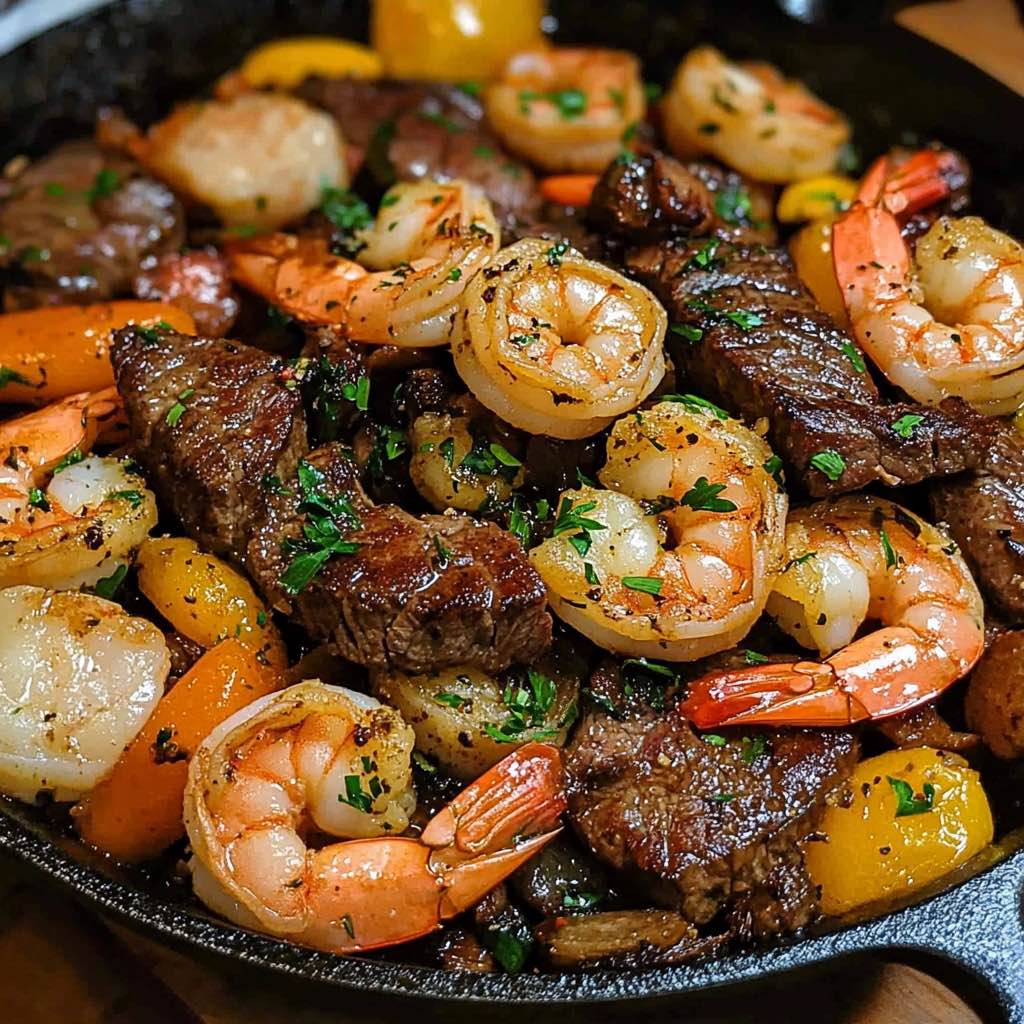
The Ultimate Steak and Shrimp Skillet: A Perfect One-Pan Surf and Turf Dinner
Table of Contents
-
Introduction: Why Steak and Shrimp Skillet Rules
-
Essential Ingredients for Success
-
Choosing the Right Cuts and Seafood
-
Equipment and Tools You’ll Need
-
Step-by-Step Cooking Instructions
-
Seasoning and Flavor Combinations
-
Common Mistakes to Avoid
-
Serving Suggestions and Side Dishes
-
Recipe Variations and Adaptations
-
Storage and Reheating Tips
-
Nutritional Benefits
-
Frequently Asked Questions
-
Conclusion
The steak and shrimp skillet represents the ultimate fusion of land and sea, bringing together tender beef and succulent seafood in one magnificent pan. This beloved surf and turf combination delivers restaurant-quality flavors right in your home kitchen. Moreover, the one-pan approach makes cleanup effortless while maximizing flavor development through shared cooking juices.
Furthermore, this versatile dish adapts beautifully to various occasions. Whether you’re planning a romantic dinner, hosting friends, or treating your family to something special, a perfectly executed steak and shrimp skillet never disappoints. Additionally, the cooking process allows both proteins to complement each other, creating a harmonious blend of textures and tastes.
Essential Ingredients for Success
Primary Proteins
The foundation of any exceptional steak and shrimp skillet begins with quality ingredients. First, select premium beef cuts that cook quickly and evenly. Similarly, choose fresh or properly frozen shrimp that will complement the beef’s richness.
Beef Selection:
-
Ribeye steaks (1-inch thick)
-
New York strip steaks
-
Filet mignon medallions
-
Sirloin steaks (well-marbled)
Shrimp Options:
-
Large shrimp (16-20 count per pound)
-
Jumbo shrimp (21-25 count)
-
Extra-large shrimp (26-30 count)
-
Wild-caught varieties for best flavor
Essential Seasonings and Aromatics
Subsequently, gathering the right seasonings transforms ordinary ingredients into extraordinary flavors. These components work together to enhance both the beef and seafood elements.
Core Seasonings:
-
Kosher salt and freshly ground black pepper
-
Garlic powder and onion powder
-
Paprika for color and mild heat
-
Italian seasoning blend
-
Cajun seasoning for spicy variations
Fresh Aromatics:
-
Fresh garlic cloves (4-6 pieces)
-
Yellow onions or shallots
-
Fresh thyme and rosemary
-
Italian parsley for garnish
-
Lemon for brightness
Cooking Fats and Liquids
Next, selecting appropriate cooking fats ensures proper searing and flavor development. These ingredients contribute significantly to the dish’s overall success.
-
High-heat cooking oil (avocado or canola)
-
Unsalted butter for finishing
-
Beef broth for deglazing
-
Heavy cream (optional for sauce)
-
Fresh lemon juice
Choosing the Right Cuts and Seafood
Beef Cut Selection Guide
Choosing appropriate beef cuts directly impacts your steak and shrimp skillet’s final quality. Therefore, understanding each cut’s characteristics helps you make informed decisions.
Ribeye Steaks: These well-marbled cuts provide incredible flavor and tenderness. Additionally, the fat content keeps the meat moist during high-heat cooking. However, ribeye requires careful temperature monitoring to prevent overcooking.
New York Strip: This lean yet flavorful cut offers excellent texture and consistent results. Furthermore, strip steaks hold their shape well during skillet cooking. Consequently, they’re ideal for beginners attempting this recipe.
Filet Mignon: The most tender cut available, filet mignon cooks quickly and evenly. Moreover, its mild flavor allows the shrimp and seasonings to shine. Nevertheless, this premium cut requires gentle handling to prevent toughening.
Sirloin Steaks: Budget-friendly yet flavorful, sirloin provides excellent value. Additionally, proper marinating enhances tenderness significantly. However, avoid overcooking to maintain optimal texture.
Shrimp Selection and Preparation
Similarly, shrimp selection greatly influences your dish’s final outcome. Fresh, properly sized shrimp elevate the entire preparation.
Size Considerations: Large shrimp (16-20 count) provide substantial bites that complement thick steaks. Conversely, jumbo shrimp (21-25 count) offer elegant presentation while cooking evenly. Meanwhile, extra-large varieties work well for family-style servings.
Fresh vs. Frozen: Fresh shrimp delivers superior texture and flavor when available. However, individually quick-frozen (IQF) shrimp provides excellent results when properly thawed. Additionally, frozen shrimp offers convenience and longer storage life.
Preparation Tips: Always remove shells and devein shrimp before cooking. Furthermore, pat shrimp completely dry to ensure proper searing. Subsequently, season shrimp just before cooking to prevent moisture loss.
Equipment and Tools You’ll Need
Essential Cookware
The right equipment significantly impacts your steak and shrimp skillet’s success. Therefore, investing in quality tools pays dividends in cooking performance.
Cast Iron Skillet: A 12-inch cast iron skillet provides superior heat retention and even cooking. Moreover, cast iron develops beautiful sears on both proteins. Additionally, these skillets transition seamlessly from stovetop to oven when needed.
Stainless Steel Alternative: Heavy-bottomed stainless steel pans offer excellent heat distribution. Furthermore, they’re easier to clean than cast iron. However, they may require slightly more oil to prevent sticking.
Carbon Steel Option: Professional-grade carbon steel combines cast iron’s heat retention with lighter weight. Additionally, these pans develop natural non-stick properties over time.
Supporting Tools
Beyond the primary cooking vessel, several tools enhance your cooking experience and results.
-
Long-handled tongs for safe protein manipulation
-
Instant-read thermometer for accurate doneness
-
Sharp chef’s knife for preparation
-
Cutting boards (separate for meat and vegetables)
-
Measuring spoons and cups
-
Small mixing bowls for seasoning prep
Step-by-Step Cooking Instructions
Preparation Phase
Proper preparation ensures smooth cooking execution and optimal results. Therefore, completing all prep work before heating the skillet prevents overcooking.
Step 1: Protein Preparation
First, remove steaks from refrigeration 30 minutes before cooking. This allows even temperature distribution throughout the meat. Subsequently, pat steaks completely dry with paper towels. Then, season generously with salt and pepper on both sides.
Meanwhile, prepare shrimp by removing shells and deveining completely. Next, rinse shrimp under cold water and pat thoroughly dry. Finally, season lightly with salt, pepper, and desired spices.
Step 2: Ingredient Organization
Measure all seasonings and have them readily accessible. Additionally, prepare aromatics by mincing garlic and slicing onions. Furthermore, have butter and broth nearby for quick addition during cooking.
Cooking Execution
Step 3: Skillet Preheating
Heat your chosen skillet over medium-high heat for 3-4 minutes. The pan should be hot enough that water droplets dance and evaporate immediately. Subsequently, add a thin layer of high-heat oil.
Step 4: Steak Searing
Carefully place seasoned steaks in the hot skillet without overcrowding. Then, sear for 3-4 minutes without moving them. This develops a beautiful crust. Next, flip steaks and sear the opposite side for another 3-4 minutes.
For medium-rare doneness, internal temperature should reach 130°F. Furthermore, medium doneness requires 135°F internal temperature. Use an instant-read thermometer for accuracy.
Step 5: Steak Resting
Once steaks reach desired doneness, transfer them to a warm plate. Then, tent loosely with foil and let rest for 5-10 minutes. This resting period allows juices to redistribute throughout the meat.
Step 6: Shrimp Cooking
In the same skillet, add prepared shrimp in a single layer. Cook for 1-2 minutes per side until pink and opaque. Avoid overcooking, as shrimp become tough and rubbery quickly.
Step 7: Flavor Building
Add minced garlic and sliced onions to the skillet. Sauté for 1-2 minutes until fragrant but not burned. Then, deglaze with beef broth, scraping up browned bits from the pan bottom.
Step 8: Final Assembly
Return sliced steaks to the skillet with cooked shrimp. Add butter and fresh herbs, tossing gently to combine. Finally, finish with fresh lemon juice and adjust seasoning as needed.
Seasoning and Flavor Combinations
Classic Herb Blend
Traditional herb combinations complement both steak and shrimp beautifully. This timeless approach appeals to most palates while highlighting natural protein flavors.
Ingredients:
-
Fresh thyme leaves
-
Chopped rosemary
-
Italian parsley
-
Garlic powder
-
Onion powder
-
Black pepper
-
Sea salt
Combine these herbs with olive oil to create a flavorful paste. Then, rub onto proteins 30 minutes before cooking for maximum penetration.
Cajun-Style Seasoning
For those preferring bolder flavors, Cajun seasonings add exciting complexity. This approach works particularly well with shrimp while complementing beef’s richness.
Blend Components:
-
Paprika (2 tablespoons)
-
Garlic powder (1 tablespoon)
-
Onion powder (1 tablespoon)
-
Dried oregano (1 teaspoon)
-
Dried thyme (1 teaspoon)
-
Cayenne pepper (1/2 teaspoon)
-
Black pepper (1/2 teaspoon)
-
Salt (1 tablespoon)
Mix thoroughly and store in an airtight container. Use generously on both proteins for authentic Cajun flavor.
Mediterranean Influence
Mediterranean flavors bring bright, fresh notes to your steak and shrimp skillet. These ingredients complement the dish without overwhelming delicate seafood flavors.
Key Elements:
-
Dried oregano
-
Lemon zest
-
Fresh basil
-
Sun-dried tomatoes (chopped)
-
Kalamata olives (pitted and sliced)
-
Feta cheese (crumbled)
Add these components during the final cooking stages to preserve their distinct characteristics.
Asian-Inspired Variation
Asian flavors create an interesting fusion approach to traditional surf and turf. These ingredients work surprisingly well together while maintaining balance.
Flavor Profile:
-
Fresh ginger (minced)
-
Soy sauce (low sodium)
-
Rice vinegar
-
Sesame oil
-
Green onions
-
Toasted sesame seeds
-
Red pepper flakes
Marinate proteins briefly in this mixture, then proceed with normal cooking methods.
Common Mistakes to Avoid
Temperature Control Issues
Many home cooks struggle with proper temperature management during skillet cooking. Therefore, understanding common pitfalls helps ensure consistent results.
Overcrowding the Pan: Adding too many pieces simultaneously lowers the pan temperature dramatically. Consequently, proteins steam rather than sear properly. Instead, cook in batches if necessary to maintain optimal heat levels.
Insufficient Preheating: Cold pans don’t develop proper crusts on proteins. Furthermore, inadequate heating leads to sticking and uneven cooking. Always allow sufficient preheating time before adding ingredients.
Temperature Guessing: Relying on visual cues alone often results in overcooked proteins. Therefore, invest in a reliable instant-read thermometer. This tool eliminates guesswork and ensures perfect doneness consistently.
Protein Preparation Errors
Proper protein preparation significantly impacts final results. These common mistakes can easily be avoided with attention to detail.
Insufficient Drying: Wet proteins don’t sear properly and may splatter dangerously. Always pat proteins completely dry before seasoning. Additionally, seasoning wet proteins dilutes flavors significantly.
Over-seasoning Shrimp: Delicate seafood requires lighter seasoning than beef. Heavy-handed seasoning masks shrimp’s natural sweetness. Instead, season shrimp lightly and adjust during final preparation.
Skipping Rest Time: Cutting steaks immediately after cooking releases precious juices. Consequently, meat appears dry despite proper cooking. Allow adequate resting time for optimal texture and moisture retention.
Timing and Coordination Problems
Coordinating different cooking times requires practice and planning. These strategies help manage multiple components successfully.
Starting Everything Simultaneously: Steaks and shrimp require different cooking times and temperatures. Therefore, stagger cooking times appropriately. Start with steaks, then add shrimp during final stages.
Ignoring Carryover Cooking: Proteins continue cooking after removal from heat. Account for this temperature rise when determining doneness. Remove proteins slightly before reaching target temperature.
Serving Suggestions and Side Dishes
Complementary Starches
Selecting appropriate starches complements your steak and shrimp skillet without competing for attention. These options absorb flavors while providing satisfying substance.
Garlic Mashed Potatoes: Creamy, buttery potatoes pair beautifully with surf and turf flavors. Furthermore, garlic enhances the dish’s overall savory profile. Additionally, mashed potatoes absorb pan juices effectively.
Wild Rice Pilaf: Nutty wild rice provides textural contrast and earthy flavors. Moreover, rice dishes accommodate various dietary preferences easily. Consequently, rice makes excellent leftover storage companions.
Herb-Roasted Fingerling Potatoes: Crispy exterior potatoes complement tender proteins perfectly. Fresh herbs tie flavors together harmoniously. Additionally, roasted potatoes require minimal active cooking time.
Buttered Egg Noodles: Simple egg noodles allow protein flavors to shine. Furthermore, noodles cook quickly for last-minute additions. Meanwhile, butter adds richness without overwhelming delicate tastes.
Vegetable Accompaniments
Fresh vegetables balance rich protein flavors while adding nutritional value. These preparations enhance rather than compete with main components.
Grilled Asparagus: Lightly charred asparagus provides elegant presentation and subtle flavors. Additionally, asparagus cooks quickly alongside other preparations. Furthermore, this vegetable maintains appealing color and texture.
Sautéed Mushrooms: Earthy mushrooms complement both beef and seafood naturally. Various mushroom types offer different flavor profiles. Consequently, mushrooms absorb pan flavors beautifully during cooking.
Steamed Broccoli: Classic broccoli provides color contrast and nutritional balance. Simple preparation methods preserve natural flavors and textures. Moreover, broccoli pairs well with various seasonings and sauces.
Mixed Green Salad: Fresh salads cleanse the palate between rich bites. Light vinaigrettes cut through protein richness effectively. Additionally, salads add valuable vitamins and minerals to the meal.
Sauce Options
Although your steak and shrimp skillet creates its own flavorful pan juices, additional sauces can enhance the experience further.
Garlic Butter Sauce: Combine melted butter with minced garlic, lemon juice, and fresh parsley. This classic preparation complements both proteins beautifully. Furthermore, butter sauces add luxurious richness without masking natural flavors.
Herb Chimichurri: Fresh herb sauces provide bright, acidic contrast to rich proteins. Traditional chimichurri includes parsley, cilantro, garlic, and olive oil. Additionally, this sauce keeps well refrigerated for future use.
Lemon Aioli: Creamy aioli enhanced with lemon zest and juice creates elegant accompaniment. This sauce pairs particularly well with shrimp preparations. Moreover, aioli can be prepared hours ahead for convenience.
For those interested in expanding their seafood repertoire, [check out our comprehensive guide on garlic-lemon catfish preparation techniques].
Recipe Variations and Adaptations
Spicy Cajun Version
Transform your basic steak and shrimp skillet into a bold Cajun feast with these modifications. This variation appeals to those preferring more adventurous flavors.
Enhanced Seasoning Blend:
-
Increase paprika and cayenne pepper quantities
-
Add dried oregano and thyme
-
Include garlic powder and onion powder
-
Season proteins more generously
Additional Components:
-
Diced bell peppers (red and green)
-
Sliced jalapeño peppers for heat
-
Andouille sausage (optional protein addition)
-
Green onions for fresh finishing touch
Cooking Modifications:
Sauté vegetables before adding proteins. This builds flavor layers throughout the cooking process. Subsequently, add proteins and proceed with standard techniques. Finally, finish with hot sauce to taste.
Mediterranean Fusion
Mediterranean flavors create an elegant twist on traditional surf and turf preparations. These ingredients complement proteins while adding sophisticated complexity.
Flavor Elements:
-
Kalamata olives (pitted and halved)
-
Sun-dried tomatoes (oil-packed and chopped)
-
Fresh oregano and basil
-
Lemon zest and juice
-
Crumbled feta cheese
-
Extra virgin olive oil
Preparation Approach:
Season proteins with Mediterranean herbs before cooking. Add olives and tomatoes during final cooking stages. Finish with feta cheese and fresh herbs after removing from heat.
Asian-Inspired Variation
Eastern flavors create unexpected but delicious combinations with traditional surf and turf. This fusion approach appeals to adventurous home cooks.
Marinade Components:
-
Low-sodium soy sauce
-
Fresh ginger (minced)
-
Garlic (minced)
-
Rice vinegar
-
Sesame oil
-
Brown sugar (small amount)
Garnish Elements:
-
Sliced green onions
-
Toasted sesame seeds
-
Fresh cilantro
-
Lime wedges
-
Sliced jalapeños
Technique Modifications:
Marinate proteins for 30 minutes before cooking. Use peanut or avocado oil for high-heat cooking. Add garnishes after cooking completion for optimal flavor and presentation.
Low-Carb Adaptation
Health-conscious diners can enjoy steak and shrimp skillet while maintaining dietary goals. These modifications reduce carbohydrates without sacrificing flavor.
Vegetable Substitutions:
-
Zucchini noodles instead of pasta
-
Cauliflower rice replacing traditional rice
-
Roasted vegetables instead of potatoes
-
Mixed greens for added nutrition
Cooking Adjustments:
Focus on increasing vegetable quantities to maintain meal satisfaction. Use healthy fats like avocado oil for cooking. Emphasize fresh herbs and citrus for flavor enhancement.
Storage and Reheating Tips
Proper Storage Techniques
Leftover steak and shrimp skillet requires careful storage to maintain food safety and quality. Following proper procedures ensures delicious meals even days later.
Refrigeration Guidelines:
Cool completely before refrigerating, ideally within two hours of cooking. Store in shallow, airtight containers to promote rapid cooling. Properly stored leftovers remain safe for 3-4 days refrigerated.
Freezing Considerations:
While possible, freezing affects texture quality significantly. Shrimp become slightly rubbery after freezing and thawing. However, if freezing is necessary, use within 2-3 months for best quality.
Container Selection:
Glass containers prevent flavor transfer and allow easy reheating. Alternatively, high-quality plastic containers work well for short-term storage. Avoid metal containers for acidic ingredients.
Reheating Methods
Stovetop Reheating (Preferred):
Heat a small amount of oil in a skillet over medium-low heat. Add leftover mixture and heat gently, stirring occasionally. This method preserves texture better than microwave heating.
Oven Method:
Preheat oven to 300°F and place leftovers in an oven-safe dish. Cover with foil to prevent drying out. Heat for 10-15 minutes until warmed through.
Microwave Option:
Use microwave-safe dishes and cover to retain moisture. Heat in 30-second intervals, stirring between cycles. This prevents overcooking and maintains even heating.
Quality Maintenance Tips
Certain techniques help maintain optimal quality during storage and reheating processes.
Moisture Preservation:
Add small amounts of broth or butter during reheating to restore moisture. This compensates for natural moisture loss during storage. Additionally, avoid overcooking during reheating process.
Texture Considerations:
Separate proteins if possible before storage to control individual reheating needs. Shrimp require less reheating time than beef. Consequently, staggered reheating prevents overcooking delicate seafood.
Nutritional Benefits
Protein Content Analysis
Steak and shrimp skillet provides exceptional protein quality and quantity. These complete proteins support muscle maintenance and overall health goals.
Beef Nutrition Profile:
-
High-quality complete protein (25-30 grams per serving)
-
Essential amino acids for muscle synthesis
-
Iron for oxygen transport and energy
-
B-vitamins supporting metabolism
-
Zinc for immune system function
Shrimp Nutritional Benefits:
-
Lean protein with minimal calories
-
Omega-3 fatty acids for heart health
-
Selenium acting as antioxidant
-
Vitamin B12 for nerve function
-
Iodine supporting thyroid health
Macronutrient Balance
When served with appropriate vegetables and starches, this dish provides balanced macronutrient distribution supporting various dietary goals.
Typical Serving Analysis:
-
Protein: 40-50 grams
-
Carbohydrates: 15-25 grams (depending on sides)
-
Fat: 20-30 grams (varies with cooking methods)
-
Calories: 400-600 per serving
Micronutrient Contributions
Beyond macronutrients, this combination provides numerous essential vitamins and minerals supporting optimal health.
Key Micronutrients:
-
Iron from beef supports energy metabolism
-
Selenium from shrimp provides antioxidant protection
-
B-vitamins support nervous system function
-
Zinc enhances immune system response
-
Potassium aids cardiovascular health
Frequently Asked Questions
Can I use frozen shrimp for this steak and shrimp skillet recipe?
Yes, frozen shrimp works perfectly when properly thawed and prepared. Thaw shrimp overnight in the refrigerator or quickly under cold running water. Subsequently, pat completely dry before seasoning to ensure proper searing. Frozen shrimp often provides better value while maintaining excellent quality.
What’s the best way to achieve perfect doneness on both proteins?
Use an instant-read thermometer for accurate temperature monitoring. Steaks should reach 130°F for medium-rare or 135°F for medium doneness. Meanwhile, shrimp cook much faster and should appear pink and opaque throughout. Remove shrimp immediately when done to prevent overcooking.
How do I prevent my skillet from smoking during high-heat cooking?
Choose oils with high smoke points like avocado or canola oil. Additionally, ensure your exhaust fan runs during cooking to manage smoke effectively. If excessive smoking occurs, reduce heat slightly while maintaining adequate searing temperature.
Can I prepare components ahead of time for easier weeknight cooking?
Absolutely! Season steaks and store refrigerated up to 24 hours ahead. Similarly, clean and season shrimp earlier in the day. Prepare aromatics and measure seasonings in advance. However, actual cooking should happen just before serving for optimal results.
What side dishes pair best with steak and shrimp skillet?
Garlic mashed potatoes, rice pilaf, and roasted vegetables complement this dish beautifully. Additionally, fresh salads provide palate-cleansing contrast to rich proteins. Choose sides that absorb flavors without competing for attention.
How can I make this recipe more budget-friendly?
Select less expensive beef cuts like sirloin instead of ribeye or filet mignon. Additionally, use smaller shrimp sizes which cost less per pound. Furthermore, stretch the dish with additional vegetables or serve over rice to increase portions.
Is it safe to cook beef and shrimp together in the same pan?
Yes, when following proper food safety guidelines. Use separate cutting boards for raw proteins and wash hands thoroughly between handling. Additionally, ensure both proteins reach safe internal temperatures during cooking.
Can I add vegetables directly to the skillet?
Certainly! Add quick-cooking vegetables like bell peppers, mushrooms, or asparagus during the final cooking stages. However, avoid overcrowding the pan which reduces cooking temperature and affects searing quality.
Conclusion
The steak and shrimp skillet represents the perfect marriage of land and sea, delivering restaurant-quality surf and turf in your home kitchen. This versatile one-pan meal adapts beautifully to various flavor profiles while maintaining its fundamental appeal. Moreover, the cooking techniques you’ve learned here apply to countless other protein combinations.
Throughout this comprehensive guide, we’ve explored essential ingredient selection, proper cooking techniques, and creative variations. Additionally, we’ve addressed common mistakes and provided solutions for consistent success. Furthermore, the storage and reheating tips ensure you can enjoy this delicious meal multiple times.
The nutritional benefits of combining high-quality beef with lean shrimp create a powerhouse meal supporting various health goals. Meanwhile, the endless customization options mean you’ll never tire of this classic combination. Whether you prefer bold Cajun flavors, elegant Mediterranean touches, or classic herb preparations, your steak and shrimp skillet will always impress.
Remember that practice makes perfect when mastering any new cooking technique. Therefore, don’t be discouraged if your first attempt isn’t restaurant-perfect. Each cooking session builds skills and confidence. Subsequently, you’ll develop your own preferences and modifications that make this recipe uniquely yours.
Steak and Shrimp Skillet
Description
Ingredients
For the Steak:
-
1½ pounds filet mignon or New York strip steaks (1½ inch thick)
-
1 tablespoon vegetable or olive oil
-
1 teaspoon fine sea salt
-
½ teaspoon black pepper, freshly ground
For the Shrimp:
-
¾ pound large shrimp (21-25 count), peeled and deveined
-
¼ teaspoon salt
-
¼ teaspoon black pepper
For the Garlic Butter Sauce:
-
6 tablespoons unsalted butter
-
2 large garlic cloves, quartered or minced
-
1 sprig fresh rosemary
-
2 tablespoons fresh parsley, chopped
Instructions
Prepare the Proteins
Remove steaks from refrigeration 30 minutes before cooking to bring to room temperature. Pat both steak and shrimp completely dry with paper towels. Season steaks with 1 teaspoon salt and ½ teaspoon pepper, and season shrimp with remaining salt and pepper just before cooking.
Sear the Steak
Heat a large cast-iron skillet over medium-high heat until it begins to smoke. Add oil and swirl to coat the pan. Place steaks in the hot skillet and sear undisturbed for 4 minutes on the first side, then flip and sear for 3-4 minutes on the second side. Using tongs, sear the edges for 30-60 seconds per edge to render the fat. Remove steaks when they reach 10 degrees below your desired doneness and transfer to a plate, tenting with foil to rest.
Cook the Shrimp
Reduce heat to medium and immediately add 3 tablespoons butter, quartered garlic, and rosemary sprig to the same skillet. Once butter melts and becomes fragrant, add seasoned shrimp in a single layer. Cook for about 1 minute per side until pink and opaque. Remove shrimp from heat immediately to prevent overcooking.
Finish the Dish
Return the rested steaks to the pan along with any accumulated juices. Turn steaks to coat in the garlic butter sauce and spoon the flavored butter over both steak and shrimp. Sprinkle with fresh chopped parsley and serve immediately.
Serving
This surf and turf combination delivers the perfect balance of tender, juicy steak and succulent shrimp, all enhanced by the rich garlic butter sauce. Serve with your favorite sides like roasted vegetables or mashed potatoes to complete this special occasion meal. The dish is best enjoyed immediately while the proteins are at their optimal temperature and the garlic butter sauce is still warm and fragrant.