
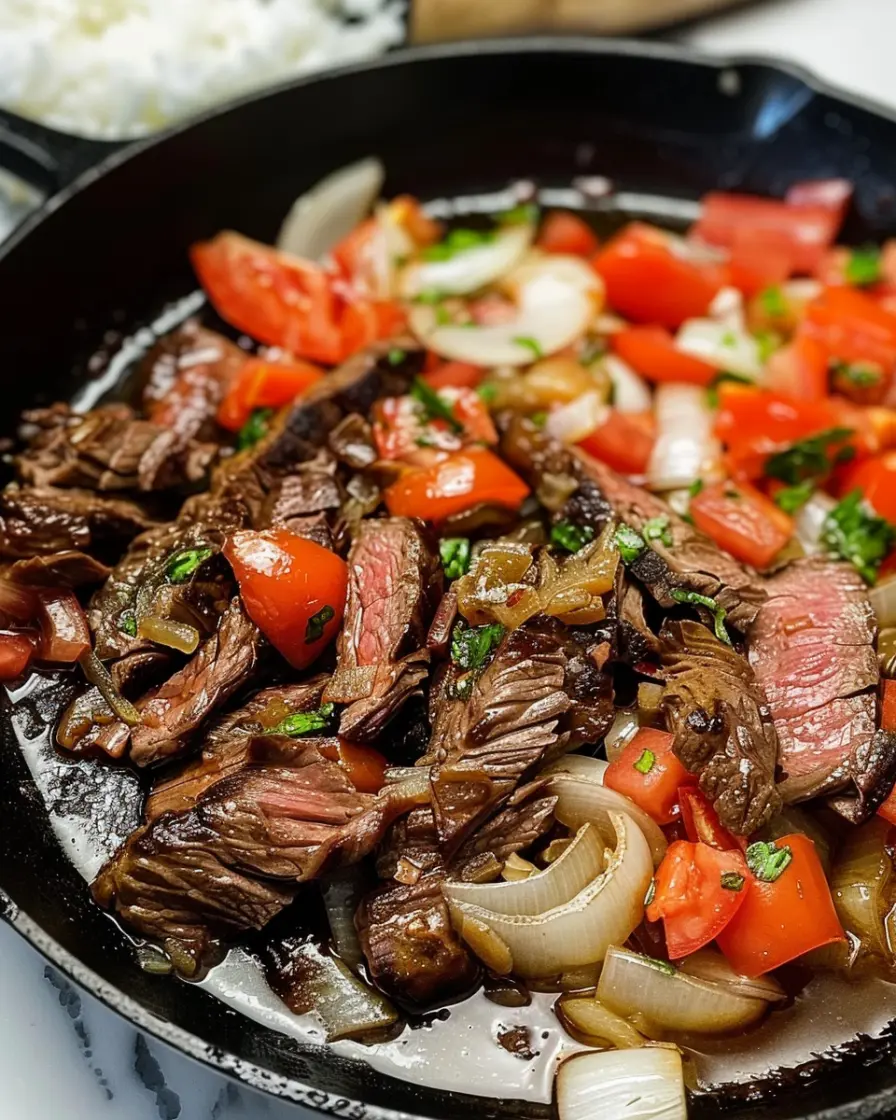
Carne en Bistec: The Soul-Satisfying Colombian Steak with Onions and Tomatoes
Ah, the sizzle of thinly sliced steak hitting a hot pan, followed shortly by the irresistible aroma of onions and tomatoes softening into a savory sauce—this is the sound of a Colombian home. More than just a recipe, Carne en Bistec is a heartfelt embrace on a plate, a staple of everyday life that speaks to the very soul of Colombian comfort food. This humble yet profoundly flavorful dish, featuring tender beef smothered in a rich, onion-and-tomato gravy, is the undisputed champion of the midday meal, the almuerzo corriente. Forget fancy, complicated feasts; the true magic lies in this simple, satisfying combination that has nourished generations. So, pull up a chair and let’s dive into the story, the culture, and the irresistible allure of this national treasure.
A Taste of Colombian Home Cooking
Imagine, if you will, walking into a bustling fonda—a small, family-run restaurant—somewhere in the heart of Bogotá or along a sunny Caribbean coast. The menu is simple, reliable, and built to satisfy. Right there, nestled between the ajiaco and the bandeja paisa, you will find it: Carne en Bistec. This isn’t a dish reserved for holidays or special occasions; on the contrary, it’s the workhorse of the kitchen, the reliable star of countless family dinners. Its beauty is in its straightforwardness: affordable, quick to prepare, and utterly delicious. Ultimately, it represents the essence of home cooking—no frills, just fantastic flavor that feels like coming home.
More Than Just a Meal: Carne en Bistec’s Place in Colombian Culture
To call Carne en Bistec merely “steak with onions and tomatoes” is a dramatic oversimplification; in reality, it’s a cultural touchstone. While other dishes might boast more complex histories or regional fame, bistec holds down the fort. It’s the dish your abuela whips up without a second thought, the plate of food you can always count on after a long day. Furthermore, it’s a cornerstone of the Colombian lunch tradition, a meal that is typically the largest and most important of the day. Served alongside a mountain of fluffy white rice, a slice of creamy avocado, a perfectly fried egg, and a golden arepa, it transforms into a complete, balanced, and deeply comforting experience. This dish, above all, is about connection—to family, to tradition, and to the simple, honest joy of a meal made with love.
Deconstructing Carne en Bistec: What Exactly Is It?
So, what magic are we actually talking about here? Well, at its core, Carne en Bistec is a masterclass in simplicity. The name itself is straightforward: “Carne” means meat, and “Bistec” is a direct translation of beefsteak. However, the preparation is uniquely Colombian. Unlike a grilled porterhouse, this dish involves thinly sliced beef quickly seared and then simmered gently in a rustic, savory sauce made from onions, tomatoes, garlic, and a hint of cumin. The resulting texture is incredibly tender—the meat practically melts in your mouth. Meanwhile, the sauce, or guiso, is neither too watery nor too thick; it’s the perfect, gravy-like consistency to spoon over a heap of rice. The flavor profile? Utterly savory with a subtle sweetness from the softened onions and a bright, tangy note from the tomatoes. It’s unpretentious, hearty, and deeply satisfying.
The Holy Trinity: Essential Ingredients for Authentic Flavor
You simply can’t build a great house without a solid foundation, and the same goes for this iconic dish. The magic of Carne en Bistec doesn’t come from a long list of exotic ingredients; instead, it comes from the quality and treatment of a few key components. Let’s break down the non-negotiables.
Choosing the Right Cut of Beef
This is, without a doubt, the most critical step. You need a cut that’s flavorful yet becomes tender quickly. The most popular choice for authentic Carne en Bistec is top sirloin (known as bola de lomo in Spanish); it’s lean, beefy, and holds up beautifully. Flap meat is another fantastic option, prized for its rich flavor. On a budget? Chuck eye steak works wonders if you slice it with care. The universal secret, however, is to slice it thinly against the grain. This technique severs the long muscle fibers, guaranteeing a tender bite every single time. A pro tip? Partially freeze the meat for about 30 minutes; it makes slicing it paper-thin an absolute breeze.
The Aromatic Base: Onions and Tomatoes
These two aren’t just supporting actors; they are the co-stars! Their transformation is what creates the soul of the sauce. Yellow or white onions are ideal because they caramelize beautifully, lending a natural sweetness that balances the tomatoes. Speaking of tomatoes, you want something fleshy and not too watery. For this reason, ripe Roma or plum tomatoes are the champions here. They break down into a luscious sauce without making everything soupy. Together, this duo forms the sofrito base—the heart of countless Latin American beef recipes.
The Flavor Builders: Garlic, Cumin, and Color
Now, for the personality! Fresh garlic is non-negotiable; its pungent, aromatic kick is fundamental. Then comes the earthy, warm whisper of ground cumin in Colombian cooking—it’s the signature spice that makes you think, “Ah, this tastes like Colombia!” Finally, there’s the color. Traditionally, a pinch of sazón con azafrán or bijol (annatto seed seasoning) is added for that characteristic golden-orange hue. While it doesn’t add much flavor, it provides that familiar, vibrant color many expect. Of course, you can use a few threads of real saffron for a more luxurious touch.
Your Guide to Perfect Colombian Bistec: A Step-by-Step Recipe
Alright, enough talk—let’s get cooking! This entire process moves fairly quickly, so having everything prepped and ready to go is the key to a stress-free, restaurant-quality meal right in your own kitchen.
Gathering Your Mise en Place
First things first: get organized! This French term simply means “everything in its place.” You’ll thank yourself later when you’re not frantically mincing garlic while your onions threaten to burn.
Ingredients:
-
1.5 lbs top sirloin or flap meat, thinly sliced against the grain
-
4 large cloves garlic, minced
-
1 tsp ground cumin
-
2 large yellow onions, thinly sliced
-
3 large Roma tomatoes, chopped
-
3 tbsp vegetable oil
-
½ cup water or beef broth
-
Salt and black pepper to taste
-
1 tsp sazón con azafrán or bijol (optional, for color)
Step 1: Preparing and Seasoning the Meat
Begin by placing your thinly sliced steak in a large bowl. Season it generously with salt, pepper, the minced garlic, and the ground cumin. Using your hands, toss everything together, ensuring each piece of meat is thoroughly coated. Let this marinate for at least 15 minutes at room temperature. This short wait allows the salt to penetrate the meat and the flavors to get acquainted.
Step 2: Creating the Sofrito Base
Next, heat two tablespoons of oil in a large, heavy-bottomed skillet or Dutch oven over medium heat. Add the sliced onions and cook, stirring occasionally, until they become soft and translucent—about 5-7 minutes. Then, add the chopped tomatoes. Continue cooking, stirring now and then, until the tomatoes have completely broken down and formed a thick, fragrant sauce with the onions. This foundational sofrito base is what will build incredible depth of flavor into your dish.
Step 3: Searing the Steak to Perfection
Now, push the sofrito to the sides of the pan or remove it temporarily. Add the remaining tablespoon of oil and increase the heat to medium-high. Here’s the crucial part: don’t overcrowd the pan! Working in batches, add a single layer of the seasoned meat and sear it for about 1-2 minutes per side, just until it’s no longer pink and has developed a beautiful brown crust. Overcooking at this stage will make the meat tough. As you finish each batch, set the seared steak aside on a clean plate.
Step 4: Uniting Everything and Simmering
Once all the meat is seared, return it along with any accumulated juices back into the skillet with the sofrito. Pour in the water or beef broth and add the optional coloring seasoning. Give everything a good stir to combine. Bring the liquid to a gentle simmer, then reduce the heat to low. Cover the skillet and let it cook for about 10-15 minutes. This gentle simmering allows the meat to become fork-tender and the flavors to meld together into a harmonious, savory symphony.
Chef’s Notes: Tips for the Best Results
-
Patience is a Virtue: Resist the urge to stir the meat constantly while searing! Let it sit undisturbed for a minute to get a proper sear.
-
Sauce Control: Is your sauce too thin? Create a quick slurry by mixing a teaspoon of cornstarch with a tablespoon of cold water and stir it in at the end, simmering for another minute. Too thick? Add a splash more broth or water.
-
Taste and Adjust: Always taste your dish right before serving. Does it need more salt? A pinch more cumin? Adjust the seasoning to make it perfect for you.
The Colombian Way: How to Serve and Enjoy Your Bistec
Presentation is part of the fun! To serve this Colombian steak recipe authentically, think in terms of a colorful palette. Start with a generous bed of fluffy white rice. Then, ladle a hearty portion of the Carne en Bistec with its glorious sauce right over the top. The traditional sides are non-negotiable for the full experience: a slice of creamy avocado, a perfectly fried egg with a runny yolk (Bistec a Caballo style), and a crispy-on-the-outside, soft-on-the-inside arepa. For a truly epic feast, add some patacones (fried green plantains) on the side. The combination of textures and flavors—the savory meat, the rich egg yolk, the cool avocado, and the crunchy arepa—is nothing short of spectacular.
Beyond the Classic: Regional Twists and Variations
Even a classic has its variations! Across different regions of Colombia, you might find delightful twists on the original formula. For instance, some cooks love to add a handful of thinly sliced bell peppers (ají) to the sofrito for an extra layer of sweetness and color. If you’re a devoted onion lover, you might prefer Bistec Encebollado, which focuses even more heavily on caramelized onions. And for those busy days, this dish adapts wonderfully to a slow cooker; simply sear the meat and dump everything in the pot on low for 6-8 hours for fall-apart tender meat.
Frequently Asked Questions About Carne en Bistec
What is the best cut of beef for Carne en Bistec?
The best cut is one that balances flavor and tenderness while being suitable for quick cooking. Top sirloin is an excellent all-around choice. Flap meat is also fantastic for its rich, beefy flavor. For a more budget-friendly option, chuck eye works well provided you slice it very thinly against the grain to ensure tenderness.
What’s the difference between Carne en Bistec and Bistec Encebollado?
They are close cousins! The primary difference lies in the focus. Carne en Bistec typically features a more balanced sauce made from both onions and tomatoes. Bistec Encebollado (“steak with onions”) often, but not always, emphasizes a much larger quantity of onions, sometimes stewed to a jammy consistency, and may not include tomatoes as a primary component of the sauce.
Can I make this dish ahead of time?
Absolutely! In fact, the flavors often improve the next day after they’ve had more time to meld. Simply store the completely cooled bistec in an airtight container in the refrigerator for up to 3 days. Reheat it gently on the stovetop over low heat, adding a tiny splash of water or broth if the sauce has thickened too much.
Is Carne en Bistec the same as Cuban Bistec de Palomilla?
No, they are distinct dishes from different culinary traditions. Cuban Bistec de Palomilla is typically a single, thin-pounded cutlet (like a minute steak), quickly seared and served with a pan sauce featuring plenty of onions and a sharp hit of lime juice. The Colombian version involves smaller strips of steak simmered in a more substantial, cooked-down tomato-based sauce, resulting in a different texture and flavor profile.
Print
Carne en Bistec – Colombian Steak with Onions and Tomatoes
Description
Carne en Bistec – Colombian Steak with Onions and Tomatoes
Ingredients
-
2 lbs thin beef steaks (sirloin, flank, or round)
-
4 garlic cloves, minced
-
1 tbsp ground cumin
-
1 tsp salt
-
1/2 tsp black pepper
-
2 tbsp vegetable oil
-
2 large onions, thinly sliced
-
3 medium tomatoes, chopped (or 1 can diced tomatoes)
-
1/2 cup beef broth (or water)
-
2 tbsp Worcestershire sauce (optional, for depth)
-
2 tbsp chopped cilantro (for garnish)
Instructions
-
Season beef: Rub steaks with garlic, cumin, salt, and pepper. Let marinate at least 30 minutes (or overnight in the fridge for deeper flavor).
-
Sear steaks: Heat oil in a large skillet over medium-high. Sear steaks for 2–3 minutes per side until browned. Remove and set aside.
-
Cook onions & tomatoes: In the same skillet, add onions and cook until softened. Stir in tomatoes and cook until they break down into a saucy consistency (about 5–7 minutes).
-
Simmer with beef: Return steaks to the skillet. Add beef broth and Worcestershire (if using). Cover and simmer on low for 20–25 minutes, until beef is tender and infused with flavor.
-
Serve: Garnish with cilantro. Traditionally served with white rice, avocado, and fried plantains.