
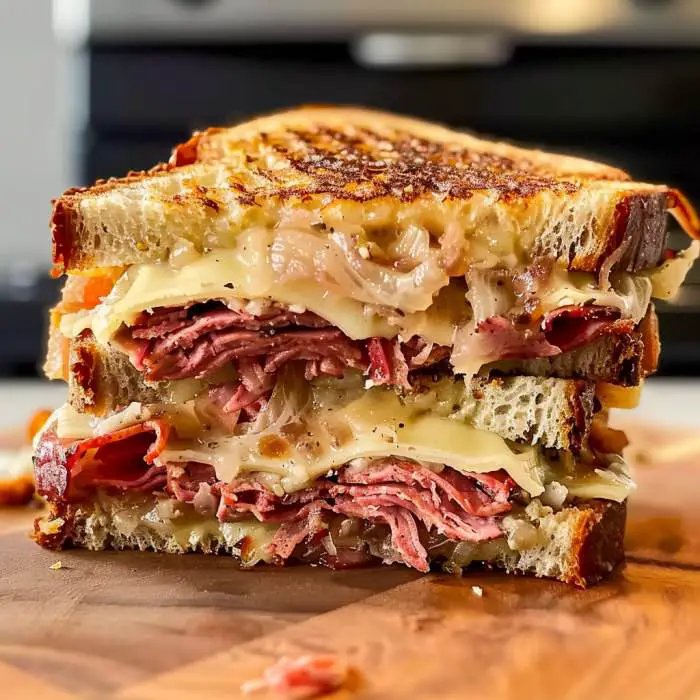
The Ultimate Reuben Sandwich: A Deep Dive into History, Recipe, and Variations
Ah, the Reuben sandwich. Just the name conjures up images of bustling delis, the satisfying sizzle of the griddle, and that first incredible bite where tangy, savory, cheesy, and crispy all collide in perfect harmony. It’s more than just a lunch order; it’s an icon of American culinary ingenuity. But have you ever paused between bites to wonder about the story behind this masterpiece? Where did it come from, and why does it work so darn well? Buckle up, because we’re embarking on a delicious journey to uncover the murky origins of the Reuben, deconstruct its perfect anatomy, and ultimately, empower you to craft the ultimate version right in your own kitchen. Forget what you know from the corner diner; we’re going deep on the history, the debate, and the art of the perfect Reuben sandwich.
Introduction and Historical Deep Dive
The Reuben Sandwich: More Than Just a Corned Beef Deli Classic
Picture this: two slices of robust rye bread, generously slathered with a creamy, pink dressing, embracing a towering stack of thinly sliced corned beef, melted Swiss cheese, and a tangy heap of sauerkraut. This, my friends, is the Reuben sandwich—a behemoth of flavor that has comfortably sat atop the throne of American deli classics for decades. Honestly, it’s a miracle of engineering and taste; somehow, this combination of seemingly simple ingredients creates something far greater than the sum of its parts. It’s the star of diner menus nationwide and the holy grail for sandwich aficionados. Yet, for all its fame, its origin story is shrouded in as much mystery as the contents of a perfect Russian dressing recipe. So, before we get our hands dirty in the kitchen, let’s rewind the clock and dig into the fascinating, and hotly contested, history of how this sandwich came to be.
A Sandwich Shrouded in Mystery: The Battle for Origin
Now, here’s where the plot thickens faster than a good dressing. Believe it or not, there isn’t one single, universally accepted tale for the invention of the Reuben. Instead, two compelling claims vie for legitimacy, each with its own passionate defenders. It’s a culinary whodunit that stretches from the heartland of Nebraska to the bustling streets of New York City.
The Nebraska Claim: Reuben Kulakofsky’s Poker Night Story
Our first story takes us to Omaha, Nebraska, in the 1920s. The protagonist? A charming Lithuanian-born grocer named Reuben Kulakofsky. As the tale goes, Reuben was a regular at weekly poker games held at the historic Blackstone Hotel. Furthermore, these games were legendary, often running late into the night and demanding sustenance. During one particularly raucous game, Reuben, undoubtedly peckish, supposedly requested a unique sandwich from the cook: corned beef, sauerkraut, Swiss cheese, and dressing on rye bread. The result was an instant hit with his poker buddies. Consequently, the hotel’s owner, Charles Schimmel, a man who clearly knew a good thing when he tasted it, added this new creation to the hotel’s restaurant menu. He aptly named it the “Reuben’s Sandwich.” As a result, this heartland tale gained monumental credibility when the Blackstone Hotel’s version won the national sandwich contest in 1956, practically sealing the deal for many historians.
The New York Claim: Arnold Reuben’s Culinary Invention
Not so fast, says New York! The Big Apple presents a formidable challenger in the form of Arnold Reuben, the German-born founder of the legendary Reuben’s Delicatessen. His story, while also lacking definitive paperwork, is equally colorful. According to New York lore, around 1914, a silent film actress named Annette Seelos wandered into Reuben’s deli. She was, as the story goes, tired and hungry, and asked for a new kind of sandwich. Arnold Reuben, the ever-accommodating host, supposedly whipped up a concoction featuring ham, turkey, Swiss cheese, and coleslaw on rye bread with a special dressing. He called it the “Annette Seelos Special.” However, when the actress didn’t return for it, he renamed it after himself. Over time, the ingredients allegedly evolved, with corned beef and sauerkraut replacing the original poultry and slaw. This version paints the sandwich as a star-born creation from the world of entertainment.
Weighing the Evidence: Which Story Holds Up?
So, who do we believe? Well, it’s a tough call, a real culinary stand-off. On the one hand, the Omaha story has the concrete evidence of that 1956 contest win going for it. On the other hand, Arnold Reuben’s deli was a New York institution famous for its inventive sandwiches. Many food scholars, however, point out that the earliest printed menus from Reuben’s Delicatessen don’t list the sandwich as we know it, which certainly casts a shadow of doubt on the New York origin myth. Ultimately, while the true origin might be lost to time, the enduring legacy of the Reuben sandwich is what truly matters. It’s a testament to American innovation, a delicious blend of cultures and flavors that somehow found each other. Whether born at a poker table or in a glamorous deli, we’re just lucky it exists.
Deconstructing the Perfect Reuben: The Core Components
Anatomy of a Perfect Reuben: Breaking Down the Ingredients
Alright, enough history—let’s talk construction. You can’t build a cathedral with pebbles, and you absolutely cannot build a magnificent Reuben with subpar ingredients. Each component plays a critical, symphonic role. Skimp on one, and the whole melody falls flat. Therefore, understanding the whybehind each element is your first step to sandwich nirvana. Let’s roll up our sleeves and get to know the all-star cast.
The Heart of the Matter: Choosing and Preparing Your Corned Beef
Let’s be real: the corned beef is the undisputed star of the show. This is the powerhouse flavor that everything else supports. But not all corned beef is created equal, oh no. Walking into a grocery store, you’ll likely face a choice that can make or break your sandwich.
Flat Cut vs. Point Cut: Which is Best for Reubens?
First, you’ll encounter two main cuts. The flat cut, lean and uniform, is the handsome, predictable choice you see in most photos. Conversely, the point cut (or deckle) is fattier, marbled, and a bit more irregular in shape. So, which one wins? For the perfect Reuben sandwich, the flat cut is generally your champion. Why? Well, its consistent shape and leaner profile allow for those beautiful, thin, wide slices that drape perfectly over the bread, ensuring every single bite is packed with meaty goodness without being overly greasy. The point cut is fantastic for shredding, but for structural integrity, flat is where it’s at.
To Boil or to Steam? Cooking Methods Explained
Now, how do you cook this beautiful brisket? While the package often instructs you to boil it, take a page from the classic New York deli playbook: steam it. Seriously, steaming is the secret handshake. Boiling can leach out precious flavor into the water, leaving you with a bland result. Steaming, however, gently cooks the meat in its own juices, rendering it incredibly tender and locking in that signature salty, spiced flavor. Simply place the brisket fat-side up on a rack in a large pot with a couple of inches of water, cover, and let it steam for about three hours until it’s fork-tender. Remember, always check the safe internal temperature for cooked beef, which should be at least 145°F (63°C).
The Tangy Soul: Sauerkraut Secrets
Next up, the element that provides the crucial tangy counterpoint to the rich beef: the sauerkraut. This isn’t just soggy cabbage; it’s a fermented powerhouse that cuts through the fat and cleanses the palate. For the love of all that is good, do not use it straight from the can or jar! That liquid is a one-way ticket to Soggy Sandwich Town. You must drain it thoroughly—and I mean really squeeze it out—and then give it a quick rinse to control the overpowering saltiness. For a truly next-level experience, seek out fresh, refrigerated sauerkraut; brands like Bubbies or Boar’s Head offer a crispness and complex tang that the shelf-stable stuff can only dream of.
The Creamy Glue: Crafting the Perfect Russian Dressing
What’s the difference between Russian dressing and Thousand Island? This is a debate that has sparked many a kitchen argument. Traditionally, Russian dressing uses chili sauce as its base, giving it a subtly spicier, more piquant kick. Thousand Island, on the other hand, relies on ketchup and sweet pickle relish, landing on a sweeter, milder note. Most modern delis use the terms interchangeably for their Reuben sandwich, but making your own is embarrassingly easy and a total game-changer. Whisk together mayonnaise, chili sauce (or ketchup in a pinch), a little horseradish for zing, and a mince of sweet pickle. Voilà! You’ve just created the creamy, pink, flavorful glue that binds this behemoth together.
The Supporting Cast: Cheese and Bread
Don’t you dare overlook these final two players; they are absolutely vital.
Why Swiss Cheese is Non-Negotiable
You need a cheese that melts into gooey perfection without turning into an oily mess. Swiss cheese, specifically varieties like Emmental or Gruyère, is the only choice. Its signature nutty flavor is the ideal complement to the salty beef and tangy kraut. Moreover, those famous holes? They’re a bonus—little pockets of melted goodness throughout. Pro tip: place a slice on both the top and bottom pieces of bread; this creates a protective, melty barrier that helps prevent the dressing from making the bread soggy.
The Foundation: Selecting the Right Rye Bread
Finally, the foundation: a sturdy, flavorful rye bread. Flimsy white bread will buckle and disintegrate under the weight and moisture of the fillings. You need a robust, seeded rye or, even better, marbled rye (swirled with pumpernickel) that can stand up to the challenge. It provides a slightly sour, earthy base that holds its own against the strong flavors and, when grilled, transforms into a crispy, buttery shell of delight.
The Art of Assembly and Cooking
Building and Grilling the Perfect Reuben: A Step-by-Step Guide
You’ve gathered your A-team ingredients. Now, it’s showtime. Assembling a Reuben is a ritual, a careful dance that leads to culinary bliss. Follow these steps precisely, and you will be rewarded.
Step 1: Buttering the Bread (The Outside)
This is your first critical step. Take your slices of rye bread and butter the outer sides generously. Yes, the outsides! This is what will create that gorgeous, golden-brown, crispy crust when it hits the griddle. Use softened butter for easy, even spreading that won’t tear the bread.
Step 2: Layering the Ingredients (The Inside)
Now, flip the slices over so the unbuttered sides are facing up. This is your canvas. On the bottom slice, spread a generous amount of your Russian dressing. Then, layer on one slice of Swiss cheese. Next, pile high with your warm, thinly sliced corned beef. After that, add your well-drained sauerkraut, distributing it evenly. Finally, top the kraut with the second slice of Swiss cheese. This “cheese on both sides” technique is a pro move that acts as a moisture barrier. Cap it all off with the top slice of bread, buttered side out.
Step 3: The Low and Slow Grill
Place your assembled sandwich on a preheated griddle or heavy skillet over medium-low heat. Why not high heat? Because you need time for the heat to penetrate all the way through to melt the cheese and warm the fillings without incinerating the bread. This is a marathon, not a sprint.
Step 4: The Flip and The Press
Cover the sandwich with a lid or a metal bowl. This traps the heat, essentially creating a miniature oven that ensures everything gets perfectly warm and melty. After about 4-5 minutes, peek underneath. Once it’s a beautiful golden brown, it’s time to flip. Carefully slide your spatula under it, press down gently to compact the fillings a bit, and confidently flip it over. Cover again and grill the other side for another 3-4 minutes.
Step 5: Resting and Slicing
I know it’s tempting to dive right in, but you must exercise patience! Remove the sandwich from the heat and let it rest on a cutting board for a minute. This allows the cheese to set slightly, preventing a volcanic eruption of filling with your first bite. Then, and only then, slice it diagonally—the only proper way to cut a sandwich of this stature—and behold your masterpiece.
Variations, Pairings, and Dietary Considerations
Beyond the Classic: Delicious Reuben Variations
The classic formula is untouchable, but that doesn’t mean you can’t play with your food. Several famous variations have earned their own spot on menus across the country.
The Rachel Sandwich: A Turkey-Based Twist
The most famous offshoot is undoubtedly the Rachel sandwich. Essentially, it’s a Reuben in a clever disguise. It typically substitutes pastrami or turkey for the corned beef and creamy coleslaw for the sauerkraut. The result is a slightly sweeter, milder, but equally delicious cousin. It’s a fantastic option for those who find the classic a bit too intense.
Other Creative Twists:
Honestly, the possibilities are endless. Feel like a California Reuben? Add some avocado and sprouts. How about a Breakfast Reuben? Top it with a fried egg. You can even use pulled pork or a firm fish like salmon. The core concept—something savory, something tangy, something creamy, and something melty on grilled rye—is your playground.
What to Serve with Your Reuben: The Perfect Pairings
A sandwich this mighty can stand alone, but a great sidekick never hurts. The classic pairing is a crisp, cold dill pickle spear—its vinegar punch cuts through the richness perfectly. Other fantastic options include a simple, mustardy potato salad, a tangy vinegary coleslaw (not the creamy kind!), or a handful of crispy french fries or potato chips for that perfect salty crunch.
Crafting a Lighter or Dietary-Friendly Reuben
Love the flavor but want a lighter version? No problem! You can easily make smart swaps without sacrificing taste. Opt for low-sodium corned beef, reduced-fat Swiss cheese, and a light mayonnaise in your dressing. For a gluten-free Reuben, seek out a high-quality gluten-free rye bread that’s sturdy enough to hold up. For a vegan version, get creative with marinated seitan or thinly sliced roasted mushrooms standing in for the beef, use vegan cheese, and ensure your dressing is egg-free. It’s all about capturing the spirit of the sandwich.
FAQs Section
Frequently Asked Questions About the Reuben Sandwich
What is the difference between a Reuben and a Rachel sandwich?
This is a common point of confusion! A classic Reuben sandwich is strictly made with corned beef and sauerkraut. Conversely, a Rachel sandwich usually swaps in turkey (or sometimes pastrami) for the meat and replaces the sauerkraut with coleslaw. It’s a milder, often sweeter take on the original.
What is a Reuben sandwich made of?
The five essential ingredients for a traditional Reuben are: sliced rye bread, corned beef, Swiss cheese, sauerkraut, and Russian or Thousand Island dressing. The whole assembly is then grilled until the bread is crispy and the cheese is utterly melted.
What is the difference between Russian dressing and Thousand Island?
Although often used interchangeably in restaurants, there is a technical difference. Russian dressingtraditionally uses chili sauce as its base, which gives it a subtly spicier and more piquant flavor profile. Thousand Island dressing, however, is typically made with a ketchup base and includes sweet pickle relish, making it noticeably sweeter and milder.
Is a Reuben sandwich Jewish?
This is an excellent question with a nuanced answer. While the sandwich features iconic Jewish deli staples like corned beef and rye bread, the combination with dairy (Swiss cheese) means it is not kosher. Therefore, while its roots are deeply embedded in Jewish-American culinary tradition, the specific sandwich itself is considered a classic American invention that evolved from that tradition. You can read more about the intricate history of corned beef to understand this better.
Print
reuben sandwich
Description
Ingredients (for 2 sandwiches):
-
4 slices rye bread (marbled rye is great)
-
4 tbsp butter, softened
-
4 tbsp Russian dressing (or Thousand Island)
-
6 oz corned beef (thinly sliced, warm)
-
1 cup sauerkraut (drained well)
-
4 slices Swiss cheese
Instructions:
-
Prepare the bread – Spread butter on one side of each bread slice. Spread Russian dressing on the inside (non-buttered) side.
-
Assemble – On one slice (dressing side up), layer Swiss cheese, corned beef, sauerkraut, another slice of cheese, and top with the second bread slice (buttered side out).
-
Grill – Heat a skillet or griddle over medium-low. Place sandwiches in the pan, press gently, and cook until the bread is golden and crisp, and the cheese is melted (about 3–4 minutes per side).
-
Serve – Slice in half and serve hot, with pickles or chips on the side.