
Introduction & The Allure of the Dish
Butter Poached Lobster Tails with Risotto: An Epitome of Gourmet Dining
Ah, the decadent duo of butter poached lobster tails and creamy risotto. Honestly, doesn’t it just sound like a special occasion on a plate? This iconic dish, a star on fancy restaurant menus, whispers of luxury, celebration, and culinary skill. Consequently, many home cooks file it away in the “too difficult to try” category—but what if I told you that’s a huge mistake?
Well, get ready to be pleasantly surprised. This guide is designed to completely demystify the process, transforming what seems like a daunting chef’s secret into an entirely achievable, show-stopping meal in your own kitchen. We’re talking about succulent, impossibly tender lobster meat, luxuriating in a bath of rich, golden butter, perfectly paired with a velvety, creamy risotto that’s bursting with flavor. Ultimately, it’s a symphony of texture and taste that is absolutely worth mastering.
So, are you ready to roll up your sleeves and create something truly magnificent? Believe me, the impressed looks from your family or guests will make every single second of effort worthwhile. Let’s dive in and discover why this gourmet dinner is the ultimate culinary project for any passionate home cook.
Understanding Your Key Ingredients
The Foundation of Flavor: Sourcing and Selecting Premium Ingredients
First things first, you simply cannot build a magnificent dish without a rock-solid foundation. In other words, the quality of your ingredients isn’t just important; it’s everything. Using lackluster components here is like trying to build a palace on sand—it just won’t end well. Therefore, let’s break down the stars of the show and how to choose them wisely.
Choosing the Perfect Lobster Tails
Navigating the seafood counter can be tricky, but fear not! Here’s the lowdown. Primarily, you’ll encounter two main types: cold-water and warm-water. Cold-water varieties, like Maine or Canadian lobster, are generally prized for their firmer, sweeter meat and larger claws. Conversely, warm-water lobsters (like Spiny or Rock lobsters) are what you typically find sold as tails; they’re still delicious but can be slightly less tender.
Now, onto the big question: fresh or frozen? Surprisingly, high-quality frozen tails are often your best bet. Why? Because unless you live right on the coast, so-called “fresh” lobster at the store was almost certainly frozen and thawed for display. By buying frozen, you control the thawing process, guaranteeing peak quality. As for size, a 4 to 6-ounce tail per person is the sweet spot for both presentation and satisfaction.
The Art of Butter Poaching: It’s All About the Butter
This isn’t the time to skimp! The butter is both the cooking medium and the primary source of flavor for the lobster. For the best results, choose a high-quality, European-style butter. Its higher butterfat content (around 82-85%) compared to American butter makes it richer and more flavorful.
Here’s the technical bit: for the traditional stovetop method, you’ll want to use clarified butter. Regular butter contains milk solids and water that will burn at the low temperature we need for poaching. Clarified butter is pure butterfat, with a much higher smoke point. Don’t worry, it’s easy to make yourself using this easy step-by-step guide to clarifying butter.
Building a Flawless Risotto
The risotto is far more than just a side; it’s a creamy, luxurious bed that complements the rich lobster. The choice of rice is critical. You need a short or medium-grain variety high in starch, like Arborio rice(most common), Carnaroli (the “king of risotto”), or Vialone Nano. This starch is what releases slowly to create that signature creaminess.
Next, your liquid. A homemade or high-quality store-bought seafood stock is ideal, as it echoes the oceanic notes of the lobster. Don’t have any? A good chicken stock works perfectly well as a substitute. Finally, fresh aromatics—shallots, garlic, and herbs—are non-negotiable for building a deep, flavorful base.

Essential Tools & Equipment
Gearing Up for Success: Your Kitchen Toolkit
You don’t need a kitchen full of fancy gadgets, but a few key pieces of equipment will make the process smoother and significantly increase your chances of success. Gathering these tools before you start is a pro move that prevents mid-recipe panic.
Firstly, a heavy-bottomed pot or Dutch oven is essential for the risotto. It distributes heat evenly, preventing the rice from scorching on the bottom—a true risotto disaster! Secondly, if you’re taking the modern route, a sous vide immersion circulator is the ultimate tool for foolproof, perfectly butter poached lobster. It takes all the guesswork out of temperature control.
For the traditional stovetop poaching method, a digital thermometer is absolutely critical. We’re working within a specific temperature window, and you can’t reliably gauge that by sight alone. Furthermore, a large sauté pan with high sides is perfect for this. Finally, have a ladle ready for adding warm stock to your risotto and a pair of kitchen shears for prepping those lobster tails. With these tools in your arsenal, you’re more than halfway to victory.
The Step-by-Step Cooking Guide
Crafting Your Culinary Masterpiece: A Detailed Step-by-Step Guide
Alright, it’s go time! This is where the magic happens. We’ll tackle this in three clear phases: prepping the lobster, poaching it to perfection, and building the risotto. Follow these steps carefully, and you’ll be amazed at what you create.
Preparing the Lobster Tails
Step 1: Thawing Safely
If your tails are frozen, please, whatever you do, do not thaw them in warm water! This compromises texture. Instead, plan ahead and transfer them from the freezer to the refrigerator for at least 12, ideally 24, hours. Patience is your first secret ingredient.
Step 2: Cleaning and Deveining
Using your kitchen shears, cut straight down the top of the shell towards the tail fin, but stop before you cut through it. Then, carefully pry the shell open and loosen the meat, keeping it attached at the base of the tail. Lift the meat so it rests on top of the shell (this is called butterflying). You might see a dark vein running along the back; gently pull it out and discard it.
Step 3: Preparing the Poaching Butter
For stovetop poaching, you’ll need clarified butter. Following the guide linked earlier, you’ll melt unsalted butter and skim off the milky solids, leaving you with pure, golden butterfat.
The Poaching Process – Two Methods
Method 1: The Traditional Stovetop Butter Poach
Pour your clarified butter into a sauté pan deep enough to submerge the tails. Heat it gently over low heat until it reaches a precise 130-140°F (55-60°C). Use your thermometer! This is a poach, not a fry. Carefully add the lobster tails. The butter should bubble very gently. Cook for about 5-8 minutes, basting constantly, until the meat is opaque and firm to the touch.
Method 2: The Foolproof Sous Vide Butter Poach
This method is incredibly reliable. Set your sous vide water bath to 135°F (57°C). Season the butterflied tails and place each in a vacuum-seal bag with a few tablespoons of whole butter and a sprig of fresh tarragon or thyme. Seal the bag and submerge it for 30-45 minutes. The result? Unbelievably tender, perfectly cooked lobster every single time. You can learn more about the precision of this technique through the science behind perfect sous vide lobster.
Building the Perfect Risotto
-
Toasting the Rice: In your heavy-bottomed pot, sauté finely chopped shallots until soft. Add the Arborio rice and toast it for a few minutes until the edges look translucent. This step seals the grain, ensuring a creamy, not mushy, result.
-
The Deglaze: Pour in a good glug of dry white wine. It will sizzle and steam—this is good! Stir until the wine is fully absorbed, which will only take a minute or two.
-
The Patient Addition of Stock: Now, add your warm stock, one ladleful at a time. Stir constantly and only add the next ladle once the previous one has been almost fully absorbed. This slow process is the heart and soul of a great risotto. It should take about 18-20 minutes.
-
Achieving “All’Onda”: The risotto is done when the rice is al dente (tender with a slight bite) and the overall consistency is creamy and fluid. Italians call this “all’onda,” meaning it should wave or flow slowly.
-
The Mantecatura: Remove the pot from the heat! This is vital. Now, vigorously stir in a few knobs of cold butter and a generous handful of grated Parmesan cheese. This final step, called mantecatura, emulsifies the fat into the risotto, creating an incredible, restaurant-level creaminess. Season with salt and pepper to taste.
Plating and Presentation
The Grand Finale: Plating for Maximum Impact
You’ve done the hard work; now it’s time for the glamour! How you plate this dish dramatically elevates the experience from a simple meal to a luxury dining event.
Creating a Restaurant-Worthy Dish
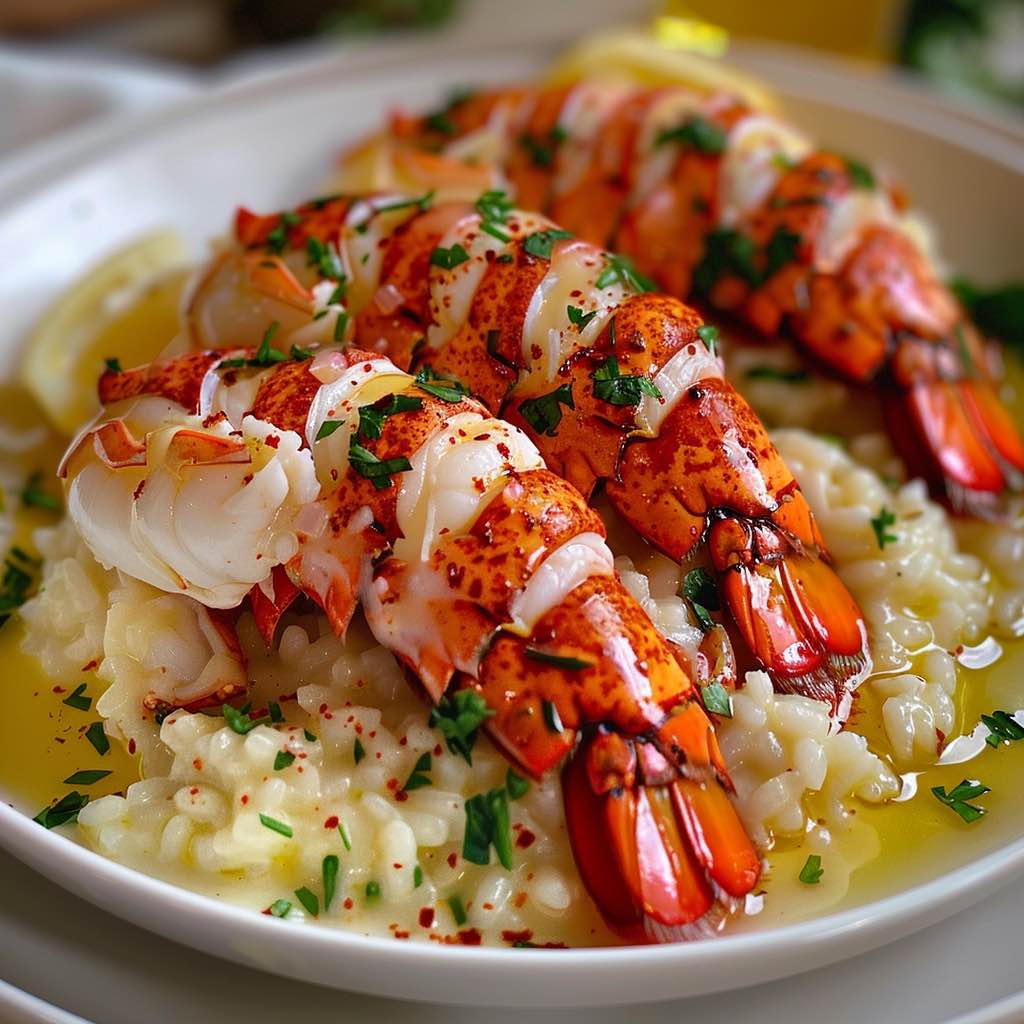
Warm your plates or shallow bowls beforehand—a simple trick that keeps the food hot longer. Place a generous scoop of risotto in the center of the bowl. Using the back of a spoon, make a slight well or swoosh. Carefully place your beautiful butter poached lobster tail on top of the risotto, either nestled in its shell or removed for easier eating. Drizzle a spoonful of that gorgeous poaching butter over everything. Finally, garnish with a sprinkle of fresh chives or parsley, a twist of black pepper, and perhaps a single microgreen for a touch of color. Voilà! You’ve just created a masterpiece.
Expert Tips, Tricks, and Common Mistakes to Avoid
Pro Secrets for Impeccable Results
Even with a great recipe, a few insider tips can make the difference between good and extraordinary. Here’s how to truly nail it.
Tips for the Best Butter Poached Lobster
-
Don’t Overcrowd: Give the tails space in the butter bath so they cook evenly.
-
Baste, Baste, Baste: If using the stovetop method, spoon the hot butter over the tails continuously.
-
Rest is Best: Let the lobster rest for a minute after poaching. This allows the juices to redistribute.
Tips for the Best Risotto
-
Warm Stock is Non-Negotiable: Adding cold stock shocks the rice and ruins the cooking process.
-
Stir Constantly: This friction is what coaxes the starch out of the rice, creating the creaminess.
-
Butter and Cheese at the End: Adding these off the heat prevents the fat from separating.
Critical Mistakes to Avoid
-
Boiling the Butter: If your butter is sizzling aggressively, it’s too hot! You’ll end up with tough, rubbery lobster.
-
Rinsing the Rice: You’ll wash away the essential starch needed for a creamy risotto.
-
Walking Away: Risotto demands your attention. Abandoning it is a surefire path to a burnt or sticky mess.
Pairing Suggestions
The Perfect Pairing: What to Serve With Your Gourmet Meal
This dish is undoubtedly rich and decadent. Therefore, your pairings should be chosen to complement and cut through that richness, creating a balanced and memorable meal.
For a non-alcoholic option, a sparkling elderflower cordial with a squeeze of lime offers a sweet and floral acidity that cleanses the palate beautifully. Alternatively, a chilled glass of iced green tea with lemon provides a refreshing, astringent contrast.
In terms of side dishes, keep them simple and fresh. A side of simply steamed asparagus or haricots verts with a squeeze of lemon is a classic and perfect choice. Furthermore, a light arugula salad with a sharp lemon vinaigrette and shaved Parmesan adds a wonderful peppery bite that contrasts the creamy risotto wonderfully.
Article Part 8: FAQs (Frequently Asked Questions)
Butter Poached Lobster Tails with Risotto: Your Questions Answered
Can I use frozen lobster tails?
Absolutely. In fact, high-quality frozen lobster tails are often a better and more sustainable option than “fresh” ones that have been thawed at the store. The key is to thaw them slowly and properly in the refrigerator overnight.
What can I use if I don’t have a thermometer for poaching?
It is highly discouraged to attempt traditional butter poaching without a thermometer, as the margin for error is tiny. Instead, the sous vide method is far more reliable. Alternatively, you can gently pan-sear and then baste the tails with butter (a method similar to cooking a steak), though the texture will be slightly different.
Why did my risotto turn out gummy or hard?
A gummy risotto is usually caused by overcooking or adding too much stock too quickly. A hard risotto means it’s undercooked; simply continue adding small amounts of warm stock and stirring until it reaches the desired creamy-yet-al-dente texture.
Can I make any part of this dish ahead of time?
You can prep your ingredients (e.g., chop herbs, measure rice, make stock) ahead of time. However, both the lobster and the risotto are best served immediately. Risotto, in particular, does not hold well and will become sticky.
Print
Butter Poached Lobster Tails with Risotto
Description
Ingredients (2–3 servings):
For the Lobster:
-
3 lobster tails (about 4–5 oz each), shells split and meat removed
-
1 cup unsalted butter (2 sticks), cut into cubes
-
2 tbsp water
-
1 clove garlic, smashed
-
1 sprig fresh thyme (optional)
-
Lemon wedges, for serving
For the Risotto:
-
1 cup Arborio rice
-
3 tbsp butter (divided)
-
1 tbsp olive oil
-
1 small shallot, finely diced
-
2 cloves garlic, minced
-
½ cup dry white wine (Sauvignon Blanc or Pinot Grigio)
-
4 cups chicken or seafood stock (kept warm)
-
½ cup Parmesan cheese, freshly grated
-
2 tbsp mascarpone (optional, for extra creaminess)
-
Salt & freshly cracked black pepper, to taste
-
Fresh parsley or chives, chopped, for garnish
Instructions:
-
Prepare Lobster – Remove meat from lobster tails, cut into large chunks. Set aside.
-
Start Risotto – In a large pan, heat 1 tbsp butter + olive oil over medium heat. Add shallot and garlic, cook until soft and fragrant. Stir in Arborio rice, toasting for 1–2 minutes until slightly translucent.
-
Deglaze – Add wine, stirring until mostly absorbed.
-
Cook Risotto – Add warm stock, ½ cup at a time, stirring often. Let liquid absorb before adding more. Continue until rice is creamy and al dente (18–20 minutes). Stir in Parmesan, remaining butter, and mascarpone. Season with salt and pepper. Keep warm.
-
Butter Poach Lobster – In a small saucepan, add 2 tbsp water and bring to a simmer. Reduce heat to low, whisk in butter cubes a few at a time to create an emulsion (don’t let it boil). Add garlic and thyme. Slip in lobster meat and gently poach 5–6 minutes until opaque and tender.
-
Assemble – Spoon risotto onto plates, top with butter-poached lobster, drizzle with a little of the poaching butter, and garnish with fresh herbs. Serve with lemon wedges.