
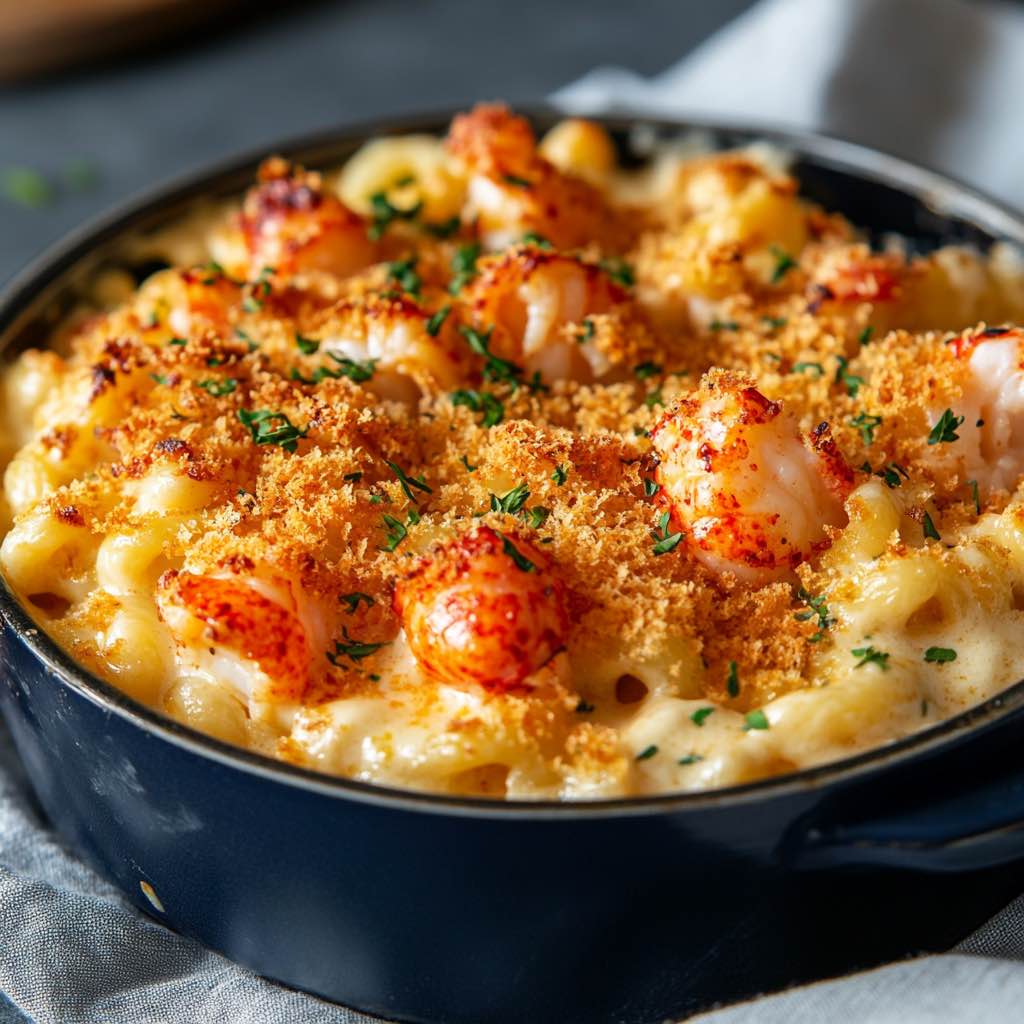
The Ultimate Baked Lobster Mac and Cheese: A Luxurious Comfort Food Experience
Introduction
Nothing quite compares to the indulgent combination of creamy mac and cheese elevated with succulent lobster meat. Baked Lobster Mac and Cheese transforms a beloved comfort food classic into an elegant, restaurant-worthy dish that’s perfect for special occasions or when you want to treat yourself to something extraordinary.
Whether you’re hosting a dinner party, celebrating an anniversary, or simply craving an upscale comfort food experience, this baked lobster mac and cheese delivers impressive results with surprisingly manageable preparation. Additionally, the recipe can be partially prepared ahead of time, making it perfect for entertaining without stress.
What Makes Baked Lobster Mac and Cheese Special
The Perfect Marriage of Flavors
Baked lobster mac and cheese represents the ultimate fusion of land and sea comfort foods. The sweet, delicate flavor of lobster meat pairs beautifully with rich, creamy cheese sauce, creating a harmonious balance that’s both familiar and luxurious. Moreover, the pasta provides the perfect vehicle for carrying these complementary flavors in every bite.
Texture Contrast Excellence
This dish excels in textural variety. The tender pasta and succulent lobster meat contrast beautifully with the crispy, golden breadcrumb topping. Additionally, the creamy cheese sauce binds everything together while maintaining distinct textural elements that keep each forkful interesting.
Versatile Elegance
While impressive enough for special occasions, baked lobster mac and cheese remains approachable for home cooks. Furthermore, it works equally well as a main course for intimate dinners or as a show-stopping side dish for larger gatherings.
Nutritional Advantages
Lobster provides high-quality protein, omega-3 fatty acids, and essential minerals like zinc and selenium. Similarly, the cheese contributes calcium and additional protein, making this indulgent dish surprisingly nutritious.
Essential Ingredients for Perfect Results
The Pasta Foundation
Elbow Macaroni: Traditional elbow macaroni works best because its curved shape holds cheese sauce perfectly. However, shells, cavatappi, or penne can substitute effectively.
Cooking Requirements: Use plenty of salted water and cook pasta just until al dente, as it will continue cooking in the oven.
Lobster Selection and Preparation
Fresh vs. Frozen: Fresh lobster meat provides the best flavor and texture. Nevertheless, high-quality frozen lobster meat works well when thawed properly and drained thoroughly.
Quantity Guidelines: Plan for approximately 12-16 ounces of cooked lobster meat for a standard recipe serving 6-8 people.
Preparation Tips: Remove lobster meat from shells carefully, checking for any shell fragments. Cut larger pieces into bite-sized chunks for even distribution.
Cheese Blend Components
Sharp Cheddar: Forms the flavor base with its tangy, robust character that complements lobster’s sweetness.
Gruyere: Adds nutty complexity and excellent melting properties for smooth sauce consistency.
Fontina: Contributes creamy texture and mild flavor that doesn’t overpower the delicate lobster.
Parmesan: Provides sharp, salty notes and helps create the perfect golden top when baked.
Sauce Foundation Elements
Butter: Use unsalted butter for better control over seasoning levels.
All-Purpose Flour: Creates the roux base for thickening the cheese sauce properly.
Whole Milk and Heavy Cream: The combination provides richness without being overly heavy.
Seasonings: White pepper, garlic powder, nutmeg, and sea salt enhance flavors without masking the lobster.
Breadcrumb Topping
Panko Breadcrumbs: Create superior crunchiness compared to regular breadcrumbs.
Additional Cheese: Extra Parmesan mixed with breadcrumbs ensures golden browning.
Herb Additions: Fresh chives or parsley add color and bright flavor contrast.
Step-by-Step Recipe Instructions
Phase 1: Preparation and Setup
Step 1: Preheat your oven to 375°F (190°C). Meanwhile, butter a 9×13-inch baking dish thoroughly to prevent sticking.
Step 2: Bring a large pot of salted water to boiling. Subsequently, cook 1 pound of elbow macaroni according to package directions until al dente, typically 7-8 minutes.
Step 3: Drain pasta thoroughly and rinse briefly with cold water to stop cooking. Then, set aside while preparing the cheese sauce.
Phase 2: Creating the Perfect Cheese Sauce
Step 4: In a large saucepan, melt 6 tablespoons of unsalted butter over medium heat. Once melted, whisk in 6 tablespoons of all-purpose flour continuously for 2 minutes to create a smooth roux.
Step 5: Gradually add 2 cups of whole milk while whisking constantly to prevent lumps. Continue cooking and whisking until the mixture thickens, approximately 3-4 minutes.
Step 6: Slowly incorporate 1 cup of heavy cream while maintaining constant whisking motion. The mixture should be smooth and creamy at this point.
Step 7: Remove the saucepan from heat. Next, add cheeses gradually: 2 cups sharp cheddar, 1 cup Gruyere, and ½ cup Fontina, whisking until completely melted and smooth.
Step 8: Season the cheese sauce with 1 teaspoon salt, ½ teaspoon white pepper, ¼ teaspoon garlic powder, and a pinch of freshly grated nutmeg.
Phase 3: Assembly and Baking
Step 9: In the prepared baking dish, combine the cooked pasta with 12 ounces of lobster meat chunks. Gently fold together to distribute evenly.
Step 10: Pour the warm cheese sauce over the pasta and lobster mixture. Then, stir gently to coat everything thoroughly without breaking the lobster pieces.
Step 11: For the topping, mix 1 cup panko breadcrumbs with ½ cup grated Parmesan cheese and 2 tablespoons melted butter. Sprinkle this mixture evenly over the mac and cheese.
Step 12: Bake for 25-30 minutes until the top is golden brown and the edges are bubbling. Finally, let rest for 10 minutes before serving to allow the sauce to set properly.
Pro Tips for Restaurant-Quality Results
Temperature Control Mastery
Always cook the cheese sauce over medium or medium-low heat to prevent curdling. Additionally, remove the pan from heat before adding cheese to maintain smooth consistency.
Pasta Perfection
Cook pasta slightly less than package directions suggest since it continues cooking in the oven. Furthermore, reserve some pasta cooking water in case the sauce needs thinning.
Lobster Handling Excellence
Pat lobster meat completely dry before adding to prevent watery results. Moreover, add lobster in the final assembly stage to preserve its delicate texture.
Make-Ahead Strategies
Prepare the dish completely but don’t add the breadcrumb topping until ready to bake. Similarly, cover tightly and refrigerate for up to 24 hours before baking.
Flavor Enhancement Techniques
Let the completed dish rest for 10-15 minutes after baking. This resting period allows flavors to meld and prevents the sauce from being too liquidy when served.
Equipment Recommendations
Use a heavy-bottomed saucepan for even heat distribution when making cheese sauce. Additionally, a large whisk prevents lumps and ensures smooth consistency throughout the cooking process.
Delicious Variations to Try
Smoky Bacon Addition
Incorporate 6-8 strips of crispy, crumbled bacon for smoky flavor contrast. The saltiness complements both the cheese and lobster beautifully while adding textural interest.
Herb-Crusted Version
Mix fresh herbs like tarragon, chives, and parsley into the breadcrumb topping. These herbs enhance the lobster’s natural flavors while adding visual appeal and aromatic complexity.
Truffle Oil Enhancement
Drizzle a small amount of truffle oil over the dish just before serving. This addition elevates the already luxurious flavors to restaurant-level sophistication.
Three-Cheese Simplicity
For a streamlined approach, use only sharp cheddar, Gruyere, and Parmesan. This combination still provides excellent flavor complexity while simplifying ingredient procurement.
Spicy Kick Variation
Add a pinch of cayenne pepper or hot paprika to the cheese sauce for subtle heat. The warmth enhances the lobster’s sweetness without overwhelming delicate flavors.
Caramelized Onion Addition
Fold in caramelized onions for sweet, savory depth. The onions’ natural sugars complement the lobster while adding another layer of sophisticated flavor.
Nutritional Benefits and Information
Protein Powerhouse Profile
Each serving of baked lobster mac and cheese provides approximately 35-40 grams of high-quality protein. The lobster contributes complete proteins containing all essential amino acids necessary for muscle maintenance and growth.
Mineral Content Advantages
Lobster meat is exceptionally rich in zinc, selenium, and copper. These minerals support immune function, antioxidant activity, and proper cellular metabolism throughout the body.
Omega-3 Fatty Acids
The lobster provides beneficial omega-3 fatty acids that support heart health and brain function. These essential fats are particularly important for maintaining cardiovascular wellness.
Calcium and Bone Health
The multiple cheeses contribute significant calcium content, supporting bone density and dental health. One serving provides approximately 40% of daily calcium requirements.
Portion Control Considerations
While indulgent, reasonable portions of this dish can fit into balanced eating plans. Consider serving smaller portions alongside fresh vegetables or leafy green salads.
Lighter Modifications
Substitute part of the heavy cream with additional milk to reduce calories slightly. Similarly, using reduced-fat cheese varieties can lower overall fat content while maintaining flavor.
Storage and Reheating Guidelines
Proper Storage Techniques
Store leftover baked lobster mac and cheese in the refrigerator for up to 3-4 days. Use airtight containers to prevent flavor absorption from other foods and maintain optimal texture.
Freezing Capabilities
This dish freezes successfully for up to 2-3 months when properly wrapped. However, the texture may be slightly different after thawing due to the dairy content.
Optimal Reheating Methods
Oven Reheating: Cover with foil and reheat at 350°F for 15-20 minutes until heated through. This method preserves the best texture and prevents drying.
Microwave Option: Use 50% power in 1-minute intervals, stirring between each interval. Add a tablespoon of milk if needed to restore creaminess.
Stovetop Technique: Reheat gently in a saucepan over low heat, stirring frequently and adding milk as needed to maintain proper consistency.
Quality Preservation Tips
Never leave the dish at room temperature for more than 2 hours to prevent bacterial growth. Additionally, reheat only the portion you plan to consume immediately for best results.
Check out our guide on [proper food storage techniques] for more detailed information about maintaining food quality and safety.
Serving Suggestions and Pairings
Elegant Presentation Ideas
Serve baked lobster mac and cheese in individual ramekins for sophisticated portion control and presentation. Garnish with fresh chive snips and a light dusting of paprika for color contrast.
Complementary Side Dishes
Fresh Salads: Arugula salad with lemon vinaigrette cuts through the richness beautifully. Similarly, a simple mixed green salad provides necessary balance and nutritional variety.
Vegetable Accompaniments: Roasted asparagus, steamed broccoli, or sautéed green beans offer color contrast and nutritional balance to the rich main dish.
Bread Selections: Crusty artisan bread or dinner rolls help guests manage the rich flavors while providing textural variety throughout the meal.
Special Occasion Considerations
For dinner parties, prepare individual portions in attractive ramekins. This approach ensures consistent serving sizes while creating an upscale presentation that impresses guests.
Troubleshooting Common Issues
Preventing Sauce Separation
If the cheese sauce appears grainy or separated, remove it from heat immediately. Then, whisk in a tablespoon of cold milk or cream to help restore smooth consistency.
Fixing Oversalted Results
Balance oversalted mac and cheese by adding unsalted pasta or extra cheese to dilute the salt concentration. Additionally, a splash of cream can help mellow excessive saltiness.
Addressing Dry Texture
Add warm milk or cream gradually until reaching desired consistency. Furthermore, covering the dish while baking prevents excessive moisture loss during cooking.
Soggy Breadcrumb Solutions
Ensure breadcrumbs are completely dry before adding to the topping mixture. Moreover, bake uncovered during the final 10 minutes to achieve optimal crispiness.
Lobster Texture Issues
Avoid overcooking lobster by adding it during assembly rather than cooking it further. Additionally, pat lobster meat completely dry before incorporating into the dish.
Temperature Regulation Problems
Use an oven thermometer to verify accurate temperature settings. Inconsistent oven temperatures can cause uneven cooking and textural problems throughout the dish.
Frequently Asked Questions
Can I make baked lobster mac and cheese ahead of time?
Yes, absolutely! You can assemble the entire dish up to 24 hours in advance without the breadcrumb topping. Cover tightly and refrigerate, then add breadcrumbs and bake when ready to serve. This make-ahead approach actually allows flavors to meld beautifully.
What’s the best type of lobster meat to use?
Fresh cooked lobster meat provides the best flavor and texture for this recipe. However, high-quality frozen lobster meat works well when properly thawed and drained. Avoid imitation lobster products, as they won’t provide the authentic taste and texture this dish deserves.
How do I prevent the cheese sauce from becoming lumpy?
The key to smooth cheese sauce lies in proper temperature control and gradual ingredient addition. Always remove the saucepan from heat before adding cheese, and whisk constantly while incorporating ingredients slowly. Additionally, using room-temperature cheese helps prevent lumping.
Can I substitute different types of pasta?
While elbow macaroni works best for traditional mac and cheese, you can successfully substitute shells, cavatappi, rotini, or penne. Choose pasta shapes with curves or ridges that hold cheese sauce effectively for optimal results.
How long does leftover baked lobster mac and cheese last?
Properly stored leftover mac and cheese remains safe and delicious for 3-4 days in the refrigerator. Store in airtight containers and reheat thoroughly before serving. The dish can also be frozen for up to 2-3 months, though texture may change slightly.
What should I do if my dish turns out too thick or thin?
For thick mac and cheese, gradually stir in warm milk or cream until reaching desired consistency. If the dish is too thin, create a small flour and butter roux separately, then whisk it into the hot mixture to thicken appropriately.
Is it possible to make this recipe dairy-free?
While traditional baked lobster mac and cheese relies heavily on dairy ingredients, you can experiment with high-quality dairy-free alternatives. Use plant-based milk, dairy-free cheese varieties, and vegan butter substitutes, though results will differ from the original recipe.
How do I know when the dish is properly cooked?
The mac and cheese is ready when the top is golden brown, edges are bubbling, and the center feels set when gently shaken. Internal temperature should reach 165°F for food safety, and the dish should rest for 10 minutes before serving.
Conclusion
Baked Lobster Mac and Cheese represents the perfect fusion of comfort food familiarity and luxurious indulgence. This remarkable dish transforms simple ingredients into an elegant centerpiece worthy of special celebrations while remaining approachable for home cooks of all skill levels.
Whether you’re hosting an intimate dinner party, celebrating a special milestone, or simply treating yourself to an extraordinary comfort food experience, this baked lobster mac and cheese delivers consistent, impressive results. The make-ahead capabilities and storage flexibility make it practical for entertaining without sacrificing quality or sophistication.
Baked Lobster Mac and Cheese
Description
Ingredients
For the Lobster:
-
1-1½ pounds cooked lobster meat, roughly chopped
-
2 tablespoons unsalted butter
-
½ teaspoon Cajun seasoning (optional)
For the Pasta and Cheese Sauce:
-
1 pound cavatappi, elbow macaroni, or corkscrew pasta
-
6 tablespoons unsalted butter, divided
-
¼ cup all-purpose flour
-
2½ cups whole milk
-
1 cup heavy cream
-
½ teaspoon kosher salt
-
½ teaspoon freshly ground black pepper
-
¼ teaspoon garlic powder
-
¼ teaspoon onion powder
-
½ teaspoon smoked paprika
-
Pinch of grated nutmeg
-
12 ounces Gruyère cheese, freshly grated
-
8 ounces sharp cheddar cheese, freshly grated
-
1 cup shredded mozzarella or Havarti cheese
-
½ cup grated Parmesan cheese, divided
For the Topping:
-
⅓ cup panko breadcrumbs
-
2 tablespoons unsalted butter, melted
-
Fresh parsley and chives for garnish
Instructions
Prepare the Lobster:
-
If using fresh lobster tails, preheat oven to 450°F. Cut lobster tails in half vertically, brush with melted butter and Cajun seasoning if using, then bake for 10 minutes until cooked through. Remove meat from shells and chop into large chunks. Lower oven temperature to 375°F.
Cook the Pasta:
-
Bring a large pot of salted water to boil and cook pasta according to package directions until al dente, about 6-8 minutes. Drain and set aside.
Make the Cheese Sauce:
-
In a large saucepan, melt ¼ cup butter over medium heat. Whisk in flour and cook for 2-3 minutes until golden brown, creating a roux.
-
Slowly add milk and heavy cream while whisking continuously to prevent lumps. Season with salt, pepper, garlic powder, onion powder, smoked paprika, and nutmeg.
-
Simmer for 2-3 minutes until sauce thickens slightly. Remove from heat and stir in most of the cheeses (reserve some for topping), whisking until smooth.
Assemble and Bake:
-
Gently fold cooked pasta and half of the lobster meat into the cheese sauce. Transfer mixture to a greased 9×13-inch baking dish.
-
Top with remaining lobster pieces and reserved cheeses, leaving some lobster visible. In a small bowl, mix melted butter with panko breadcrumbs and remaining Parmesan, then sprinkle over the top.
-
Bake at 375°F for 20-30 minutes until golden brown and bubbly. For extra browning, broil for 2-3 minutes at the end, watching carefully.
-
Let rest for 10 minutes before serving to allow the cheese to set. Garnish with fresh parsley and chives.
Pro Tips
Cheese Quality: Freshly grate your own cheese as pre-shredded varieties contain anti-caking agents that prevent smooth melting.
Lobster Preparation: If using pre-cooked lobster meat, keep it chilled until adding to prevent overcooking. The lobster will warm through during baking.
Make-Ahead Option: This dish can be assembled completely and refrigerated for up to 24 hours before baking. Add 10-15 minutes to the baking time if cooking from cold.