
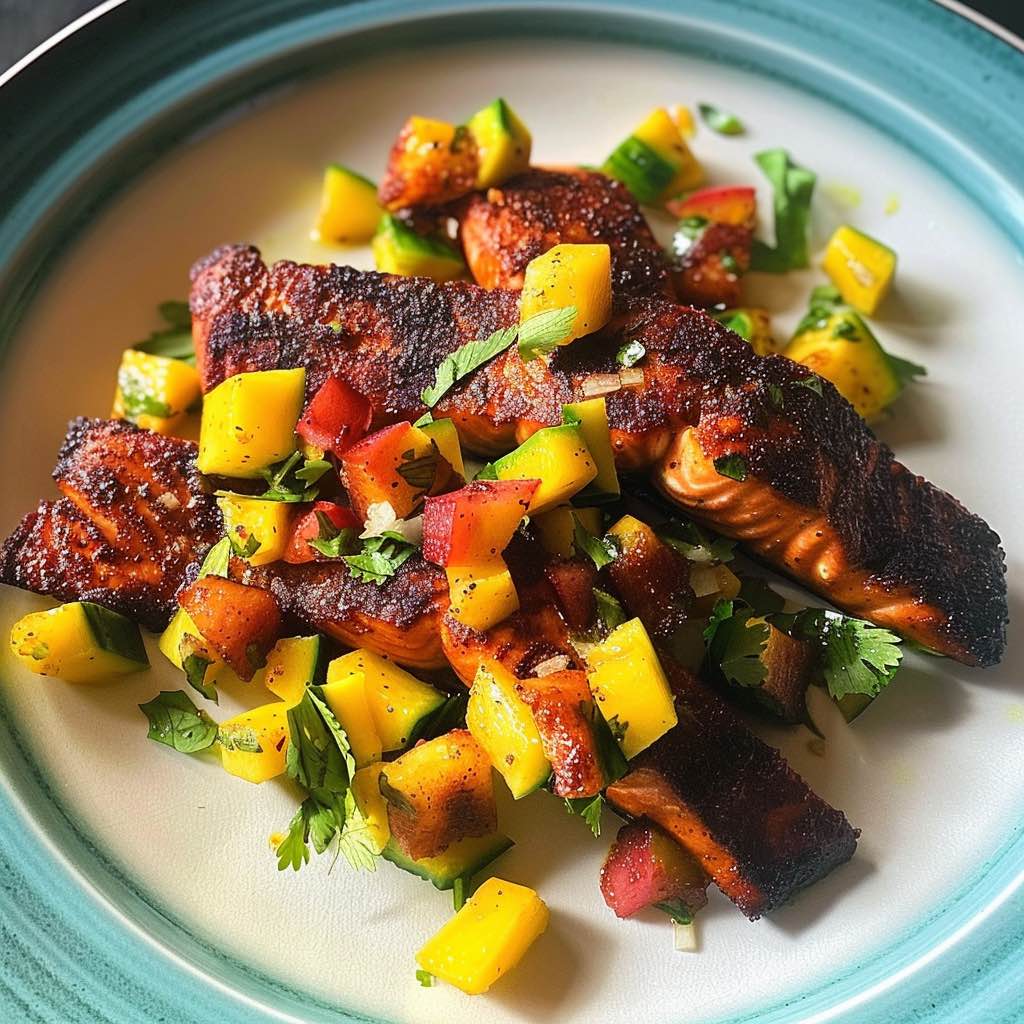
Blackened Salmon with Mango Salsa
Introduction
Blackened Salmon with Mango Salsa brings together bold Cajun spices and refreshing tropical flavors in one stunning dish. This restaurant-quality meal takes just 30 minutes to prepare at home. Moreover, it’s packed with omega-3 fatty acids and vibrant nutrients. The contrast between the smoky, spiced salmon and the sweet, tangy mango salsa creates an unforgettable taste experience.
This recipe delivers impressive results without complicated techniques. Furthermore, it’s naturally gluten-free and adaptable to various dietary needs. Whether you’re cooking for a weeknight dinner or entertaining guests, this dish never fails to impress. The colorful presentation makes it perfect for special occasions too.
What Makes Blackened Salmon Special
Blackening is a cooking technique that originated in Louisiana. Chef Paul Prudhomme popularized this method in the 1980s. The process involves coating fish in bold spices and cooking it in a very hot skillet. Consequently, you get a flavorful crust while keeping the inside moist and tender.
The Science Behind Blackening
The high heat creates a Maillard reaction on the salmon’s surface. This chemical process develops complex flavors and aromas. Additionally, the spice blend forms a protective barrier. Therefore, the fish stays juicy even with intense heat.
The technique works exceptionally well with salmon’s fatty texture. Salmon’s natural oils prevent it from drying out during cooking. As a result, you achieve that perfect crispy exterior everyone loves.
Cajun Seasoning Profile
Traditional blackening seasoning combines several bold spices. Paprika provides the base and distinctive red color. Meanwhile, cayenne pepper adds heat and depth. Garlic powder and onion powder contribute savory notes. Oregano and thyme bring herbal complexity to the mix.
This spice combination creates layers of flavor rather than just heat. Indeed, the blend enhances the salmon’s natural taste without overwhelming it. You can adjust the cayenne level to control spiciness.
The Perfect Mango Salsa
Mango salsa transforms this dish from good to extraordinary. The sweet, juicy fruit balances the spicy blackened crust beautifully. Furthermore, the fresh ingredients add textural contrast and vibrant colors.
Why Mango Works So Well
Mangoes contain natural enzymes that complement rich fish perfectly. Their sweetness counteracts the heat from Cajun spices effectively. Moreover, mangoes provide vitamin C and dietary fiber. The tropical notes transport your taste buds to paradise.
Ripe mangoes should feel slightly soft when gently pressed. They should also have a sweet, fragrant aroma near the stem. Avoid mangoes that feel rock-hard or have brown spots.
Building Flavor Layers
The salsa combines multiple flavor elements for complexity. Red onion adds sharpness and crunch. Jalapeño contributes fresh heat that differs from dried cayenne. Cilantro brings herbaceous freshness to every bite. Lime juice ties everything together with bright acidity.
Each ingredient plays a specific role in the overall profile. Therefore, don’t skip components even if they seem minor. The combination creates a perfectly balanced topping.
Ingredients You’ll Need
For the Blackened Salmon
-
4 salmon fillets (6 ounces each, skin-on or skinless)
-
2 tablespoons paprika
-
1 tablespoon garlic powder
-
1 tablespoon onion powder
-
1 teaspoon cayenne pepper (adjust to taste)
-
1 teaspoon dried oregano
-
1 teaspoon dried thyme
-
1 teaspoon black pepper
-
1 teaspoon salt
-
2 tablespoons olive oil or avocado oil
For the Mango Salsa
-
2 large ripe mangoes, diced
-
1/2 red bell pepper, finely chopped
-
1/4 red onion, finely diced
-
1 jalapeño, seeded and minced
-
1/4 cup fresh cilantro, chopped
-
2 tablespoons lime juice (about 1 lime)
-
1/2 teaspoon lime zest
-
1/4 teaspoon salt
-
Pinch of black pepper
According to the USDA FoodData Central, fresh salmon provides exceptional nutritional value. It contains high-quality protein and essential omega-3 fatty acids. Similarly, mangoes offer abundant vitamins and antioxidants for overall health.
Step-by-Step Cooking Instructions
Preparing the Mango Salsa
First, start with the salsa since flavors develop while sitting. Peel the mangoes using a sharp vegetable peeler. Cut the flesh away from the pit carefully. Then, dice the mango into small, uniform pieces.
Next, combine all salsa ingredients in a medium bowl. Mix gently to avoid crushing the mango pieces. Taste and adjust lime juice or salt as needed. Cover and refrigerate while preparing the salmon.
The salsa improves as it sits and flavors meld together. Therefore, you can make it up to 4 hours ahead. However, add cilantro just before serving to maintain freshness.
Making the Blackening Seasoning
Combine all dry spices in a small bowl. Mix thoroughly to distribute ingredients evenly. This ensures consistent flavor on every piece of salmon. Store any leftover seasoning in an airtight container.
The spice blend stays fresh for up to 3 months. Consequently, you can double or triple the recipe for future use. Keep it away from heat and direct sunlight.
Preparing the Salmon
Pat salmon fillets completely dry with paper towels. This step is crucial for proper seasoning adhesion. Moisture prevents spices from sticking and forming a good crust.
Brush both sides of each fillet lightly with oil. Then, generously coat all surfaces with blackening seasoning. Press the spices gently into the fish for better adherence. Let the seasoned salmon rest for 5 minutes before cooking.
Cooking the Salmon
Heat a large cast-iron skillet or heavy pan over medium-high heat. The pan must be very hot for proper blackening. Add a thin layer of oil and let it shimmer. Meanwhile, ensure your kitchen is well-ventilated as cooking produces smoke.
Carefully place salmon fillets in the hot pan skin-side up. Cook without moving them for 4-5 minutes. The crust should be dark brown and aromatic. Then, flip the fillets carefully using a spatula.
Cook the second side for 3-4 minutes for medium doneness. The internal temperature should reach 145°F according to FDA guidelines. However, many prefer salmon slightly undercooked at 130-135°F for better texture.
Remove salmon from heat and let rest for 2 minutes. This allows juices to redistribute throughout the fish. Meanwhile, the residual heat continues gentle cooking.
Plating and Serving
Place each salmon fillet on a serving plate or platter. Top generously with fresh mango salsa immediately before serving. Garnish with extra cilantro leaves and lime wedges if desired. Serve while the salmon is still warm and the salsa is cool.
Pro Tips for Perfect Results
Choosing Quality Salmon
Select salmon with firm flesh and a fresh ocean smell. Wild-caught salmon offers superior flavor and nutritional benefits. However, farm-raised Atlantic salmon works perfectly well too. Look for bright color and no brown spots or discoloration.
Skin-on fillets hold together better during cooking. Nevertheless, skinless fillets work if you prefer them. Just handle them more gently when flipping.
Temperature Control
Managing heat is the most critical factor for success. The pan must be hot enough to create the characteristic crust. However, excessive heat burns spices before cooking the fish properly.
Cast iron retains heat exceptionally well for even cooking. Alternatively, a heavy stainless steel pan also works effectively. Avoid nonstick pans as they don’t achieve high enough temperatures.
Spice Level Adjustments
Reduce cayenne pepper for a milder version suitable for children. Start with 1/2 teaspoon and adjust upward if needed. Additionally, you can increase paprika to maintain the coating volume.
Conversely, add more cayenne for extra heat lovers. Some people include chipotle powder for smoky depth. Experiment to find your perfect spice balance.
Salsa Variations
Swap mango for pineapple or peach for different flavor profiles. Diced avocado adds creaminess and healthy fats to the mix. Cherry tomatoes contribute acidity and juicy texture. Black beans transform the salsa into a heartier topping.
Add minced ginger for an Asian-inspired twist on the classic. Fresh mint instead of cilantro creates a refreshing alternative. The possibilities are truly endless with this versatile salsa base.
Nutritional Benefits
Omega-3 Fatty Acids
Salmon ranks among the best sources of omega-3 fatty acids. These essential fats support heart health and reduce inflammation. Research published by the American Heart Association confirms their cardiovascular benefits. Eating salmon twice weekly provides optimal omega-3 intake.
EPA and DHA omega-3s benefit brain function significantly. They support cognitive health and may reduce depression risk. Furthermore, these nutrients promote healthy skin and strong hair.
High-Quality Protein
Each salmon fillet provides approximately 34 grams of complete protein. Protein supports muscle growth, repair, and maintenance effectively. Moreover, it keeps you feeling full and satisfied longer. This makes salmon excellent for weight management goals.
The amino acid profile in salmon is exceptionally complete. Therefore, it supplies all essential amino acids your body needs. This protein digests easily compared to red meat options.
Vitamin and Mineral Content
Salmon delivers substantial amounts of B vitamins, particularly B12. These vitamins support energy metabolism and nervous system function. Additionally, salmon provides significant vitamin D for bone health. Selenium in salmon acts as a powerful antioxidant.
Mangoes contribute vitamin C, which boosts immune system function. They also provide vitamin A for healthy vision and skin. The combination creates a nutritionally balanced, satisfying meal.
Low-Carb and Keto-Friendly
This dish fits perfectly into low-carbohydrate eating patterns. The mango salsa adds natural sweetness without excessive sugar. Moreover, the meal provides healthy fats from salmon and olive oil. Therefore, it satisfies while supporting various dietary approaches.
The net carb count remains reasonable even with fruit. Each serving contains approximately 15-18 grams of total carbohydrates. Most come from nutrient-dense mango rather than processed ingredients.
Serving Suggestions and Side Dishes
Grain and Starch Options
Serve blackened salmon over fluffy cilantro lime rice for fullness. Quinoa makes an excellent protein-rich alternative to regular rice. Cauliflower rice keeps the meal lighter and lower in carbs. Sweet potato wedges add natural sweetness that complements the spices.
Wild rice pilaf contributes nutty flavor and interesting texture. Coconut rice enhances the tropical theme beautifully. Check out our guide on [insert link] for perfect rice cooking techniques.
Vegetable Sides
Grilled asparagus provides an elegant accompaniment to the salmon. Roasted Brussels sprouts add crispy texture and earthy notes. Sautéed green beans with garlic remain a classic pairing. Grilled zucchini and summer squash keep things light and fresh.
A mixed green salad with citrus vinaigrette balances the rich fish. Additionally, roasted bell peppers echo the salsa’s colorful presentation. Steamed broccoli offers simple, nutritious support to the main dish.
Complete Meal Ideas
Create a grain bowl with rice, salmon, salsa, and avocado. Layer ingredients in a beautiful, Instagram-worthy presentation. Drizzle with extra lime juice and cilantro for finishing touches.
Alternatively, serve salmon alongside Mexican street corn for bold flavors. Black beans and rice create a satisfying Latin-inspired plate. Fresh tortillas let guests make salmon tacos if desired.
Storage and Meal Prep Tips
Storing Cooked Salmon
Refrigerate leftover salmon in an airtight container immediately after cooling. Properly stored salmon stays fresh for up to 3 days. Reheat gently in a 275°F oven to avoid drying out. Alternatively, enjoy cold salmon in salads or wraps.
The blackened crust loses some crispness during storage. However, the flavor remains delicious even when reheated. Consider removing the crust before freezing for better texture later.
Freezing Options
Freeze cooked salmon for up to 2 months in freezer-safe containers. Wrap individual portions tightly in plastic wrap, then aluminum foil. Label with the date for easy tracking. Thaw overnight in the refrigerator before reheating.
Freezing raw seasoned salmon also works effectively for meal prep. Coat fillets with spice blend and freeze individually. Then, cook directly from frozen, adding 2-3 extra minutes.
Mango Salsa Storage
Store mango salsa separately from salmon in the refrigerator. It keeps well for 2-3 days in an airtight container. The flavors actually improve after a day of marinating together. Drain excess liquid before serving if it becomes watery.
Don’t freeze mango salsa as the texture becomes mushy. Fresh salsa tastes infinitely better than frozen and thawed. Therefore, make only what you’ll use within a few days.
Meal Prep Strategy
Prepare the blackening seasoning and store in a jar. This saves time on busy weeknight cooking sessions. Cut and dice salsa ingredients ahead of time separately. Store each component in small containers until ready to mix.
Pre-portion salmon fillets and freeze individually after seasoning. Then, you can cook exactly what you need. This approach minimizes waste and maximizes convenience throughout the week.
Common Mistakes to Avoid
Overcooking the Salmon
Overcooked salmon becomes dry, chalky, and unpleasant to eat. Monitor cooking time carefully and check internal temperature regularly. Remember that salmon continues cooking after leaving the heat. Therefore, remove it slightly before reaching the target temperature.
Visual cues help determine doneness without a thermometer. The flesh should be opaque but still slightly translucent in the center. It should flake easily with a fork yet remain moist.
Using a Cold Pan
Starting with a cold or insufficiently heated pan prevents proper blackening. The spices need intense heat to develop their characteristic flavor. However, the fish won’t stick if the pan is properly heated. Wait until oil shimmers before adding salmon.
Test pan temperature by flicking water droplets into it. They should sizzle and evaporate immediately when ready. This simple test ensures perfect blackening every time.
Crowding the Pan
Overcrowding reduces pan temperature and causes steaming instead of searing. Leave space between fillets for proper heat circulation. Cook in batches if necessary rather than cramming everything together. This ensures each piece gets the crispy crust you want.
Steam from crowded pans also prevents spice adhesion properly. Therefore, patience yields significantly better results than rushing. Each fillet deserves individual attention for optimal outcomes.
Moving the Salmon Too Soon
Resist the urge to flip or move salmon prematurely. Let the crust develop completely before touching the fish. Moving too early causes the spices to stick to the pan. Additionally, the fish may tear or fall apart.
The salmon releases naturally from the pan when ready to flip. Trust the process and wait for this natural release. Patience ensures beautiful presentation and perfect texture.
Using Unripe Mangoes
Underripe mangoes taste tart and have tough, fibrous texture. They lack the sweetness needed to balance spicy salmon. Choose mangoes that yield slightly to gentle pressure. The aroma near the stem should smell sweet and tropical.
If mangoes are slightly underripe, let them ripen at room temperature. Place them in a paper bag to speed the process. Check daily until they reach perfect ripeness.
Frequently Asked Questions
Can I use frozen salmon for this blackened salmon recipe?
Yes, frozen salmon works perfectly for this recipe. Thaw it completely in the refrigerator overnight before cooking. Pat the thawed fillets very dry to ensure proper seasoning adhesion. Frozen salmon may release more moisture during cooking, so adjust accordingly.
How do I know when my blackened salmon is done?
Insert an instant-read thermometer into the thickest part of the fillet. The internal temperature should reach 145°F for FDA-recommended doneness. However, many prefer salmon at 130-135°F for a more tender texture. The flesh should be opaque and flake easily with a fork.
Can I make the mango salsa ahead of time?
Absolutely! Mango salsa tastes even better after sitting for several hours. Prepare it up to 4 hours before serving for optimal flavor development. However, add fresh cilantro just before serving to maintain its vibrant color. Store covered in the refrigerator until ready to use.
What can I substitute for mango in the salsa?
Pineapple creates a similar tropical sweetness and bright flavor profile. Peaches offer a softer, more delicate alternative when in season. Papaya provides exotic flavor and creamy texture that works beautifully. Even diced nectarines or apricots can substitute successfully.
Is blackened salmon spicy?
The spice level depends on the amount of cayenne pepper used. Standard recipes provide moderate heat that most people enjoy. Reduce cayenne by half for a milder version suitable for sensitive palates. Conversely, increase it for those who prefer bolder heat levels.
Can I bake the salmon instead of pan-searing?
Baking produces different results than traditional blackening requires high heat. However, you can bake seasoned salmon at 425°F for 12-15 minutes. The crust won’t be as dark or pronounced as pan-blackened. Nevertheless, the flavor remains delicious and the method works well.
What type of pan works best for blackening?
Cast iron skillets are ideal because they retain heat exceptionally well. Heavy stainless steel pans also work effectively for this technique. Avoid nonstick pans as they don’t achieve the necessary high temperatures. The pan must be oven-safe if you prefer finishing salmon there.
How long does leftover salmon keep?
Store cooked blackened salmon in an airtight container in the refrigerator. It stays fresh and safe to eat for up to 3 days. Reheat gently to avoid drying out the fish unnecessarily. Cold leftover salmon also tastes excellent in salads or sandwiches.
Conclusion
Blackened Salmon with Mango Salsa delivers restaurant-quality results in your home kitchen. The bold Cajun spices create an irresistible crust on tender salmon. Meanwhile, the fresh mango salsa adds bright, tropical flavors that balance perfectly. This nutritious meal provides omega-3 fatty acids, complete protein, and abundant vitamins.
The recipe comes together in just 30 minutes from start to finish. Furthermore, it impresses guests while remaining simple enough for weeknight dinners. The vibrant colors make every plate look Instagram-worthy and appetizing. Best of all, you control the spice level to suit your preferences.
Master this technique once and you’ll make it repeatedly. The blackening method works beautifully with other fish varieties too. Additionally, the mango salsa complements grilled chicken, shrimp, and pork. This versatile recipe deserves a permanent spot in your cooking repertoire.
Ready to create this stunning dish tonight? Gather your ingredients and start cooking this blackened salmon masterpiece. Share your beautiful results with friends and family who’ll request the recipe. Don’t forget to experiment with the salsa variations to discover your favorite combination.
Blackened Salmon with Mango Salsa
Description
Blackened Salmon with Mango Salsa
Ingredients
For the Salmon:
-
4 salmon fillets (about 6 oz each)
-
2 tablespoons olive oil
-
1 tablespoon paprika
-
1 teaspoon garlic powder
-
1 teaspoon onion powder
-
1 teaspoon cayenne pepper (adjust for heat)
-
1 teaspoon dried thyme
-
½ teaspoon black pepper
-
½ teaspoon salt
-
Lemon wedges, for serving
For the Mango Salsa:
-
1 ripe mango, diced
-
½ red bell pepper, diced
-
¼ red onion, finely chopped
-
1 small jalapeño, seeded and minced (optional)
-
Juice of 1 lime
-
2 tablespoons chopped fresh cilantro
-
Salt, to taste
Instructions
-
Prepare the Mango Salsa
In a bowl, combine mango, red bell pepper, onion, jalapeño, lime juice, cilantro, and a pinch of salt.
Mix well and chill in the refrigerator while cooking the salmon. -
Season the Salmon
In a small bowl, mix paprika, garlic powder, onion powder, cayenne, thyme, pepper, and salt.
Rub each salmon fillet with olive oil, then coat generously with the blackened seasoning on all sides. -
Cook the Salmon
Heat a cast-iron skillet over medium-high heat until hot.
Sear salmon for 3–4 minutes per side, or until the crust is dark and the fish is cooked through but still tender inside. -
Assemble and Serve
Top each salmon fillet with a generous scoop of fresh mango salsa.
Serve with lime wedges, rice, quinoa, or grilled vegetables.