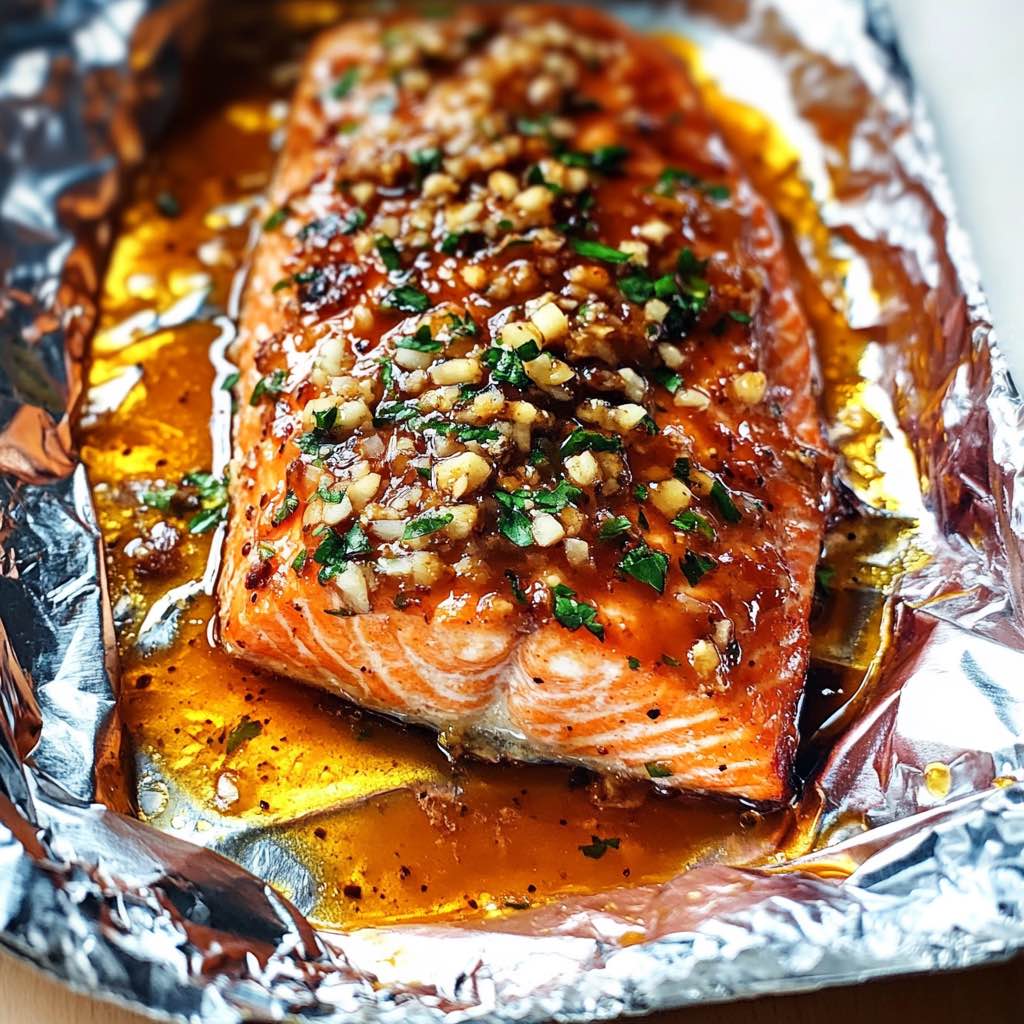
Honey Mustard Salmon in Foil
Introduction
Honey Mustard Salmon in Foil combines the sweet and tangy flavors of honey and mustard with tender, flaky salmon. This simple cooking method delivers restaurant-quality fish in just 20 minutes. Moreover, the foil packet technique locks in moisture and enhances flavor while making cleanup effortless.
This recipe requires minimal prep work and basic ingredients. Additionally, you can prepare it in your oven or on the grill. Therefore, it’s perfect for busy weeknights or weekend entertaining. The foil creates a sealed environment that steams the fish gently, resulting in perfectly cooked salmon every single time.
Baking salmon in foil offers numerous advantages over traditional cooking methods. First, it retains essential nutrients and moisture. Second, it prevents sticking and simplifies cleanup. Finally, it allows flavors to infuse deeply into the fish.
What Makes Honey Mustard Salmon in Foil Special
The honey mustard glaze creates a perfect balance of flavors. Honey provides natural sweetness, while mustard adds tanginess and depth. This combination complements salmon’s rich, buttery taste without overpowering it.
The foil packet method transforms ordinary baked salmon into something extraordinary. Furthermore, the sealed packet traps steam, which keeps the fish incredibly moist. As a result, even beginners can achieve professional-quality results consistently.
This cooking technique also enhances convenience significantly. You simply place seasoned salmon on foil, add the glaze, seal the packet, and bake. Consequently, there are no pans to scrub or splattered ovens to clean afterward.
Health Benefits of Salmon
Exceptional Nutritional Profile
Salmon ranks among the healthiest proteins available worldwide. It delivers high-quality protein while remaining low in saturated fat. A typical serving provides approximately 35 grams of protein and only 10 grams of fat.
Omega-3 Fatty Acids
Salmon contains abundant omega-3 fatty acids, particularly EPA and DHA. These essential fats support heart health and reduce inflammation throughout the body. Therefore, including salmon in your diet regularly promotes cardiovascular wellness.
Vitamins and Minerals
This nutritious fish provides 124% of your daily vitamin D requirement. Additionally, it offers significant amounts of B vitamins, selenium, and potassium. Consequently, eating salmon supports bone health, immune function, and overall vitality.
Brain Function Support
The omega-3s in salmon play crucial roles in brain health. They support cognitive function and may reduce age-related mental decline. Thus, salmon makes an excellent choice for maintaining mental sharpness.
Essential Ingredients
The Salmon
Choose fresh or frozen salmon fillets for this recipe. Look for firm, vibrant flesh without strong odors. You can use a whole side of salmon or individual fillets based on serving size.
Honey
Pure honey adds natural sweetness to the glaze. It also helps caramelize the salmon’s surface when broiled. Use any variety you prefer, though mild-flavored honeys work best.
Mustard Options
Dijon mustard provides smooth, refined flavor with mild heat. Whole grain mustard adds texture and robust taste. Many recipes combine both types for optimal flavor complexity.
Supporting Ingredients
Fresh garlic enhances the sauce with aromatic depth. Lemon juice brightens the overall flavor profile while cutting through richness. Butter or olive oil adds richness and helps the glaze adhere to the fish.
Seasonings
Salt and pepper form the foundation of seasoning. Optional additions include chili powder or cayenne for heat. Fresh parsley makes an attractive garnish that adds color and freshness.
Step-by-Step Cooking Instructions
Preparation Phase
Preheat your oven to 375°F (190°C) before beginning. Line a large baking sheet with aluminum foil, using enough to completely seal the packet. Position the oven rack in the middle for even heat distribution.
Pat salmon fillets completely dry with paper towels. This step ensures proper seasoning adhesion and browning. Season both sides generously with salt and pepper to taste.
Making the Honey Mustard Glaze
Combine honey, mustard, melted butter, minced garlic, and lemon juice in a small saucepan. Whisk ingredients together over low heat until smooth and well blended. The mixture should be pourable but not too thin.
Alternatively, mix all glaze ingredients in a bowl without heating. This method works well when using olive oil instead of butter. Whisk vigorously until everything combines thoroughly.
Assembling the Foil Packet
Place salmon skin-side down on the prepared foil. Pour the honey mustard mixture over the fish, spreading it evenly with a pastry brush. Ensure complete coverage for maximum flavor infusion.
Fold the foil sides up and over the salmon carefully. Seal the edges tightly by crimping them together. The packet must be completely closed to trap steam effectively.
Baking Process
Transfer the sealed packet to the oven immediately. Bake for 10-12 minutes depending on fillet thickness and desired doneness. Thicker pieces require slightly longer cooking times.
Open the foil packet carefully after baking, watching for escaping steam. For caramelized edges, broil the salmon for 3-4 minutes on medium heat. This step adds beautiful color and concentrated flavor.
Finishing Touches
Remove salmon from the oven and let it rest briefly. Garnish with fresh chopped parsley for color and freshness. Serve immediately with lemon wedges on the side.
Tips for Perfect Results Every Time
Choosing Quality Salmon
Select salmon with firm texture and bright coloring. Wild-caught salmon offers deeper flavor, while farmed salmon tends to be milder. Both work excellently in this recipe.
Frozen salmon works just as well as fresh. Thaw it completely in the refrigerator before cooking. Never thaw salmon at room temperature, as this promotes bacterial growth.
Temperature Control
Avoid overcooking, which makes salmon dry and tough. The internal temperature should reach 145°F for food safety. However, many prefer salmon cooked to 125-130°F for optimal texture.
Use an instant-read thermometer to check doneness accurately. Insert it into the thickest part of the fillet. The fish should flake easily with a fork when properly cooked.
Glaze Consistency
The honey mustard sauce should coat the back of a spoon. If too thick, add a little water or lemon juice. If too thin, simmer it briefly to reduce and concentrate flavors.
Reserve some glaze before pouring it over raw salmon. Brush this untouched sauce on after baking for extra flavor. This technique prevents cross-contamination while intensifying taste.
Foil Packet Sealing
Ensure the foil packet seals completely on all sides. Leave some space above the salmon for steam circulation. Proper sealing prevents moisture loss and ensures even cooking.
Use heavy-duty aluminum foil to prevent tears and leaks. Alternatively, double-layer regular foil for added strength. The packet should hold its shape throughout cooking.
Variations and Customization Ideas
Alternative Mustards
Experiment with different mustard varieties for unique flavors. Stone-ground mustard adds hearty texture and bold taste. Yellow mustard creates a milder, more accessible version.
Honey Dijon mustard simplifies preparation by combining two ingredients. Spicy brown mustard increases heat and complexity. Each variety transforms the dish subtly yet significantly.
Sweetener Substitutions
Replace honey with pure maple syrup for different sweetness. Maple adds distinctive flavor that pairs beautifully with salmon. The cooking method remains exactly the same.
Brown sugar works well for deeper, molasses-like sweetness. Agave nectar offers a lighter alternative with neutral flavor. Adjust quantities based on desired sweetness levels.
Additional Flavor Boosters
Add fresh herbs like dill, thyme, or rosemary to the glaze. These aromatics complement salmon’s natural flavors wonderfully. Fresh herbs always taste superior to dried versions.
Include sliced vegetables in the foil packet for a complete meal. Asparagus, cherry tomatoes, and bell peppers cook perfectly alongside salmon. This approach simplifies meal preparation considerably.
Spice Additions
Incorporate red pepper flakes for subtle heat without overwhelming the dish. Smoked paprika adds depth and beautiful color. Ground ginger provides warmth and Asian-inspired notes.
Cajun seasoning transforms the recipe into a bold, spicy creation. Simply sprinkle it over the salmon before adding glaze. This variation suits those who prefer assertive flavors.
Side Dish Pairings
Vegetable Options
Roasted vegetables complement honey mustard salmon beautifully. Try roasted broccoli, Brussels sprouts, or green beans. Their slight char contrasts nicely with the sweet glaze.
Fresh salads provide lightness and crunch to balance richness. Mixed greens with vinaigrette work particularly well. Add nuts or seeds for extra texture and nutrition.
Grain Accompaniments
Fluffy rice absorbs the delicious honey mustard sauce perfectly. Choose white rice, brown rice, or wild rice blends. Each variety offers different textures and nutritional profiles.
Quinoa provides complete protein and nutty flavor. It cooks quickly and adds wholesome substance to the meal. Furthermore, it appeals to health-conscious diners.
Potato Variations
Roasted potatoes deliver comfort food satisfaction alongside elegant salmon. Cut them into wedges and season simply with herbs. They can roast while the salmon bakes.
Mashed potatoes create a classic pairing with any fish dish. Sweet potatoes offer nutritional benefits and natural sweetness. Both options complement the honey mustard flavors excellently.
Storage and Meal Prep
Refrigeration Guidelines
Store leftover honey mustard salmon in airtight containers promptly. Refrigerate within two hours of cooking for optimal safety. Properly stored salmon keeps for 3-4 days.
Separate leftover glaze from the cooked fish before storing. This prevents sogginess and maintains better texture. Store glaze and salmon in separate containers.
Freezing Instructions
Freeze cooked salmon in freezer-safe containers or bags. Remove as much air as possible to prevent freezer burn. Label containers with the date for tracking purposes.
Frozen cooked salmon remains safe indefinitely but tastes best within three months. Thaw overnight in the refrigerator before reheating. Never refreeze previously frozen cooked salmon.
Reheating Methods
Reheat salmon gently to prevent drying and overcooking. The oven at 275°F works best for maintaining moisture. Cover loosely with foil and heat for 10-15 minutes.
Microwave reheating works in a pinch but may dry the fish. Use 50% power and check every 30 seconds. Add a splash of water to create steam.
Make-Ahead Strategies
Prepare the honey mustard glaze up to three days ahead. Store it refrigerated in an airtight container. This saves time on busy cooking days significantly.
Assemble foil packets with raw salmon and glaze hours before cooking. Refrigerate them until ready to bake. This strategy streamlines dinner preparation tremendously. Check out our guide on [meal prep strategies for busy families].
Common Mistakes to Avoid
Overcooking the Salmon
Many home cooks overcook salmon, making it dry and chalky. Watch timing carefully and check doneness early. Remember that carryover cooking continues after removing from heat.
Salmon continues cooking even after leaving the oven. Therefore, remove it when slightly underdone at the center. It will reach perfect doneness during resting.
Inadequate Seasoning
Under-seasoned salmon tastes bland despite flavorful glaze. Salt the fish generously before adding sauce. Proper seasoning enhances rather than masks natural flavors.
Season both sides of the fillet, not just the top. This ensures complete flavor penetration throughout the fish. Don’t be timid with salt and pepper.
Poor Foil Sealing
Improperly sealed packets leak moisture and prevent proper steaming. Crimp edges tightly and check for gaps. The packet should hold its shape when lifted.
Loose sealing allows steam to escape during cooking. This results in drier, less flavorful salmon. Take extra time to seal packets thoroughly.
Wrong Oven Temperature
Cooking at too high a temperature causes uneven results. Stick to 375°F for reliable, consistent outcomes. Higher temperatures may burn the glaze before cooking the fish.
Too low temperatures extend cooking time unnecessarily. This can actually dry out the salmon more. Follow recipe temperature guidelines for best results.
Frequently Asked Questions
What type of salmon works best for this recipe?
Any salmon variety works excellently in foil packets. Atlantic, coho, sockeye, and king salmon all deliver delicious results. Choose based on availability, budget, and personal preference. Thicker fillets require slightly longer cooking times than thinner ones.
Can I make Honey Mustard Salmon in Foil on the grill?
Absolutely, grilling adds wonderful smoky flavor to this dish. Preheat your grill to medium heat before adding packets. Grill sealed packets for 10-15 minutes, checking for doneness. The foil protects the fish from direct flames while allowing smoke infusion.
How do I know when salmon is done cooking?
Properly cooked salmon appears opaque and flakes easily with a fork. The internal temperature should reach 145°F for food safety standards. However, many chefs prefer 125-130°F for moist, tender results. Insert a thermometer into the thickest part to check accurately.
Can I prepare the foil packets ahead of time?
Yes, assembling packets in advance saves significant time later. Prepare them up to 4 hours ahead and refrigerate. Bring packets to room temperature for 15 minutes before baking. This ensures even cooking throughout the fillet.
What sides pair best with honey mustard salmon?
Roasted vegetables, rice, quinoa, and potatoes all complement this dish beautifully. Fresh salads with light vinaigrette provide refreshing contrast. Choose sides that don’t compete with the sweet-tangy glaze flavors. Simple preparations work best to let the salmon shine.
Can I use frozen salmon for this recipe?
Frozen salmon works perfectly after proper thawing in the refrigerator overnight. Never thaw salmon at room temperature or in warm water. Pat thawed fillets very dry before seasoning and glazing. Frozen salmon often costs less while maintaining excellent quality.
Conclusion
Honey Mustard Salmon in Foil delivers impressive flavor with minimal effort and cleanup. This foolproof cooking method produces moist, perfectly seasoned fish every single time. Moreover, it suits both weeknight dinners and special occasions equally well.
The sweet and tangy glaze complements salmon’s natural richness beautifully. Furthermore, the foil packet technique locks in moisture while enhancing flavors. This combination creates restaurant-quality results in your own kitchen consistently.
Whether baking in the oven or grilling outdoors, this recipe adapts effortlessly. The health benefits of salmon make it an excellent protein choice. Plus, the simple ingredient list and quick preparation suit busy modern lifestyles perfectly.
Try this Honey Mustard Salmon in Foil recipe tonight for a delicious, nutritious meal. Experiment with different mustard varieties and add-ins to make it your own. Your family will request this flavorful dish again and again!
Honey Mustard Salmon in Foil
Description
Honey Mustard Salmon in Foil
Ingredients
-
1 ½ lbs (about 4 fillets) salmon, skin-on or skinless
-
Salt and black pepper, to taste
-
2 tablespoons olive oil
-
3 tablespoons Dijon mustard
-
2 tablespoons whole grain mustard (optional for texture)
-
3 tablespoons honey
-
2 cloves garlic, minced
-
1 tablespoon lemon juice
-
1 teaspoon paprika
-
1 tablespoon chopped fresh parsley (for garnish)
-
Lemon slices, for serving
🔪 Instructions
1. Prepare the Foil Packet
-
Preheat oven to 400°F (200°C).
-
Line a baking sheet with aluminum foil and lightly brush with olive oil.
-
Place salmon fillet(s) in the center and season lightly with salt and pepper.
2. Make the Honey Mustard Glaze
-
In a small bowl, whisk together Dijon mustard, whole grain mustard, honey, garlic, lemon juice, olive oil, and paprika.
-
Pour the mixture evenly over the salmon, coating the top well.
3. Seal and Bake
-
Fold the foil over the salmon and crimp edges to seal tightly, forming a packet.
-
Bake for 15–18 minutes (depending on thickness).
-
Open the foil, spoon the sauce over the top, and broil for 2–3 minutes until caramelized and golden.
4. Serve and Garnish
-
Sprinkle with fresh parsley and add lemon slices on the side.
-
Spoon the extra sauce from the foil over the salmon when serving for a glossy, mouthwatering finish.
🍽️ Serving Ideas
Serve with:
-
Roasted asparagus or green beans
-
Garlic mashed potatoes or wild rice
-
A crisp green salad with lemon vinaigrette