
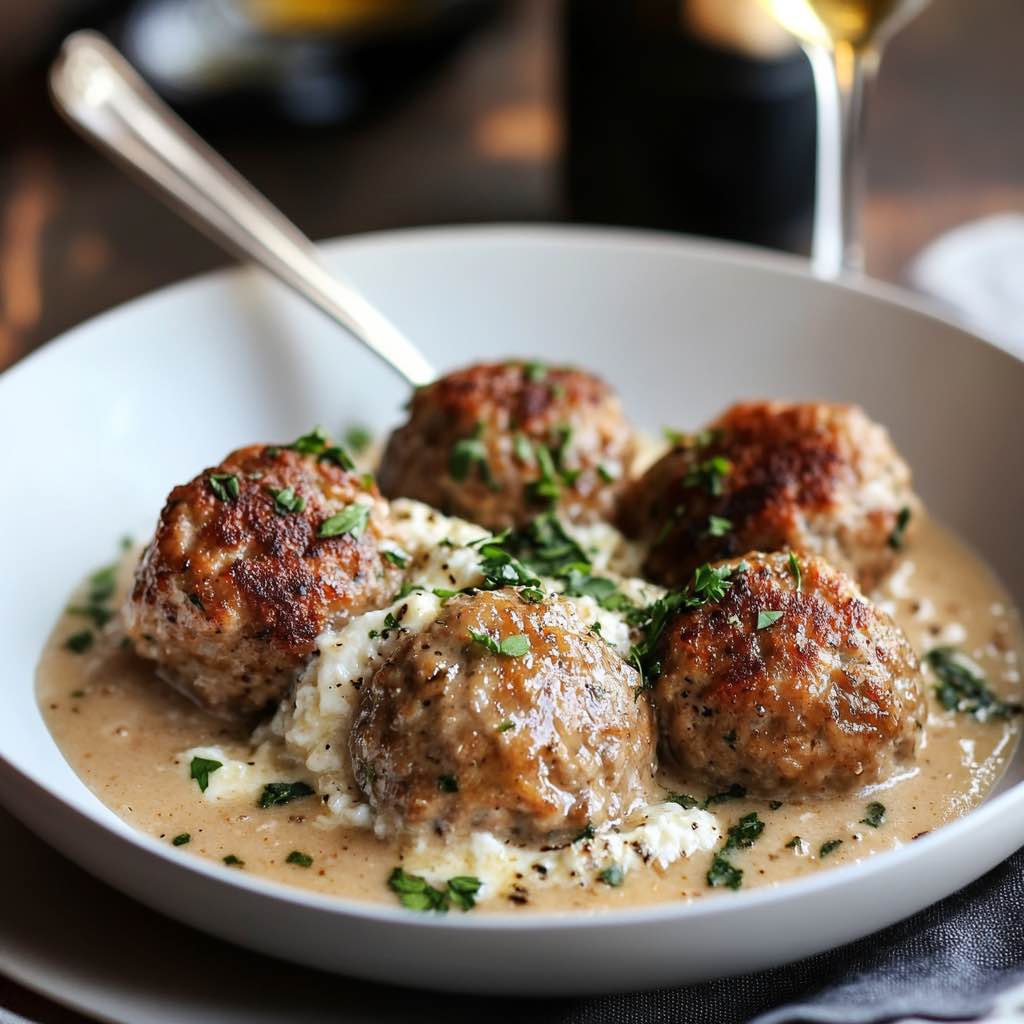
Pork and Ricotta Meatballs with White Sauce
Introduction
Pork and Ricotta Meatballs with White Sauce combine Italian tradition with creamy comfort food perfection. Moreover, this dish offers tender, flavorful meatballs bathed in a velvety sauce that transforms any dinner into something special. The combination of ground pork and ricotta cheese creates incredibly moist meatballs, while the classic white sauce adds richness without overwhelming the delicate flavors. Additionally, this recipe provides a satisfying meal that works beautifully for family dinners or special occasions.
What Makes Pork and Ricotta Meatballs Special
The Magic of Ricotta
Ricotta cheese transforms ordinary meatballs into extraordinarily tender creations. Furthermore, the cheese adds moisture that prevents the meat from becoming dry during cooking. The mild flavor of ricotta complements pork beautifully without competing with other seasonings. Therefore, each bite delivers a melt-in-your-mouth texture that traditional meatballs simply cannot match.
Ricotta provides essential nutrients including high-quality protein and bone-strengthening calcium. Each serving delivers approximately 14 grams of protein per half-cup. Additionally, ricotta contains phosphorus, which plays a crucial role in skeletal development and bone integrity.
Why Choose Ground Pork
Ground pork offers a naturally sweet flavor that pairs perfectly with Italian seasonings. Moreover, pork contains just enough fat to keep meatballs juicy without being greasy. The meat readily absorbs herbs and spices, creating deeply flavored results. Consequently, pork meatballs develop a rich taste that beef alone cannot provide.
Essential Ingredients
For the Meatballs
The foundation starts with quality ground pork, typically requiring about two pounds for a family-sized batch. Next, whole-milk ricotta cheese adds creaminess and moisture to the mixture. Breadcrumbs or panko create structure while keeping the texture light. Fresh eggs bind everything together without making the meatballs dense.
Seasonings include minced garlic, which infuses aromatic flavor throughout. Additionally, fresh parsley brightens the taste and adds color to each meatball. Salt and pepper provide essential seasoning that enhances all other flavors. Italian seasoning or dried herbs like oregano contribute authentic Mediterranean notes.
Parmesan cheese adds a salty, nutty dimension that complements the milder ricotta. Therefore, grating fresh Parmesan yields better flavor than pre-grated varieties. Some recipes include finely chopped shallots for extra depth.
For the White Sauce
Classic white sauce, also called béchamel, requires just three core ingredients. First, unsalted butter provides the fat base for the sauce. All-purpose flour thickens the liquid to create proper consistency. Whole milk forms the bulk of the sauce and delivers creamy richness.
Additional seasonings enhance the basic formula significantly. Therefore, freshly grated nutmeg adds warmth and traditional French character. Salt and white pepper season without adding dark specks. Some cooks add bay leaf and onion studded with cloves for deeper flavor.
How to Make Perfect White Sauce
Understanding Sauce Ratios
The butter-to-flour ratio determines sauce thickness and consistency. For medium-thick sauce, use equal parts butter and flour. Generally, one tablespoon each per cup of milk creates versatile results. However, thicker sauce requires two tablespoons of flour per cup of milk.
Creating the Roux
Start by melting butter in a large saucepan over medium heat. Next, sprinkle flour over the melted butter and whisk vigorously. Cook this mixture, called roux, for about 30 seconds while stirring constantly. Consequently, this step eliminates the raw flour taste without burning the mixture.
Adding Milk Properly
Remove the pan from heat before adding any milk. Then, pour in a small amount of milk and whisk vigorously to break up lumps. Gradually add remaining milk while whisking continuously to maintain smoothness. Therefore, this technique prevents lumps from forming in the finished sauce.
Cooking to Perfection
Return the pan to medium-low heat and continue whisking. Furthermore, cook for 12 to 20 minutes until the sauce thickens properly. The sauce is ready when it coats the back of a wooden spoon. Additionally, dragging your finger through the coating should leave a clear line.
Season with salt, pepper, and a pinch of nutmeg. Finally, strain the sauce through fine mesh for silky smoothness. Remember that béchamel thickens as it cools, so it may need thinning when reheated.
Step-by-Step Meatball Recipe
Preparing the Mixture
Begin by combining ground pork, ricotta cheese, breadcrumbs, and eggs in a large bowl. Next, add minced garlic, chopped parsley, grated Parmesan, and seasonings. Mix gently with your hands or a wooden spoon until just combined. However, avoid overmixing, which creates tough, dense meatballs.
Some recipes recommend sautéing shallots before adding them to the mixture. Therefore, heat olive oil in a skillet and cook chopped shallots until translucent. Add minced garlic and cook for 30 seconds, then let cool. Consequently, this step develops deeper flavor compared to raw aromatics.
Shaping the Meatballs
Form the mixture into evenly sized balls using wet or oiled hands. Generally, aim for 1.5-inch diameter meatballs weighing about two ounces each. A cookie scoop ensures uniform sizing for even cooking. Place shaped meatballs on a parchment-lined baking sheet.
Refrigerate the shaped meatballs for 20 to 30 minutes before cooking. Furthermore, this chilling step helps them hold together during the cooking process. Consequently, cold meatballs are less likely to fall apart when handled.
Cooking Methods
Baking: Preheat the oven to 375°F and arrange meatballs on a lined baking sheet. Bake for 20 to 25 minutes until the internal temperature reaches 160°F. Therefore, use a meat thermometer to ensure proper doneness. The meatballs should show nice browning on the outside.
Browning First: Some recipes recommend browning meatballs in a skillet before baking. Heat a little oil over medium heat and brown on all sides. Then, transfer to a baking dish and proceed with the white sauce. Consequently, this method adds extra flavor and color.
Pan-Frying: Cook meatballs in olive oil over medium heat for 8 to 10 minutes. Turn frequently to brown all sides evenly. However, this method requires more attention than baking.
Cooking Techniques
Temperature Considerations
Ground pork must reach an internal temperature of 160°F for food safety. Furthermore, using a meat thermometer prevents both undercooking and overcooking. Insert the thermometer into the center of the largest meatball. Additionally, the meat should not show any pink when cut open.
Combining Sauce and Meatballs
After baking, transfer meatballs to a large skillet or baking dish. Next, pour the prepared white sauce over the meatballs. Gently stir to coat each meatball with sauce. Then, cover and simmer for 5 to 10 minutes so flavors meld.
For oven finishing, pour sauce over meatballs in a baking dish. Therefore, top with extra grated cheese if desired. Bake at 350°F for about 30 minutes until golden and bubbly. Consequently, this method creates a beautiful presentation.
Preventing Common Issues
Handle the meat mixture gently to avoid compacting it. Furthermore, light handling keeps meatballs fluffy rather than dense. Don’t pack the mixture too tightly when shaping. Additionally, leave space between meatballs on the baking sheet for even cooking.
Avoid walking away while making white sauce, as it can burn quickly. Therefore, constant whisking prevents lumps and scorching. If the sauce thickens too fast, lower the heat immediately.
Nutritional Benefits
Protein Content
Pork and ricotta meatballs deliver substantial protein in every serving. Moreover, the combination of meat and cheese provides complete amino acids. A typical serving contains approximately 14 to 20 grams of protein. Therefore, this dish supports muscle maintenance and growth.
Bone Health
Ricotta cheese supplies significant calcium for strong bones. Furthermore, about 99 percent of the body’s calcium resides in bones and teeth. Each serving also provides phosphorus, essential for skeletal development. Consequently, regular consumption may support overall bone health.
Balanced Nutrition
The dish offers a mix of macronutrients including protein, fats, and carbohydrates. Additionally, the meal provides important vitamins and minerals like selenium and Vitamin A. However, portion control helps maintain a balanced diet. A typical serving contains about 400 to 450 calories depending on preparation.
Serving Suggestions
Traditional Pairings
Serve pork and ricotta meatballs with white sauce over pasta for classic comfort food. Additionally, egg noodles work beautifully to soak up the creamy sauce. Wide pappardelle or fettuccine also complement the dish perfectly. Therefore, cook pasta al dente for the best texture.
Rice provides another excellent base for the saucy meatballs. Moreover, fluffy white rice absorbs the white sauce wonderfully. Wild rice or rice pilaf adds more complex flavors and textures.
Vegetable Accompaniments
A fresh green salad balances the richness of the creamy sauce. Furthermore, simple mixed greens with vinaigrette cut through the heaviness. Roasted vegetables like Brussels sprouts pair wonderfully with the meatballs. Additionally, roasting vegetables alongside meatballs saves time and energy.
Garlic bread makes an ideal side for soaking up extra sauce. Therefore, crusty Italian bread works particularly well. Steamed broccoli or green beans add color and nutrition to the plate.
Presentation Ideas
Arrange meatballs in a shallow serving dish and pour sauce over them. Next, garnish with fresh parsley or basil leaves for color. A sprinkle of extra Parmesan cheese adds visual appeal. Consequently, serving family-style creates an inviting presentation.
For individual plating, place several meatballs over pasta or rice. Then, spoon white sauce generously over everything. Finally, add a fresh herb sprig for an elegant finishing touch.
Check out our guide on [insert link] for more Italian comfort food recipes.
Storage and Reheating Tips
Proper Storage
Let meatballs and sauce cool to room temperature before storing. Then, transfer to airtight containers and refrigerate promptly. Properly stored meatballs keep for 3 to 4 days in the refrigerator. Additionally, separate storage of sauce and meatballs works if preferred.
For longer storage, freeze meatballs in freezer-safe containers. Furthermore, individual portions freeze well for up to 3 months. Label containers with the date and contents for easy identification.
Reheating Methods
Reheat refrigerated meatballs gently in a covered pan over low heat. Moreover, add a splash of milk to thin the sauce if needed. Stir occasionally to prevent scorching on the bottom. Therefore, heat until the internal temperature reaches 165°F.
For microwave reheating, use medium power to prevent drying out. Additionally, cover the container to retain moisture. Stir halfway through heating for even warming.
Frozen meatballs should thaw overnight in the refrigerator before reheating. However, gentle stovetop reheating from frozen is also possible. Consequently, add extra liquid and extend cooking time accordingly.
Common Mistakes to Avoid
Overmixing the Meat
Overworking the meatball mixture creates dense, tough results. Furthermore, excessive mixing develops the proteins too much. Mix ingredients only until just combined for tender meatballs. Therefore, use a light hand when incorporating ingredients.
Incorrect Temperatures
Cooking at too high a temperature dries out meatballs. Additionally, insufficient heat leaves them undercooked and unsafe. Always verify doneness with a meat thermometer reading 160°F. Consequently, proper temperature ensures both safety and quality.
Lumpy Sauce
Adding milk too quickly creates lumps in white sauce. Moreover, failing to whisk constantly allows flour clumps to form. Remove the pan from heat before adding milk gradually. Therefore, whisk vigorously while slowly pouring in liquid.
Skipping the Chill
Forming meatballs and cooking immediately may cause them to fall apart. Furthermore, chilling firms up the mixture for better handling. Refrigerate shaped meatballs for at least 20 minutes before cooking. Consequently, this simple step dramatically improves results.
Frequently Asked Questions
Can I use different meat for pork and ricotta meatballs with white sauce?
Yes, ground turkey, chicken, or a beef-pork blend work well in this recipe. However, adjust cooking times based on the meat’s fat content. Leaner meats may need slightly longer cooking to reach proper temperature.
How do I know when meatballs are fully cooked?
Use a meat thermometer to check that the internal temperature reaches 160°F. Additionally, the meat should show no pink color when cut open. Furthermore, juices should run clear rather than pink or red.
Can I make the white sauce ahead of time?
Yes, prepare béchamel sauce up to 2 days in advance and refrigerate. Then, reheat gently over low heat while whisking constantly. Moreover, add milk to thin if the sauce becomes too thick.
What causes meatballs to be dry?
Overcooking is the primary cause of dry meatballs. Additionally, using meat that’s too lean removes necessary moisture. Furthermore, overmixing the ingredients creates a dense, dry texture. Therefore, cook to proper temperature and handle gently.
Can this recipe be frozen?
Absolutely, freeze cooked meatballs with or without sauce for up to 3 months. However, thaw overnight in the refrigerator before reheating. Additionally, frozen meatballs maintain quality better than frozen sauce.
What can I substitute for ricotta cheese?
Cottage cheese blended until smooth makes an acceptable substitute. Additionally, cream cheese works but creates a denser texture. However, ricotta provides the most authentic Italian flavor and ideal consistency.
Conclusion
Pork and Ricotta Meatballs with White Sauce deliver comfort food excellence with Italian flair. Moreover, the combination of tender pork, creamy ricotta, and velvety béchamel creates an unforgettable meal. These meatballs offer superior moisture and flavor compared to traditional recipes. Additionally, the classic white sauce adds richness without overpowering the delicate meat.
The recipe provides excellent nutrition, including substantial protein and calcium. Furthermore, the dish works beautifully for family dinners or special entertaining. Serve over pasta, rice, or with crusty bread for a complete meal. Therefore, master this recipe and enjoy restaurant-quality results at home.

Pork and Ricotta Meatballs with White Sauce
Description
Pork and Ricotta Meatballs with White Sauce
Ingredients
For the Meatballs:
-
1 lb (450 g) ground pork
-
½ cup ricotta cheese
-
¼ cup grated Parmesan cheese
-
½ cup breadcrumbs
-
1 egg
-
2 cloves garlic, minced
-
1 teaspoon salt
-
½ teaspoon black pepper
-
1 teaspoon Italian seasoning
-
2 tablespoons chopped parsley
For the White Sauce:
-
2 tablespoons butter
-
2 tablespoons all-purpose flour
-
2 cups milk (whole or 2%)
-
½ cup grated Parmesan cheese
-
2 cloves garlic, minced
-
Salt and pepper to taste
-
Pinch of nutmeg (optional)
Optional garnish:
-
Chopped parsley
-
Extra Parmesan
🔪 Instructions
1. Prepare the Meatballs
-
Preheat oven to 400°F (200°C) and line a baking sheet with parchment paper.
-
In a large bowl, combine ground pork, ricotta, Parmesan, breadcrumbs, egg, garlic, salt, pepper, Italian seasoning, and parsley.
-
Form mixture into 1.5-inch meatballs and place on the prepared baking sheet.
2. Bake the Meatballs
-
Bake for 15–20 minutes, or until golden and cooked through (internal temp 160°F / 71°C).
3. Make the White Sauce
-
In a medium saucepan, melt butter over medium heat.
-
Add garlic and sauté 30 seconds until fragrant.
-
Stir in flour to form a roux; cook 1–2 minutes.
-
Gradually whisk in milk, ensuring no lumps.
-
Simmer for 3–5 minutes until thickened.
-
Stir in Parmesan cheese, season with salt, pepper, and nutmeg.
4. Combine and Serve
-
Place baked meatballs in a serving dish or skillet.
-
Pour the white sauce over the meatballs.
-
Garnish with chopped parsley and extra Parmesan.
-
Serve with:
-
Fettuccine, spaghetti, or creamy mashed potatoes
-
Garlic bread or a crusty baguette
-