
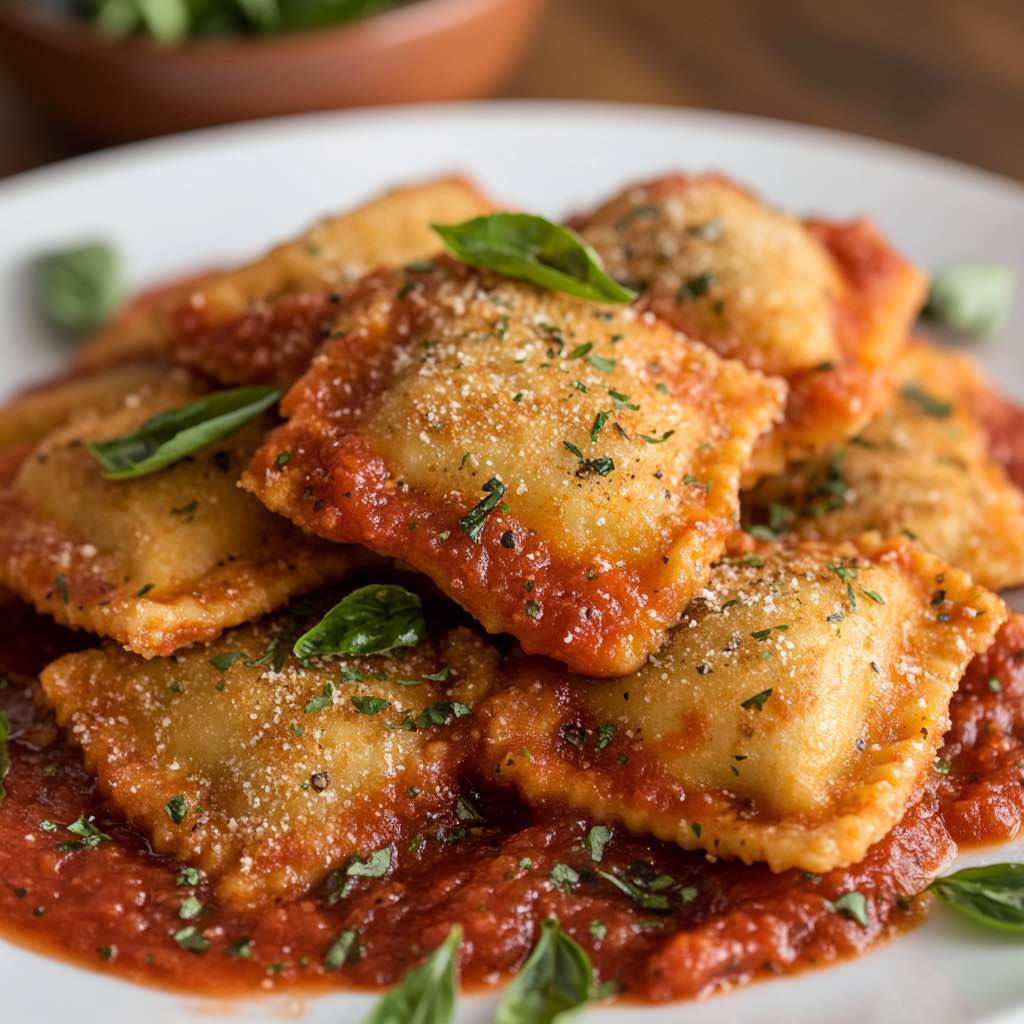
Fried Ravioli with Marinara
Introduction
Imagine biting into a perfectly golden, crispy exterior that gives way to a warm, creamy cheese filling. That’s the magic of fried ravioli with marinara. This beloved appetizer transforms ordinary pasta into an extraordinary dish. Also known as “toasted ravioli” or “T-ravs,” this recipe delivers restaurant-quality results right in your home kitchen. Whether hosting a party or craving comfort food, this recipe will become your new favorite.
The best part? You can make this impressive appetizer with just a few simple ingredients. Additionally, the dish comes together in under 30 minutes from start to finish. Therefore, it’s perfect for both experienced cooks and kitchen beginners alike.
What is Fried Ravioli?
Fried ravioli is breaded, deep-fried pasta typically served as an appetizer with marinara dipping sauce. The dish features ravioli coated in breadcrumbs and seasonings, then fried until golden and crispy. Most versions use frozen or refrigerated ravioli, making preparation surprisingly easy.
The pasta parcels puff up slightly during frying, similar to boiled ravioli. However, the exterior becomes wonderfully crunchy while the filling stays soft and creamy. This contrast in textures makes the dish incredibly satisfying.
People often dust the finished ravioli with Parmesan cheese and fresh herbs. The final touch adds extra flavor and visual appeal. Consequently, these golden bites look as impressive as they taste.
The History Behind This Iconic Dish
Fried ravioli originated in St. Louis, Missouri, specifically in The Hill neighborhood. This predominantly Italian-American area claims the dish dates back to the 1940s. Most origin stories involve a happy accident where ravioli fell into hot oil instead of boiling water.
Three restaurants compete for bragging rights to this creation. Mama’s on the Hill (formerly Oldani’s) advertised toasted ravioli in 1943. Charlie Gitto’s, then called Angelo’s, opened in 1947 and popularized the dish. Lombardo’s claims their menu featured it since the 1930s.
Some food historians suggest Italian immigrants adapted calcionetti, a traditional Abruzzo dessert. This sweet ravioli gets deep-fried during holidays. The technique may have simply transferred to savory versions. Regardless of true origins, St. Louis proudly claims this delicious creation as its own.
Why You’ll Love This Recipe
This fried ravioli recipe offers numerous advantages for home cooks. First, it’s incredibly versatile and works as an appetizer or light meal. Moreover, the dish appeals to both adults and children. The crispy, cheesy bites are universally loved.
Preparation takes minimal effort since store-bought ravioli does most of the work. You won’t need to make pasta from scratch. Furthermore, the recipe is budget-friendly and feeds a crowd. These factors make it ideal for parties and gatherings.
The cooking process is straightforward and forgiving. Even novice cooks achieve excellent results. Additionally, you can customize fillings and seasonings to suit preferences. The dish also freezes beautifully for make-ahead convenience.
Essential Ingredients
For the Fried Ravioli
Creating perfect fried ravioli requires just a handful of ingredients. Start with 20-25 ounces of frozen or refrigerated ravioli in your favorite filling. Cheese ravioli works wonderfully, though meat and vegetable versions are equally delicious.
You’ll need 2 cups of breadcrumbs for the coating. Panko breadcrumbs create extra crunch and a lighter texture. Italian-seasoned breadcrumbs add convenient flavor. Many recipes combine both types for optimal results.
Two beaten eggs mixed with 1/2 cup milk form the egg wash. This helps the breadcrumbs adhere properly. Additionally, gather 1/4 cup all-purpose flour for initial dredging. Season with 1/2 teaspoon each of garlic powder and salt, plus 1/4 teaspoon black pepper.
Finally, you’ll need 2-3 cups vegetable or canola oil for frying. The oil should be about 2 inches deep in your pan. Fresh Parmesan cheese and parsley make excellent garnishes.
For the Marinara Sauce
Homemade marinara sauce elevates this dish to restaurant quality. You’ll need one 28-ounce can of crushed tomatoes as the base. San Marzano tomatoes offer superior flavor if available.
Aromatics include 1/2 medium yellow onion, finely chopped, and 3 cloves minced garlic. These create the sauce’s flavor foundation. Add 2 tablespoons extra virgin olive oil for sautéing.
Season with 1/2 teaspoon each of dried oregano, salt, and black pepper. Optional additions include 1/4 teaspoon red pepper flakes for heat. A small amount of sugar balances acidity. Fresh basil added at the end brightens the entire sauce.
Some recipes include balsamic vinegar for depth. This adds complexity without overpowering other flavors. However, this ingredient remains optional based on preference.
Equipment You’ll Need
Proper equipment ensures success when making fried ravioli. A heavy-bottomed pot or Dutch oven works best for deep frying. Cast iron skillets also perform excellently. The vessel should be deep enough to safely contain hot oil.
You’ll need three shallow dishes or bowls for the breading station. These should be large enough to comfortably hold ravioli. Additionally, prepare a wire rack set over a baking sheet. This setup allows excess oil to drain properly.
A kitchen thermometer helps monitor oil temperature accurately. This tool is optional but highly recommended. Maintaining proper heat prevents soggy or burnt ravioli. A slotted spoon or spider strainer removes ravioli safely from hot oil.
For the marinara, use a medium saucepan with a lid. A wooden spoon for stirring completes your toolkit. Having everything ready before starting makes the process smooth.
How to Make Fried Ravioli Step-by-Step
Preparing the Breading Station
Set up your breading station before beginning. Place flour in the first shallow dish. Beat eggs with milk in the second dish until well combined. Mix breadcrumbs with seasonings in the third dish.
Line up the dishes in order: flour, egg wash, then breadcrumbs. Position a plate or baking sheet at the end for breaded ravioli. This assembly-line approach makes coating efficient. Consequently, you’ll work much faster and with less mess.
Some recipes recommend double-dipping ravioli for extra crunch. This means going through egg and breadcrumbs twice. However, a single coating typically provides sufficient crispiness. Choose based on your texture preference.
Coating the Ravioli
Ensure ravioli are thawed if using frozen varieties. Pat them dry with paper towels to remove excess moisture. This step helps breadcrumbs adhere better. Working with one ravioli at a time prevents clumping.
Dip each ravioli first in flour, coating all sides. Shake off excess flour gently. Next, submerge in the egg wash, ensuring complete coverage. Allow excess egg to drip off briefly.
Finally, press ravioli into breadcrumbs on both sides. Gently pat to help the coating stick. Place breaded ravioli on your prepared plate. Repeat until all pieces are coated.
Using a small sharp knife, poke a small hole in each ravioli’s center. This prevents them from bursting during frying. The tiny vent allows steam to escape safely.
Frying to Golden Perfection
Heat oil in your Dutch oven to 350°F (180°C). Use a thermometer for accuracy. To test without one, drop in a few breadcrumbs. If they sizzle immediately and vigorously, the oil is ready.
Carefully add 5-6 ravioli to the hot oil, working in batches. Don’t overcrowd the pan as this lowers oil temperature. Overcrowding also prevents even browning. Fry for 2-3 minutes total, flipping halfway through.
The ravioli should turn deep golden brown and visibly crispy. They’ll puff up slightly, indicating the filling is hot. Remove with a slotted spoon, allowing oil to drain. Transfer to the wire rack immediately.
Repeat with remaining ravioli, letting oil return to temperature between batches. This ensures consistent results. The entire frying process takes about 15 minutes.
Pan-Frying Method
Pan-frying offers a less messy alternative to deep frying. Heat 3 tablespoons olive oil in a large skillet over medium-high heat. The oil should shimmer but not smoke.
Add breaded ravioli in a single layer without crowding. Cook for 2-3 minutes per side until golden brown. Flip carefully using tongs or a spatula. Add more oil between batches as needed.
This method uses significantly less oil than deep frying. However, it requires more attention to prevent burning. The results are slightly less crispy but still delicious.
Making Homemade Marinara Sauce
Building the Flavor Base
Start your marinara while ravioli are being prepared. Heat 2 tablespoons olive oil in a medium saucepan over medium heat. Add chopped onion and cook until soft and golden, about 5 minutes.
Stir frequently to prevent burning. The onions should turn translucent and fragrant. Add minced garlic and cook for another minute. Garlic burns easily, so watch carefully.
This sautéing process develops deep, savory flavors. Consequently, your sauce will taste much better than plain canned versions. The aromatic base creates complexity.
Simmering the Sauce
Pour in crushed tomatoes, stirring to combine. Rinse the can with a small amount of water and add that too. This captures every bit of tomato goodness. Add oregano, basil, salt, pepper, and optional red pepper flakes.
Bring the mixture to a gentle boil, then reduce heat. Let it simmer partially covered for 15-20 minutes. Stir occasionally to prevent sticking. The sauce should thicken considerably and lose its watery consistency.
Taste and adjust seasonings as needed. Some prefer adding a pinch of sugar to balance acidity. Others enjoy a splash of balsamic vinegar for depth. Stir in fresh basil at the very end.
Remove from heat and keep warm until serving. The sauce can be made ahead and reheated. Actually, flavors improve after resting overnight.
Tips for Perfect Crispy Ravioli
Achieving maximum crispiness requires attention to detail. First, always pat ravioli completely dry before breading. Moisture prevents proper adhesion and creates soggy coating. This simple step makes a significant difference.
Maintain oil temperature consistently between batches. Temperature drops cause greasy, limp results. Conversely, too-hot oil burns the exterior before heating the filling. Use a thermometer for best results.
Don’t skip poking holes in the ravioli. This venting prevents explosive bursting in hot oil. The small puncture doesn’t affect filling retention. Additionally, it allows steam to escape gradually.
Press breadcrumbs firmly onto ravioli surfaces. This helps coating stay attached during frying. However, avoid pressing so hard that ravioli crack. Gentle but thorough pressure works best.
Drain fried ravioli on a wire rack rather than paper towels. Racks allow air circulation on all sides. Paper towels trap steam underneath, making bottoms soggy. This technique keeps everything crispy.
Different Types of Ravioli Fillings
Cheese Varieties
Cheese ravioli remains the most popular choice for frying. Four-cheese versions typically combine ricotta, Parmesan, mozzarella, and provolone. This blend offers creamy texture with robust flavor. Ricotta-based fillings are traditional and mild.
Goat cheese ravioli provides tangy sophistication. Fillings often include sun-dried tomatoes and fresh basil. Burrata ravioli delivers ultra-creamy luxury. The soft cheese center melts beautifully when fried.
Three-cheese combinations work wonderfully with spinach. The vegetables add color and nutritional value. Additionally, they balance richness with earthy notes. Any cheese ravioli fries well when properly coated.
Meat Fillings
Meat ravioli offers heartier flavor profiles. Traditional versions combine ground beef and Italian sausage with ricotta. This creates a satisfying, protein-rich filling. The meat should be cooked before stuffing.
Some recipes include spinach with meat and cheese. Others add fresh herbs like parsley and basil. Seasoning is crucial for well-balanced flavor. Salt, pepper, and garlic powder work universally well.
Meat ravioli takes slightly longer to heat through when frying. Therefore, monitor cooking time carefully. The filling should be piping hot before serving.
Vegetable Options
Vegetable ravioli provides lighter, plant-forward options. Spinach and ricotta combinations are classic. Mushroom ravioli offers earthy, umami-rich flavor. Butternut squash fillings bring sweetness and color.
Pea and shallot ravioli delivers fresh, springtime taste. Roasted vegetable combinations work beautifully too. These options appeal to vegetarian diners. Moreover, they pair wonderfully with marinara sauce.
All vegetable ravioli fry successfully with proper breading. The key is ensuring fillings aren’t too wet. Excess moisture causes soggy results.
Cooking Methods Compared
Deep Frying
Deep frying produces the crispiest exterior. The ravioli cook evenly on all sides simultaneously. This method requires 2-3 cups of oil. Temperature control is easier with deep frying.
However, this approach uses more oil than alternatives. Cleanup can be messier. Additionally, some people prefer avoiding deep-fried foods. The finished ravioli are undeniably delicious though.
Pan Frying
Pan frying uses significantly less oil. You’ll need only 3 tablespoons per batch. This method feels more manageable for many home cooks. The results are slightly less crispy but still excellent.
Each side requires individual cooking time. Therefore, the process takes a bit longer overall. Watch carefully to prevent burning. Add fresh oil between batches as needed.
Oven Baking
Baking offers the healthiest cooking option. Preheat your oven to 400°F (200°C). Spray breaded ravioli with cooking spray on both sides. Arrange in a single layer on a baking sheet.
Bake for 15-20 minutes, flipping halfway through. The ravioli will be crispy but not as golden as fried versions. This method eliminates oil splatter concerns. However, texture won’t match deep-fried results.
Air Frying
Air fryers create crispy results with minimal oil. Spray breaded ravioli lightly with cooking spray. Arrange in a single layer in the air fryer basket. Cook at 375°F for 8-10 minutes, flipping once.
Air frying combines convenience with good texture. The appliance does require less cleanup than traditional frying. Results fall between oven-baked and deep-fried. This method works well for smaller batches.
Serving Suggestions
Fried ravioli shines as a party appetizer. Arrange pieces on a large platter around a bowl of warm marinara. Garnish with freshly grated Parmesan and chopped parsley. The presentation looks impressive and inviting.
Serve ravioli immediately while still hot and crispy. They’re best enjoyed within 15 minutes of frying. Guests can dunk pieces in marinara sauce. Provide small plates and napkins for easy handling.
Consider offering multiple dipping sauces for variety. Alfredo sauce provides creamy contrast. Pesto adds herby brightness. Spicy marinara appeals to heat lovers. Ranch dressing is surprisingly popular too.
For a light meal, pair fried ravioli with fresh salad. Caesar salad works particularly well. Mixed greens with Italian dressing complement the richness. Add crusty bread for a complete dinner.
Storage and Reheating Instructions
Storing Leftovers
Store cooled fried ravioli in an airtight container. Refrigerate for up to 3 days. Place parchment paper between layers to prevent sticking. However, texture deteriorates somewhat during storage.
Marinara sauce keeps separately for up to 1 week refrigerated. Store in a sealed container. Actually, sauce flavor often improves after a day. Reheat gently on the stovetop before serving.
Freezing Instructions
Fried ravioli freeze beautifully for future meals. Arrange cooked, cooled ravioli in a single layer on a baking sheet. Freeze until solid, about 2 hours. Transfer to freezer bags or airtight containers.
Properly frozen ravioli last up to 3 months. Label containers with the date. This make-ahead option is perfect for entertaining. You can also freeze uncooked breaded ravioli using the same method.
Reheating Methods
Oven reheating produces the best results. Preheat to 350°F (175°C). Arrange frozen ravioli on a baking sheet in a single layer. Bake for 10-15 minutes until hot and crispy.
Microwave reheating is fastest but creates soggier texture. Use it only when necessary. Place ravioli on a microwave-safe plate. Heat in 30-second intervals until warm throughout.
Air fryers also work well for reheating. Cook at 350°F for 5-7 minutes. This method refreshes crispiness effectively. Check frequently to prevent over-browning.
Nutritional Information
Fried ravioli provides substantial calories due to frying. A typical serving of 6-8 pieces contains approximately 300-400 calories. Cheese ravioli generally has fewer calories than meat versions. However, the breading and frying add significant energy content.
Fat content ranges from 15-20 grams per serving. This comes primarily from frying oil absorption. Carbohydrates measure around 30-35 grams per serving. The pasta and breadcrumbs contribute most carbs.
Protein content is moderate at 10-15 grams per serving. Cheese and meat fillings provide protein. Additionally, eggs in the coating add protein. Sodium levels can be high, reaching 600-700mg per serving.
Baking or air frying significantly reduces fat and calories. These methods can cut fat content by 30-40%. Using whole wheat ravioli increases fiber content. Adding vegetable-based fillings boosts nutritional value.
Marinara sauce adds minimal calories, about 40-50 per 1/4 cup. The sauce provides vitamin C from tomatoes. It also contains lycopene, a beneficial antioxidant. Choose low-sodium versions when possible.
Frequently Asked Questions
Can I use fresh ravioli instead of frozen?
Absolutely! Fresh refrigerated ravioli works wonderfully for frying. Actually, some cooks prefer it over frozen varieties. Just ensure ravioli are at room temperature before breading. Pat them dry thoroughly to remove surface moisture. Fresh ravioli may cook slightly faster than frozen. Therefore, watch carefully and adjust timing as needed.
What’s the best oil for frying ravioli?
Vegetable and canola oil work best for frying. These oils have high smoke points and neutral flavors. Peanut oil is another excellent choice. Avoid olive oil for deep frying as it burns at lower temperatures. The oil should reach 350°F for optimal results. This temperature creates crispy exteriors without greasiness.
How do I prevent ravioli from bursting?
Poking a small hole in each ravioli’s center prevents bursting. Use a sharp knife or toothpick to create a tiny vent. This allows steam to escape during frying. Additionally, maintain proper oil temperature. Oil that’s too hot causes rapid steam buildup. Finally, don’t overcook the ravioli. Remove them as soon as they turn golden brown.
Can I make fried ravioli ahead of time?
Yes, this recipe is excellent for advance preparation. Bread the ravioli completely, then freeze them uncooked. Alternatively, fry them completely and freeze after cooling. Both methods work well for make-ahead entertaining. Reheat frozen cooked ravioli in a 350°F oven. They’ll taste nearly as good as freshly fried.
What can I serve with fried ravioli?
Fried ravioli pairs beautifully with various sides. Fresh salads provide refreshing contrast to richness. Caesar salad is particularly popular. Garlic bread complements the Italian flavors. For a heartier meal, add soup like minestrone or tomato basil. Multiple dipping sauces create variety. Consider marinara, Alfredo, pesto, or even ranch dressing.
Is toasted ravioli the same as fried ravioli?
Yes, these terms describe the same dish. “Toasted ravioli” is the traditional St. Louis name. Locals call them “T-ravs” affectionately. The name “toasted” supposedly sounds more appealing than “fried”. However, the cooking method involves deep frying, not toasting. Therefore, both names are correct and interchangeable.
Conclusion
Fried ravioli with marinara transforms simple ingredients into spectacular results. This St. Louis specialty delivers crispy, golden exteriors with warm, creamy centers. The recipe comes together quickly using store-bought ravioli. Consequently, even beginners achieve impressive outcomes.
The combination of crunchy breadcrumb coating and tangy marinara creates perfect balance. Whether serving as an appetizer or light meal, this dish satisfies. Moreover, it’s endlessly customizable with different fillings and cooking methods. From deep frying to air frying, options exist for every preference.
Make this recipe for your next gathering. Your guests will request it repeatedly. The make-ahead convenience means less stress when entertaining. Furthermore, leftovers reheat beautifully for quick snacks. Check out our guide on [insert link to related Italian appetizers] for more party-perfect recipes.
Print
Fried Ravioli with Marinara
Description
Fried Ravioli with Marinara
Ingredients
For the Ravioli:
-
1 (20 oz / 570 g) package refrigerated cheese or meat ravioli
-
2 large eggs
-
½ cup milk
-
1 cup all-purpose flour
-
1 ½ cups Italian-style breadcrumbs (or plain + 1 tsp Italian seasoning)
-
½ cup grated Parmesan cheese
-
Salt and pepper, to taste
-
Vegetable oil, for frying
For Serving:
-
1 ½ cups marinara sauce (homemade or store-bought)
-
Fresh parsley or basil, for garnish
-
Extra Parmesan, for sprinkling
Instructions
1. Prepare the Coating
-
In one bowl, add flour seasoned with salt and pepper.
-
In another bowl, whisk together eggs and milk.
-
In a third bowl, mix breadcrumbs and Parmesan cheese.
2. Coat the Ravioli
-
Working in batches, dip each ravioli first in flour, then in the egg mixture, and finally in the breadcrumb mixture— pressing lightly so the coating sticks well.
-
Place coated ravioli on a parchment-lined tray.
3. Fry the Ravioli
-
In a deep skillet or pot, heat about 2 inches of oil to 350°F (175°C).
-
Fry the ravioli in batches for 2–3 minutes per side, until golden brown and crisp.
-
Remove and drain on paper towels.
4. Serve
-
Warm the marinara sauce in a saucepan or microwave.
-
Arrange the fried ravioli on a platter and sprinkle with Parmesan and fresh herbs.
-
Serve hot with marinara dipping sauce.