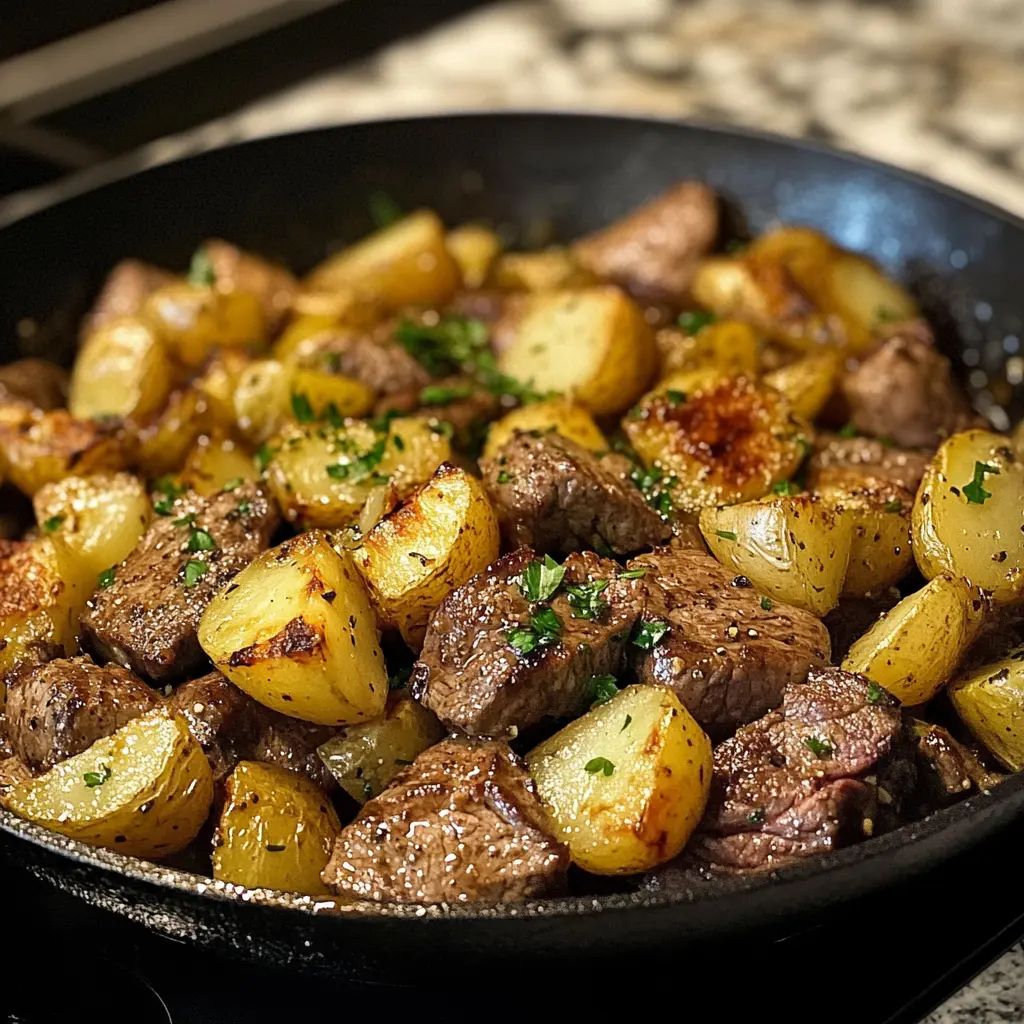
Garlic Butter Steak and Potato Skillet: The Ultimate One-Pan Comfort Meal
Looking for a satisfying dinner that combines juicy steak bites with perfectly crispy potatoes? This Garlic Butter Steak and Potato Skillet recipe delivers restaurant-quality flavors in a single pan, making it ideal for busy weeknights or impressive weekend dinners. With minimal cleanup and maximum flavor, this dish brings together tender beef, golden potatoes, and aromatic garlic butter for an unforgettable meal.
Why This Recipe Works
The beauty of a garlic butter steak and potato skillet lies in its simplicity. This one-pan wonder combines protein and vegetables in a single cooking vessel, reducing both preparation time and cleanup effort. The high heat of the skillet creates a beautiful sear on the steak while simultaneously crisping the potatoes to golden perfection.
Additionally, the garlic butter acts as both a cooking medium and a finishing sauce. It infuses every bite with rich, aromatic flavor while keeping the steak tender and the potatoes moist. The technique of cooking each component separately before combining them ensures that both elements achieve their ideal texture without compromising quality.
Choosing the Right Ingredients
Selecting the Perfect Steak Cut
The success of your garlic butter steak and potato skillet depends heavily on choosing the right cut of beef. Several options work exceptionally well for skillet cooking.
Ribeye steak stands out as a top choice due to its exceptional marbling. The intramuscular fat renders during cooking, creating intense flavor and ensuring tenderness. Both boneless and bone-in varieties work well, though boneless ribeyes cook more quickly and evenly.
Sirloin steak offers a leaner option while maintaining excellent flavor. This cut develops a firm texture with a beautiful crust when seared properly. It remains juicy inside despite its lower fat content.
Strip steak (also called New York strip) provides robust flavor with a firm texture. This cut sears beautifully and develops a crisp exterior while staying tender inside.
Filet mignon delivers the most tender eating experience. Though pricier, this cut from the tenderloin guarantees melt-in-your-mouth texture with delicate flavor.
Flank steak presents a budget-friendly alternative. When sliced against the grain, this leaner cut becomes surprisingly tender. Its longer grain structure benefits from cutting into bite-sized pieces before cooking.
Choosing Potato Varieties
Not all potatoes perform equally in skillet cooking. Understanding starch content helps you select the best variety for this garlic butter steak and potato skillet.
Yukon Gold potatoes rank as the most versatile choice. These all-purpose spuds contain moderate starch levels and natural buttery flavor. They hold their shape during cooking while developing crispy exteriors and creamy interiors.
Red potatoes (including red bliss) work wonderfully for skillet dishes. Their waxy texture and lower starch content help them maintain structure during high-heat cooking. The thin skins require no peeling, saving preparation time.
Baby potatoes of any variety offer convenience and visual appeal. Their smaller size ensures faster, more even cooking. Simply quarter them for optimal surface area and caramelization.
Russet potatoes contain high starch levels, making them crispy on the outside. However, they require careful attention to prevent breaking apart during stirring.
Fresh Herbs and Aromatics
Fresh herbs elevate the garlic butter steak and potato skillet from good to extraordinary. Thyme, rosemary, and oregano complement both beef and potatoes beautifully. Fresh garlic provides the signature flavor profile, with most recipes calling for 4-5 cloves minced.
Fresh parsley serves as an excellent finishing garnish. It adds brightness and visual appeal to the dish. Italian seasoning blend offers a convenient alternative when individual herbs aren’t available.
Quality Butter and Oil
Using high-quality butter significantly impacts the final flavor. The recipe typically requires 3-4 tablespoons divided between cooking stages. Unsalted butter allows better control over seasoning levels.
Olive oil provides a higher smoke point for the initial searing. Starting with olive oil prevents butter from burning during high-heat cooking. The combination of both fats creates optimal flavor and cooking performance.
Essential Kitchen Equipment
The Perfect Skillet
A quality skillet makes all the difference in this recipe. Cast iron skillets excel at retaining and distributing heat evenly. They create superior sears on both steak and potatoes. Additionally, cast iron naturally develops a non-stick surface with proper seasoning.
Non-stick pans offer easier cleanup and require less oil. However, they may not develop the same depth of browning as cast iron. Choose a skillet at least 12 inches in diameter to avoid overcrowding.
Some recipes call for oven-safe skillets to finish cooking. This method ensures even doneness throughout both components. Verify your skillet handle can withstand oven temperatures before using this technique.
Additional Tools
A meat thermometer ensures perfect doneness every time. According to food safety guidelines, steak should reach an internal temperature of 145°F (62.8°C) for medium-rare, with a three-minute rest period. Ground meat requires cooking to 160°F (71.1°C) for safety.
Sharp knives facilitate clean cuts against the grain. This technique maximizes tenderness in every bite. A tight-fitting lid helps steam potatoes when needed, speeding up cooking time.
Step-by-Step Cooking Instructions
Preparing Your Ingredients
Start by cutting your steak into bite-sized pieces or strips. For flank steak, slice against the grain into 1-inch strips. Sirloin and ribeye can be cut into 1-inch cubes for faster cooking.
Quarter baby potatoes or cut larger varieties into 1-inch chunks. Uniform sizing ensures even cooking throughout. Pat both steak and potatoes dry with paper towels to promote better browning.
Season the steak pieces with salt and pepper. Some recipes suggest marinating the meat briefly in soy sauce and olive oil for enhanced flavor. Meanwhile, mince 4-5 garlic cloves and chop fresh herbs.
Cooking the Potatoes First
Heat your skillet over medium-high heat. Add 1 tablespoon olive oil and 1-2 tablespoons butter. Once the butter melts and begins to foam, add the potato pieces in a single layer.
Let the potatoes cook undisturbed for 3-4 minutes. This initial searing develops the golden crust that makes this garlic butter steak and potato skillet so appealing. Resist the urge to stir too early, as movement prevents proper browning.
After the first side browns, stir the potatoes and continue cooking for another 3-5 minutes. Add minced garlic and fresh herbs during this stage. Season generously with salt, pepper, and any additional spices like garlic powder or rosemary.
The potatoes should reach fork-tender consistency while maintaining crispy exteriors. This typically takes 8-10 minutes total cooking time. Transfer the cooked potatoes to a plate and set aside.
Searing the Steak
Increase the heat to high and add the remaining butter to your skillet. The pan should be very hot to achieve proper searing. Once the butter melts completely, add the seasoned steak pieces in a single layer.
Let the steak sear without moving it for a full minute. This creates the flavorful crust that defines restaurant-quality beef. After one minute, flip or stir the pieces to brown the opposite side.
Cook for an additional 1-2 minutes for medium doneness. Be careful not to overcook, as the residual heat will continue cooking the meat slightly after removing from heat. For perfectly cooked steak in your garlic butter steak and potato skillet, use a meat thermometer to verify internal temperature.
If you marinated the steak, pour any reserved marinade over the meat during the final minute of cooking. This adds extra flavor and creates a light sauce.
Combining and Finishing
Return the cooked potatoes to the skillet with the steak. Toss everything together gently to distribute the garlic butter evenly. Remove the pan from heat to prevent overcooking.
For oven-finished versions, push the steak to one side and potatoes to the other. Transfer the skillet to a preheated 375-425°F oven for 5-20 minutes, depending on desired doneness and potato tenderness.
Add a final dollop of garlic herb butter on top while everything is still hot. The butter will melt and coat all ingredients with rich flavor. Garnish with freshly chopped parsley or additional herbs before serving.
Pro Tips for Perfect Results
Achieving the Best Sear
Temperature control makes or breaks this dish. Always preheat your skillet adequately before adding ingredients. Cast iron requires extra time to heat thoroughly, but the patience pays off in superior browning.
Avoid overcrowding the pan, which causes steaming instead of searing. Work in batches if necessary to maintain proper spacing. Each piece should have contact with the hot surface for optimal caramelization.
Pat ingredients dry before cooking. Excess moisture creates steam barriers that prevent browning. This simple step dramatically improves the final texture of your garlic butter steak and potato skillet.
Timing Considerations
Cook components separately for best results. Potatoes require longer cooking time than steak, so they should always go first. This prevents overcooked meat while ensuring tender potatoes.
Monitor cooking times carefully based on your preferred steak doneness. Rare steak needs minimal cooking, while well-done requires several additional minutes. Remember that carryover cooking will raise the temperature another 5 degrees during resting.
Flavor Enhancements
Create compound garlic butter in advance for deeper flavor. Mix softened butter with minced garlic, herbs, salt, and pepper, then refrigerate. This prepared butter can be added at multiple stages throughout cooking.
Don’t skip the fresh herbs. While dried herbs work in a pinch, fresh thyme, rosemary, and oregano deliver superior flavor and aroma. Add woody herbs like rosemary and thyme during cooking, but save delicate parsley for garnishing.
Consider adding crushed red pepper flakes for heat. A small pinch elevates the overall flavor profile without overwhelming other ingredients.
Nutritional Information
A typical serving of garlic butter steak and potato skillet provides substantial protein and carbohydrates. A 6-8 ounce steak portion delivers approximately 40-50 grams of protein. Potatoes contribute complex carbohydrates, fiber, and essential vitamins.
Garlic offers impressive health benefits beyond flavor. It contains antioxidants that protect cells from damage and may support heart health by helping lower blood pressure and cholesterol levels. Fresh garlic provides vitamins C and B6, along with manganese.
The butter component provides fat-soluble vitamins and energy. Moderate butter consumption can enhance absorption of nutrients from vegetables. However, those watching saturated fat intake should use butter sparingly.
Fresh herbs contribute additional antioxidants and anti-inflammatory compounds. Thyme, rosemary, and oregano all contain beneficial plant compounds. These herbs add flavor without extra calories or sodium.
Serving Suggestions and Pairings
This garlic butter steak and potato skillet functions as a complete meal on its own. The combination of protein, vegetables, and healthy fats creates a balanced plate. However, several accompaniments can enhance the dining experience.
Fresh green salads provide contrast to the rich, savory main dish. A simple arugula salad with lemon vinaigrette cuts through the butter beautifully. Roasted vegetables like asparagus, green beans, or Brussels sprouts complement the flavors nicely.
Crusty bread helps soak up the delicious garlic butter sauce. Warm dinner rolls or baguette slices make excellent additions. For lower-carb options, serve with cauliflower rice or zucchini noodles instead of adding bread.
[INTERNAL LINK PLACEHOLDER: Link to your related beef recipes or one-pan dinner ideas here]
Storage and Reheating Guidelines
Leftover garlic butter steak and potato skillet keeps well when stored properly. Transfer cooled food to airtight containers within two hours of cooking. Refrigerate for up to 3-4 days for best quality.
When reheating, use gentle heat to prevent overcooking the steak. The oven method works best: spread leftovers on a baking sheet and warm at 325°F for 10-15 minutes. Alternatively, reheat gently in a skillet over medium-low heat, adding a splash of broth to prevent drying.
Microwave reheating is fastest but can make steak tough. If using this method, heat in short 30-second intervals at reduced power. Cover the dish with a damp paper towel to maintain moisture.
For meal prep purposes, consider storing steak and potatoes separately. This allows better control during reheating and maintains optimal texture for each component.
Common Mistakes to Avoid
Overcrowding the Pan
The most frequent error is adding too many ingredients at once. Overcrowding reduces surface temperature and causes steaming instead of searing. This results in gray, steamed meat rather than beautifully browned steak.
Work in batches if your skillet cannot accommodate all ingredients comfortably. Each piece should have space around it for proper browning. This extra step makes a significant difference in the final quality of your garlic butter steak and potato skillet.
Moving Ingredients Too Soon
Patience during the initial searing phase is crucial. Constantly stirring prevents the Maillard reaction from developing. Let potatoes sit undisturbed for 3-4 minutes before the first stir.
Similarly, steak needs at least one full minute of contact with the hot pan. Resist the temptation to peek or flip prematurely. The meat will release naturally from the pan once a proper crust forms.
Incorrect Temperature Control
Using insufficient heat prevents proper searing. The pan must be very hot before adding ingredients. However, excessively high heat can burn butter and garlic quickly.
Start with medium-high heat for potatoes, then increase to high for searing steak. Adjust as needed based on your stove’s output and pan type. Cast iron retains heat longer and may require lower settings than other materials.
Overcooking the Steak
Beef continues cooking after removal from heat. Account for this carryover cooking by removing steak slightly before it reaches target temperature. A three-minute rest period allows juices to redistribute throughout the meat.
Use a meat thermometer for accuracy rather than guessing doneness. For medium-rare, remove steak at 140°F as it will rise to 145°F during resting. This ensures food safety while maintaining optimal texture.
Recipe Variations
Different Protein Options
While beef defines the classic garlic butter steak and potato skillet, other proteins work beautifully with this cooking method. Chicken breast or thighs cut into bite-sized pieces cook quickly and absorb the garlic butter flavor wonderfully. Ensure chicken reaches 165°F internal temperature for safety.
Pork tenderloin provides another lean option. Cut into medallions, pork pairs excellently with the herb-infused butter and crispy potatoes. Cook to 145°F with a three-minute rest.
Shrimp creates a lighter version perfect for seafood lovers. Large shrimp cook in just 2-3 minutes per side and complement the garlic butter beautifully. Cook shrimp to 145°F for proper food safety.
Vegetable Additions
Enhance your garlic butter steak and potato skillet with additional vegetables. Bell peppers add color and sweetness when diced and cooked alongside potatoes. Onions caramelize beautifully in the rendered fat and garlic butter.
Mushrooms contribute earthy flavor and meaty texture. Slice them thickly and add during the potato cooking phase. Green beans or asparagus work well when tossed in during the final few minutes.
Cherry tomatoes burst with flavor when added briefly at the end. Their acidity balances the rich butter beautifully. Spinach or kale can be stirred in just before serving for added nutrition.
Seasoning Variations
Experiment with different herb combinations to customize your garlic butter steak and potato skillet. Cajun seasoning creates a spicy kick. Italian seasoning blend offers convenient multi-herb flavor.
Try Montreal steak seasoning for a bold, peppery taste. Smoked paprika adds depth and subtle smokiness without grilling. Fresh lemon zest brightens the rich butter sauce.
For Asian-inspired flavor, add ginger with the garlic and finish with sesame oil and green onions. Balsamic vinegar drizzled before serving adds tangy complexity.
Dietary Modifications
For dairy-free versions, substitute ghee or olive oil for butter. While the flavor profile changes slightly, the dish remains delicious. Coconut oil works but imparts distinct flavor that may not appeal to everyone.
Low-carb adaptations can replace potatoes with cauliflower florets or radishes. Both vegetables crisp nicely when roasted and absorb the garlic butter well. Turnips also work as potato substitutes when cut into similar-sized pieces.
For reduced-fat versions, use less butter and increase fresh herbs for flavor. The herbs provide aromatic intensity without added calories. Cooking spray can replace some of the oil for initial searing.
Frequently Asked Questions
What cut of steak is best for a garlic butter steak and potato skillet?
Ribeye, sirloin, strip steak, and flank steak all work excellently for skillet cooking. Ribeye offers the most marbling and flavor, while sirloin provides a leaner option. Flank steak presents a budget-friendly choice when sliced against the grain. Choose based on your budget and preferred fat content.
Can I use frozen potatoes instead of fresh?
Fresh potatoes perform best in this recipe due to their moisture content and texture. Frozen potatoes often contain excess water that prevents proper crisping. If using frozen, thaw completely and pat very dry before cooking. However, fresh potatoes require minimal preparation and deliver superior results.
How do I know when the steak is done cooking?
Use a meat thermometer inserted into the thickest part of the steak. For medium-rare, target 145°F internal temperature with a three-minute rest period. Medium reaches 150-155°F, while well-done steak hits 160°F or higher. Remember that carryover cooking raises temperature another 5 degrees during resting.
Can I make this garlic butter steak and potato skillet ahead of time?
While best served immediately, you can prep components in advance. Cut steak and potatoes up to 24 hours ahead and store separately in the refrigerator. Prepare garlic butter and measure seasonings beforehand. However, cook the dish just before serving for optimal texture and temperature.
What type of potato works best for skillet cooking?
Yukon Gold potatoes rank as the most versatile choice for this garlic butter steak and potato skillet. They develop crispy exteriors while maintaining creamy interiors. Red potatoes and baby potatoes also perform excellently due to their waxy texture and ability to hold shape during cooking. Avoid overly starchy russets unless you prefer softer potatoes.
Can I cook this entirely in the oven instead of on the stovetop?
Yes, though the technique differs slightly. Start by roasting potatoes at 425°F for 20 minutes, then add seared steak and continue cooking for 5-8 additional minutes. Some recipes call for hybrid methods that start on the stovetop and finish in the oven. This ensures even cooking and allows you to multitask during preparation.
How can I make this recipe healthier?
Reduce butter quantity and increase fresh herbs for flavor without extra fat. Choose leaner steak cuts like sirloin or flank instead of heavily marbled ribeye. Add more vegetables like bell peppers, mushrooms, or green beans to increase fiber and nutrients. Use smaller portions of steak balanced with larger portions of potatoes and vegetables.
Why did my steak turn out tough?
Overcooking is the most common cause of tough steak. Use a meat thermometer to avoid exceeding target temperature. Cutting with the grain instead of against it also creates chewy texture. Additionally, moving meat too frequently prevents proper searing, which can affect tenderness perception. Let the steak rest for three minutes after cooking to allow juices to redistribute.
Can I use dried herbs instead of fresh?
Yes, though the flavor will be less vibrant. Use one-third the amount of dried herbs compared to fresh since dried versions are more concentrated. Add dried herbs earlier in cooking to allow time for rehydration and flavor release. Fresh herbs can still be added as garnish for visual appeal and brightness.
What should I serve with this garlic butter steak and potato skillet?
This dish functions as a complete meal with protein and starch included. However, fresh green salads, roasted vegetables, or crusty bread make excellent accompaniments. Light sides work best since the main dish is quite rich. Consider vegetable sides like asparagus, green beans, or a simple tomato salad.
Conclusion
This Garlic Butter Steak and Potato Skillet delivers impressive flavors with minimal effort, making it perfect for both weeknight dinners and special occasions. By following the proper techniques for searing steak and crisping potatoes, you’ll create a restaurant-quality meal in your own kitchen. The rich garlic butter ties everything together, creating an irresistible dish that satisfies every time.
Print