
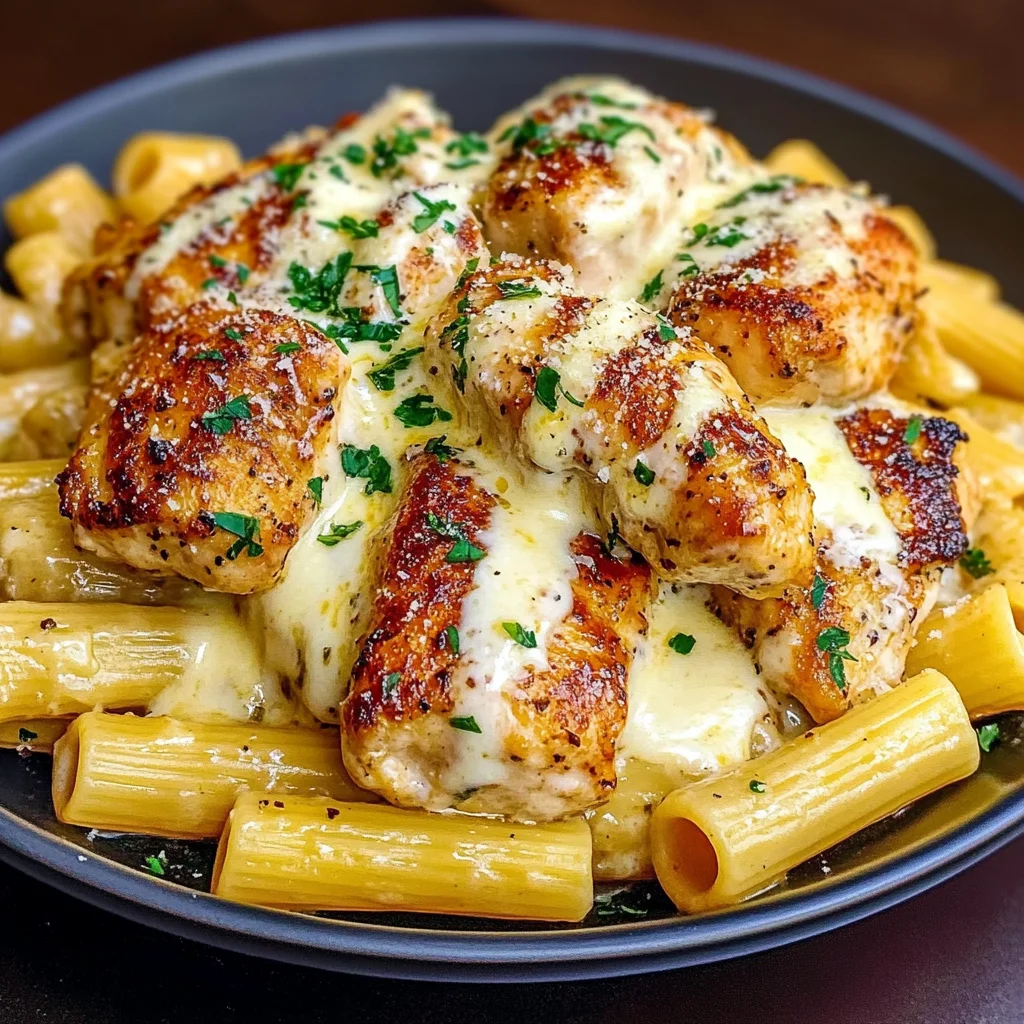
Garlic Parmesan Chicken with Creamy Rigatoni Pasta: The Ultimate Comfort Food Guide
Introduction
Nothing beats the comfort of Garlic Parmesan Chicken with Creamy Rigatoni Pasta on a busy weeknight. This restaurant-quality dish combines tender chicken breasts coated in aromatic garlic and nutty Parmesan with perfectly cooked rigatoni swimming in a velvety cream sauce. Moreover, you can prepare this impressive meal in under 45 minutes, making it ideal for family dinners or entertaining guests.
This recipe delivers bold Italian flavors without any complicated techniques. so everyone at your table can enjoy it. The creamy sauce clings beautifully to the rigatoni’s ridges, while the chicken stays juicy and flavorful. Furthermore, you’ll discover pro tips that ensure perfect results every single time.
Why This Recipe Works
Perfect Texture Combination
The contrast between crispy chicken exterior and tender pasta creates an incredible eating experience. The rigatoni’s tubular shape captures the creamy sauce in every bite. Meanwhile, the Parmesan cheese adds both flavor and a slightly granular texture that enhances the dish’s complexity.
Quick Cooking Method
Unlike many Italian-inspired dishes, this recipe doesn’t require hours of preparation. In fact, you can have dinner on the table in approximately 40 minutes. The chicken cooks quickly when pounded to even thickness. Similarly, rigatoni has an ideal cooking time that aligns perfectly with your chicken preparation.
Balanced Flavor Profile
Garlic provides aromatic depth without overwhelming the palate. The Parmesan adds savory umami notes. Additionally, fresh herbs brighten the rich cream sauce. This balance ensures the dish feels indulgent yet not overly heavy.
Family-Friendly Appeal
This garlic Parmesan chicken pasta recipe pleases both adults and children. The familiar ingredients create comfort food appeal. Moreover, the mild garlic flavor isn’t too intense for younger palates. You can also adjust the seasoning to suit your family’s preferences.
Essential Ingredients Breakdown
For the Chicken
Chicken Breasts: Choose boneless, skinless breasts weighing 6-8 ounces each. Therefore, you’ll need approximately 1.5 to 2 pounds for four servings. Pound them to uniform thickness for even cooking.
Garlic: Fresh garlic cloves provide the best flavor. Use 6-8 cloves for bold garlic taste. Minced garlic from a jar works in a pinch, though fresh delivers superior results.
Parmesan Cheese: Freshly grated Parmigiano-Reggiano offers the best flavor and texture. Avoid pre-grated varieties containing cellulose. You’ll need about 1 cup divided between the chicken coating and sauce.
All-Purpose Flour: This creates a light coating that helps seasonings stick. It also promotes browning and adds body to the pan sauce later.
Italian Seasoning: A blend of oregano, basil, thyme, and rosemary enhances the Italian character. Use 2 teaspoons for optimal flavor.
Salt and Black Pepper: Season generously to bring out the chicken’s natural flavors. Freshly ground black pepper provides better taste than pre-ground.
Olive Oil: Extra virgin olive oil adds fruity notes and helps achieve golden-brown chicken. Use approximately 3 tablespoons.
Butter: Unsalted butter contributes richness and helps create the sauce base. You’ll need 4 tablespoons total.
For the Pasta and Sauce
Rigatoni Pasta: This tube-shaped pasta has ridges that hold sauce beautifully. One pound serves four people generously. [Check out our guide on choosing the best pasta shapes for cream sauces].
Heavy Cream: The foundation of your sauce requires 2 cups of heavy whipping cream. Don’t substitute with half-and-half, as it won’t achieve the same consistency.
Chicken Broth: Low-sodium chicken broth adds depth without making the dish too salty. Use 1 cup to balance the cream’s richness.
Additional Parmesan: Reserve ½ cup for the sauce and extra for garnish. This cheese thickens the sauce while adding savory notes.
Fresh Parsley: Chopped flat-leaf parsley adds color and freshness. Use ¼ cup for garnish.
Garlic (for sauce): Add 3-4 more cloves to infuse the cream sauce with garlic flavor.
Red Pepper Flakes: Optional but recommended. A pinch adds gentle heat that complements the creamy sauce.
Kitchen Tools You’ll Need
Essential Equipment
A large skillet or sauté pan (12 inches) with high sides handles both chicken and sauce. Additionally, you’ll need a large pot for boiling pasta. A meat mallet helps pound chicken to even thickness. Furthermore, keep measuring cups and spoons handy for accurate ingredient portions.
Helpful But Optional
A microplane grater makes quick work of Parmesan cheese. A pasta fork lifts rigatoni efficiently. Moreover, a splatter screen prevents mess while cooking chicken. An instant-read thermometer ensures perfectly cooked chicken at 165°F.
Step-by-Step Cooking Instructions
Preparing the Chicken
First, place chicken breasts between plastic wrap sheets. Pound them to ½-inch thickness using a meat mallet. This ensures even cooking throughout.
Next, mix flour, Italian seasoning, ½ cup Parmesan, salt, and pepper in a shallow dish. Dredge each chicken breast in this mixture. Shake off excess coating gently.
Meanwhile, heat 2 tablespoons olive oil and 2 tablespoons butter in your large skillet over medium-high heat. Wait until the butter melts and starts foaming.
Then, add chicken breasts to the hot pan. Cook for 5-6 minutes per side until golden brown. The internal temperature should reach 165°F. Remove chicken to a plate and tent with foil to keep warm.
Cooking the Pasta
While the chicken cooks, bring a large pot of salted water to boil. The water should taste like seawater for properly seasoned pasta. Add rigatoni and cook according to package directions minus 1 minute. You want it slightly undercooked since it’ll finish in the sauce.
Reserve 1 cup pasta cooking water before draining. This starchy liquid helps adjust sauce consistency later. Drain the remaining water and set pasta aside.
Making the Creamy Sauce
Using the same skillet you cooked chicken in, reduce heat to medium. Add remaining butter and olive oil. Once melted, add minced garlic. Sauté for 30-45 seconds until fragrant but not browned.
Pour in chicken broth and scrape up any browned bits from the pan bottom. These flavor bits enhance your sauce significantly. Let the broth simmer for 2 minutes to reduce slightly.
Add heavy cream and bring to a gentle simmer. Reduce heat to medium-low. Let it simmer for 5-7 minutes, stirring occasionally. The sauce will thicken naturally as it reduces.
Stir in ½ cup grated Parmesan cheese gradually. The cheese melts into the sauce, creating velvety texture. Season with salt, pepper, and red pepper flakes if desired.
Combining Everything
Add the drained rigatoni to your cream sauce. Toss gently to coat every piece. If the sauce seems too thick, add reserved pasta water 2 tablespoons at a time. The starch helps the sauce cling to the pasta beautifully.
Slice the rested chicken breasts on the bias into ½-inch strips. This creates attractive presentation and makes serving easier.
Arrange the creamy rigatoni on serving plates or a large platter. Top with sliced garlic Parmesan chicken. Garnish generously with fresh parsley and additional Parmesan cheese. Serve immediately while hot.
Pro Tips for Perfect Results
Achieving Golden Chicken
Pat chicken completely dry before coating. Moisture prevents proper browning. Additionally, don’t move the chicken once it hits the pan. Let it develop a crust for 5-6 minutes before flipping.
Furthermore, avoid overcrowding your skillet. Cook chicken in batches if necessary. Crowded pans cause steaming rather than browning. Consequently, your chicken won’t develop that desirable golden crust.
Creating Silky Sauce
Always use room temperature cream to prevent curdling. Add Parmesan gradually while stirring constantly. This prevents clumping and ensures smooth incorporation.
Moreover, don’t let the sauce boil vigorously after adding cheese. High heat can cause separation. Instead, maintain a gentle simmer for the best texture.
Pasta Perfection
Cook rigatoni 1 minute under the recommended time. It finishes cooking in the sauce. This prevents mushy pasta and allows better sauce absorption.
Similarly, save pasta water before draining. The starchy water is invaluable for adjusting sauce consistency. Add it gradually until you achieve your desired thickness.
Garlic Guidelines
Fresh garlic provides superior flavor compared to jarred varieties. However, don’t let it brown or burn. Burnt garlic tastes bitter and ruins the dish. Cook just until fragrant, about 30-45 seconds.
For even more garlic flavor, rub chicken with a cut garlic clove before coating. This subtle step adds extra aromatic depth without overwhelming the dish.
Make-Ahead Strategies
Prepare the flour-Parmesan coating mixture up to 2 days ahead. Store it in an airtight container at room temperature. You can also pound chicken earlier in the day and refrigerate until cooking time.
However, cook the sauce fresh for best results. Cream sauces don’t reheat as well as tomato-based alternatives. If you must prepare ahead, slightly undercook the sauce and finish it when reheating.
Nutritional Information
Per Serving (Based on 4 Servings)
Each portion of Garlic Parmesan Chicken with Creamy Rigatoni Pasta contains approximately:
-
Calories: 820-850
-
Protein: 48-52g
-
Carbohydrates: 62-65g
-
Fat: 42-45g
-
Saturated Fat: 24-26g
-
Fiber: 3-4g
-
Sugar: 3-4g
-
Sodium: 680-720mg
-
Calcium: 380-420mg
Dietary Considerations
This recipe provides excellent protein from chicken and cheese. The pasta offers energy through complex carbohydrates. However, the dish is high in calories and saturated fat due to cream and cheese content.
For lighter versions, consider the modifications in the variations section below. Additionally, serve with a large green salad to add vegetables and fiber. This balances the richness of the creamy pasta.
The recipe is naturally suitable for most diets. Those watching sodium should use low-sodium broth and reduce added salt.
Serving Suggestions
Side Dishes
A crisp Caesar salad provides refreshing contrast to the rich pasta. The tangy dressing cuts through the cream beautifully. Alternatively, serve garlic bread for extra garlic lovers. Roasted vegetables like broccoli, asparagus, or Brussels sprouts add color and nutrition.
Moreover, a simple arugula salad with lemon vinaigrette offers peppery notes. The bright acidity balances the dish’s richness perfectly. For heartier appetites, add roasted cherry tomatoes that burst with sweet-tart flavor.
Presentation Ideas
Serve this garlic Parmesan chicken pasta family-style on a large platter. This creates a beautiful centerpiece for your table. Layer the creamy rigatoni as a base, then arrange sliced chicken on top.
Alternatively, plate individually for restaurant-quality presentation. Twirl pasta using tongs to create height. Fan chicken slices artfully over the pasta. Garnish generously with fresh parsley and shaved Parmesan.
For special occasions, use your finest serving dishes. The visual appeal enhances the dining experience. Furthermore, fresh herbs add vibrant color that photographs beautifully for social media sharing.
Storage and Reheating Guide
Refrigerator Storage
Store leftovers in airtight containers within 2 hours of cooking. Refrigerated garlic Parmesan chicken pasta stays fresh for 3-4 days. Keep chicken and pasta together or separate, depending on your preference.
For best results, slightly undercook pasta if you plan leftovers. This prevents mushiness when reheating. Additionally, reserve some sauce separately if possible. Add it when reheating to restore moisture.
Freezing Instructions
While this dish can be frozen, cream sauces sometimes separate upon thawing. If you choose to freeze, store in freezer-safe containers for up to 2 months. Leave headspace for expansion during freezing.
Thaw overnight in the refrigerator before reheating. Don’t thaw at room temperature, as this promotes bacterial growth. Expect some texture changes, particularly in the sauce consistency.
Reheating Methods
Stovetop Method: This produces the best results. Place pasta in a skillet over medium-low heat. Add a splash of chicken broth or cream to restore moisture. Heat gently, stirring frequently, until warmed through. Add chicken during the last few minutes.
Microwave Method: Transfer portions to microwave-safe dishes. Add a tablespoon of broth or cream. Cover loosely and microwave in 1-minute intervals, stirring between each. This prevents hot spots and ensures even heating.
Oven Method: Preheat oven to 350°F. Place pasta and chicken in an oven-safe dish. Add extra cream or broth and cover with foil. Bake for 20-25 minutes until heated through. Remove foil during the last 5 minutes for slight browning.
Maintaining Quality
Regardless of reheating method, avoid high heat. Excessive temperature causes cream to separate and chicken to dry out. Therefore, gentle reheating preserves the dish’s creamy texture better.
If sauce seems broken or separated, whisk in a tablespoon of butter. This helps re-emulsify the components. Additionally, fresh Parmesan stirred in at the end enhances flavor.
Common Mistakes to Avoid
Overcooking the Chicken
Dry, tough chicken ruins this dish. Use an instant-read thermometer to check doneness. Remove chicken at exactly 165°F internal temperature. Carryover cooking will raise the temperature a few more degrees.
Furthermore, pounding chicken to even thickness prevents some pieces from overcooking while others remain underdone. This simple step ensures perfectly cooked chicken throughout.
Burning the Garlic
Garlic burns quickly and tastes bitter when overcooked. Add it to medium or medium-low heat, not high. Cook only 30-45 seconds until fragrant. If garlic browns too much, start over with fresh garlic.
Boiling the Cream Sauce
High heat causes cream to separate and curdle. After adding cream, reduce heat to medium-low. Maintain a gentle simmer, never a rolling boil. Patience creates silky-smooth sauce every time.
Using Pre-Grated Cheese
Pre-shredded Parmesan contains anti-caking agents that prevent smooth melting. These additives create grainy sauce texture. Always grate fresh Parmesan for the best results.
Additionally, avoid using Parmesan substitutes like Romano exclusively. While Romano adds nice flavor, it’s saltier and sharper than Parmesan. A blend works well, but pure Romano may overpower the dish.
Skipping the Pasta Water
Pasta cooking water contains starch that helps sauce cling to noodles. Without it, you can’t adjust sauce consistency properly. Always reserve at least one cup before draining.
This starchy water also helps bind the sauce to pasta better than plain water or broth. Don’t skip this crucial step for optimal results.
Overcrowding the Pan
Cooking too much chicken at once lowers pan temperature. This causes steaming instead of searing. Work in batches if necessary. Proper browning develops flavor and creates appealing color.
Not Seasoning Properly
Underseasoned food tastes bland, no matter how good the recipe. Season chicken generously before coating. Taste sauce before serving and adjust seasoning. Remember that Parmesan adds saltiness, so adjust accordingly.
Recipe Variations
Lighter Version
Reduce calories by using half-and-half instead of heavy cream. You’ll need to add a cornstarch slurry to achieve proper thickness. Mix 2 tablespoons cornstarch with 2 tablespoons cold water. Stir into simmering sauce.
Additionally, use chicken tenders instead of breasts. They cook faster and contain less fat. Serve smaller portions with extra vegetables to maintain satisfaction while reducing calories.
Vegetable-Packed Option
Add vegetables to boost nutrition and color. Sauté spinach, sun-dried tomatoes, or mushrooms with the garlic. Broccoli florets work beautifully in this creamy sauce. Roasted red peppers add sweetness and visual appeal.
Furthermore, incorporate vegetables into the sauce itself. Puree roasted cauliflower into the cream for hidden nutrition. This maintains creaminess while adding fiber and nutrients.
Different Pasta Shapes
While rigatoni is ideal, other shapes work too. Penne, ziti, or shells all hold sauce well. For variety, try orecchiette or cavatappi. Each shape creates a slightly different eating experience.
Short pasta shapes generally work better than long noodles. The thick cream sauce clings better to compact shapes. However, fettuccine makes an acceptable alternative for more traditional presentation.
Spicier Version
Increase red pepper flakes to ½ teaspoon for moderate heat. Add diced jalapeños to the sauce for fresh spice. Alternatively, use Cajun seasoning in the flour coating instead of Italian herbs.
For maximum heat, serve with hot sauce on the side. This allows each person to customize spice level. Fresh black pepper generously applied also adds pleasant warmth.
Herb Variations
Experiment with different fresh herbs for varied flavor profiles. Basil adds sweet, aromatic notes perfect for summer. Fresh thyme contributes earthy undertones. Rosemary creates more robust, wintery flavors.
Moreover, use a combination of herbs rather than just parsley. Mix equal parts parsley, basil, and oregano for complex flavor. Fresh herbs taste better than dried in the final garnish.
Protein Alternatives
Substitute chicken with other proteins for variety. Shrimp cooks quickly and pairs beautifully with garlic cream sauce. Use 1.5 pounds large shrimp, peeled and deveined. Turkey cutlets work similarly to chicken.
For plant-based options, use firm tofu or tempeh. Press tofu well before coating and cooking. Mushrooms, particularly portobellos, create a meaty texture.
Frequently Asked Questions
Can I make Garlic Parmesan Chicken with Creamy Rigatoni Pasta ahead of time?
You can prepare components separately ahead. Cook chicken and refrigerate up to 1 day before serving. Make the sauce fresh when ready to serve for best texture. Cream sauces don’t hold well, so fresh preparation yields superior results.
How do I keep the chicken moist?
Pound chicken to even thickness before cooking. Don’t overcook beyond 165°F internal temperature. Let chicken rest 5 minutes before slicing. These steps ensure juicy, tender chicken every time.
What can I use instead of heavy cream?
For lower fat content, use half-and-half with cornstarch thickening. Mix 2 tablespoons cornstarch with equal parts water. Stir into simmering sauce until thickened. Alternatively, try evaporated milk for richness with fewer calories.
However, results won’t match heavy cream’s luxurious texture. Light cream or half-and-half creates thinner sauce. Consider this trade-off when making substitutions.
Can I use chicken thighs instead of breasts?
Absolutely. Boneless, skinless thighs offer more flavor and stay moist easily. They take slightly longer to cook, about 7-8 minutes per side. Check internal temperature reaches 165°F for food safety.
Additionally, thighs contain more fat, making them more forgiving if slightly overcooked. Many people prefer their richer flavor and tender texture.
Why did my sauce separate?
Sauce separation occurs when cream boils too vigorously or when cheese is added too quickly. Always maintain gentle heat after adding cream. Stir Parmesan in gradually while whisking constantly.
To fix separated sauce, whisk in cold butter one tablespoon at a time. Alternatively, blend briefly with an immersion blender to re-emulsify the components.
How do I store leftover garlic Parmesan chicken pasta?
Store in airtight containers in the refrigerator for 3-4 days. Keep chicken and pasta together or separate based on preference. Add a splash of cream or broth when reheating to restore moisture and texture.
Can I freeze this dish?
While possible, cream sauces don’t freeze ideally. The texture changes upon thawing and reheating. If you must freeze, store in freezer-safe containers for up to 2 months. Expect some sauce separation and texture changes.
What sides go well with this pasta?
Light, fresh sides balance the rich pasta beautifully. Caesar salad, roasted vegetables, or garlic bread complement well. A simple green salad with vinaigrette cuts through the cream’s richness perfectly.
Is this recipe kid-friendly?
Yes, children typically enjoy this mild, creamy pasta. The garlic flavor isn’t overwhelming. However, you can reduce garlic quantity for very young children. The familiar ingredients make it approachable for most ages.
How can I make this recipe healthier?
Use half-and-half instead of heavy cream with cornstarch for thickening. Add vegetables like spinach or broccoli for nutrition. Reduce Parmesan quantity slightly to lower fat and sodium. Serve smaller portions with large salads.
Conclusion
Garlic Parmesan Chicken with Creamy Rigatoni Pasta delivers restaurant-quality results in your home kitchen. This comfort food classic combines tender chicken, perfectly cooked pasta, and silky cream sauce for an unforgettable meal. Moreover, the recipe comes together quickly, making it perfect for busy weeknights or special occasions.
The key to success lies in proper technique and quality ingredients. Fresh garlic and real Parmesan cheese make substantial flavor differences. Additionally, careful attention to cooking temperatures ensures juicy chicken and smooth sauce every time. Don’t rush the process, and you’ll be rewarded with exceptional results.
This recipe proves you don’t need complicated ingredients for impressive dishes. The simple combination of garlic, Parmesan, cream, and chicken creates magic when prepared correctly. Furthermore, the versatility allows endless customization to suit your family’s preferences.
Garlic Parmesan Chicken with Creamy Rigatoni Pasta
Description
Garlic Parmesan Chicken with Creamy Rigatoni Pasta
Ingredients
• 2 large chicken breasts, sliced into strips
• 1 lb rigatoni pasta
• 2 tbsp butter
• 1 tbsp olive oil
• 4 cloves garlic, minced
• 1 cup heavy cream
• 1 cup chicken broth
• 1 cup grated Parmesan cheese
• 1 tsp Italian seasoning
• 1/2 tsp paprika
• Salt + black pepper
• Fresh parsley, chopped (for garnish)
Instructions
-
Cook rigatoni according to package directions. Drain and set aside.
-
Season chicken with paprika, salt, pepper, and half the Italian seasoning.
-
Heat butter and olive oil in a large skillet over medium-high heat. Add chicken strips and cook until golden and cooked through. Remove from skillet.
-
In the same skillet, add minced garlic and sauté 30 seconds. Pour in cream and chicken broth. Bring to a gentle simmer.
-
Stir in Parmesan and remaining Italian seasoning until the sauce thickens and gets silky smooth.
-
Add cooked pasta and chicken back into the sauce. Toss everything until well coated.
-
Garnish with parsley and an extra sprinkle of Parmesan because that’s just the right thing to do.