
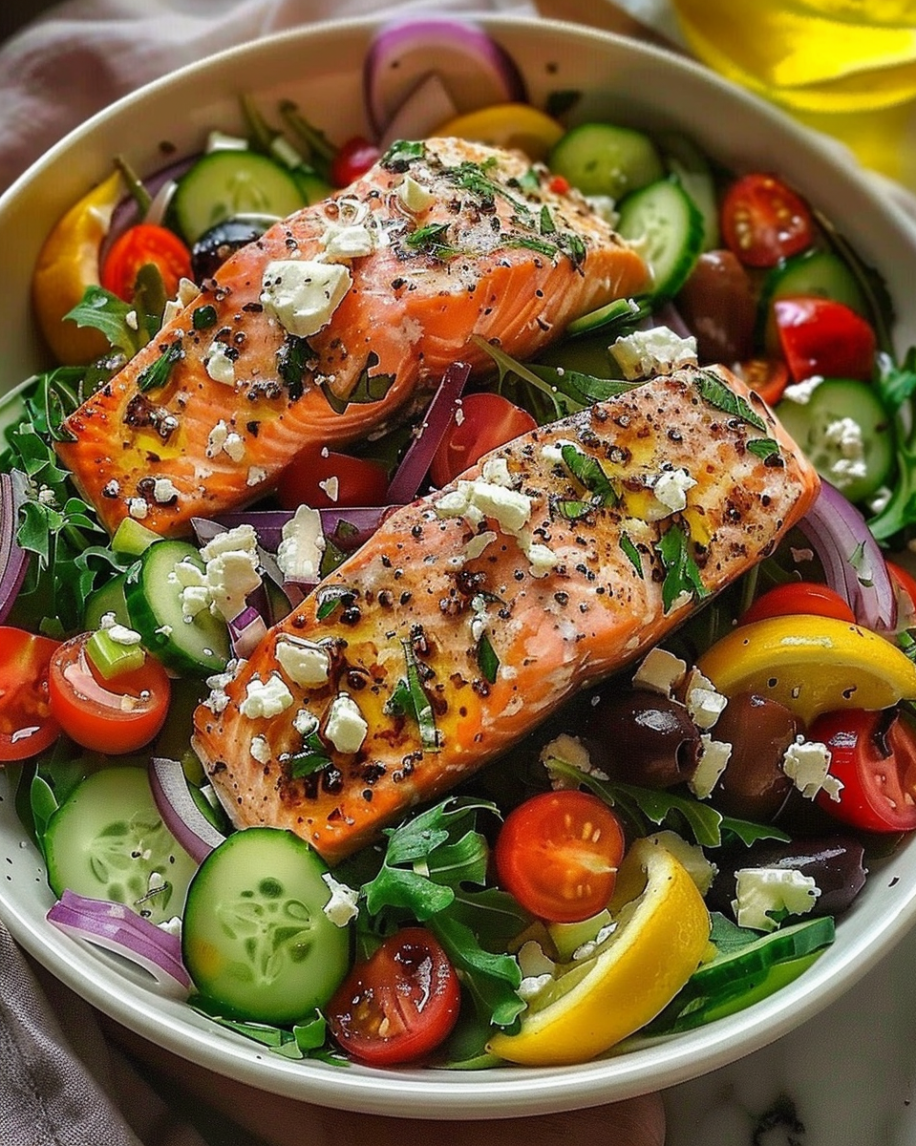
Greek Salmon Salad: The Ultimate Mediterranean Power Bowl
Introduction
Mediterranean cuisine offers countless healthy options, but few dishes combine flavor and nutrition like a perfectly crafted Greek Salmon Salad. This vibrant meal brings together the richness of omega-3 packed salmon with the fresh, bold flavors of traditional Greek ingredients.
Furthermore, this Greek Salmon Salad delivers restaurant-quality results in your own kitchen. The combination of flaky grilled salmon, crisp vegetables, tangy feta cheese, and herbs creates an unforgettable dining experience. Additionally, this recipe requires minimal cooking time while maximizing both taste and nutritional value.
Whether you’re seeking a quick weeknight dinner or preparing for meal prep success, this Mediterranean-inspired salad checks every box. Moreover, the flexibility of ingredients allows for endless customization based on personal preferences and seasonal availability.
What Makes Greek Salmon Salad Special
Mediterranean Flavor Profile
The beauty of Greek Salmon Salad lies in its authentic Mediterranean flavor combination. Traditional Greek ingredients like Kalamata olives, feta cheese, and fresh oregano create a distinctive taste profile. Consequently, each bite delivers the essence of Greek island cuisine.
The tangy lemon dressing brightens every ingredient while complementing the rich salmon perfectly. Similarly, the combination of fresh and dried herbs adds layers of complexity without overwhelming the palate.
Nutritional Powerhouse
This salad delivers exceptional nutritional density in every serving. Salmon provides high-quality protein and essential omega-3 fatty acids for heart and brain health. Meanwhile, the variety of fresh vegetables contributes vitamins, minerals, and fiber.
The healthy fats from olive oil and salmon support nutrient absorption. Additionally, the colorful vegetables provide antioxidants that fight inflammation and support overall wellness.
Versatility and Convenience
Greek Salmon Salad adapts easily to different dietary needs and preferences. The recipe works equally well with grilled, baked, or pan-seared salmon preparation methods. Furthermore, the salad components can be prepared ahead of time for quick assembly.
This flexibility makes it perfect for busy schedules while maintaining nutritional quality. Moreover, the recipe scales easily for single servings or large gatherings.
Essential Ingredients Breakdown
Salmon Selection and Preparation
Fresh Salmon Fillets (1.5 pounds): Choose skin-on Atlantic or Pacific salmon for best results. The skin helps retain moisture during cooking while adding extra flavor. Look for bright color and firm texture when selecting fresh fillets.
Seasoning Blend: Simple salt and pepper allow the salmon’s natural flavor to shine. However, adding dried oregano and garlic powder enhances the Mediterranean profile without overpowering the fish.
Greek Salad Foundation
Mixed Greens (8 cups): Combine romaine lettuce and baby spinach for optimal texture and nutrition. The romaine provides crunch while spinach adds iron and folate. Alternatively, arugula adds a peppery note that complements salmon beautifully.
Cherry Tomatoes (2 cups): Choose ripe, colorful varieties for sweetness and visual appeal. Cut larger tomatoes in half to ensure even distribution throughout the salad.
Cucumber (2 large): English cucumbers work best due to fewer seeds and thinner skin. The crisp texture provides refreshing contrast to the rich salmon.
Red Onion (1 medium): Thinly sliced red onion adds sharpness and color. Soaking slices in cold water for 10 minutes reduces intensity if desired.
Authentic Greek Elements
Feta Cheese (8 ounces): Traditional Greek feta made from sheep’s milk offers the most authentic flavor. However, cow’s milk feta works well as a milder alternative. Crumble by hand for irregular pieces that distribute evenly.
Kalamata Olives (1 cup): These dark purple olives provide distinctive briny flavor essential to Greek cuisine. Pitted olives save preparation time while maintaining authentic taste.
Fresh Herbs: Chopped fresh dill (1/4 cup) and parsley (1/4 cup) brighten the entire dish. Fresh oregano can substitute for dried if available.
Lemon Herb Dressing Components
Extra Virgin Olive Oil (1/2 cup): Choose high-quality olive oil for best flavor and health benefits. Greek or Italian olive oils complement the Mediterranean theme perfectly.
Fresh Lemon Juice (1/4 cup): Freshly squeezed lemon juice provides bright acidity that balances rich ingredients. Avoid bottled lemon juice for optimal flavor.
Garlic (3 cloves): Minced fresh garlic adds aromatic depth to the dressing. Alternatively, garlic powder works in a pinch.
Dried Oregano (2 teaspoons): This quintessential Greek herb ties all flavors together harmoniously.
Step-by-Step Preparation Guide
Preparing the Salmon
Step 1: Season the Fillets
Pat salmon fillets completely dry with paper towels. Then, season both sides generously with salt, pepper, and dried oregano. Allow the seasoned fish to rest at room temperature for 15 minutes before cooking.
Step 2: Heat the Cooking Surface
Preheat a grill pan or skillet over medium-high heat. Add a thin layer of olive oil once the pan is hot. The oil should shimmer but not smoke when ready.
Step 3: Cook the Salmon
Place salmon fillets skin-side down in the hot pan. Cook without moving for 4-5 minutes until the skin crisps. Subsequently, flip carefully and cook for an additional 3-4 minutes for medium doneness.
Step 4: Rest and Flake
Remove cooked salmon to a plate and let rest for 5 minutes. Then, remove skin and flake the fish into bite-sized pieces using a fork.
Creating the Salad Base
Step 5: Prepare the Vegetables
Wash and thoroughly dry all leafy greens using a salad spinner. Meanwhile, slice cucumbers into half-moons and halve the cherry tomatoes. Additionally, slice the red onion as thinly as possible.
Step 6: Combine Ingredients
In a large serving bowl, combine the mixed greens, tomatoes, cucumbers, and red onion. Toss gently to distribute evenly throughout the mixture.
Making the Lemon Herb Dressing
Step 7: Whisk the Dressing
In a small bowl, whisk together lemon juice, minced garlic, and dried oregano. Gradually add olive oil while whisking constantly to create an emulsion. Season with salt and pepper to taste.
Step 8: Adjust Seasoning
Taste the dressing and adjust acidity with additional lemon juice if needed. The dressing should be bright and well-balanced.
Final Assembly
Step 9: Dress the Salad
Drizzle half the dressing over the vegetable mixture and toss gently. Add more dressing as needed to coat all ingredients lightly.
Step 10: Add Final Touches
Top the dressed salad with flaked salmon, crumbled feta cheese, and Kalamata olives. Finally, sprinkle fresh herbs over the entire Greek Salmon Salad for color and aroma.
Nutritional Benefits
Omega-3 Fatty Acids
Salmon serves as one of nature’s best sources of omega-3 fatty acids. These essential fats support heart health by reducing inflammation and improving cholesterol profiles. Moreover, omega-3s benefit brain function and may help prevent cognitive decline.
A single serving of this Greek Salmon Salad provides approximately 1.5 grams of omega-3 fatty acids. This amount meets most daily recommendations for these crucial nutrients.
Complete Protein Profile
The salmon in this salad delivers high-quality complete protein containing all essential amino acids. Each serving provides roughly 35 grams of protein, supporting muscle maintenance and satiety.
Furthermore, the combination of salmon and feta cheese boosts the total protein content significantly. This makes the salad suitable as a complete meal rather than just a side dish.
Antioxidant Powerhouse
The colorful vegetables contribute various antioxidants that fight cellular damage. Tomatoes provide lycopene, while leafy greens offer lutein and zeaxanthin for eye health. Additionally, the herbs contribute flavonoids with anti-inflammatory properties.
These compounds work synergistically to support overall health and may reduce chronic disease risk. The variety of colors ensures a broad spectrum of beneficial plant compounds.
Heart-Healthy Fats
Beyond the omega-3s from salmon, the extra virgin olive oil provides monounsaturated fats. These healthy fats help reduce bad cholesterol while supporting good cholesterol levels. Consequently, the overall fat profile of this salad promotes cardiovascular wellness.
The Mediterranean diet pattern, which this salad exemplifies, has extensive research supporting its heart health benefits.
Bone-Supporting Nutrients
Feta cheese contributes calcium and phosphorus essential for bone health. Meanwhile, the leafy greens provide vitamin K, which works with calcium for proper bone formation. This nutrient combination makes the salad particularly beneficial for bone density maintenance.
Flavor Variations and Customizations
Protein Alternatives
While salmon creates the signature flavor, other proteins work beautifully in this Greek-inspired salad. Grilled chicken breast provides a leaner option while maintaining the Mediterranean theme. Similarly, pan-seared shrimp cooks quickly and absorbs Greek seasonings wonderfully.
For vegetarian versions, chickpeas or white beans add plant-based protein and fiber. These legumes complement the Greek flavors while creating a satisfying meat-free meal.
Seasonal Vegetable Swaps
Spring variations might include asparagus spears and radish slices for extra crunch. During summer, bell peppers and zucchini ribbons add color and nutrition. Fall adaptations could incorporate roasted butternut squash for sweetness and warmth.
Winter versions benefit from heartier greens like kale or Swiss chard. These sturdy leaves hold up well to the robust flavors and provide additional nutrients.
Grain Additions
Transform this Greek Salmon Salad into a more substantial meal by adding cooked grains. Quinoa provides complete protein and a nutty flavor that complements Mediterranean ingredients. Alternatively, pearl couscous or orzo pasta creates a more traditional Greek feel.
Brown rice or farro add fiber and create a more filling meal. These grains absorb the lemon dressing beautifully while providing sustained energy.
Cheese Variations
While feta remains the most authentic choice, other cheeses work well in this salad. Goat cheese provides similar tangy flavor with a creamier texture. Fresh mozzarella balls create a milder, more approachable option for those who find feta too strong.
For dairy-free versions, marinated tofu or cashew-based cheese alternatives maintain the creamy element without compromising flavor.
Storage and Serving Tips
Proper Storage Techniques
Store components separately for optimal freshness and texture. Keep the cooked salmon refrigerated in an airtight container for up to three days. Meanwhile, store the prepared vegetables and dressing in separate containers.
Undressed greens stay fresh longer when stored with a paper towel to absorb excess moisture. The lemon herb dressing keeps well for up to one week when refrigerated properly.
Meal Prep Strategies
This Greek Salmon Salad adapts perfectly to meal prep routines. Cook salmon in larger batches and portion into individual containers. Similarly, prepare the vegetable components and store in portioned containers.
Pack dressing separately and add just before eating to maintain optimal texture. This approach ensures fresh-tasting salads throughout the week while saving preparation time.
Serving Suggestions
Present this salad on chilled plates for the best dining experience. Additionally, warm pita bread or crusty sourdough makes an excellent accompaniment. [Check out our guide on homemade pita bread recipes] for the perfect pairing.
For entertaining, consider serving family-style in a large wooden bowl. This presentation showcases the colorful ingredients while allowing guests to serve themselves preferred portions.
Temperature Considerations
While this salad is delicious cold, slightly warm salmon can enhance the overall experience. Remove salmon from refrigeration 15 minutes before serving to take the chill off.
Conversely, keeping the vegetables well-chilled provides pleasant temperature contrast. This variation in temperatures adds textural interest to each bite.
Portion Guidelines
A typical serving contains approximately 6 ounces of salmon with 2 cups of dressed vegetables. This portion provides a satisfying meal with balanced macronutrients. However, adjust portions based on individual appetite and dietary goals.
For lighter appetites, 4 ounces of salmon with extra vegetables creates a lower-calorie option. Conversely, adding extra feta and olives increases richness for those with higher caloric needs.
Frequently Asked Questions
Can I use frozen salmon for this Greek Salmon Salad?
Yes, frozen salmon works perfectly well in this recipe. Thaw the fillets completely in the refrigerator overnight before cooking. Pat them dry thoroughly to ensure proper browning and seasoning adhesion.
Frozen salmon often costs less than fresh while maintaining excellent nutritional value. Just ensure you’re purchasing high-quality frozen fillets from reputable sources.
How long does prepared Greek Salmon Salad keep?
When stored properly with components separated, this salad stays fresh for 3-4 days. Keep the cooked salmon, vegetables, and dressing in separate airtight containers. Assemble individual portions just before eating for best texture.
Once assembled and dressed, consume the salad within 24 hours for optimal quality and food safety.
What’s the best way to prevent soggy salad?
Keep ingredients properly dried and store dressing separately until serving time. Additionally, place delicate ingredients like tomatoes on top rather than mixing them in completely.
Using a salad spinner for greens removes excess water that dilutes dressing and creates sogginess. This simple step significantly improves the final result.
Can I make this salad dairy-free?
Absolutely! Simply omit the feta cheese or substitute with dairy-free alternatives. Marinated artichoke hearts or avocado slices provide similar richness and flavor complexity.
Nutritional yeast sprinkled over the salad adds umami depth that compensates for the missing cheese flavor.
Is this recipe suitable for meal prep?
This Greek Salmon Salad excels for meal prep when components are stored separately. Cook salmon in batches and portion into individual containers. Similarly, prepare vegetables and store in portioned containers.
The lemon herb dressing actually improves in flavor after a day or two as the ingredients marry together.
What other fish work well in this recipe?
While salmon provides the signature flavor, other fish create delicious variations. Grilled halibut or cod offer milder flavors that work well with Greek seasonings. Tuna steaks, whether seared or grilled, create a more substantial variation.
For budget-friendly options, canned salmon or tuna work surprisingly well while maintaining the Mediterranean theme.
Conclusion
This Greek Salmon Salad represents the perfect intersection of flavor, nutrition, and convenience. The combination of omega-3 rich salmon with fresh Mediterranean vegetables creates a meal that satisfies both taste buds and nutritional needs. Furthermore, the flexibility of ingredients allows for endless customization based on personal preferences and seasonal availability.
The recipe’s simplicity makes it accessible to cooks of all skill levels. Meanwhile, the sophisticated flavor profile impresses dinner guests and family members alike. Additionally, the meal prep potential saves valuable time during busy weeks while ensuring healthy eating habits.
Whether you’re following Mediterranean diet principles or simply seeking delicious, nutritious meals, this Greek Salmon Salad delivers exceptional results. The vibrant colors, bold flavors, and satisfying protein make it a standout addition to any meal rotation.
Transform your dinner routine with this restaurant-quality Greek Salmon Salad that brings Mediterranean sunshine to your table. Try this recipe tonight and discover why fresh, simple ingredients create the most memorable meals. Your taste buds and your health will thank you for choosing this nutritious, flavorful option that proves healthy eating never has to be boring.
Greek Salmon Salad
Description
Greek Salmon Salad
Ingredients
For the Salmon
-
1 lb salmon fillet, cut into 4 equal pieces
-
Kosher salt and black pepper to taste
-
1 1/2 teaspoons dried oregano (or to taste)
-
2 teaspoons olive oil for cooking
For the Salad
-
8 oz hearts of Romaine lettuce, chopped
-
10 oz cherry or grape tomatoes, halved
-
1 bell pepper (any color), cored and sliced into rounds or chopped
-
1 English cucumber, sliced or chopped
-
2 shallots, thinly sliced
-
Pitted Kalamata olives to your liking
-
Quality Greek feta cheese, in blocks or crumbled
-
Fresh chopped dill
-
1/2 cup fresh mint leaves (optional)
For the Lemon-Mint Vinaigrette
-
1/2 cup extra virgin olive oil
-
Juice of 2 large lemons
-
2 garlic cloves, roughly chopped
-
20-30 fresh mint leaves (about 7 grams), stems removed
-
1 teaspoon dried oregano
-
1/2 teaspoon sweet paprika
-
Kosher salt and black pepper to taste
Instructions
-
Prepare the Salmon: Season salmon pieces with salt, pepper, and dried oregano. Heat olive oil in a skillet over medium-high heat. Cook salmon for about 4-6 minutes per side or until cooked through and nicely browned. Remove from heat.
-
Make the Salad: In a large bowl, combine chopped romaine, tomatoes, bell pepper, cucumber, shallots, Kalamata olives, chopped dill, and feta cheese. Add fresh mint if using. Toss gently to combine.
-
Prepare the Vinaigrette: Blend or whisk together olive oil, lemon juice, garlic, mint leaves, dried oregano, paprika, salt, and pepper until emulsified.
-
Dress the Salad: Drizzle vinaigrette over the salad and toss to coat evenly.
-
Assemble and Serve: Place the cooked salmon fillets over the tossed salad and serve immediately.
This fresh salad combines classic Greek flavors with tender salmon for a satisfying, healthy meal.