
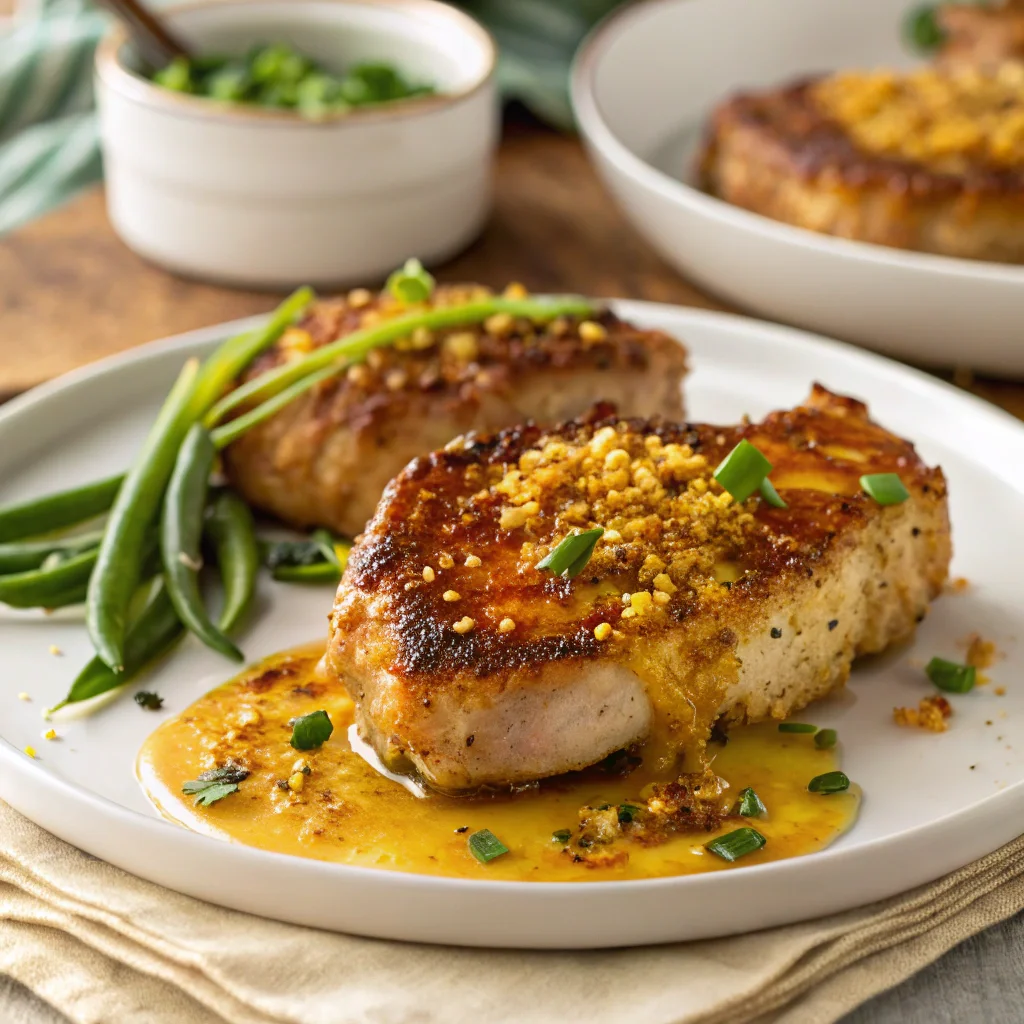
Honey Mustard Pork Chops with Crispy Edges
There’s something irresistible about perfectly cooked Honey Mustard Pork Chops with Crispy Edges—the golden, caramelized crust giving way to tender, juicy meat beneath. This recipe delivers restaurant-quality results right in your home kitchen, combining the sweet tang of honey with the sharp bite of mustard for a flavor profile that never gets old. Whether you’re planning a weeknight dinner or entertaining guests, these pork chops prove that simple ingredients can create extraordinary meals when prepared with the right techniques.
Why This Recipe Works
The magic behind these honey mustard pork chops lies in the balanced approach to cooking temperature and timing. The honey in the marinade creates natural caramelization during the searing process, while the mustard’s acidity helps tenderize the meat and adds depth of flavor. This combination produces a beautiful glaze that locks in moisture while developing those sought-after crispy edges.
The Science of Perfect Pork Chops
Pork chops benefit from high-heat cooking methods that create a Maillard reaction—the chemical process responsible for browning and flavor development. When you combine this with the sugars from honey, you get enhanced caramelization. The mustard contains compounds that break down proteins, making the meat more tender. Additionally, the fat content in bone-in chops helps keep the meat moist during cooking.
Key Flavor Components
The honey mustard combination works because it hits multiple taste receptors simultaneously. Sweet, tangy, and savory notes create complexity that keeps each bite interesting. The crispy edges add textural contrast to the tender interior, making every forkful a complete sensory experience.
Ingredient Selection Guide
Choosing quality ingredients makes a significant difference in the final result of your pork chops with honey mustard glaze.
Selecting the Right Pork Chops
Bone-In vs. Boneless
Bone-in chops offer superior flavor and stay juicier during cooking. The bone acts as a heat conductor, cooking the meat from the inside while the exterior crisps. Boneless chops cook faster but require more attention to prevent drying.
Thickness Matters
Aim for chops that are 1 to 1.5 inches thick. Thinner cuts cook too quickly, making it difficult to achieve crispy edges without overcooking the interior. Thicker chops provide more control over the cooking process.
Cut Types
-
Rib Chops: Most tender and flavorful, with good marbling
-
Loin Chops: Leaner with a T-bone, offering two textures
-
Shoulder Chops: More affordable with rich flavor but tougher texture
Honey Selection
Different honey varieties bring unique flavor profiles. Clover honey provides mild sweetness, while wildflower honey adds complexity. For bolder flavor, try buckwheat honey. Raw, unfiltered honey contains more beneficial compounds and richer taste.
Mustard Varieties
Dijon mustard offers smooth texture and sophisticated flavor. Whole grain mustard adds visual interest and textural pop. Yellow mustard creates a more American-style profile. Combine varieties for layered complexity in your honey mustard sauce.
Supporting Ingredients
Fresh garlic, quality olive oil, and proper seasoning elevate the dish. Use kosher salt for better control over seasoning. Freshly ground black pepper provides more aromatic punch than pre-ground versions.
Essential Kitchen Tools
Having the right equipment ensures consistent results when preparing crispy honey mustard pork chops.
Must-Have Items
-
Heavy-bottomed skillet: Cast iron or stainless steel conducts heat evenly
-
Meat thermometer: Ensures perfect doneness every time
-
Tongs: For safe flipping without piercing the meat
-
Mixing bowls: For marinade preparation
-
Basting brush: Applies sauce evenly
-
Paper towels: Essential for patting meat dry
Optional But Helpful
A splatter screen protects against hot oil while maintaining heat. A kitchen timer prevents overcooking. A meat mallet helps achieve uniform thickness if your chops vary.
Step-by-Step Preparation
Follow this detailed process to create perfectly cooked pork chops every time.
Phase 1: Marinating
-
Mix honey, mustard, minced garlic, and olive oil in a bowl
-
Season with salt, pepper, and optional herbs
-
Pat pork chops completely dry with paper towels
-
Coat chops thoroughly with marinade
-
Refrigerate for 30 minutes to 4 hours
The drying step is crucial. Moisture prevents proper browning and crispy edge formation. Even marinaded meat should have surface moisture removed before cooking.
Phase 2: Bringing to Room Temperature
Remove chops from refrigerator 20-30 minutes before cooking. Cold meat contracts when it hits hot surfaces, making even cooking difficult. Room temperature protein cooks more uniformly and develops better crust formation.
Phase 3: The Searing Process
-
Heat your skillet over medium-high heat for 3-4 minutes
-
Add a thin layer of high-heat oil (avocado or grapeseed)
-
Wait until oil shimmers but doesn’t smoke
-
Place chops in pan without crowding
-
Resist the urge to move them for 4-5 minutes
-
Flip once a golden crust forms
-
Cook second side for 3-4 minutes
-
Check internal temperature
Phase 4: Resting
Transfer cooked chops to a clean plate and tent loosely with foil. Rest for 5 minutes minimum. During resting, internal temperature rises 5-10 degrees while juices redistribute throughout the meat. Cutting immediately causes moisture loss and dry texture.
Achieving Perfect Crispy Edges
The crispy edges that make these honey mustard pork chops special require specific techniques.
Temperature Control
Medium-high heat creates the ideal environment for crisping without burning. Too low, and the meat steams rather than sears. Too high, and the honey burns before the interior cooks through.
The Dry Surface Principle
Moisture is the enemy of crispiness. After marinating, pat chops dry again before cooking. Even small amounts of surface moisture create steam, preventing browning.
Don’t Overcrowd the Pan
Leave at least 2 inches between chops. Crowding lowers pan temperature and traps steam. Cook in batches if necessary. The wait is worth the superior results.
The Flip-Once Method
Constant flipping prevents proper crust formation. Let the first side cook undisturbed until it releases easily from the pan. A well-seared chop will naturally lift when ready.
Finishing Techniques
For extra-crispy edges, consider these advanced methods:
-
Oven finish: Sear both sides, then transfer to 400°F oven for 5-7 minutes
-
Butter basting: Add butter to the pan during final minutes and spoon over chops
-
Pan pressing: Use a spatula to gently press edges against the hot pan
Honey Mustard Sauce Variations
Customize your honey mustard glaze to suit different preferences and occasions.
Classic Sweet and Tangy
Ingredients:
-
1/4 cup honey
-
3 tablespoons Dijon mustard
-
2 tablespoons whole grain mustard
-
2 cloves minced garlic
-
1 tablespoon olive oil
-
1/2 teaspoon salt
-
1/4 teaspoon black pepper
This balanced version works for any occasion and pleases most palates.
Spicy Kick Variation
Add 1-2 teaspoons of cayenne pepper or red pepper flakes to the classic recipe. The heat complements the sweetness while cutting through the richness of the pork.
Herb-Infused Version
Incorporate 1 tablespoon fresh thyme, 1 tablespoon fresh rosemary, and 2 teaspoons fresh sage. Fresh herbs add aromatic complexity that dried versions can’t match.
Citrus-Enhanced Option
Mix in 2 tablespoons fresh orange juice and 1 teaspoon orange zest. The citrus brightens the sauce and adds another flavor dimension.
Smoky Style
Add 1 teaspoon smoked paprika and 1/2 teaspoon chipotle powder for depth and complexity without heat.
Side Dish Pairings
Complete your meal with sides that complement the sweet and tangy profile of honey mustard pork chops.
Vegetable Sides
Roasted Brussels Sprouts: The caramelized edges mirror the crispy pork while adding nutritional balance. Toss with olive oil, salt, and pepper, then roast at 425°F for 20-25 minutes.
Glazed Carrots: Natural sweetness harmonizes with the honey glaze. Cook carrots in butter with a touch of honey until tender and glossy.
Green Beans Almondine: The crisp-tender beans and toasted almonds provide textural contrast. Blanch beans, sauté with garlic, and top with sliced almonds.
Starch Options
Garlic Mashed Potatoes: Creamy potatoes balance the intense flavors while soaking up extra sauce. Check out our guide on [perfect mashed potatoes].
Wild Rice Pilaf: The nutty flavor and chewy texture complement the tender pork. Cook with vegetables and herbs for added complexity.
Roasted Sweet Potatoes: Natural sweetness enhances the honey notes while adding nutritional value. Cut into wedges and roast until caramelized.
Salad Pairings
Apple and Walnut Salad: Fresh apples echo the sweetness while walnuts add crunch. Dress with a light vinaigrette.
Mixed Greens with Balsamic: A simple salad cleanses the palate between bites. The acidity cuts through richness.
Storage and Reheating Tips
Proper storage maintains quality when you have leftovers.
Refrigerator Storage
Cool cooked pork chops to room temperature within 2 hours. Place in an airtight container with parchment paper between layers. Store in the coldest part of your refrigerator for up to 4 days.
Freezer Storage
Wrap individual chops tightly in plastic wrap, then aluminum foil. Place in a freezer-safe container or bag. Label with the date and use within 3 months for best quality.
Reheating Methods
Oven Method (Best for Maintaining Texture)
-
Preheat oven to 350°F
-
Place chops in an oven-safe dish
-
Add 2 tablespoons of broth or water
-
Cover with foil
-
Heat for 10-15 minutes until warm
Skillet Method (Fastest)
-
Add a small amount of oil to a pan
-
Heat over medium-low
-
Cook chops for 2-3 minutes per side
-
Brush with fresh honey mustard sauce
Microwave (Quickest but Less Ideal)
Place chops on a microwave-safe plate. Cover with a damp paper towel. Heat in 30-second intervals, checking temperature between each. This method may soften crispy edges.
Common Mistakes to Avoid
Learn from these frequent errors to ensure success.
Using Cold Meat
Cooking chops straight from the refrigerator leads to uneven cooking. The exterior overcooks while the center remains underdone.
Skipping the Pat-Dry Step
Wet surfaces steam instead of sear. Always thoroughly dry meat before cooking, even after marinating.
Moving the Chops Too Soon
Premature flipping prevents crust formation. Wait until the meat releases naturally from the pan.
Overcooking
Modern food safety guidelines allow pork to be slightly pink in the center. Overcooking to “well-done” creates dry, tough meat.
Cutting Immediately
Skipping the rest period wastes all the effort put into cooking. Those few minutes make a significant difference in juiciness.
Using the Wrong Pan Temperature
Insufficient heat prevents browning. Excessive heat burns the honey before the pork cooks through. Medium-high is the sweet spot.
Nutritional Information
Understanding the nutritional profile helps with meal planning.
Per Serving (One 6-ounce Bone-In Chop)
-
Calories: 380-420
-
Protein: 35-40g
-
Fat: 18-22g
-
Carbohydrates: 18-22g
-
Fiber: 0g
-
Sugar: 16-18g (from honey)
-
Sodium: 450-550mg
Nutritional Benefits
Pork provides high-quality protein essential for muscle maintenance and growth. It contains B vitamins, particularly thiamine, which supports energy metabolism. Pork is also a good source of selenium and zinc.
Reducing Calories and Sugar
Use less honey or substitute part of it with unsweetened applesauce. Choose leaner, boneless chops to reduce fat content. Increase vegetable sides to add volume without excess calories.
Frequently Asked Questions
How do I know when honey mustard pork chops are done?
Use a meat thermometer inserted into the thickest part without touching bone. The internal temperature should reach 145°F. After resting, the temperature will rise to 150-155°F, resulting in juicy, slightly pink meat that’s completely safe to eat.
Can I make honey mustard pork chops in advance?
You can marinate chops up to 24 hours ahead. However, cook them fresh for best results. Cooked chops lose their crispy texture when stored, though you can revive them somewhat using the reheating methods described earlier.
What’s the best thickness for pork chops?
Chops between 1 and 1.5 inches thick provide the best balance. This thickness allows enough time to develop crispy edges while keeping the interior juicy. Thinner chops cook too quickly and often overcook.
Why are my pork chops tough?
Overcooking is the primary cause of tough pork chops. Cook to 145°F only, then rest. Also, cutting against the grain after cooking improves tenderness. Starting with quality meat makes a difference too.
Can I use this recipe with boneless pork chops?
Yes, but reduce cooking time by 1-2 minutes per side. Boneless chops cook faster and have less inherent moisture, so watch them carefully. Consider butterflying thick boneless chops for more even cooking.
What can I substitute for honey?
Maple syrup, agave nectar, or brown sugar dissolved in a small amount of water work as alternatives. Each changes the flavor profile slightly but maintains the sweet element necessary for caramelization.
How can I make the edges even crispier?
Ensure meat is completely dry before cooking. Use a cast iron skillet for superior heat retention. Don’t overcrowd the pan. Consider finishing in a hot oven for extra crispness. A light dusting of cornstarch on the surface before cooking can also enhance crispiness.
Is it safe to eat pork that’s slightly pink?
Yes, according to USDA guidelines, pork cooked to 145°F with a three-minute rest is safe even if slightly pink. The parasites and bacteria of concern are destroyed at lower temperatures than those that affect color.
These Honey Mustard Pork Chops with Crispy Edges deliver exceptional flavor and texture with straightforward techniques that anyone can master. The combination of sweet honey, tangy mustard, and perfectly caramelized edges creates a memorable meal that works for both everyday dinners and special occasions. By following the detailed steps for preparation, cooking, and achieving those signature crispy edges, you’ll produce restaurant-quality results in your home kitchen. Remember the key principles: dry surfaces for proper searing, medium-high heat for optimal browning, and proper resting for maximum juiciness.
Ready to transform your dinner routine? Gather your ingredients, heat up that skillet, and experience the satisfaction of creating perfectly cooked pork chops with irresistible crispy edges.
Print
Honey Mustard Pork Chops with Crispy Edges
Description
Honey Mustard Pork Chops with Crispy Edges
Ingredients:
-
4 bone-in or boneless pork chops (about 1 inch thick)
-
2 tablespoons olive oil
-
Salt and black pepper, to taste
-
1 teaspoon garlic powder
-
½ teaspoon smoked paprika
Honey Mustard Sauce:
-
¼ cup honey
-
¼ cup Dijon mustard
-
1 tablespoon whole-grain mustard (optional for texture)
-
1 tablespoon apple cider vinegar
-
2 cloves garlic, minced
Instructions:
-
Preheat oven:
Preheat oven to 400°F (200°C). Line a baking sheet with foil. -
Prepare the pork chops:
Pat pork chops dry. Rub both sides with olive oil, garlic powder, smoked paprika, salt, and pepper. -
Sear the chops (optional but recommended):
Heat a skillet over medium-high heat. Sear pork chops 2–3 minutes per side until golden brown. -
Make the honey mustard sauce:
In a small bowl, whisk together honey, Dijon mustard, whole-grain mustard, apple cider vinegar, and minced garlic. -
Bake the chops:
Place seared pork chops on the prepared baking sheet. Brush generously with the honey mustard sauce. Bake for 15–20 minutes, or until internal temperature reaches 145°F (63°C). -
Broil for crispy edges (optional):
Broil for 2–3 minutes to caramelize the sauce and get crispy edges. -
Serve:
Drizzle any extra sauce over the pork chops. Garnish with fresh herbs like parsley or thyme.