
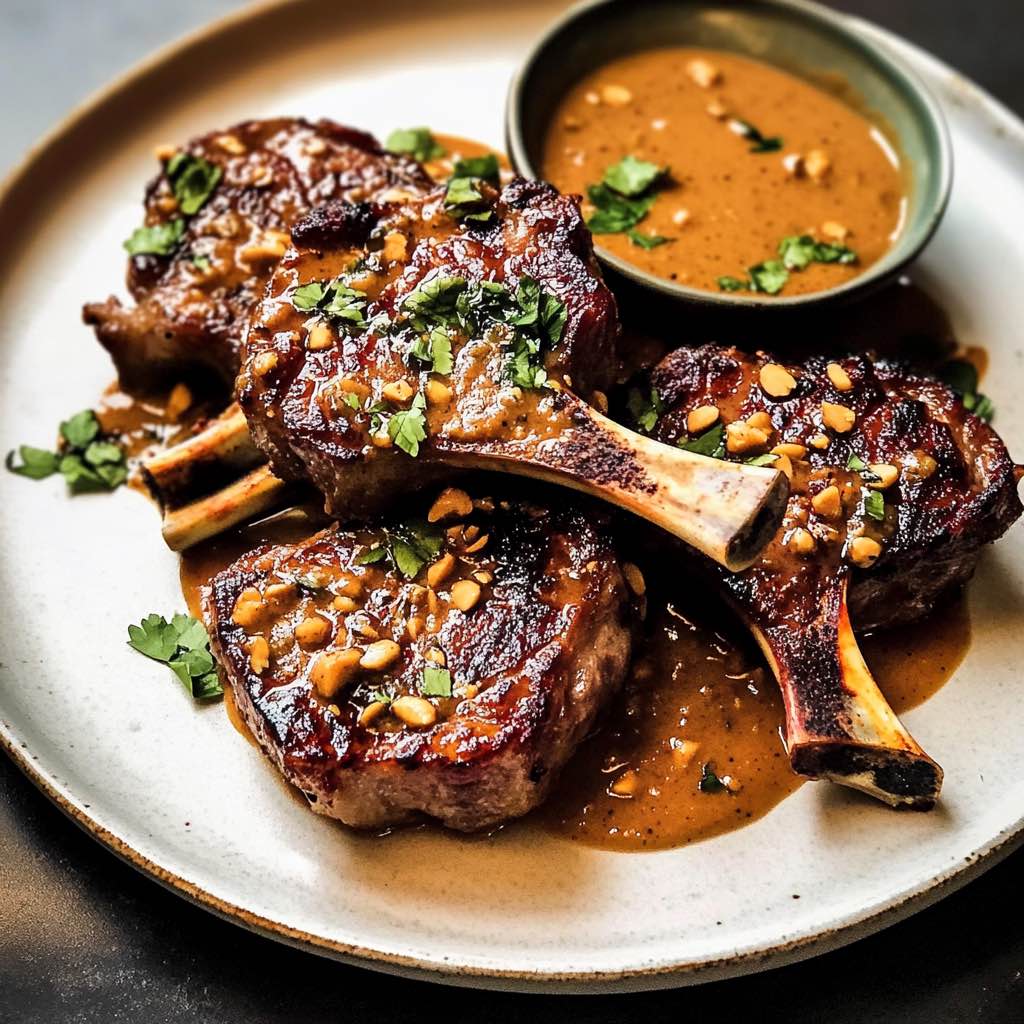
Lamb Chops with Peanut Sauce: A Complete Guide to This Delicious Asian-Inspired Dish
Lamb chops with peanut sauce bring together tender, juicy meat with a rich, creamy Asian-inspired topping. This recipe combines the robust flavor of perfectly cooked lamb with a savory peanut sauce that balances sweet, spicy, and tangy notes. Whether grilling outdoors or cooking indoors, this dish delivers restaurant-quality results at home.
What Makes Lamb Chops with Peanut Sauce Special
This dish offers a unique fusion of flavors. The rich, slightly gamey taste of lamb pairs beautifully with creamy peanut sauce. Moreover, the preparation is surprisingly simple. In addition, the cooking time is minimal, making it perfect for weeknight dinners.
The combination draws inspiration from Southeast Asian cuisine. Furthermore, it provides a refreshing alternative to traditional lamb preparations. The peanut sauce adds depth and complexity. Meanwhile, it complements rather than overpowers the meat.
This recipe also offers versatility. You can adjust the spice level easily. Similarly, you can modify the sauce thickness to your preference. Additionally, it works well with various cooking methods.
Choosing the Right Lamb Chops
Selecting quality lamb chops ensures success. Look for chops that are bright red or pink. Additionally, they should have a small amount of white fat. The most common types include loin chops, rib chops, and shoulder chops.
Loin chops offer tenderness and a mild flavor. They typically measure about 1 inch thick. In contrast, rib chops contain more fat. As a result, they provide more flavor. Shoulder chops cost less but require longer cooking times.
For this recipe, 1-inch-thick loin chops work best. They cook evenly and quickly. Furthermore, they provide the perfect canvas for peanut sauce. Plan for 2 chops per person as a main course.
Fresh lamb should smell clean and slightly sweet. Never choose meat with a strong odor. Moreover, avoid chops with excessive moisture. The meat should feel firm to the touch.
Essential Ingredients for Peanut Sauce
The peanut sauce requires simple yet flavorful components. First, you need creamy or chunky peanut butter as the base. Additionally, garlic adds aromatic depth. Fresh cilantro contributes brightness and freshness.
Sriracha or red curry paste provides heat. Meanwhile, lime juice adds tanginess. Soy sauce delivers umami and saltiness. Furthermore, a touch of brown sugar balances the flavors.
Some variations include coconut milk for extra creaminess. Similarly, sesame oil adds nutty notes. Rice vinegar can replace lime juice if needed. Each ingredient plays a crucial role in the final taste.
Quality peanut butter makes a significant difference. Natural varieties work best. They contain fewer additives. Consequently, they provide a cleaner peanut flavor. Check out [the complete guide to Asian sauces] for more inspiration.
Step-by-Step Cooking Instructions
Preparing the Lamb Chops
Start by bringing lamb chops to room temperature. This takes about 30 minutes. Meanwhile, pat them dry with paper towels. Season generously with salt and pepper on both sides.
Some recipes call for marinating the lamb. However, a simple seasoning works wonderfully. The peanut sauce provides ample flavor. Therefore, minimal seasoning suffices.
Making the Peanut Sauce
Combine all sauce ingredients in a food processor. Add 2 garlic cloves, 1/2 cup peanut butter, and 1/4 cup cilantro leaves. Then, add 2 tablespoons vegetable oil and 2 tablespoons sriracha.
Next, add 2 tablespoons lime juice and 2 tablespoons water. Include 2 teaspoons brown sugar and 1 tablespoon soy sauce. Process until smooth and creamy. The consistency should be pourable yet thick.
If the sauce seems too thick, add water gradually. Conversely, if it’s too thin, add more peanut butter. Taste and adjust seasonings as needed.
Cooking Methods
Grilling
Preheat the grill to medium-high heat. Oil the grates to prevent sticking. Then, place lamb chops on the grill. Cook for 4 minutes per side. This timing works for 1-inch-thick chops.
The chops should develop beautiful grill marks. Additionally, they should reach 125-130°F for medium-rare. Use an instant-read thermometer for accuracy. Then, remove from heat and rest for 3 minutes.
Pan-Searing
Heat a large skillet over medium-high heat. Add a tablespoon of oil. When the oil shimmers, add the lamb chops. Cook for 3-4 minutes per side. They should be well-browned underneath.
This method creates a delicious crust. Furthermore, it works year-round regardless of weather. Make sure not to overcrowd the pan. Cook in batches if necessary.
Oven Roasting
Preheat your oven to 425°F. Place seasoned chops on a baking sheet. Roast for 10-15 minutes total. The exact time depends on desired doneness.
For thicker cuts, try a two-stage method. First, roast at 400°F until internal temperature reaches 110°F. Then, turn on the broiler. Return chops to oven when cooled back to 110°F. Broil until they reach 120°F.
Perfect Cooking Temperatures
Temperature accuracy ensures optimal results. The USDA recommends cooking lamb to 145°F with a 3-minute rest. However, many prefer different doneness levels.
For rare lamb, aim for 125°F internal temperature. After resting, it reaches 130°F. Medium-rare requires 135°F before resting. This results in a final temperature of 140°F.
Medium doneness needs 145°F initially. The final temperature reaches 150°F after resting. Medium-well starts at 150°F and finishes at 155°F. Well-done begins at 155°F and exceeds 160°F.
An instant-read thermometer is essential. Insert it into the thickest part of the chop. Avoid touching the bone for accurate readings. According to Thermoworks, medium-rare temperatures between 130-135°F yield the best results.
Most chefs recommend medium-rare for lamb chops. This doneness preserves tenderness and flavor. Additionally, it prevents the meat from becoming too gamey. However, personal preference ultimately determines the best temperature.
Peanut Sauce Variations
The basic peanut sauce recipe adapts easily. First, try a Thai-inspired version. Use coconut milk instead of water. Add fish sauce for umami depth. This creates a richer, creamier sauce.
For extra heat, increase the sriracha amount. Alternatively, add fresh chili peppers. Red curry paste offers another spicy option. Each variation provides a different heat profile.
A sweeter version uses more brown sugar. Similarly, honey works well as a substitute. This balance appeals to those who prefer milder flavors. Conversely, reduce sugar for a more savory profile.
Texture variations offer different experiences. Chunky peanut butter adds pleasant crunch. Meanwhile, smooth peanut butter creates silky consistency. Some recipes incorporate crushed peanuts as garnish.
Sesame oil adds nutty complexity. Meanwhile, ginger provides warmth and spice. Rice vinegar offers a gentler acidity than lime juice. Experiment to find your perfect combination.
Nutritional Benefits
Lamb Nutrition
Lamb provides excellent protein content. It contains essential amino acids for muscle health. Additionally, lamb supplies B vitamins, particularly B12. These vitamins support energy metabolism and nerve function.
The meat also contains minerals like iron and zinc. Iron helps prevent anemia. Meanwhile, zinc supports immune system function. Furthermore, lamb provides selenium, an important antioxidant.
Grass-fed lamb offers omega-3 fatty acids. These healthy fats support heart health. However, lamb also contains saturated fat. Therefore, portion control matters.
Peanut Sauce Nutrition
Peanut sauce offers its own nutritional benefits. Peanuts provide plant-based protein. They also contain healthy fats. Moreover, peanuts supply vitamin E, an antioxidant.
The sauce contains minerals including magnesium and potassium. Magnesium supports bone health. Meanwhile, potassium helps regulate blood pressure.
One cup of peanut sauce contains approximately 356 calories. The macronutrient breakdown shows 69% fat, 19% carbs, and 12% protein. Most of the fat comes from monounsaturated sources.
However, peanut sauce can be high in sodium. Commercial soy sauce contributes significant salt content. Therefore, use low-sodium alternatives when possible. Additionally, watch portion sizes to manage calorie intake.
Serving Suggestions
Side Dishes
Rice complements lamb chops with peanut sauce beautifully. Jasmine rice offers floral notes. Similarly, coconut rice adds richness. Brown rice provides more fiber and nutrients.
Grilled vegetables work wonderfully alongside. Try bell peppers, zucchini, or eggplant. Meanwhile, steamed broccoli offers a simple option. Asian-style green beans provide crunch and color.
Salads add freshness to the plate. A cucumber salad with rice vinegar dressing refreshes the palate. Alternatively, try a simple mixed green salad. Fresh herbs like cilantro and mint enhance the Asian theme.
Noodles offer another excellent pairing. Rice noodles complement the flavors well. Similarly, soba noodles add nutty notes. Toss them with sesame oil and vegetables.
Garnishes
Fresh cilantro brightens the presentation. Sprinkle it over the lamb chops generously. Chopped peanuts add textural contrast. They also reinforce the sauce flavor.
Lime wedges allow diners to adjust acidity. Additionally, they provide visual appeal. Sliced green onions offer mild onion flavor. Red chili slices add color and heat.
Sesame seeds create an attractive finish. Furthermore, they contribute subtle nuttiness. Fresh mint leaves provide cooling contrast. They work especially well with spicier sauce versions.
Presentation Tips
Arrange lamb chops on a white platter. This showcases the meat’s color beautifully. Then, drizzle peanut sauce artistically over the top. Alternatively, serve sauce on the side in a small bowl.
Place garnishes strategically around the plate. Avoid overcrowding the presentation. Meanwhile, ensure each element serves a purpose. The goal is elegant simplicity.
Consider temperature when plating. Serve lamb chops immediately after resting. Meanwhile, bring peanut sauce to room temperature. Cold sauce diminishes the overall experience.
Common Mistakes to Avoid
Overcooking the Lamb
Overcooked lamb becomes tough and dry. It also develops a stronger, gamey flavor. To prevent this, use a meat thermometer consistently. Remove chops from heat before reaching final temperature.
Remember that carryover cooking continues after removal. The internal temperature rises 5-10°F during resting. Therefore, pull chops early to account for this. Moreover, thicker chops experience more carryover.
Inadequate Resting Time
Skipping the rest period leads to juice loss. When you cut into meat immediately, juices run out. As a result, the lamb becomes dry. Always rest chops for at least 3 minutes.
During resting, juices redistribute throughout the meat. Consequently, each bite remains moist and flavorful. Cover chops loosely with foil while resting. However, avoid wrapping tightly, which can steam the meat.
Sauce Consistency Issues
Too-thick sauce doesn’t coat the lamb properly. It sits heavily on top instead. Therefore, thin it with water or coconut milk. Add liquid gradually while stirring constantly.
Conversely, thin sauce runs off the meat. It pools on the plate without adhering. To thicken it, add more peanut butter. Alternatively, reduce the liquid amount in the recipe.
Not Seasoning Properly
Under-seasoned lamb tastes bland despite the sauce. Salt the meat generously before cooking. The seasoning should be visible on the surface. Meanwhile, don’t forget black pepper for additional flavor.
Season both sides of each chop evenly. Do this just before cooking to prevent moisture loss. Additionally, taste the peanut sauce before serving. Adjust salt, acid, or sweetness as needed.
Using Cold Meat
Cooking cold lamb leads to uneven doneness. The outside overcooks while the inside stays cold. Therefore, bring meat to room temperature first. This takes about 30 minutes for standard chops.
Cold meat also cooks more slowly. As a result, timing becomes unpredictable. Room-temperature meat sears better too. It develops superior crust formation.
Storage and Reheating Tips
Storing Cooked Lamb
Refrigerate leftover lamb chops within 2 hours. Place them in an airtight container. They keep safely for 3-4 days. Alternatively, wrap individual chops in plastic wrap.
Store peanut sauce separately from the meat. This prevents the lamb from becoming soggy. The sauce keeps for up to one week refrigerated. Transfer it to a sealed container.
Freezing Options
Freeze cooked lamb chops for longer storage. Wrap each chop individually in plastic wrap. Then, place wrapped chops in a freezer bag. Remove excess air before sealing.
Frozen cooked lamb stays good for 2-3 months. Label containers with the date clearly. Meanwhile, freeze peanut sauce in small portions. Ice cube trays work perfectly for this purpose.
Reheating Methods
Oven reheating preserves texture best. Preheat to 350°F. Place chops on a baking sheet. Cover loosely with foil to prevent drying.
Heat until the internal temperature reaches 130-135°F. This takes about 10-15 minutes. Meanwhile, warm peanut sauce gently on the stovetop. Stir frequently to prevent burning.
Microwave reheating works in a pinch. However, it can toughen the meat. Use 50% power for better results. Heat in 30-second intervals. Check temperature between each interval.
Never reheat lamb more than once. Each reheating cycle reduces quality. Additionally, it increases food safety risks. Only reheat the portion you plan to eat.
Frequently Asked Questions
What cut of lamb works best for lamb chops with peanut sauce?
Loin chops work best for this recipe. They offer tenderness and mild flavor that pairs perfectly with peanut sauce. Rib chops also work well but contain more fat. Meanwhile, shoulder chops require longer cooking times and different preparation methods.
Can I make the peanut sauce ahead of time?
Yes, peanut sauce stores well in the refrigerator. Make it up to one week in advance. Store in an airtight container. Before serving, bring to room temperature and stir well. Add a splash of water if it thickens too much.
How do I know when lamb chops are done?
Use an instant-read thermometer for accuracy. Insert it into the thickest part of the chop. For medium-rare, aim for 135°F before resting. The temperature rises to 140°F during the 3-minute rest period.
What can I substitute for sriracha in the sauce?
Red curry paste offers excellent heat and flavor. Alternatively, use fresh chili peppers for natural spice. Chili garlic sauce works well too. Adjust the amount based on your heat tolerance.
Is this recipe suitable for grilling or pan-searing only?
This recipe adapts to multiple cooking methods. Grilling provides smoky flavor and char marks. Pan-searing works year-round indoors. Oven roasting or broiling also produces excellent results. Choose based on available equipment and personal preference.
Can I use natural peanut butter?
Yes, natural peanut butter works excellently. It provides cleaner peanut flavor without additives. However, it separates more easily. Therefore, stir it thoroughly before measuring. The oil separation doesn’t affect the final sauce quality.
How spicy is lamb chops with peanut sauce?
The spice level varies based on personal preference. The basic recipe provides moderate heat. However, adjust sriracha amount to taste. Start with less for mild sauce. Conversely, add more for extra kick. Fresh chilies increase heat significantly.
What’s the best way to tenderize lamb chops?
Quality lamb chops rarely need tenderizing. However, marinating helps if desired. Avoid over-marinating, which can make meat mushy. For best results, choose tender cuts like loin or rib chops. Proper cooking temperature prevents toughness more than tenderizing techniques.
Conclusion
Lamb chops with peanut sauce deliver impressive flavor with minimal effort. This dish combines tender, perfectly cooked lamb with rich, creamy sauce. Moreover, it offers versatility in cooking methods and sauce variations. The recipe adapts easily to different spice preferences and dietary needs.
Success depends on proper temperature control and quality ingredients. Use an instant-read thermometer for precision. Additionally, allow adequate resting time for optimal juiciness. Fresh peanut butter and quality lamb make all the difference.
Print
Lamb Chops with Peanut Sauce
Description
Lamb Chops with Peanut Sauce
Ingredients:
For the Lamb Chops:
-
8 lamb chops (about 1 inch thick)
-
2 tablespoons olive oil
-
2 cloves garlic, minced
-
1 teaspoon salt
-
½ teaspoon black pepper
-
1 teaspoon smoked paprika
For the Peanut Sauce:
-
½ cup creamy peanut butter
-
¼ cup coconut milk
-
2 tablespoons soy sauce
-
1 tablespoon lime juice
-
1 tablespoon honey or brown sugar
-
1 teaspoon ginger, grated
-
1 clove garlic, minced
-
½ teaspoon chili flakes (optional)
-
Water as needed to thin the sauce
For Garnish (optional):
-
Chopped peanuts
-
Fresh cilantro
Instructions:
-
Prepare the lamb:
Season lamb chops with olive oil, garlic, salt, pepper, and smoked paprika. Let sit for 15–30 minutes at room temperature. -
Cook the lamb:
Heat a skillet or grill pan over medium-high heat.
Sear lamb chops 3–4 minutes per side for medium-rare (adjust time based on thickness). Remove and rest 5 minutes. -
Make the peanut sauce:
In a small saucepan, combine peanut butter, coconut milk, soy sauce, lime juice, honey, garlic, ginger, and chili flakes.
Heat gently, whisking, until smooth and slightly thickened. Add water a little at a time if needed to reach a pourable consistency. -
Serve:
Drizzle peanut sauce over lamb chops.
Garnish with chopped peanuts and fresh cilantro if desired.