
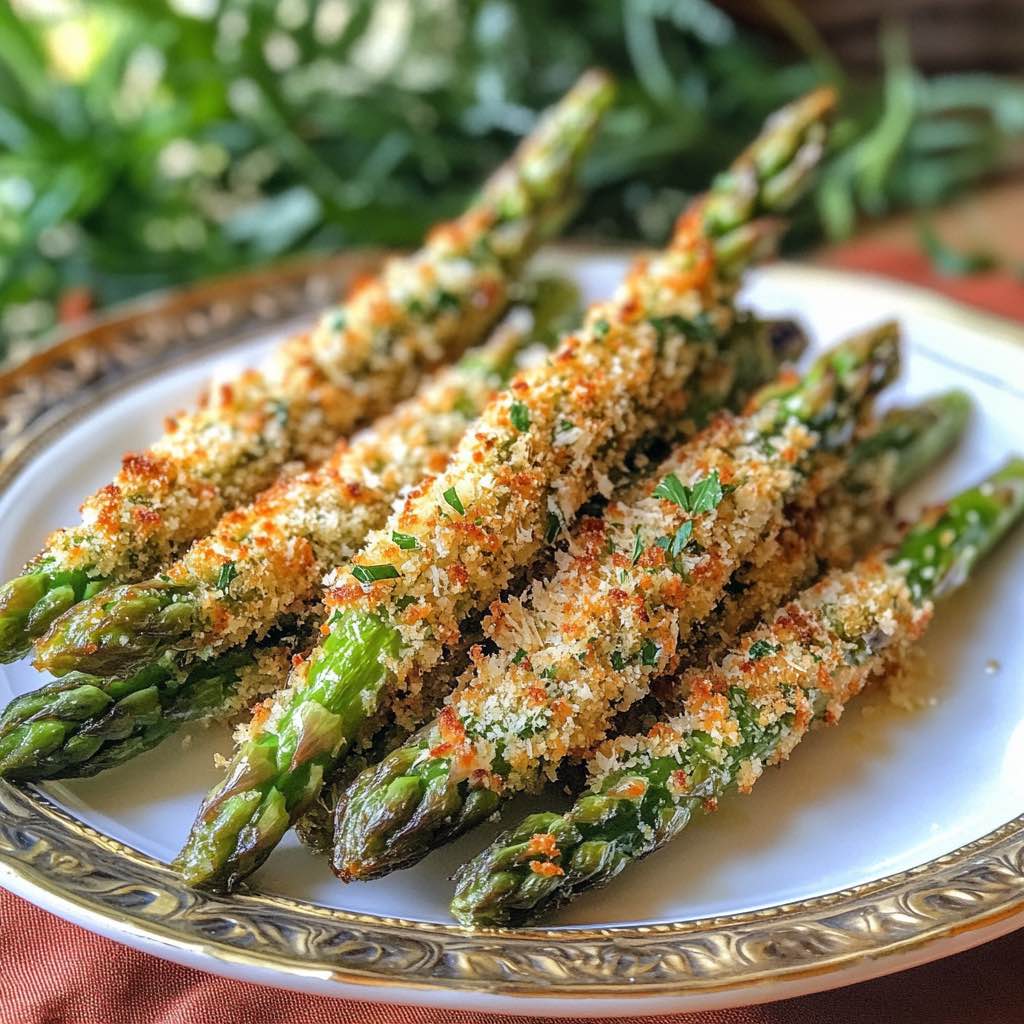
Parmesan-Crusted Asparagus: A Crispy, Golden Side Dish That Steals the Show
Parmesan-crusted asparagus transforms ordinary vegetables into an extraordinary side dish that’s crispy, cheesy, and absolutely irresistible. This simple yet elegant recipe combines tender asparagus spears with a golden, savory coating that delivers restaurant-quality results in your own kitchen. The best part is that this dish requires just a handful of ingredients and less than 20 minutes from start to finish.
What Makes Parmesan-Crusted Asparagus Special
Parmesan-crusted asparagus stands out as a side dish that looks fancy but remains incredibly simple to prepare. The combination of crispy breadcrumbs and nutty Parmesan cheese creates a textural contrast with the tender vegetable underneath. This dish works perfectly for weeknight dinners and special occasions alike.
The magic happens when heat transforms the coating into a golden-brown crust. Each bite delivers a satisfying crunch followed by the delicate flavor of perfectly roasted asparagus. The Parmesan adds a salty, umami-rich element that elevates the natural earthiness of the vegetable.
This recipe also offers versatility that few side dishes can match. Cooks can customize the crust with different herbs and spices while maintaining the core concept. Additionally, the presentation impresses guests without requiring advanced culinary skills.
Why This Recipe Works
The science behind this dish involves careful temperature control and proper coating technique. Roasting at the right temperature ensures the asparagus cooks through while the crust becomes crispy. The cheese melts slightly and binds the breadcrumbs to the asparagus surface.
Olive oil plays a crucial role in achieving the desired texture. It helps the coating adhere and promotes even browning. The fat also carries flavors from garlic and herbs throughout the dish.
Moreover, asparagus contains natural sugars that caramelize during roasting. This process adds depth to the overall flavor profile. The result tastes complex despite the simple ingredient list.
Nutritional Benefits of Asparagus
Asparagus delivers impressive nutritional value with minimal calories. An 80-gram portion contains only 21 calories yet provides significant amounts of essential vitamins and minerals. This makes asparagus-based dishes excellent choices for health-conscious eaters.
The vegetable ranks high in vitamin content across multiple categories. It contains vitamins A, C, E, K, and several B vitamins including B1, B2, B3, B5, and B6. These nutrients support various bodily functions from immune health to energy metabolism.
Furthermore, asparagus provides important minerals that many people lack. Potassium helps regulate blood pressure and heart function. Calcium, iron, zinc, magnesium, copper, selenium, and phosphorus all appear in meaningful amounts.
Key Health Benefits
Asparagus supports digestive health through its fiber content. Dietary fiber fuels beneficial gut bacteria and promotes regular bowel movements. This prebiotic effect helps maintain a healthy microbiome.
The antioxidants in asparagus combat free radicals that damage cells. Vitamins A and E particularly excel at this protective function. These compounds may reduce the risk of chronic diseases including heart disease and certain cancers.
Additionally, asparagus contains folate at exceptionally high levels. A single serving provides about one-third of daily folate requirements. This B vitamin proves essential for pregnant women as it prevents neural tube defects.
Vitamin K and Blood Health
Vitamin K plays a vital role in proper blood clotting. Asparagus serves as an excellent source of this often-overlooked nutrient. Adequate vitamin K intake ensures wounds heal properly and bleeding stops when it should.
However, people taking blood-thinning medications should monitor their vitamin K consumption. Consistency matters more than complete avoidance. Consulting with a healthcare provider about asparagus intake makes sense for those on such medications.
The vegetable also supports cardiovascular health through multiple mechanisms. Its fiber binds to cholesterol in the digestive system and helps eliminate it. Meanwhile, potassium helps regulate heartbeat and maintain healthy blood pressure levels.
Choosing the Best Asparagus
Selecting quality asparagus makes a significant difference in the final dish. Fresh asparagus displays vibrant green color from tip to stem. The spears should feel firm and snap cleanly when bent.
Thinner asparagus spears generally cook more evenly and taste more tender. They also require less preparation time than thick stalks. Look for spears about the thickness of a pencil for optimal results.
The tips should be tightly closed and compact. Open, flowering tips indicate older asparagus that may taste bitter. Fresh tips appear almost purple or deep green rather than yellow or brown.
Seasonal Considerations
Asparagus season typically runs from early spring through early summer. During peak season, the vegetable tastes sweeter and more flavorful. Off-season asparagus can still work but may require more careful selection.
Check the cut ends of the asparagus bunch. Fresh cuts appear moist and light-colored. Dry, shriveled ends suggest the asparagus has been sitting too long.
Store asparagus properly to maintain freshness until cooking time. Trim the ends and stand spears upright in a glass with water. Cover loosely with a plastic bag and refrigerate for up to three days.
Essential Ingredients for the Perfect Crust
The coating for parmesan-crusted asparagus requires just a few key components. Each ingredient serves a specific purpose in creating the ideal texture and flavor. Quality matters more than quantity when selecting these items.
Parmesan cheese forms the foundation of the crust. Authentic Parmigiano-Reggiano delivers the best flavor with its nutty, salty profile. Freshly grated cheese melts better and tastes superior to pre-grated varieties.
Panko breadcrumbs create exceptional crispiness compared to regular breadcrumbs. Their larger, flakier structure produces a lighter, crunchier coating. Standard breadcrumbs work in a pinch but yield a denser result.
Supporting Ingredients
Fresh garlic adds aromatic depth to the crust mixture. Grated or finely minced garlic distributes more evenly than chopped pieces. One to two cloves provides sufficient flavor without overwhelming the dish.
Fresh herbs brighten the overall taste profile. Parsley contributes a clean, fresh note while oregano adds earthy complexity. Chopped herbs should be incorporated throughout the breadcrumb mixture.
Olive oil helps the coating adhere and promotes browning. Extra-virgin olive oil offers the most flavor. Some recipes use melted butter as an alternative for a richer taste.
Seasoning the Crust
Salt and pepper season the coating to perfection. Kosher salt provides better control over seasoning levels. Freshly ground black pepper adds a subtle heat and aromatic quality.
Consider adding optional seasonings to customize the flavor. Lemon zest contributes brightness without moisture. Red pepper flakes introduce gentle heat for those who enjoy spice.
The ratio of breadcrumbs to cheese affects the final texture. A typical proportion uses about three parts breadcrumbs to one part cheese. This balance ensures crispiness while maintaining cheesy flavor.
Step-by-Step Cooking Instructions
Creating perfect parmesan-crusted asparagus follows a straightforward process. Success depends on proper preparation and attention to timing. Following these steps produces consistently excellent results.
Preparing the Asparagus
Start by washing the asparagus thoroughly under cold running water. Pat the spears dry with paper towels to remove excess moisture. Wet asparagus prevents the coating from adhering properly.
Trim the woody ends from each spear. Hold a spear at both ends and bend gently until it snaps naturally. The asparagus breaks at the point where tender meets tough.
For particularly thick spears, use a vegetable peeler on the lower portion. Peel the bottom two inches to ensure even cooking. This step creates uniformity in texture from tip to stem.
Making the Crust Mixture
Preheat the oven to 375-425°F depending on desired crispness. Higher temperatures create a crispier crust in less time. Line a baking sheet with parchment paper or aluminum foil for easy cleanup.
Combine panko breadcrumbs and grated Parmesan in a small bowl. Add grated garlic and finely chopped fresh herbs. Season generously with salt and freshly ground black pepper.
Mix the ingredients thoroughly using a fork or whisk. This ensures even distribution of all components. The mixture should appear uniform in color and texture.
Coating and Baking
Arrange asparagus spears on the prepared baking sheet in a single layer. Drizzle with olive oil and toss to coat evenly. Season lightly with additional salt before applying the crust.
Sprinkle the breadcrumb mixture generously over the asparagus. Press gently to help the coating adhere to each spear. Ensure every piece receives an even, generous coating.
Bake for 10-15 minutes until the asparagus becomes tender and the crust turns golden brown. Thin spears cook faster than thick ones. The coating should look toasted and crispy when done.
Finishing Touches
Remove the baking sheet from the oven immediately when the asparagus reaches the desired tenderness. Overcooking results in mushy vegetables. The asparagus should retain some firmness and vibrant color.
Serve the dish immediately for the best texture experience. The crust loses crispiness as it sits. Transfer to a serving platter using a spatula to keep the coating intact.
Optionally, squeeze fresh lemon juice over the finished dish. The acidity balances the richness of the cheese. A sprinkle of additional Parmesan adds visual appeal and extra flavor.
Variations and Flavor Twists
Parmesan-crusted asparagus adapts easily to different flavor profiles. These variations maintain the core concept while introducing new taste dimensions. Experimentation often leads to discovering personal favorites.
Lemon-Herb Version
Add fresh lemon zest to the breadcrumb mixture for bright citrus notes. Use about one teaspoon of zest per pound of asparagus. This variation pairs particularly well with fish and chicken dishes.
Increase the fresh herb content with a combination of parsley, thyme, and chives. These herbs complement lemon beautifully. The result tastes lighter and more spring-like than the basic version.
Consider replacing some Parmesan with Pecorino Romano for a sharper flavor. This Italian cheese adds more pronounced saltiness. The texture remains similar while the taste becomes more assertive.
Garlic-Lover’s Adaptation
Double or triple the garlic for an intensely aromatic crust. Some recipes use up to four cloves per pound of asparagus. The garlic mellows during roasting but remains prominent.
Add garlic powder to the breadcrumb mixture along with fresh garlic. This creates layers of garlic flavor. The powder contributes a subtle background note while fresh garlic provides punch.
Drizzle the finished dish with garlic-infused olive oil for extra richness. This final touch reinforces the garlic theme. However, balance remains important to avoid overwhelming the asparagus.
Spicy and Bold Options
Incorporate red pepper flakes into the breadcrumb mixture for gentle heat. Start with a quarter teaspoon and adjust to taste. The spice complements rather than dominates the other flavors.
Use smoked paprika to add depth and a hint of smokiness. This Spanish spice contributes color along with flavor. The result tastes more complex without becoming spicy.
Try adding finely grated aged cheddar along with the Parmesan. Sharp cheddar creates a bolder, more pronounced cheese flavor. This variation appeals to those who love rich, cheesy dishes.
Nut-Crusted Variations
Replace half the breadcrumbs with finely chopped almonds or pecans. Nuts add richness and create an even crunchier coating. Toast the nuts beforehand for enhanced flavor.
Combine crushed pistachios with the Parmesan for an elegant presentation. The green color complements the asparagus beautifully. This variation works wonderfully for special occasions.
Experiment with other cheese and nut combinations based on preference. Gruyere with walnuts or Asiago with pine nuts both work well. Each combination produces a unique flavor profile.
Serving Suggestions and Pairings
Parmesan-crusted asparagus pairs exceptionally well with numerous main courses. The versatility makes it suitable for casual family dinners and elegant entertaining. Consider the overall menu when planning serving size.
Protein Pairings
This side dish complements grilled or roasted chicken perfectly. The crispy coating echoes the texture of properly prepared poultry skin. Season chicken simply to let the asparagus shine.
Serve alongside grilled fish such as salmon, halibut, or sea bass. The light, fresh flavors work harmoniously together. Lemon-based fish preparations particularly complement the asparagus.
Pair with roasted pork tenderloin or pork chops for a satisfying combination. The richness of pork balances the vegetable’s lighter profile. Herb-seasoned pork works especially well.
Complete Meal Ideas
Create a vegetarian dinner by serving parmesan-crusted asparagus with risotto or pasta. The dishes share Italian-inspired flavors. Add a simple green salad to complete the meal.
Incorporate into a Mediterranean-themed dinner with grilled lamb and roasted potatoes. The asparagus adds freshness to the rich, hearty menu. This combination works well for spring entertaining.
Include as part of a holiday meal alongside turkey or ham. The elegant presentation elevates any special occasion table. The vibrant green color also adds visual appeal to the spread.
Side Dish Combinations
Serve with other roasted vegetables for a vegetable-focused meal. Roasted tomatoes, bell peppers, and zucchini create a colorful array. Varying the cooking methods prevents monotony.
Pair with creamy mashed potatoes for textural contrast. The crispy asparagus balances the smooth, soft potatoes. This combination satisfies multiple texture preferences.
Add to a grain bowl with quinoa, farro, or brown rice. The asparagus contributes protein, fiber, and visual interest. Drizzle with a light vinaigrette to tie everything together.
Storage and Reheating Tips
Proper storage extends the enjoyment of parmesan-crusted asparagus beyond the initial meal. Understanding best practices helps maintain quality. However, this dish tastes best when freshly prepared.
Refrigerator Storage
Cool leftover asparagus to room temperature before storing. Place in an airtight container within two hours of cooking. Refrigerate promptly to prevent bacterial growth.
Store for up to three days in the refrigerator. The coating softens during storage but remains flavorful. Write the date on the container to track freshness.
Keep away from strongly flavored foods that might transfer odors. Asparagus absorbs surrounding smells easily. Position the container on a middle shelf for consistent temperature.
Reheating Methods
The oven method produces the best results for reheating. Preheat to 350°F and arrange asparagus on a baking sheet. Heat for 5-8 minutes until warmed through and the coating crisps slightly.
An air fryer offers another excellent reheating option. Set to 350°F and cook for 3-5 minutes. This method restores more crispiness than conventional oven heating.
Avoid the microwave if possible as it makes the coating soggy. If microwaving is necessary, use 50% power in short bursts. Place on a microwave-safe plate and heat for 30-second intervals.
Freezing Considerations
Freezing cooked parmesan-crusted asparagus is not recommended. The vegetable becomes watery and mushy upon thawing. The coating also loses all crispiness and turns soggy.
However, the uncooked coating mixture freezes well for future use. Store in a freezer-safe container for up to three months. Thaw in the refrigerator before using on fresh asparagus.
Alternatively, prepare fresh asparagus by trimming and washing, then freeze. Apply the coating after thawing for better results. This approach offers some convenience while maintaining quality.
Common Mistakes to Avoid
Several common errors can compromise parmesan-crusted asparagus results. Awareness helps prevent these pitfalls. Attention to detail makes the difference between good and great.
Ingredient Issues
Using pre-grated Parmesan cheese produces inferior results. These products contain anti-caking agents that prevent proper melting. The coating becomes grainy rather than smooth and cohesive.
Skipping the asparagus trimming step leaves tough, fibrous ends. These portions remain inedibly chewy regardless of cooking time. Always remove at least an inch from the bottom of each spear.
Regular breadcrumbs substitute poorly for panko in this recipe. The denser texture creates a heavy, compact coating. Panko’s airiness contributes essential lightness to the final dish.
Preparation Errors
Overcrowding the baking sheet prevents proper crisping. Asparagus spears need space for air circulation. Use two baking sheets if necessary to avoid overlap.
Forgetting to dry the asparagus after washing causes coating adhesion problems. Excess moisture creates a barrier between vegetable and crust. Pat thoroughly with paper towels before proceeding.
Applying too little coating results in sparse coverage and disappointing texture. Generous application ensures every bite includes the crispy crust. Don’t be shy with the breadcrumb mixture.
Cooking Mistakes
Setting the oven temperature too low extends cooking time unnecessarily. The asparagus becomes overcooked before the coating browns. Aim for at least 375°F for optimal results.
Leaving the asparagus in the oven too long turns it mushy and drab. The vegetable should retain some firmness and bright color. Begin checking for doneness at the minimum recommended time.
Failing to serve immediately allows the coating to lose crispiness. Steam from the hot asparagus softens the crust as the dish sits. Prepare other meal components beforehand so asparagus can go straight to the table.
Advanced Tips and Techniques
Mastering a few advanced techniques elevates parmesan-crusted asparagus to restaurant quality. These refinements require minimal extra effort. The results justify the additional attention to detail.
Achieving Maximum Crispiness
Toast the panko breadcrumbs before mixing with other ingredients. Spread on a baking sheet and bake at 300°F for 5-7 minutes. This pre-toasting jump-starts the browning process.
Use a light spray of cooking oil over the coated asparagus before baking. This promotes even browning across the entire surface. However, avoid over-oiling which makes the coating greasy.
Consider finishing under the broiler for the last minute of cooking. This creates an extra-crispy top layer. Watch carefully as broilers vary in intensity and burning happens quickly.
Flavor Development
Grate the Parmesan cheese yourself using a food processor for fluffy texture. This method takes minutes and produces superior results. Cut the cheese into small cubes before processing.
Bloom the garlic briefly in warm olive oil before adding to the asparagus. This gentle cooking mellows harsh raw garlic notes. Cool the oil before using to prevent cooking the asparagus prematurely.
Mix a small amount of Dijon mustard with the olive oil for the asparagus coating. The mustard acts as a binder and adds subtle tang. Use about one teaspoon per tablespoon of oil.
Presentation Excellence
Arrange asparagus spears in the same direction on the baking sheet. This creates a more polished, professional appearance. Alternating tip and stem ends also helps with even cooking.
Save some of the breadcrumb mixture to sprinkle over the finished dish. Fresh coating adds visual appeal and extra crunch. Apply immediately after removing from the oven.
Garnish with fresh lemon wedges and additional Parmesan shavings. These finishing touches make the presentation Instagram-worthy. Chopped fresh parsley also adds a pop of color.
Making It a Complete Meal
Parmesan-crusted asparagus can anchor a complete, balanced meal with strategic planning. Thoughtful combinations create satisfying dinners. Consider nutritional balance along with flavor compatibility.
Vegetarian Options
Build a hearty vegetarian plate by adding protein-rich sides. Quinoa or chickpeas provide substantial plant-based protein. These ingredients complement the asparagus without competing for attention.
Include a simple arugula salad with lemon vinaigrette for freshness. The peppery greens balance the rich, cheesy asparagus. Keep the dressing light to avoid overwhelming the palate.
Round out the meal with crusty bread for soaking up any flavors. Whole grain bread adds fiber and additional nutrients. Warm the bread briefly in the oven while the asparagus cooks.
Family-Friendly Combinations
Pair with baked chicken tenders for a meal kids enjoy. The similar crispy coating creates thematic consistency. Both items can bake simultaneously using different baking sheets.
Add roasted sweet potato wedges for color and sweetness. The natural sugars appeal to younger palates. Cut wedges to similar thickness for even cooking.
Include a simple pasta with butter and Parmesan as a familiar element. This combination introduces vegetables alongside comfortable favorites. Gradually increase asparagus portions as children develop their tastes.
Special Occasion Menus
Create an elegant dinner party menu featuring parmesan-crusted asparagus. Pair with herb-crusted rack of lamb for impressive presentation. The similar coating techniques create visual harmony.
Serve alongside creamy polenta or risotto for Italian-inspired sophistication. These soft, creamy starches contrast beautifully with crispy asparagus. Choose one or the other to avoid redundancy.
Begin the meal with a light soup or salad course. This builds anticipation for the main event. Keep appetizers simple so the asparagus maintains its starring role.
Frequently Asked Questions
What is the best way to prepare parmesan-crusted asparagus?
The best method involves coating trimmed asparagus with olive oil, then covering with a mixture of panko breadcrumbs, grated Parmesan, garlic, and herbs before roasting at 375-425°F for 10-15 minutes. This produces tender asparagus with a golden, crispy crust.
How do you keep the coating from falling off?
Pat asparagus completely dry before coating, as moisture prevents adhesion. Toss spears with olive oil first to create a sticky surface. Press the breadcrumb mixture firmly onto each spear and handle gently when transferring to the oven.
Can you make this dish ahead of time?
While parmesan-crusted asparagus tastes best fresh, preparation can be divided. Trim and wash asparagus up to one day ahead. Mix the coating ingredients several hours early. However, apply the coating and bake just before serving for optimal crispiness.
What thickness of asparagus works best?
Medium-thickness asparagus about the diameter of a pencil produces the best results. Thin spears cook more quickly and evenly. Very thick spears require peeling the lower portions to ensure even cooking.
Why does my asparagus turn out soggy?
Excess moisture, overcrowding the pan, or too low oven temperature typically cause sogginess. Ensure asparagus is thoroughly dried after washing. Leave space between spears on the baking sheet. Bake at at least 375°F for proper crisping.
How long does parmesan-crusted asparagus last in the refrigerator?
Store leftovers in an airtight container for up to three days. The coating softens during storage but remains edible. Reheat in the oven or air fryer to restore some crispiness.
Can I use frozen asparagus for this recipe?
Fresh asparagus produces significantly better results than frozen. Frozen asparagus releases excessive moisture during cooking, preventing the coating from crisping properly. If using frozen, thaw completely and press out as much liquid as possible.
What can I substitute for panko breadcrumbs?
Regular breadcrumbs work but create a denser coating. Crushed cornflakes offer an interesting alternative with good crispiness. Finely chopped nuts like almonds or pecans provide a gluten-free option with excellent crunch.
Conclusion
Parmesan-crusted asparagus combines simplicity with sophistication in one delicious side dish. The crispy, golden coating transforms ordinary asparagus into something special enough for company yet easy enough for weeknight dinners. With just a handful of ingredients and about 15 minutes, anyone can create restaurant-quality results at home.
The nutritional benefits make this dish as healthy as it is delicious. Asparagus provides essential vitamins, minerals, and fiber while remaining low in calories. The addition of Parmesan and breadcrumbs creates a satisfying, flavorful coating that encourages even reluctant vegetable eaters to enjoy their greens.
Success with this recipe depends on quality ingredients and proper technique. Fresh asparagus, genuine Parmigiano-Reggiano, and crispy panko breadcrumbs form the foundation. Attention to details like thoroughly drying the asparagus and avoiding overcrowding ensures perfect results every time.
Print
Parmesan-Crusted Asparagus
Description
Parmesan-Crusted Asparagus
Ingredients
-
1 lb fresh asparagus, trimmed
-
2 tbsp olive oil
-
¼ cup grated Parmesan cheese
-
2 tbsp breadcrumbs (panko for extra crunch)
-
1 tsp garlic powder
-
Salt and black pepper, to taste
-
Lemon wedges, for serving
Instructions
-
Preheat Oven:
-
Heat oven to 400°F (200°C).
-
Line a baking sheet with parchment paper.
-
-
Prepare Asparagus:
-
Toss asparagus spears with olive oil, salt, and pepper.
-
In a small bowl, mix Parmesan, breadcrumbs, and garlic powder.
-
-
Coat and Bake:
-
Press the Parmesan mixture onto the asparagus evenly.
-
Arrange spears in a single layer on the baking sheet.
-
Bake for 12–15 minutes, until asparagus is tender and the topping is golden and crispy.
-
-
Serve:
-
Squeeze fresh lemon juice over the top.
-
Serve immediately as a side to steak, chicken, or seafood.
-