
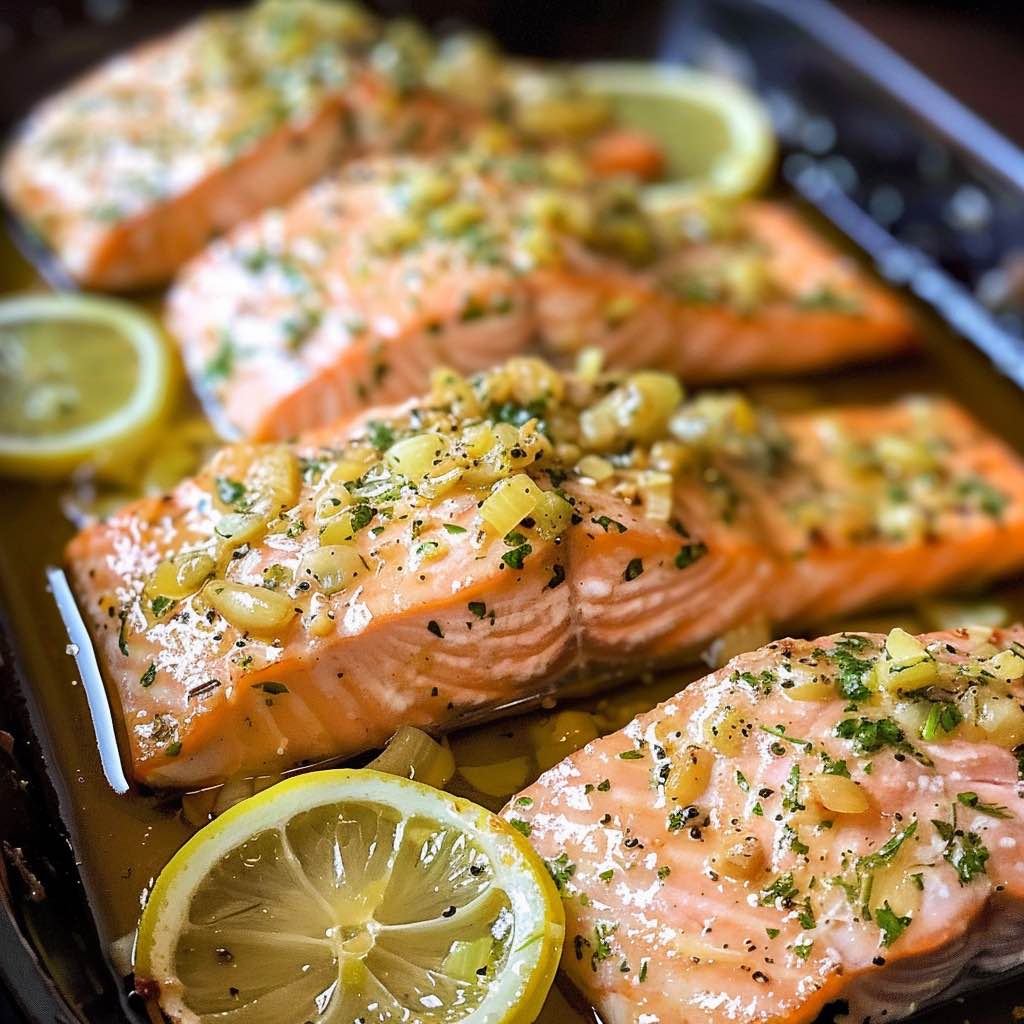
Baked Salmon with Garlic and Dijon: A Simple Recipe for Perfectly Flaky Fish
Baked salmon with garlic and Dijon is a restaurant-quality dish you can master in your own kitchen. This recipe combines the rich, buttery taste of salmon with the bold flavors of garlic and tangy Dijon mustard. Moreover, it takes less than 30 minutes from start to finish, making it perfect for busy weeknights or elegant dinner parties.
The combination of garlic and Dijon creates a savory crust that complements the natural oils in the fish. Additionally, baking ensures even cooking without the need for constant monitoring. This hands-off approach means you can prepare side dishes while your salmon cooks to perfection.
Why This Baked Salmon Recipe Works
Simple Ingredients Deliver Complex Flavors
This baked salmon recipe proves that fewer ingredients often produce better results. The Dijon mustard provides acidity and depth, while fresh garlic adds aromatic intensity. Furthermore, these ingredients create a protective coating that keeps the fish moist during baking.
Unlike many fish recipes that require complicated techniques, this method is straightforward. You simply coat the salmon and bake it. Consequently, even novice cooks can achieve professional results.
Quick Cooking Time
Salmon fillets typically need only 12-15 minutes in a preheated oven. This short cooking window preserves the fish’s delicate texture and prevents dryness. In addition, the high heat caramelizes the garlic-Dijon coating, creating appealing golden-brown edges.
The cooking time also makes this recipe practical for meal planning. Therefore, you can prepare a nutritious dinner without spending hours in the kitchen.
Healthy and Nutritious
Salmon ranks among the healthiest protein choices available. It contains omega-3 fatty acids, which support heart and brain health. Moreover, this preparation method requires minimal added fat, keeping the dish naturally wholesome.
Ingredients You’ll Need
For the Salmon
-
4 salmon fillets (6 ounces each), skin-on or skinless
-
3 tablespoons Dijon mustard
-
4 cloves garlic, minced
-
2 tablespoons olive oil
-
1 tablespoon honey
-
1 tablespoon fresh lemon juice
-
1 teaspoon dried thyme
-
½ teaspoon salt
-
¼ teaspoon black pepper
-
Fresh parsley for garnish
Optional Enhancements
-
Lemon zest for extra brightness
-
Red pepper flakes for heat
-
Fresh dill instead of thyme
-
Capers for a briny element
Equipment Needed
-
Baking sheet or baking dish
-
Parchment paper or aluminum foil
-
Small mixing bowl
-
Basting brush or spoon
-
Meat thermometer
Step-by-Step Instructions
Prepare Your Workspace
First, preheat your oven to 400°F (200°C). This temperature ensures the salmon cooks through while developing a flavorful crust. Next, line your baking sheet with parchment paper to prevent sticking and make cleanup easier.
Remove the salmon from the refrigerator about 10 minutes before cooking. Room temperature fish cooks more evenly than cold fish. Pat the fillets dry with paper towels to help the coating adhere better.
Make the Garlic-Dijon Mixture
Combine the Dijon mustard, minced garlic, olive oil, honey, and lemon juice in a small bowl. Whisk these ingredients until smooth and well-blended. Then, add the thyme, salt, and pepper, stirring to incorporate everything evenly.
The honey balances the mustard’s sharpness while helping the coating caramelize. Meanwhile, the lemon juice adds brightness that cuts through the salmon’s richness.
Coat the Salmon
Place the salmon fillets on your prepared baking sheet, spacing them about 2 inches apart. Using a basting brush or the back of a spoon, generously coat the top and sides of each fillet with the garlic-Dijon mixture.
Reserve a small amount of the coating for basting halfway through cooking. This extra layer intensifies the flavor and maintains moisture.
Bake to Perfection
Transfer the baking sheet to your preheated oven. Bake for 12-15 minutes, depending on thickness. A 1-inch thick fillet typically needs 12 minutes, while thicker cuts may require up to 15 minutes.
After 8 minutes, quickly open the oven and brush the reserved coating over the salmon. This step enhances both flavor and appearance.
Check for Doneness
The salmon is ready when it flakes easily with a fork and reaches an internal temperature of 145°F (63°C). Insert a meat thermometer into the thickest part of the fillet to verify. The fish should appear opaque and slightly translucent in the center.
Remove the salmon from the oven immediately once done. Carryover cooking will continue for a minute or two, so slight undercooking is preferable to overdoing it.
Rest and Serve
Let the salmon rest for 3-4 minutes before serving. This resting period allows the juices to redistribute throughout the fish. Consequently, each bite will be moist and flavorful.
Garnish with fresh parsley and lemon wedges. Then serve immediately while hot.
Tips for Perfect Results
Choose Quality Salmon
Fresh, high-quality salmon makes a significant difference in taste and texture. Look for fillets with bright color, firm flesh, and a mild ocean scent. Wild-caught salmon typically has a firmer texture, while farm-raised offers a milder flavor.
Check out our guide on [selecting the best fish at the market] for more detailed advice.
Don’t Overcook
Overcooked salmon becomes dry and loses its delicate texture. Therefore, monitor the cooking time carefully and use a thermometer for accuracy. Remember that the fish continues cooking after you remove it from the oven.
If you prefer your salmon more well-done, aim for 140°F during cooking. The residual heat will bring it to 145°F while resting.
Adjust Garlic Intensity
Fresh garlic provides the most robust flavor, but you can adjust the amount to your preference. For milder garlic taste, reduce to 2-3 cloves. Conversely, garlic lovers can increase to 5-6 cloves without overwhelming the dish.
Roasted garlic offers a sweeter, mellower alternative to raw garlic. Simply roast whole cloves beforehand and mash them into the Dijon mixture.
Customize the Heat
Add heat gradually to suit your taste. Start with a small pinch of red pepper flakes and increase as desired. Cayenne pepper or hot sauce also work well for those who enjoy spicier dishes.
Use a Reliable Thermometer
A meat thermometer removes all guesswork from cooking fish. Digital instant-read thermometers provide the most accurate readings. Insert the probe horizontally into the thickest part of the fillet for best results.
Nutritional Benefits of Salmon
Omega-3 Fatty Acids
Salmon contains abundant omega-3 fatty acids, particularly EPA and DHA. These essential fats support cardiovascular health, reduce inflammation, and promote brain function.
A single 6-ounce serving provides approximately 2-3 grams of omega-3s. This amount meets or exceeds most daily recommendations for these beneficial fats.
High-Quality Protein
Each salmon fillet delivers approximately 34 grams of complete protein. This protein contains all essential amino acids your body needs for muscle repair, enzyme production, and immune function. Furthermore, protein helps maintain satiety, making salmon an excellent choice for weight management.
The protein in salmon is highly bioavailable, meaning your body can easily absorb and utilize it. This efficiency makes salmon particularly valuable for active individuals and those recovering from illness.
Essential Vitamins and Minerals
Salmon provides excellent amounts of several key nutrients:
-
Vitamin B12: Supports nerve function and red blood cell formation
-
Vitamin D: Promotes bone health and immune function
-
Selenium: Acts as a powerful antioxidant
-
Potassium: Helps regulate blood pressure
-
Niacin: Supports energy metabolism
These nutrients work synergistically to support overall health and well-being. Additionally, the vitamin D content is particularly noteworthy since few foods naturally contain this essential nutrient.
Low in Mercury
Compared to many fish species, salmon contains relatively low mercury levels. This makes it safe for regular consumption, including for pregnant women and children (in appropriate portions).
Serving Suggestions
Classic Pairings
This baked salmon with garlic and Dijon pairs beautifully with numerous side dishes. Consider these classic combinations:
-
Roasted vegetables: Asparagus, Brussels sprouts, or green beans complement the fish perfectly
-
Rice pilaf: Plain or herbed rice provides a neutral base that absorbs the flavorful juices
-
Mashed potatoes: Creamy potatoes create a comforting contrast to the salmon’s texture
-
Fresh salad: A crisp green salad with vinaigrette balances the richness of the fish
Grain-Based Sides
Whole grains add nutrition and heartiness to your meal:
-
Quinoa with herbs and lemon
-
Couscous with roasted vegetables
-
Wild rice with mushrooms
-
Farro with cherry tomatoes and basil
These options provide fiber and complex carbohydrates while maintaining the meal’s healthy profile.
Vegetable Options
Maximize your vegetable intake with these preparations:
-
Steamed broccoli with lemon butter
-
Sautéed spinach with garlic
-
Roasted sweet potatoes
-
Grilled zucchini and bell peppers
The vegetables add color, texture, and additional nutrients to your plate. Moreover, they help create a well-balanced, satisfying meal.

Complete Meal Ideas
Create restaurant-worthy presentations with these combinations:
Elegant Dinner: Baked salmon with garlic and Dijon, roasted asparagus, and wild rice pilaf
Casual Weeknight: Salmon served over mixed greens with cherry tomatoes and cucumber
Family Style: Salmon alongside roasted potatoes, steamed green beans, and dinner rolls
Storage and Reheating
Refrigerator Storage
Store leftover salmon in an airtight container in the refrigerator. Properly stored, it remains safe for 3-4 days. Place the salmon in the coldest part of your refrigerator (typically the back of the bottom shelf) for optimal freshness.
Let the salmon cool to room temperature before refrigerating, but don’t leave it out longer than 2 hours. This practice prevents bacterial growth while maintaining food safety.
Freezer Storage
While fresh salmon tastes best, you can freeze cooked salmon for up to 3 months. Wrap individual portions tightly in plastic wrap, then place them in a freezer-safe bag. Remove as much air as possible to prevent freezer burn.
Label the package with the date and contents. This organization helps you track storage times and rotate your frozen items effectively.
Best Reheating Methods
Gentle reheating preserves the salmon’s texture and prevents drying:
Oven Method: Place salmon in a baking dish, cover with foil, and heat at 275°F for 10-15 minutes
Stovetop Method: Warm in a covered skillet over low heat for 5-7 minutes
Microwave Method: Heat on 50% power in 30-second intervals, checking frequently
Avoid high heat, which quickly dries out the fish. Add a splash of water or broth to the container to create steam and maintain moisture.
Using Leftover Salmon
Transform leftover baked salmon into new meals:
-
Flake over salads for added protein
-
Mix into pasta dishes
-
Make salmon cakes or patties
-
Add to scrambled eggs or omelets
-
Create salmon salad sandwiches
These versatile preparations ensure nothing goes to waste while providing quick, nutritious meals.
Recipe Variations
Mediterranean Style
Transform this recipe with Mediterranean flavors. Replace the Dijon with whole grain mustard and add these ingredients:
-
2 tablespoons chopped Kalamata olives
-
1 tablespoon capers, drained
-
½ teaspoon dried oregano
-
Cherry tomatoes arranged around the salmon
This variation brings bright, briny flavors that complement the fish beautifully.
Asian-Inspired
Create an Asian fusion version by modifying the coating:
-
Replace Dijon with 2 tablespoons miso paste
-
Add 1 tablespoon rice vinegar
-
Include 1 teaspoon sesame oil
-
Sprinkle with sesame seeds before baking
-
Garnish with sliced green onions
The result is a umami-rich dish with complex, savory notes.
Herb-Crusted
For an herbaceous variation, increase the herbs:
-
Use 2 tablespoons mixed fresh herbs (dill, parsley, chives)
-
Add lemon zest
-
Mix in 2 tablespoons breadcrumbs for crunch
-
Reduce mustard to 2 tablespoons
This version creates a flavorful crust while keeping the salmon moist inside.
Spicy Version
Heat lovers will enjoy this kicked-up version:
-
Add 1-2 teaspoons sriracha or hot sauce to the coating
-
Include ½ teaspoon smoked paprika
-
Sprinkle with red pepper flakes before baking
-
Serve with cooling cucumber yogurt sauce
The heat level remains customizable to your preference.
Maple-Glazed
For a touch of sweetness, try this variation:
-
Replace honey with pure maple syrup
-
Add ½ teaspoon ground cinnamon
-
Include a pinch of ground ginger
-
Use whole grain Dijon for texture
This combination creates a sweet-savory profile that appeals to many palates.
Common Mistakes to Avoid
Using Cold Salmon
Cold salmon straight from the refrigerator cooks unevenly. The outside overcooks before the center reaches the proper temperature. Therefore, always let salmon sit at room temperature for 10-15 minutes before cooking.
This simple step ensures uniform cooking throughout the fillet. Consequently, you’ll achieve better texture and doneness.
Skipping the Pat-Dry Step
Excess moisture prevents the coating from adhering properly. Wet salmon also steams rather than bakes, resulting in less flavorful fish. Always pat the fillets thoroughly dry with paper towels before applying the coating.
This quick step significantly improves the final result. Moreover, it takes only seconds to complete.
Overcrowding the Pan
Place fillets at least 2 inches apart on your baking sheet. Crowded fish doesn’t cook evenly and the coating won’t caramelize properly. If necessary, use two baking sheets or cook in batches.
Proper spacing allows hot air to circulate around each fillet. This circulation is essential for even cooking and browning.
Ignoring Fillet Thickness
Cooking times vary based on thickness. A thin fillet (¾ inch) needs only 10-12 minutes, while a thick one (1½ inches) may require 15-18 minutes. Always check the thickest part of the fillet when testing for doneness.
Adjust your timing accordingly rather than following a strict schedule. Each piece of fish is unique and may require slight modifications.
Opening the Oven Repeatedly
Frequent oven opening causes temperature fluctuations that affect cooking time. Check your salmon only once or twice during baking. Trust the process and resist the urge to peek constantly.
Stable oven temperature ensures predictable, consistent results. Additionally, it prevents heat loss that extends cooking time.
Forgetting to Rest
Cutting into salmon immediately after cooking releases all the flavorful juices. Let the fish rest for 3-4 minutes before serving. This brief waiting period significantly improves both moisture and taste.
The resting time also makes the salmon easier to portion and serve. Meanwhile, you can finish preparing your side dishes or setting the table.
Frequently Asked Questions
Should I remove the skin from salmon before baking?
You can bake salmon with or without skin. Leaving the skin on helps hold the fillet together during cooking and makes flipping easier if needed. The skin also adds flavor and becomes crispy when cooked properly. However, if you prefer skinless salmon, this recipe works perfectly well either way. Simply adjust the cooking time slightly, as skinless fillets may cook 1-2 minutes faster.
Can I use frozen salmon for this baked salmon with garlic and Dijon recipe?
Yes, but proper thawing is essential. Thaw frozen salmon in the refrigerator overnight for best results. Never thaw at room temperature, as this promotes bacterial growth. Once thawed, pat the salmon very dry, as frozen fish releases more moisture than fresh. The extra moisture can dilute the coating and affect texture, so thorough drying is particularly important with previously frozen salmon.
How do I know when the salmon is fully cooked?
The most reliable method is using a meat thermometer. Insert it into the thickest part of the fillet, which should read 145°F (63°C) when done. Visually, properly cooked salmon appears opaque throughout with a slightly translucent center. The fish should flake easily when tested with a fork. Additionally, the flesh changes from a bright orange-pink to a lighter, more opaque pink color when fully cooked.
What type of Dijon mustard works best?
Traditional Dijon mustard provides the best balance of tang and heat. However, stone-ground Dijon adds interesting texture and slightly stronger flavor. Avoid sweet or honey Dijon varieties, as this recipe already contains honey for sweetness. If you only have regular yellow mustard, you can substitute it, though the flavor will be milder and less complex.
Can I prepare the coating ahead of time?
Absolutely. Mix the garlic-Dijon coating up to 24 hours in advance and store it in an airtight container in the refrigerator. The flavors actually meld and intensify during storage. Let the coating come to room temperature before using, as cold coating is harder to spread and may cool down the salmon’s surface temperature. Stir well before applying, as separation may occur during storage.
Is it necessary to flip the salmon during baking?
No, flipping is not necessary and often causes problems. The coating can stick to your spatula, and the delicate fish may break apart. Baking from one side produces excellent results when using the proper temperature and timing. The heat circulates around the fillet, cooking it evenly from all sides. Focus instead on proper oven temperature and accurate timing for best results.
What’s the best way to prevent the salmon from sticking?
Parchment paper provides the most reliable non-stick surface. Alternatively, lightly oil your baking sheet or use aluminum foil sprayed with cooking spray. If using a baking dish, ensure it’s well-greased. The coating itself contains olive oil, which also helps prevent sticking. Avoid moving the salmon once placed on the baking sheet, as this can disturb the coating and increase sticking.
Can I make this recipe with salmon portions other than fillets?
Yes, this recipe adapts well to different cuts. Salmon steaks work beautifully, though they may need an additional 2-3 minutes of cooking time. A whole salmon side looks impressive for entertaining and requires about 20-25 minutes at 375°F. Individual portions make serving easier and allow for more precise cooking. Adjust cooking times based on thickness rather than the specific cut.
How can I tell if my salmon is overcooked?
Overcooked salmon appears very pale, almost white, and has a dry, chalky texture. When you press it with your finger, it feels firm rather than slightly springy. The fish may also release a white protein called albumin that coagulates on the surface. If you notice these signs, reduce your oven temperature or cooking time for next time. Slightly undercooked salmon is preferable to overcooked, as it retains more moisture and flavor.
What side dishes complement this recipe best?
Light, fresh sides balance the rich salmon perfectly. Roasted asparagus, steamed green beans, or sautéed spinach provide healthy vegetable options. Grain-based sides like quinoa, rice pilaf, or couscous absorb the flavorful juices nicely. For a low-carb option, cauliflower rice or zucchini noodles work wonderfully. Consider your overall meal balance when choosing sides, aiming for a mix of textures and flavors.
Baked salmon with garlic and Dijon delivers impressive results with minimal effort. This foolproof recipe combines bold flavors, quick preparation, and outstanding nutritional benefits. The tangy mustard coating keeps the fish moist while adding sophisticated flavor that rivals any restaurant preparation.
Whether you’re cooking for a special occasion or a simple weeknight dinner, this recipe consistently produces tender, flavorful salmon. The versatility allows endless variations to suit your preferences, while the basic method remains simple enough for beginning cooks. Most importantly, you’ll enjoy a delicious, healthy meal that comes together in less than 30 minutes.
Ready to create restaurant-quality salmon at home? Try this baked salmon with garlic and Dijon recipe tonight and discover how easy gourmet cooking can be!

Baked Salmon with Garlic and Dijon
Description
Baked Salmon with Garlic and Dijon
Ingredients
For the Salmon:
-
1 1/2 pounds salmon fillets (or 4 individual 5-6 ounce fillets)
-
Salt and pepper to taste
-
1 tablespoon olive oil for brushing
For the Garlic Dijon Sauce:
-
1/4 cup extra virgin olive oil
-
1/3 cup Dijon mustard
-
3-4 large garlic cloves, minced
-
1 small lemon, zested and juiced (about 2 tablespoons juice)
-
1/4 cup fresh parsley, finely chopped
-
1 tablespoon fresh dill, chopped
-
1/2 teaspoon dried oregano
-
1/2 teaspoon sweet paprika
-
1/4 teaspoon salt
-
1/4 teaspoon black pepper
Instructions
Preparation:
-
Preheat oven to 375°F
-
Line a large baking sheet with parchment paper and brush lightly with olive oil
-
Pat salmon fillets dry with paper towels
Make the Sauce:
-
In a small bowl, whisk together olive oil, Dijon mustard, minced garlic, lemon zest, lemon juice, parsley, dill, oregano, paprika, salt, and pepper until well combined
Prepare the Salmon:
-
Place salmon fillets on the prepared baking sheet, skin-side down if using skin-on fillets
-
Season salmon with salt and pepper
-
Generously coat the top of each salmon fillet with the garlic Dijon mixture using a pastry brush or spoon
Baking:
-
Bake for 15-20 minutes, depending on thickness of fillets
-
For thicker fillets, bake closer to 20 minutes; for thinner pieces, check at 15 minutes
-
Salmon is done when it flakes easily with a fork and reaches an internal temperature of 145°F
-
Optional: Broil for 1-2 minutes at the end for a lightly golden top
Serving:
-
Remove from oven and let rest for 2-3 minutes
-
Garnish with additional fresh dill or parsley if desired
-
Serve immediately with lemon wedges on the side
This flavorful baked salmon stays incredibly moist thanks to the Dijon coating, which acts as a protective layer while infusing the fish with tangy, garlicky flavor. The dish pairs beautifully with roasted vegetables, rice, or a fresh green salad.