
Grilled Sesame-Crusted Tuna Steaks: The Ultimate Guide to Restaurant-Quality Results
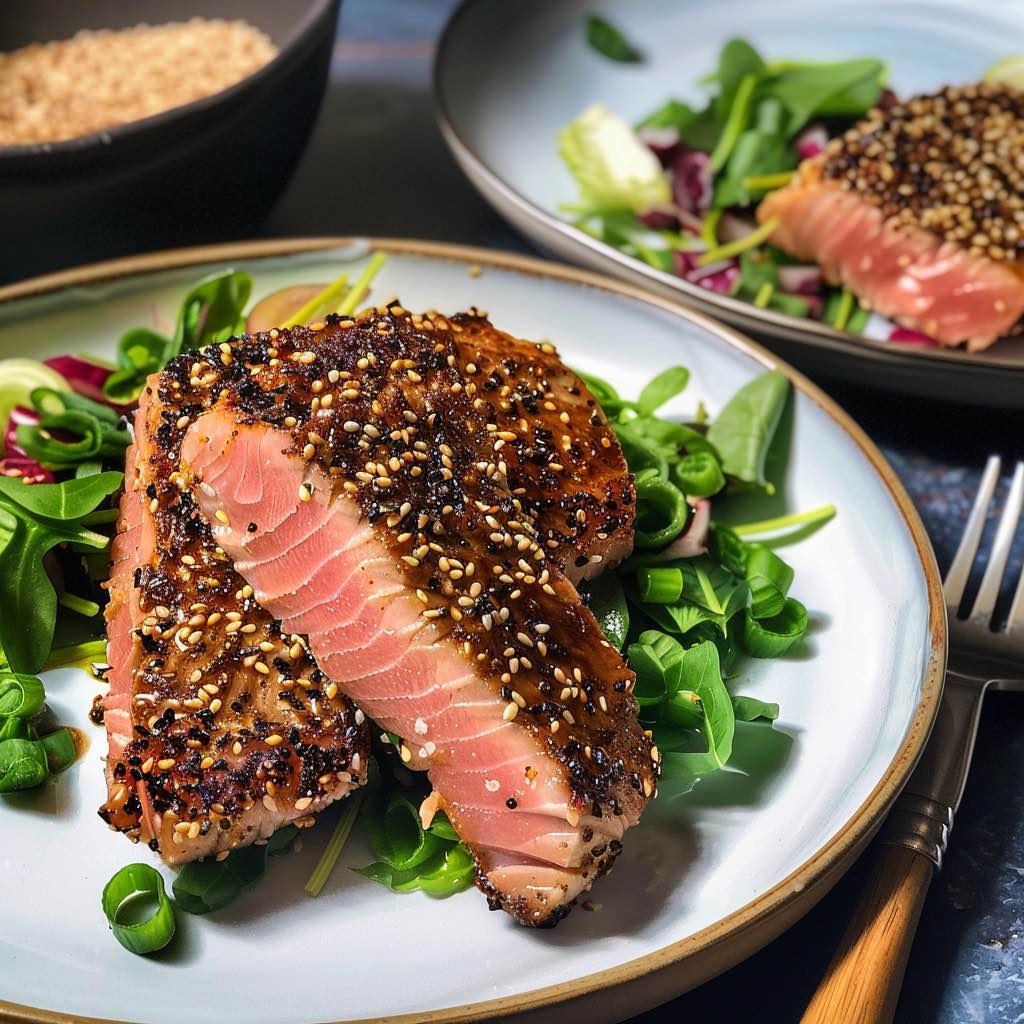
Grilled Sesame-Crusted Tuna Steaks deliver a perfect balance of crispy, nutty exterior and tender, ruby-red interior. This dish combines the rich flavor of high-quality tuna with the aromatic crunch of toasted sesame seeds. Furthermore, it’s surprisingly simple to prepare at home. Whether preparing a weeknight dinner or impressing guests, this recipe elevates any meal into a memorable culinary experience.
Why Choose Grilled Sesame-Crusted Tuna Steaks
Tuna steaks offer exceptional versatility and nutrition in one impressive package. Moreover, the sesame crust adds an elegant touch without complex techniques. This preparation method preserves the fish’s natural moisture while creating textural contrast.
The dish originates from Asian culinary traditions, where sesame seeds complement seafood beautifully. Additionally, grilling imparts subtle smokiness that enhances the tuna’s meaty flavor. This combination creates a sophisticated yet approachable meal.
Restaurant chefs favor this preparation because it showcases quality ingredients simply. Similarly, home cooks appreciate the quick cooking time and minimal ingredients required. The visual appeal of seared tuna with its striking color gradient makes every plate Instagram-worthy.
Understanding Tuna: Types and Selection
Common Tuna Varieties
Selecting the right tuna makes all the difference in your final dish. Therefore, understanding different varieties helps you make informed choices. Each type brings unique characteristics to the table.
Yellowfin Tuna is the most popular choice for grilling. It features mild flavor and pinkish-red flesh. This variety maintains firm texture during cooking. Most grocery stores carry yellowfin regularly.
Bigeye Tuna offers slightly darker color and richer taste. It contains higher fat content than yellowfin. This makes it exceptionally tender when seared. Bigeye works beautifully for sesame-crusted preparations.
Ahi Tuna refers to both yellowfin and bigeye varieties. This Hawaiian name indicates premium-quality fish suitable for raw or rare preparations. Ahi is the standard for poke bowls and seared dishes.
Bluefin Tuna represents the highest quality and price point. It features intense marbling and buttery texture. However, bluefin often requires special ordering. Yellowfin and bigeye provide excellent results at more accessible prices.
Selecting Fresh Tuna Steaks
Visual inspection reveals tuna quality immediately. Look for deep red color without brown spots. Fresh tuna should appear moist and glossy, not dull or dry.
Texture indicates freshness reliably. Press the steak gently with your finger. It should spring back firmly. Avoid steaks that feel soft or mushy.
Fresh tuna smells clean and oceanic. Strong or ammonia-like odors signal spoilage. Trust your nose when evaluating seafood.
Thickness matters for proper searing. Choose steaks at least one inch thick, preferably 1.5 to 2 inches. Uniform thickness ensures even cooking throughout.
Frozen options work well when fresh isn’t available. Look for vacuum-sealed packages without ice crystals. Freezer burn indicates poor storage conditions. Thaw frozen tuna gradually in the refrigerator.
Nutritional Benefits of Tuna
Protein Powerhouse
Tuna steaks pack exceptional nutritional value into every serving. One cup of sesame-crusted tuna contains approximately 47 grams of protein. This supports muscle growth, tissue repair, and immune function.
The protein in tuna is complete, containing all essential amino acids. Your body cannot produce these amino acids independently. Therefore, dietary sources like tuna become crucial for optimal health.
Heart-Healthy Omega-3 Fatty Acids
Tuna provides abundant omega-3 fatty acids, particularly EPA and DHA. These essential fats support cardiovascular health significantly. Research shows they help maintain healthy blood pressure levels.
Omega-3s reduce inflammation throughout the body. They also support proper blood circulation and heart rhythm. The American Heart Association recommends eating omega-3-rich fish twice weekly.
Furthermore, DHA supports brain function and development. It contributes to cognitive health and memory. Regular tuna consumption may improve overall brain performance.
Additional Nutrients
Tuna delivers impressive amounts of vitamin D. One serving provides up to 793% of daily requirements. Vitamin D supports bone health, immune function, and mood regulation.
Iron content helps prevent anemia and supports oxygen transport. Tuna also provides selenium, a powerful antioxidant. This mineral protects cells from oxidative damage.
Potassium aids in maintaining healthy blood pressure. B vitamins, particularly B12, support energy metabolism and nervous system function. These nutrients work synergistically for optimal health.
Essential Ingredients and Tools
Core Ingredients
The ingredient list for Grilled Sesame-Crusted Tuna Steaks remains refreshingly simple. Quality matters more than quantity here. Start with these essentials.
Fresh tuna steaks form the foundation. Choose 6-ounce portions, 1 to 1.5 inches thick. Plan one steak per person for main course servings.
Sesame seeds create the signature crust. Mix white and black seeds for visual appeal. Use approximately half cup for coating two steaks. Toasted sesame adds deeper flavor.
Low-sodium soy sauce provides umami depth in marinades. It adds savory complexity without overpowering the fish. Quarter cup suffices for two steaks.
Sesame oil contributes nutty aroma and authentic Asian flavor. A little goes far with this ingredient. One to two tablespoons enhances the marinade perfectly.
Fresh ingredients elevate the dish considerably. Scallions, ginger, and garlic add aromatic notes. Honey balances savory elements with subtle sweetness.
Recommended Equipment
A reliable meat thermometer ensures perfect doneness every time. Look for instant-read models for accuracy. Temperature control prevents overcooking delicate tuna.
Grill options include gas, charcoal, or grill pans. Gas grills offer consistent temperature control. Charcoal imparts smoky flavor. Cast-iron grill pans work excellently indoors.
Heavy-bottomed pans retain heat effectively for searing. Cast iron provides superior heat capacity. This creates the ideal crust without overcooking the interior.
Tongs allow safe flipping without piercing the fish. Piercing releases precious juices. Proper tools maintain moisture and presentation.
Step-by-Step Cooking Instructions
Preparing the Marinade
Begin by combining marinade ingredients in a bowl. Mix soy sauce, sesame oil, and chopped scallions thoroughly. Add minced garlic and ginger for aromatic depth.
Place tuna steaks in a resealable bag. Pour marinade over the fish, ensuring complete coverage. Seal the bag, removing excess air. Refrigerate for 15 to 20 minutes maximum.
Avoid marinating longer than 20 minutes. Acidic ingredients can begin cooking the fish. Short marinating time infuses flavor without affecting texture.
Applying the Sesame Crust
Remove tuna from marinade and pat dry gently. Brush off excess scallions or garlic pieces. Moisture prevents sesame seeds from adhering properly.
Spread sesame seeds on a plate or shallow dish. Press each side of the tuna firmly into the seeds. Coat all surfaces evenly for uniform crust.
Pat seeds gently to ensure adhesion. The coating should feel secure but not overly thick. Proper coating creates crispy texture without overwhelming the fish.
Grilling Technique
Preheat your grill to high heat, around 425 to 450°F. A properly heated surface creates immediate sear. This locks in juices while developing crust.
Oil the grill grates lightly to prevent sticking. Alternatively, brush tuna steaks with high smoke-point oil. Avocado or grapeseed oil work excellently.
Place tuna steaks on the hottest part of the grill. Leave them undisturbed for 1.5 to 2 minutes. This creates attractive grill marks and golden crust.
Rotate steaks 45 degrees for crosshatch marks. Continue cooking another 45 seconds to 1 minute. Then flip carefully using tongs.
Cook the second side for 1 to 2 minutes. Total cooking time ranges from 3 to 4 minutes. Check internal temperature immediately.
Temperature and Timing Guidelines
Understanding Doneness Levels
Rare tuna represents the ideal doneness for most preparations. Pull tuna from heat at 65°F internal temperature. Carryover cooking raises it to 95-100°F.
Medium-rare tuna reaches 90°F before resting. The center remains pink but slightly opaque. This doneness suits those preferring less raw texture.
The fish continues cooking after removal from heat. Temperature can rise 25°F during resting. Therefore, pulling at lower temperatures prevents overcooking.
Monitoring Temperature
Insert an instant-read thermometer into the thickest part. Check temperature immediately after flipping the second side. This prevents leaving tuna on heat too long.
Start checking early to avoid overshooting target temperature. Even a few degrees changes texture dramatically. Precision ensures restaurant-quality results consistently.
Visual cues help gauge doneness too. The exterior should show golden-brown sesame crust. The sides reveal a thin seared band with ruby center visible.
Resting Period
Transfer cooked tuna to a wire rack. Let it rest for 5 minutes before slicing. Resting redistributes juices and brings temperature closer to room temperature.
This cooling makes slicing cleaner and easier. It also improves eating quality. Slightly cooled tuna showcases texture better than piping hot.
Marinades and Seasonings
Classic Asian-Inspired Marinade
Traditional marinades emphasize umami and aromatic elements. Soy sauce forms the salty base. Sesame oil adds nutty richness.
Fresh ginger provides spicy warmth and aromatic quality. Garlic contributes pungent depth. Together, they create complex flavor profiles.
Honey balances savory notes with gentle sweetness. It also aids in caramelization during grilling. Use sparingly to avoid overwhelming the fish.
Scallions add mild onion flavor and visual interest. Chop both white and green parts finely. They infuse throughout the marinade effectively.
Simple Seasoning Alternative
Sometimes simplicity wins. Salt and pepper alone allow tuna’s natural flavor to shine. Coarse sea salt and freshly cracked pepper work best.
Coat tuna with oil first, then season generously. The oil helps seasonings adhere and promotes even browning. This minimalist approach suits high-quality fish perfectly.
Citrus Variations
Lemon juice adds brightness that complements rich tuna. Use sparingly in marinades to prevent cooking the fish. Two tablespoons maximum for short marinating times.
Lime zest provides aromatic citrus notes without acidity. It pairs beautifully with sesame seeds. The combination creates restaurant-worthy complexity.
Avoid citrus-heavy marinades for extended periods. Acid begins cooking fish proteins chemically. This results in mushy texture rather than tender.
Perfecting the Sesame Crust
Choosing Sesame Seeds
White sesame seeds offer mild, nutty flavor and classic appearance. They’re the most common variety. White seeds blend seamlessly with various flavor profiles.
Black sesame seeds provide stronger, earthier taste. They create striking visual contrast against tuna. Mixing both varieties offers best of both worlds.
Toasting sesame seeds intensifies their flavor significantly. Toast briefly in a dry pan until fragrant. However, untoasted seeds work fine since grilling toasts them.
Application Techniques
Spread sesame seeds in a shallow dish or plate. Press each side of tuna firmly and evenly. Ensure complete coverage for uniform crust.
Pat seeds gently after coating. This embeds them into the fish surface. Proper adhesion prevents seeds from falling off during cooking.
Avoid coating too thickly. Quarter to half cup of seeds suffices for two steaks. Excessive coating may burn before tuna reaches proper doneness.
Achieving Golden Crust
High heat is essential for proper crust development. The grill surface must reach 425-450°F minimum. Lower temperatures steam rather than sear.
Let the crust form undisturbed for full contact time. Resist the urge to peek or move the fish. Movement prevents proper browning.
The sesame seeds should turn golden-brown, not black. Watch carefully as seeds can burn quickly. Adjust heat if seeds darken too rapidly.
Common Mistakes to Avoid
Overcooking the Tuna
Tuna transforms from tender to tough in seconds. Overcooking represents the most common error. Always err on the side of underdone.
Use a reliable thermometer rather than guessing. Visual cues alone can mislead. Temperature provides the only accurate measure.
Remember carryover cooking adds significant heat. Pull tuna well below target temperature. This compensates for continued cooking during rest.
Using Insufficient Heat
Low heat won’t sear properly. It cooks the interior before browning the exterior. High heat creates the signature crusty exterior with rare center.
Preheat grills thoroughly before adding fish. Wait until the cooking surface reaches proper temperature. Patience here pays dividends in results.
Selecting Poor Quality Fish
Low-quality tuna ruins even perfect technique. Brown spots or dull color indicate old fish. Fresh tuna makes all the difference.
Don’t compromise on thickness either. Thin steaks overcook before developing proper crust. One-inch minimum thickness ensures success.
Marinating Too Long
Extended marinating times harm delicate tuna. The fish begins breaking down texturally. Fifteen to twenty minutes provides adequate flavor infusion.
Acidic marinades work particularly quickly. Lemon juice or vinegar can “cook” the fish. Keep acid levels moderate and timing brief.
Side Dishes and Serving Suggestions
Grain-Based Sides
Rice complements tuna’s rich flavor naturally. Saffron jasmine rice adds aromatic elegance. White rice provides neutral base for bold flavors.
Quinoa salad offers nutty taste and complete protein. Toss cooked quinoa with fresh vegetables and light dressing. This adds nutrition and texture contrast.
Vegetable Accompaniments
Steamed vegetables provide healthy, light pairing. Broccoli, asparagus, and green beans work particularly well. Steam until tender-crisp to maintain nutrients and color.
Roasted vegetables develop deeper, caramelized flavors. Brussels sprouts with balsamic glaze complement tuna beautifully. Sweet potatoes offer contrasting sweetness.
Sautéed green beans add vibrant color and crisp texture. Toss with garlic and olive oil. Simple preparations let tuna remain the star.
Salad Options
Cucumber salad delivers refreshing contrast to rich tuna. Slice cucumbers thinly and toss with rice vinegar. Add sesame seeds for thematic consistency.
Greek pasta salad incorporates Mediterranean flavors effectively. Combine pasta, tomatoes, cucumbers, and olives. Lemon vinaigrette ties everything together.
Asian-inspired coleslaw features cabbage and carrots with sesame dressing. Ginger adds aromatic bite. This pairs naturally with sesame-crusted tuna.
Starchy Sides
Oven-roasted potatoes provide satisfying heartiness. Cut into wedges and season with herbs. Crispy exterior and fluffy interior balance tender tuna.
Baked sweet potatoes offer nutritional boost and natural sweetness. Roast until caramelized and tender. Their flavor complements tuna without competing.
Greek lemon potatoes bring Mediterranean flair to the plate. Roast with lemon juice, oregano, and olive oil. Bright flavors enhance rather than overpower.
Check out our guide on [insert link] for more seafood side dish inspiration.
Storage and Reheating Tips
Proper Storage Methods
Refrigerate leftover tuna within two hours of cooking. Place in airtight containers to prevent odor absorption. Consume within two days for best quality.
Cooked tuna continues to oxidize and darken in storage. This affects appearance more than safety or taste. Expect some color changes.
Separate sesame crust from plain sliced tuna if possible. The crust may soften in storage. Keeping them separate maintains better texture.
Reheating Considerations
Reheating tuna poses challenges since it’s meant to be rare. Gentle warming prevents further cooking. Room temperature works for many preparations.
If warming is necessary, use very low heat briefly. Pan-searing for 30 seconds per side refreshes the crust. Avoid microwaving, which creates rubbery texture.
Consider serving leftover tuna cold instead. Slice thinly over salads or in grain bowls. This showcases the fish without quality loss.
Frequently Asked Questions
What makes Grilled Sesame-Crusted Tuna Steaks special?
The combination of crispy sesame exterior and tender rare interior creates unique textural contrast. High-quality tuna delivers rich flavor that sesame seeds enhance beautifully. Moreover, the presentation impresses with striking colors and professional appearance.
Can I use frozen tuna steaks?
Frozen tuna works well when fresh isn’t available. Choose vacuum-sealed packages without freezer burn or ice crystals. Thaw gradually in the refrigerator overnight. Pat dry thoroughly before seasoning.
How do I know when tuna is done?
Use an instant-read thermometer for accuracy. Pull tuna at 65°F for rare, allowing carryover to reach 95-100°F. Visually, the exterior should be seared while the center remains deep red.
Why did my sesame seeds burn?
Excessive heat or too-long cooking time causes burning. Monitor closely and adjust heat as needed. Sesame seeds darken quickly at high temperatures. Pull tuna earlier if seeds are browning too fast.
What type of tuna works best for this recipe?
Yellowfin (ahi) and bigeye tuna deliver ideal results. Both maintain firm texture and mild flavor that complements sesame. Choose steaks at least one inch thick for proper searing.
Can I make this recipe without a grill?
Absolutely. Use a cast-iron skillet or grill pan instead. Heat to 425-450°F before adding tuna. The technique remains identical to outdoor grilling.
Conclusion
Grilled Sesame-Crusted Tuna Steaks transform simple ingredients into an extraordinary meal. The crispy, nutty crust pairs perfectly with tender, ruby-red tuna. With proper technique and quality ingredients, anyone can achieve restaurant-quality results at home.
Remember the key principles: high heat for proper searing, accurate temperature monitoring, and brief cooking times. Quality tuna and fresh sesame seeds make the biggest difference. These elements combine to create impressive dishes consistently.
The nutritional benefits of tuna add another compelling reason to prepare this dish regularly. Omega-3 fatty acids, lean protein, and essential vitamins support overall health. Delicious and nutritious rarely combine so perfectly.
Ready to create your own Grilled Sesame-Crusted Tuna Steaks? Start with the freshest tuna you can find, heat your grill properly, and trust your thermometer. Your first attempt will likely exceed expectations. The simplicity of this preparation makes success accessible to cooks of all skill levels.
Print
Grilled Sesame-Crusted Tuna Steaks
Description
Grilled Sesame-Crusted Tuna Steaks
Ingredients
-
2 fresh ahi (yellowfin) tuna steaks, about 1 inch thick
-
2 tbsp soy sauce
-
1 tbsp sesame oil
-
1 tbsp rice vinegar or lime juice
-
1 tsp honey (optional, for balance)
-
1 clove garlic, minced
-
1 tsp grated fresh ginger
-
2 tbsp black sesame seeds
-
2 tbsp white sesame seeds
-
Salt and freshly cracked black pepper
-
Green onions and lime wedges for garnish
Instructions
-
Marinate the Tuna
In a small bowl, whisk together soy sauce, sesame oil, rice vinegar (or lime juice), honey, garlic, and ginger.
Place tuna steaks in the marinade for 15–20 minutes, flipping once. -
Prepare the Sesame Crust
On a plate, combine black and white sesame seeds.
Remove tuna from the marinade and press each side into the sesame mixture to coat evenly. -
Preheat the Grill
Heat your grill (or grill pan) over high heat and lightly oil the grates. You want it very hot to sear the outside quickly. -
Grill the Tuna Steaks
Place the tuna on the grill and cook for:-
1–2 minutes per side for rare (pink in the center)
-
3–4 minutes per side for medium
Avoid overcooking — tuna is best when slightly rare inside.
-
-
Rest and Serve
Let the tuna rest 2 minutes before slicing. Garnish with chopped green onions and lime wedges.